Key Takeaways
Why Depreciation Myths Are So Costly for Sellers
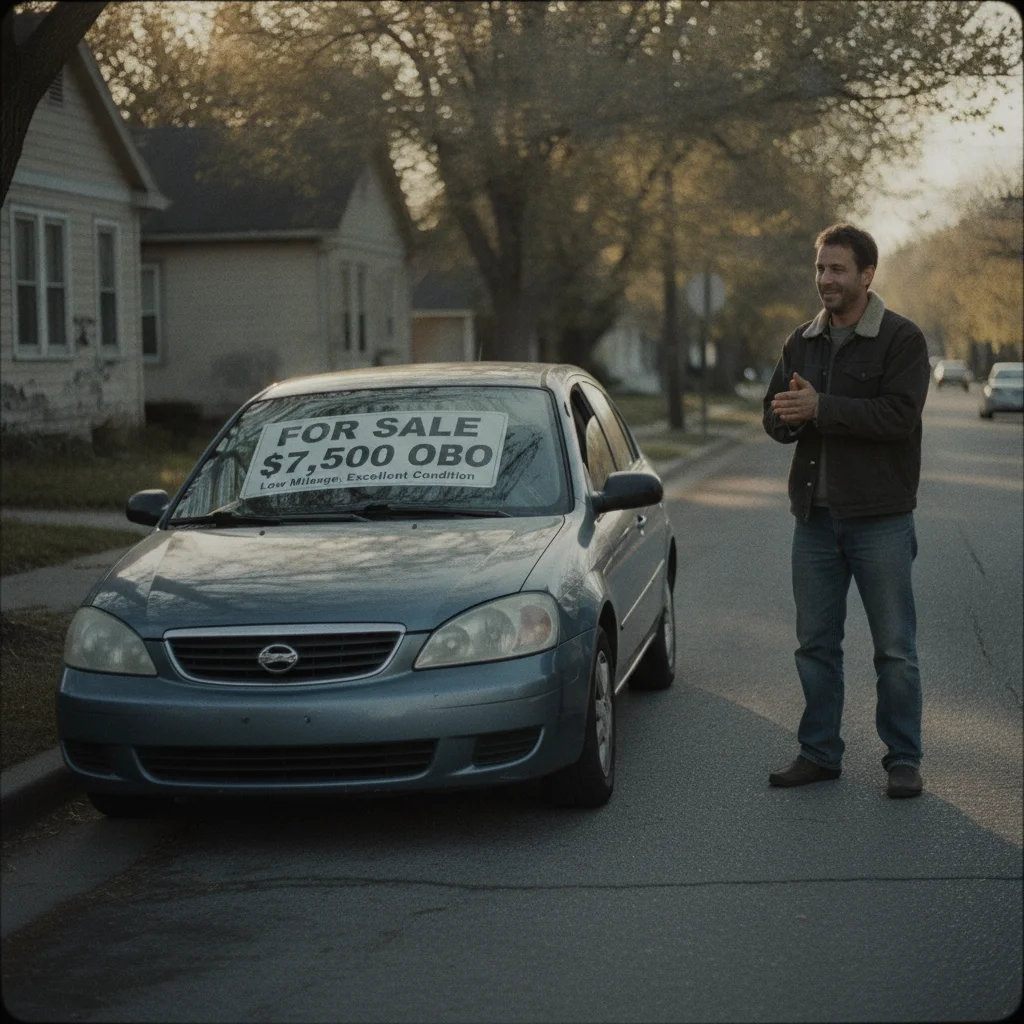
Most sellers enter the process with a number in mind—one built from memory, emotion, and a handful of assumptions that feel logical but don't hold up to market data. The result is predictable: the listing sits unsold for weeks, a price drop happens, and the final sale comes in lower than a well-priced listing would have earned on day one.
Depreciation is the single most powerful force shaping your car's resale value, and it follows patterns that often surprise sellers. Understanding those patterns—and, just as importantly, unlearning the myths that distort them—is the difference between a confident, data-backed price and a guess that costs you money.
For a solid foundation on how vehicles lose value over time, start with the Depreciation Basics hub, which walks through the mechanics that drive every myth we'll correct below. You may also want to read why sellers consistently overestimate what their car is worth to understand the psychology behind these pricing errors before diving into the myths themselves.

The Most Damaging Depreciation Myths, Corrected
Each myth below represents a belief that, left unchallenged, will cause you to set a price the market simply won't accept. Work through them carefully—some will be obvious, others may surprise you.
Myth
My car is only three years old, so it hasn't lost that much value yet.
Fact
New vehicles typically lose 15–25% of their value in year one and around 40–50% by year three—making the early years the steepest part of the depreciation curve.
This is one of the most expensive myths sellers carry into the pricing process. The assumption is that a relatively new car retains most of its purchase price. The reality is the opposite: depreciation is front-loaded, meaning the sharpest drops happen early.
A car purchased new for $36,000 may be worth $27,000 after 12 months and as little as $18,000–$20,000 by year three, depending on brand, model, and market conditions. That's not a flaw in the market—it's simply how depreciation curves work. Once a car is no longer new, the entire category of buyer willing to pay a premium for that newness disappears.
Sellers who use their purchase price as an anchor systematically overprice their vehicles by thousands of dollars. The Depreciation Basics hub breaks down exactly how these curves unfold by vehicle age, which is essential reading before you set any price.
Myth
My mileage is low, so I can price significantly above market comparables.
Fact
Low mileage is a positive factor, but its premium value is modest and only meaningful when compared to vehicles in the same year and model range—not used as a license to ignore comparable listings.
Low mileage genuinely does support a higher price—but within a defined range, not without limit. A 2020 midsize sedan with 22,000 miles is a stronger listing than one with 48,000 miles. However, it is not automatically worth more than comparable 2020 sedans with 30,000–35,000 miles listed in your area at a given price point.
The mileage premium buyers will actually pay is typically $500–$2,000 depending on the vehicle segment, total mileage gap, and local inventory. Sellers who add $4,000 to their ask based on mileage alone find their listing ignored because buyers can filter by mileage and compare actuals side by side.
There are also mileage thresholds that trigger meaningful buyer hesitation—100,000 miles being the most common psychological barrier. Below that threshold, the per-mile impact on pricing is relatively modest. How mileage affects your car's resale value more than you think details the specific thresholds and how buyers interpret them.
Myth
The upgrades I added—premium sound system, custom wheels, tinted windows—will increase my sale price by at least what I paid for them.
Fact
Aftermarket upgrades rarely add dollar-for-dollar value at resale and frequently add nothing measurable. Some modifications actually reduce the pool of interested buyers.
It's a painful truth: the $2,500 you spent on a custom audio system or $1,800 on aftermarket wheels is almost certainly not recoverable at sale. Here's why. Buyers shopping your vehicle are comparing it to stock versions of the same car. They haven't asked for your upgrades, and many would prefer the factory configuration—either because they want OEM reliability, insurance simplicity, or simply different taste.
The upgrades that have the best chance of supporting a modest price increase are practical ones that were installed by the manufacturer or dealer and appear on the vehicle's records: tow packages, factory navigation, heated seats added as a trim upgrade. Even these rarely return full cost.
Custom wheels, aftermarket exhaust, suspension modifications, and non-stock stereo equipment often require buyers to factor in reinstallation of stock parts or worry about warranty implications. In some cases, heavily modified vehicles sit on the market longer than comparable stock vehicles because the buyer pool is smaller. Things owners unknowingly do that accelerate their car's depreciation discusses how modifications fit into the broader picture of value erosion.
Myth
What I paid for the car establishes a floor for what I should accept.
Fact
Your purchase price is irrelevant to market value. Buyers pay based on what comparable vehicles are selling for today—not what you paid years ago.
Purchase price is a sunk cost. The market does not care what you paid, what you owed, or what you feel the car is worth based on your ownership experience. This disconnect is one of the primary reasons sellers overprice vehicles and then feel wronged when buyers don't respond.
If you paid $28,000 for a vehicle three years ago and it's now worth $17,500 based on market comps, that $10,500 difference is already gone—absorbed by depreciation the moment you drove off the lot. Pricing the car at $21,000 because you 'can't sell it for less' doesn't change the market reality; it just means the car won't sell.
This is especially common among sellers who financed their vehicle and still have a loan balance near or above current market value—a situation sometimes called being underwater. Being underwater on a loan is a financing problem, not a pricing solution. Why sellers consistently overestimate what their car is worth addresses the psychology behind purchase-price anchoring in detail.
Myth
A clean, well-maintained car will always sell quickly at a premium price.
Fact
Condition is a baseline expectation, not a premium feature. Buyers expect clean and mechanically sound—excellent condition earns you the right to ask the market price, not above it.
Sellers frequently conflate condition with value premium. The reasoning goes: 'My car is in perfect condition, so I deserve more than the market average.' But most buyers assume the cars they're seriously considering are in good condition—that's the starting point, not the exception.
Condition affects pricing in the downward direction more than the upward direction. Poor condition—stained interior, worn tires, deferred maintenance—justifies pricing below comparable listings. Good condition allows you to price at the market midpoint. Exceptional condition with documented service history can support the upper range of comparable listings, but rarely a significant premium above them.
This myth also intersects with detailing investments. Spending $400 on a professional detail before selling is unlikely to add $400 to your sale price—it prevents a condition-related deduction, which is a different (and less exciting) value proposition. See detailing myths that cost sellers time and money for a realistic look at what pre-sale prep actually returns.
Myth
Depreciation happens at a steady, predictable rate each year, so I can calculate my car's value by taking a fixed percentage off annually.
Fact
Depreciation is front-loaded and non-linear. The rate of loss slows significantly after the first few years and varies widely by vehicle category, brand, and market conditions.
The 'constant percentage per year' model is intuitive but wrong. If depreciation were linear, a car that lost 10% per year would be worth 70% of its original value after three years. In practice, that same car might be worth 55–60% of its original value by year three because the early-year losses are disproportionately large.
Conversely, this non-linear pattern also means that later years see smaller absolute dollar losses. A seven-year-old vehicle might lose only $800–$1,200 in value over a full year, while a two-year-old version of the same vehicle might drop $3,000–$4,500 in the same period.
Different vehicle categories also depreciate at dramatically different rates. Trucks and SUVs from mainstream brands have historically held value better than luxury sedans. Electric vehicles in certain segments have depreciated steeply as newer models with longer range entered the market. Brand and model-level data—not a blanket annual percentage—is what actually predicts your car's trajectory. The depreciation myths that cost car buyers real money article covers several category-level patterns worth understanding.
Myth
Listing higher gives me negotiating room, so I should start well above what I'll accept.
Fact
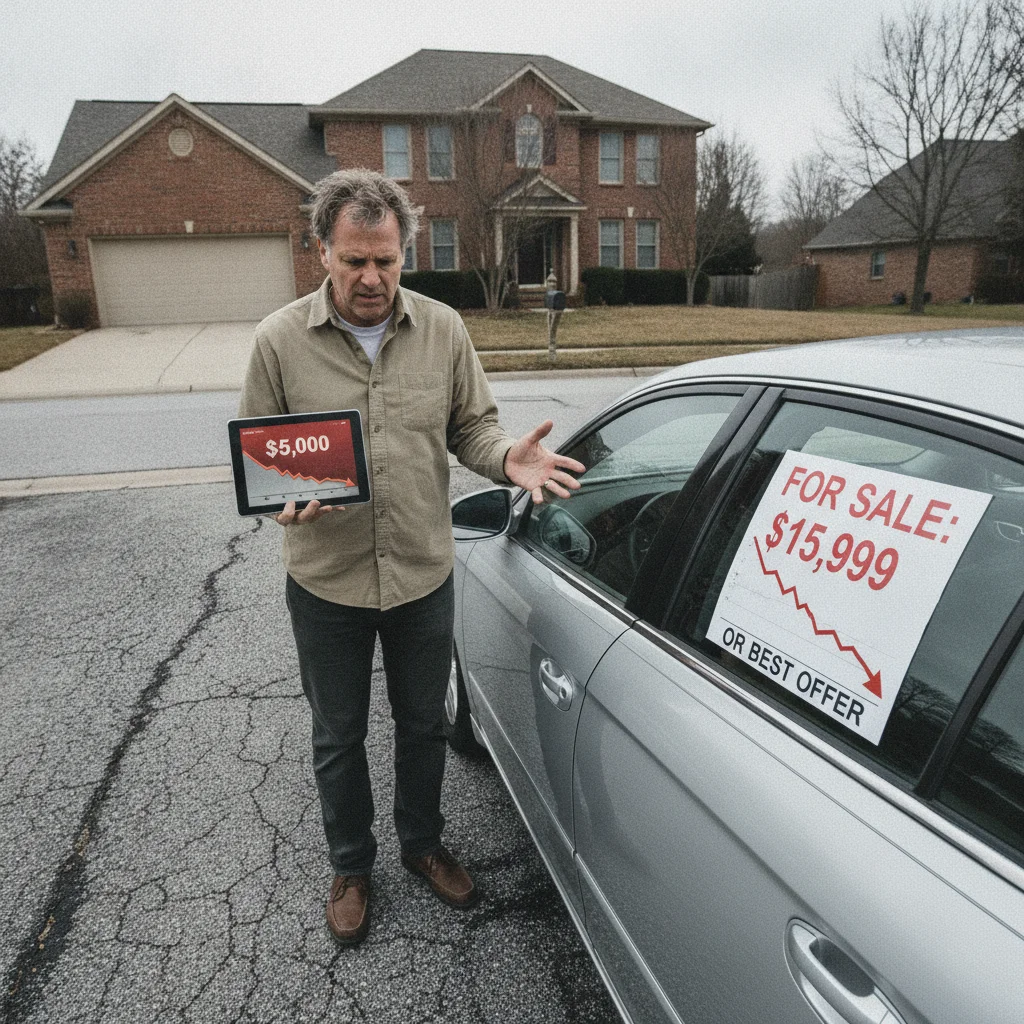
Overpricing reduces visibility, delays sale, and typically results in a lower final price than a realistic listing would have achieved from day one.
The logic seems sound: list high, negotiate down, end up where you wanted. The problem is that modern car-shopping platforms sort and filter by price. An overpriced listing appears beside competitively priced alternatives, and most buyers simply don't click on it. It doesn't get the traffic needed to generate offers, let alone strong ones.
Listings that sit for more than two to three weeks signal to buyers that something is wrong—either with the price or the car itself. When you finally reduce the price, serious buyers who saw it initially may have moved on, and new visitors may wonder why it's been sitting. The negotiated final price on a stale listing often undershoots what a well-priced listing would have fetched immediately.
Data from platforms like CarGurus consistently shows that listings priced within 5% of market value sell faster and at higher final transaction prices than those priced 10%+ above market. Pricing correctly from day one is not giving value away—it's maximizing your outcome. The Valuation Tools hub can help you find that right-from-day-one number using current market data.
20%
Average value lost in year one
According to Carfax vehicle value research, most new cars lose approximately 20% of their value within the first 12 months of ownership.
~50%
Value retained after five years
Edmunds data shows that the average vehicle retains roughly 40–50% of its original MSRP after five years, though this varies significantly by brand and category.
$0–$500
Typical resale return on aftermarket audio upgrades
Industry appraisers consistently report that aftermarket infotainment and audio systems add little to no measurable resale value, even when original cost exceeded $2,000.
2–3x
Longer average days-on-market for overpriced listings
CarGurus marketplace data indicates that listings priced more than 10% above market average take two to three times longer to sell than accurately priced comparables.
100K miles
Key psychological mileage threshold
Market research from iSeeCars finds that six-figure mileage triggers a disproportionate drop in buyer interest and price tolerance, even when mechanical condition is strong.
What Actually Drives Your Car's Real-World Value
Once you've cleared out the myths, a clearer picture emerges: depreciation is driven by age, mileage relative to market norms, mechanical condition, model-specific demand, and current local inventory. None of those factors involve what you paid, what you spent on upgrades, or how carefully you treated the car emotionally.
Tools like Kelley Blue Book, Edmunds, and CarGurus aggregate real transaction data to produce estimates grounded in what buyers are actually paying—not what sellers are hoping to receive. The Valuation Tools hub explains how each of these platforms calculates their figures and where they differ, which is important because no single tool tells the complete story.
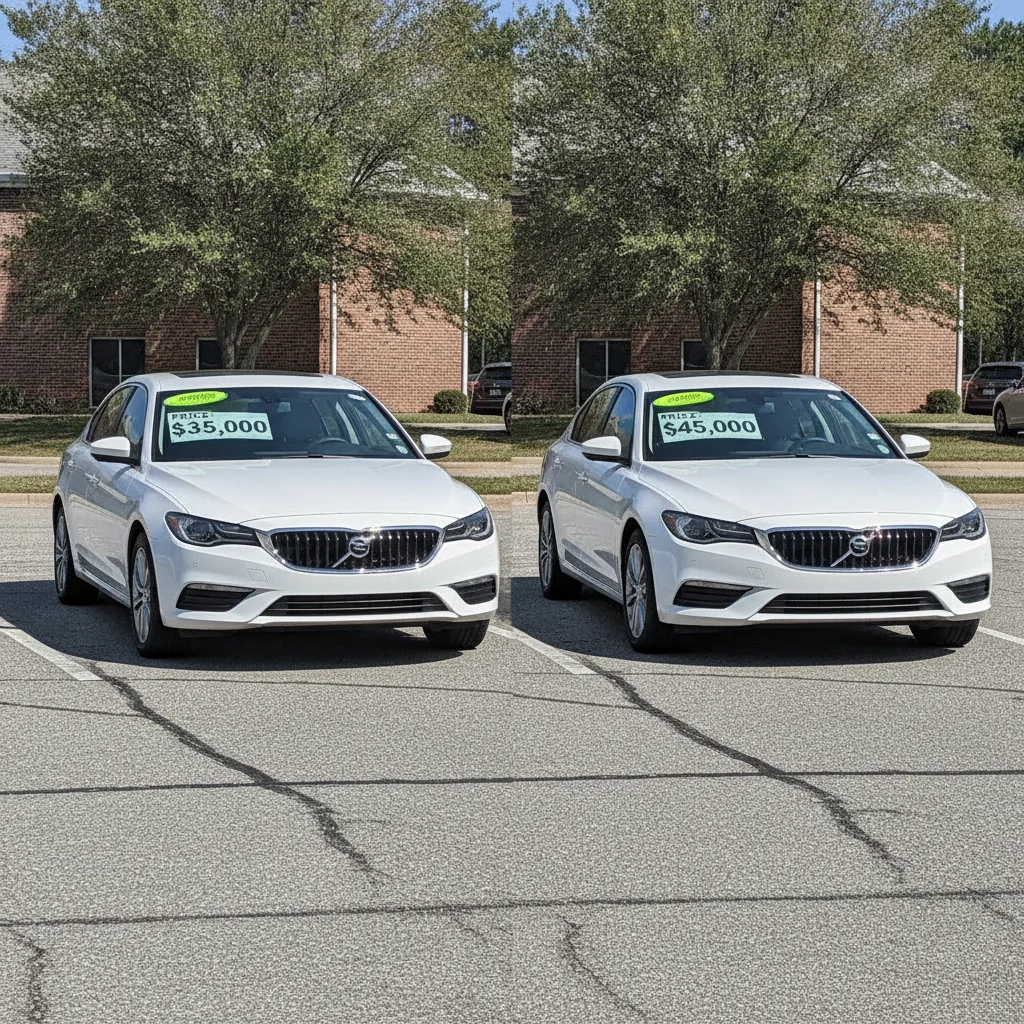
It's also worth recognizing that depreciation is not uniform across the life of a vehicle. The curve is steepest in years one through three, flattens through years four to six, and becomes much more gradual after that. A three-year-old car and a seven-year-old car of the same make and model are on entirely different parts of that curve, which is why age-adjusted comparisons matter far more than simple year-over-year assumptions.
Don't Rely on a Single Valuation Tool
No single platform—KBB, Edmunds, or otherwise—gives you the complete picture of your car's market value. Each tool uses different data sources, transaction sets, and methodologies, which can produce estimates that differ by $1,500 or more for the same vehicle. Always cross-reference at least two tools and check active local listings before finalizing your price. For a deeper look at where these tools agree and disagree, see the <a href="/selling-your-car/pricing-your-car/valuation-tools/myths-about-car-valuation-tools-that-sellers-keep-believing">myths about car valuation tools that sellers keep believing</a>.
Seasonal Timing Has Limits—Don't Wait Too Long
While timing your sale around seasonal demand can add a few hundred dollars at the margin, waiting months for the 'perfect' window is rarely worth it. Every additional month of ownership adds wear, mileage, and depreciation that erodes the seasonal premium you're waiting to capture. If your car is ready to sell, a modest seasonal adjustment in the right direction is useful—but holding out too long is not.
Finally, some factors accelerate depreciation in ways sellers genuinely don't anticipate. Recall history, technology obsolescence on older infotainment systems, and shifts in fuel economy standards can all quietly drag down value. The article on hidden depreciation triggers most sellers don't see coming covers these in depth.
Setting a Price That Sells Without Leaving Money on the Table
Realistic pricing is not the same as low pricing. When you anchor to actual market comps—same make, model, year, trim, and mileage range, in your geographic area—you set a number that attracts buyers quickly while still capturing the genuine value of your vehicle.
Here's a practical process: Pull values from at least two independent tools (KBB private-party and an Edmunds appraisal, for example). Search active listings in your ZIP code for comparable vehicles. If your car has condition issues relative to those comps, subtract; if it genuinely has advantages like a full service record or significantly below-average mileage for its year, a modest premium is defensible—but rarely more than 5–8% above the midpoint comp.

Sellers who go private-party often expect a premium over trade-in offers, and that's reasonable. But compare apples to apples: the trade-in channel and the private-party channel serve different buyers with different tolerances. For a clear view of how dealership trade-in values are calculated and where myths creep in there too, see trade-in value myths that cost car sellers real money.
Emotional Value Is Not Market Value
The memories you associate with a car, the care you put into maintaining it, and the pride you take in its condition are real—but they are invisible to the market. Buyers evaluate your vehicle against current comparable listings, full stop. Building your asking price around sentimental attachment or effort invested is the fastest path to an overpriced listing that doesn't sell. Detach the price from the ownership experience and anchor it to data instead.
Being Underwater Doesn't Change Your Car's Value
If you owe more on your auto loan than your car is currently worth, that is a financing problem—not a reason to overprice your listing. The market will not pay above fair value because your loan balance is high. Pricing above market to 'break even' on your loan simply means the car won't sell, and every additional month it sits costs you more in interest and continued depreciation. Address the financing gap separately; price the car at market value.
Timing matters at the margin. Convertibles sell faster in spring. Trucks and SUVs spike in demand before winter in northern markets. If you're flexible, a two-to-four-week window on either side of the right season can add a few hundred dollars to your final price without any other changes. That said, don't hold out for a perfect seasonal window if your car is depreciating in the meantime—every month of ownership carries a carrying cost that erodes the advantage you're waiting for.
If you want to understand how mileage specifically affects your position in the market relative to same-year comparables, how mileage affects your car's resale value more than you think offers a detailed breakdown of the thresholds that shift buyer perception and pricing benchmarks.
Habits That Unknowingly Accelerate Depreciation Before You Even List
Some sellers arrive at listing day already behind because of choices made during ownership. Skipped oil changes, deferred recalls, aftermarket modifications that can't be reversed, and poor storage conditions all register to buyers and appraisers as condition deductions—often larger ones than sellers expect.
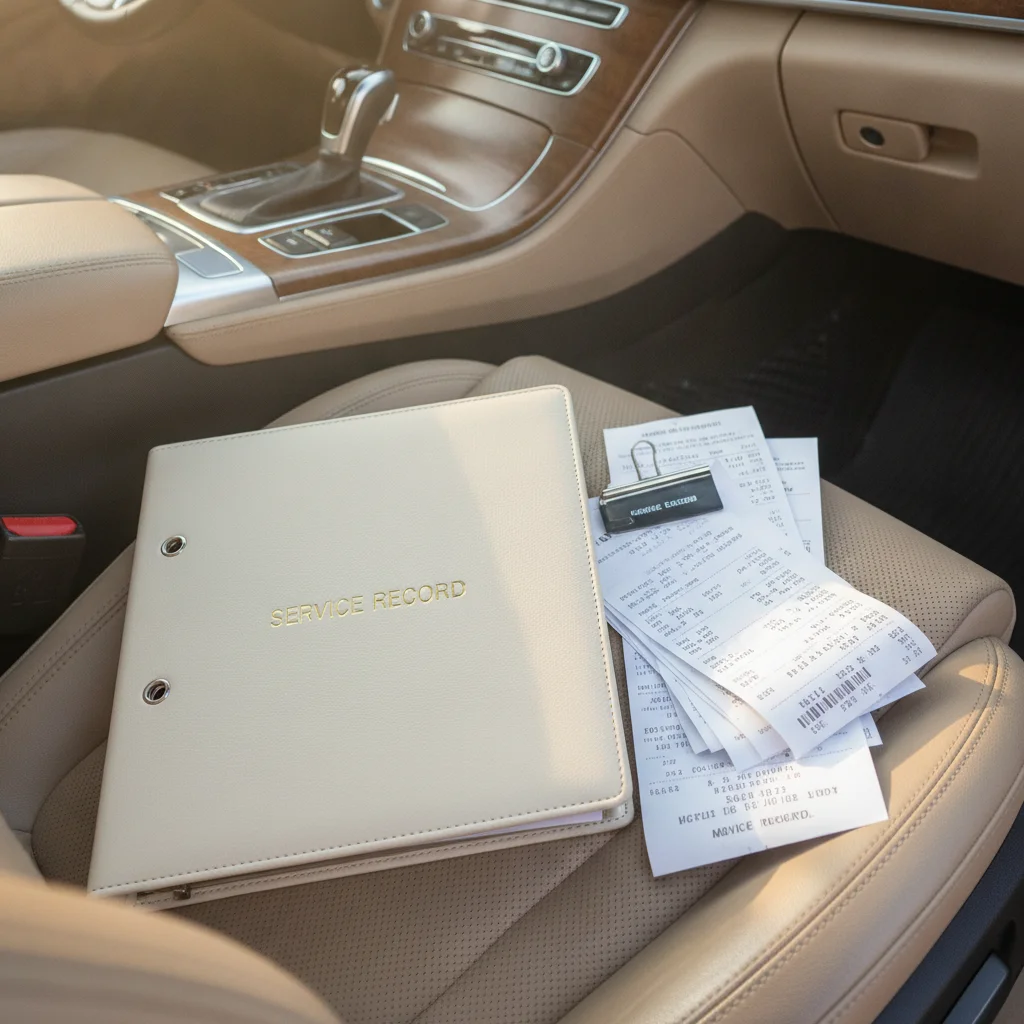
The good news is that some of these are controllable. Maintaining a clean, complete service record is one of the highest-return investments an owner can make in future resale value. A documented service history tells a buyer that the mechanical condition matches the mileage, which reduces perceived risk and supports the asking price.
Avoid the temptation to prep the car with shortcuts. Detailing is worth doing properly, but some popular DIY prep tips actively damage paint or trim. Detailing myths that cost sellers time and money separates the genuinely effective prep steps from the ones that do more harm than good.
For a comprehensive look at ownership habits that erode value over time—many of which owners don't recognize until they're already at the listing stage—read things owners unknowingly do that accelerate their car's depreciation.
Armed with accurate depreciation knowledge and a market-based pricing approach, you're no longer guessing. You're setting a number that reflects what your car is actually worth today—and that's the number that sells.

All claims are backed by peer-reviewed research. Sources on request.