Key Takeaways
Why Service Records Are Worth Real Money
When a prospective buyer sits across from you at a kitchen table or walks around your car in a parking lot, they are essentially making a risk calculation. They can't see inside the engine. They don't know whether the transmission fluid was ever changed or whether the timing belt snapped and was quietly replaced. What they can see is whether you have a folder — physical or digital — that answers those questions honestly.
That folder, or the absence of it, has a measurable effect on what they're willing to pay. According to data from vehicle history and valuation platforms, cars sold with complete service documentation routinely attract stronger offers and sell faster than comparable vehicles without records. The logic is straightforward: documentation reduces uncertainty, and buyers pay a premium to reduce uncertainty.
$500+
Typical resale premium for fully documented service history
Industry appraisers and resale valuation tools consistently note that complete service documentation can add several hundred dollars or more to private-party and dealer trade-in offers.
72%
Buyers who say maintenance records affect purchase decision
A CarGurus consumer survey found nearly three in four used-car buyers consider service history an important or very important factor when evaluating a vehicle.
30%
Used vehicles with verifiable full-service history on the market
According to vehicle history data providers, fewer than a third of used cars listed for private sale come with complete, verifiable maintenance documentation — making a thorough file a genuine differentiator.
The dynamic is equally true at dealerships. When a trade-in appraiser reviews your vehicle, they are pricing in risk. A car with no service history forces them to assume the worst about deferred maintenance — and they'll discount accordingly. Bring a coherent paper trail and you shift the conversation. As one industry phrase puts it, you're selling the car's story, not just its current condition.
For a deeper look at how documentation affects appraisal outcomes specifically, see how to build a paper trail that supports a higher trade-in offer.
Understanding the Standard Service Schedule
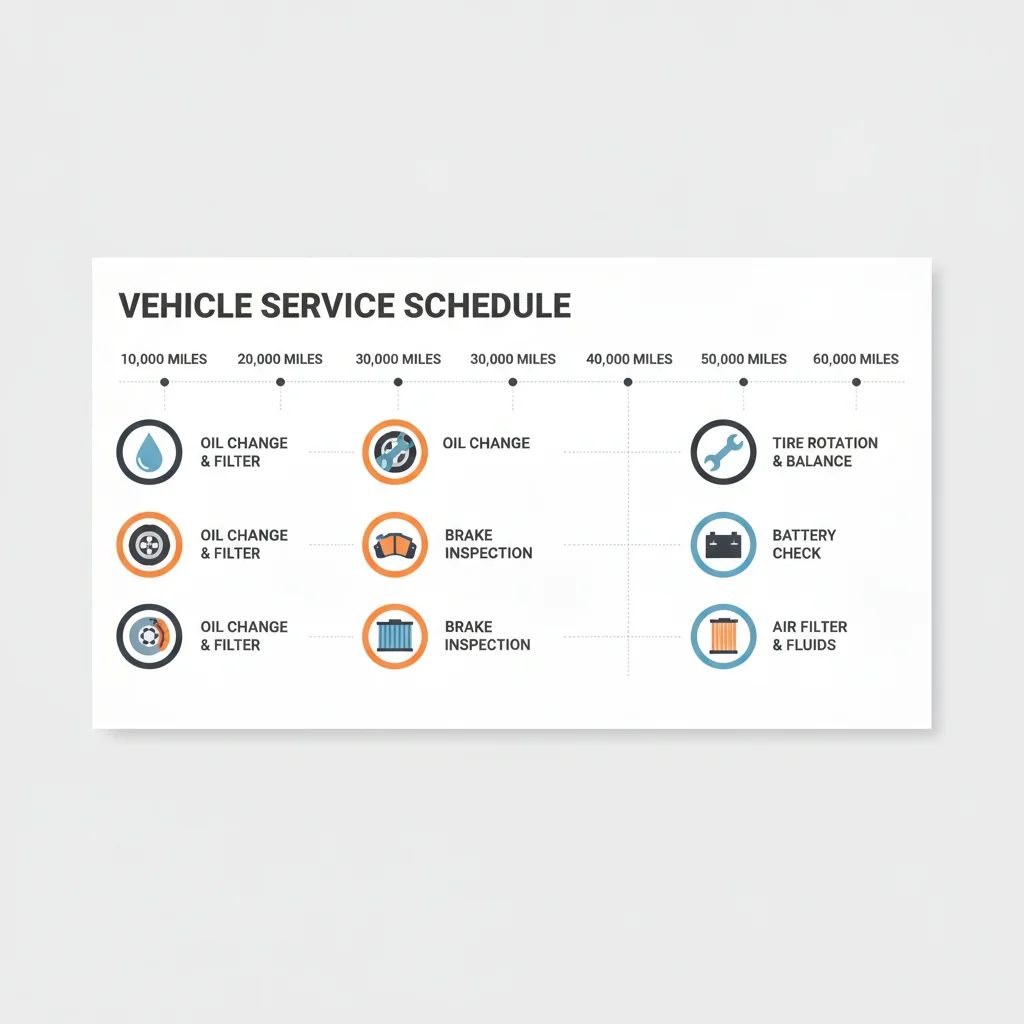
You can't document what you haven't done — so the first step is knowing what a vehicle actually needs and when. While schedules vary by make, model, and driving conditions, most modern vehicles follow a recognizable pattern of maintenance milestones.
The Core Intervals Every Owner Should Know
- Every 3,000–7,500 miles: Oil and filter change
- This is the most frequent item and the one most commonly documented. Synthetic oil in modern engines extends this interval, but skipping or delaying changes is one of the fastest ways to accelerate engine wear. Every receipt matters.
- Every 5,000–10,000 miles: Tire rotation
- Uneven tire wear affects handling and fuel economy. Rotation receipts also signal to buyers that you were paying attention to the vehicle systematically.
- Every 15,000–30,000 miles: Air filters, cabin filters, fluid checks
- Engine air filters affect combustion efficiency; cabin filters affect HVAC performance. These are low-cost services, but their presence in a record demonstrates diligence.
- Every 30,000–60,000 miles: Brake inspection and service, transmission fluid, spark plugs
- Brake jobs are among the most scrutinized items during a pre-purchase inspection. A record showing proactive brake service is far more reassuring than a buyer discovering worn pads during a test drive.
- Every 60,000–100,000 miles: Timing belt or chain service, coolant flush, power steering fluid
- These are the high-stakes items. A timing belt failure can destroy an engine. Documentation of this service — or confirmation that your vehicle uses a chain requiring no scheduled replacement — provides genuine peace of mind.
Always cross-reference your owner's manual for model-specific intervals. Manufacturer-recommended schedules differ from what some quick-lube shops suggest, and following the OEM guidance protects your warranty and your credibility with informed buyers.
Use Your Owner's Manual as a Checklist
Your vehicle's owner's manual contains the manufacturer's official maintenance schedule — the authoritative reference for what's required and when. Keep it in your service folder and use it to track upcoming milestones. When a buyer sees that you followed the OEM schedule rather than guessing, it signals a level of care that generic receipts alone can't convey.
Photograph Your Odometer at Every Service
A quick photo of the dashboard odometer before you pull out of a service bay takes five seconds and creates a timestamped mileage log that's difficult to dispute. Pair these photos with your receipts to produce a seamless record that demonstrates consistent, mile-accurate maintenance.
Best Practices for Collecting and Organizing Records
The best system is the one you'll actually use. That said, certain approaches make records more useful — and more persuasive — when sale day arrives.
Start a dedicated physical folder for your vehicle the day you buy it.
A car without an organized file forces you to reconstruct history under pressure when it's time to sell. Starting immediately means no gaps, no scrambling, and no lost receipts. Buyers respond to completeness — a full folder signals a diligent owner.
Always get an itemized receipt from every service visit, even free inspections.
Generic invoices that say 'oil change' tell buyers little. An itemized receipt showing oil type, filter brand, technician notes, and mileage provides verifiable detail that builds credibility. It also protects you if a buyer later claims a service wasn't performed.
Log every service in a single running spreadsheet or maintenance app tied to your VIN.
Paper receipts are vulnerable to loss and damage. A digital log creates a redundant record and allows you to share your maintenance history instantly with a buyer or appraiser. Consistent logging also helps you identify upcoming milestones before they become expensive problems.
Never skip a recall — and always keep the completion certificate.
An open recall is a dealbreaker for many informed buyers and can disqualify a vehicle from certain certified pre-owned programs. A recall completion certificate documents that a known defect was remedied at no cost to you, which is an unambiguous positive for the vehicle's history.
Cross-reference your records against your Carfax or AutoCheck report before listing.
Third-party vehicle history reports don't capture every service, but they do flag major events — accidents, title issues, odometer discrepancies — that buyers will see. Knowing what's in the report before a buyer pulls it prevents surprises and lets you address gaps proactively.
Keep records organized chronologically with a one-page summary at the front.
A disorganized stack of receipts undermines buyer confidence even when the underlying maintenance is excellent. A clear summary page tells buyers immediately what was done and when, and a chronological file lets them verify the detail behind any entry quickly.
Going Digital Without Losing the Paper Trail
Physical receipts fade, get water-damaged, or simply disappear into a glove compartment abyss. A hybrid approach — keeping originals in a dedicated folder while maintaining digital backups — gives you redundancy without added complexity.
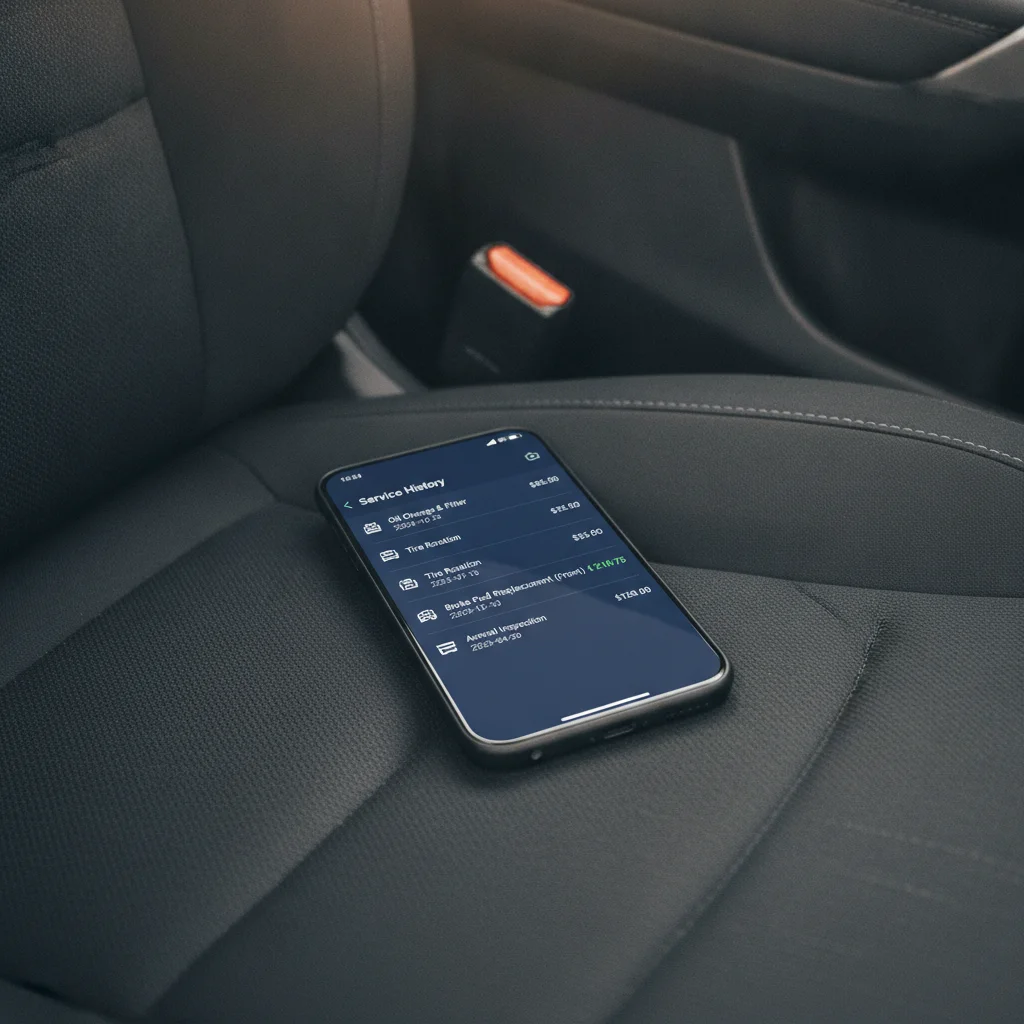
Several apps are designed specifically for vehicle maintenance logging. Options like Drivvo, CarFax Car Care, and even a shared Google Sheet can capture service dates, mileage, costs, and shop names in a format that's easy to share with a buyer via screenshot or exported PDF.
Some dealers and service chains automatically push records to a vehicle's VIN history, which means a Carfax or AutoCheck report may already contain some of your history. Run a report on your own vehicle before listing it — what's there reinforces your documentation, and what's missing tells you what to reconstruct.
What Vehicle History Reports Don't Capture
Services performed at independent shops, quick-lube chains, and DIY home garages often don't appear in Carfax or AutoCheck reports because those platforms rely on data from participating businesses and government agencies. Your personal service file fills exactly this gap. Don't assume a clean or detailed vehicle history report means your own documentation is redundant — it isn't.
If you're preparing to list and realize your records are incomplete, don't panic. Most dealerships retain service records for years and can print a summary. Independent shops often keep logs as well. Oil-change chains maintain digital histories tied to your license plate or VIN. See how to recover or reconstruct missing service records for a practical approach.
What to Include Beyond Oil Change Receipts
Many sellers stop at oil changes and forget the broader documentation ecosystem that buyers find equally credible. A thorough service file includes more than routine maintenance receipts.
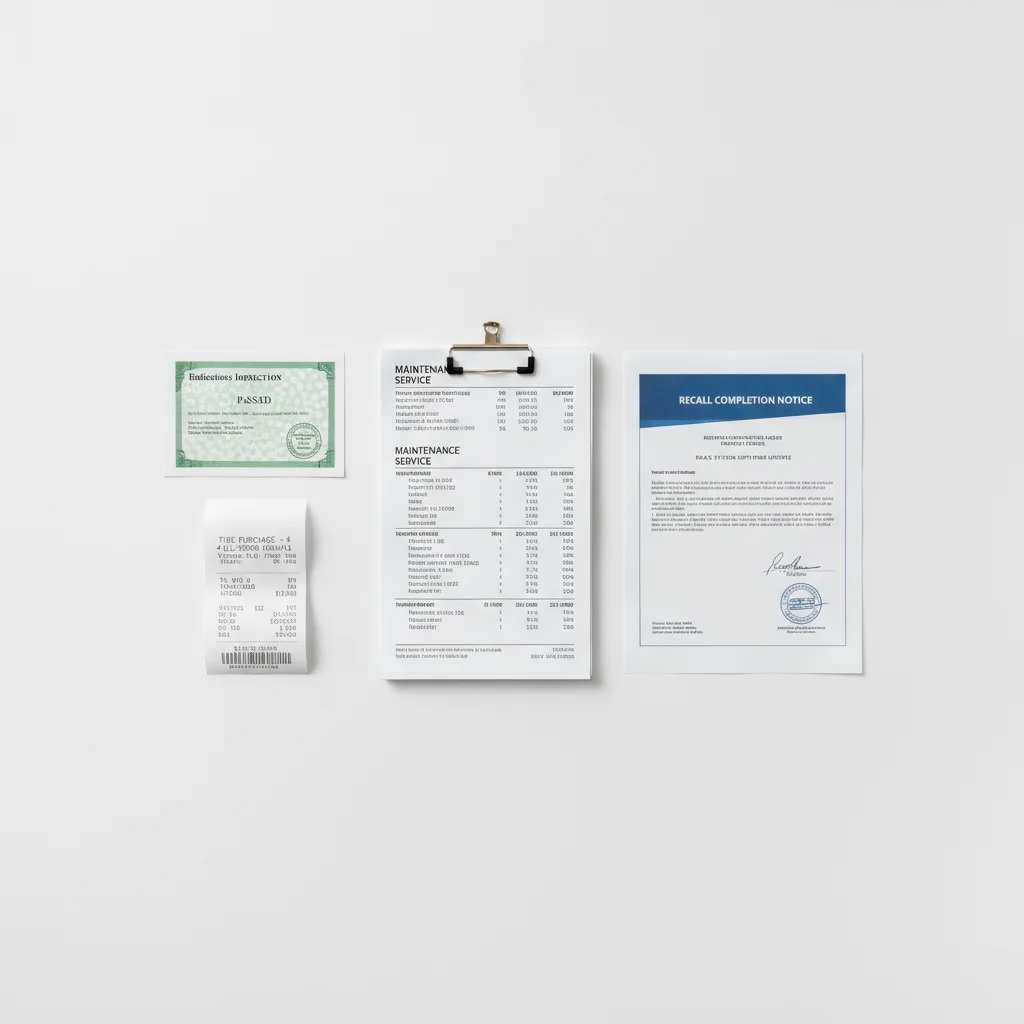
- Recall completion notices: If your vehicle had an open recall and you had it addressed, the completion certificate belongs in your file. Buyers increasingly check for open recalls, and proof of completion removes a bargaining chip from their hands.
- Tire purchase receipts: New or recently replaced tires are a genuine selling point. Include the brand, size, and installation date.
- Warranty documentation: If any component is still under a parts or labor warranty from a shop, transfer documentation can actually pass value to the buyer.
- Inspection records: Many states require annual or biennial safety and emissions inspections. These certificates, often overlooked, confirm the car met minimum standards at a specific date and mileage.
- Bodywork and paint records: If you repaired cosmetic damage professionally, receipts demonstrate quality work and preempt buyer suspicion about the car's history.
“Documentation is the single most underutilized tool in a private seller's arsenal. Buyers are essentially buying trust, and a complete service history is the most credible form of trust you can offer.”
— Lauren Fix, Automotive analyst and certified automotive technician, widely quoted on vehicle ownership and resale
For sellers moving through a dealer channel, understanding what documentation strengthens your trade-in position can help you prioritize which records carry the most weight in an appraisal context.
Quick Wins: Start Strengthening Your File Today
Whether you've owned your current vehicle for six months or six years, there are immediate steps you can take to build a more compelling service history.
Presenting Your Records to Buyers
Having records is one thing. Presenting them effectively is another. A disorganized stack of crumpled receipts tells a different story than a chronologically organized binder with a summary sheet on top.
How to Structure Your Service File for Maximum Impact
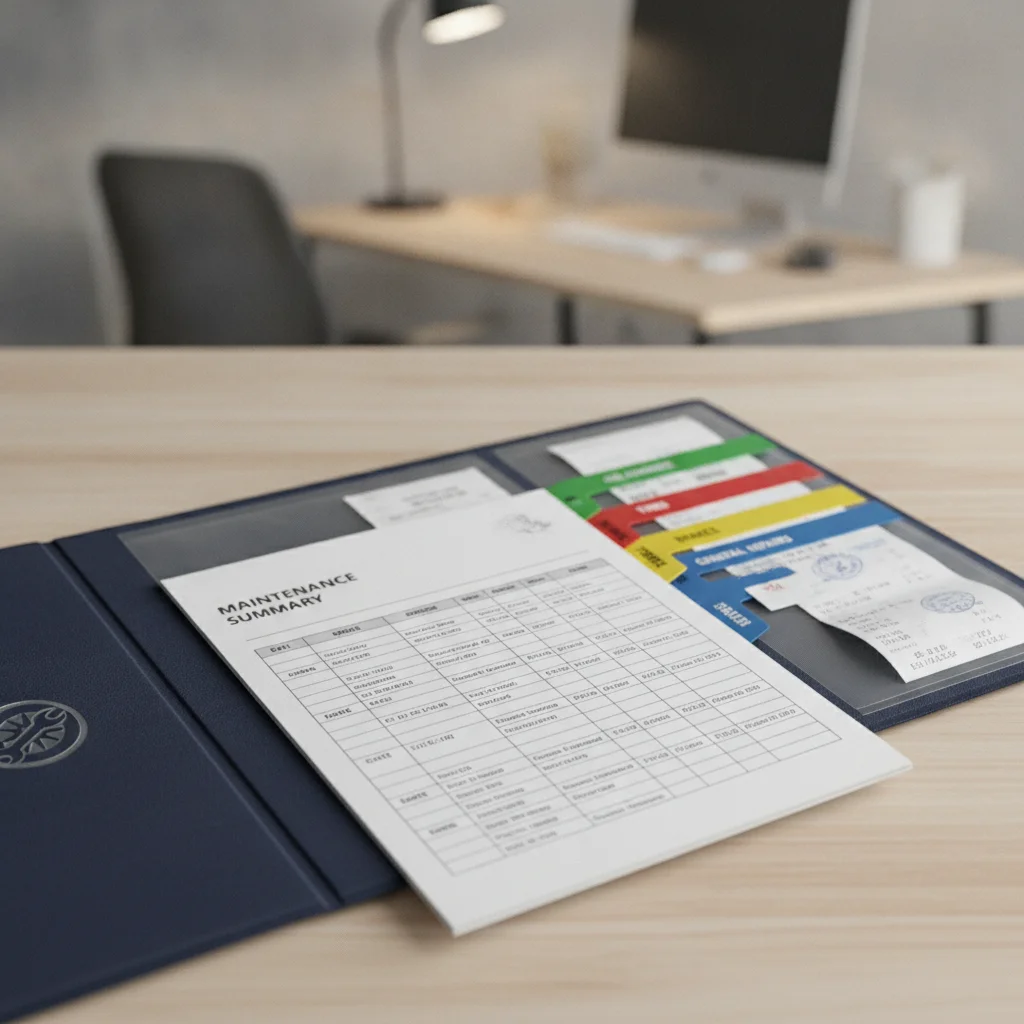
- Create a one-page summary: List the key services performed, the mileage at each, and the performing shop. This is the first thing a buyer reads and sets the tone for the rest of the documentation.
- Organize chronologically: Place the most recent service at the top and work backward. Buyers want to see current condition first.
- Highlight major services: Use a paper clip or tab to flag significant items — timing belt replacement, transmission service, new tires — so a buyer's eye goes directly to the work that matters most.
- Include the owner's manual: The presence of the original owner's manual signals that the car was treated carefully. Mark the service schedule section to show you followed it.
- Offer digital copies: If a buyer wants to share the file with a mechanic before committing, a PDF sent via email removes friction and builds trust.
For sellers considering detailing and other pre-sale preparation alongside documentation, the full guide to detailing and repairs covers which physical improvements deliver the best return on investment.
And if you're thinking about how records interact with depreciation over the long term, service records as a depreciation buffer explains the financial mechanics in detail.
The bottom line is simple: keeping records is a low-effort habit that compounds over time. Every receipt you file today is a data point that makes your car easier to sell and harder to low-ball tomorrow.

All claims are backed by peer-reviewed research. Sources on request.