Key Takeaways
Why Service Records Move the Needle on Price
When a buyer looks at your car, they're not just evaluating what they can see—they're trying to estimate what they can't see. Is the transmission going to fail in six months? Was the timing belt ever replaced? Has this engine been pushed hard and neglected? Service records answer those questions directly, which is exactly why they carry so much weight in the used car market.
From a buyer's perspective, a car with a full, documented maintenance history is a lower-risk purchase. That lower risk has a real dollar value. Sellers who walk in with a clean folder of oil change receipts, brake job invoices, and tire rotation records are signaling that this vehicle was cared for systematically—not just patched up before listing.

Dealers apply the same logic, though they're usually more clinical about it. An appraiser at a franchise dealership uses service history to calibrate how aggressively they'll discount for potential reconditioning costs. A car with no history gets a larger risk buffer built into the offer. That buffer comes directly out of what they're willing to pay you. See how documentation factors into appraisals in our article on documentation that strengthens your trade-in position.
The effect is compounding: service records don't just hold your value—they can actively buffer against depreciation. A well-documented high-mileage vehicle will often outsell a lower-mileage car with no paper trail, because mileage alone doesn't tell the whole story. For a deeper look at how maintenance history offsets standard depreciation curves, see our piece on service records as a depreciation buffer.
What Counts as a Service Record—and What Doesn't
Not all documentation is created equal. Understanding what qualifies as a credible service record helps you present your strongest case—and avoid wasting time organizing paperwork that won't move the needle.
Collect VIN-linked invoices from every service provider, not just dealers.
Independent shop invoices are just as credible as dealer records when they include the VIN, date, mileage, and description of work. Limiting your documentation to dealer visits creates artificial gaps that buyers will question.
Run a vehicle history report on your own VIN before listing.
A Carfax or AutoCheck report shows you exactly what a buyer or dealer will see—including any accident flags, odometer inconsistencies, or service records already in their system. Surprises discovered by the buyer erode trust; surprises you discover first give you time to address them.
Create a one-page service summary sheet to lead your documentation packet.
Most buyers won't read every invoice; they scan for patterns and completeness. A summary that lists service type, date, and mileage at a glance gives them the narrative of the car's care in 60 seconds and primes them to view the detailed records favorably.
Disclose known recurring issues proactively—in writing—even if repaired.
A buyer who discovers a repaired recurring problem after purchase feels deceived. The same buyer who reads an upfront disclosure that "this vehicle had a coolant leak in 2021 that was repaired under warranty" sees a seller who is honest and a problem that was professionally resolved.
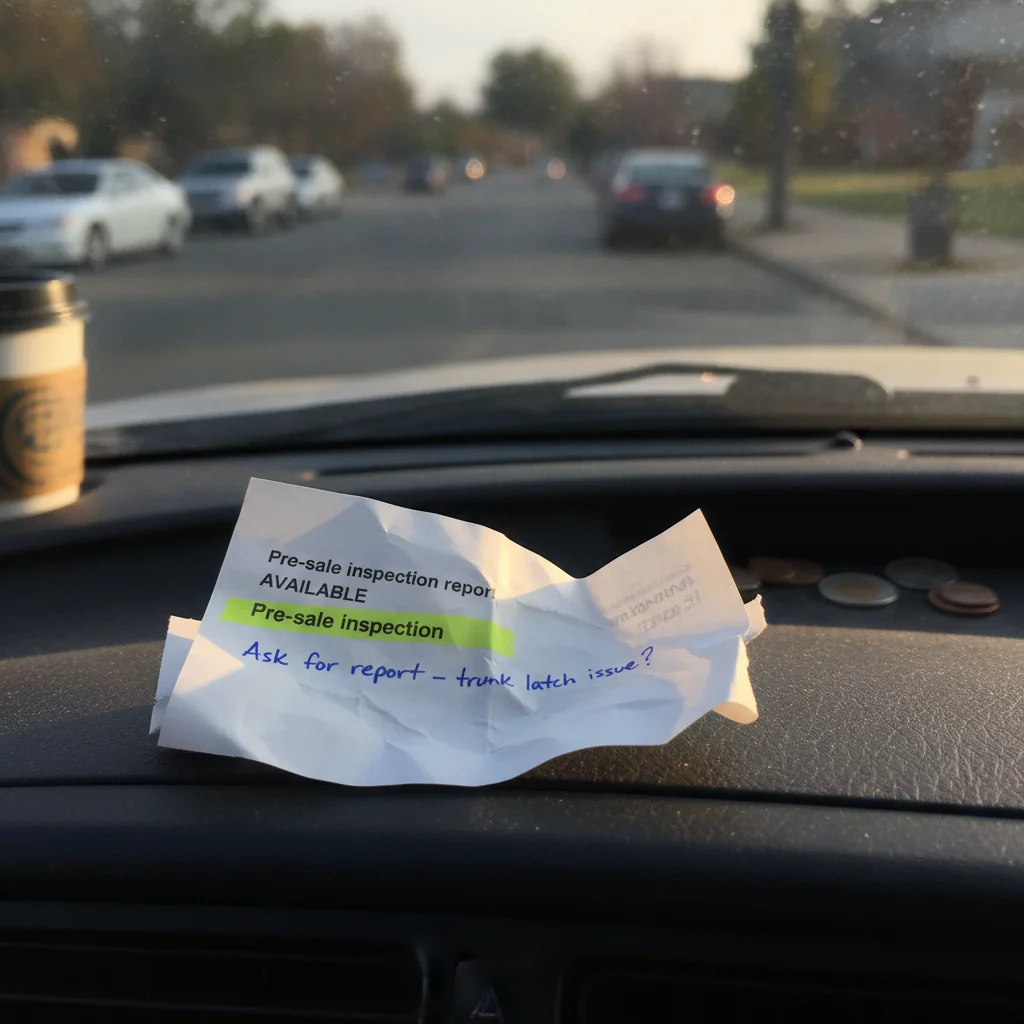
Get a pre-sale inspection from an independent mechanic if records are sparse.
An independent inspection provides a credentialed, current-state assessment of the vehicle. For buyers who can't evaluate service history, it substitutes transparency about condition right now for transparency about condition over time.
Present documentation before the appraiser inspects the car at a dealership.
Appraisers form initial impressions quickly. Presenting records before the physical inspection lets your documentation shape their risk assessment before they've mentally anchored on a number. After an offer is written, records are used to argue for adjustments—a weaker position.
The gold standard is a dealer or shop invoice with the vehicle's VIN printed on it, a date, a description of work performed, and the mileage at time of service. This kind of record is independently verifiable—a buyer or appraiser can call the shop and confirm it. That verifiability is what gives it value.
Beyond invoices, helpful documentation includes manufacturer recall completion notices, warranty repair records, and inspection certificates from your state's vehicle inspection program. These aren't strictly "service records," but they speak to the car's mechanical state at a specific point in time, which is what buyers are really after.
Dealer Records Are Tied to the VIN, Not You
Many sellers assume that because they no longer own the car they bought new, or because they moved, their dealer service records are inaccessible. In fact, franchise dealership service records are stored by VIN in manufacturer systems—not by customer account. Any authorized dealer for that brand can pull the history. You don't need your original contact information, account number, or even the original dealership's name.
Selective Disclosure Can Backfire Legally
Presenting only favorable records while withholding records that document known problems isn't neutral—in many states it constitutes active misrepresentation. If a buyer later obtains the full service history through a third party (shop records, Carfax, dealer systems) and finds records you chose not to include, it becomes difficult to argue you were acting in good faith. When in doubt, include everything or verbally disclose what the records show.
'As-Is' Sales Don't Eliminate All Seller Liability
Selling a vehicle 'as-is' transfers mechanical risk to the buyer—but it does not eliminate your obligation to disclose known defects in most states. Courts have repeatedly held that 'as-is' clauses do not protect sellers who actively conceal or misrepresent a vehicle's condition. Disclosure forms and accurate documentation protect you even in as-is transactions.
What doesn't count in most buyers' eyes: informal notes you wrote yourself, undated receipts without VIN references, or a verbal claim that "my cousin who's a mechanic always worked on it." These aren't worthless, but they don't carry independent weight. Use them as supporting context, not primary evidence.
How to Recover Records You've Lost
Lost records are more recoverable than most sellers realize. Before you assume your history is gone, work through these sources systematically.

Dealership service departments are your first call. If you bought the car new or had it serviced at a franchise dealer at any point, they almost certainly have records. These are stored in the manufacturer's service management system—often for the life of the vehicle—and tied to the VIN, not your name or contact information. Call the service department, give them the VIN, and ask for a complete service history printout. Many will provide it free or for a nominal fee.
Independent repair shops also maintain customer records, though their retention policies vary more widely. If you remember using a specific shop—even years ago—it's worth a call. Shops that use modern shop management software (like Mitchell, NAPA AutoCare's system, or RepairLink) can often pull records by VIN instantly.
Oil change chains (Jiffy Lube, Valvoline Instant Oil Change, Firestone, Midas, etc.) maintain centralized databases. Many allow you to look up your history online by license plate or VIN. This is often overlooked but can recover years of routine maintenance records in minutes.
Your insurance provider or extended warranty company may have claim or inspection records attached to the vehicle. These aren't maintenance records per se, but they can corroborate a vehicle's condition at key points in its history.
Carfax and AutoCheck aggregate service records from many shops and dealers. Running a report on your own VIN before listing costs around $40 and shows you exactly what buyers will see—and what gaps exist that you may be able to fill.
Check Oil Change Chain Databases First
National oil change chains like Jiffy Lube, Valvoline, and Firestone maintain centralized databases that you can often access online by entering your VIN or license plate. This step takes less than five minutes and can recover years of routine service records instantly. It's one of the most underused tools available to sellers trying to reconstruct a maintenance history.
Label and Date Loose Receipts Before You Organize
If you have a box of loose receipts, don't start organizing until you've written the mileage on any receipt that's missing it—you may remember roughly when the service occurred based on the date, which lets you cross-reference your odometer logs or insurance records. Once you start filing, it's easy to lose context that's still accessible to you now.
Finally, check your own email inbox. If you ever received a service reminder, appointment confirmation, or post-service summary by email, those can be printed and included in your documentation packet. They're date-stamped, VIN-linked, and harder to dispute than paper receipts.
Presenting Records Effectively to Buyers and Dealers
How you organize and present service records signals as much about the car's care as the records themselves. A chaotic pile of crumpled receipts tells a buyer you didn't value the maintenance process. A clean, organized history binder tells them you did.
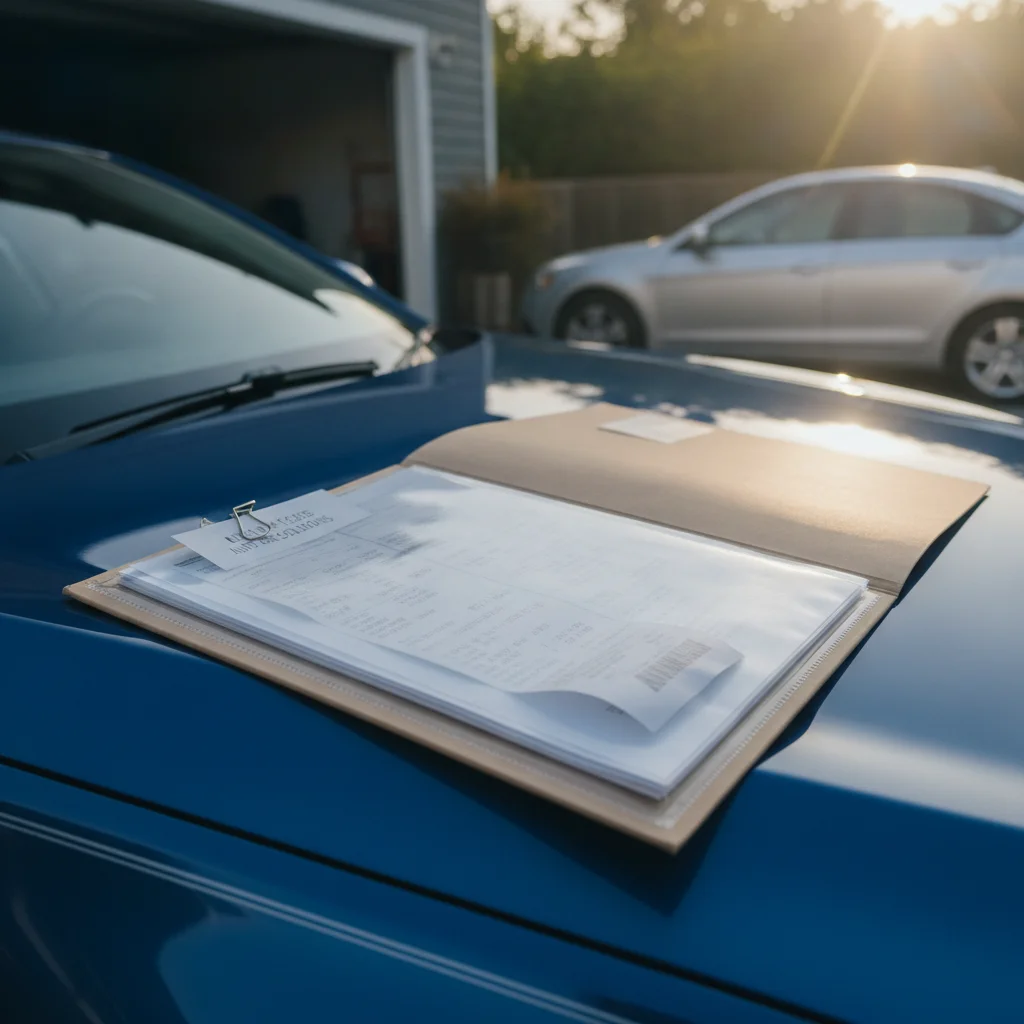
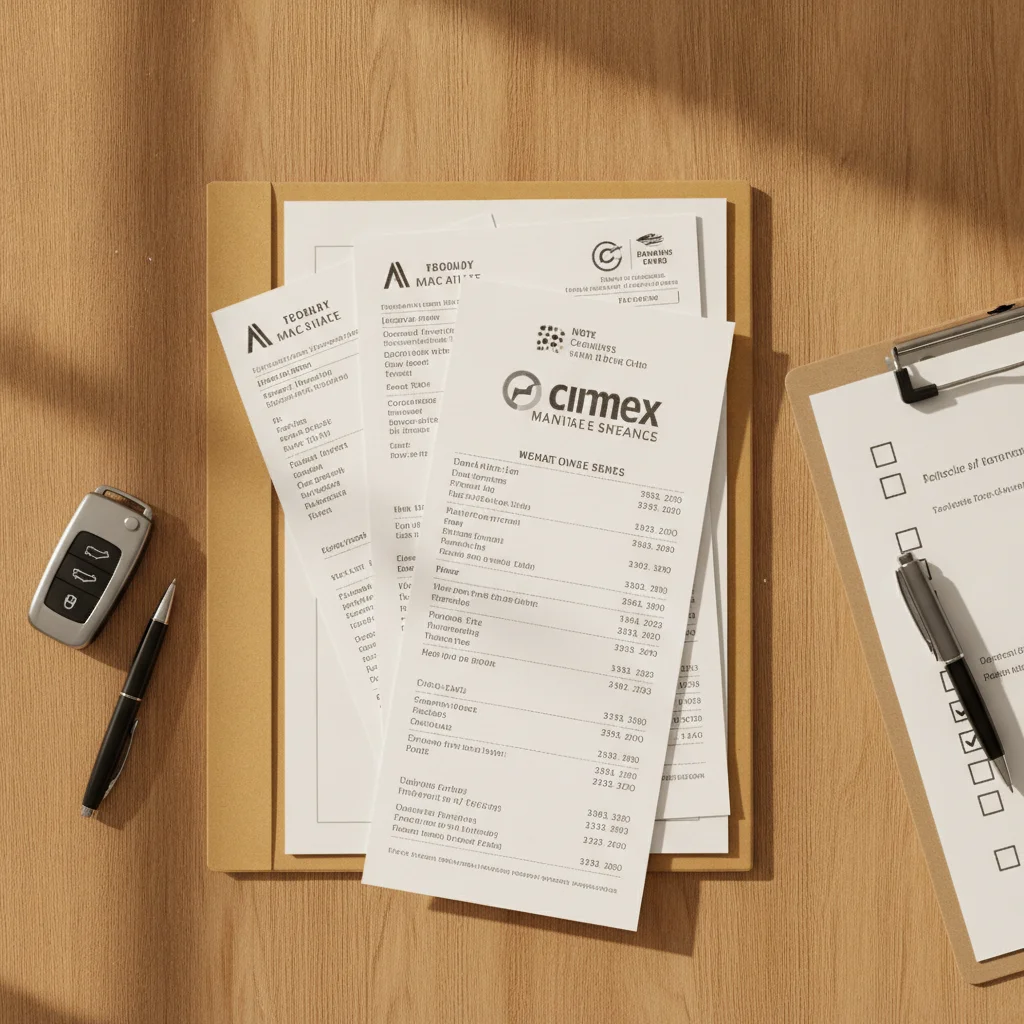
When selling privately, create a single documentation packet. Chronological order works best—earliest service first, most recent on top. Include a one-page summary sheet at the front that lists the major services performed and the mileage at which they occurred. This lets a buyer scan the history in 60 seconds and builds confidence before they dig into the details.
For dealer trade-ins or appraisals, timing matters. Present your documentation before the appraiser walks the car—not after the offer is on the table. Once a number is written down, it's psychologically anchored. Your records are most powerful when they shape the appraiser's expectations before that first impression is set. For more on what to bring and how to position it, see building a paper trail that supports a higher trade-in offer.
$500–$1,500
Value premium for documented service history
Industry appraisers and private sale analyses consistently show that verifiable service records support a premium of several hundred to over a thousand dollars versus equivalent undocumented vehicles.
64%
Used car buyers who say maintenance history affects purchase decision
A 2022 CarGurus survey found nearly two-thirds of used car shoppers consider documented service history an important or very important factor in their buying decision.
~$40
Cost to run a vehicle history report on your own VIN
A single Carfax or AutoCheck report gives sellers the same view buyers have, allowing them to address gaps or surprises before negotiations begin.
If you have gaps in the record—say, a two-year stretch with no documented service—acknowledge them proactively rather than hoping the buyer doesn't notice. A brief, honest explanation ("I moved states and used a family friend's shop—I don't have receipts from that period, but I can describe what was done") reads as credibility, not deception. Buyers are trained to spot evasiveness; transparency disarms it.
Navigating State Disclosure Requirements
Service records aren't just about maximizing sale price—they intersect with your legal obligations as a seller. Most states require sellers to disclose known material defects, and your service history can be used as evidence of what you knew (or should have known) about the vehicle's condition.
Disclosure requirements vary significantly by state. California, for instance, has robust consumer protection statutes that can expose private sellers to liability for non-disclosed defects. Texas imposes a general duty to disclose known latent defects. Some states, like "as-is" states, offer more protection to sellers but still carve out exceptions for fraud or intentional concealment.
Dealer Records Are Tied to the VIN, Not You
Many sellers assume that because they no longer own the car they bought new, or because they moved, their dealer service records are inaccessible. In fact, franchise dealership service records are stored by VIN in manufacturer systems—not by customer account. Any authorized dealer for that brand can pull the history. You don't need your original contact information, account number, or even the original dealership's name.
Selective Disclosure Can Backfire Legally
Presenting only favorable records while withholding records that document known problems isn't neutral—in many states it constitutes active misrepresentation. If a buyer later obtains the full service history through a third party (shop records, Carfax, dealer systems) and finds records you chose not to include, it becomes difficult to argue you were acting in good faith. When in doubt, include everything or verbally disclose what the records show.
'As-Is' Sales Don't Eliminate All Seller Liability
Selling a vehicle 'as-is' transfers mechanical risk to the buyer—but it does not eliminate your obligation to disclose known defects in most states. Courts have repeatedly held that 'as-is' clauses do not protect sellers who actively conceal or misrepresent a vehicle's condition. Disclosure forms and accurate documentation protect you even in as-is transactions.
The key principle across nearly all states is this: you cannot actively misrepresent the vehicle's condition, and in most cases, you cannot conceal a known defect by simply staying silent about it. Service records that document recurring problems—repeated brake failures, coolant leaks, transmission warnings—can be subpoenaed in a dispute. Sellers who discard those records after a sale rarely escape liability if a buyer can establish through third-party records what the vehicle's issues were.
The practical implication: don't cherry-pick records to present only the flattering ones. Present everything, or present nothing and disclose verbally. Selective disclosure—handing over records that show routine maintenance while withholding records showing a known engine issue—creates the worst of both worlds legally.
Check your state's DMV website or the registration and taxes hub for links to state-specific seller disclosure forms. Many states have standardized disclosure documents that walk you through exactly what must be disclosed. Completing one—even when it's not legally required—signals good faith to buyers and protects you from post-sale disputes.

Pricing Your Car Accurately When Records Are Incomplete
If you genuinely cannot recover your service history, you need to price accordingly—and communicate that gap honestly. Attempting to price as if you have full documentation when you don't will lead to offers falling through, renegotiations at delivery, or worse, post-sale disputes.
Start with a baseline valuation from a credible tool. The valuation tools hub walks through how KBB, Edmunds, and other platforms estimate your car's worth. These tools factor in condition and mileage, but they assume a baseline level of documentation. If you're selling with no service history, apply a "fair" or "rough" condition rating even if the car looks and drives well—that's the honest category for undocumented vehicles.
“In the used car market, documentation is a proxy for trust. A seller who can show you what happened to a vehicle over its life is telling you something important about how they treated it—and how straightforward they're going to be in the transaction.”
— Oren Weintraub, President, Authority Auto, professional car buying advisory service
From there, consider what you can document: a recent pre-sale inspection from an independent mechanic (typically $100–$150) can partially substitute for missing history. A written inspection report from a credentialed shop tells buyers the car's current condition, even if the journey to get there is undocumented. Many buyers will accept this as a reasonable alternative—it shows you're willing to be transparent about the vehicle's state right now.
Price the car to reflect the documentation gap honestly, then list it that way. Buyers who negotiate aggressively on undocumented cars are pricing in their own risk. If your price already accounts for that risk, you have a much stronger negotiating position—and you'll attract buyers who are comfortable with the trade-off rather than buyers who feel misled.
For a complete guide on compiling whatever records you do have before you list, see getting your service records in order before listing, and on the longer-term habit of keeping records as you go, see keeping your service records and why it pays off when you sell.

All claims are backed by peer-reviewed research. Sources on request.