Key Takeaways
Summary
22 items · 45–90 minutes
Why Valuation Research Comes Before Everything Else
Most sellers price their car wrong — not because they're dishonest, but because they rely on one number from one source and call it done. That single number might be a trade-in estimate, a friend's opinion, or a quick glance at Kelley Blue Book. None of those alone is sufficient.
The private party market rewards sellers who understand what their car is actually worth in their specific geography, at this specific moment, with this specific set of options and condition factors. Get that number right and you attract serious buyers quickly. Misprice it — high or low — and you either sit on the listing for weeks or leave real money on the table.
This checklist walks you through every valuation step you should complete before you write a single word of your listing. Think of it as your pre-listing due diligence. If you're already thinking about how to present your car to buyers, check out what buyers will check before making an offer — that article pairs directly with this one.
And if you're approaching this from the buyer side, the mirror-image research process is covered in how to research a car's market value before buying online.
Tools You'll Need
Before you start pulling numbers, make sure you have these resources ready. Most are free; one or two have a small cost that's worth every dollar when you're selling a $15,000+ asset.
Kelley Blue Book (kbb.com)
Generates a private party value estimate based on your trim, mileage, condition, and zip code — the most buyer-recognized valuation benchmark in the US.
Edmunds True Market Value (edmunds.com)
Provides a transaction-based value estimate that reflects what buyers are actually paying in your region, useful for cross-checking KBB.
NADA Guides (nadaguides.com)
Offers a third valuation data point especially reliable for trucks, SUVs, and specialty vehicles.
Carfax or AutoCheck
Generates a vehicle history report covering accident records, title brands, ownership count, and reported service history using your VIN.
CarGurus / Autotrader / Cars.com
Used to search active local listings for comparable vehicles, providing real-time market pricing data in your geographic area.
Manufacturer VIN Decoder
Retrieves your vehicle's original factory-installed options and packages — critical for accurate trim-level and option-based valuation.
CarMax Instant Offer Tool
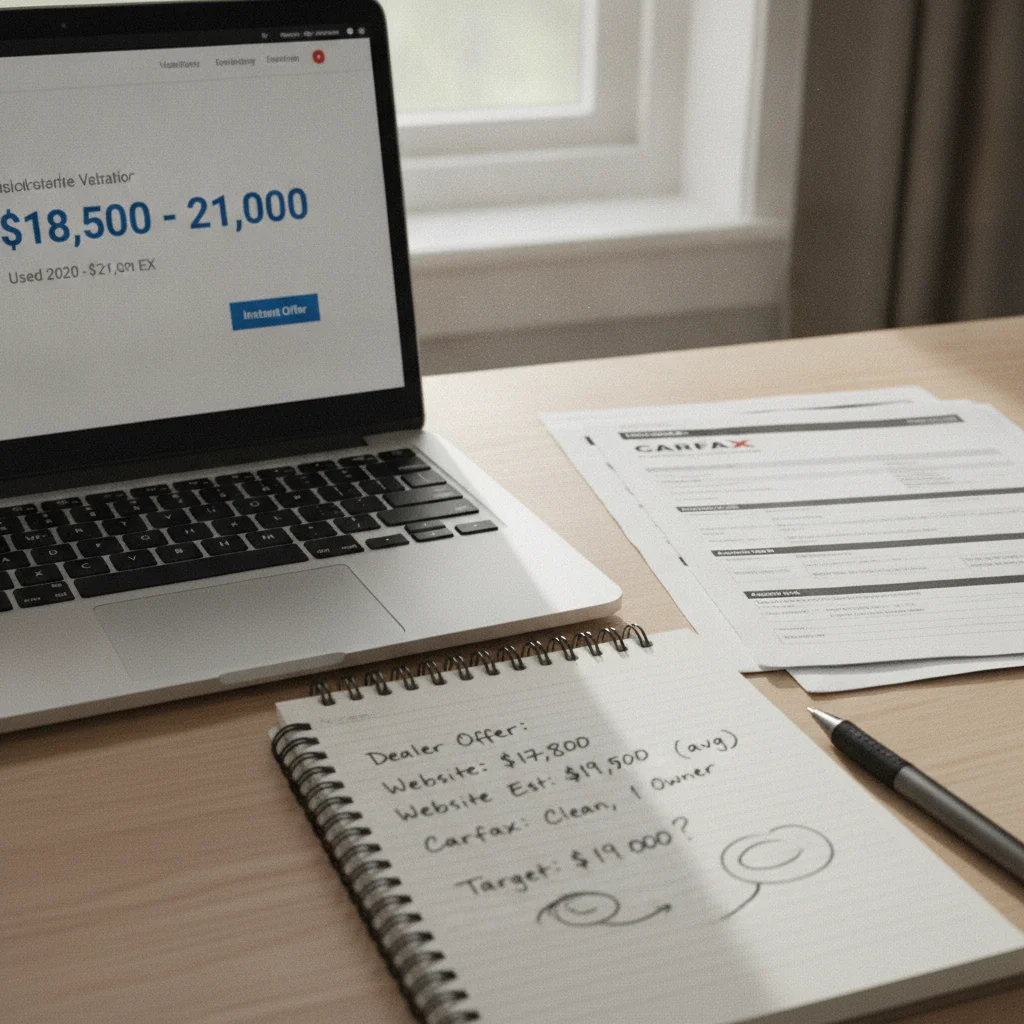
Provides a hard-floor cash offer that tells you the minimum a private sale should beat to be worth the additional effort.
State DMV Title/Lien Check
Confirms your title is free and clear of any outstanding liens before you list — a step that prevents serious legal and financial complications at closing.
The Pre-Listing Valuation Checklist
Work through these groups in order. Each builds on the previous one — you can't price accurately without first knowing your exact vehicle spec, and you can't interpret guide values without understanding how condition adjustments work.
Know Your Exact Vehicle Specification
Pull Your Vehicle History
Pull Multiple Valuation Estimates
Research Active Local Comparables
Apply Condition and Market Adjustments
Don't Rate Your Own Condition Too Generously
Sellers consistently overrate their vehicle's condition by one full category. Read each tool's condition definitions word for word before selecting. A car with a repainted panel, worn interior, or any deferred maintenance is almost never "Excellent" — it's "Good" at best. Overrating inflates your estimate and creates expectation gaps that kill deals when buyers show up.
Listed Price Is Not the Same as Sold Price
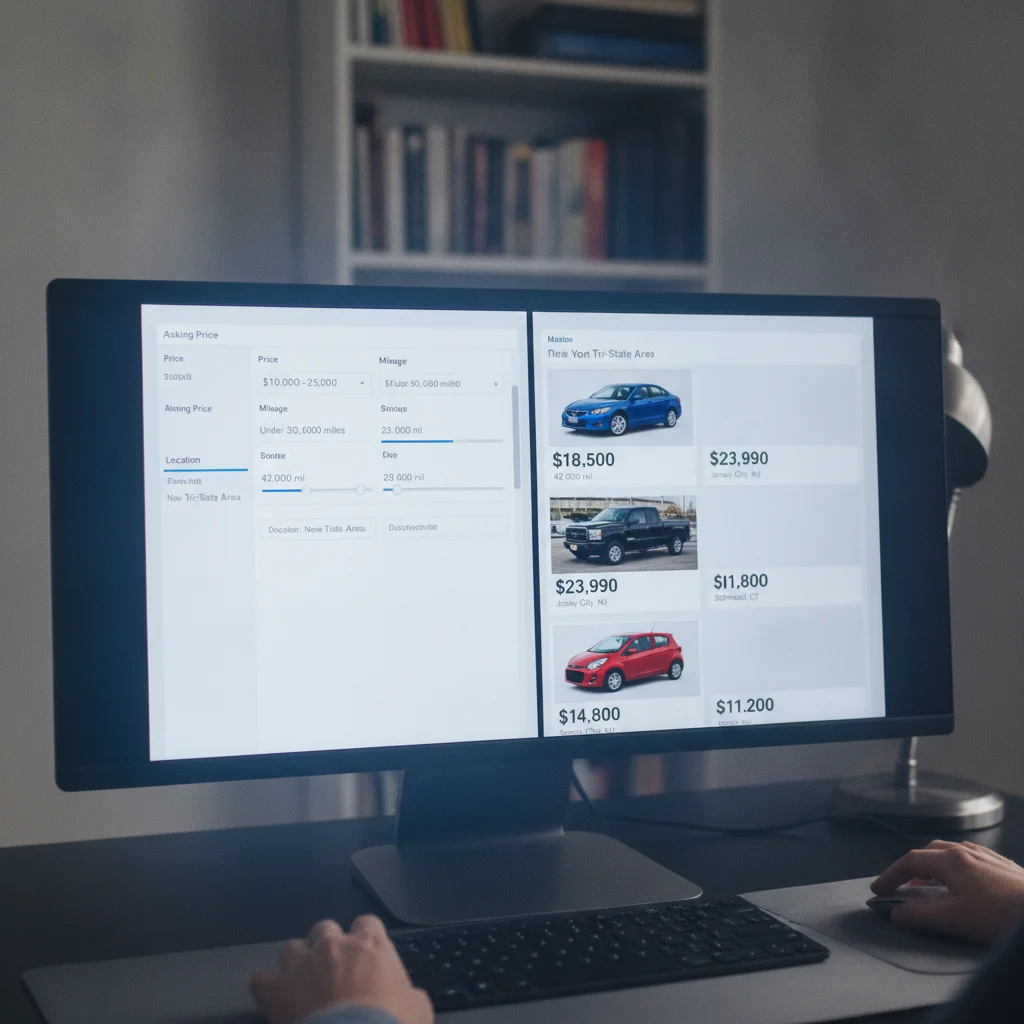
When researching active comps, remember you're looking at asking prices — not what buyers actually paid. In most private party transactions, the final sale price is 4–8% below the ask. Account for that gap when interpreting comparable listing data, and don't anchor your price to listings that have been sitting for 45+ days.
A Clean Title Isn't Guaranteed — Verify It
Even if you know your car has never been in a serious accident, title issues can exist from previous ownership you're unaware of. A salvage or rebuilt brand discovered at closing can collapse the deal entirely. Pull the report and check the state DMV lien search before you commit to a price and publish your listing.
Once you've completed the checklist, you'll have a defensible, data-backed price range rather than a single guess. That range is what you use in setting the right asking price for a private sale.
How the Major Valuation Sources Compare
Not all valuation tools are created equal, and each one uses a different data set and methodology. Here's a plain-language breakdown of what each source actually measures and when to trust it.
| Source | Data basis | Best used for | Watch out for |
|---|---|---|---|
| Kelley Blue Book (KBB) | Dealer transaction data, auction results, consumer listings | Establishing a widely recognized benchmark buyers will reference | Can skew slightly high in some markets; condition definitions are subjective |
| Edmunds TMV | Actual transaction prices (not just listings) | Understanding what buyers in your area are actually paying | Regional data can be thin in less-populated areas |
| NADA Guides | Dealer and auction data; historically dealer-oriented | Cross-checking the other two; often used by lenders | Less granular on private party values; may reflect dealer retail more than private market |
| CarGurus / Autotrader / Cars.com listings | Active and recently sold listings | Real-time local market temperature; what buyers are actually seeing | Listed price ≠ sold price; inflated asks exist on all platforms |
| Facebook Marketplace / Craigslist | Private seller listings | Local floor price; what your direct competition looks like | No quality control; condition and history vary wildly |
The practical takeaway: use KBB and Edmunds to establish your baseline range, then use active listings to stress-test that range against real market conditions in your zip code. If the active listings in your area are clustering $1,200 below your KBB private party estimate, the market is telling you something you should listen to.
Timing matters too. If you've already run through your valuation homework but haven't thought about when to list, the pre-listing timing checklist covers seasonal windows and demand cycles that can shift your achievable price by hundreds of dollars.
Outstanding Liens Will Block Your Sale
If you still owe money on your car, you do not hold a clear title — and you cannot legally transfer ownership without satisfying or arranging payoff of that lien at closing. Contact your lender before listing to get a 10-day payoff quote, understand their process for releasing the title, and factor the payoff balance into your minimum acceptable price. Trying to navigate this after you've accepted an offer is a fast way to lose a buyer.
One Valuation Source Is Not Enough
Relying on a single tool is one of the most common and costly mistakes private sellers make. Each guide uses different data sources, condition definitions, and regional weighting. A car that KBB values at $14,500 might be valued at $13,100 by Edmunds in your zip code — and active listings might show a market ceiling of $13,800. You need all three data points to set a defensible price.
Condition, Mileage, and Options: Where Sellers Leave Money
Guide values give you a starting point. The real work is adjusting that starting point accurately for your specific vehicle. Three variables move the needle most.
Condition
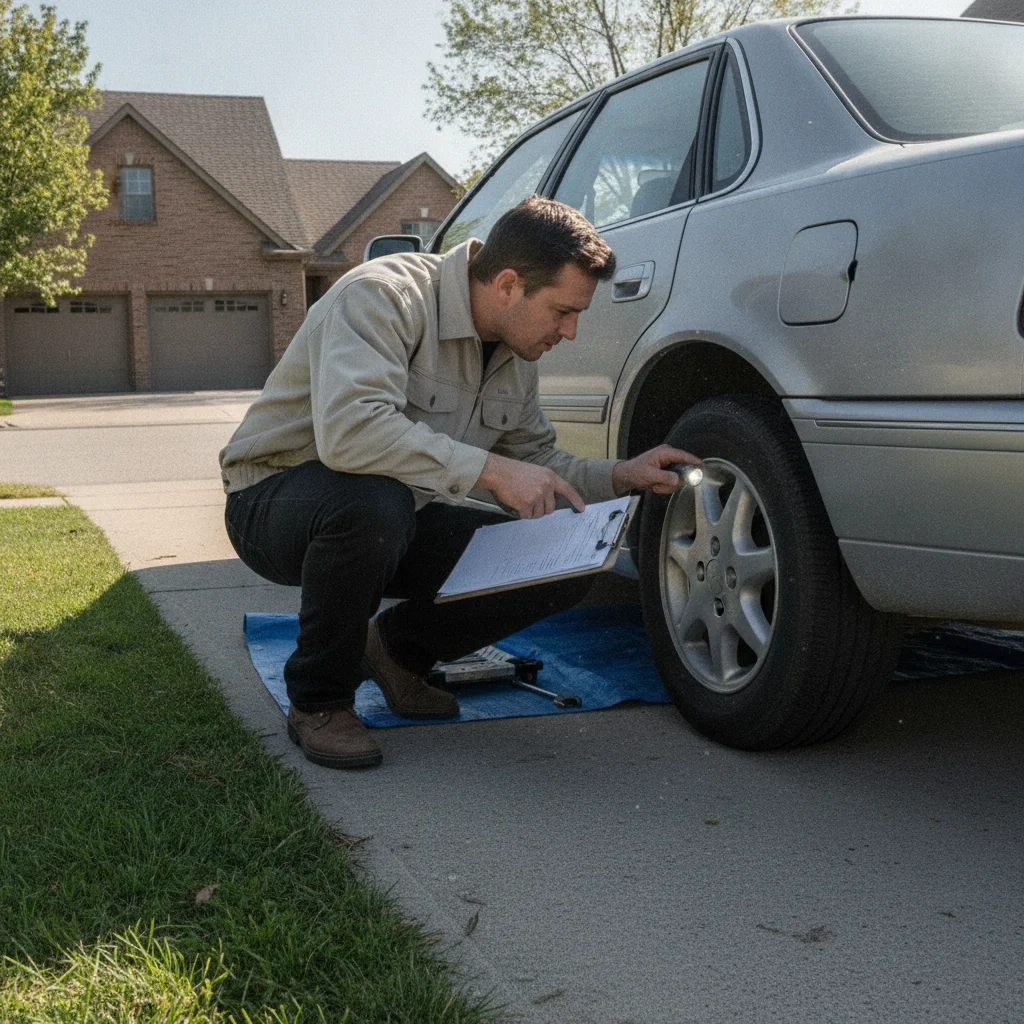
Every major tool uses a condition scale — typically Excellent, Good, Fair, and Poor. Most sellers overrate their car by one full category. Be honest: Excellent means near-flawless paint, no mechanical issues, and full service history. If your car has a door ding and needs new rear tires, it's Good at best. Overrating costs you credibility with buyers who show up expecting one thing and find another.
Mileage
The national average is roughly 12,000–15,000 miles per year. Run your numbers: if your car is four years old and has 72,000 miles on it, you're above average and that affects value. Most guides allow you to input actual mileage — use it. Don't round down.
Options and Packages
Factory packages — premium audio, advanced safety suites, panoramic sunroof, towing package — can add $800 to $3,500 in market value depending on the vehicle. Pull your original window sticker (available free via the manufacturer's VIN decoder for many brands) and inventory every factory option. List them in your valuation tool and your listing.
Color matters more than most sellers expect. Unusual or polarizing colors (bright yellow, orange, two-tone oddities) can reduce your effective buyer pool by 30–40% in some markets, which translates directly to price pressure. Neutral colors — white, black, silver, gray — sell faster and often closer to asking price.
Before you finalize your number, also consider whether a pre-sale inspection makes sense. A pre-sale inspection can justify your asking price and reduce buyer negotiating leverage — especially useful if your car is above average condition and you want documentation to prove it.
What to Do With Your Valuation Range
After working through this checklist, you should have a defensible price range — likely a spread of $500 to $1,500 depending on how tightly your comps cluster. Here's how to use it:
- Set your ask at the top of the range, not the middle. Private party buyers expect to negotiate. Building in 5–8% negotiating room is standard practice. If your range is $14,000–$15,200, list at $15,000–$15,500.
- Document your research. Keep a simple note with your three valuation sources, the comparable listings you found, and the condition rating you applied. You'll refer to this when a buyer pushes back on price.
- Plan your floor before you list. Know the lowest number you'll accept before the first offer comes in. Deciding in the heat of negotiation leads to bad decisions.
- Revisit the research if your car sits. If you haven't received a serious inquiry within 7–10 days on a high-traffic platform, your price is likely 5–10% above where the market is. Rerun your comp search — the market moves.
Make sure your paperwork is in order before you post. Every document you need before listing is the companion checklist for the title, bill of sale, and service records side of the process. And when you're ready to stage and photograph the car itself, the pre-sale car prep checklist walks through every zone of the vehicle.
For the full picture on private party selling from listing to close, the private party sales hub is your starting point.

All claims are backed by peer-reviewed research. Sources on request.