Key Takeaways
Why Pricing Is the Most Important Decision You'll Make
Everything else in a private car sale — your photos, your description, your availability — is secondary to the number at the top of your listing. Price too high and serious buyers scroll past. Price too low and you hand a stranger a windfall that should have been yours. The sweet spot is a real, calculable range, not a guess.
Most sellers get this wrong for one of two reasons: they anchor on what they paid or what they still owe, or they grab the highest estimate from a valuation tool and treat it as gospel. Neither approach reflects what a real buyer in your specific market will actually pay this week.
This guide walks you through a repeatable process — the same one experienced private sellers use — to arrive at a defensible asking price backed by current market data. For a broader view of the full selling process, see the Complete Seller's Roadmap before you list.

What You Need Before You Start
Gather the following information before you open a single valuation website. Having it all in front of you means your estimates will be accurate rather than approximate.
What you will need
Kelley Blue Book (KBB)
Provides private party value estimates based on your car's year, make, model, trim, mileage, condition, and zip code.
Edmunds True Market Value (TMV)
Offers a competing private party valuation that often differs from KBB — useful for triangulating a realistic range.
NADA Guides
Provides a third valuation reference point, particularly useful for trucks, RVs, and older vehicles.
Facebook Marketplace
Search active private party listings near your zip code to see what real sellers are asking for comparable vehicles right now.
Craigslist
A secondary source for local comparable listings — cross-reference with Facebook Marketplace to identify pricing patterns.
CarGurus or AutoTrader
Shows both dealer and private party listings with 'deal rating' indicators that reveal how your price compares to the market.
Vehicle History Report (Carfax or AutoCheck)
A clean report is a selling point that justifies a higher price; having it ready also speeds up serious buyer inquiries.
Step-by-Step: Finding Your Number
Follow these steps in order. Skipping ahead — especially jumping straight to posting a number — is how sellers end up with a listing that sits unsold for 60 days.
Pull valuations from three tools simultaneously
Open KBB, Edmunds, and NADA in separate browser tabs and enter the identical information in each: year, make, model, specific trim (not just base or SE — be precise), mileage, your zip code, and your honest condition grade. Record the private party value from each tool — not the trade-in value and not the dealer retail value. You want the number a private buyer would pay a private seller.
Write down all three numbers. Calculate the average. That average is your starting anchor — not a final price, but a defensible center of gravity. Understand the strengths and limitations of each tool by reviewing the Valuation Tools hub.
Find 5–10 comparable active listings in your market
Go to Facebook Marketplace and search for your vehicle's year, make, and model. Filter by distance — start within 50 miles, expand to 100 miles if you get fewer than five results. Look for listings that match your trim level and are within 10,000 miles of your odometer reading.
Record the asking prices of the five to ten most comparable listings. Calculate the median (not the average — a single outlier can skew an average). This median is what real sellers in your area are asking right now, which is more current than any valuation tool's database.
Note how long each listing has been posted. Cars that have sat for 30+ days without a price reduction are likely overpriced. Filter those out of your median calculation — they don't represent what the market is actually clearing at.
Determine your honest condition grade
Most valuation tools use four condition tiers: Excellent, Good, Fair, and Poor. The majority of used cars genuinely fall into the Good category — not Excellent. Excellent requires near-flawless paint, no significant interior wear, a complete and current maintenance record, and zero mechanical concerns. If you can't document all of that, grade your car as Good.
Walk around your car as a buyer would. Check for paint chips, scratches, and dents. Sit in every seat. Look at the carpet and headliner. Start the engine cold and listen. Check that every electronic feature works. Be specific about what you find — it will help you write an accurate listing description and avoid surprises during a buyer's inspection.
Calculate your price range
You now have two key data points: the average of your three tool valuations and the median of active comparable listings in your market. Compare them.
- If they're within 5% of each other, split the difference and use that as your target net price.
- If the comps are significantly lower than the tool valuations, trust the comps — local supply and demand is more current than any algorithm.
- If the comps are higher, you may have more room than you thought. Proceed carefully — high asking prices don't always equal high closing prices.
Your target net price is what you actually want to put in your pocket at the end of the transaction, before any negotiation. Write it down and keep it private.
Add a negotiation buffer to set your listing price
Private buyers almost universally expect to negotiate. If you list at your true floor, the first offer lands below it and you have no room to give ground without feeling like you lost. Add 5–8% to your target net price to create negotiation room.
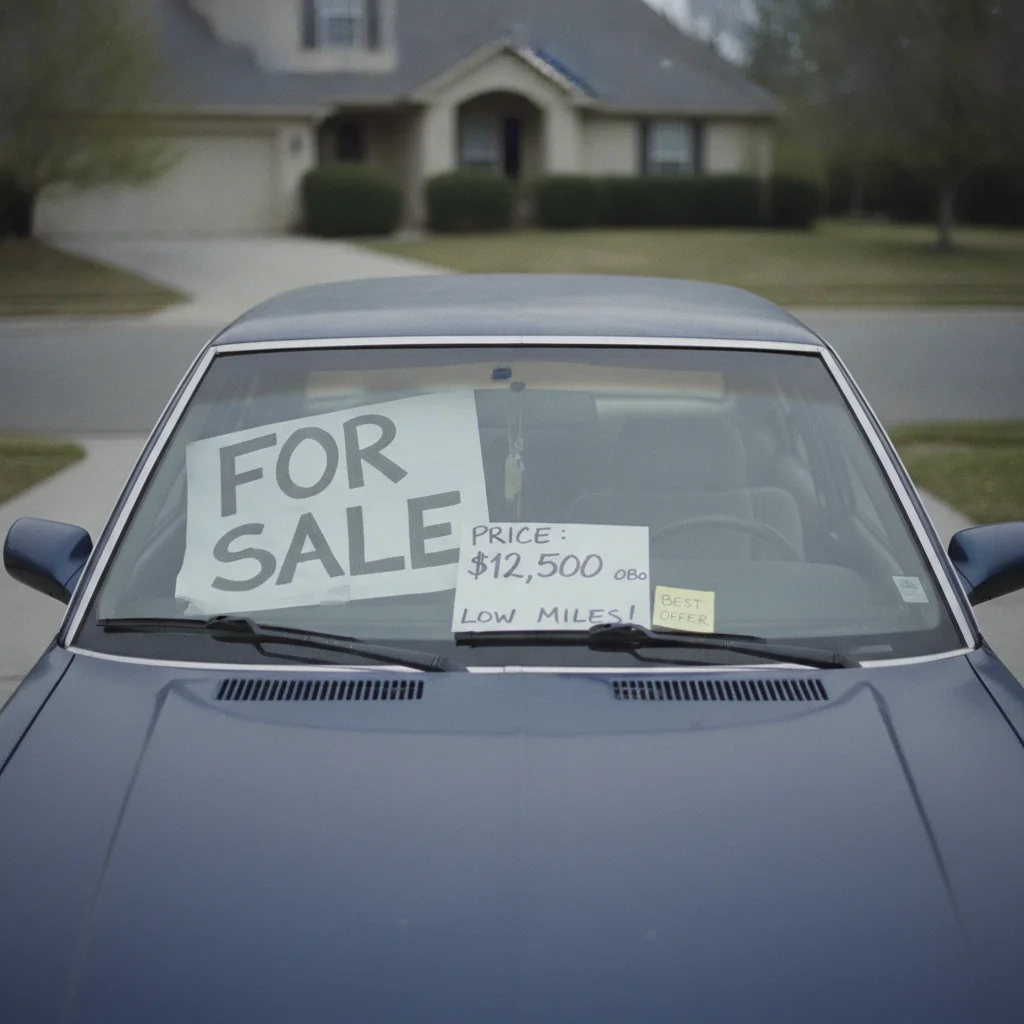
Example: If your target net price is $14,000, your listing price should be in the $14,700–$15,120 range. Round to a number that looks intentional — $14,900 reads as a price you've thought about; $14,837 reads like a spreadsheet and invites line-item challenges.
Odd-number pricing (e.g., $14,900 instead of $15,000) has a marginal psychological edge in private party markets, but don't overthink it. Clarity and confidence in your listing description matter far more than the last two digits.
Stress-test your price before posting
Before you hit publish, do one final sanity check. Search CarGurus or AutoTrader for your vehicle and look at the deal rating on comparable listings. If cars priced similarly to yours are flagged as 'Good Deal' or 'Fair Deal,' you're in the right zone. If yours would come up as 'Overpriced,' reconsider — CarGurus uses the same data buyers use, and a bad rating will suppress your listing's visibility on that platform.
Also ask yourself: if a buyer offered me $500 less than my listing price right now, would I take it? If the answer is yes and that buyer hasn't even looked at the car yet, your buffer may be too thin. If the answer is an immediate no, you've priced it correctly.
Once you've run through these steps, you'll have a price range grounded in real data rather than wishful thinking. The next challenge is holding that number during negotiations — see Negotiating With Private Buyers Without Leaving Money on the Table for specific tactics.
Common Pricing Mistakes and How to Avoid Them
Even sellers who do their research fall into a few predictable traps. Knowing them in advance keeps your listing competitive from day one.
Cherry-picking the highest valuation
Run three tools and you'll often get three different numbers. The temptation is to post the highest one. Why Sellers Overprice Their Cars explains exactly how that plays out — spoiler: your listing ages, you eventually cut the price anyway, and buyers assume something is wrong with the car.
Ignoring local supply
Valuation tools use national data. If there are twelve identical SUVs listed within 50 miles of you, you're competing for the same pool of buyers. High local supply means you need to be at or below the midpoint of those comparable listings to get clicks.
Pricing based on what you owe
Your loan balance is irrelevant to a buyer. If you owe more than the car is worth, that's a separate problem to solve — not a reason to misprice the vehicle. Overpriced listings because of negative equity are one of the most common reasons private sales stall.
Forgetting to account for negotiation room
Private buyers expect to negotiate. If you price at your absolute floor, the first offer will be below it and you'll have no room to move. Build in 5–8% above your true minimum so you can make a meaningful concession and still feel good about the final number.
Stale Listings Invite Lowball Offers
If your car has been listed for more than three weeks without serious inquiries, buyers can see that on most platforms — and they'll use it as leverage. A listing that's been sitting signals either an inflated price or a problem with the car. Cut your price by $300–$500 before the 21-day mark to stay competitive and avoid the perception of desperation that sets in after 30+ days.
Adjusting for Condition and Local Market Factors
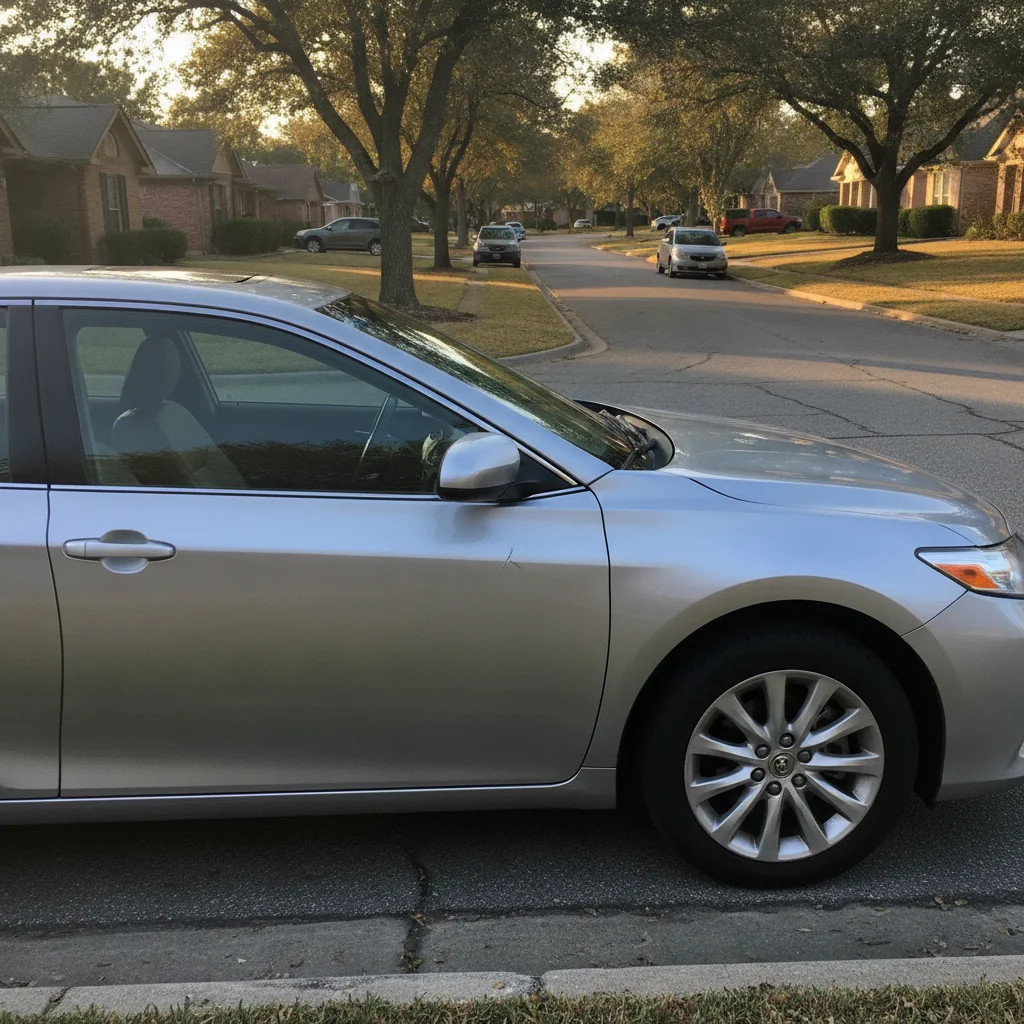
Valuation tools ask you to self-report condition, and most sellers rate their car one tier higher than it deserves. Be honest — buyers will see the car in person, and an inflated condition grade just creates an awkward negotiation.
Condition tiers and their price impact
| Condition | What it actually means | Typical price adjustment vs. "Good" |
|---|---|---|
| Excellent | No mechanical issues, minimal cosmetic wear, current on all maintenance | +8–12% |
| Good | Minor cosmetic flaws, no significant mechanical issues, mostly current on maintenance | Baseline |
| Fair | Visible wear, one or more mechanical issues the buyer needs to address | −10–18% |
| Poor | Significant mechanical or body damage — typically wholesale territory | −25–40% |
Local demand signals to watch
- Season: Convertibles peak in spring. 4WD trucks and SUVs command premiums heading into winter. List at the right time or price for the off-season reality.
- Regional preferences: Diesel pickups move faster in rural markets. Fuel-efficient compacts and hybrids are more competitive in dense metro areas.
- Days on market: On Facebook Marketplace and Craigslist, filter comparable listings by date posted. If similar cars are sitting for 30+ days, the market is telling you something.
List at the Right Time of Year
Timing your listing to seasonal demand can add real money to your final sale price. Convertibles, sports cars, and recreational vehicles sell faster and closer to asking price in spring and early summer. AWD SUVs and trucks get a boost in fall as buyers prepare for winter. If your schedule allows, hold your listing until demand peaks for your vehicle type.
A Clean Car Commands a Higher Price
A professional detail costs $100–$250 and routinely adds $500–$1,000 in perceived value to a vehicle. Buyers make emotional decisions about condition within the first few seconds of seeing a car. Clean paint, fresh-smelling interior, and spotless glass send a signal that the car has been cared for — which directly influences what they're willing to pay.
Before finalizing your number, run through the Pre-Listing Valuation Checklist to make sure you haven't missed a factor that could shift your price by several hundred dollars.
Setting Your Final Listing Price
At this point you have: a range from multiple valuation tools, a set of active comparable listings, an honest condition assessment, and an understanding of local demand. Here's how to convert all of that into a single number.
- Find the midpoint of your valuation range. Average the private party values from KBB, Edmunds, and NADA for your specific condition grade.
- Adjust for comps. If comparable listings in your market are clustering 5% below that midpoint, move down accordingly. If they're above it, you have more room.
- Add your negotiation buffer. Take your target net price and add 5–8%. That's your listing price.
- Set a firm floor in your head. Know the lowest number you'll accept before the first buyer walks through the door. Never disclose it unprompted.
Never Disclose Your Floor Price
Your minimum acceptable price is the one number you should never volunteer to a buyer. Once they know your floor, every negotiation starts there — not from your asking price. Even if a buyer directly asks 'what's the lowest you'll take?', respond with 'the price is listed at $X, but I'm open to reasonable offers.' Protect your floor and let the negotiation come to you.
Price Below Dealer Retail by a Meaningful Margin
If your private party listing is within a few hundred dollars of what a nearby dealership charges for the same vehicle, most buyers will choose the dealer. Dealers offer financing, limited warranties, and recourse if something goes wrong — advantages a private seller can't match. To make your listing worth the extra hassle to a buyer, price it at least $800–$1,500 below comparable dealer retail on a mid-range vehicle. The savings have to be real and visible.
One final check: compare your listing price against dealer retail prices for the same vehicle in your area. If you're within 3–5% of what a dealership is asking, most buyers will go with the dealer for the warranty and financing convenience. Your private party price needs to offer a clear savings advantage — typically at least $800–$1,500 below dealer retail on a vehicle in the $10,000–$25,000 range — to justify the added friction of a private transaction.
For context on how buyers evaluate value from the other side of the table, How to Research a Car's Market Value Before Buying Online shows you exactly what a savvy buyer does before they send you a message — which is useful intelligence when you're setting your number.

All claims are backed by peer-reviewed research. Sources on request.