Key Takeaways
Why One Tool Is Never Enough
Most sellers make the same mistake: they pull up Kelley Blue Book, see a number they like, and list the car at that price. Then the phone doesn't ring. The problem isn't that KBB is wrong — it's that KBB is answering a slightly different question than "what will a buyer in my zip code pay for this car this week."
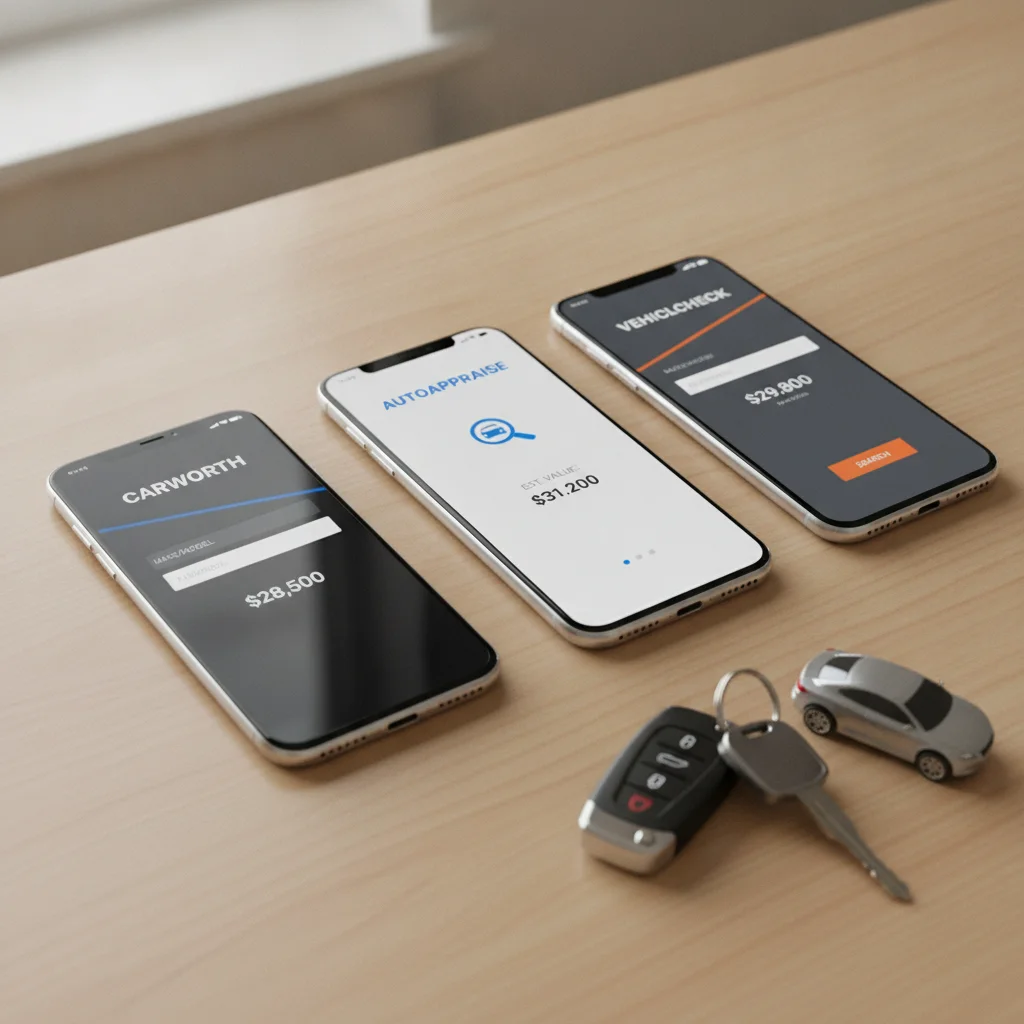
Every major valuation tool draws on different data. KBB leans on consumer transaction data and has a strong brand-trust signal among buyers. Edmunds uses dealer transaction data and tends to run a bit lower. NADA is calibrated for dealers and lenders, so its numbers often reflect wholesale or book values more than retail market reality. None of them scrapes live listings in your market in real time.
That's why the only reliable method is triangulation: pull numbers from at least three sources, compare them to active listings for comparable cars, and find the zone where all the evidence overlaps. That overlap is your defensible asking price range. See our breakdown of what each tool is actually measuring for the methodology details before you start.
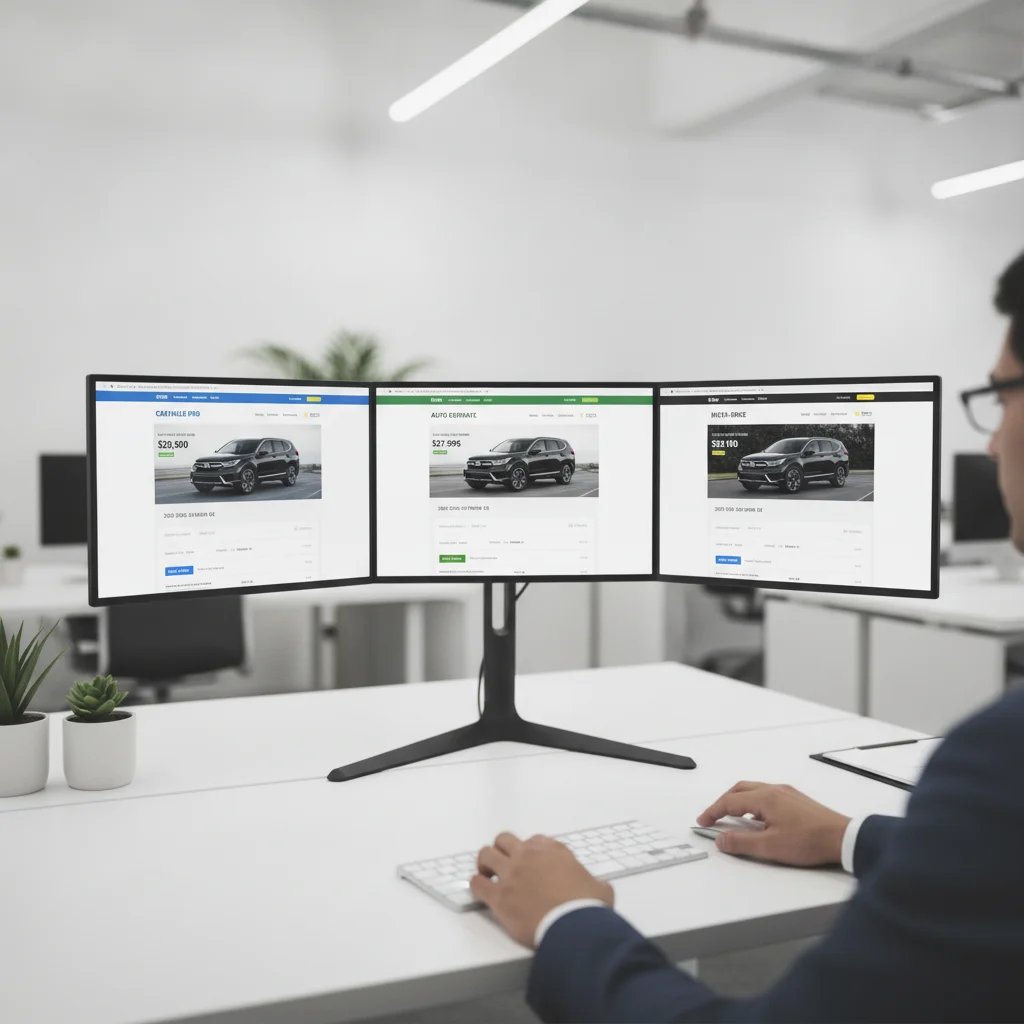
The steps below walk you through the full process — from gathering raw numbers to choosing a final list price you can defend to any buyer who tries to lowball you.
What you will need
Step-by-Step: Building Your Price From Multiple Sources
Work through these steps in order. Each one builds on the last, and skipping ahead usually means you'll anchor on a number before you have the full picture.
Kelley Blue Book (KBB)
Provides private party value ranges based on consumer transaction data; the most widely recognized tool among private buyers.
Edmunds
Provides private party and dealer transaction-based valuations; tends to run slightly more conservative than KBB.
NADA Guides (J.D. Power)
Provides dealer-oriented book values useful as a ceiling check and reference for lenders and trade-ins.
CarGurus or Autotrader
Used to pull active comparable listings in your local market — the most current real-world pricing signal available.
Carfax or AutoCheck
Vehicle history report that reveals accidents, title issues, and ownership history buyers will check independently.
Carvana / CarMax Instant Offer
Provides a guaranteed cash offer that serves as your floor-of-last-resort if the private sale doesn't close.
Spreadsheet (Excel, Google Sheets)
Used to organize valuation data from multiple sources and calculate your consensus price range.
Gather your car's exact specifications before touching any tool
Every valuation tool will ask for year, make, model, trim, mileage, and condition. Get these exactly right before you start — errors here cascade through every estimate you pull.
- Trim level: Check your registration or the door jamb sticker. "EX" and "EX-L" on a Honda can differ by $1,500–$2,500 in value.
- Mileage: Use the actual current odometer reading, not a round number.
- Options and packages: Note any factory add-ons — navigation, premium audio, towing package, sunroof. These are addable value in most tools.
- Accident history: Pull a Carfax or AutoCheck report now. Buyers will, and a disclosed accident is less damaging than a discovered one.
Run Kelley Blue Book for private party value
Go to KBB.com and select the "What's my car worth?" flow. Enter your specs and select Private Party as the sale type — not Trade-In and not Dealer Retail. KBB will give you a range (e.g., "$13,200 – $14,800") based on your condition input.
Record both the low and high end of the range in a simple spreadsheet or notes doc. Also note which condition grade you selected and why. You'll compare condition grades across tools in a later step.
Run Edmunds for private party value
Go to Edmunds.com and use their appraisal tool. Select Private Party sale type. Edmunds uses a slightly different condition scale and draws on different transaction data, so expect the number to differ from KBB — often by $500–$1,500, sometimes more.
Record the Edmunds estimate. Note whether it's higher or lower than KBB and by how much. Also check if Edmunds offers a "Suggested Price" label — that's their algorithmic best estimate of fair market value rather than a range.
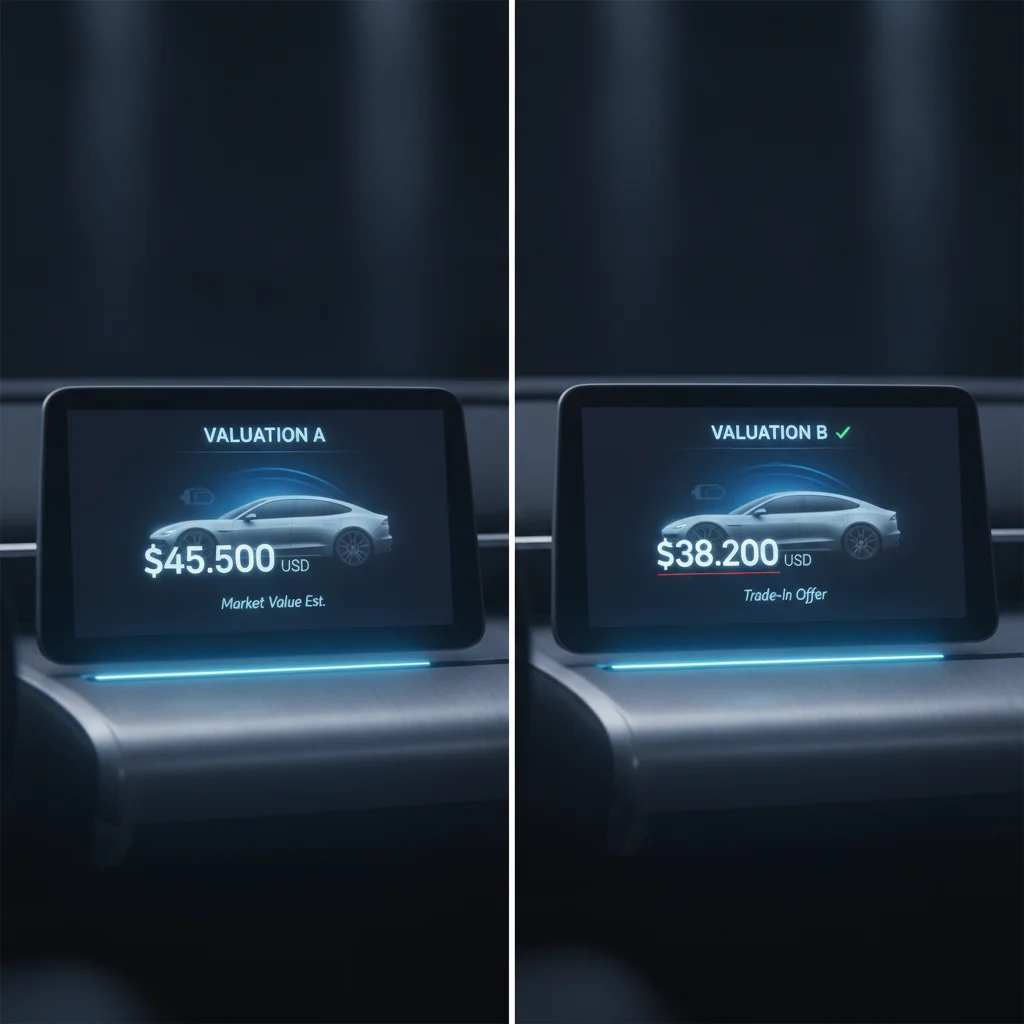
For context on why these tools diverge, see why your car's valuation differs across every tool.
Check NADA for retail and trade-in reference points
Go to NADAguides.com (now integrated with J.D. Power). NADA is most useful here as a sanity check and a reference for what dealers consider a fair trade or book value. Pull the Clean Retail value — this is what a dealer would theoretically charge a consumer for the same car on their lot.
NADA Clean Retail typically runs higher than private party tools because it builds in a dealer margin. Your private party price should generally fall between NADA Trade-In and NADA Clean Retail. If your KBB and Edmunds numbers are significantly above NADA Clean Retail, that's a warning sign to investigate further. See the major valuation tools compared side by side for a full methodology breakdown.
Search active listings for genuine market comparables
This is the most important step and the one most sellers skip. Open CarGurus, Autotrader, or Cars.com and search for your exact car: same year, same trim, within 100–150 miles, and with mileage within 10,000–15,000 miles of yours.
Filter to private party listings only if possible — dealer prices include overhead that doesn't apply to your sale. Pull 8–12 comparable listings and record their asking prices. Note mileage, condition descriptions, and whether they've been listed for over 30 days (a long-sitting listing suggests the price is too high).
Calculate the median asking price of your sample — not the average, which gets skewed by outliers. This median is your most current, local-market signal of what buyers expect to pay.
Build a simple comparison table and find the consensus range
With all your numbers collected, organize them into a table like this:
| Source | Value Type | Low | High |
|---|---|---|---|
| KBB | Private Party | $13,200 | $14,800 |
| Edmunds | Private Party | $12,900 | $13,600 |
| NADA | Clean Retail | — | $15,100 |
| Market Listings (median) | Asking Price | $13,500 | $14,200 |
Identify the range where at least three of your four sources overlap. In the example above, that overlap zone is roughly $13,200–$13,600. That's your defensible market range. Your list price should sit in the upper half of that zone — here, around $13,400–$13,600 — leaving room to negotiate without dropping below fair value.
Set your list price and establish your walk-away floor
Choose a specific list price — not a range. Listings that say "$13,500 OBO" signal desperation and invite lowballs. Pick a number like $13,750 that looks deliberate and gives you $200–$400 of psychological buffer before you hit the top of your consensus range.
Then, privately document your walk-away floor — the minimum you'll accept under any circumstances. This should account for any payoff balance on a loan, your transaction costs (platform fees, DMV transfer fees), and the minimum profit margin you need to make the sale worthwhile versus taking an instant cash offer.
Write both numbers down. Never share your floor with a buyer.
Reading the Results and Handling Disagreement
Once you've completed the steps, you should have a spreadsheet with four to six data points: KBB private party, Edmunds private party, NADA retail, and a sample of five to ten active comparable listings with their asking prices. Here's how to interpret what you're seeing.
When the numbers cluster tightly
If your tool estimates are within $800–$1,200 of each other and your market comps fall in the same band, you have strong market consensus. List at the upper quarter of that range and you'll have room to negotiate while staying credible.
When the tools diverge significantly
A spread of $2,500 or more between tools usually signals one of a few things: your car's trim or option package is unusual, your mileage falls in a bucket where depreciation curves diverge, or your market has local supply/demand dynamics the national tools can't see. In that case, weight your active market listings more heavily than the tool estimates — real listings reflect what buyers in your area are actually willing to consider. For a deeper explanation of why this happens, see when valuation tools disagree by a lot.

Adjusting for condition honestly
Every tool asks you to self-report condition, and almost every seller rates their car one grade higher than it deserves. "Very Good" on KBB means a car with no mechanical issues, no paint chips, no torn upholstery, and tires with solid tread remaining. If your car has a scratch you've been meaning to fix, that's "Good" — not "Very Good." Run the numbers at the condition grade that a hard-nosed stranger would assign, not the one that makes you feel good about the car.
Test Your Own Condition Grade
Before you enter a condition grade into any tool, look up that tool's definition of each grade on their website. KBB, Edmunds, and NADA all define 'Good' and 'Very Good' differently. Read the criteria, then honestly match your car to the description — not the grade name. Sellers who game this step typically overprice by $400–$900 and wonder why nobody calls.
Use CarGurus' Price Analysis Feature
CarGurus automatically labels listings as 'Great Deal,' 'Good Deal,' 'Fair Price,' 'High Price,' or 'Overpriced' based on comparable market data. When you're researching comps, filter for listings labeled 'Fair Price' or better — those represent the market's consensus on reasonable pricing, not outliers on either end.
Revisit Your Research Every Two Weeks
Car values shift with fuel prices, seasonal demand, and regional inventory. If your car is still listed after 14 days without a serious offer, re-run your market comp search to see if the median has moved. A $300 price adjustment made promptly is almost always better than holding firm for another three weeks.
Setting your floor price
Before you list, decide on the minimum you'll accept. This should be below your list price by enough to absorb negotiation — typically 8–12% for a private party sale. If the market data says your car is worth $14,000 and you need at least $12,500 to cover your payoff and moving costs, make sure your list price starts no lower than $13,800 so you have room to move. Never disclose your floor to a buyer.
Don't Anchor on the First Number You See
If the first tool you check shows a high number, there's a natural tendency to anchor on it and dismiss lower estimates from other sources. Run all your sources before you form any price opinion. Anchoring bias is the single biggest reason sellers overprice and sit on a car for months.
Asking Prices Are Not Sale Prices
Market listings show what sellers are asking — not what buyers are paying. In a normal market, private party cars sell for 3–7% below asking price. In a soft market, that discount can reach 10–12%. Build that expectation into your list price from the start so you're not surprised when a buyer negotiates.
Using Instant Cash Offers as a Baseline
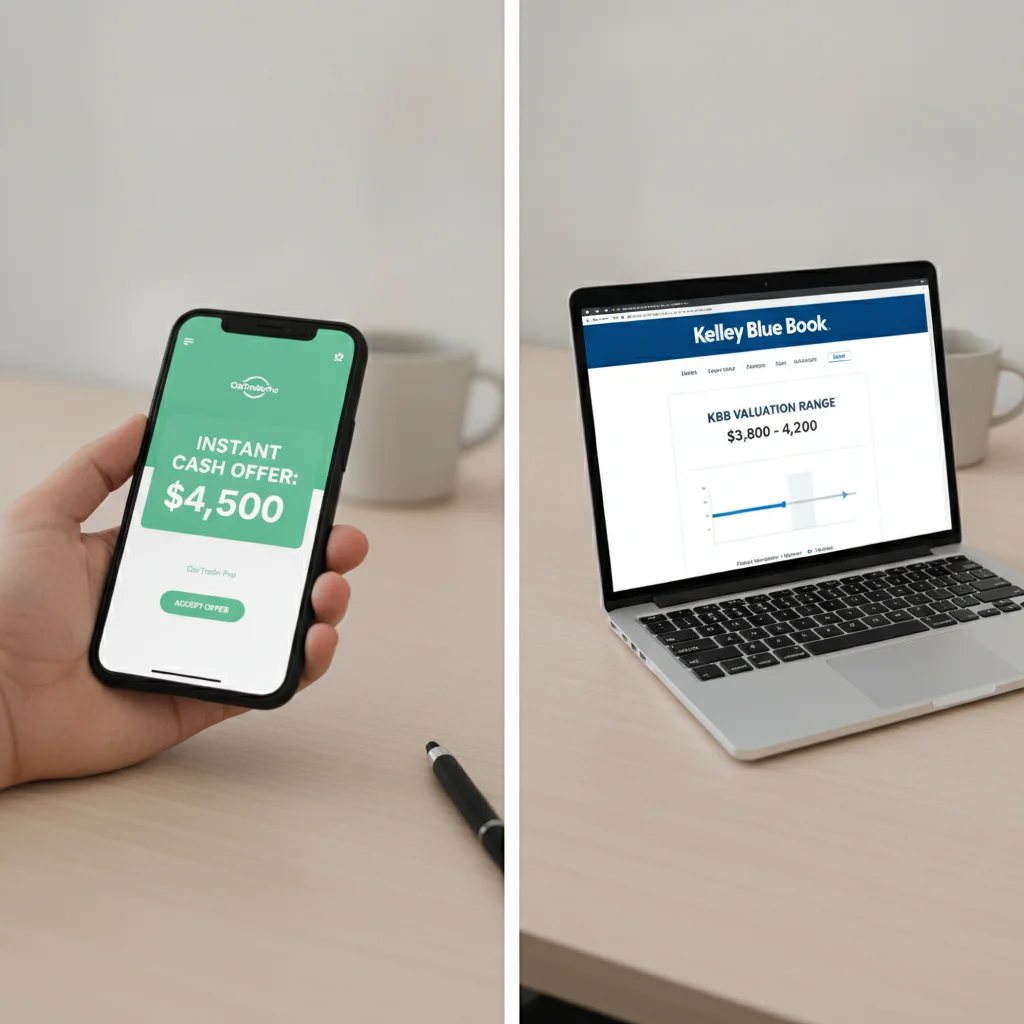
Before you finalize your list price, spend 15 minutes running your car through Carvana, CarMax, and one or two other instant-offer platforms. These tools will give you a firm, no-haggle cash offer that typically represents a wholesale-to-retail midpoint — meaning you should be able to beat it in a private party sale, but if you can't beat it by at least $500–$1,000 after accounting for your time and effort, it may not be worth listing privately.
Think of the instant cash offer as your floor-of-last-resort. If the private sale falls through or drags on for more than 45 days, you always have that option waiting. Instant cash offer tools vs. market valuation estimates explains exactly how those offers are calculated and where the spread comes from.
Don't Sell Privately for Less Than an Instant Offer
If your best private party offer after 30 days of active listing is below the instant cash offer you received from Carvana or CarMax, take the cash offer. The math doesn't justify the hassle of private party selling unless you net meaningfully more — a general rule of thumb is at least $700–$1,000 more than the best instant offer to make the time, test drives, and paperwork worthwhile.
Loan Payoff Can Force a Price Floor
If you owe more on your car than the market says it's worth, you're in a negative equity position and no amount of valuation research changes that math. Your asking price must cover your payoff balance or you'll need to bring cash to the table at closing. Confirm your exact payoff amount with your lender before setting any price — it's often different from your remaining balance shown on statements.
Also consider timing. If it's late January or early February and you're selling a convertible, your market comparables may look thin because demand is seasonally suppressed. Holding four to six weeks could meaningfully change what buyers will pay. The market timing hub covers which vehicle categories are most sensitive to seasonal pricing shifts.
Documenting Your Price for Buyer Conversations
One underrated advantage of doing this research systematically is that you can show your work. When a buyer says "I looked it up and it's only worth $11,000," you can respond calmly: "I ran it through KBB, Edmunds, and pulled fifteen comparable listings from CarGurus. Here's what I found." Most lowball attempts evaporate when the seller clearly knows the market better than the buyer does.
Print or screenshot your research. Note the date you pulled it — valuations shift, and a buyer who comes back three weeks later might try to use a newer (and lower) number. If the market has moved against you, acknowledge it and adjust. Stubbornness on price when the data has shifted is how cars sit unsold for months.
If you're also considering using the car as a trade-in, run the same exercise against dealer trade-in values. The trade-in strategies hub has specific guidance on using your private-party valuation research as leverage at the dealership.

Finally, revisit your price every 10–14 days the car is unsold. If you're getting views but no inquiries, the price is probably 5–8% high. If you're getting inquiries but all lowball offers, your price is in the right ballpark but buyers are testing you — hold firm or drop $200–$300 to signal flexibility without conceding ground.

All claims are backed by peer-reviewed research. Sources on request.