Key Takeaways
Tow hitches add functional value in truck and SUV markets
A properly rated, professionally installed hitch with wiring harness signals work-ready capability to buyers already seeking towing capacity. In pickup and full-size SUV markets, this can support $300–$700 in additional asking price.
Window tint is broadly appealing in warm climates
Professionally installed ceramic or dyed window tint within legal limits reduces heat buildup, protects upholstery, and lowers air conditioning load—practical benefits that most buyers in Southern markets view as a genuine plus.
All-weather floor liners signal careful ownership
Quality rubber floor mats from brands like WeatherTech protect carpets and stay with the car as a selling feature. They reinforce a "well-maintained" narrative that supports a cleaner condition rating.
Enthusiast-specific builds can command premiums in the right markets
Lifted Tacomas, modified Wranglers, and certain Japanese sport compacts with documented, quality suspension and off-road upgrades can attract buyers willing to pay above book value—provided the market density supports it.
Retaining OEM parts expands buyer appeal
Keeping and offering original components allows sellers to present the car to both mod-averse buyers and enthusiast buyers, widening the pool and strengthening the negotiating position.
Performance mods shrink the buyer pool dramatically
Engine, exhaust, and suspension modifications raise red flags about warranty status, insurance costs, and mechanical wear for mainstream buyers. Sellers typically recover less than 50 cents per dollar spent on performance work.
Custom paint and wraps lock in a niche aesthetic
Polarizing finishes—matte colors, custom graphics, full wraps—appeal to a narrow slice of buyers and add reconditioning costs for anyone who wants to return the car to a neutral appearance.
Lowered suspension limits geographic market reach
In any market with snow, steep driveways, or rough road surfaces, lowered suspension is a deal-breaker for a significant share of buyers. It also raises questions about component wear and ride comfort.
Aftermarket wheels introduce uncertainty about fitment and safety
Non-OEM wheels prompt questions about load ratings, speedometer accuracy, and brake clearance. That uncertainty translates to lower offers or a narrower buyer pool, even when the wheels are high-quality units.
Valuation tools don't credit most modifications
KBB, Edmunds, and similar platforms price vehicles against their stock configuration. Aftermarket additions don't increase book value and may actually trigger lower condition ratings if they appear non-standard.
Modifications can void factory warranty coverage
Performance and powertrain modifications may void relevant portions of the manufacturer's warranty under the Magnuson-Moss Warranty Act, which is a significant liability to disclose and a strong deterrent for buyers seeking warranty protection.
Emotional attachment leads to systematic overpricing
Sellers who built up their vehicles over time often price in the labor, research, and enjoyment they got from the build—none of which the market reimburses. This mismatch extends time-to-sale and often results in a lower final price.
Our Verdict
Aftermarket modifications are a financial liability far more often than they are an asset. The rare exceptions—window tint, tow hitches, all-weather floor mats, and in some markets, lifted truck setups—tend to be practical, reversible, or deeply aligned with a specific buyer demographic. For the vast majority of customizations, sellers should budget for the mod to return zero dollars and price accordingly. Setting realistic expectations based on data, not emotion, is the single biggest factor in a clean and profitable sale.
Best for owners who modified their vehicle and are now preparing to sell, and want honest, data-backed guidance on what to expect at resale.
Why Modifications and Resale Value Rarely Get Along
Here's the core problem with aftermarket modifications and resale value: you're spending money to customize a car for your tastes, then expecting a stranger with different tastes to pay you back for that work. That disconnect is why most mods depreciate faster than the car itself.
Think of it this way. A factory car is optimized for the widest possible audience. The manufacturer spent years in consumer research deciding on wheel size, exhaust note, ride height, and interior color. The moment you start changing those decisions, you're making the car appealing to a smaller slice of buyers. In most cases, a smaller buyer pool means a lower sale price.
The depreciation basics of any car are already working against you. Vehicles lose value rapidly in the first three years—often 40% to 50% of their original MSRP. Add modifications that shrink the buyer pool further, and you accelerate that curve. But not all mods work the same way, and that's where sellers need to think carefully before they list.
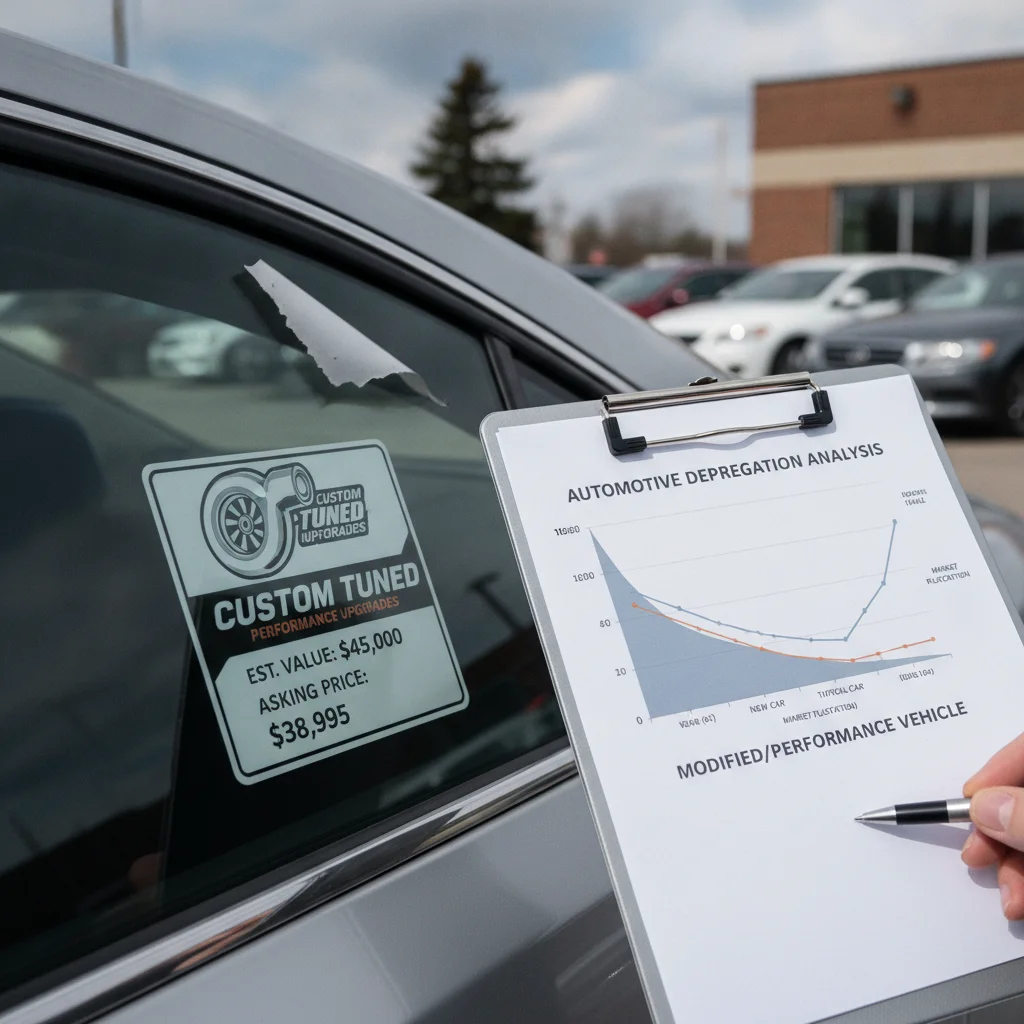
To understand what's happening at the market level, it also helps to know that used-car pricing tools like Kelley Blue Book and Edmunds build their valuations around stock configurations. Modifications don't automatically add to a car's book value—in many cases they actively reduce it. See how those tools actually work over at the Valuation Tools hub to understand exactly what they're measuring.
The Modifications That Actually Hurt Resale Value
Before we get to the exceptions, let's be clear-eyed about the damage that most modifications do. The categories below account for the majority of resale-value complaints from sellers who modified their vehicles.
Performance mods shrink the buyer pool dramatically
Engine, exhaust, and suspension modifications raise red flags about warranty status, insurance costs, and mechanical wear for mainstream buyers. Sellers typically recover less than 50 cents per dollar spent on performance work.
Custom paint and wraps lock in a niche aesthetic
Polarizing finishes—matte colors, custom graphics, full wraps—appeal to a narrow slice of buyers and add reconditioning costs for anyone who wants to return the car to a neutral appearance.
Lowered suspension limits geographic market reach
In any market with snow, steep driveways, or rough road surfaces, lowered suspension is a deal-breaker for a significant share of buyers. It also raises questions about component wear and ride comfort.
Aftermarket wheels introduce uncertainty about fitment and safety
Non-OEM wheels prompt questions about load ratings, speedometer accuracy, and brake clearance. That uncertainty translates to lower offers or a narrower buyer pool, even when the wheels are high-quality units.
Valuation tools don't credit most modifications
KBB, Edmunds, and similar platforms price vehicles against their stock configuration. Aftermarket additions don't increase book value and may actually trigger lower condition ratings if they appear non-standard.
Modifications can void factory warranty coverage
Performance and powertrain modifications may void relevant portions of the manufacturer's warranty under the Magnuson-Moss Warranty Act, which is a significant liability to disclose and a strong deterrent for buyers seeking warranty protection.
Emotional attachment leads to systematic overpricing
Sellers who built up their vehicles over time often price in the labor, research, and enjoyment they got from the build—none of which the market reimburses. This mismatch extends time-to-sale and often results in a lower final price.
Performance modifications are probably the biggest offenders in terms of surprise depreciation. A buyer looking at a turbocharged hatchback sees higher insurance premiums, elevated mechanical risk, and a voided factory warranty—not the thrilling weekend car the seller is describing. Even documented, tasteful engine work rarely returns 50 cents on the dollar at resale.
Cosmetic mods present a different but equally damaging problem. A vinyl wrap in matte army green may look stunning to you, but it screams "specialized taste" to every buyer who doesn't share your aesthetic. Lenders and insurers may also flag unconventional wraps and custom paint, adding friction to an already complex transaction.
Lowered suspension kits are another category that consistently erodes value. Outside of enthusiast markets for specific models—think certain Japanese sport compacts—buyers worry about scraping on steep driveways, compromised ride quality, and wear patterns on suspension components. If you also live somewhere with harsh winters, the concern deepens: lowered cars handle poorly on snow and ice, and that's a deal-killer in many markets.
Oversized or non-OEM wheels reduce the buyer pool even further. Many buyers don't know whether that 20-inch aftermarket wheel fits the wheel well specification or whether the tires paired to it maintain the correct speedometer calibration. Uncertainty translates to lower offers.
Things owners unknowingly do that accelerate depreciation covers more of these pitfalls in depth—worth a read if you've made several changes to your vehicle over its lifetime.
The Short List of Modifications That Can Help
It's a short list. But it exists. The modifications that hold or add value share a common profile: they are practical, reversible or removable, factory-compatible in appearance, or targeted to a very specific high-demand buyer segment.
Tow hitches add functional value in truck and SUV markets
A properly rated, professionally installed hitch with wiring harness signals work-ready capability to buyers already seeking towing capacity. In pickup and full-size SUV markets, this can support $300–$700 in additional asking price.
Window tint is broadly appealing in warm climates
Professionally installed ceramic or dyed window tint within legal limits reduces heat buildup, protects upholstery, and lowers air conditioning load—practical benefits that most buyers in Southern markets view as a genuine plus.
All-weather floor liners signal careful ownership
Quality rubber floor mats from brands like WeatherTech protect carpets and stay with the car as a selling feature. They reinforce a "well-maintained" narrative that supports a cleaner condition rating.
Enthusiast-specific builds can command premiums in the right markets
Lifted Tacomas, modified Wranglers, and certain Japanese sport compacts with documented, quality suspension and off-road upgrades can attract buyers willing to pay above book value—provided the market density supports it.
Retaining OEM parts expands buyer appeal
Keeping and offering original components allows sellers to present the car to both mod-averse buyers and enthusiast buyers, widening the pool and strengthening the negotiating position.
The single clearest example is a tow hitch on a pickup truck or SUV. Towing capacity is a primary purchase driver for those segments. A factory-spec or dealer-installed hitch—especially a properly rated Class III or Class IV unit with a wiring harness—signals to the next buyer that the vehicle is work-ready. In the truck market, this can add $300 to $700 to a realistic asking price, particularly if the hitch looks factory-clean and documentation exists.
Window tint is another outlier. In warm climates, tinted windows have broad appeal: they reduce cabin temperature, protect upholstery, and lower cooling costs. Professionally installed ceramic or dyed tint within legal limits for the state rarely hurts a sale, and in hotter markets (Texas, Arizona, Florida), it can be a modest plus. The key word is professionally installed—peeling or bubbling film does the opposite.
All-weather floor liners and cargo mats (brands like WeatherTech or Husky) are inexpensive, universally practical, and often stay with the car at sale as a selling point. They don't dramatically move the price, but they signal that the owner cared for the interior, which supports a cleaner condition rating overall.
For specific enthusiast vehicles, the calculus shifts somewhat. A lifted 4Runner or Tacoma with a quality suspension lift, all-terrain tires, and skid plates in a market like Colorado or Utah may actually command a premium among buyers who were going to do that work themselves. The mod needs to be well-documented, use reputable brands (ARB, Old Man Emu, Bilstein), and be installed professionally. Even then, you're selling to a narrowed audience—but in some markets, that audience is dense enough to make it work.
It's worth contrasting this with how factory options perform. Trim level and package effects on resale value shows that even factory-installed options can underperform at resale—which reinforces how steep the climb is for aftermarket alternatives.
How to Think About the Dollar Math
Let's put some concrete numbers to this. Say you bought a mid-range crossover for $32,000 and spent $4,500 over two years on modifications: a cat-back exhaust ($800), lowering springs ($600 plus $400 installation), an aftermarket grille ($350), and a full custom vinyl wrap ($2,350).
Your total investment in the car: $36,500. The stock version of your vehicle, two years old with average mileage, books at roughly $24,000 in clean condition. With your modifications, what should you expect?
~$0
Average resale premium recovered from cosmetic mods
Industry analysis from iSeeCars and Edmunds consistently shows that cosmetic modifications return little to no financial value at private sale, and often reduce offers from dealers due to reconditioning costs.
40–50%
Average value lost in first three years on a new car
According to Carfax and Edmunds depreciation research, the average new vehicle loses between 40% and 50% of its original MSRP within three years—before any modification impact is factored in.
15–25%
Additional discount dealers apply to heavily modified vehicles
Dealer trade-in assessments typically apply a 15–25% reconditioning discount on top of normal depreciation for vehicles with performance or cosmetic modifications that require reversal before retail sale.
$300–$700
Realistic resale premium for tow hitch on trucks and SUVs
Based on private-sale market analysis of truck and full-size SUV listings, a factory-spec or dealer-installed tow hitch with wiring harness can support a modest asking price premium in towing-oriented markets.
<50¢
Return per dollar spent on performance modifications
Consumer automotive forums and resale market data consistently show that performance engine and suspension modifications return less than 50 cents for every dollar spent when factored into final sale price.
Realistically, the exhaust and suspension may cause a percentage of buyers to walk away or offer less due to concerns about mechanical modifications. The custom grille and wrap will appeal to some and put off others—but the "others" are statistically more common in the general used-car market. A fair estimate is that your modified car might fetch $22,000 to $23,500 from a private buyer who likes the look, or as little as $19,000 to $20,500 from a dealer who needs to account for reconditioning costs and resale risk.
You spent $4,500 on modifications. Best case, you recovered $0 in resale premium. Worst case, you lost an additional $1,500 to $2,000 on top of normal depreciation. That's the typical outcome, and it's why financial advisors consistently flag cosmetic and performance modifications as poor investments when you factor in the full ownership lifecycle.
Compare this to how mileage affects resale value. High mileage is a well-understood depreciator. Unusual modifications are an unpredictable one—and unpredictable is often worse because neither the seller nor the buyer has a clear market benchmark to negotiate from.
The 'Book Value' Trap for Modified Cars
When you enter your vehicle into KBB or Edmunds, those tools calculate value based on the factory configuration for your year, make, model, and trim. There is no input field for "custom exhaust" or "aftermarket wheels." This means the book value you see is essentially the ceiling—not the starting point—for a modified car in most markets. Modifications that appeal to you personally do not translate into algorithmic value, and dealers will use book value to anchor their trade-in offers aggressively downward.
Disclosure Is Both Legal and Strategic
In most states, sellers are legally required to disclose known modifications—particularly any that affect safety systems, emissions compliance, or odometer function. Beyond the legal requirement, disclosure is also strategic: a buyer who discovers an undisclosed modification during a pre-purchase inspection is far more likely to walk away or demand a steep price reduction than a buyer who knew about it upfront. Full transparency, supported by receipts and installation documentation, builds trust and reduces renegotiation risk.
The 'Keep Your Stock Parts' Rule
If there is one piece of tactical advice that pays off consistently for modifiers who eventually plan to sell, it's this: keep your original components.
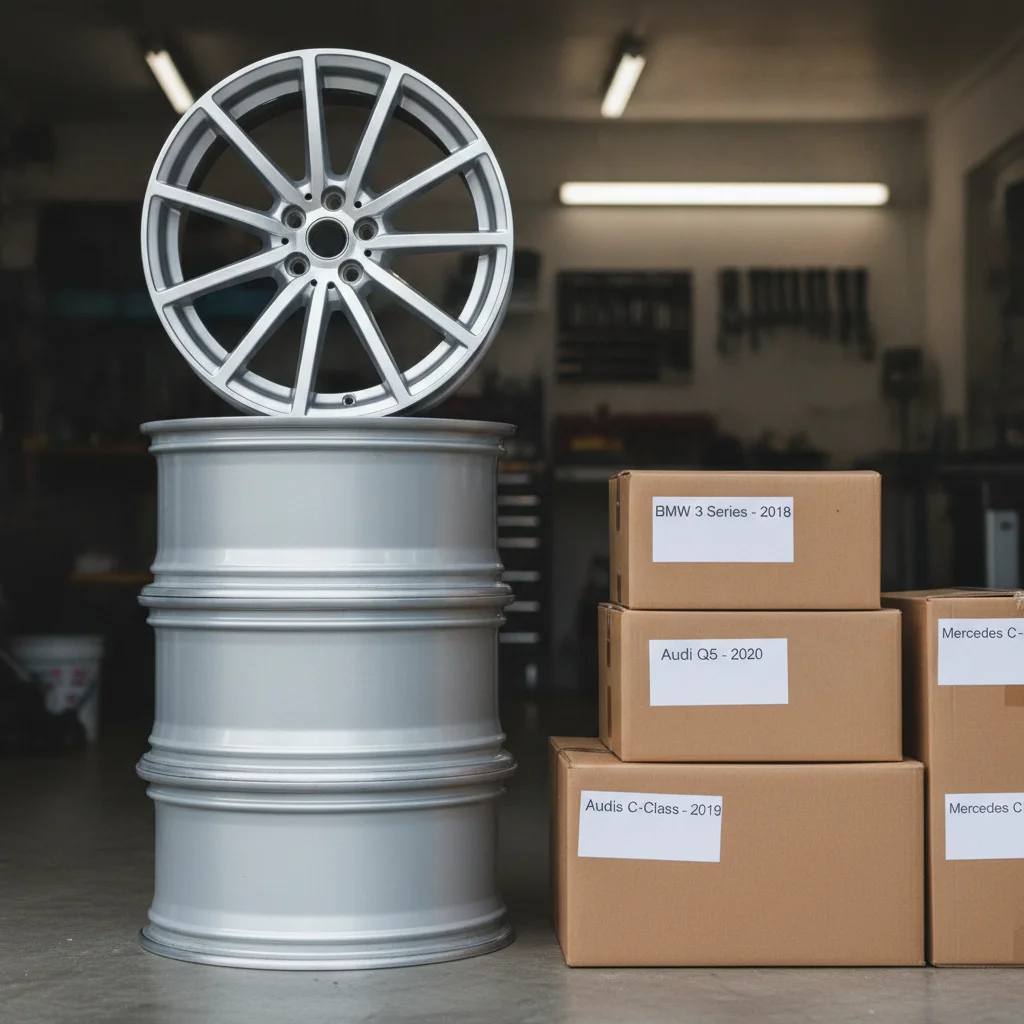
When you swap out your factory wheels for aftermarket ones, box up the OEM wheels and store them. When you install a performance intake, keep the stock airbox. When you lower the suspension, hold onto the original struts and springs. This simple discipline gives you a path back to a stock-configured car—or at least a car you can represent honestly as "modified but all original parts available."
Buyers who aren't interested in mods can be reassured that they're getting the factory experience. Enthusiast buyers who want the modifications may see the included OEM parts as additional value (resale parts, ability to pass inspections, etc.). Either way, you've expanded your buyer pool.
Storage is genuinely the barrier here. A set of factory 18-inch alloy wheels takes up real space in a garage. But if you have the room, it's a no-cost move that can directly improve your negotiating position years down the road. Pair this with the broader strategies in how to slow your car's depreciation without spending a fortune for a comprehensive playbook.
Market and Model Context Matter Enormously
The same modification can be a value-neutral addition on one vehicle and a value-destroying mistake on another. Context is everything.
A cold-air intake on a Toyota Camry signals "potential engine stress" to most family-car buyers. The same intake on a Subaru WRX, in a market with a dense enthusiast community, is expected and barely moves the needle either way. A roof rack on a Honda Civic looks like an afterthought. A roof rack on a Toyota 4Runner reads as purpose-built and practical.
Some models have strong enthusiast communities that support modified resale—Jeep Wranglers, older Ford Broncos, the aforementioned Tacoma and 4Runner, Subaru WRX/STI, and certain German sport sedans in high-income urban markets. These communities have established pricing norms for certain mods, which gives both buyers and sellers a shared reference point. Outside of those communities, you're largely on your own.
It's also worth noting that brand and reliability reputation shape how buyers interpret modifications. A vehicle from a brand known for reliability (Toyota, Honda) sells easily in stock form—modifications raise suspicion. A vehicle from a brand with mixed reliability scores may face the additional assumption that mods were done because the stock version had problems. Slow vs. fast depreciators goes into why brand reputation plays such a large role in how quickly a car loses value overall.
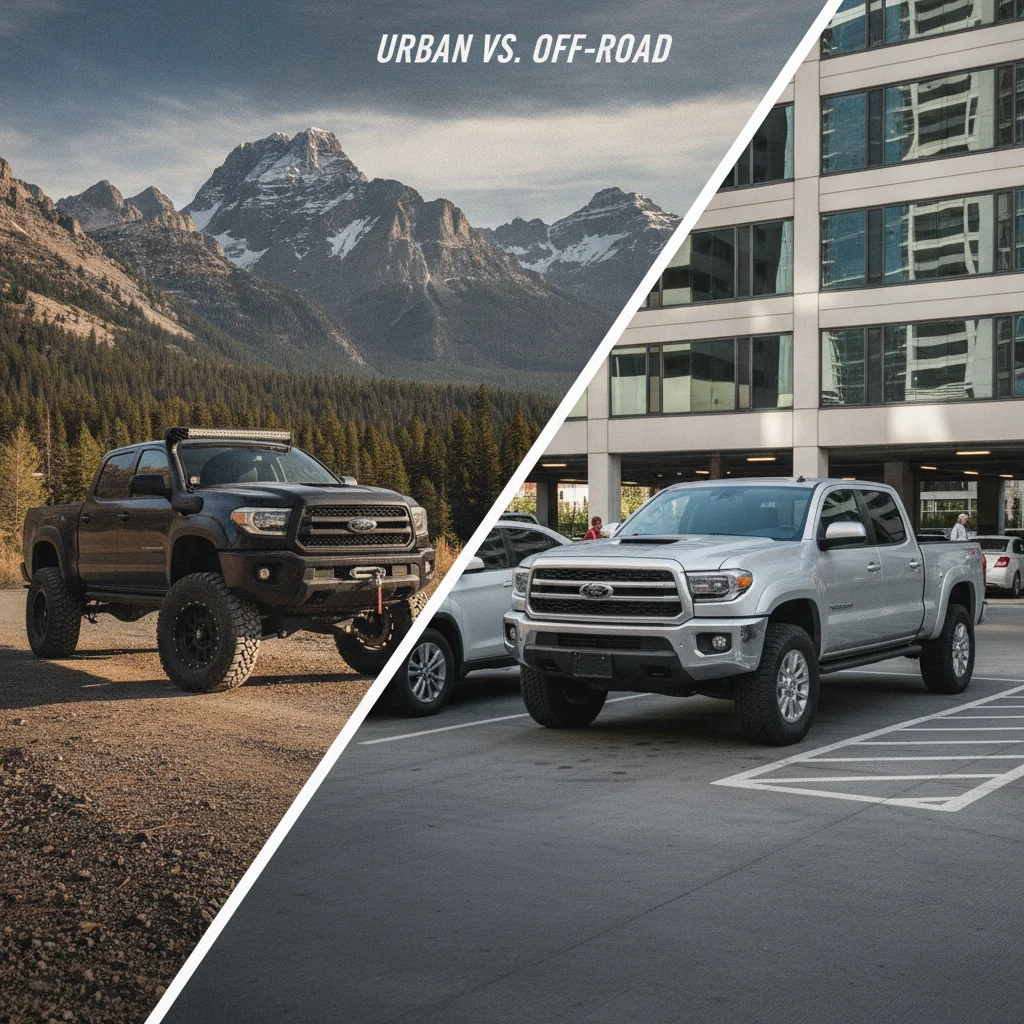
Finally, geography shapes the market. Lifted trucks command premiums in rural and mountain-adjacent markets. Blacked-out luxury sedans may perform better in urban areas with younger buyer demographics. Before setting your asking price, research what modified versions of your specific vehicle actually sell for in your ZIP code—not nationally, but locally, on platforms like Craigslist, Facebook Marketplace, and Cars.com with local filters applied.
Setting Realistic Expectations Before You List
If you've modified your vehicle and you're preparing to sell, here's a practical framework for pricing it correctly:
- Find the stock book value first. Use KBB, Edmunds, and Carmax's online tool to establish what your car is worth in factory condition with your mileage and condition rating. That's your ceiling, not your floor.
- Subtract for irreversible mods. Any modification that a mainstream buyer would need to undo—custom paint, aggressive lowering, performance engine work, non-standard audio installs—should be treated as a value subtraction, not an addition. A rough rule: deduct 50% to 100% of the cost of any mod that reduces mainstream appeal.
- Add conservatively for practical mods. Tow hitches in truck/SUV markets, window tint in warm climates, and quality floor liners may justify a modest premium—$200 to $700 depending on the mod and market. Don't stack these; buyers see through additive mod pricing quickly.
- Target the right buyer channel. A modified car often sells faster and for more money in enthusiast channels (dedicated forums, enthusiast Facebook groups, specialty classified sites) than on general marketplaces. The audience there understands the value of quality modifications in a way general buyers don't.
- Be fully transparent. Disclose every modification in your listing. Hidden modifications discovered during a pre-purchase inspection kill deals and erode trust. Full documentation of professional installation actually helps.
Car color and resale value data is a useful comparison here—even something as simple as paint color has a measurable and often counterintuitive effect on what buyers will pay. Modifications operate by the same principle, just with higher stakes.
The 'Book Value' Trap for Modified Cars
When you enter your vehicle into KBB or Edmunds, those tools calculate value based on the factory configuration for your year, make, model, and trim. There is no input field for "custom exhaust" or "aftermarket wheels." This means the book value you see is essentially the ceiling—not the starting point—for a modified car in most markets. Modifications that appeal to you personally do not translate into algorithmic value, and dealers will use book value to anchor their trade-in offers aggressively downward.
Disclosure Is Both Legal and Strategic
In most states, sellers are legally required to disclose known modifications—particularly any that affect safety systems, emissions compliance, or odometer function. Beyond the legal requirement, disclosure is also strategic: a buyer who discovers an undisclosed modification during a pre-purchase inspection is far more likely to walk away or demand a steep price reduction than a buyer who knew about it upfront. Full transparency, supported by receipts and installation documentation, builds trust and reduces renegotiation risk.
Sellers who approach this process with data-backed expectations—rather than emotional attachment to their build—consistently have cleaner, faster transactions. Know what the market values, price accordingly, and let the right buyer find you.

All claims are backed by peer-reviewed research. Sources on request.