Key Takeaways
Mileage-Driven Depreciation
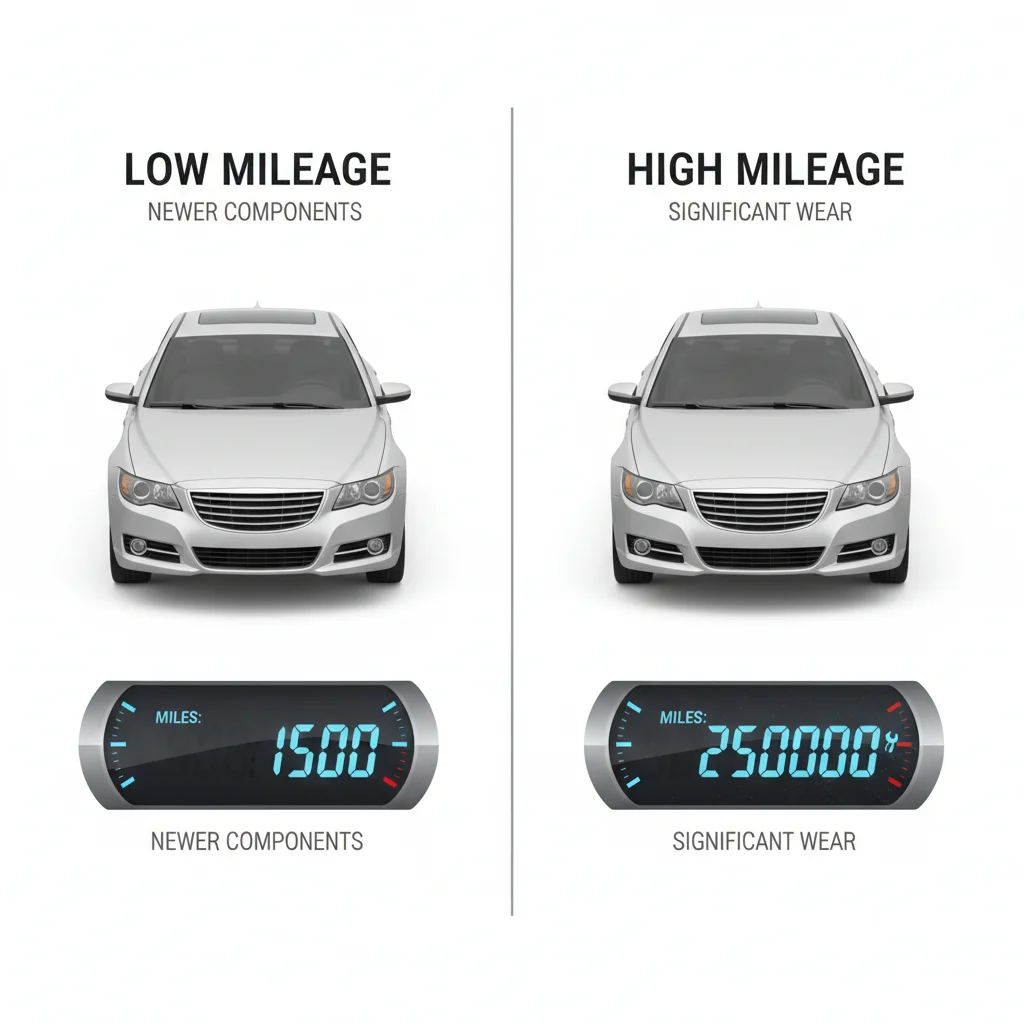
Mileage-driven depreciation is the loss in a car's resale value that occurs as its odometer reading increases. Unlike calendar-based depreciation, which happens simply with the passage of time, mileage depreciation is triggered by actual use — wear on the engine, transmission, brakes, and other mechanical systems. The more miles a car has, the closer it is to costly repairs, which buyers factor directly into what they're willing to pay.
Lenders and valuation tools like Kelley Blue Book apply mileage adjustments to book value estimates, typically using 12,000–15,000 miles per year as the baseline for an "average" vehicle. Deviations above that baseline trigger downward price corrections that compound with age.
Why Mileage Hits Your Wallet Harder Than the Calendar Does
Most sellers think about depreciation in terms of age. A five-year-old car is worth less than a three-year-old car, right? That's true — but it's incomplete. Mileage often has a larger and more immediate effect on resale value than the year on the title, because mileage is a direct measure of mechanical wear.
Think of it this way: a 2020 vehicle with 95,000 miles has endured far more engine cycles, brake applications, and suspension stress than a 2019 vehicle sitting at 28,000 miles. Buyers aren't just paying for a car's age — they're paying for how much useful life remains. The odometer reading is their clearest window into that.
This is why valuation tools apply separate adjustments for time and mileage. When you plug your car into Kelley Blue Book or Edmunds, notice that the tool asks for your mileage explicitly. That number feeds a formula that can shift your estimate by hundreds — sometimes thousands — of dollars relative to an identical car with fewer miles.
Understanding the mechanics behind that formula is the first step to pricing your vehicle accurately and avoiding the missteps covered in articles like common depreciation myths that lead sellers to misprice.
15,000
Annual miles used as valuation baseline
Kelley Blue Book and Edmunds use approximately 15,000 miles per year as the standard benchmark for pricing used vehicles at fair market value.
$0.08–$0.12
Value lost per mile above average
Industry estimates suggest vehicles lose roughly 8 to 12 cents of resale value for every mile driven above the annual average baseline, varying by vehicle segment.
~20%
Additional value drop at 100k miles
Analysis of used-car listings consistently shows vehicles crossing the 100,000-mile mark trade at roughly 15–20% less than near-identical sub-100k counterparts, reflecting buyer psychology.
50%+
Depreciation in first 3 years
According to Edmunds data, new vehicles can lose more than half their original value within three years — with mileage accelerating this decline beyond the time-based average.
12,000
Miles per year for low-mileage premium
Vehicles averaging fewer than 12,000 miles per year typically command above-market pricing, with the premium growing as the gap from average widens.
The Baseline: What "Average" Mileage Actually Means
Every major valuation tool and auto lender uses a benchmark — typically 12,000 to 15,000 miles per year — to define what counts as average mileage for a given vehicle age. If your car falls within that band, it's priced at or near the standard market rate. Stray above it, and you're in negative adjustment territory.
Here's what that looks like in concrete terms:
| Vehicle Age | Average Mileage (15k/yr) | High Mileage (20k/yr) | Low Mileage (8k/yr) |
|---|---|---|---|
| 2 years | 30,000 | 40,000 | 16,000 |
| 4 years | 60,000 | 80,000 | 32,000 |
| 6 years | 90,000 | 120,000 | 48,000 |
| 8 years | 120,000 | 160,000 | 64,000 |
A four-year-old car sitting at 80,000 miles isn't just "a little high" — it's the mechanical equivalent of a six-year-old average-use vehicle. Buyers sense this intuitively, and valuation algorithms confirm it.
Annual Mileage Baselines Vary by Source
Different valuation tools use slightly different annual mileage baselines — KBB historically uses 12,000 miles per year, while Edmunds and some lenders use 15,000. This means the same car can show different mileage adjustments depending on which tool you use. Always check at least two sources and average the results for a more reliable market estimate.
Mileage Affects Loan Eligibility Too
Many auto lenders impose hard limits on vehicle mileage for financing eligibility — commonly 100,000 to 125,000 miles at loan origination. A vehicle above these thresholds may only attract cash buyers, which meaningfully shrinks your potential audience and reduces your negotiating leverage as a seller.
Sellers who drive a lot for work — real estate agents, traveling sales professionals, ride-share drivers — often find themselves with cars that are mechanically sound but numerically disadvantaged at resale. If that describes your situation, see how to prep a high-mileage car for sale for targeted advice on where to focus your effort.
The Mileage Thresholds That Trigger Buyer Hesitation
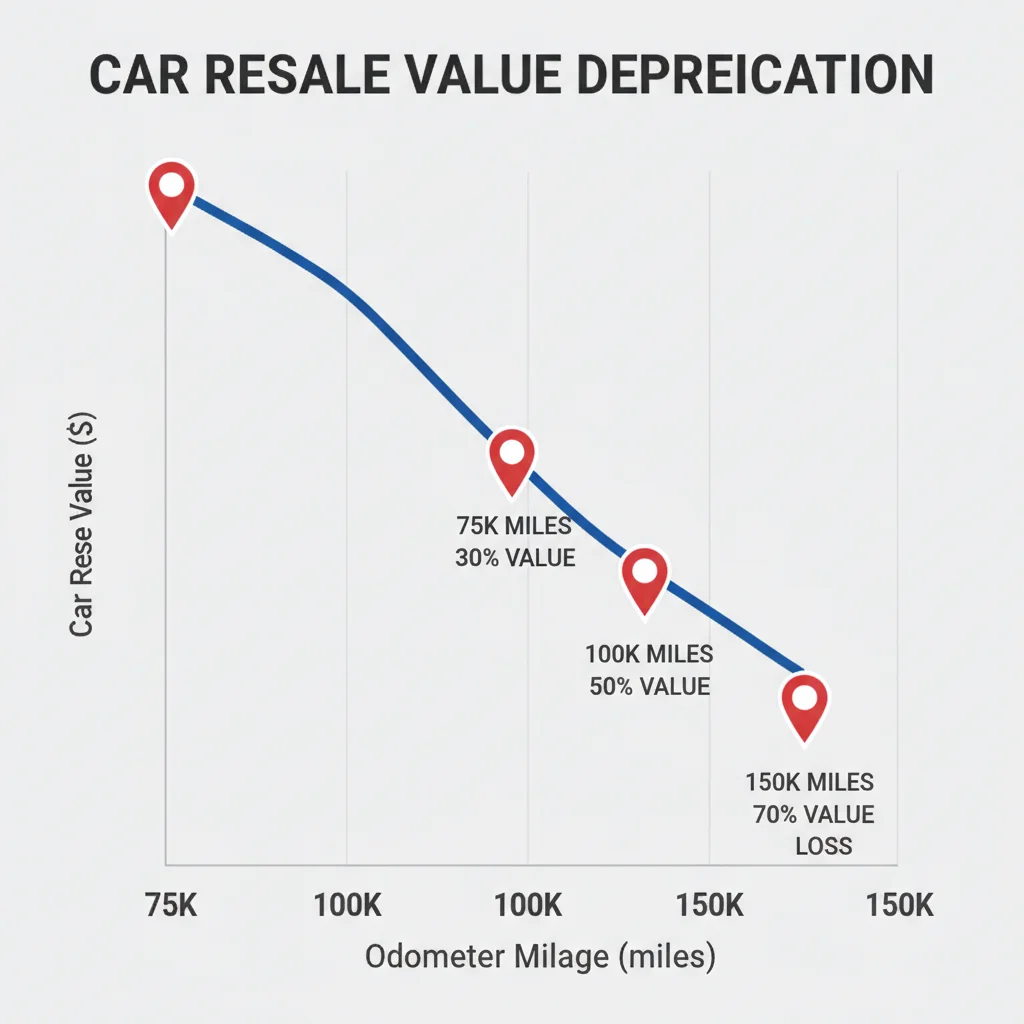
Depreciation from mileage isn't perfectly linear. Buyers don't value a car at 99,999 miles the same as one at 100,001 miles based on physics — but they absolutely do based on psychology. Certain odometer readings function as mental cliffs that shift both buyer perception and real-market pricing.
The 75,000-Mile Threshold
At around 75,000 miles, many buyers start mentally associating a vehicle with "mid-life" or approaching the need for major services — timing belt or chain inspection, coolant flush, suspension component wear. Even if the car has been perfectly maintained, crossing this number narrows your buyer pool. Shoppers who were looking for a "nearly new" used vehicle start disqualifying your listing.
The 100,000-Mile Threshold
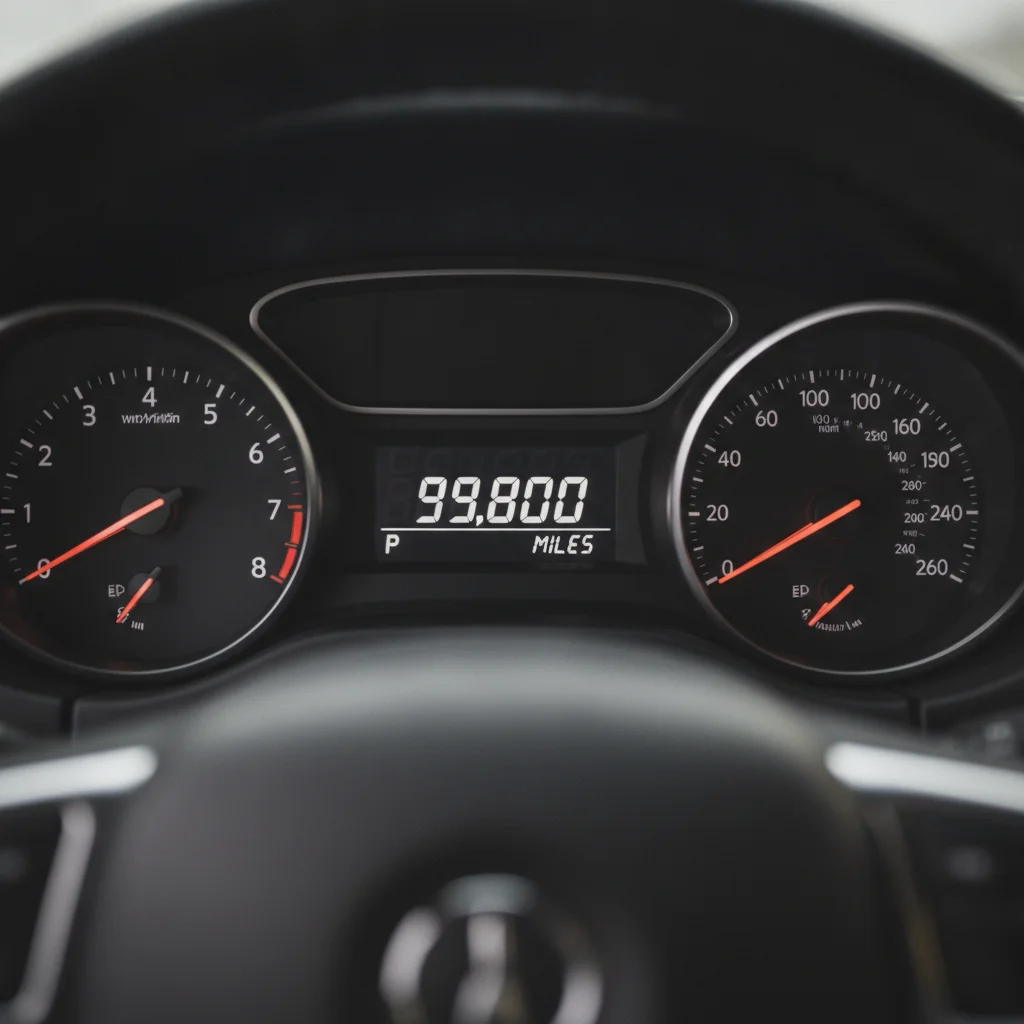
This is the single most psychologically powerful number in used-car pricing. Six figures on the odometer triggers immediate hesitation for a large segment of buyers, especially those without mechanical confidence. The fear of imminent, expensive repairs — regardless of whether they're actually imminent — makes buyers either walk away or lowball aggressively. Sellers who understand this threshold can sometimes price just below 100,000 miles strategically, or alternatively, accept that they need to price competitively and compensate with thorough documentation.
The 150,000-Mile Threshold
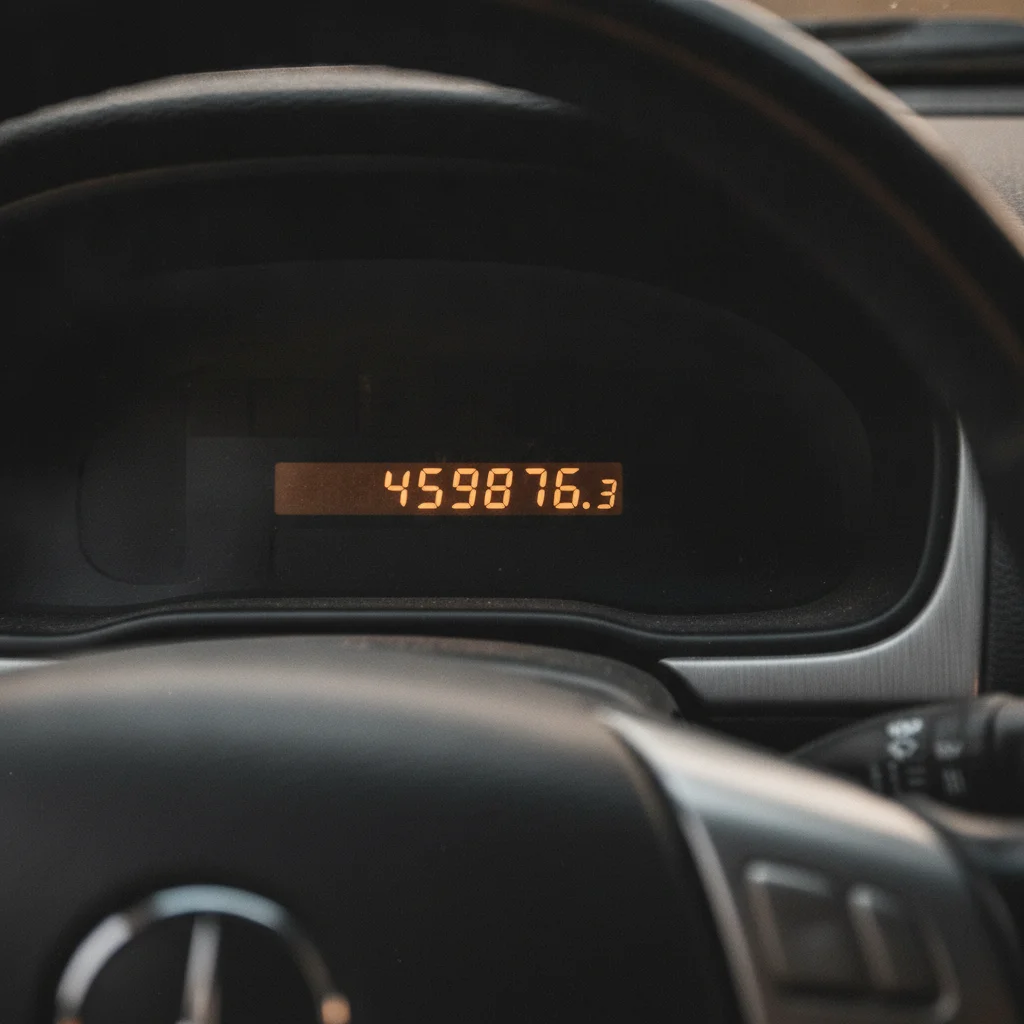
Beyond 150,000 miles, the buyer pool shrinks significantly to experienced used-car shoppers, budget buyers, and those who specifically seek high-mileage vehicles for parts or project use. Pricing expectations drop sharply, and financing becomes harder — many lenders restrict loans on vehicles above certain mileage limits.
For a deeper look at where these drops are steepest and how to position your vehicle accordingly, see the full breakdown of mileage thresholds that trigger buyer hesitation.
“The 100,000-mile barrier is more psychological than mechanical. Modern engines routinely last 200,000 miles with proper care — but the odometer reading still moves markets because most buyers don't have the confidence or information to look past it.”
— Jack Nerad, Former Executive Editorial Director, Kelley Blue Book
How Vehicle Reliability Reputation Changes the Equation
Not all high-mileage vehicles are created equal in the eyes of buyers. A Toyota Camry or Honda Accord at 130,000 miles occupies a fundamentally different market position than a luxury European sedan at the same reading. Why? Because buyers have absorbed decades of reliability data — through Consumer Reports surveys, owner forums, and word of mouth — that shapes their confidence in how much usable life remains.
This reputation effect is real and measurable. In practice, it means:
- Japanese mainstream brands (Toyota, Honda, Subaru) tend to hold value better at high mileage because buyers believe the engine has more miles left in it.
- Domestic trucks and SUVs (Ford F-150, Chevy Silverado, Ram 1500) often retain strong resale even at high mileage due to their robust powertrains and enormous buyer demand.
- Luxury brands (German makes especially) suffer steeper mileage-related depreciation because buyers are acutely aware of expensive repair costs once warranties expire.
- Discontinued models or brands face compounding disadvantage — limited parts availability and shrinking service expertise accelerate buyer hesitation at every mileage level.
If you own a vehicle with a strong reliability reputation, that's a legitimate selling point to emphasize — not just in your listing language, but as a factual counterweight when buyers try to lowball based on mileage alone.
Lead With Reliability Data in Your Listing
If you're selling a brand with a strong reliability reputation, mention it explicitly — and back it with data. Linking to a J.D. Power reliability ranking or a Consumer Reports score in your listing description gives hesitant buyers an objective reason to reconsider a high-mileage vehicle they might otherwise scroll past.
Time Your Sale Strategically
If you're approaching a key threshold — say, 97,000 miles — consider selling before you cross into six-figure territory. The pricing difference between 98,000 and 102,000 miles can easily exceed $1,500, making an early sale financially worthwhile even if it's slightly inconvenient logistically.
It's also worth understanding that mileage affects more than just resale price — annual mileage directly affects your insurance premiums, which is a cost many high-mileage drivers underestimate throughout the ownership period.
Documentation: The Partial Antidote to High Mileage
You can't subtract miles from an odometer, but you can change the story those miles tell. Thorough maintenance documentation is the most effective tool a high-mileage seller has to counter buyer skepticism.
What documentation actually moves the needle:
- Oil change records
- Consistent oil changes — especially if done at or before the manufacturer's recommended interval — signal to buyers that the engine internals were protected. A stack of receipts covering the car's life is more reassuring than a single recent oil change with no history.
- Timing belt/chain service records
- For interference engines, proof that this critical service was performed on schedule can be the difference between a buyer saying yes or walking. Without it, buyers assume the worst and price their offer accordingly.
- Major repair receipts
- Counterintuitively, showing that you replaced brakes, a water pump, or a serpentine belt recently works in your favor — it tells buyers these components have fresh life and won't need immediate attention.
- Inspection reports
- A current inspection from a trusted mechanic or a third-party pre-sale inspection service adds credibility that no seller's description can match on its own.

Think of your maintenance file as a product you're also selling alongside the car. Buyers who see organized, complete records will pay more and negotiate less aggressively than buyers who are asked to take your word for the vehicle's condition.
For a broader view of behaviors that quietly erode value before a sale, see things owners unknowingly do that accelerate depreciation.
Setting a Realistic Price: How to Use Mileage Data to Your Advantage
Pricing a high-mileage vehicle requires combining objective data with an honest assessment of your car's condition relative to comparable listings. Here's a practical framework:
- Start with a valuation baseline. Use at least two tools — KBB and Edmunds are the most widely referenced — to get a range. Enter your exact mileage and condition honestly. The output gives you a defensible anchor for buyer conversations.
- Search your actual competition. Look at listings for the same year, make, model, and trim within 150 miles of your location. Filter for mileage within 10,000 miles of yours. Note the asking prices and how long listings have been sitting — a listing that's been up for 60+ days tells you that price is above market.
- Apply the mileage adjustment manually. If your car has 20,000 more miles than the average comparable listing, expect to price roughly $500–$1,500 lower depending on vehicle segment. Trucks command different spreads than sedans.
- Factor in your documentation premium. A well-documented high-mileage car can justify $300–$800 above a comparable undocumented listing. Price this premium in, but be prepared to justify it with your records.
- Leave negotiating room without overpricing. Pricing $500–$1,000 above your firm floor gives buyers the psychological satisfaction of negotiating down while keeping you near your target. Overpricing by $3,000+ tends to suppress inquiries entirely.
This approach aligns with the foundational principles of how depreciation works and keeps your expectations grounded in what the market will actually bear.
If you want to get ahead of the problem for your next vehicle, there are concrete steps you can take to slow depreciation without major expense.
What High Mileage Means If You're Buying, Not Selling
Everything above applies in reverse if you're on the buying side of a high-mileage transaction. A 100,000-mile vehicle that has been meticulously maintained, comes with full documentation, and belongs to a brand with a strong reliability record can be an exceptional value — precisely because most buyers avoid it based on the odometer reading alone.
The key due diligence steps for a high-mileage purchase:
- Request the full maintenance history before you visit the vehicle.
- Have an independent mechanic perform a pre-purchase inspection — typically $100–$150, money well spent.
- Run a vehicle history report (Carfax or AutoCheck) to check for accidents, title issues, and odometer discrepancies.
- Check whether the manufacturer offers any certified pre-owned options at lower mileage that might serve you better for a modest premium.
- Understand your financing options — some lenders restrict loans on vehicles above 100,000 miles, so confirm financing before falling in love with a listing.

Also keep in mind that aftermarket modifications on high-mileage vehicles add another layer of complexity. See which aftermarket modifications actually hold value to understand whether a modded high-mileage vehicle's extras are worth paying for.
Understanding the exact points where mileage causes steep resale value drops helps both buyers and sellers identify where the real opportunities and risks lie on the depreciation curve.

All claims are backed by peer-reviewed research. Sources on request.