
Key Takeaways
Trim Level & Resale Value
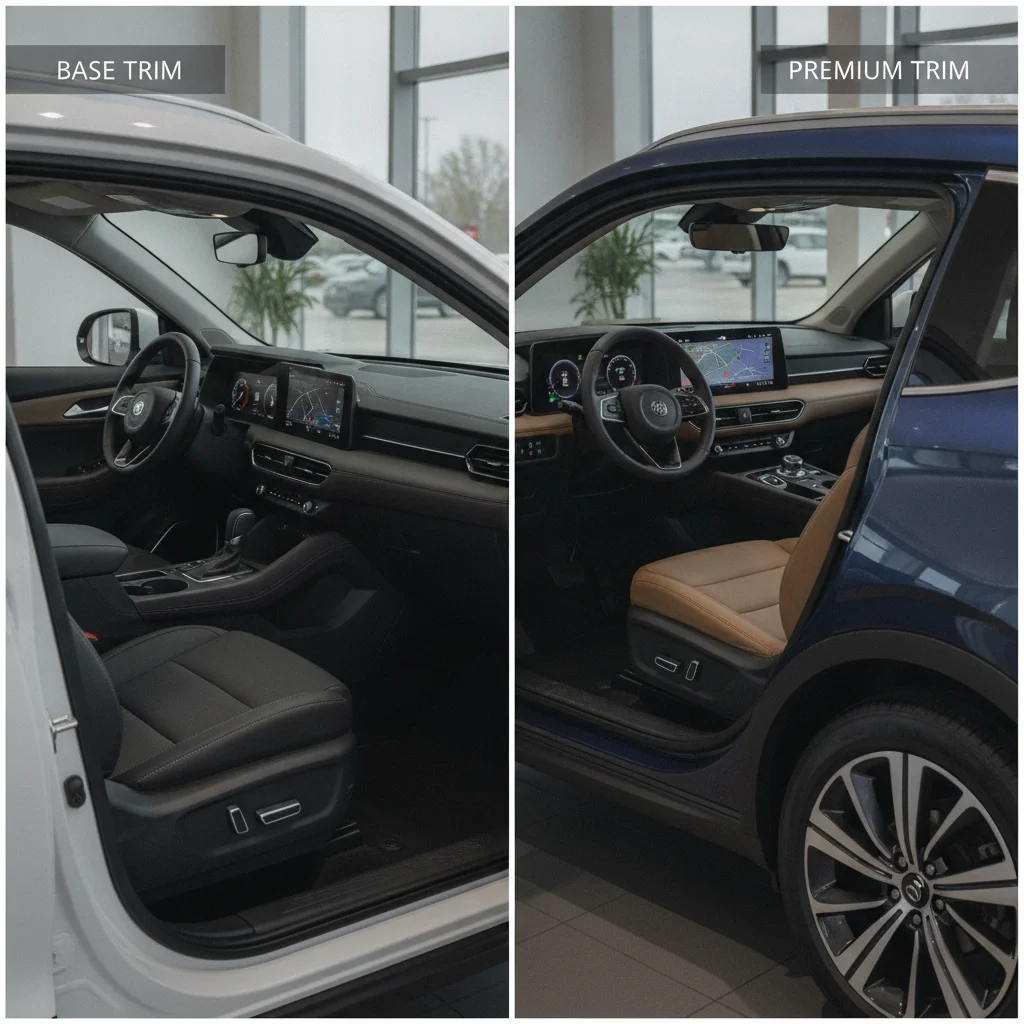
A trim level is a version of a vehicle model that comes with a specific set of standard features and equipment. Automakers offer multiple trims — from base to top-of-the-line — so buyers can choose the features they want at different price points. At resale time, the trim level you chose when you bought the car directly shapes how much a buyer or dealer is willing to pay. Some trims hold their value remarkably well; others erode faster than the base price you paid would suggest.
Residual value percentages used by lenders in lease calculations often vary by 3–8 percentage points between trim levels of the same model, reflecting the market's long-run demand for specific configurations.
Why Trim Level Is More Than a Badge on the Tailgate
When you walked into the dealership and chose between the LT, the EX, or the Limited, you weren't just picking a list of features — you were making a financial decision that would follow your vehicle for the next five to ten years. Trim levels are how automakers segment a single model into multiple products with meaningfully different price points and equipment lists. Understanding how that choice compounds over time is the first step toward smarter buying and selling decisions.
Think of it this way: a 2023 Honda CR-V LX starts around $30,000, while the top-trim Touring lands close to $40,000. Both are CR-Vs. Both will depreciate. But they won't depreciate at the same rate, and they won't attract the same buyers when you go to sell. The spread between those two price points doesn't stay fixed as the years pass — it narrows, sometimes dramatically.
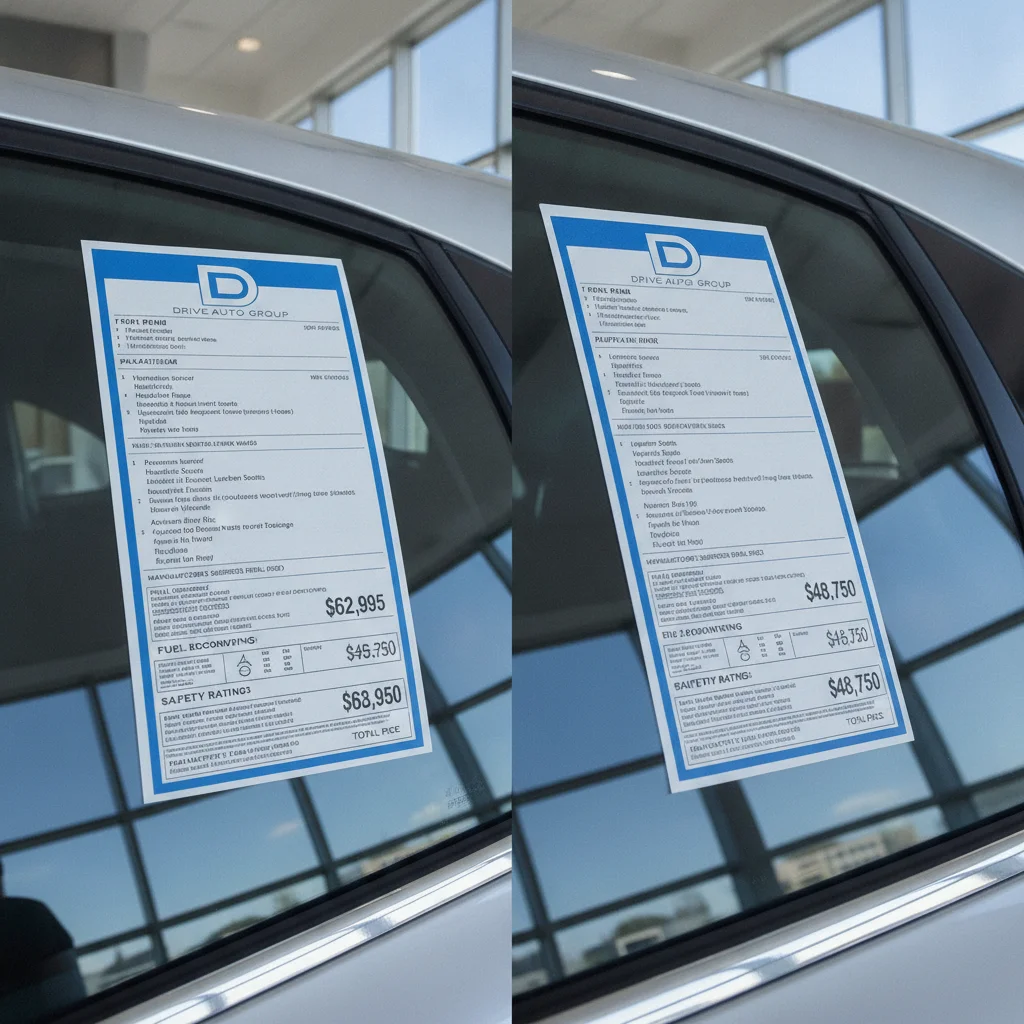
The core question sellers need to ask isn't "Is my car worth more because it's a higher trim?" The real question is: "Does the market value my trim's extra features enough to justify what I paid for them?" More often than not, the answer is nuanced — some features do, some don't, and knowing the difference is where money is made or lost at sale time.
For a broader picture of how individual variables interact with your final valuation, see how mileage, trim level, and color move your valuation number.
The Depreciation Curve: How Trim Levels Lose Value Differently
All vehicles depreciate, but the curve isn't identical across trim levels. A base trim typically loses value steadily because its lower starting price means there's less dollar value to shed. A top-trim vehicle often suffers a sharper initial drop because it launched at a premium that the used-car market won't sustain once the vehicle is no longer new.
49%
Average 5-year depreciation across all segments
According to iSeeCars.com research covering model years 2017–2022, the average vehicle loses approximately 49% of its value within five years of purchase.
3–8%
Residual value gap between trim tiers
Lease residual tables from major captive lenders commonly show a 3–8 percentage point spread in projected residual value between base and top trims of the same model.
$1,500
Average premium for factory AWD at resale
Edmunds data suggests all-wheel drive adds roughly $1,000–$2,000 to used-car transaction prices in markets where snow or off-road capability is a regular buyer concern.
62%
Retained value for well-chosen mid trims after 3 years
Analysis of iSeeCars and KBB historical data shows mid-range trims in popular truck and SUV segments frequently retain 60–65% of MSRP at the three-year mark.
$300–$500
Typical resale value added by a factory nav package
Industry appraisers and valuation tools routinely assign $300–$500 to factory navigation in model years 2018–2022, even when the original package cost $1,500–$2,500 new.
Here's a concrete example. Imagine a midsize truck where the base trim costs $35,000 and the loaded platinum trim costs $58,000. After three years, comparable used vehicles might show:
- Base trim: selling for roughly $24,000–$26,000 — about 70–74% retained
- Platinum trim: selling for roughly $36,000–$40,000 — about 62–69% retained
The platinum truck is worth more in raw dollars, yes. But the owner who paid $58,000 lost $18,000–$22,000 in three years. The base-trim owner lost $9,000–$11,000. The premium trim buyer effectively paid more for the privilege of losing more.
This pattern holds across most segments, though the gap varies by brand and model. Trucks and SUVs generally see smaller gaps between trim tiers than sedans or minivans. Luxury models sometimes invert the curve for top trims — but that's the exception, not the rule.
The Luxury Segment Plays by Different Rules
In the luxury segment — think BMW, Mercedes-Benz, and Audi — top trims and option packages often depreciate even more sharply than in mainstream segments. A loaded $80,000 S-Class may lose 60–65% of its value in five years, creating a large gap between purchase cost and resale return. Buyers in this segment are often better served by leasing or purchasing nearly-new certified pre-owned with the options they want already priced in by the first owner's depreciation hit.
CPO Programs and Trim Level Eligibility
Not all trims qualify equally for manufacturer certified pre-owned programs. Some automakers exclude base trims from their CPO tiers, effectively making mid-to-high trims more attractive to used-car buyers who want warranty coverage. If your vehicle qualifies for CPO certification, the trim level becomes a factor in whether a dealer will certify it and at what price premium.
Which Factory Packages Actually Slow Depreciation
Not all option packages are equal when it comes to resale. Buyers making used-car purchase decisions are looking for specific functionality, and when those features are factory-installed and verifiable, they're willing to pay for them. Here's how the major package categories tend to perform:
Powertrain and Capability Upgrades
Four-wheel drive, all-wheel drive, diesel engines, and towing packages consistently rank among the best value-retaining options. A used truck with a factory tow package will almost always outsell an identical truck without one, because towing capability is a primary reason buyers choose trucks in the first place. These features are also hard to add after the fact — you either have the hardware or you don't.
Active Safety Technology
Blind-spot monitoring, lane-keep assist, adaptive cruise control, and automatic emergency braking have crossed from luxury into expectation. As these features trickle into standard equipment on new models, their presence on a used vehicle becomes a stronger differentiator — particularly for safety-conscious buyers like families and older drivers.
Convenience and Comfort Features
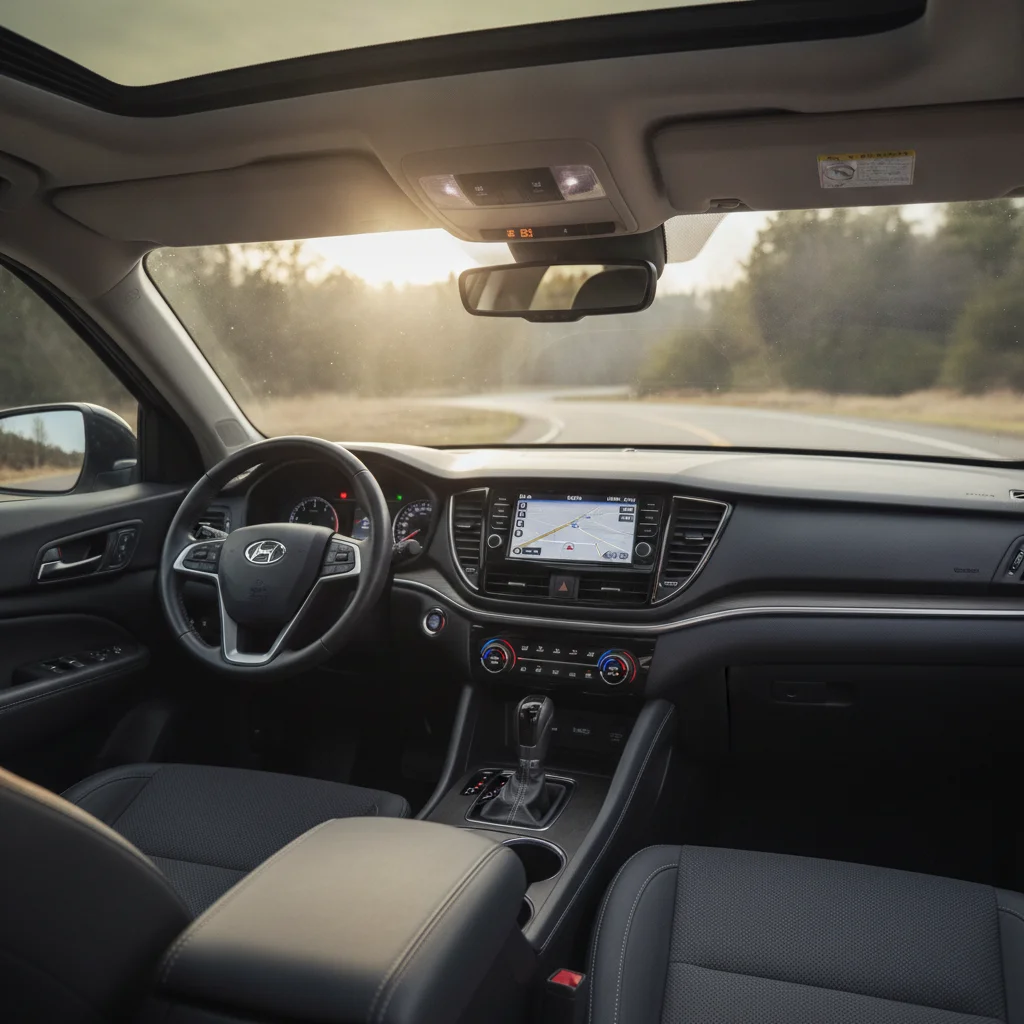
Heated front seats, a power liftgate, and a sunroof appeal to a wide swath of buyers. They're the features people use daily, they're noticeable in a test drive, and they're hard to replicate cheaply aftermarket. These hold value better than luxury niche items.
Infotainment and Technology Packages
This is where sellers often get a painful surprise. Built-in navigation systems, premium audio packages, and digital cockpit upgrades age quickly. A $2,500 navigation package installed in 2020 may add only a few hundred dollars to your 2024 resale value because virtually every smartphone does the same job for free. Technology depreciation within vehicle depreciation is real — and it accelerates.
Always Cross-Reference Factory Options
Before listing your vehicle, decode your VIN through the manufacturer's website or a third-party decoder like Autocheck. This generates a full list of factory-installed options that you can include in your listing. Buyers and dealers will cross-reference this data anyway — presenting it upfront builds trust and often leads to stronger offers.
Price to the Market, Not Your Receipt
Set your asking price based on what comparable vehicles in your market are actually selling for — not what you paid for the trim upgrades. Use at least three valuation sources and filter for your exact ZIP code. Overpricing based on original package cost is one of the most common seller mistakes and leads directly to extended days-on-market and lower final offers.
The Mid-Range Trim Sweet Spot
Across most vehicle categories, the second-from-top trim tends to offer the best balance of original price and resale retention. It includes the features that the broadest pool of buyers actually want — real safety tech, a comfortable interior, modern connectivity — without the niche luxury items that inflate the sticker price without building equivalent resale demand.
Consider the Toyota RAV4 lineup. The XLE Premium trim is frequently cited by valuation experts as the retention sweet spot. It includes a power moonroof, heated front seats, blind-spot monitoring, and a quality audio system — but it stops short of the pricier TRD Off-Road or Limited trims that add features most buyers don't prioritize in a crossover.
“The features that retain value best are the ones a buyer can't easily add themselves after purchase and wouldn't want to live without. Everything else is a luxury that the market reprices quickly.”
— Brian Moody, Executive Editor, Autotrader
The math works because used-car buyers are practical. They want enough features to feel like they're getting a deal compared to new, but they're not in the market to pay top dollar for a massaging driver's seat or a panoramic roof. When you price a vehicle with mid-range trim, you're selling to the widest possible audience, and a wider audience means more competitive offers.
It's also worth understanding how other seller behavior can quietly narrow that audience. Factors that quietly tank your trade-in value often have nothing to do with trim and everything to do with how the vehicle was cared for — but together with trim, they compound quickly.
Regional Demand: The Factor the Sticker Price Ignores
Resale value isn't calculated in a vacuum. The same trim level with identical packages can command meaningfully different prices depending on where you're selling. Regional climate and geography drive demand in ways that no national average captures cleanly.
A few practical examples:
- AWD and 4WD packages carry a premium in Minnesota, Colorado, and the Pacific Northwest. The same feature adds almost nothing to resale in Southern California or South Florida.
- Towing packages hold value in rural markets, coastal markets in the Southeast, and the Mountain West, where recreational vehicles and boats are common. In dense urban markets, they're a checkbox, not a feature.
- Sunroofs and convertible tops retain more value in temperate climates where they're usable year-round, less so in extreme cold or rain markets.

This is why national valuation tools like Kelley Blue Book and Edmunds give you a range, not a fixed number. The trim level is one input; the local used-car market's demand for that trim's features is the multiplier. When setting your asking price, research what comparable vehicles are actually selling for in your ZIP code — not just what they're listed for nationally.
Understanding how vehicles lose value over time gives you the foundational framework to interpret those regional differences accurately.
Comparing Factory Packages to Aftermarket Add-Ons
One of the most common mistakes sellers make is assuming that an aftermarket upgrade carries similar resale weight to a factory option. It almost never does, for several concrete reasons.
Verification: A factory package shows up on the window sticker and in the vehicle history. A buyer — and especially a dealer — can confirm it immediately. An aftermarket stereo or suspension lift requires trust, and used-car buyers extend very little trust by default.
Warranty and integration: Factory options are covered under the original manufacturer warranty and are integrated into the vehicle's electronics and safety systems. An aftermarket touchscreen installed by a third party might interfere with driver-assist systems, which raises liability red flags for buyers.
Quality perception: Even high-quality aftermarket parts are viewed with skepticism. When a buyer sees a non-factory item, their first question is "what else was modified, and did someone know what they were doing?" That skepticism suppresses offers.
The contrast between factory and aftermarket value is stark enough that some modifications actively reduce resale value below what the stock vehicle would fetch. For a full breakdown, aftermarket modifications and depreciation: what actually adds value walks through exactly which customizations help versus hurt.
Setting Realistic Expectations Before You List
If you're getting ready to sell, the first productive step is to separate what you paid for your trim and packages from what the market will pay today. These numbers are rarely the same, and expecting them to be is the fastest path to a frustrating and prolonged sale.
Here's a practical process for setting data-backed expectations:
- Identify your exact trim and packages using the original window sticker or your vehicle's build sheet, which you can often find through the manufacturer's VIN decoder.
- Pull comparable listings on CarGurus, AutoTrader, and Cars.com for the same model year, trim, and similar mileage within 100 miles of your location. This is your real-world market price, not a theoretical one.
- Use multiple valuation tools — Kelley Blue Book for private-party value, Edmunds True Market Value, and if trading in, get a direct offer from CarMax or a dealer to establish a floor.
- Adjust for condition and history, not just trim. Two identical trim levels with different service records and cosmetic condition can easily diverge by $1,500–$3,000 in actual offers.

One area sellers frequently overlook is the cumulative effect of ownership habits on what trim-level value remains at sale time. Things owners unknowingly do that accelerate their car's depreciation covers the behavioral side of value preservation that complements any trim-level advantage you started with.
Finally, remember that presentation matters. Before listing, address the items that deliver the best dollar-for-dollar return. Detailing and repair steps that deliver the best return on investment can meaningfully close the gap between a good offer and a great one — regardless of trim level.
Always Cross-Reference Factory Options
Before listing your vehicle, decode your VIN through the manufacturer's website or a third-party decoder like Autocheck. This generates a full list of factory-installed options that you can include in your listing. Buyers and dealers will cross-reference this data anyway — presenting it upfront builds trust and often leads to stronger offers.
Price to the Market, Not Your Receipt
Set your asking price based on what comparable vehicles in your market are actually selling for — not what you paid for the trim upgrades. Use at least three valuation sources and filter for your exact ZIP code. Overpricing based on original package cost is one of the most common seller mistakes and leads directly to extended days-on-market and lower final offers.

All claims are backed by peer-reviewed research. Sources on request.