Key Takeaways
Why Inherited Cars Are Legally Different from Regular Used Cars
When you inherit a vehicle, you don't automatically receive a clean title in your name the moment someone passes away. The car still legally belongs to the deceased — or more precisely, to their estate — until the proper legal and administrative steps are completed. Trying to sell before those steps are done isn't just difficult; in most states, it's not legally permissible at all.
This matters because a buyer can't register a vehicle without a clean, properly signed title. And a title can't be signed over unless the person signing it has the legal authority to do so. That authority flows from one of three sources: a court-appointed executor or administrator, a surviving joint owner, or a state-specific small estate process. Understanding which category applies to you is the very first thing to determine before you do anything else.
The good news is that these hurdles, while real, are manageable. Most states have streamlined procedures specifically designed for inherited vehicles. The process is paperwork-heavy, but it follows a predictable sequence. This guide walks through that sequence from beginning to end — from confirming your authority to sign, all the way to handing over the keys and completing the sale.
Before diving into the steps, it's worth noting that selling an inherited car is related to, but different from, keeping and registering one in your own name. If you're planning to hold onto the vehicle rather than sell it, see registering a car you inherited or received as a gift for the process that applies to you.
What You'll Need Before You Start
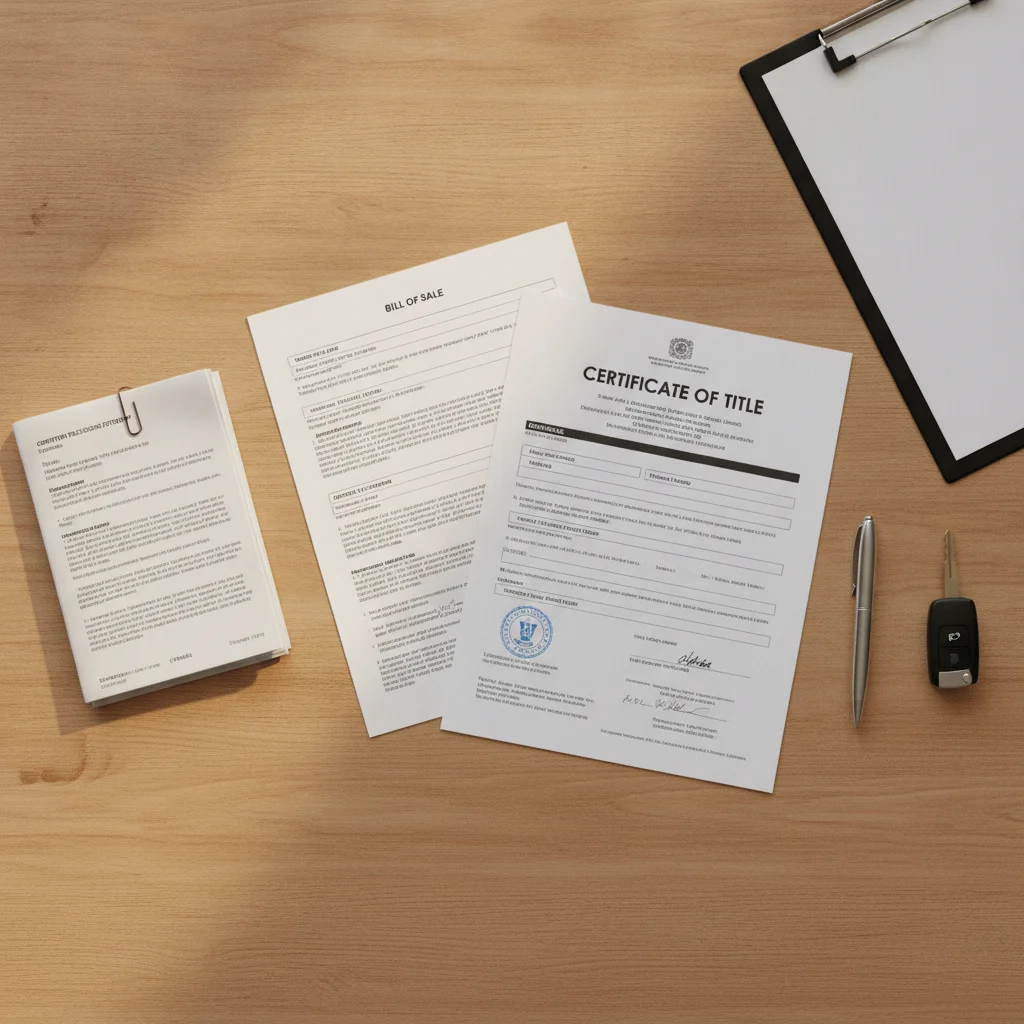
Gathering documents upfront will save you multiple trips to the DMV or courthouse. What you need depends on your role and your state's rules, but the categories below cover the vast majority of situations.
What you will need
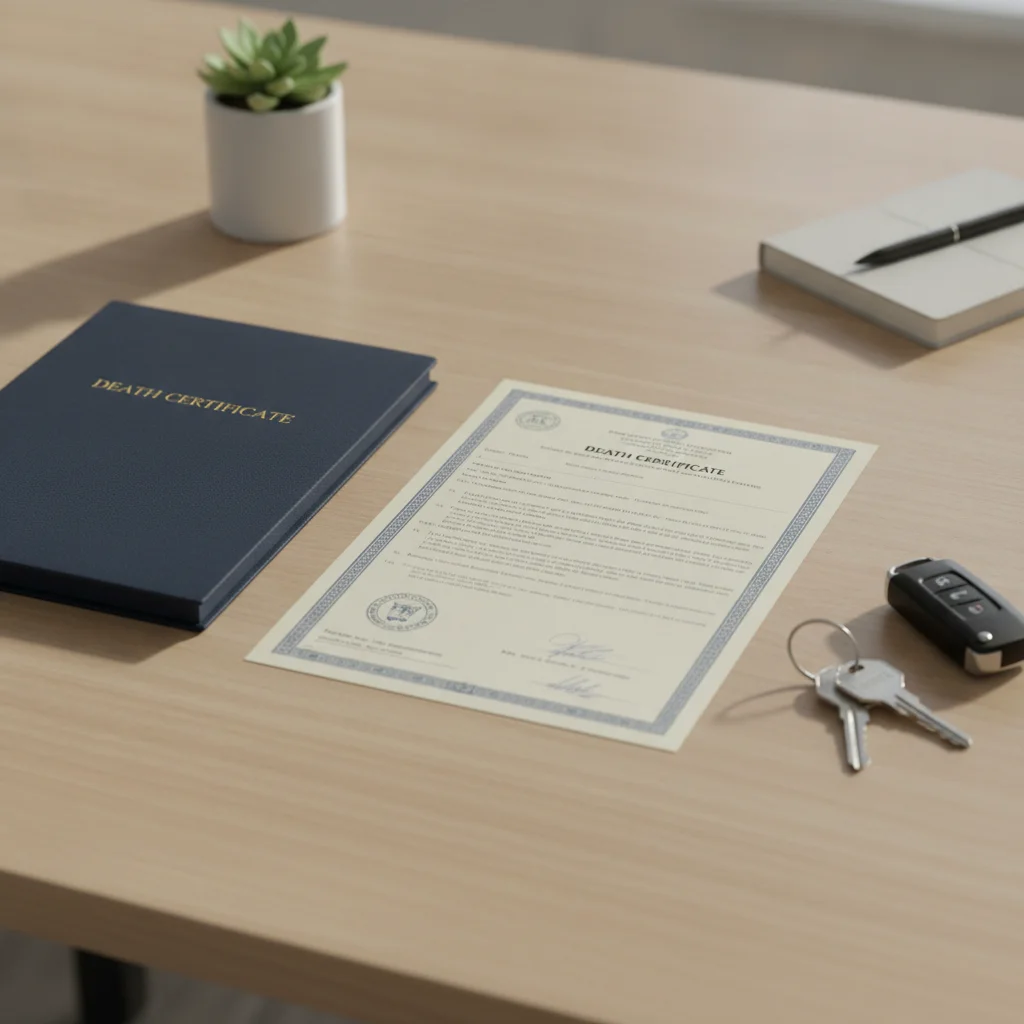
Certified Death Certificate
Required by the DMV and any financial institution to prove the owner has died and initiate any title change.
Original Vehicle Title
The foundational document for any title transfer — the back of the title must be signed by the authorized person to transfer ownership.
Letters Testamentary or Letters of Administration
Court-issued document proving you have legal authority to act on behalf of the estate, required for probated estates.
Small Estate Affidavit
A sworn statement used in lieu of full probate when the estate qualifies under state value thresholds.
Odometer Disclosure Statement
Required by federal law for vehicles under 10 years old — certifies the vehicle's mileage at time of sale.
Bill of Sale
Documents the terms of the sale and protects both parties legally after the transaction is complete.
Lien Release Letter
If the deceased had an outstanding loan on the vehicle, this document from the lender confirms the lien is cleared.
Notice of Transfer and Release of Liability
Filed with the DMV in many states after a sale to remove your responsibility for the vehicle going forward.
One document worth locating immediately is the vehicle's service history. Even though it doesn't affect the title transfer, a documented maintenance record meaningfully increases a buyer's confidence and can support a stronger asking price. See every document you need before listing your car for sale for a complete pre-listing checklist.
Step-by-Step: From Estate to Sale-Ready
The sequence below applies whether you're an executor handling a fully probated estate or an heir using a small estate affidavit. Some steps may not apply to your specific situation — for example, if the vehicle had a co-owner who is still living, you may be able to skip probate entirely. Read each step carefully and note where the process branches.
Locate the Title and Confirm How the Vehicle Was Titled
Find the original vehicle title. Check the deceased's files, home safe, filing cabinet, and safe-deposit box. If you can't locate it, contact the state DMV to request a duplicate — you'll need a death certificate and, depending on the state, proof of your authority to make the request.
Once you have the title, read it carefully. Note the following:
- Whose name or names appear as owner
- Whether multiple names are connected by "and" or "or"
- Whether there is a lienholder listed
- Whether there is a Transfer-on-Death beneficiary designated
The answers determine your next move. A TOD designation means you can proceed directly to the DMV with a death certificate. An "or" co-title means the surviving co-owner can sell without any estate involvement. Anything else typically requires either probate or an affidavit process.
Clear Any Outstanding Liens on the Vehicle
If the title lists a lender — a bank, credit union, or finance company — that lien must be cleared before the title can be transferred to anyone. Contact the lender directly with the death certificate. They will tell you the payoff amount (if any balance remains) and explain their process for releasing the lien.
Options here vary:
- If the loan is paid off, the lender should already hold a clear title or issue a lien release letter
- If a balance remains, the estate may need to pay it before the title can be transferred
- If the estate lacks funds, the vehicle may need to be sold as part of the probate process, with proceeds used to satisfy the debt
Once the lien is released, obtain the lender's written lien release letter. This document may need to accompany the title at the DMV.
Determine Whether Probate Is Required or Whether a Small Estate Shortcut Applies
Research your state's small estate affidavit rules. Your state's DMV website or department of revenue website typically has this information, along with the relevant forms. Key questions to answer:
- What is the estate value threshold in your state?
- Is the vehicle's value calculated alone, or is it part of the total estate value?
- Is there a waiting period before the affidavit can be used (some states require 30–45 days after death)?
- Does the affidavit need to be notarized?
If the estate exceeds the threshold or if the vehicle's ownership is disputed among heirs, you will need to go through formal probate. An estate attorney can help you file the petition and obtain Letters Testamentary, which is the court document that authorizes you to act as executor.
Obtain Your Authorization Documents
Depending on the path you're taking, obtain the appropriate authorization documents:
- Full probate: The probate court will issue Letters Testamentary (if there is a will) or Letters of Administration (if there is no will). These letters authorize you to act on behalf of the estate. They have an expiration date — check the date and make sure the DMV transfer happens while they're still valid.
- Small estate affidavit: Complete the state-specific affidavit form, have it notarized if required, and keep multiple copies. The DMV will retain one.
- TOD or surviving joint owner: A certified death certificate and your own photo ID are your primary documents.
At this stage, also confirm with your specific DMV whether you need to transfer the title into your name first, or whether you can sign as executor and transfer directly to the buyer. This varies significantly by state and affects your cost and timeline.
Transfer the Title — Into Your Name or Directly to the Buyer
Go to the DMV (or equivalent agency in your state) with your full document package: the original title, your authorization document (Letters Testamentary, affidavit, or death certificate), your photo ID, lien release if applicable, and any state-specific transfer forms.
If your state requires the title to pass through your name first, the DMV will issue a new title in your name. There will be a fee for this. Once you have the new title in your own name, you can treat the sale like any standard private party transaction.
If your state permits an executor-direct transfer, you'll sign the title in the seller's signature field, noting your capacity as executor. The exact phrasing matters — ask the DMV clerk how they need it written before you sign, because a correction on a title can require the whole process to restart.
Set the Sale Price, Prepare Disclosures, and Complete the Transaction
With a clean, transferable title in hand, you're ready to sell. Research fair market value using tools like Kelley Blue Book or NADA Guides, factoring in the vehicle's mileage, condition, and any known history. Be honest about the vehicle's condition in your listing — inherited vehicles often have deferred maintenance that should be disclosed upfront.
When a buyer is ready to proceed:
- Complete the odometer disclosure statement (required by federal law for vehicles under 10 years old)
- Complete a bill of sale that names you in your capacity (e.g., as executor) and includes all required fields
- Sign the back of the title as the seller, exactly as the DMV instructed
- Collect payment — cash, cashier's check, or a verified electronic transfer before handing over the keys
- Provide the buyer with the signed title, bill of sale, and any applicable release documents
- File a Notice of Transfer and Release of Liability with your state DMV if required
Keep photocopies of every document you give the buyer, as well as every document you received during the estate process. Store them for a minimum of three years.
Never Skip the Title-in-Your-Name Step if Your State Requires It
Some sellers try to avoid the intermediate title transfer step to save time and fees. In states where this transfer is legally required, skipping it creates a title defect that will surface when the buyer tries to register. The buyer's DMV will reject the paperwork and the deal will collapse — often after you've already been paid, creating a messy unwind.
Estate Debts Can Affect Your Right to Sell
If the estate has significant debts — medical bills, a mortgage, credit cards — creditors may have a claim against estate assets, including the vehicle. Selling before those claims are settled could expose you to personal liability as executor. Consult with an estate attorney before selling if you are unsure whether the estate is solvent.
Once the title is in your name and you've confirmed the vehicle's condition, you're ready to list. For a detailed walkthrough of the actual sale mechanics — how to sign the back of a title correctly, what a bill of sale must include, and how to handle a lien release — see how a private vehicle title transfer works.
Probate vs. Small Estate Affidavit: Which Path Applies to You
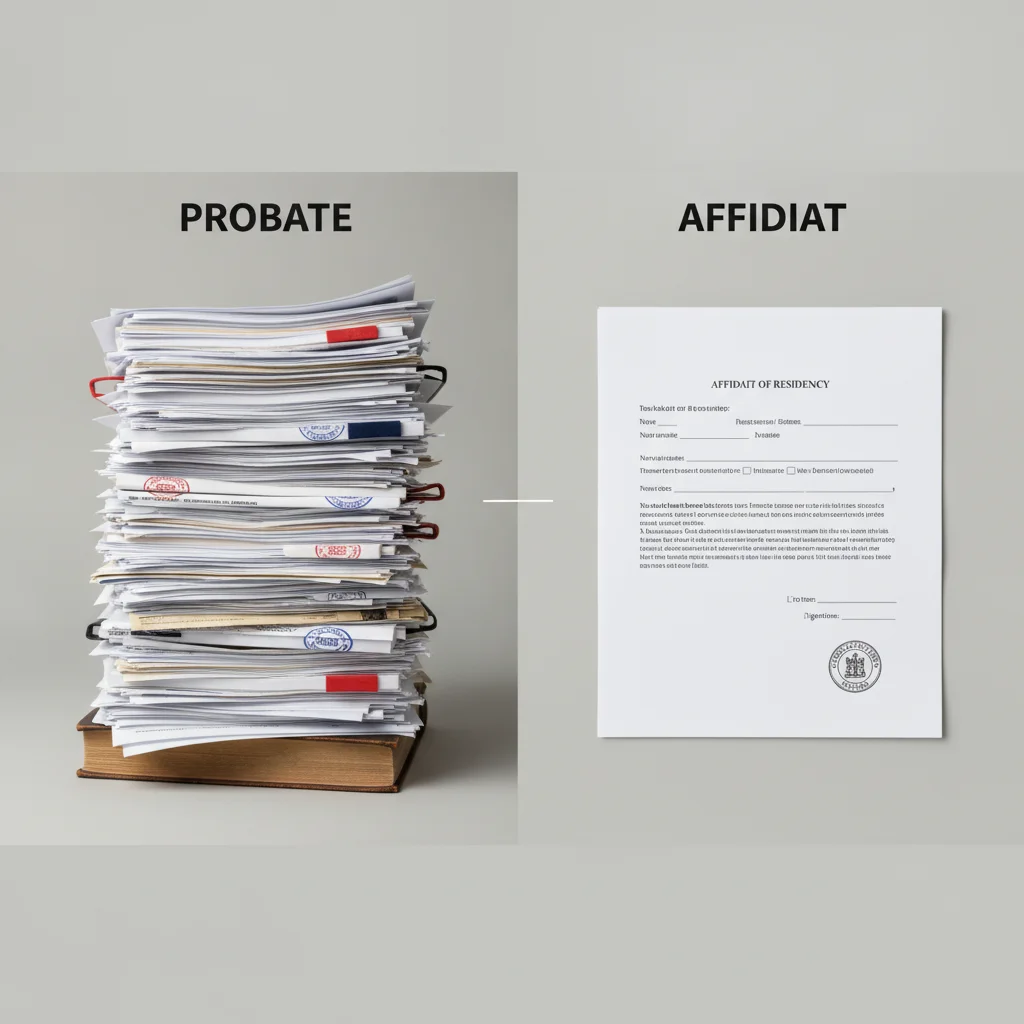
This is the question that determines how much time and money the process will cost you. Full probate is the court-supervised process of settling a deceased person's estate. It involves filing a petition, waiting for a judge to appoint an executor or administrator, and eventually receiving court authorization to transfer assets — including vehicles. Probate timelines range from a few months to over a year, depending on the state and the estate's complexity.
Small estate affidavits are a shortcut available in most states for estates that fall below a certain value threshold. The heir signs a sworn affidavit stating that the estate qualifies, and that document — rather than a court order — authorizes the DMV to transfer the title. The dollar threshold varies significantly by state: California's threshold is $184,500 (as of 2024), while others are as low as $25,000. Some states calculate the threshold based on the vehicle's value alone; others look at the entire estate.
| Situation | Likely Path | Key Document Needed |
|---|---|---|
| Large estate, multiple beneficiaries | Full probate | Letters Testamentary or Letters of Administration |
| Small estate, sole heir | Small estate affidavit | Affidavit of Heirship or state-specific form |
| Vehicle had a joint owner ("or" on title) | No probate needed | Death certificate + surviving owner's ID |
| Vehicle held in a living trust | No probate needed | Trust documents + trustee authorization |
| Vehicle transferred via TOD designation | No probate needed | Death certificate + beneficiary ID |
Transfer-on-Death (TOD) designations, sometimes called beneficiary designations, are available for vehicle titles in about half of U.S. states. If the deceased added a TOD beneficiary to the title, that person can transfer the title directly at the DMV using only a death certificate and their own ID — no probate, no affidavit required. It's worth checking the original title for any such designation before assuming probate is necessary.
Check the Title for a TOD Beneficiary First
Before assuming you need probate, inspect the original title for a Transfer-on-Death designation. This is a line or box on the title itself, sometimes labeled "Beneficiary" or "TOD." If the deceased named you there, you may be able to transfer the title at the DMV with nothing more than a death certificate and your own ID — saving weeks of process.
Certified Copies of the Death Certificate Are Worth Getting in Bulk
You will use more certified death certificate copies than you expect. Order at least five to eight copies from the county vital records office when you first begin the estate process. Each institution — the DMV, the lender, the probate court — typically requires its own original certified copy, not a photocopy.
A Pre-Sale Inspection Protects You from Post-Sale Disputes
Having the vehicle inspected by an independent mechanic before listing it creates a documented record of its condition at the time of sale. If a buyer later claims you concealed a defect, the inspection report shows exactly what was known and disclosed. This is especially useful when selling a vehicle whose full history you don't know.
Joint ownership situations can get complicated quickly. If two names appear on the title connected by the word "and," both parties typically needed to sign for any transfer — which creates a problem when one owner has died. If the connector was "or," the surviving owner may have full authority to sell without any additional process. For more on how titling language affects your options, see how joint ownership affects a car sale.
State-by-State Variation: What Changes and What Doesn't
The federal requirement for an odometer disclosure on vehicles under 10 years old applies in every state. Everything else — affidavit thresholds, notarization requirements, whether the title must be transferred into your name before you can sell, and how many witnesses a signature requires — is state law and varies considerably.
A few patterns are worth knowing:
- Some states require the title to go through your name first. In these states, you cannot sign the title directly over to a buyer as executor. You must first transfer it into your own name, then sign it over. This means two rounds of DMV fees and paperwork.
- Other states allow executor-direct transfers. Here, an executor with valid Letters Testamentary can sign the title as the seller without taking personal ownership first. This is faster and cheaper but requires careful attention to how the signature line is completed.
- Notarization rules differ. Some states require a notarized affidavit. Others require a notarized title signature. A few require both. Some require none.
- Surviving spouse rules are often more lenient. Many states have simplified procedures specifically for spouses that don't apply to other heirs.
Always verify your state's current rules directly through the DMV's official website or by calling the office. Requirements change and some states have updated thresholds recently. For a broader look at how state-level rules affect private sales generally, the private sale paperwork state-by-state overview is a useful companion reference.
Acting as Executor Carries Legal Responsibility
As an executor, you have a fiduciary duty to the estate's beneficiaries. Selling a vehicle below fair market value, failing to clear a lien, or improperly signing a title can expose you to personal liability. If multiple heirs stand to benefit from the vehicle's sale, document your decision-making process carefully and consider getting a written appraisal to justify your asking price.
Do Not Sign a Title Before You Have Legal Authority
Signing a title as the seller before you have court authorization or a valid affidavit in place is not just ineffective — it may constitute fraud. The buyer will be unable to register the vehicle, and you could face legal consequences. Wait until your authorization documents are fully executed and in hand before signing anything.
Completing the Sale: Disclosures, Bill of Sale, and Handing Over the Keys
Once you have a clean title in the appropriate name — yours, the estate's, or transferred directly from the estate to the buyer — the actual sale mechanics work the same way as any private party transaction. But a few inherited-vehicle specifics are worth keeping in mind.
Odometer Disclosure
Federal law (the Truth in Mileage Act) requires a signed odometer disclosure for any vehicle under 10 model years old. As the seller — even as an executor — you are responsible for certifying the mileage. If you don't know the vehicle's true mileage, you must disclose that the reading is unknown rather than certifying an inaccurate number. Never guess or round up. An incorrect disclosure is a federal violation.
"As-Is" Sales and Disclosure Obligations
Most private party sales are completed as-is, meaning the buyer accepts the vehicle in its current condition without warranty. However, "as-is" does not mean you can conceal known defects. If you're aware of a mechanical problem, flood damage, a salvage history, or a rebuilt title, you are generally obligated to disclose it. Failure to do so can expose you to fraud claims even after the sale. If you inherited the vehicle and genuinely don't know its full history, say so — in writing, on the bill of sale.
The Bill of Sale
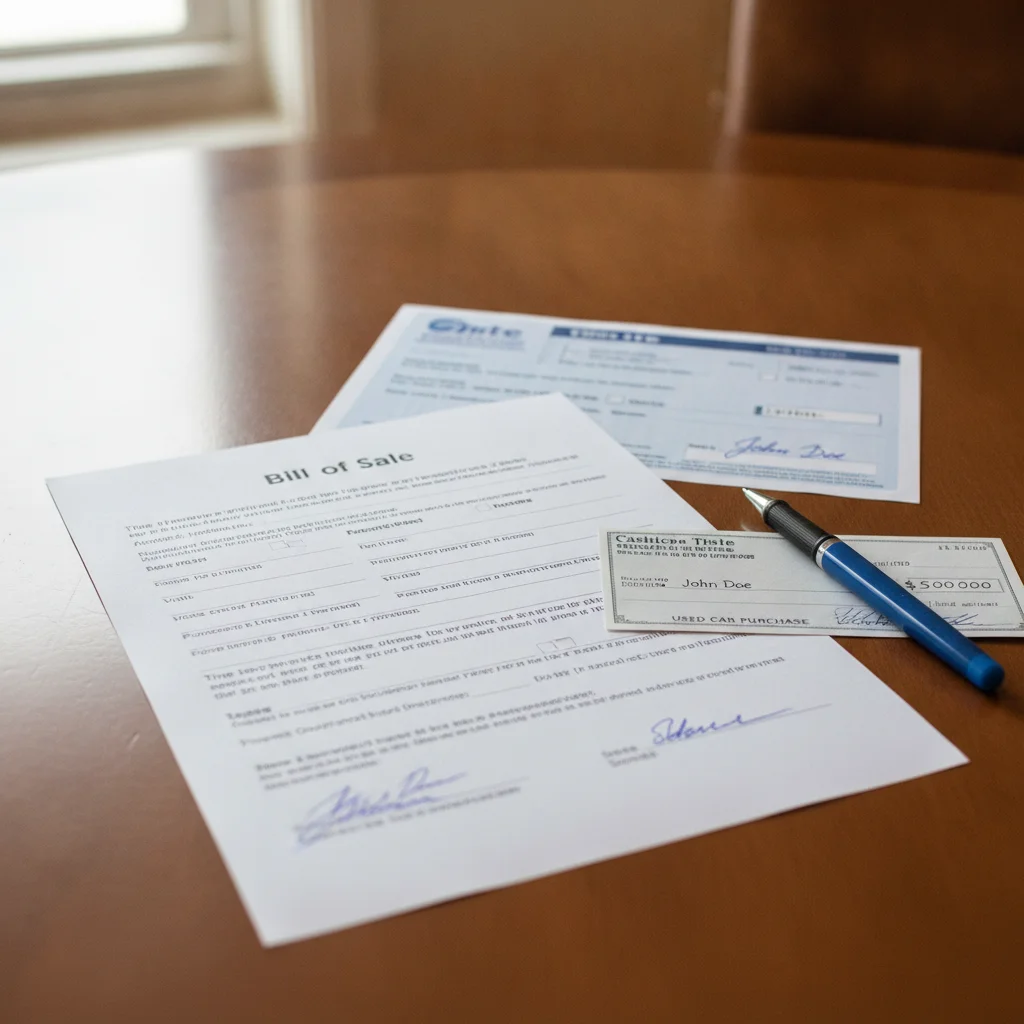
A properly written bill of sale protects you after the transaction closes. It should include the buyer's and seller's legal names and addresses, the vehicle's VIN, make, model, year, odometer reading, sale price, and the date. Note your role — for example, "Jane Smith, Executor of the Estate of Robert Smith" — so the document accurately reflects who is selling and in what capacity. For a detailed guide on what this document needs to say, see what a bill of sale must include to protect both parties.
After the Sale
Notify your state DMV of the sale if your state requires it (many do, via a Notice of Transfer and Release of Liability form). Keep copies of every document — the signed title, the bill of sale, the affidavit or court letters, and any odometer disclosure — for at least a few years after the transaction. If a buyer later claims a problem with the title or the vehicle's history, that paper trail is your protection.
Selling a private party vehicle involves more moving parts than most people expect, even without the added layer of inheritance. For a comprehensive look at how private party sales work from listing to closing, the hub covers each phase in depth.

All claims are backed by peer-reviewed research. Sources on request.