Key Takeaways
Summary
22 items · 45 minutes to 2 hours depending on loan status and record organization
Why Paperwork Comes Before the Listing, Not After
Most private sellers list their car first and scramble for documents when a buyer actually shows up. That sequence causes deals to fall apart — buyers get cold feet when a seller can't produce a clean title on the spot, or when the odometer disclosure is missing and the DMV won't complete the transfer. Getting your paperwork in order before you post is one of the highest-leverage moves a private seller can make.
Think of it this way: your listing competes with dozens of others. A seller who can say "I have the title in hand, full service history since 2018, and a clean Carfax" is immediately more credible than someone who says "I'll track the title down once we agree on a price." That credibility shortens your time on market and strengthens your negotiating position.
This checklist walks through every document you should have assembled — or at least located — before your first buyer inquiry comes in. Some items are legally required. Others are optional but valuable. The checklist groups below tell you which is which. If you're also comparing the seller experience to trading in at a dealership, see our guide on how documentation requirements differ between trade-ins and private sales — dealers absorb a lot of the title paperwork you'll need to handle yourself here.

Tools and Resources You'll Need
Before working through the checklist, gather the resources below. Some are physical documents you already have; others are services that generate new records on demand.
State DMV Website
Verify your state's specific title transfer requirements, download official bill of sale forms, and apply for a duplicate title if needed.
Carfax or AutoCheck
Pull a vehicle history report using your VIN to review accident history, title brands, and mileage discrepancies before buyers do.
NHTSA Recalls Database (recalls.nhtsa.gov)
Check your VIN for any open federal safety recalls and print completion confirmation for your document packet.
Your Lender's Payoff Department
Obtain a 10-day payoff quote and understand the lien release process if you still owe money on the vehicle.
Document Scanner App (e.g., Adobe Scan, Microsoft Lens)
Digitize service records, receipts, and other paper documents so you can share them electronically with prospective buyers.
Emissions Testing Station
Obtain a smog or emissions certificate if your state requires sellers to provide one at the point of sale.
Escrow Service (e.g., Escrow.com or a local title company)
Facilitate simultaneous loan payoff and title transfer for higher-value or out-of-state transactions to protect both parties.
The Full Pre-Listing Document Checklist
Work through each group in order. The first group — title and ownership — is the foundation everything else builds on. Don't skip ahead to service records if you haven't confirmed your title status first.
Title and Ownership Documentation
Legally Required Transfer Documents
Vehicle History and Condition Records
Disclosure and Liability Protection
Post-Sale Filings to Prepare in Advance
Never Sign the Title Before You Have Payment
Once you sign the title and hand it to a buyer, ownership transfer has effectively begun in most states. Do not endorse or release the title until you have received cleared funds — whether cash, a cashier's check confirmed by the issuing bank, or a verified electronic transfer. Personal checks and even some cashier's checks can bounce or be fraudulent. If a buyer pressures you to sign first and pay later, walk away.
Salvage or Rebuilt Titles Require Extra Disclosure
If your vehicle carries a salvage, rebuilt, or flood-damage title brand, you are legally required to disclose this in most states. Selling a branded-title vehicle as clean is considered fraud, even if the buyer didn't ask. Some states require branded titles to be physically marked or use a different form. Check your DMV's guidance specifically for branded title transfers before listing.
Out-of-State Sales Add Complexity
When selling to a buyer in a different state, you must satisfy your own state's seller requirements and the buyer must satisfy their state's registration requirements. Emissions certificates issued in your state may not be accepted in theirs. Use an escrow or title service for out-of-state private sales whenever possible — the added cost is worth the legal protection.
State-by-State Variations You Must Know
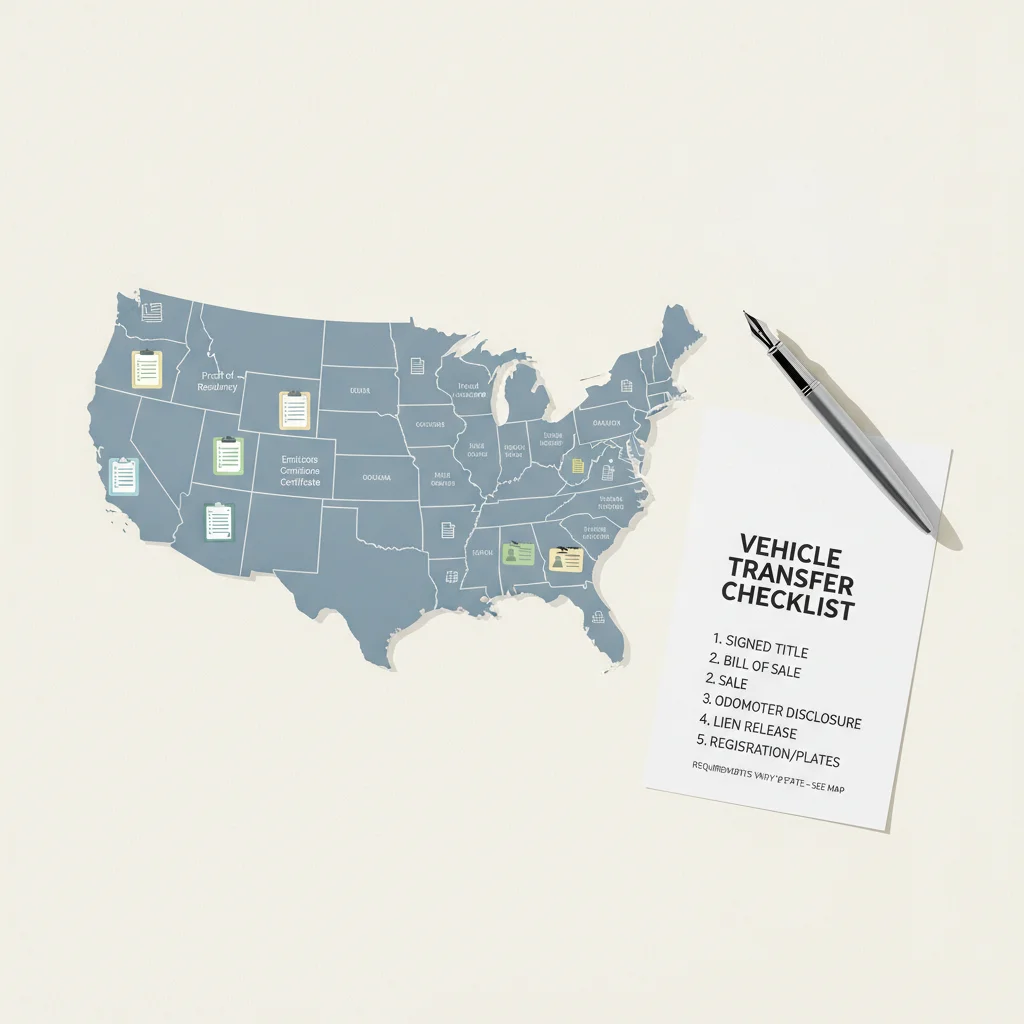
While the federal government mandates odometer disclosure and sets standards for lien releases, states control most of the remaining paperwork requirements. What's optional in Texas may be mandatory in California. Below are the most common state-level variations sellers encounter.
Bill of Sale
Most states don't legally require a bill of sale for a private vehicle transfer, but roughly a dozen do — and many more strongly recommend one for liability purposes. States like Louisiana, Maryland, Montana, Nebraska, New Hampshire, and West Virginia require a bill of sale as part of the title transfer process. Even where it's not required, a bill of sale protects you from parking tickets, toll violations, and accidents that occur after the sale but before the buyer re-registers the vehicle. Our state-by-state overview of private sale paperwork requirements breaks this down in detail.
Smog and Emissions Certificates
California requires sellers to provide a smog certificate issued within 90 days of the sale for most vehicles. Colorado, Connecticut, Illinois, New York, Texas (in certain counties), and a handful of other states have similar requirements tied to county of registration or vehicle age. Check your state DMV website to confirm whether the obligation falls on the seller or the buyer — it varies.
Safety Inspection Certificates
States including Pennsylvania, New York, New Jersey, Virginia, and Missouri require valid safety inspection stickers. If yours has lapsed, the buyer may need to get a fresh inspection after purchase — or you can get one done pre-sale to remove that friction from negotiations.
As-Is Disclosure
Some states require sellers to provide a written "as-is" disclosure or use a state-issued form. Even where it isn't required, including one protects you from post-sale disputes about mechanical issues the buyer claims you concealed.
Federal Odometer Fraud Is a Felony
The Federal Odometer Act makes it illegal to misrepresent a vehicle's mileage during a sale. The odometer disclosure form isn't optional paperwork — falsifying it carries penalties of up to $10,000 per violation and potential federal criminal charges. Record the exact mileage at the time of sale, sign the form, and have the buyer sign it as well. Keep a copy. This applies to any vehicle under 10 model years old; vehicles 10 years or older are exempt from the federal requirement but may still be covered by state law.
A Co-Owner Must Be Present or Provide a Power of Attorney
If the title lists two owners joined by 'and' (rather than 'or'), both owners must sign the title for the transfer to be legal. If one owner is unavailable, you'll need a notarized power of attorney authorizing one party to sign on behalf of the other. Titles listing owners with 'or' only require one signature. Check your title language carefully — this is a common sticking point that delays closings at the last minute.
Transfer of License Plates
In most states, license plates stay with the seller when the vehicle is sold. The buyer registers with their own plates. A few states — including Connecticut, Kansas, and North Dakota — allow plates to transfer with the vehicle. Confirm this with your DMV so you don't accidentally let your registration travel with the car.
What to Do If Your Title Is Missing or Has a Lien
Lost or Destroyed Title
If you've misplaced the title, don't list the car until you've applied for a duplicate. Every state DMV allows this — the form is typically called an Application for Duplicate Certificate of Title. Fees are usually $10–$25. Processing takes anywhere from a few days (expedited) to several weeks. In most states you can initiate this online. Do it immediately — a buyer who asks for the title and you don't have it will almost certainly walk.
Title with a Lien (You Still Owe on the Loan)
If you're still making payments, the lender — not you — holds the physical title. You have two main options:
- Pay off the loan before the sale. Once the loan is settled, the lender releases the lien and you receive a clean title, usually within 2–4 weeks.
- Coordinate a simultaneous payoff at closing. The buyer pays you, you use those funds to pay off the lender at the same time, and the lender releases the title directly to the buyer (or to the buyer's lender if they're financing). This requires careful coordination — ideally done at a bank or through an escrow service. Some lenders will cooperate with this process; call yours early to understand their specific procedure.
Never accept a partial payment plan where the buyer takes the car before the lien is cleared. You remain legally liable for a vehicle that's titled in your name, even if someone else is driving it. For a broader look at what the buyer will be reviewing on their end, see the paper trail that should come with every used car — understanding their checklist helps you anticipate their questions.
For sellers using instant offer platforms where the platform handles the transaction, prepping your car before submitting a VIN covers how loan status affects the offer process specifically.

Organizing and Presenting Your Documents to Buyers
Having the right documents is only half the job. Presenting them in a way that builds buyer confidence is the other half. Here's a practical approach that works whether you're meeting a buyer in person or shipping documents for an out-of-state sale.
Create a Document Packet
Place all documents in a clear folder or envelope: title on top, followed by the bill of sale template (pre-filled with your information, leaving buyer fields blank), odometer disclosure, service records in chronological order, and any remaining extras like the window sticker or warranty booklet. Label the folder with the year, make, model, and VIN.
Make Copies Before You Sign Anything
Before the buyer arrives, photocopy or scan everything — especially the title. Once you sign the title over, your copy is your only proof of what the title said before transfer. Keep records for at least 5 years after the sale.
Notify the DMV Promptly After Sale
Most states allow — and some require — sellers to file a Notice of Release of Liability or similar form with the DMV immediately after the sale. This formally records the date of transfer and protects you if the buyer doesn't re-register the vehicle quickly. File it the same day you hand over the keys.
For a complete walkthrough of every legal step from first contact to final DMV filing, see everything involved in a legal private car sale. And if you want to verify you're pricing the car competitively before any of this matters, run through this pre-listing valuation checklist first.
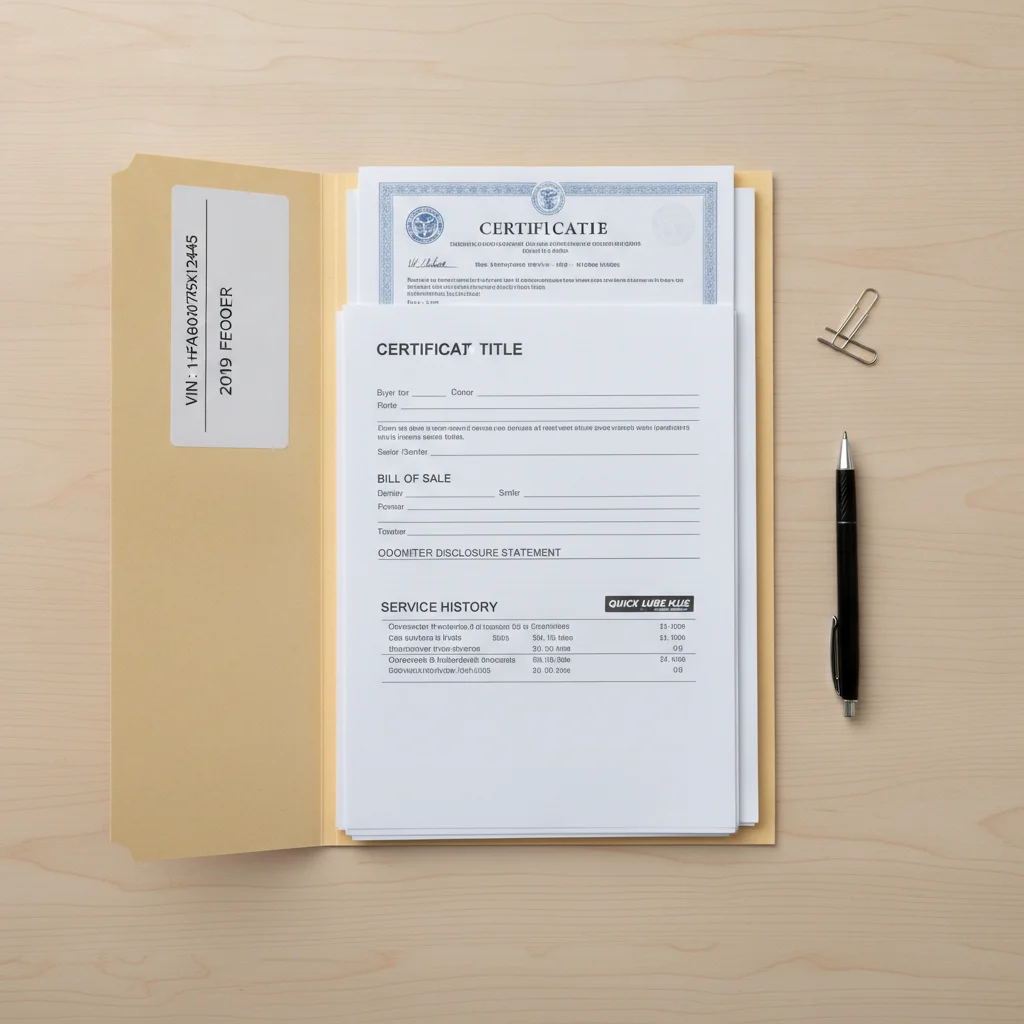
Sellers who walk into a buyer meeting with a complete, organized document packet consistently close faster and at higher prices. The paperwork isn't just administrative — it's part of your pitch.

All claims are backed by peer-reviewed research. Sources on request.