Key Takeaways
Option A
Brake Warning Light
The urgent red flag for your primary braking system.
Best for: Alerting drivers to critical issues like low brake fluid, brake pad wear, or hydraulic failure that directly compromise stopping power.
Option B
ABS Warning Light
The targeted alert for your anti-lock braking system.
Best for: Signaling faults in the electronic ABS system that affect controlled braking in emergencies, not your basic ability to stop.
If you see a red brake warning light while driving
Brake Warning Light
Treat this as an emergency. Slow gradually, avoid hard stops if possible, and get off the road safely. Do not ignore a red brake light — it signals your core stopping ability may be compromised.
If you see only a yellow ABS light with no other brake symptoms
ABS Warning Light
You can drive cautiously to a shop, but avoid situations that require panic stops. Your standard brakes work, but you've lost anti-lock protection in emergency braking.
If both lights appear at the same time
Brake Warning Light
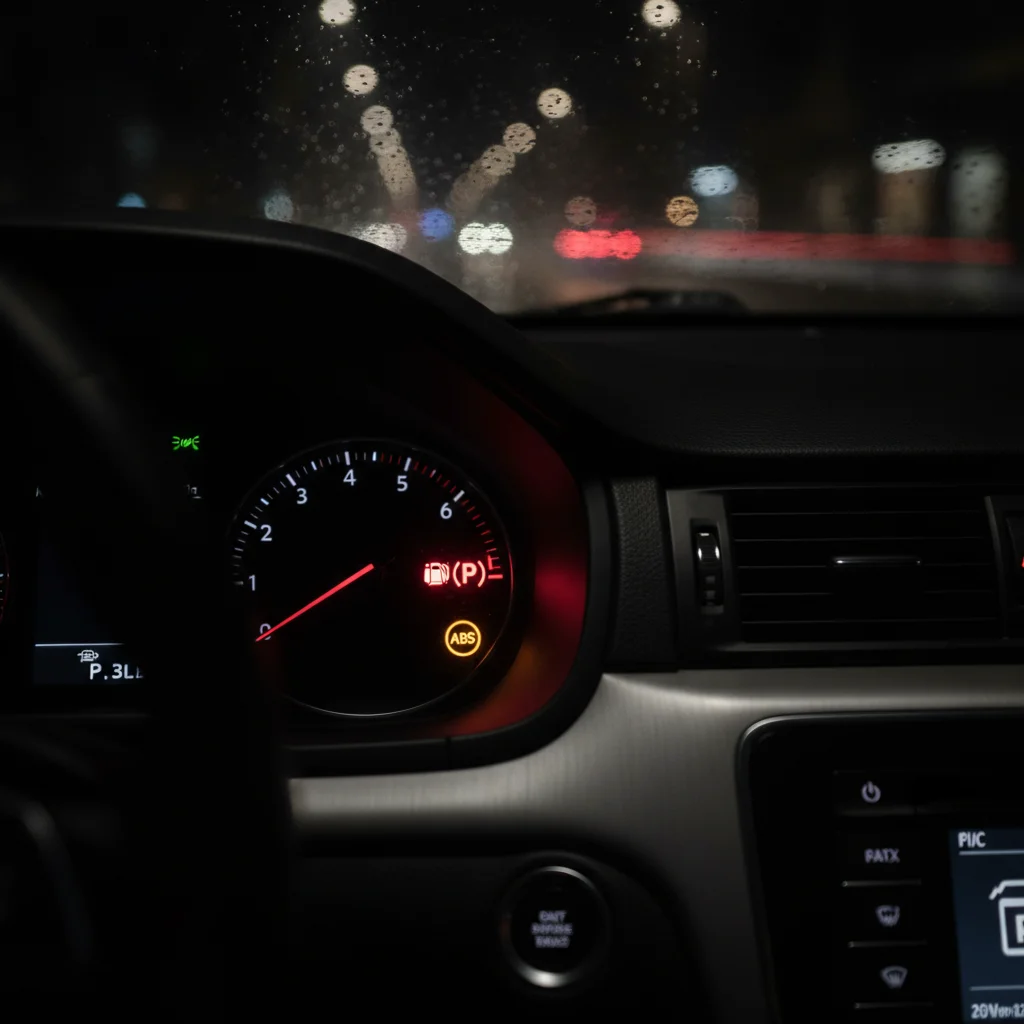
When both the brake and ABS lights illuminate together, assume a serious brake system failure. Pull over when safe, and arrange a tow — do not risk driving further.
If your brake light comes on only when the parking brake is engaged
Brake Warning Light
This is a benign trigger — the same light monitors parking brake status on most vehicles. Fully release the parking brake and confirm the light goes off before driving.
If you want to understand warning lights during a used car test drive
Brake Warning Light
Any brake or ABS light showing during a test drive is a red flag on a used car. Either indicates deferred maintenance or hidden brake system problems that add real cost.
Why Drivers Confuse These Two Lights
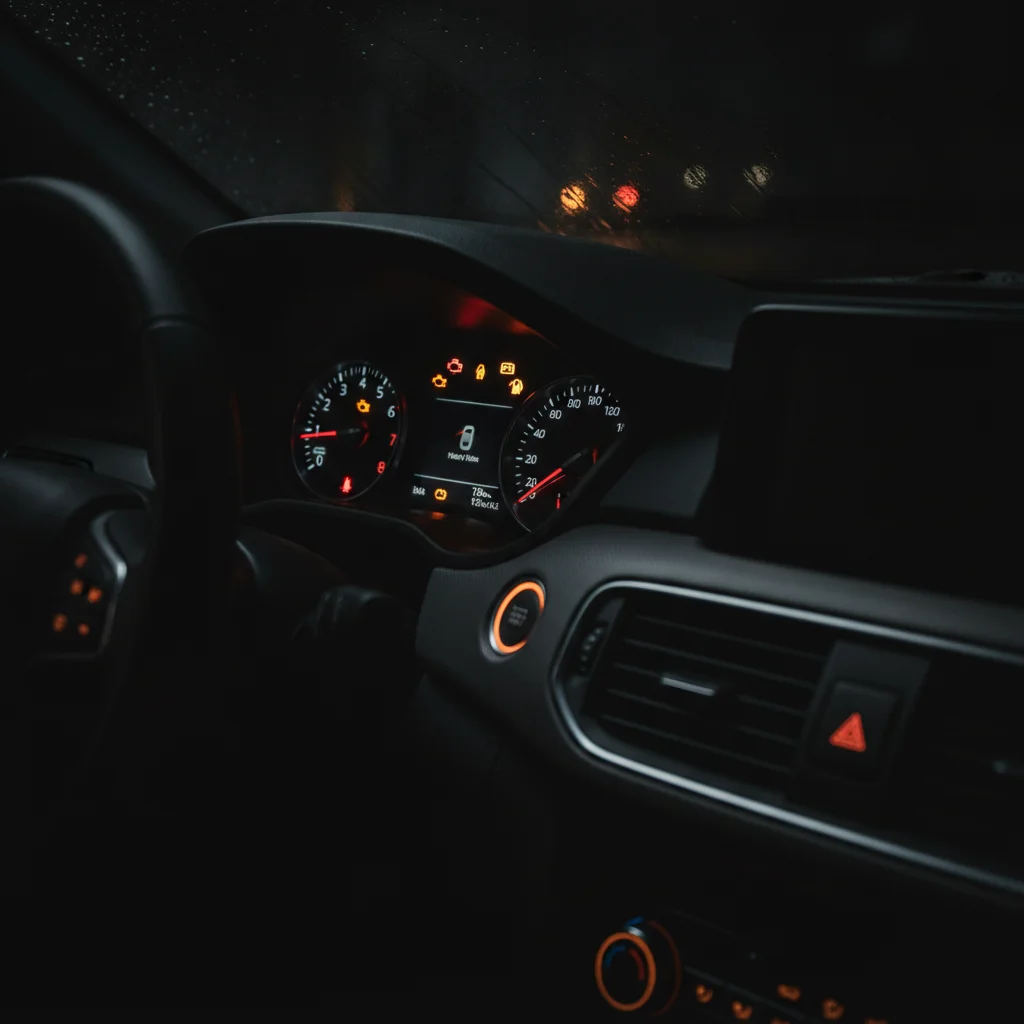
Walk into any auto parts store and describe a glowing symbol on your dashboard, and the staff will almost always ask the same first question: What color is it? Color matters enormously in the warning light hierarchy. But when it comes to brake-related lights, even experienced drivers get confused — because your car can display two completely different alerts that both relate to stopping.
The brake warning light — typically a red exclamation point inside a circle, sometimes paired with the letter P or the word BRAKE — monitors your primary hydraulic braking system. The ABS warning light — usually an amber or yellow indicator reading ABS — monitors an entirely separate electronic system layered on top of your base brakes.
These systems are related in function but independent in design. Confusing one for the other can lead to dangerous decisions: dismissing a serious brake failure as a minor ABS glitch, or panicking unnecessarily over an ABS fault that leaves your normal brakes fully intact. See our complete dashboard warning light reference for the full picture of what every symbol demands from you.
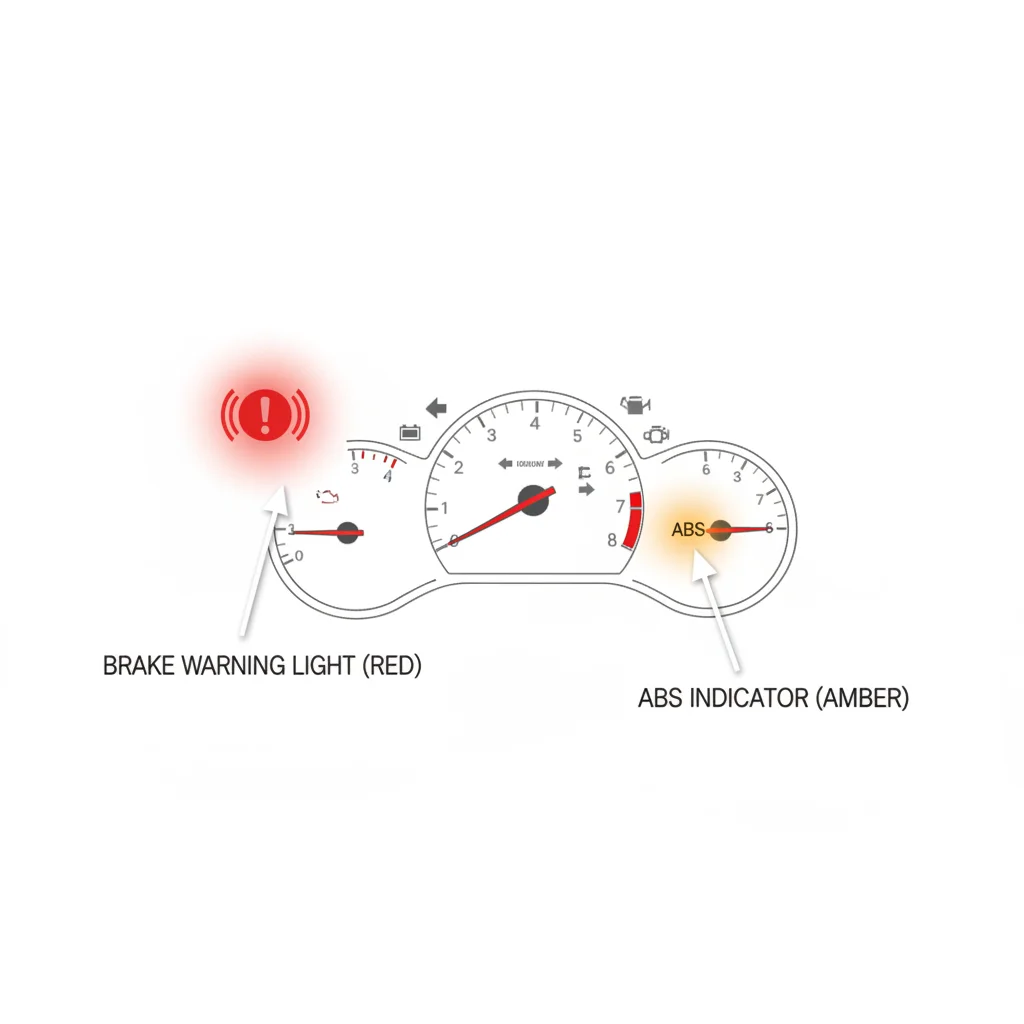
Think of it this way: your hydraulic brakes are the foundation of the house. Your ABS is the smart alarm system installed inside it. A crack in the foundation is a structural emergency. A fault in the alarm system is a problem worth fixing — but the walls aren't falling down yet.
What the Brake Warning Light Actually Monitors
Your brake warning light ties into several different inputs, which is why it can appear under very different circumstances. Understanding what it's watching helps you make better decisions when it illuminates.
Parking Brake Engagement
Most vehicles share a single indicator for both the parking brake and brake system alerts. If this light comes on as you start moving, the first thing to check — literally before anything else — is whether your parking brake is fully released. A partially engaged parking brake will trigger the light, create a burning smell, and accelerate rotor and pad wear dramatically. This is a non-emergency trigger, but one that's easy to miss, especially in cold weather when parking brakes can stick slightly.
Brake Fluid Level
A float sensor in your brake fluid reservoir monitors fluid level. When the fluid drops below a minimum threshold, the brake light activates. Brake fluid doesn't evaporate — if the level is low, it's gone somewhere. Two possibilities: brake pads have worn down significantly (as pads wear, more fluid fills the caliper space, lowering reservoir level), or there's a leak in the system. Both scenarios require prompt attention. A slow leak that becomes a sudden failure is exactly the kind of escalation that turns a $200 repair into a $1,500 one — or worse, an accident.
Hydraulic Pressure Imbalance
Modern brake systems are split into two hydraulic circuits (typically front-left/rear-right and front-right/rear-left) so that a failure in one circuit doesn't eliminate all braking. However, a significant pressure imbalance between circuits triggers the brake warning light. This can indicate a failing master cylinder, a ruptured brake line, or a stuck caliper. This is the most serious trigger category — changes in brake pedal feel almost always accompany this fault.
Worn Brake Pads (on equipped vehicles)
Some vehicles include a wear sensor in the brake pad itself. When the pad wears to a critical thickness, the sensor grounds out and illuminates the brake warning light (or a dedicated pad wear indicator). This is a maintenance alert — still important and time-sensitive, but not a same-day emergency in most cases.
22%
Vehicles with brake system defects in roadside inspections
The Commercial Vehicle Safety Alliance found brake violations in over one-fifth of vehicles checked during annual roadcheck inspections, underscoring how often brake issues go unaddressed.
$300–$800
Average brake repair cost when caught early
Industry repair data consistently shows that addressing brake issues at the warning light stage costs significantly less than repairs required after component failure or accident damage.
5x
Cost multiplier when brake leaks escalate to failures
According to ASE-certified technician estimates, a hydraulic brake line leak caught early averages $250–$400 to repair; the same failure after total brake loss can cost $1,500 or more including caliper and rotor damage.
What the ABS Warning Light Actually Monitors
Anti-lock braking systems prevent wheel lockup during hard braking by modulating brake pressure at each wheel faster than any driver could. When you need to stop hard on wet pavement or gravel, ABS keeps you in control rather than sliding in a straight line with locked wheels. It's a genuinely valuable safety system — but its warning light means something very different from the red brake light.
The ABS module continuously monitors wheel speed sensors at each corner of the vehicle. These sensors report rotational speed dozens of times per second. When the module detects a mismatch or sensor dropout, it illuminates the ABS light and disables the anti-lock function to prevent erratic brake modulation based on bad data.
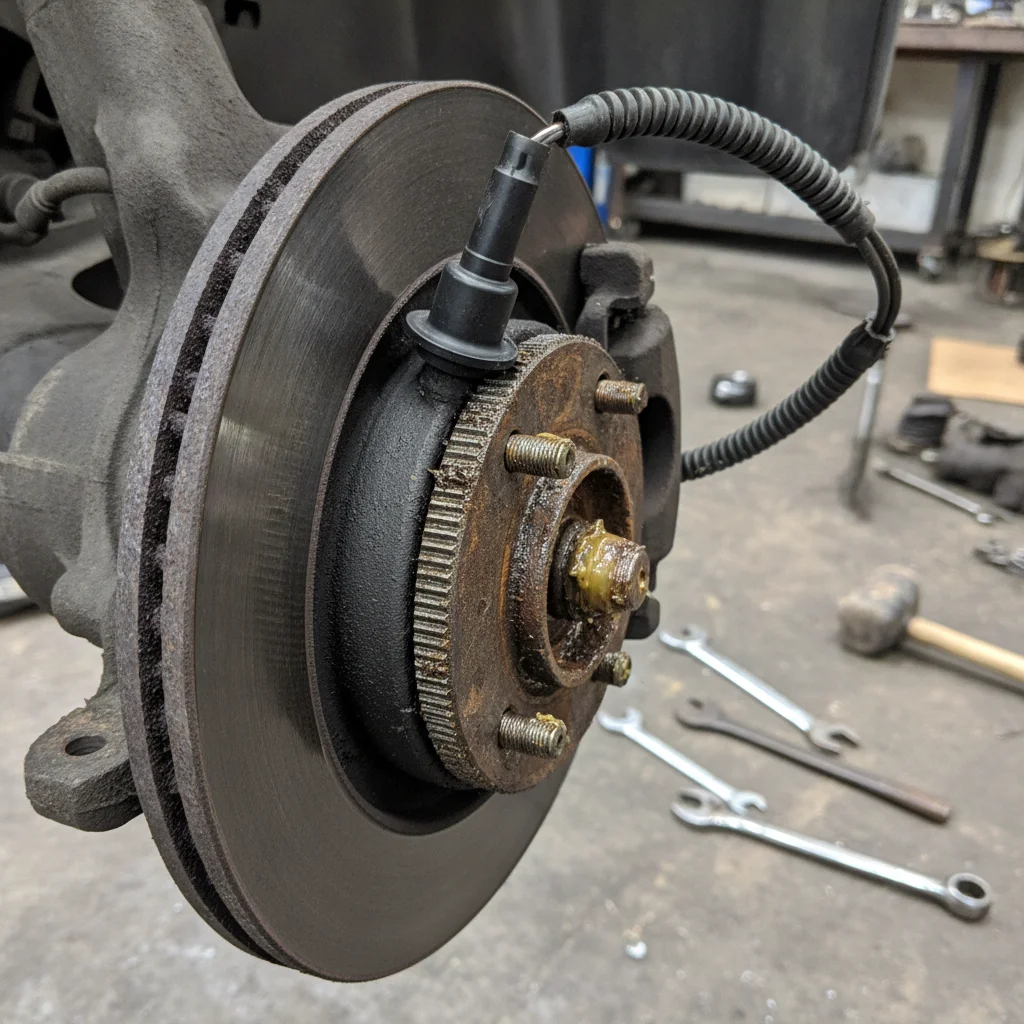
Common ABS Fault Triggers
- Wheel speed sensor failure: The most frequent cause. Sensors sit close to the wheel hub and are exposed to road grit, moisture, and heat. They fail relatively often and typically cost $150–$400 to replace, depending on the vehicle.
- Tone ring damage: The toothed ring the sensor reads can crack or accumulate debris. Often diagnosed at the same time as a sensor issue.
- ABS module fault: The control module itself can fail, though this is less common than sensor issues. Module replacement is more expensive — often $600–$1,200.
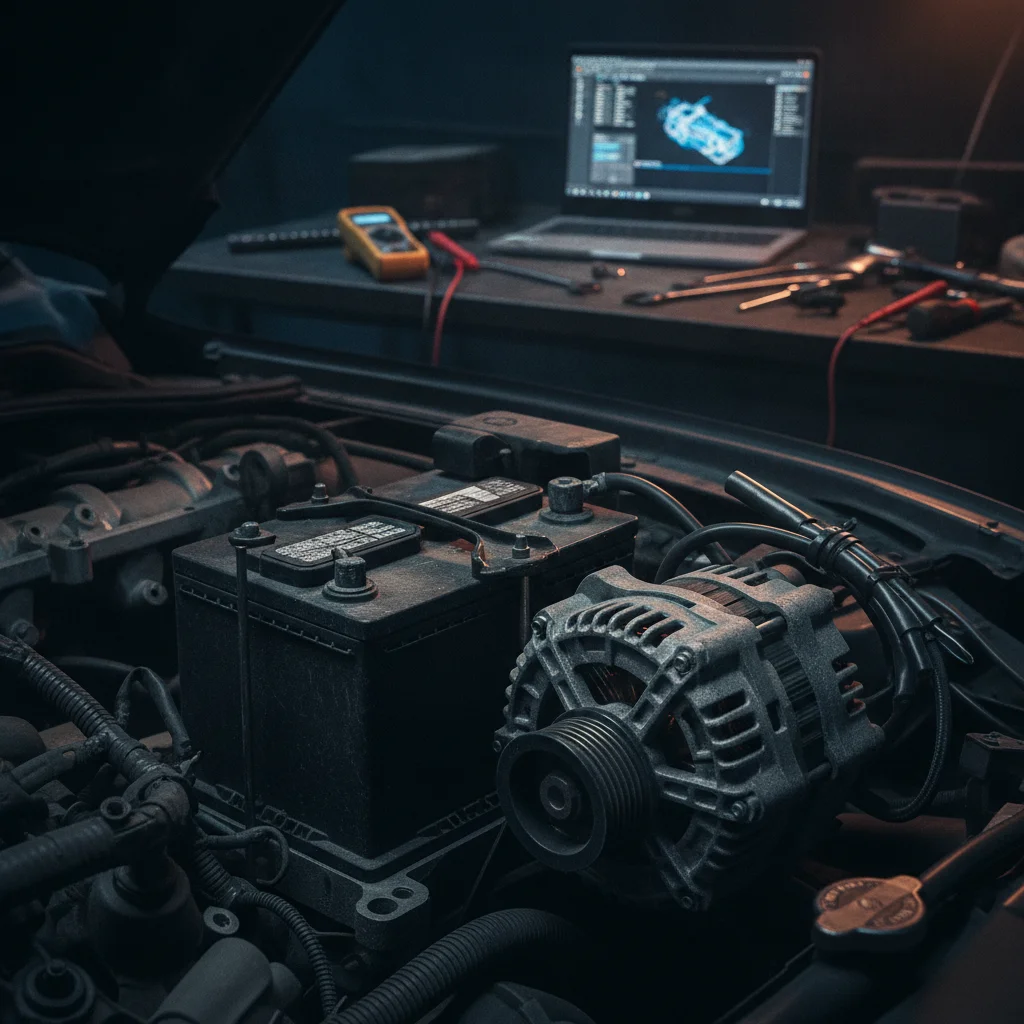
- Low battery voltage: Intermittent ABS lights sometimes trace back to a weak battery causing voltage fluctuations. Worth checking before chasing sensor issues.
The critical point: none of these faults affect your base hydraulic brakes. When ABS disengages due to a fault, your brakes revert to standard operation — the same way every car worked before ABS became standard equipment. You can stop. You just lose the modulation advantage in an emergency stop. For context on similar diagnostic puzzles, see how battery and alternator failures produce confusingly similar symptoms.
ABS and Traction Control Often Share a Module
On many modern vehicles, the ABS and electronic stability control (ESC) or traction control system share a single hydraulic control module. This means an ABS fault code can sometimes trigger both the ABS light and a traction control warning simultaneously. Don't be alarmed if you see multiple lights — they may trace back to one sensor or module issue. A proper diagnostic scan will clarify whether you're dealing with one fault or several.
Head-to-Head: Brake Warning Light vs. ABS Light
The table below distills the key differences between these two alerts — what they monitor, how urgently you need to respond, and what repair typically looks like.
| Criterion | Brake Warning Light | ABS Warning Light |
|---|---|---|
| Indicator color | Red | Yellow / Amber |
| System monitored | Primary hydraulic brake system | Anti-lock braking (electronic) system |
| Affects stopping ability? | Yes — potentially severely | No — standard brakes still function |
| Urgency level | High — stop driving safely ASAP | Moderate — drive cautiously to shop |
| Common triggers | Low fluid, worn pads, parking brake, leak | Wheel speed sensor, tone ring, module fault |
| Typical repair cost range | $150–$900+ depending on cause | $150–$1,500 depending on component |
| Requires tow? | Often yes, especially with symptoms | Rarely — drive to shop is usually safe |
| Both lights on simultaneously | Serious brake failure likely | Treat as brake emergency |
The urgency gap between these two lights is substantial. A brake warning light in the red zone demands a conservative, cautious response: reduce speed, avoid aggressive braking, and reach a safe stop. An ABS light in isolation allows you to drive normally to a repair shop — with one important caveat. If conditions require emergency braking before you get there, your car will still stop. It just won't modulate the way ABS would. For a broader triage framework, our guide on when to pull over versus when to drive to a shop walks through exactly this kind of decision.
When Both Lights Appear Together
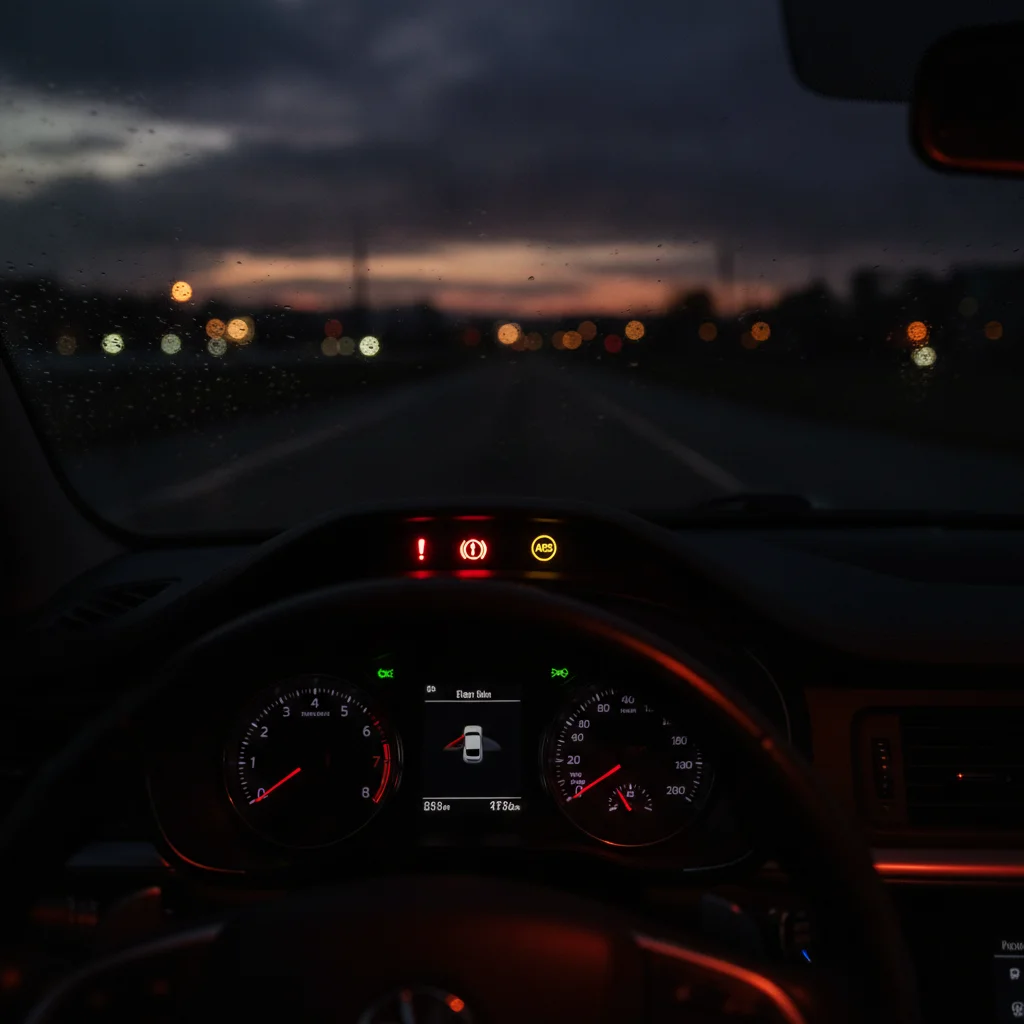
This is the scenario that demands the most serious response. When the red brake warning light and the yellow ABS light illuminate simultaneously, it nearly always means a brake system failure is affecting both the hydraulic circuit and the ABS system — because the ABS depends on brake system integrity to function. The ABS module may be detecting abnormal hydraulic pressure or a fluid loss condition.
In practical terms: both lights together means your braking ability is compromised, full stop. Here's the right sequence:
- Do not panic-brake — begin slowing down gradually using smooth, steady pressure.
- Activate your hazard lights to alert other drivers.
- Move toward the right shoulder or a safe pull-off area.
- Do not attempt to drive to a shop. Call for a tow.
The financial math here is straightforward. A tow costs $75–$150. A rear-end collision because your brakes failed costs far more — in repairs, insurance, potential injury, and rate increases. Early action on a brake warning light is one of the clearest examples of a small investment preventing a catastrophic one.
Cold weather adds one complication worth knowing: some ABS lights appear briefly at startup in very cold temperatures as sensors initialize. If the light disappears within a minute of normal driving, it's likely a cold-soak initialization issue, not a fault. A brake warning light, however, should never be attributed to cold weather and dismissed. See which warning lights cold weather can trigger legitimately to sort out cold-start false positives from real problems.
Repair Costs and What to Ask Your Mechanic
Understanding likely repair costs helps you evaluate quotes and avoid being oversold unnecessary work. The cost range for each system varies widely based on the root cause.
Brake Warning Light Repairs
- Brake fluid top-off (if no leak): $20–$50 for fluid plus inspection. But if fluid was low, the cause matters more than the top-off.
- Brake pad replacement: $150–$400 per axle, depending on vehicle and pad quality. Rotors may also need replacement.
- Brake line repair: $200–$600 depending on line location and length.
- Master cylinder replacement: $400–$900 including labor.
- Brake caliper replacement: $300–$800 per caliper.
ABS Warning Light Repairs
- Wheel speed sensor replacement: $150–$400 per sensor, including labor. Often the most cost-effective fix.
- Tone ring replacement: $100–$250, sometimes done alongside a wheel bearing service.
- ABS control module replacement: $600–$1,500 depending on vehicle. Refurbished modules can reduce this cost significantly.
When you bring your car in, ask specifically: Did you pull ABS fault codes from the module? A good shop will use a scan tool to read ABS diagnostic trouble codes (DTCs) before recommending any parts. Replacing sensors based on guesswork when the module has a stored code pointing to a specific corner is a red flag about the shop's diagnostic process.
For used car shoppers: a brake warning light or an ABS light illuminated on a test drive is never something to overlook. Our dashboard warning lights buyer's reference guide explains exactly how to evaluate these alerts when shopping for a vehicle. And remember that warning lights are just one signal — sounds, smells, and pedal feel tell their own story that a dashboard alone can't convey.

All claims are backed by peer-reviewed research. Sources on request.