| Total OBD-II fault codes | Over 5,000 standardized codes (SAE International OBD-II Standard) |
| Free fault code reading | Available at most major auto parts chains (AutoZone, O'Reilly, Advance Auto Parts) |
| Vehicles with TPMS required | All U.S. cars built after Sept. 1, 2007 (NHTSA TPMS Federal Mandate) |
| Fuel economy loss from under-inflation | Up to 3% per 10 PSI underinflation (U.S. Department of Energy) |
| Average check engine repair cost | $150–$1,200 depending on cause (RepairPal Industry Data, 2023) |
| Red light response | Pull over as soon as safely possible |
| Amber light response window | Service within 200–500 miles or one week |
| Most ignored warning light | Check engine (up to 25% of drivers ignore it) (CarMD Vehicle Health Index, 2022) |
How Dashboard Warning Lights Work
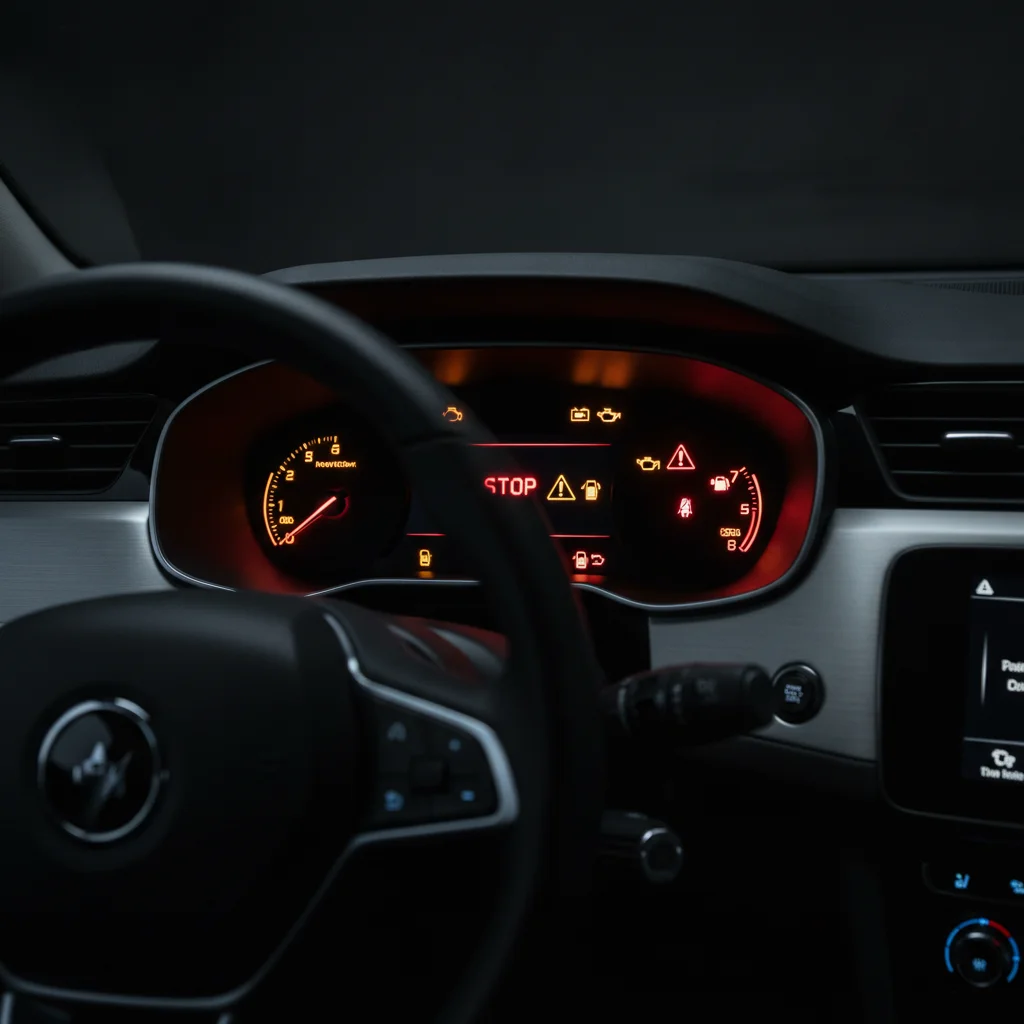
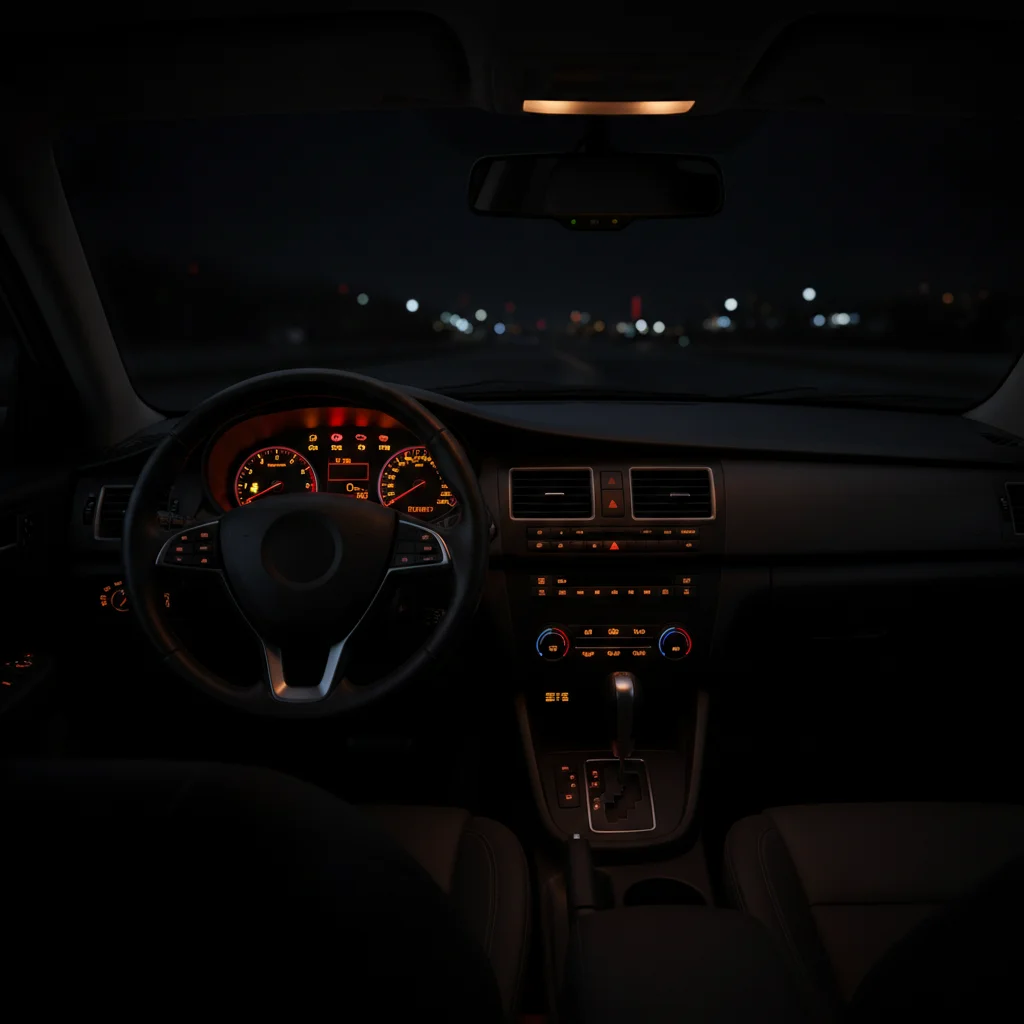
Every modern vehicle has an onboard diagnostic system — called OBD-II on cars built after 1996 — that continuously monitors dozens of sensors throughout the engine, transmission, safety systems, and emissions equipment. When a sensor reading falls outside its expected range, the system logs a fault code and activates the corresponding warning light on your instrument cluster.
Warning lights follow a universal color-coding convention that mirrors traffic signals:
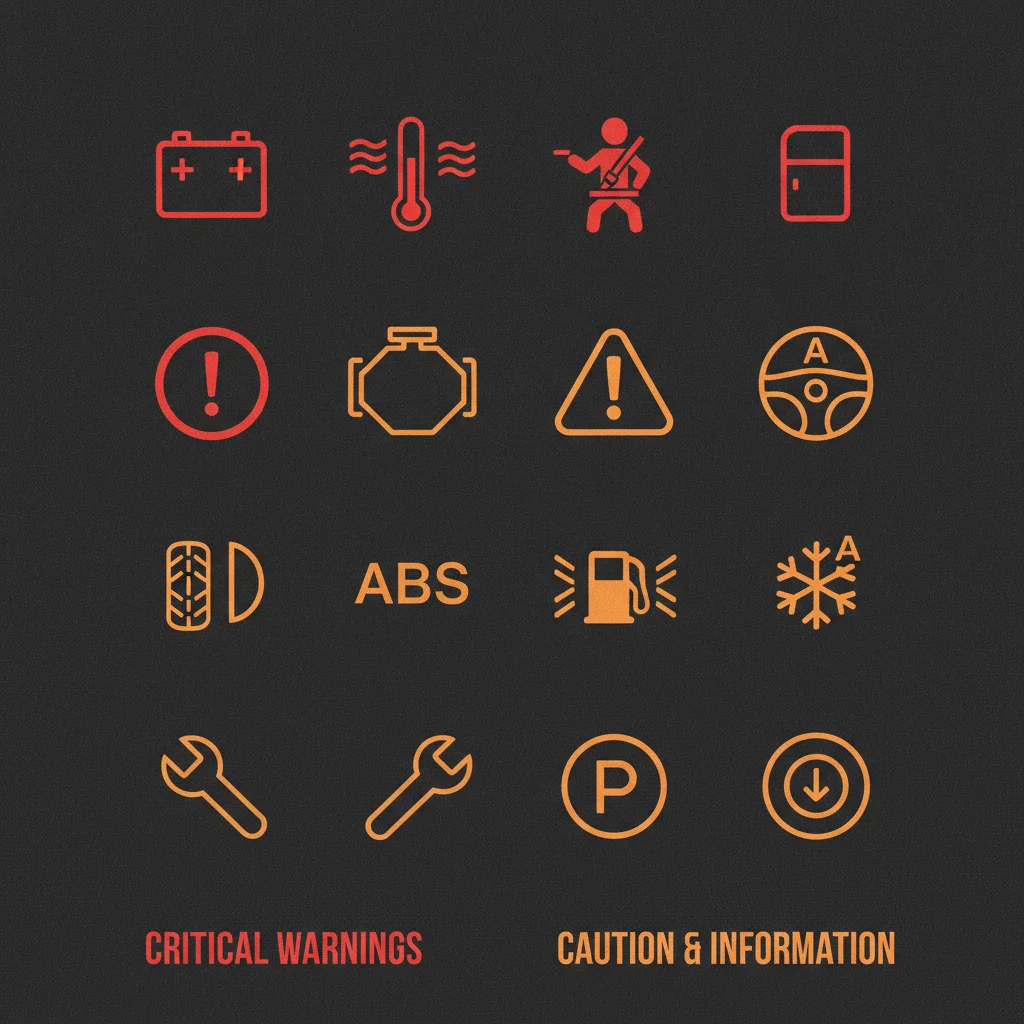
- Red lights signal an immediate threat to vehicle safety or engine integrity. Stop driving as soon as it is safe to do so.
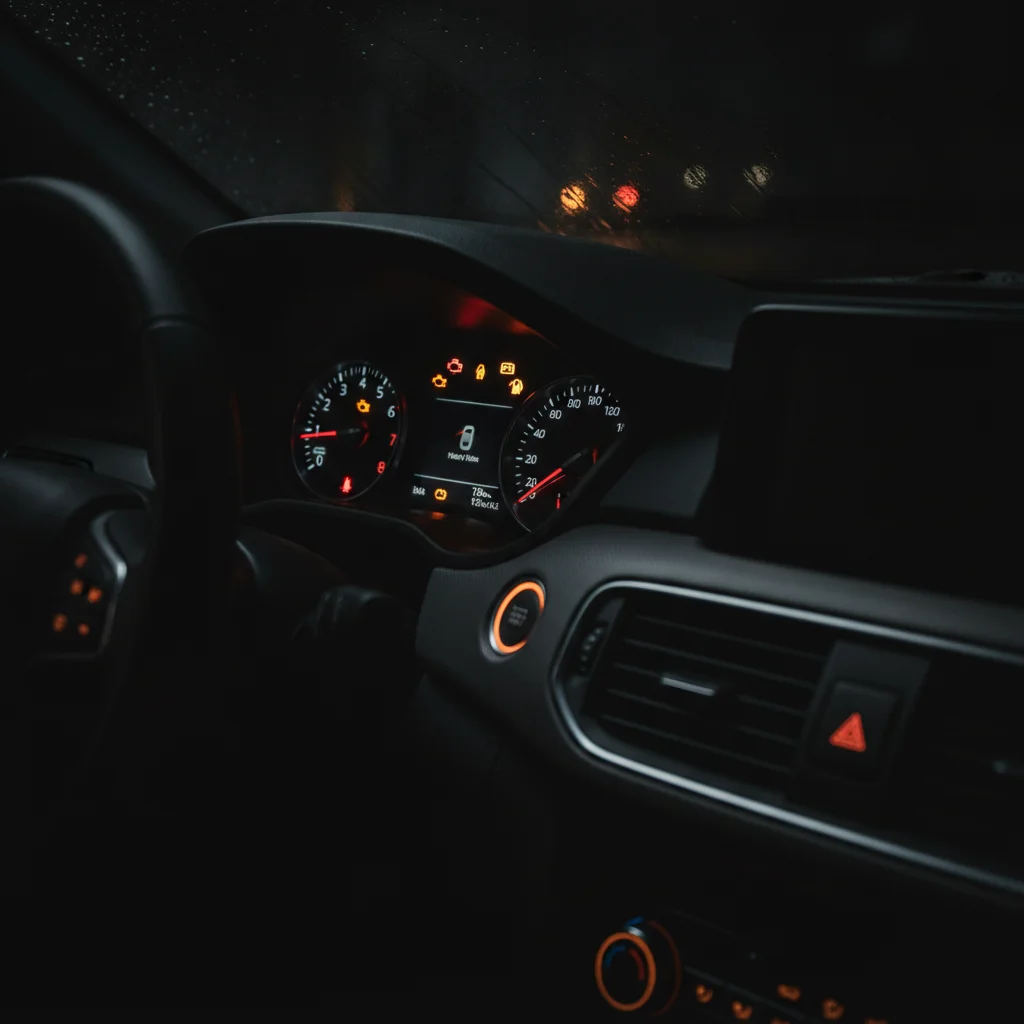
- Amber or yellow lights indicate a problem that needs attention soon — typically within days or a few hundred miles — but does not require you to stop immediately.
- Green and blue lights are confirmations that a system is active, not warnings at all.
The key insight that most drivers miss: warning lights are not the problem itself. They are the messenger. Ignoring an amber light because the car still drives fine is like silencing your smoke alarm instead of looking for the fire. Small problems caught early are cheap. The same problem left for 10,000 miles can mean an engine rebuild.
For a broader look at how warning lights fit into the full picture of vehicle health — including sounds and smells — see The Complete Guide to Vehicle Warning Signs.
| Total OBD-II fault codes | Over 5,000 standardized codes (SAE International OBD-II Standard) |
| Free fault code reading | Available at most major auto parts chains (AutoZone, O'Reilly, Advance Auto Parts) |
| Vehicles with TPMS required | All U.S. cars built after Sept. 1, 2007 (NHTSA TPMS Federal Mandate) |
| Fuel economy loss from under-inflation | Up to 3% per 10 PSI underinflation (U.S. Department of Energy) |
| Average check engine repair cost | $150–$1,200 depending on cause (RepairPal Industry Data, 2023) |
| Red light response | Pull over as soon as safely possible |
| Amber light response window | Service within 200–500 miles or one week |
| Most ignored warning light | Check engine (up to 25% of drivers ignore it) (CarMD Vehicle Health Index, 2022) |
Red Warning Lights: Stop or Pull Over
Red lights mean the car is telling you something is dangerously wrong right now. Driving on with a red warning light risks catastrophic — and expensive — mechanical failure, or worse, a safety emergency.
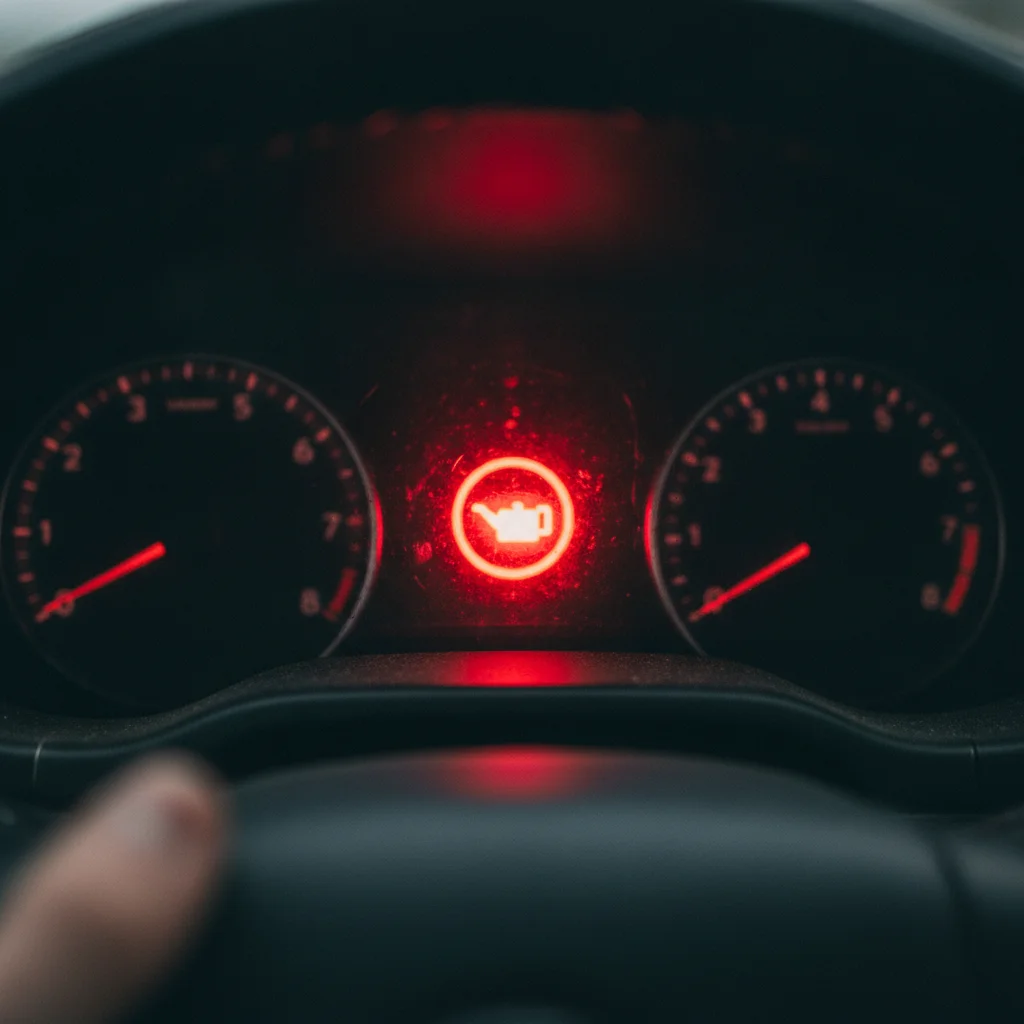
Oil Pressure Warning (Oil Can Icon)
This is the one light that should make you pull over within seconds. Low oil pressure means your engine's moving metal parts are not getting lubrication. At highway speeds, an unlubricated engine can seize in under a minute, turning a $50 oil top-up into a $5,000 engine replacement. Check the oil level immediately. If it reads full and the light stays on, do not restart the engine — call for a tow.
Engine Temperature Warning (Thermometer in Liquid)
Your coolant temperature has exceeded its safe operating range. An overheating engine warps cylinder heads and destroys head gaskets — repairs that routinely run $1,500–$3,000. Pull over, turn off the engine, and let it cool for at least 30 minutes before opening the hood. Never open a hot radiator cap.
Battery / Charging System (Battery Icon)
This light usually means the alternator is no longer charging the battery while you drive. Your car is running on reserve battery power only. You may have 30–60 minutes of driving left before everything shuts off, including power steering and brakes. Head directly to a shop or parts store — do not turn the engine off until you arrive, because it may not restart.
Brake System Warning (Exclamation Mark in Circle)
If your parking brake is not engaged and this light is on, you have a brake system fault — typically low brake fluid, a failed brake line, or an ABS issue. Brakes are non-negotiable. Pull over and have the car towed. See our guide on accident procedures to understand what to do if a brake failure leads to an incident.
Seat Belt Reminder (Figure with Belt)
Red, but not a mechanical emergency — the vehicle has detected an unbelted occupant. Buckle up. Every time.
25%
Drivers who ignore the check engine light
According to CarMD's annual Vehicle Health Index, roughly one in four drivers continues driving with an active check engine light for weeks or months.
$5,000+
Average engine replacement cost
RepairPal data shows that engine seizures resulting from ignored oil pressure warnings average $4,000–$8,000 in repair or replacement costs.
3%
Fuel economy loss per 10 PSI under-inflation
The U.S. Department of Energy estimates that properly inflated tires improve gas mileage by up to 3% — a small number that adds up over a vehicle's lifetime.
11,000
Annual tire blowout accidents in the U.S.
The National Highway Traffic Safety Administration links approximately 11,000 crashes per year to tire-related failures, many preventable by TPMS response.
60 min
Estimated battery reserve after alternator failure
Industry technicians estimate most vehicles have 30–60 minutes of electrical reserve once the alternator stops charging, depending on load and battery age.
Amber Warning Lights: Schedule Service Soon
Amber lights buy you time, but not unlimited time. Think of them as a 200–500 mile window to address the issue before it escalates. The exact urgency varies by which light is on.
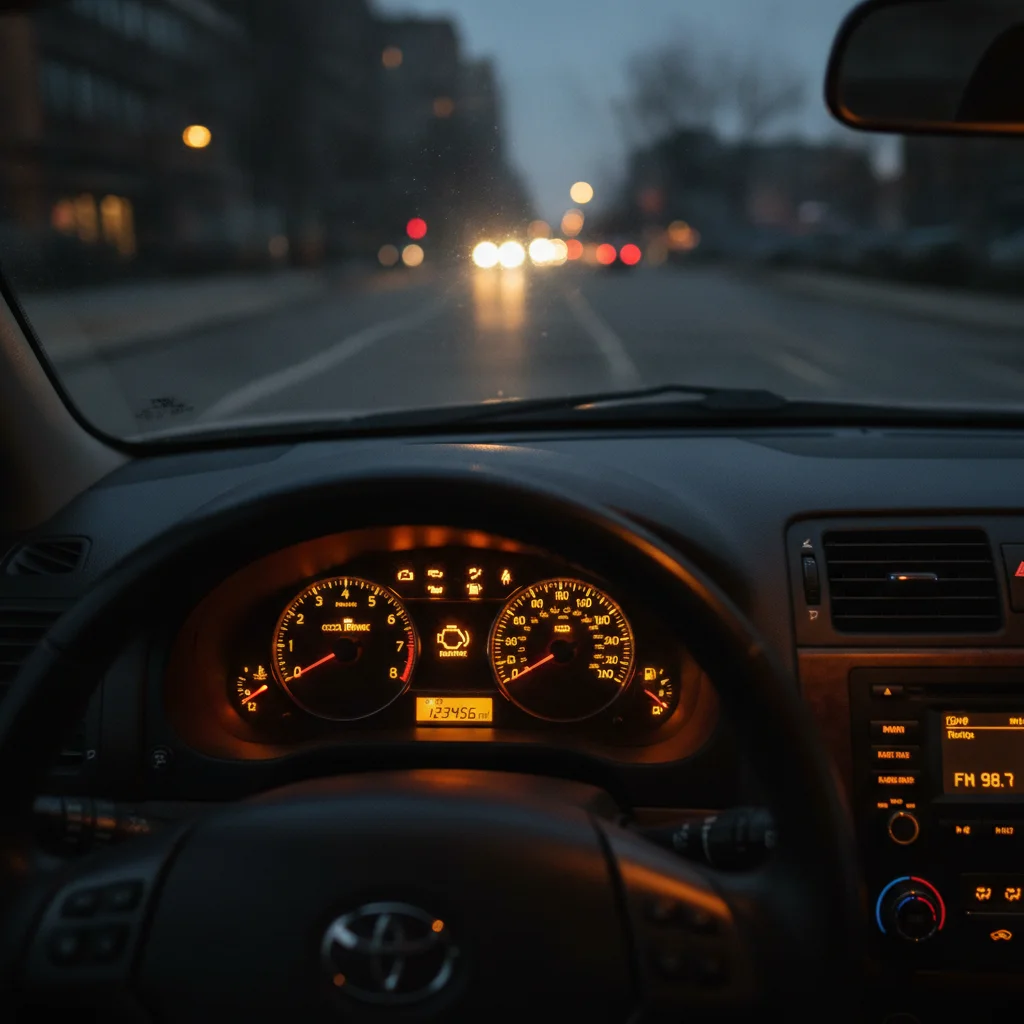
Check Engine Light (Engine Outline)
The most misunderstood light on the dashboard. It covers hundreds of possible fault codes — from a loose gas cap to a failing catalytic converter. A steady check engine light typically means something is wrong but not immediately dangerous. A flashing check engine light means the engine is misfiring badly enough to damage the catalytic converter in real time — treat it like a red light and reduce speed immediately.
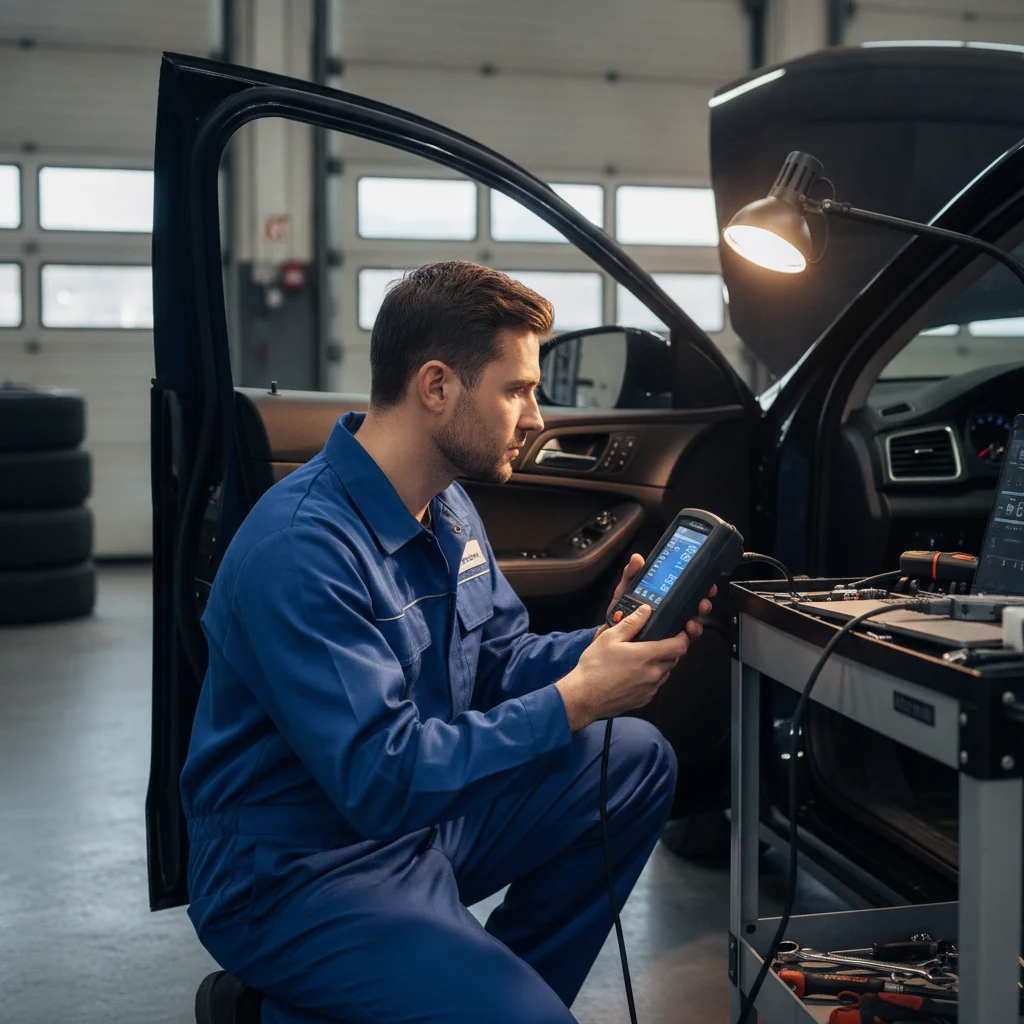
The only way to know what triggered it is to read the fault code with an OBD-II scanner, which auto parts stores will do for free. Diagnosing a warning sign yourself before visiting a mechanic walks you through how to gather useful information before paying shop labor rates.
Tire Pressure Monitoring System — TPMS (Horseshoe with Exclamation Mark)
One or more tires is significantly under-inflated. Under-inflated tires wear unevenly, reduce fuel economy by up to 3%, and are more prone to blowouts at highway speed. Check all four tires with a gauge and inflate to the PSI printed on the door jamb sticker — not the number on the tire sidewall. If the light persists after inflation, a tire may have a slow leak or the TPMS sensor itself may need replacement.
Transmission Temperature (Gear with Thermometer)
The transmission fluid is running hotter than its design limit. This commonly happens when towing heavy loads or during stop-and-go traffic in hot weather. Pull over, shift to Park, and let the transmission cool with the engine idling for 10–15 minutes. Repeated overheating accelerates fluid breakdown and can require a full transmission rebuild.
Traction Control / Stability Control Off (Car with Wavy Lines)
If you didn't manually disable traction control, this light means the system detected wheelspin and intervened — or the system has a fault and is not functioning. On slippery roads, this matters enormously. Have the wheel speed sensors and ABS module checked.
Service Engine Soon
Unlike the check engine light, this indicator is typically a scheduled maintenance reminder — oil change, spark plugs, or a manufacturer-defined service interval. Consult your owner's manual to confirm, then schedule service. Missing scheduled maintenance voids warranties on many vehicle components.
Power Steering Warning (Steering Wheel with Exclamation)
On electric power steering systems, this indicates a fault in the assist motor or control module. Steering may feel heavy and require more physical effort. Drive carefully to a shop — highway driving without power assist is manageable but fatiguing and less precise in emergencies.
Warning Lights on a Used Car Test Drive
If any warning light is illuminated during a test drive of a used vehicle, treat it as a negotiating point — not a reason to walk away automatically. Ask the seller to disclose any known fault codes and get a pre-purchase inspection from an independent mechanic. Some lights (like a loose gas cap triggering a check engine code) are trivial; others (like an airbag or brake warning) are deal-breakers. For full guidance, see our <a href="/buying-a-car/car-buying-process/test-drives-and-inspections/dashboard-warning-lights-a-buyers-reference-guide">buyer's reference guide to dashboard warning lights</a>.
Owner's Manual: Your Best Reference
Manufacturers occasionally use proprietary warning light symbols not covered by any universal standard. If you see a light you don't recognize, the owner's manual warning light index is always definitive. Digital versions of most manuals are available free on manufacturer websites if your physical copy is missing.
Resetting a Warning Light Doesn't Fix the Problem
Many drivers clear warning lights by disconnecting the battery or using an OBD-II scanner reset. While this clears the code, the underlying fault typically remains. The light will return after a few drive cycles — and in some states, a recently-reset OBD system will cause your vehicle to fail an emissions inspection because the system hasn't completed its readiness monitors.
Specialized System Warnings
Modern vehicles have expanded far beyond the classic powertrain warning lights. Advanced driver assistance systems, emissions equipment, and fuel systems each have their own indicators.
ABS Warning Light (ABS in Circle)
The anti-lock braking system has a fault. Your standard brakes still work, but ABS — the system that prevents wheel lockup during emergency stops — is disabled. This significantly increases stopping distance on wet or icy roads. Do not drive in adverse conditions until repaired. Typical causes include a failed wheel speed sensor ($150–$350) or a faulty ABS control module (potentially $800+).
Airbag / SRS Warning (Person with Circle)
A fault exists in the Supplemental Restraint System. In a collision, your airbags may not deploy — or worse, may deploy unexpectedly. This is a safety-critical repair that should not be deferred. SRS faults are also flagged when buying used cars; always note them on a test drive. Dashboard warning lights: a buyer's reference guide covers what airbag and SRS lights mean in a used vehicle context.
Emissions / Catalytic Converter Warning
Distinct from the check engine light on some vehicles, this specifically flags the exhaust after-treatment system. A failing catalytic converter can cost $1,000–$2,500 to replace and in many states will cause your vehicle to fail emissions testing, making it illegal to register.
Fuel Level Warning (Fuel Pump Icon)
You have roughly 30–50 miles of range remaining, depending on the vehicle. Running a fuel-injected engine completely dry can damage the fuel pump, which relies on gasoline for cooling and lubrication. A fuel pump replacement runs $400–$900 — expensive consequences for ignoring a $40 tank of gas.
Electronic Throttle Control (Lightning Bolt)
The throttle-by-wire system has detected a fault. You may experience reduced power, erratic acceleration, or limp mode. Pull over safely and restart the engine — this clears the fault in many cases. If it returns, the throttle body or accelerator pedal sensor likely needs replacement.
4WD / AWD Warning
The four-wheel drive or all-wheel drive system has a fault. On a 4WD truck, this may mean you're stuck in 2WD even in off-road conditions. On an AWD crossover, the rear axle may be disengaged, affecting handling in rain or snow. Address before driving in conditions that require full-time all-wheel grip.
Diesel Exhaust Fluid (DEF) Warning
Diesel vehicles with selective catalytic reduction (SCR) systems require DEF to control NOx emissions. When the DEF tank runs low, the warning activates. If it runs empty, most diesel vehicles will limit engine power to a crawl — by design — until refilled. DEF is available at most truck stops.
What to Do When a Warning Light Comes On
The right response depends on the color and which specific light is illuminated. Here is a practical decision framework:
- Identify the light immediately. Glance at the symbol and its color. If you cannot identify it, pull over safely and consult the owner's manual before continuing — every vehicle manual has a dedicated warning light index.
- For red lights: Reduce speed, activate hazard flashers, and find a safe place to stop. Do not continue driving in hopes the light will clear itself.
- For amber lights: Note whether the car's behavior has changed (rough idle, unusual sounds, pulling to one side). Drive to your destination cautiously and schedule diagnosis within the week.
- Get the fault code read. Even before visiting a mechanic, a free OBD-II scan at any auto parts store will tell you the specific code. Write it down. This prevents mechanics from guessing — and charging — at your expense.
- Don't reset without diagnosing. Clearing a warning code without fixing the underlying problem means the light returns — and you've lost information about how many drive cycles the fault has been active.
Not every warning light demands the same urgency. Responding to Dashboard Alerts: When to Pull Over vs. When to Drive to a Shop gives a detailed triage framework to help you make the call safely.
If you're evaluating a used car that has warning lights illuminated on the test drive, that's equally important information. The test drives and inspections hub covers exactly what to look for and how to negotiate around findings.
OBD-II
On-Board Diagnostics, second generation — a standardized system required on all U.S. vehicles since 1996 that monitors engine and emissions systems and stores fault codes when sensors detect problems.
Fault Code (DTC)
A Diagnostic Trouble Code stored in the vehicle's computer when a sensor reading falls outside its expected range. Reading these codes is the first step in diagnosing a warning light.
TPMS
Tire Pressure Monitoring System — federally mandated sensors inside each wheel that alert the driver when tire pressure drops 25% or more below the recommended level.
Catalytic Converter
An exhaust system component that converts harmful combustion byproducts into less harmful gases. Damage from engine misfires or overheating can make replacement necessary at a cost of $1,000–$2,500.
Limp Mode
A reduced-power operating state the vehicle's computer activates when it detects a serious fault, designed to allow the driver to reach a shop while limiting further engine or transmission damage.
SRS
Supplemental Restraint System — the collective term for airbags and seatbelt pretensioners. An SRS warning light indicates a fault that could prevent airbag deployment in a collision.
ABS
Anti-lock Braking System — prevents wheel lockup during hard braking by rapidly pulsing brake pressure, allowing the driver to maintain steering control. An ABS warning light means this function is disabled.
DEF
Diesel Exhaust Fluid — a urea-water solution injected into diesel exhaust to reduce nitrogen oxide emissions. Running a diesel vehicle without DEF can trigger power-limiting limp mode.
NHTSA Vehicle Safety Complaints Database
Search the National Highway Traffic Safety Administration's public database to see if other owners of your vehicle have reported the same warning light or fault. Useful for identifying known issues before visiting a shop.
CarMD Vehicle Health Index
Annual report ranking the most common check engine light causes by vehicle make, model, and year — helps you benchmark repair cost estimates before talking to a mechanic.
OBD-II Fault Code Lookup (OBD-Codes.com)
Free searchable database of OBD-II diagnostic trouble codes. Enter the code from your scanner to get a plain-English explanation, common causes, and typical repair cost ranges.
RepairPal Cost Estimator
Enter your vehicle and the repair needed to get a fair-price range based on your ZIP code. Essential for checking whether a shop's quote is reasonable before you authorize work.
Your Vehicle Owner's Manual (Manufacturer Website)
Most manufacturers host free digital versions of every owner's manual. Search your make and model to find the official warning light index — the definitive source for your specific vehicle.
TPMS Sensor Compatibility Guide
If your TPMS light persists after proper inflation, this tool helps identify compatible replacement sensors for your vehicle's year, make, and model before ordering parts or visiting a shop.
The Financial Case for Acting Early
Every warning light represents a spectrum of outcomes determined almost entirely by how quickly you respond. Consider a few real-world cost comparisons from the shop floor:
| Warning Light | Caught Early | Ignored Until Failure |
|---|---|---|
| Oil Pressure | $25–$75 (oil top-up or filter) | $4,000–$8,000 (engine replacement) |
| TPMS | $5–$15 (air or plug repair) | $200–$500 (tire replacement after blowout) |
| Coolant Temp | $20–$60 (coolant flush or hose) | $1,500–$3,000 (head gasket / warped head) |
| Check Engine (steady) | $50–$300 (sensor or O2 fix) | $1,000–$2,500 (catalytic converter) |
| Brake System | $100–$250 (fluid or pads) | $500–$1,500 (rotors, calipers, lines) |
| Battery / Charging | $150–$400 (alternator) | $800+ (battery, alternator, and potential tow) |
The pattern is consistent: problems that cost hundreds to fix at the warning stage routinely cost thousands when they reach failure. And that's before factoring in towing fees, rental cars, and the possibility of an accident caused by a compromised safety system.
Dashboard lights also directly affect your insurance situation. A vehicle that has suffered an engine seizure or been in a brake-related accident will carry a different ownership cost profile — and in some cases a different insurance rate — than one that has been maintained proactively. Why your check engine light isn't the only warning sign worth watching explores the full universe of signals — beyond lights — that indicate your vehicle's true health.
The best mechanics aren't the ones who perform the most repairs. They're the ones who help their customers avoid them.

All claims are backed by peer-reviewed research. Sources on request.