Key Takeaways
Our Verdict
Not every change in brake feel signals a crisis, but none should be ignored. Surface rust, minor fade after heavy use, and a temporarily higher pedal after new pads are normal. Everything else — sponginess, pulling, grinding, vibration, or a pedal that sinks to the floor — represents a real mechanical problem with genuine safety consequences. Acting early costs far less than waiting until the system fails.
| Best for | Recommended |
|---|---|
| Drivers who notice a soft or sinking pedal | Immediate inspection for air or fluid leak |
| Drivers experiencing vibration or shuddering during braking | Rotor resurfacing or replacement |
| Drivers whose car pulls to one side when braking | Caliper and pad inspection for uneven wear |
| Drivers hearing grinding or squealing noises | Pad and rotor inspection before further driving |
Why Brake Feel Is Such a Reliable Early Warning System
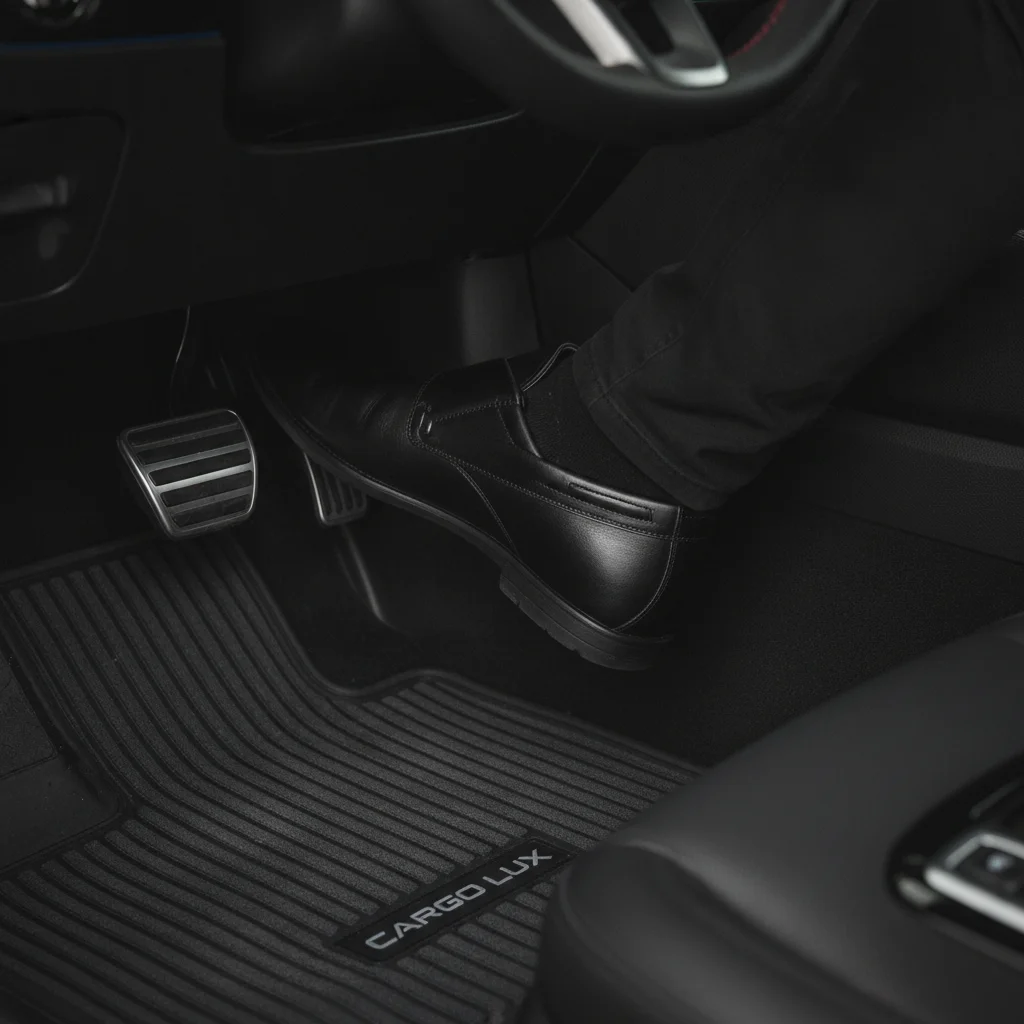
Your brake pedal is one of the most direct feedback channels between you and your car's mechanical condition. Unlike an engine misfire you might only catch with a scan tool, or a transmission shudder that comes and goes, brake feel changes are things you experience personally, every single time you slow down. That makes your foot a remarkably useful diagnostic instrument — if you know what to pay attention to.
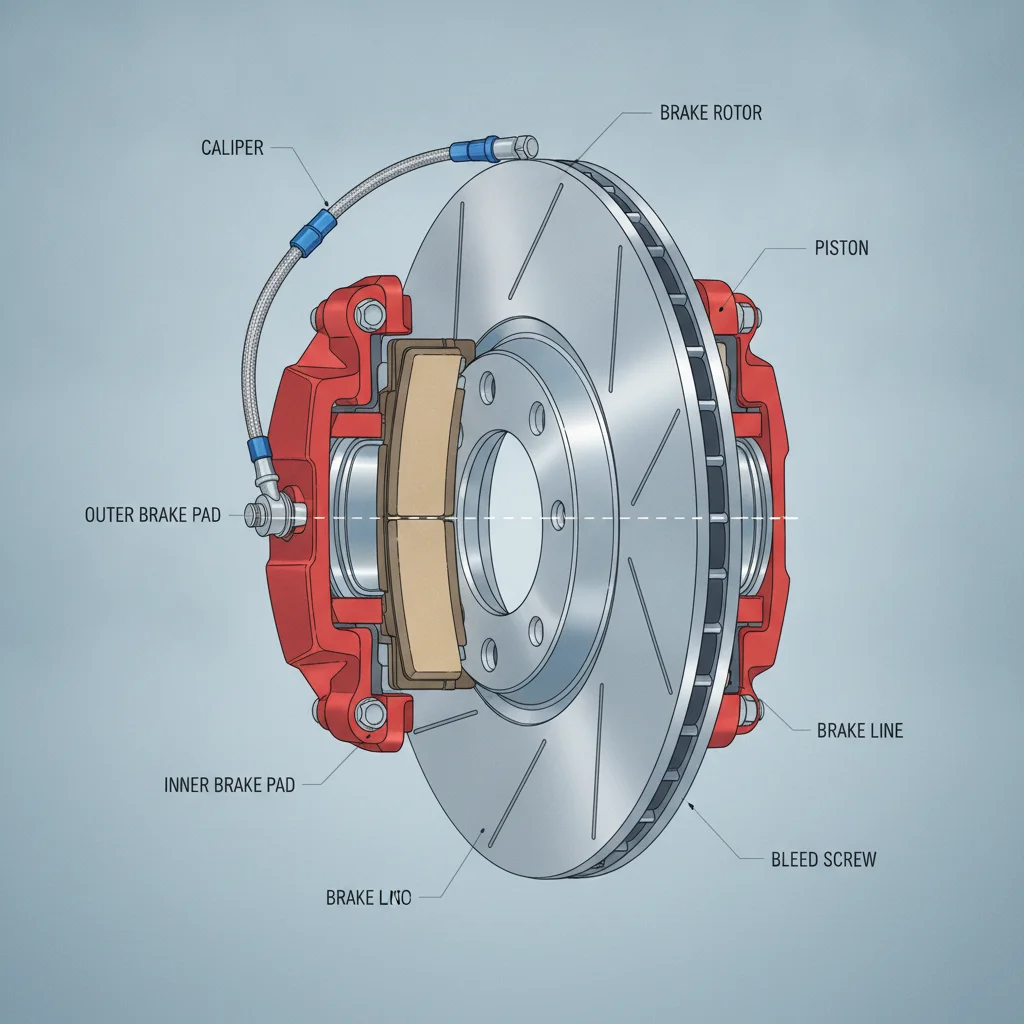
The brake system works through hydraulic pressure. You press the pedal, that force pushes brake fluid through lines and calipers, which clamp pads against spinning rotors to generate friction and slow the car. Every component in that chain — the master cylinder, brake lines, calipers, pads, and rotors — has a characteristic way of communicating when something is wrong. The communication method is almost always a change in how the pedal feels, sounds, or responds.
The challenge is that some changes are benign and others are genuinely dangerous, and they can feel similar to the untrained foot. This guide walks through the most common brake feel changes, explains the likely cause behind each one, and tells you clearly how urgently each situation needs professional attention.
If you're evaluating a used car and want to assess brake health before buying, see how to evaluate brake performance on a test drive for a structured approach.
Normal Brake Feel Changes: What You Can Stop Worrying About
Before cataloging the red flags, it's worth being honest about what's genuinely fine. A lot of drivers rush to the shop — or ignore a real problem — because they can't separate normal brake behavior from warning signs.
Light Surface Rust After Rain or Overnight Sitting
Cast iron rotors rust quickly. If your car sits overnight in damp conditions, the first few brake applications may feel slightly rough or produce a brief scraping sensation. This is surface oxidation, and it's completely normal. It clears within the first quarter-mile of driving. If the sensation persists beyond that, you're dealing with something else.
Slightly Higher or Firmer Pedal After New Pads
Fresh brake pads haven't yet conformed to the rotor surface. During the first 200–300 miles of bedding-in, the pedal may feel a bit different from what you were used to with worn pads. This is expected and resolves on its own.
Mild Fade After Extended Heavy Braking
Towing a trailer down a long mountain grade, or repeatedly stopping hard at a track day, can temporarily overheat brake pads and reduce effectiveness. This is brake fade, and in moderate form it's a designed-in trade-off. The brakes recover once they cool. However, consistent fade during ordinary street driving is not normal and points to incorrect pad material, an undersized brake system, or a dragging caliper.
Bed In New Brake Pads Properly
After installing new pads, perform 8–10 moderate stops from 30 mph, allowing the brakes to cool between each one. This deposits an even layer of pad material onto the rotor surface and establishes consistent contact. Skipping the bedding process can cause uneven deposits that produce the same vibration as a warped rotor — even though nothing is actually wrong.
Keep a Simple Brake Service Log
Write down the date and mileage of every brake service — pads, fluid flush, caliper replacement. A simple note in the glove box takes ten seconds and gives you (and any future buyer) a verifiable service history. It also makes it easy to know when your fluid is due for a change before the brakes tell you in an emergency.
Increased Stopping Distance in Cold Weather
Brake pads and rubber seals stiffen in very cold temperatures, which can produce slightly longer stopping distances until the system warms up. This is a physical property of the materials and isn't a sign of failure — though it is a reminder to give extra following distance in the first few minutes of winter driving.
The Red Flags: Brake Feel Changes That Need Attention Now
These symptoms each point to a specific mechanical problem. Some require prompt attention; others require you to stop driving immediately. Knowing which is which matters.
| Symptom | Likely Cause | Safety Urgency | Typical Repair Cost | |
|---|---|---|---|---|
| Spongy / soft pedal | Air in lines or fluid leak | High — address immediately | $80–$200 (bleed); more if leak | |
| Pedal sinks to floor | Master cylinder failure or fluid loss | Critical — stop driving | $300–$500 | |
| Vibration / pulsing when braking | Warped / uneven rotors | Moderate — schedule soon | $200–$450 per axle | |
| Pulling to one side | Stuck caliper or uneven pad wear | Moderate-high — inspect this week | $200–$600 | |
| Squealing noise | Wear indicator contact | Low-moderate — 1–2 weeks | $150–$300 (pads only) | |
| Grinding noise | Pads worn through to metal | High — drive only to shop | $400–$700+ per axle | |
| Burning smell after normal driving | Dragging/seized caliper | Moderate-high — same week | $200–$400 per caliper | |
| Brief roughness after overnight sit | Surface rotor rust (normal) | None — clears while driving | No repair needed |
Spongy or Soft Pedal
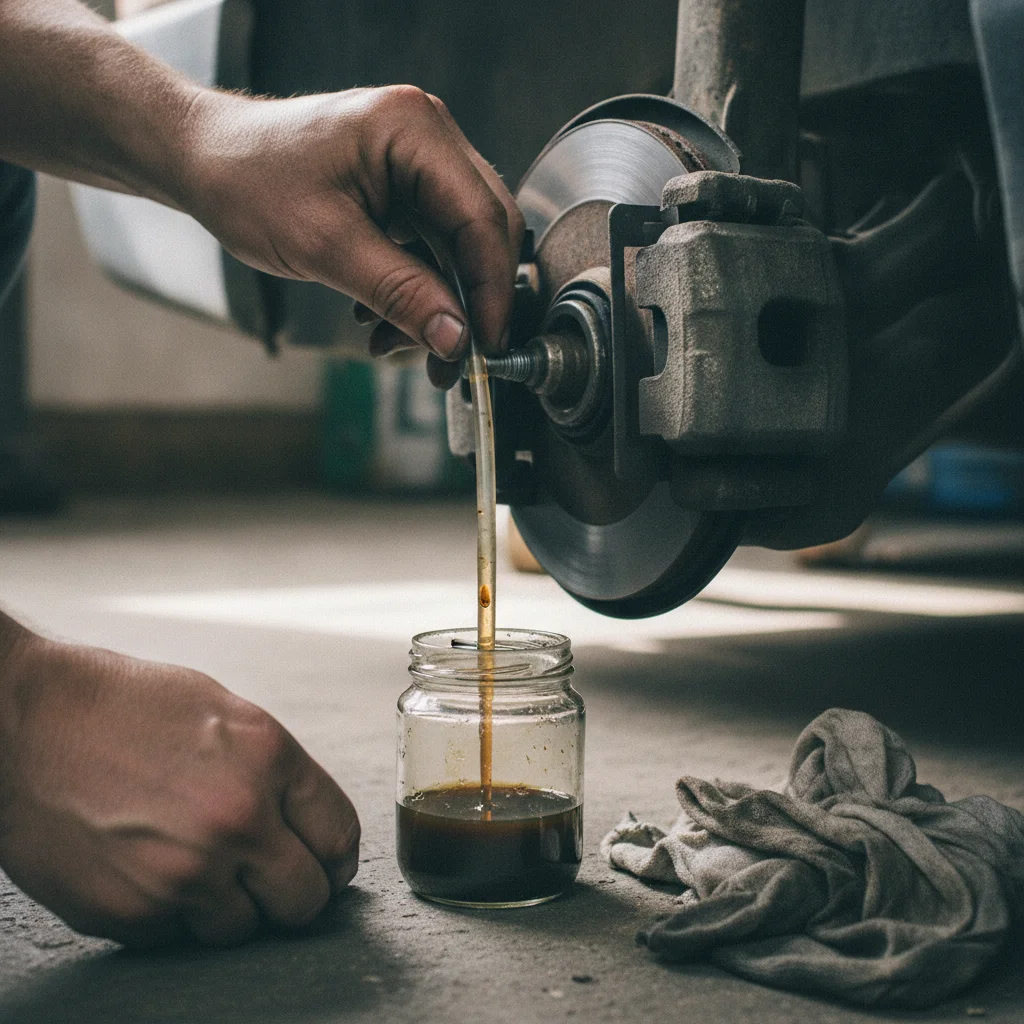
A pedal that compresses easily and feels like pressing into a foam cushion — rather than building firm resistance — is telling you that something compressible is in the hydraulic line. Hydraulic fluid is incompressible; air is not. Air in the brake lines is the most common cause. It typically enters when the system is opened for service and not properly bled, or when a brake line develops a slow leak.
A spongy pedal that gets progressively softer over days or weeks usually means fluid is leaking somewhere — either externally through a cracked line or caliper, or internally through a failing master cylinder. Either way, you're losing hydraulic pressure over time, which means your stopping ability is degrading. This is a safety emergency, not a «monitor and see» situation.
See what bleeding your brakes actually involves if you suspect air in the system and want to understand whether this is a DIY repair or shop work.
Pedal That Sinks to the Floor
A pedal that travels all the way to the floor before building any resistance is the most urgent brake symptom on this list. It almost always indicates either a complete fluid loss or a failed master cylinder. Both conditions mean the hydraulic system can no longer generate adequate clamping force. Do not drive this vehicle until the problem is diagnosed and repaired.
Vibration or Pulsing When Braking
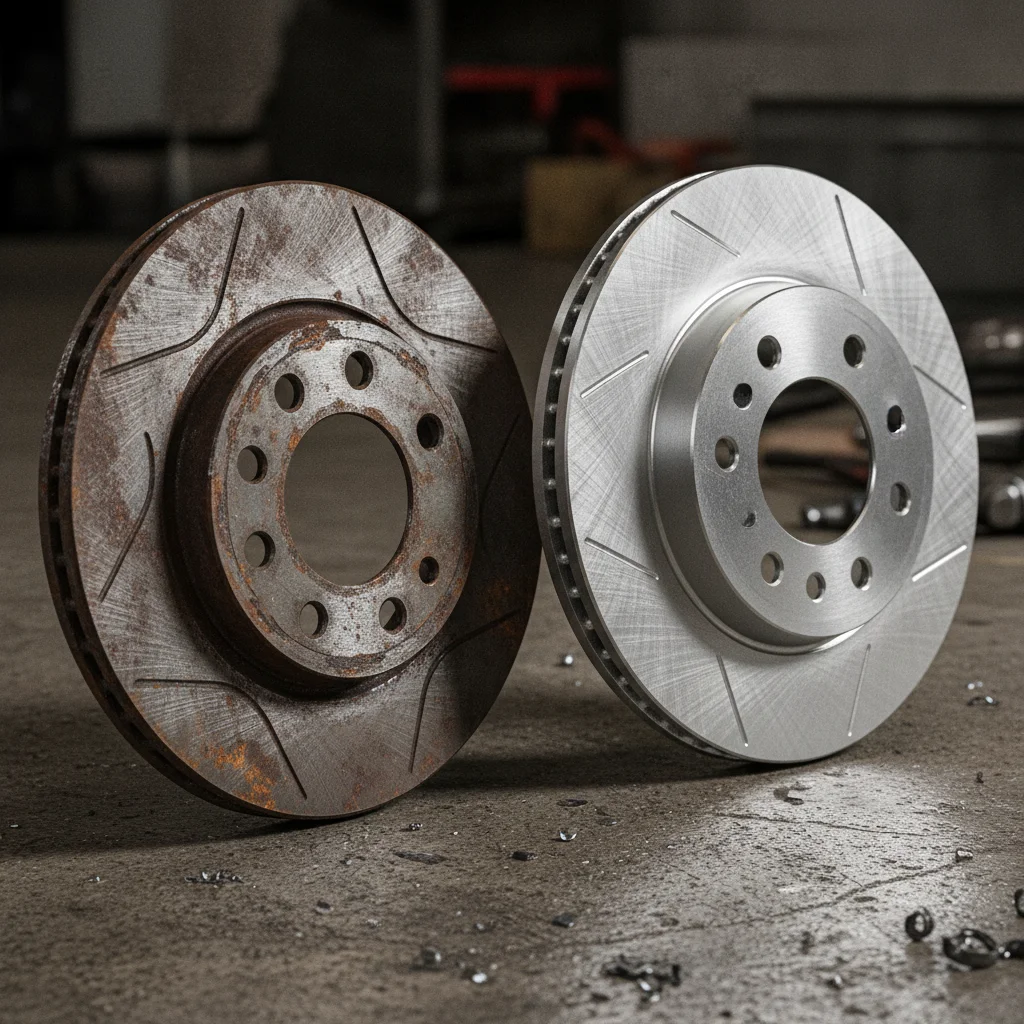
If the pedal pulses rhythmically as you brake — or if you feel the whole steering wheel shudder — the most likely cause is rotor runout, which mechanics often call «warped rotors.» Technically, the rotor surface has developed thickness variation, meaning the pad contacts a high spot, releases at a low spot, and repeats that cycle with every wheel revolution. You'll feel this as a pulsing sensation that increases in intensity as you apply more brake force.
Warped rotors reduce braking effectiveness and place irregular stress on wheel bearings and caliper slides. They should be addressed, but this isn't a park-the-car scenario — it's a schedule-a-shop-visit-soon scenario, particularly if the vibration is severe. Note that vibration felt only through the steering wheel (not the pedal) more often points to wheel balance or suspension issues. See suspension warning signs for help distinguishing those.
Pulling to One Side During Braking
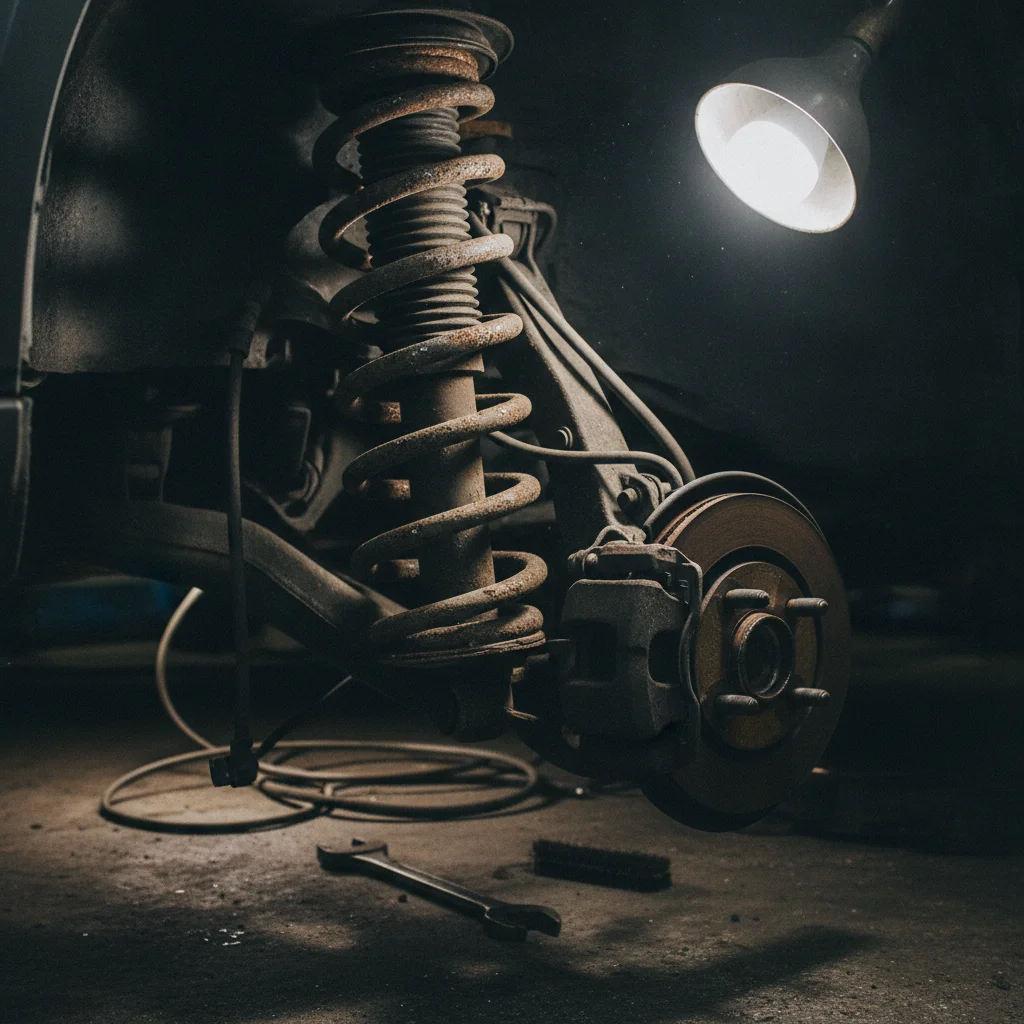
When your car tracks straight until you apply the brakes and then drifts left or right, the braking force is uneven across the front axle. A stuck or dragging caliper on one side generates more clamping force than the other, pulling the car toward the stronger side. Uneven pad wear produces the same effect. A collapsed flexible brake hose — one that's deteriorated internally and acts like a one-way valve — can also cause fluid to get trapped in one caliper.
Pulling during braking is different from pulling during normal driving, which tends to come from tire pressure, alignment, or a worn suspension component. If your car only pulls when you press the brake pedal, the cause is almost certainly brake-side. For a deeper look at diagnosing directional pull in general, this guide on why cars pull to one side covers the full diagnostic path.
Squealing or High-Pitched Screeching
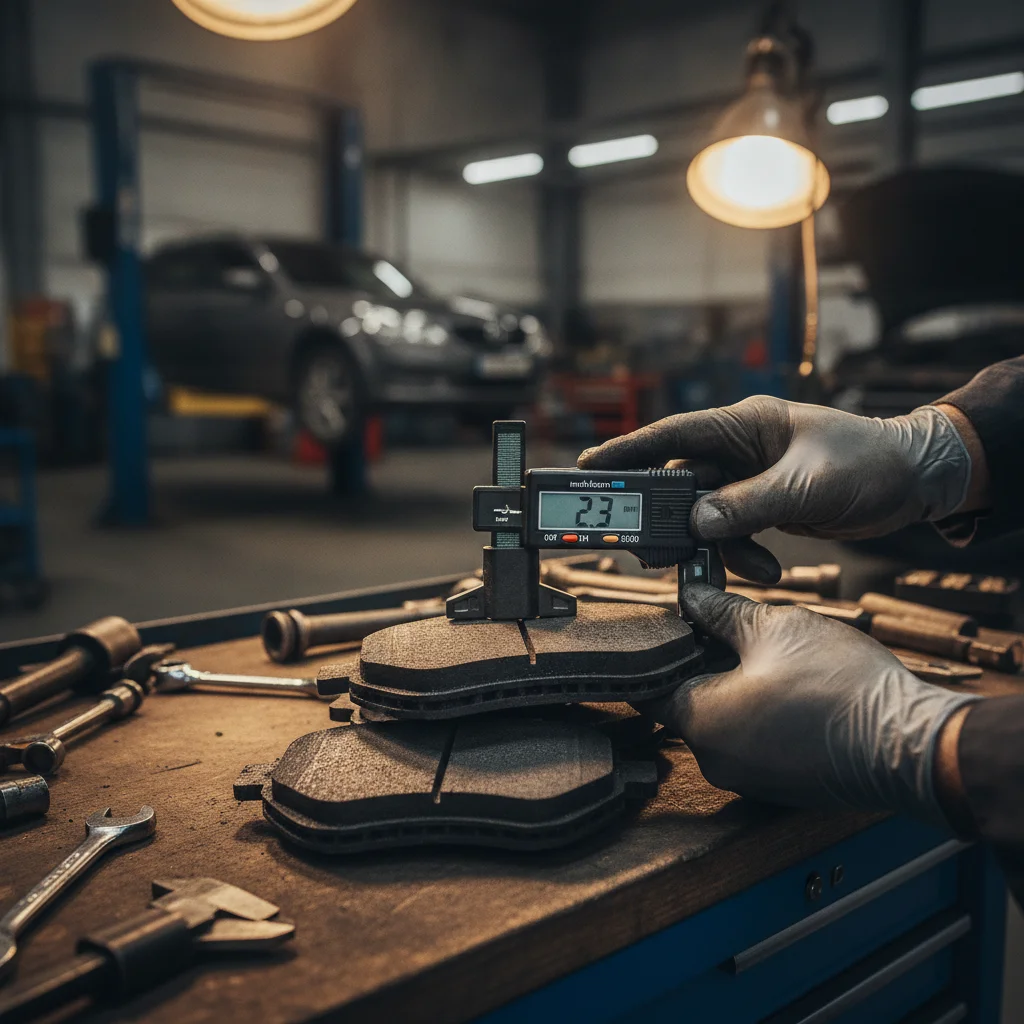
Most disc brake pads include a small metal tab called a wear indicator. When the pad material wears down to the minimum safe thickness, this tab contacts the rotor and produces a high-pitched squeal. It's deliberate engineering — a built-in alarm. If you hear it consistently during normal braking, not just occasionally when the rotors are cold and slightly rusty, your pads are due for replacement.
Important: some performance or semi-metallic pads squeal during light, cold applications even when they're new. Context matters. If the squeal appeared recently on a car that didn't do it before, that's the wear indicator talking.
Grinding Noise During Braking
Grinding is the sound of metal contacting metal. It means the pad material has worn through completely and the metal backing plate is now contacting the rotor surface directly. Every revolution is scoring grooves into the rotor. A rotor that might have been refinished for $80–100 per corner can now require replacement at $150–250 per corner, plus the full pad replacement cost on top. Continuing to drive also risks damaging caliper pistons and, eventually, brake lines. This is a stop-driving situation unless it's absolutely unavoidable to reach a shop.
Burning Smell After Normal Driving
A sharp chemical burning smell after heavy braking — coming down a mountain, towing a trailer — is brake fade, and some of it is normal. But if you smell burning brakes after ordinary stop-and-go traffic, a caliper is likely sticking and dragging the pad against the rotor continuously. A dragging caliper also kills fuel economy and accelerates pad and rotor wear dramatically. It will eventually seize completely.
The Hidden Factor: Brake Fluid Condition
Brake fluid is hygroscopic — it actively absorbs moisture from the air. Over time, this water content raises the fluid's boiling point significantly, meaning that under heavy braking, the fluid can vaporize and create gas bubbles in the lines. Gas is compressible. You'll experience this as sudden pedal sponginess under exactly the conditions you need maximum braking performance.
~25%
Vehicles with brake deficiencies in roadside inspections
Federal Motor Carrier Safety Administration roadside inspection data consistently finds roughly one in four commercial vehicles with brake violations; passenger vehicle brake neglect rates are similarly significant in industry surveys.
2–3 years
Recommended brake fluid replacement interval
Most manufacturers and brake fluid standards (DOT 3/4) recommend flushing fluid every 24–36 months due to moisture absorption that lowers the boiling point.
3x
Cost multiplier when pads wear through to rotors
Industry repair data shows that allowing brake pads to grind into rotors typically triples the total repair cost compared to a timely pad-only replacement.
30%
Stopping distance increase with worn brake pads
Testing by the Tire Rack and AAA has shown that worn brake pads can increase stopping distances from 60 mph by 25–30% compared to new pads.
Most OEM brake fluid recommendations call for replacement every two years or 24,000 miles, though many drivers skip this service entirely because the brakes «feel fine.» The problem is that degraded brake fluid doesn't announce itself through obvious pedal changes under everyday driving conditions. It reveals itself under stress — an emergency stop, a long downhill, or a hot track session.
Testing fluid moisture content is simple: most shops use an inexpensive test strip or probe that measures moisture percentage in seconds. If you've never changed your brake fluid and your car is more than two years old, it's worth having it checked. The flush itself costs $80–150 at most shops and is genuinely preventive maintenance, not upselling. The difference between a brake warning light and ABS light is another element of brake health that's easy to misread — worth understanding if your dash lit up recently.
EV and Hybrid Brakes: The Same Rules Apply, With One Difference
Electric and hybrid vehicles use regenerative braking to recapture energy during deceleration, which means the friction brakes engage less frequently than on a conventional vehicle. This sounds like an advantage — and for pad wear, it largely is. But it introduces a unique pattern: because the friction brakes sit largely dormant, rotors can develop surface corrosion that's never scrubbed off during normal use. Some EV owners find their rotors rusting prematurely even with relatively low mileage.
The other consequence is that brake feel on EVs can be less consistent, because the system blends regenerative and friction braking depending on speed, battery state, and pedal input. A change in how that blend feels isn't always a mechanical failure — it can reflect a software calibration or a shift in regeneration mode. That said, the red flags from earlier sections apply equally: spongy pedals, grinding, pulling, and fluid degradation are not regenerative braking artifacts. For a full picture of how EVs handle brake wear differently, see how regenerative braking affects your brake pads.
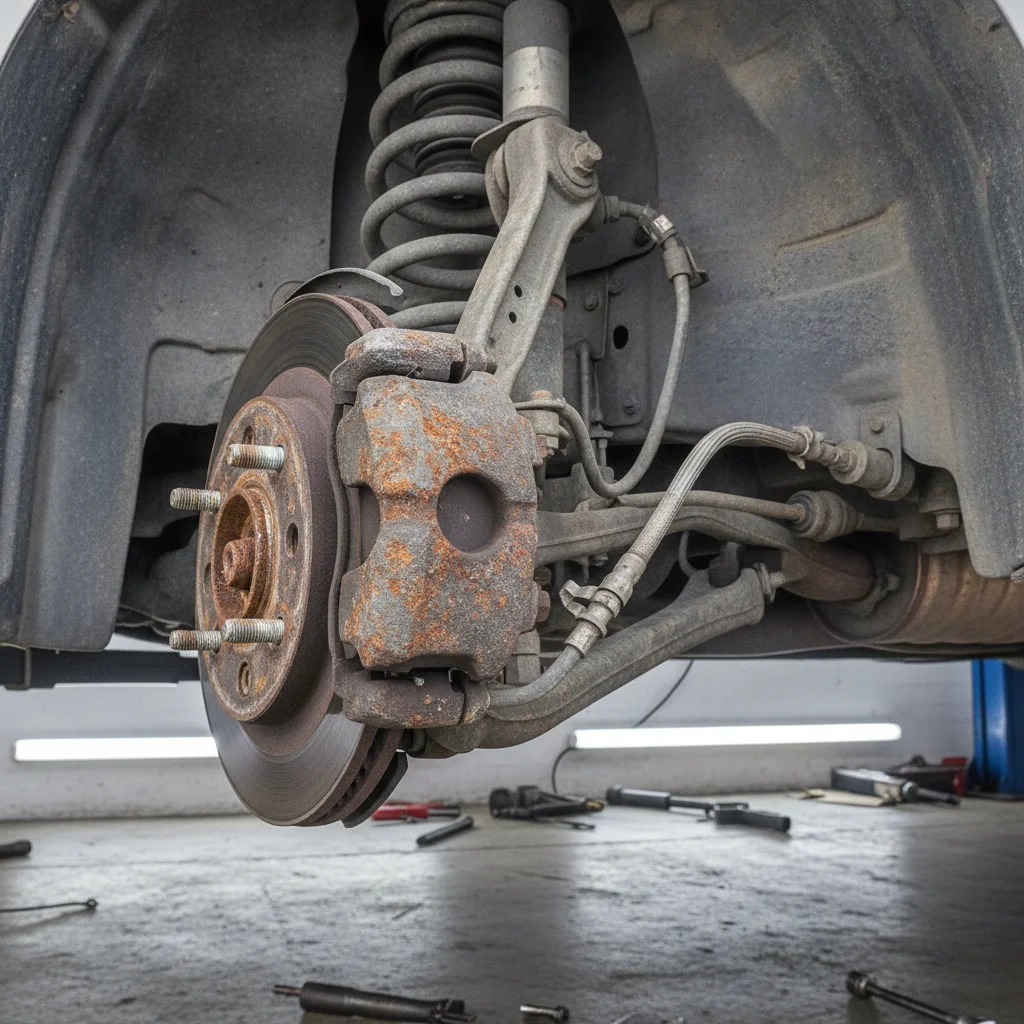
If you're buying a used EV, pay particular attention to rotor condition during a pre-purchase inspection — rust pitting can be more advanced than you'd expect from the mileage, precisely because the rotors see so little regular friction cleaning.
Don't Assume EV Brake Feel Changes Are Software
EV owners sometimes dismiss changes in brake feel as regenerative braking calibration, particularly after over-the-air software updates. While blending behavior can shift with software changes, a spongy pedal, grinding, or pulling are mechanical symptoms and should be inspected regardless of the vehicle's powertrain. The regenerative system does not eliminate the risk of hydraulic brake failure.
Repair Cost Reality: What Each Symptom Typically Costs
One of the clearest arguments for catching brake problems early is the financial one. The cost escalation between a minor brake issue and a neglected one is steep.
A standard front brake pad replacement on a typical sedan runs $150–$300 for both sides, including labor. Add rotor resurfacing and that rises to $250–$400. If pads are worn to metal and rotors are scored, you're replacing both at $400–$700 for the front axle. On a performance vehicle or truck, those numbers can double.
Caliper replacement is another tier up — a single rebuilt caliper plus installation typically runs $200–$400 per corner. A master cylinder replacement, which addresses a sinking pedal, generally costs $300–$500 in labor and parts. Brake line repair varies widely with location and extent of damage, from $150 for a local patch to $600+ for a full line replacement.
The arithmetic is consistent: the earlier you catch the problem, the cheaper it is. A pad replacement done when the wear indicator starts squealing costs roughly one-third what it costs after you've let it grind through to the rotors and scored the caliper piston.
It's also worth noting that brake problems can have knock-on effects on your insurance position. A vehicle with known brake issues that's involved in an accident may face coverage complications, and some insurers factor deferred maintenance into liability assessments. Keeping a simple maintenance record — including brake service dates — is useful documentation.
When evaluating any used vehicle's ownership costs, brake system condition is one of the highest-leverage inspection points. The same diagnostic thinking applies to transmissions — if you're assessing a used car, evaluating transmission behavior during a test drive covers the analogous warning signs in that system.
A Practical Decision Framework: What to Do When You Notice a Change
Not every brake change requires an immediate tow. Here's how to triage what you're experiencing:
- Sinking pedal or no braking response: Do not drive the vehicle. Call a tow truck.
- Spongy pedal that appeared suddenly: Inspect for visible fluid leaks under the car before driving. If you see fluid, do not drive it. If none visible, drive directly to a shop — no extended trips.
- Grinding noise: Drive only if necessary to reach a shop today. Do not defer this repair.
- Squealing during normal braking: Schedule pad inspection within the next 1–2 weeks. Pads are near end of life but not yet through.
- Vibration or pulsing pedal: Schedule an inspection soon. Brakes are functional but rotors need attention.
- Pulling to one side during braking: Have it inspected within the week. A dragging caliper will worsen and can cause uncontrolled directional drift.
- Burning smell after normal driving: Have it inspected promptly — same-week if possible. A dragging caliper generates heat continuously and will eventually seize.
Bed In New Brake Pads Properly
After installing new pads, perform 8–10 moderate stops from 30 mph, allowing the brakes to cool between each one. This deposits an even layer of pad material onto the rotor surface and establishes consistent contact. Skipping the bedding process can cause uneven deposits that produce the same vibration as a warped rotor — even though nothing is actually wrong.
Keep a Simple Brake Service Log
Write down the date and mileage of every brake service — pads, fluid flush, caliper replacement. A simple note in the glove box takes ten seconds and gives you (and any future buyer) a verifiable service history. It also makes it easy to know when your fluid is due for a change before the brakes tell you in an emergency.
For anything involving warning lights accompanying these symptoms, the distinction between your brake warning lamp and your ABS light matters more than most drivers realize. Understanding what each light signals tells you which system is affected and how urgently you need to respond.

All claims are backed by peer-reviewed research. Sources on request.