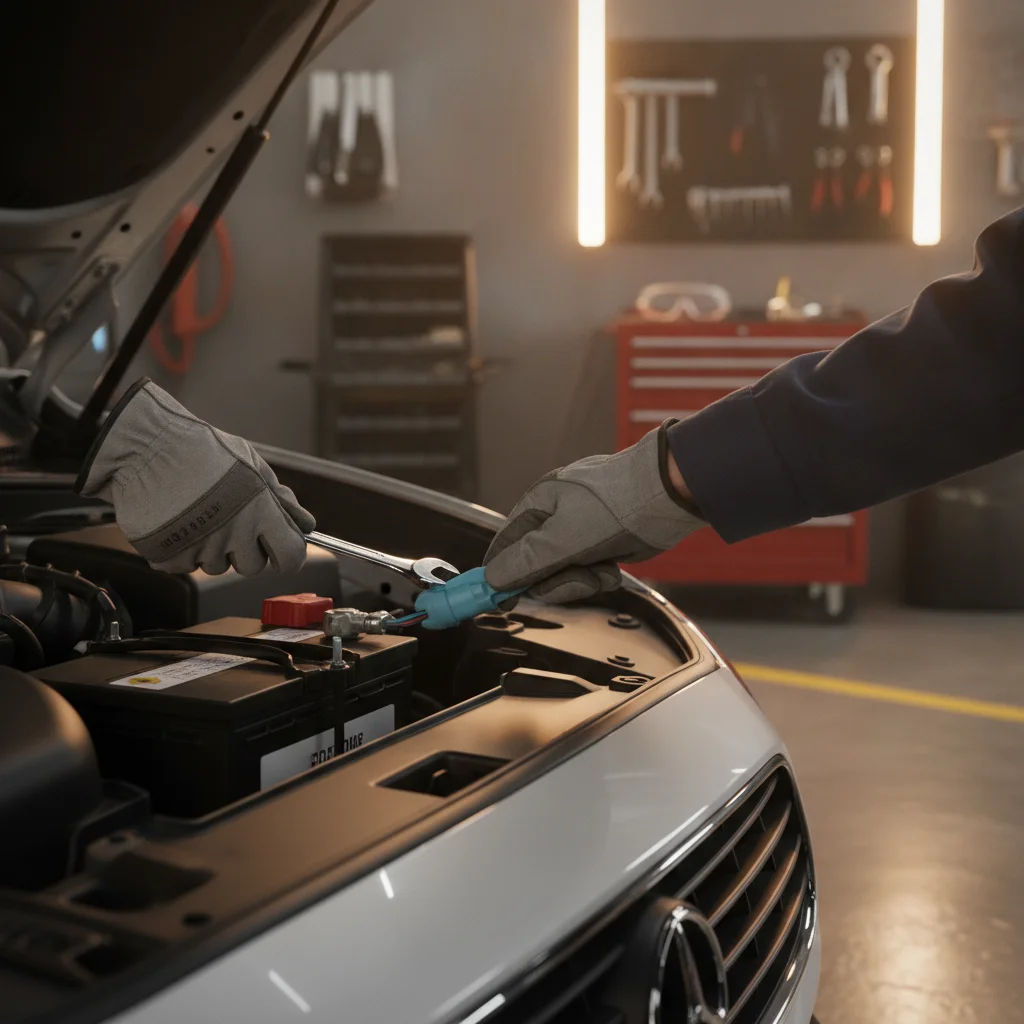
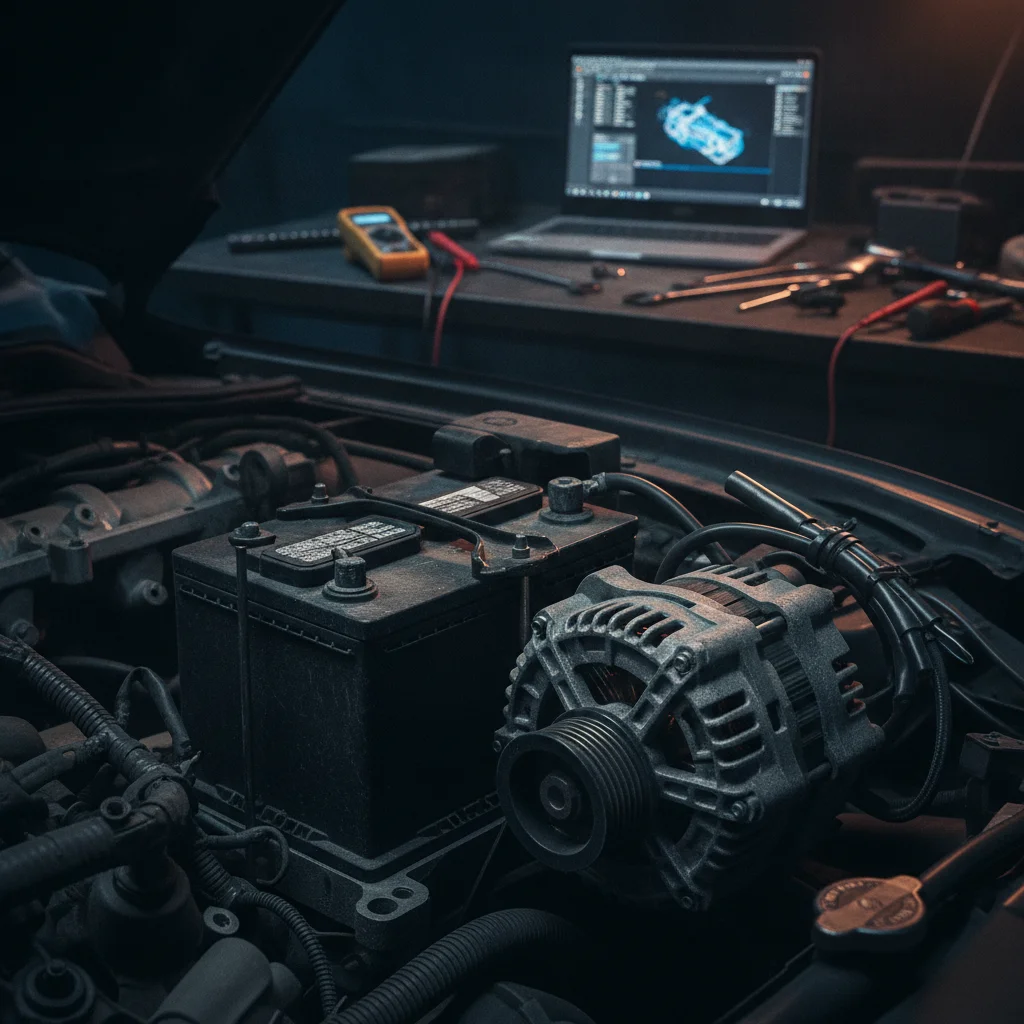
Key Takeaways
Option A
Dead or Failing Battery
The stored-energy component that's first to get blamed.
Best for: Understanding when your car's power storage unit is genuinely at fault for starting and electrical failures.
Option B
Failing Alternator
The generator that keeps everything running after the car starts.
Best for: Identifying when the charging system itself is the culprit behind repeated dead batteries and mid-drive electrical symptoms.
If your car won't start after sitting overnight or in cold weather
Dead or Failing Battery
Batteries lose significant cranking power in cold temperatures. A battery older than three years that struggles on cold mornings is almost certainly the issue.
If your car starts fine but warning lights flicker or dim while driving
Failing Alternator
The alternator powers your electrical system while driving. Flickering or dimming under load is a classic sign the alternator is no longer keeping up with demand.
If a jump-start works but the car dies again within 20–30 minutes
Failing Alternator
A healthy alternator recharges the battery while you drive. If the car dies shortly after a jump, the alternator isn't replenishing the charge it borrowed.
If your battery is more than four years old and has needed multiple jump-starts
Dead or Failing Battery
Most car batteries have a useful life of three to five years. Repeated jump-starts that don't lead to spontaneous starting failures usually point to a battery at end of life.
If you hear a whining or grinding noise from the engine bay alongside electrical symptoms
Failing Alternator
Worn alternator bearings produce distinctive mechanical noise. Combined with voltage-related symptoms, this points squarely at an alternator that needs replacement soon.
Why These Two Problems Look So Much Alike
Walk into any auto parts store and tell the counter person your car won't start, and the first question will almost certainly be: "Have you checked your battery?" It's the obvious guess, and often the right one. But roughly one in three "dead battery" diagnoses actually turns out to be a failing alternator in disguise. Swapping the battery doesn't fix anything — and then you're back at square one, a couple hundred dollars lighter.
The reason these two problems masquerade as each other comes down to how the system actually works. Think of it like your phone's battery and charger: the battery holds the charge, and the charger replenishes it. If your phone dies, it might be a dead battery — or it might be a broken charger that's been slowly starving the battery for weeks. The phone doesn't care which one failed. It just shows you a black screen either way.
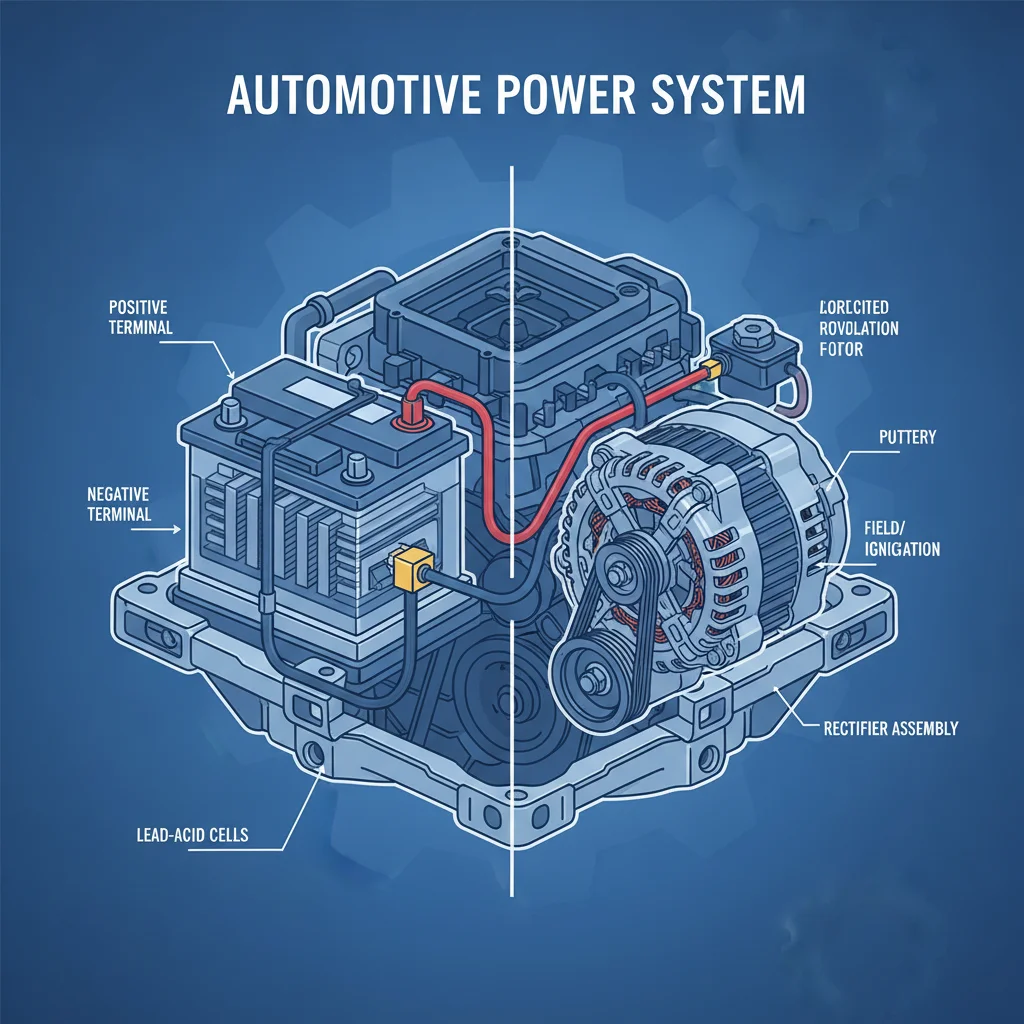
In a car, the battery provides the burst of electricity needed to crank the starter motor and fire the engine. Once the engine is running, the alternator — driven by a belt off the crankshaft — takes over, powering all electrical systems and simultaneously recharging the battery. When either one fails, the symptoms can overlap enough to fool even experienced drivers.
Understanding which one is actually failing is critical because the repairs aren't interchangeable. A new battery runs $150–$250 for most vehicles. An alternator replacement runs $400–$1,000 including labor. Getting it wrong is an expensive mistake — and it's avoidable with a few targeted observations. As you build your diagnostic instincts, it's also worth knowing that many maintenance issues announce themselves through sounds, smells, and feel long before a dashboard light appears.
Reading the Symptoms: Battery vs. Alternator
The symptom patterns for each failure have distinct fingerprints once you know where to look. Most drivers experience one or two symptoms and assume the worst about the battery, missing the clues that point elsewhere.
Classic Battery Failure Symptoms
- Slow, labored cranking on startup — the starter motor turns the engine over sluggishly, like it's fighting through molasses. This is the low-voltage signature of a battery that can't deliver enough cranking amps.
- No-start after sitting — especially pronounced after the car has sat overnight or in cold weather. Batteries lose 30–60% of their cranking power at or below freezing.
- Clicking sound when turning the key — a rapid series of clicks means the solenoid is firing but the battery can't sustain the current draw. A single loud click suggests the battery is almost completely dead.
- Age over three to four years — batteries are wear items. Past the four-year mark, capacity degrades rapidly regardless of how well the car has been maintained.
- Corroded or loose terminals — visible white or blue-green crust on the battery posts causes resistance that mimics a weak battery even if the battery itself is fine.
Classic Alternator Failure Symptoms
- Battery warning light illuminates while driving — this light monitors system voltage, not battery health specifically. If it lights up mid-drive, the charging system is the prime suspect.
- Dimming headlights or interior lights under load — turning on the A/C, blower motor, or rear defroster causes lights to visibly dim when the alternator can't keep up with electrical demand.
- Electrical gremlins — intermittent power window slowness, radio cutting in and out, or dashboard gauges behaving erratically are all signs of voltage instability.
- Car dies shortly after a jump-start — this is the most telling alternator clue. A jump-start borrows charge from another battery. If the alternator isn't working, that borrowed charge depletes within 20–30 minutes of driving.
- Whining or growling from the engine bay — worn alternator bearings produce mechanical noise that rises and falls with engine RPM.
| Criterion | Dead / Failing Battery | Failing Alternator |
|---|---|---|
| Primary function | Stores electrical energy for starting | Generates electricity while engine runs |
| When failure strikes | Typically at startup / key turn | During or after driving |
| Jump-start result | Car stays running reliably after jump | Car dies again within 20–30 minutes |
| Battery warning light | Usually off while driving | Often illuminates while driving |
| Headlight behavior | Normal brightness once started | Dims under heavy electrical load |
| Multimeter reading (engine off) | Below 12.2V (weak or dead) | May read normal (12.6V+) |
| Multimeter reading (engine running) | 13.8V–14.7V (alternator compensates) | Below 13.0V or drops under load |
| Typical repair cost | $150–$350 (part + install) | $400–$900 (part + labor) |
| DIY difficulty | Low — most owners can manage | Moderate to high — belt and access issues |
| Average component lifespan | 3–5 years | 80,000–150,000 miles |
One important nuance: a failing alternator will eventually kill a healthy battery. If you've already replaced your battery and the new one keeps dying, the alternator is almost certainly the real culprit. Think of it like buying a new phone and plugging it into a broken charger — the new battery won't save you.
How to Test Each Component at Home
You don't need a professional scan tool to narrow down the problem. A basic digital multimeter — available for under $20 at any hardware or auto parts store — gives you the data you need. Here's how to run the two most useful tests.
Test 1: Static Battery Voltage
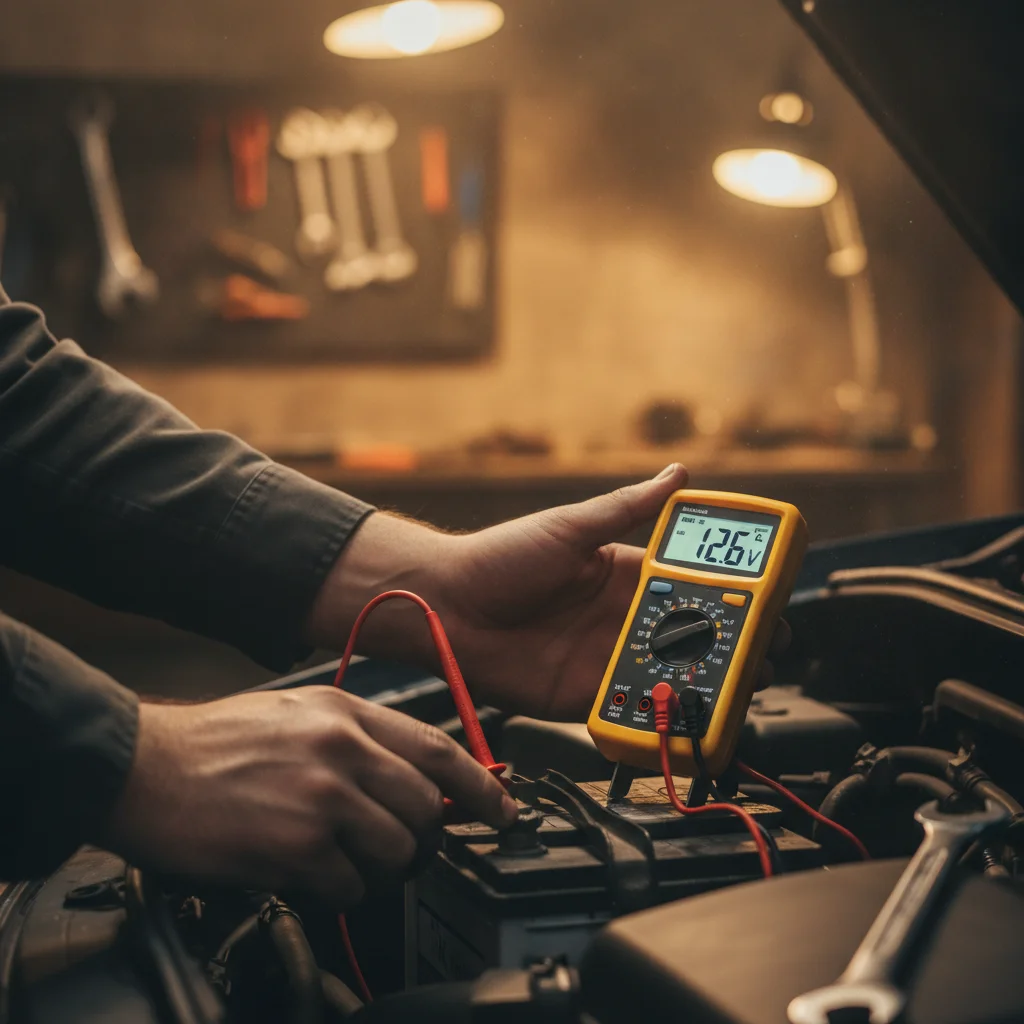
With the engine completely off and the car sitting for at least 30 minutes (to allow surface charge to dissipate), set your multimeter to DC voltage and touch the probes to the battery terminals: red to positive, black to negative.
- 12.6V or higher — battery is fully charged and healthy
- 12.4V — battery is about 75% charged; could be acceptable
- 12.2V or lower — battery is significantly discharged or failing
- Below 11.8V — battery is deeply discharged or has a bad cell
Test 2: Alternator Output (Running Voltage)
Start the engine and, with the multimeter still connected to the battery terminals, read the voltage again. A healthy alternator should produce 13.8V to 14.7V at idle. Turn on major electrical loads — headlights on high beam, blower fan on max, rear defroster on — and watch the reading.
- Stays between 13.5V–14.7V under load — alternator is performing correctly
- Drops below 13.0V under load — alternator is struggling; likely failing
- Reads 12.6V or close to battery voltage — alternator is not charging; probable failure
- Reads above 15.0V — alternator is overcharging; voltage regulator failure, which can damage electronics
~33%
Battery replacements that mask alternator failure
Industry technician surveys suggest roughly one in three battery replacements is performed on a vehicle whose real underlying problem is a failing alternator.
30–60%
Battery power lost in freezing temperatures
The Battery Council International notes that a fully charged lead-acid battery loses 30–60% of its cranking amperage at temperatures at or below 0°F (-18°C).
3–5 yrs
Average car battery lifespan
Most major battery manufacturers and AAA recommend proactive testing or replacement after three years, with most batteries failing by year five in warm climates.
$400–$900
Typical alternator replacement total cost
RepairPal data shows alternator replacement averaging $400–$900 at independent shops, with dealer prices often 20–40% higher depending on vehicle make.
13.8–14.7V
Healthy alternator output at idle
A properly functioning alternator should maintain system voltage between 13.8V and 14.7V at idle, dropping no lower than 13.5V under full electrical load.
If your multimeter tests point squarely at the battery, replacing a car battery is a manageable DIY job — but the order of operations matters more than most guides acknowledge. And before heading to a shop, documenting your symptoms clearly saves time and money at the repair counter.
When the Battery Light Isn't About the Battery
The battery warning light on your dashboard is actually a voltage warning light — it monitors the entire charging system, not just the battery itself. When it illuminates while the engine is running, the most common cause is an alternator that's no longer producing sufficient voltage. A genuinely bad battery will typically manifest as a no-start condition rather than a warning light while driving. If you see this light come on mid-trip, reduce your electrical loads (turn off A/C, heated seats, and non-essential accessories) to conserve whatever charge remains, and head directly to a shop or auto parts store for testing.
The Jump-Start Diagnostic Test
If you don't have a multimeter handy, there's a field-expedient test that every stranded driver already has access to: the jump-start itself. How your car behaves after a jump-start is one of the most revealing diagnostic signals available.
Here's how to read it:
- Jump-start the car successfully. Note how quickly the engine cranks once you get the cables connected. Very slow cranking even with a good donor battery suggests an internal battery fault (bad cell) rather than simple discharge.
- Drive the car for 20–30 minutes at highway speed. This is important — highway driving spins the alternator faster, maximizing its charging output. If the alternator is good, the battery should be meaningfully recharged by the end of this drive.
- Turn the car off and try to restart it. If it restarts easily, the battery was likely just deeply discharged (perhaps from a light left on) and the alternator successfully recharged it. That's a battery or user-error scenario. If it won't restart — especially if you noticed warning lights or dimming lights during the drive — you almost certainly have an alternator problem.
A second variation: if your car dies while you're driving after a jump-start — not when you try to restart it, but actually stalls out mid-drive — that's a near-definitive sign of alternator failure. The engine's own electrical demands exceeded what the depleted battery could supply once the borrowed jump charge was exhausted.
For EV drivers reading this, the charging system works very differently — if you're seeing unusual battery behavior in an electric vehicle, the warning signs that suggest your EV battery needs professional attention are a separate category entirely from what's described here.
What Each Repair Actually Costs — and What to Watch Out For
Once you've narrowed down the culprit, it helps to go into the shop with realistic cost expectations. Shops vary significantly, and knowing the ballpark prevents you from being upsold unnecessarily.
Battery Replacement Costs
A standard 12-volt lead-acid battery for a typical sedan or light truck runs $120–$220 for the part alone. Labor to install is minimal — often $0–$30 if you're buying the battery from the shop. Many auto parts stores (AutoZone, O'Reilly, NAPA) will install a battery you purchase from them for free in their parking lot.
What to watch out for: AGM (Absorbent Glass Mat) batteries are required for vehicles with start-stop systems, push-button ignition, or heavy accessory loads. These run $200–$350 for the battery alone. Installing a conventional flooded battery in a vehicle that requires AGM will cause premature battery failure and potential charging system issues. Always match the battery type to what the manufacturer specifies.
Alternator Replacement Costs
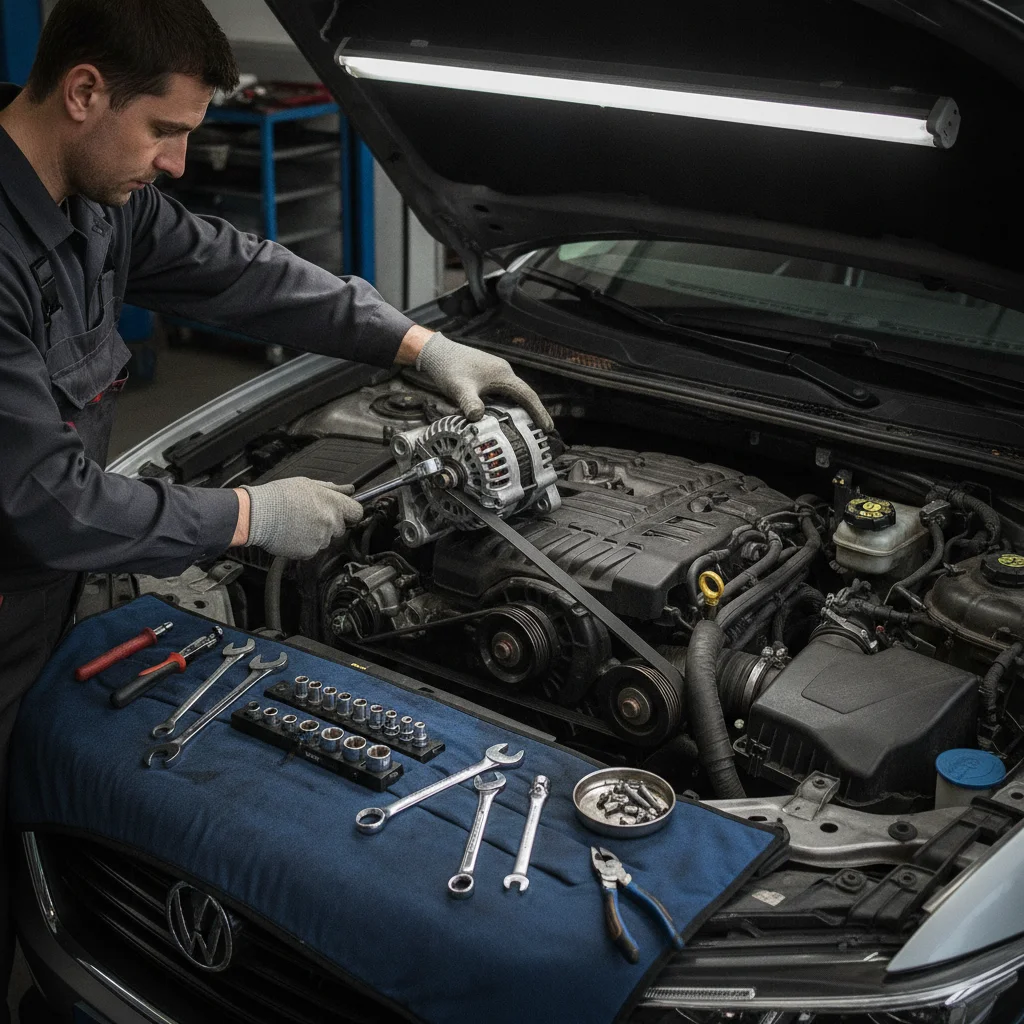
This is where it gets more significant. A remanufactured alternator — the most common choice — runs $150–$350 for the part. Labor adds $100–$400 depending on how accessible the alternator is. On many transversely mounted engines, the alternator is buried under intake components, making it a two- to three-hour job. Total repair: $400–$900 at most independent shops, higher at dealers.
What to watch out for: always ask whether the shop is using a new or remanufactured alternator. Remanufactured units are generally fine, but the quality varies by supplier. A reputable shop will stand behind their parts with at least a one-year parts and labor warranty.
Also: if the alternator belt (serpentine belt) is worn or cracked, replace it at the same time. You're already paying for the labor access. A belt failure after the alternator repair means doing the job twice.
For drivers who also want to sharpen their ability to read other dashboard warnings accurately, understanding the difference between your brake warning light and ABS light follows the same diagnostic logic — similar-looking lights that mean very different things.
Making the Right Call Before You Spend a Dollar
The diagnostic sequence that experienced technicians follow is simple and repeatable. Before authorizing any repair, work through these steps in order:
- Check the battery terminals first. Corroded or loose terminals cause enormous mischief. Clean them with a wire brush and baking soda solution, reconnect firmly, and retest. You'd be surprised how many "dead batteries" are just dirty connections.
- Test static battery voltage with a multimeter (or ask any auto parts store — they'll test it free). Anything below 12.2V warrants further investigation before assuming it's a bad battery.
- Test alternator output voltage with the engine running and electrical loads active. Below 13.5V under load means the alternator isn't keeping up.
- Perform the jump-start drive test if you can't get a multimeter reading. Your car's behavior in the 30 minutes after a jump-start is your clearest real-world data point.
- Consider the age and history of each component. A battery older than four years that's been jump-started twice in six months is at end of life. An alternator on a high-mileage vehicle with a worn belt has a plausible failure history.
One more thing worth remembering: electrical problems have a way of masking each other. A failing alternator damages batteries over time. A severely undercharged battery can cause an otherwise healthy alternator to work so hard it overheats. Getting the diagnosis right on the first component often prevents a second repair down the line.
The bottom line is this — both failures are fixable, both are manageable in cost, and neither one has to leave you stranded if you catch the early warning signs. The drivers who pay the most for automotive repairs are almost always the ones who waited for a total failure instead of acting on the early clues their car was already providing.

All claims are backed by peer-reviewed research. Sources on request.