Key Takeaways
Tire Pressure and Road Safety
Tire pressure refers to the amount of air inside your tires, measured in pounds per square inch (PSI). When that pressure falls below the manufacturer's recommended level — even by a modest amount — your tires can't perform the way they were engineered to, which directly affects braking, steering, and blowout risk. Maintaining correct tire pressure is one of the simplest and most evidence-backed steps a driver can take to reduce crash risk.
The National Highway Traffic Safety Administration (NHTSA) defines a tire as significantly underinflated at 25% or more below the vehicle placard PSI. However, research indicates that safety and handling degradation begins at lower deficits than that threshold.
The Safety Risk Most Drivers Dismiss
Ask most American drivers whether their tires are properly inflated, and many will say they look fine. That response captures the problem precisely: tire pressure is invisible to the naked eye until a tire is dramatically flat. Research consistently shows that millions of vehicles on U.S. roads are traveling on underinflated tires at any given time — not because drivers are careless, but because the consequences aren't immediately obvious.
The National Highway Traffic Safety Administration estimates that tire-related problems contribute to approximately 11,000 crashes per year in the United States. These aren't all dramatic blowouts on the freeway. Many involve subtle handling changes — slower steering response, longer stopping distances, reduced traction in rain — that drivers attribute to road conditions rather than the rubber beneath them.
What makes this a particularly important safety conversation is that proper tire inflation is entirely within a driver's control, costs nothing beyond a gauge and a few minutes, and has well-documented outcomes in crash prevention research. This isn't abstract safety advice. It's actionable, evidence-based, and genuinely underutilized by typical drivers.
Many of the behaviors that cause crashes are ones drivers feel confident about — and tire pressure neglect fits squarely in that category.
TPMS Is a Safety Floor, Not a Gauge
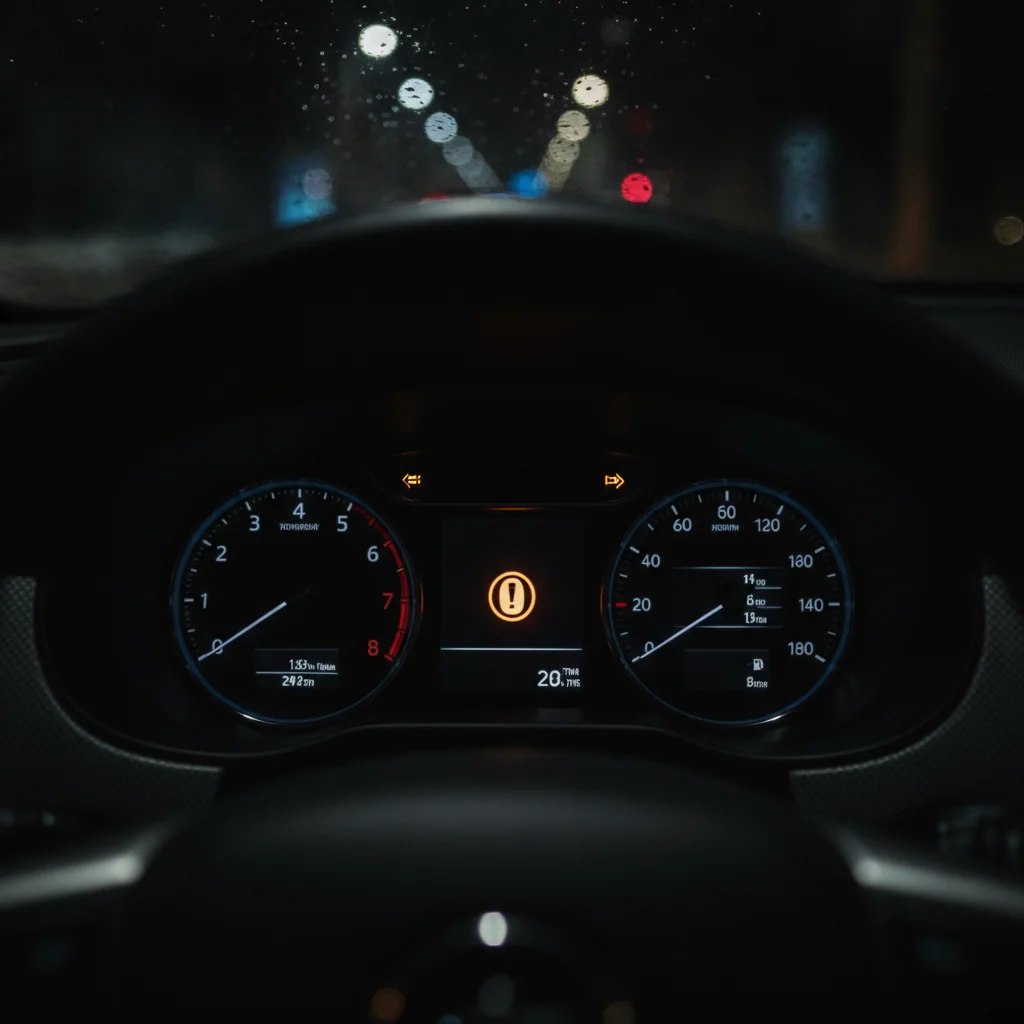
The Tire Pressure Monitoring System in your vehicle is required by federal law to warn you when pressure falls 25% below the recommended level — but it won't alert you to smaller, still-significant deficits. NHTSA and tire industry groups recommend manual checks with a calibrated gauge every month, regardless of whether the TPMS light is illuminated.
Check Pressure When Tires Are Cold
Driving heats the air inside tires and temporarily raises pressure readings by 4 to 6 PSI. For an accurate reading, check pressure before you've driven more than a mile or after the vehicle has sat for at least three hours. A reading taken after a highway commute will overstate actual cold inflation pressure.
What Underinflation Actually Does to Your Tires
To understand why tire pressure matters for safety, it helps to understand what a tire actually does. A properly inflated tire maintains a specific contact patch — the portion of the tire touching the road — and distributes the vehicle's weight evenly across that surface. Engineers design this contact patch to optimize braking force, lateral grip, and heat dissipation.
When pressure drops, the tire's sidewalls begin to flex more with each rotation. This has three interconnected effects:
- Heat generation: Excess flexing creates friction and heat inside the tire. Sustained high-speed driving on underinflated tires can cause the rubber to degrade and, in severe cases, fail suddenly.
- Contact patch distortion: Rather than a firm, even contact zone, an underinflated tire develops a bowed contact patch that prioritizes the outer edges. Braking force and lateral cornering grip both suffer.
- Structural fatigue: Repeated underinflated driving weakens the internal cords and belts that give a tire its structural integrity. Damage may accumulate invisibly long before a failure occurs.
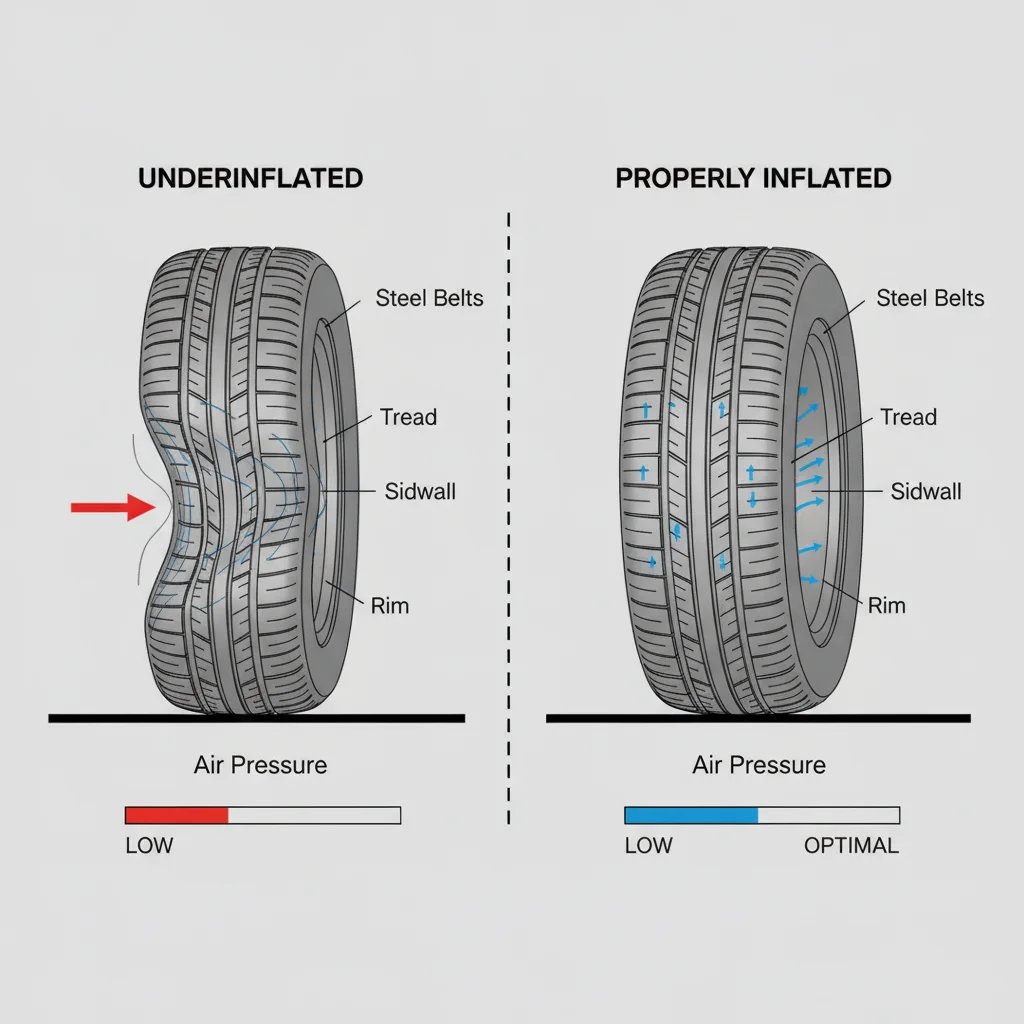
NHTSA's research on tire safety found that vehicles with at least one tire underinflated by 25% or more had crash rates significantly higher than those with properly inflated tires. But the 25% threshold in federal law is a trigger for the TPMS warning system — it doesn't mean pressure deficits below that level are safe. Meaningful degradation in wet-weather braking and handling begins at more modest deficits, particularly on vehicles with performance-oriented tires.
11,000
Annual U.S. tire-related crashes
According to NHTSA research, approximately 11,000 crashes per year in the United States are linked to tire-related failures, including underinflation.
1 PSI
Pressure lost per 10°F temperature drop
The Tire Industry Association notes that tires lose roughly 1 PSI for every 10-degree Fahrenheit decrease in ambient temperature.
25%
TPMS activation threshold below recommended PSI
Federal law requires TPMS warning lights to activate when any tire reaches 25% below the vehicle's recommended PSI — a significant deficit before any warning appears.
~3%
Maximum fuel economy gain from proper inflation
The U.S. Department of Energy estimates properly inflated tires can improve fuel economy by up to 3%, depending on how underinflated tires were previously.
1–3 PSI
Natural monthly pressure loss per tire
Even undamaged tires lose 1 to 3 PSI per month through normal molecular permeation of air through the rubber, per Rubber Manufacturers Association guidance.
Braking Distance: Where the Numbers Get Serious
Of all the safety metrics tied to tire pressure, stopping distance is the one that should command attention. A vehicle traveling at 60 mph needs roughly 130 to 140 feet to stop under ideal conditions with properly inflated tires. Add underinflation, and that distance grows — sometimes by several car lengths.
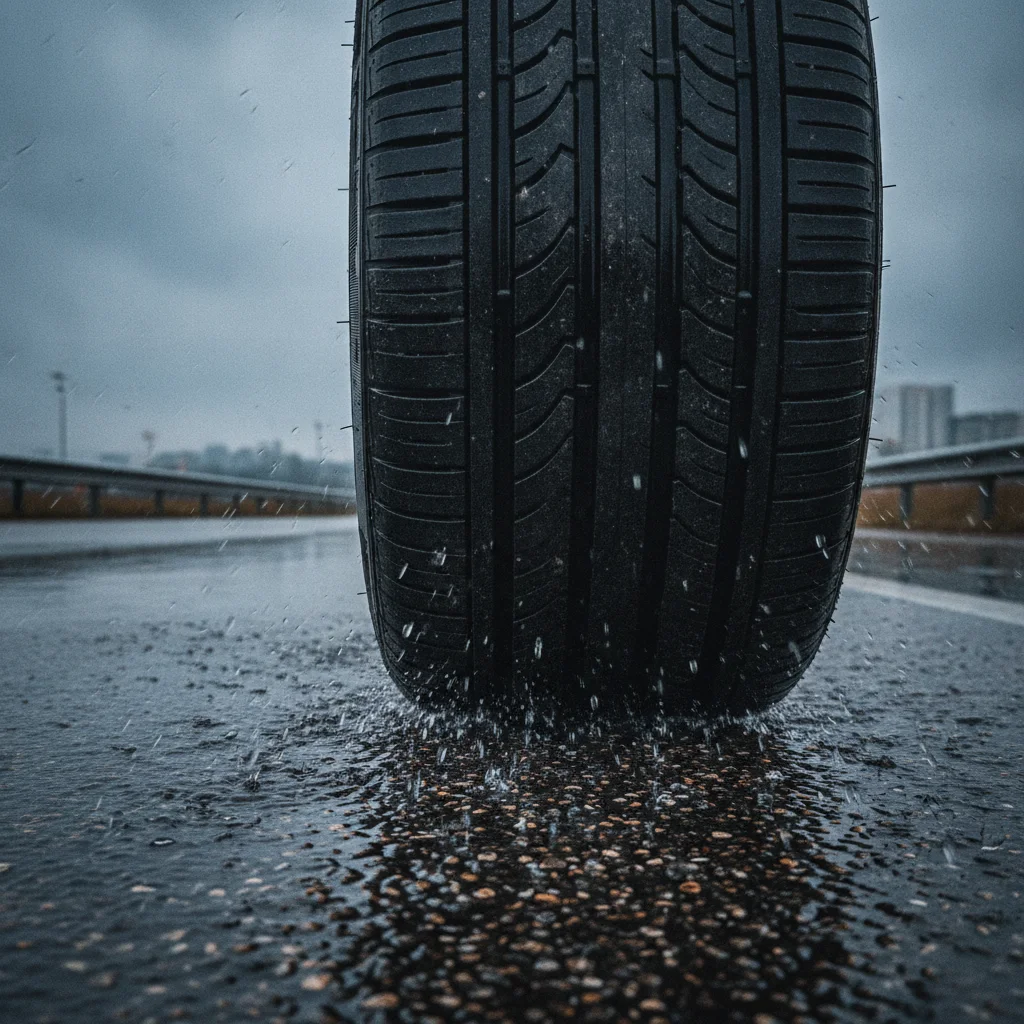
Research published by the Rubber Manufacturers Association found measurable increases in stopping distance when tires were run at 75% of recommended inflation. On wet pavement, the effect is compounded: water intrudes into a distorted contact patch more easily, reducing the friction needed to brake effectively.
“Underinflated tires are one of the most preventable contributors to vehicle crashes on American roads. Drivers often don't realize how significantly a few PSI affects the physics of braking — especially in an emergency stop at highway speeds.”
— Rae Tyson, Former NHTSA spokesperson and automotive safety communications veteran
These aren't marginal differences. In real-world traffic scenarios — a child running into the street, a vehicle braking suddenly ahead on the highway — a few extra feet of stopping distance is the difference between a close call and a collision. And that's before factoring in driver reaction time.
For drivers of electric vehicles, this matters doubly. EVs are heavier than their gasoline equivalents due to battery packs, which means more momentum to arrest during braking. Tire pressure and rolling resistance in EVs is a topic that intersects both efficiency and safety — and the safety dimension often goes undiscussed.
Own a Digital Gauge — Don't Rely on Station Pumps Alone
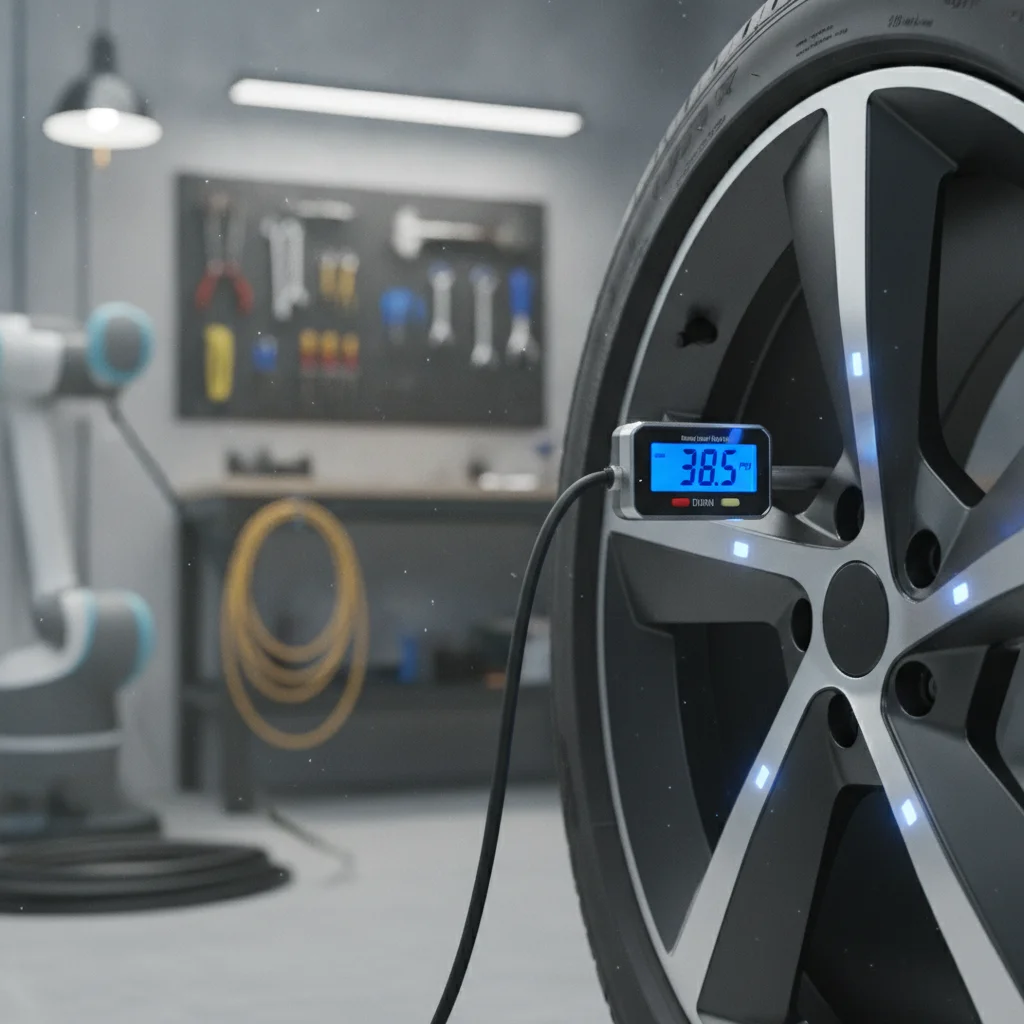
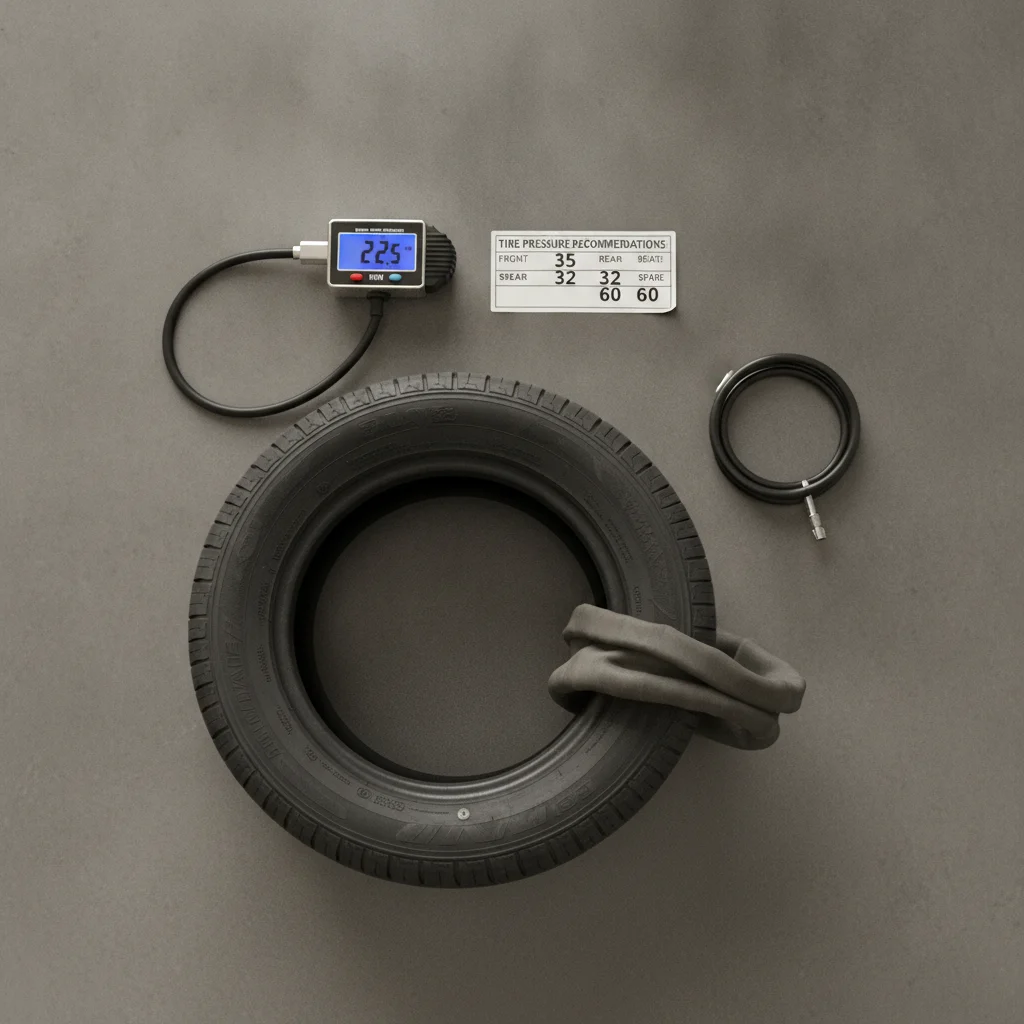
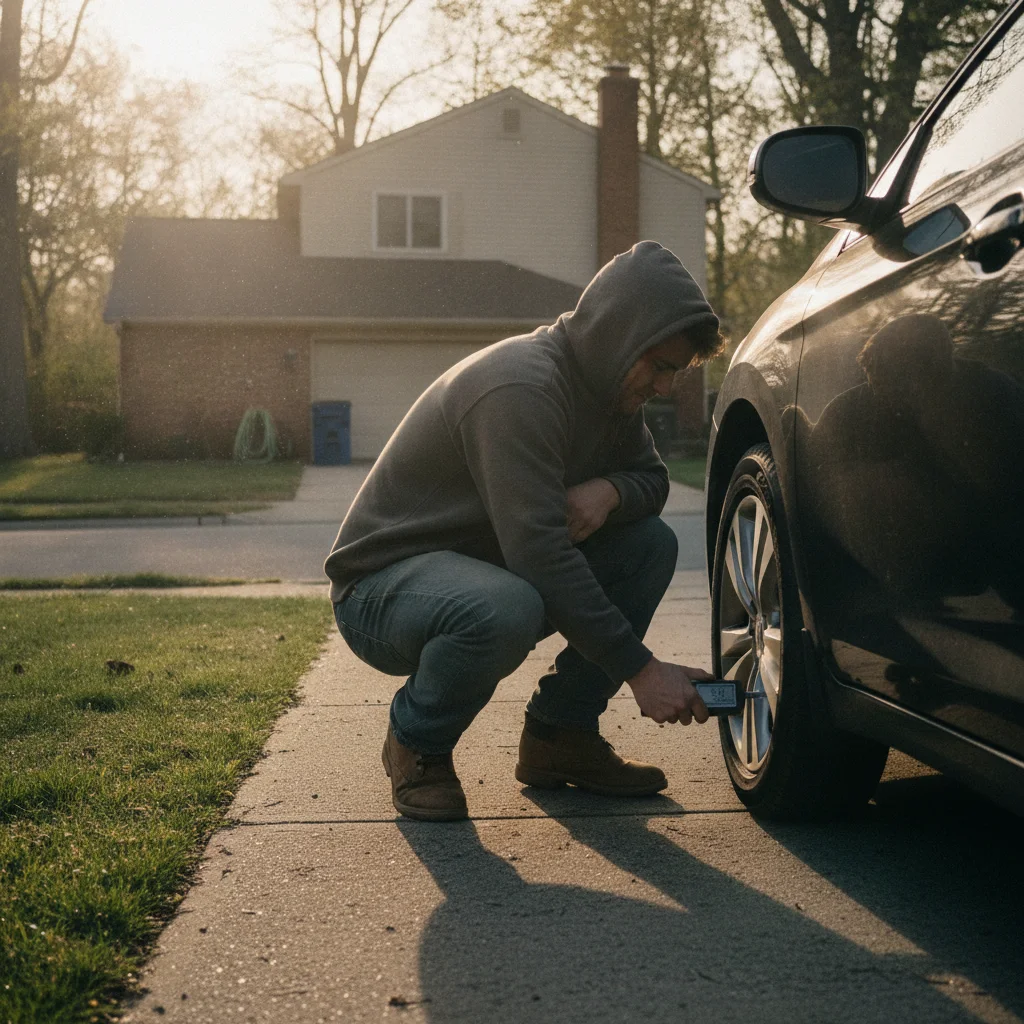
A quality digital tire pressure gauge costs $10 to $15 and gives you an accurate, immediate reading in seconds. Air pump gauges at gas stations vary in accuracy and may be damaged from heavy use. Checking pressure in your driveway with your own gauge before a trip is the most reliable approach.
Set a Monthly Reminder to Check All Four Tires
Tire pressure loss happens gradually and invisibly. Setting a recurring monthly reminder on your phone takes 30 seconds and ensures you catch seasonal pressure drops and slow leaks before they become safety issues. Include the spare tire in your check — it's often overlooked until it's needed.
Temperature, Seasonality, and the Pressure Drop Most Drivers Miss
Tire pressure isn't static. Physics guarantees it will fluctuate, even in a tire with no leak and no damage. The general rule: for every 10°F drop in ambient temperature, tire pressure falls by approximately 1 PSI. In much of the continental United States, the transition from summer to fall can represent a 30–40°F temperature swing — potentially costing 3 to 4 PSI before a driver has noticed anything.
On top of that, tires naturally lose about 1 to 3 PSI per month through molecular permeation — air slowly migrating through the rubber itself. This is normal and happens in every tire, regardless of brand or quality.
The practical implication: a tire that was correctly inflated in September may be 5 or 6 PSI low by November without a single nail or puncture involved. This is precisely why NHTSA and tire industry groups recommend monthly pressure checks rather than reactive checks after the TPMS light activates.
Seasonal transitions — particularly the first cold snap of autumn — should prompt a pressure check for every vehicle. Many drivers who've had a slow leak develop over time may also benefit from a proper repair. Fixing a slow tire leak is more accessible than most drivers realize and doesn't always require buying a new tire.
TPMS Is a Safety Floor, Not a Gauge
The Tire Pressure Monitoring System in your vehicle is required by federal law to warn you when pressure falls 25% below the recommended level — but it won't alert you to smaller, still-significant deficits. NHTSA and tire industry groups recommend manual checks with a calibrated gauge every month, regardless of whether the TPMS light is illuminated.
Check Pressure When Tires Are Cold
Driving heats the air inside tires and temporarily raises pressure readings by 4 to 6 PSI. For an accurate reading, check pressure before you've driven more than a mile or after the vehicle has sat for at least three hours. A reading taken after a highway commute will overstate actual cold inflation pressure.
Finding the Right PSI — and Where Drivers Go Wrong
One of the most persistent misconceptions about tire pressure is where to find the correct number. Many drivers check the sidewall of their tire, which displays a maximum pressure — not the target operating pressure. Running a tire at its maximum sidewall PSI can actually reduce grip and increase wear, the opposite of what most drivers intend.
The correct pressure for your vehicle is printed on the placard affixed to the driver's door jamb. It accounts for the vehicle's weight distribution, suspension tuning, and the specific tire size installed. If your car uses different tire sizes front and rear — common on performance vehicles — the placard will specify different pressures for each axle.
Tire pressure and wheel alignment work together to determine how evenly and predictably your car handles. Running consistently low pressure on one side of the vehicle, for example, can mask or amplify alignment problems, making both issues harder to diagnose.
When checking pressure, do so when the tires are cold — before driving or after the vehicle has been parked for at least three hours. Driving heats the air inside tires and temporarily raises pressure readings by 4 to 6 PSI, which can give a falsely reassuring reading if you check after a commute.
Own a Digital Gauge — Don't Rely on Station Pumps Alone
A quality digital tire pressure gauge costs $10 to $15 and gives you an accurate, immediate reading in seconds. Air pump gauges at gas stations vary in accuracy and may be damaged from heavy use. Checking pressure in your driveway with your own gauge before a trip is the most reliable approach.
Set a Monthly Reminder to Check All Four Tires
Tire pressure loss happens gradually and invisibly. Setting a recurring monthly reminder on your phone takes 30 seconds and ensures you catch seasonal pressure drops and slow leaks before they become safety issues. Include the spare tire in your check — it's often overlooked until it's needed.
TPMS: Useful, But Not a Substitute for Monthly Checks
Since 2008, all new passenger vehicles sold in the United States have been required to include a Tire Pressure Monitoring System (TPMS). The system uses sensors inside each wheel to monitor pressure and illuminate a dashboard warning light when pressure falls below a threshold. It's a meaningful safety advance — but it's widely misunderstood.
Federal rules require the TPMS light to activate when a tire reaches 25% below the vehicle's recommended PSI. On a car with a 32 PSI recommendation, that means the light comes on at or below 24 PSI — a deficit of 8 pounds. By that point, handling degradation is measurable, braking distance has increased, and the risk of heat-related tire damage has risen substantially.
Treating the TPMS light as your primary pressure-monitoring tool means accepting a significant safety buffer below proper inflation. The light is a floor, not a target. Understanding what your TPMS warning actually means is critical context every driver should have before assuming the absence of a warning light means properly inflated tires.
A quality digital tire pressure gauge — available at any auto parts store for $10 to $15 — provides accurate, immediate readings and takes less than five minutes to use on all four tires. It remains the most reliable tool for maintaining safe inflation.
The Maintenance Habit That Costs Almost Nothing
Among all the maintenance tasks associated with vehicle ownership, checking tire pressure has one of the highest safety-to-effort ratios available. It requires no mechanical skill, no appointment, and minimal time. The barrier is almost entirely one of habit and awareness.
Building pressure checks into existing routines reduces the friction further. Many drivers find it natural to check pressure monthly on the same day they pay a regular bill, when they refuel, or at the start of each new season. Gas stations with air pumps often provide a pressure gauge built into the pump — though stand-alone digital gauges are more accurate and worth owning.
The downstream financial benefits reinforce the habit. Properly inflated tires wear more evenly, lasting longer before replacement. Tire pressure and fuel economy is another measurable benefit: the U.S. Department of Energy estimates that correct inflation can improve gas mileage by 0.5% to 3%, depending on how underinflated the tires are. Over a year of driving, that adds up.
But the safety case stands on its own. Longer stopping distances, reduced wet-weather traction, and elevated blowout risk are consequences that no fuel savings calculation fully captures. The connection between tire pressure and road safety is not complicated — it's just underestimated. Correcting that gap starts with a gauge and a monthly five-minute commitment.

All claims are backed by peer-reviewed research. Sources on request.