Key Takeaways
Tire Pressure and Fuel Economy
Tire pressure is the amount of air inside your tires, measured in pounds per square inch (PSI). When tires are underinflated, they flatten slightly against the road, creating more friction — called rolling resistance — which forces your engine to work harder and burn more fuel. Keeping tires at the correct pressure is one of the simplest ways to improve your miles per gallon.
Rolling resistance increases roughly proportionally with tire deflection. A 20% drop in inflation pressure can raise rolling resistance by 10–15%, measurably reducing fuel efficiency at all speeds.
Why Tire Pressure Is a Fuel Economy Issue
Most drivers think about tire pressure when a warning light appears or when a tire looks visibly flat. But tire pressure affects your fuel economy every single mile you drive — quietly, invisibly, and cumulatively.
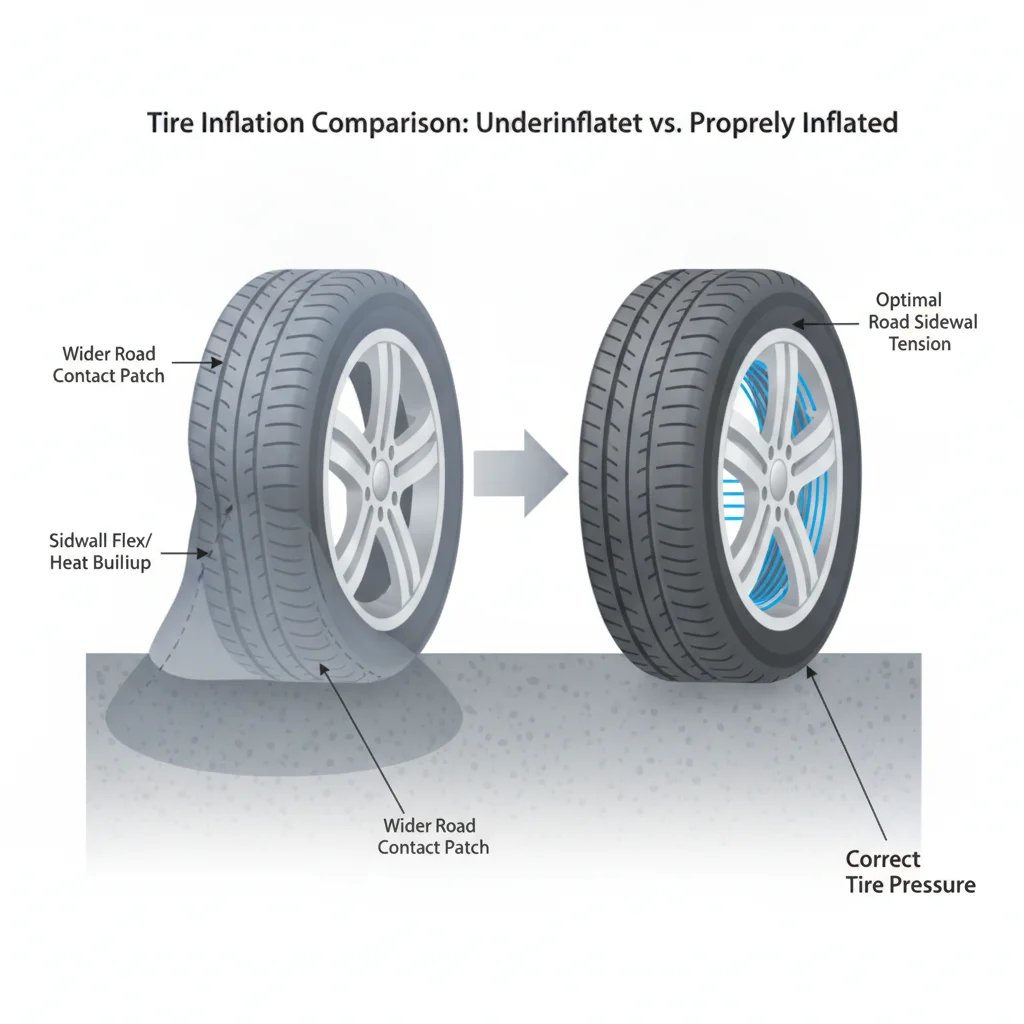
Here's the core physics: a properly inflated tire holds its round shape and rolls with minimal contact against the road surface. When pressure drops, the tire deforms — its footprint widens and the sidewalls flex more with each rotation. That extra flexing and surface contact creates rolling resistance, which is the force your engine has to overcome just to keep the car moving at a steady speed.
The more rolling resistance, the more fuel burned. It's that straightforward.
What makes this easy to overlook is that tire pressure drops slowly. Tires naturally lose 1–2 PSI per month through normal permeation — air gradually escaping through the rubber and valve stems. Add a cold snap and that rate accelerates: tires lose roughly 1 PSI for every 10°F drop in temperature. By midwinter, a tire that was correctly inflated in September might be 5 or 6 PSI low without ever picking up a nail.
At 5 PSI low across all four tires, you could be burning meaningfully more fuel on every trip. That's not a minor inefficiency — it's a slow, steady drain on your wallet that's completely preventable.
Nitrogen vs. Regular Air: Does It Matter?
Some tire shops and dealerships offer nitrogen inflation instead of compressed air. Nitrogen molecules are slightly larger than oxygen molecules, so they permeate rubber more slowly — meaning pressure stays stable longer. The real-world benefit is modest: a tire inflated with nitrogen might lose pressure a bit more slowly over months. For most drivers, the practical impact is small compared to simply checking pressure regularly. If nitrogen is free or very cheap at your dealer, it's a reasonable choice, but it's not worth paying a premium for.
Spare Tire Pressure: Don't Forget It
Your spare tire loses pressure over time just like the tires you're driving on. A full-size spare should be checked whenever you check the other four tires. Compact spare ("donut") spares are typically specified at 60 PSI — much higher than regular tires — and can lose a significant portion of that sitting in your trunk for months. The worst time to discover a flat spare is when you're already dealing with a flat tire on the roadside.
When to Check Pressure After a Temperature Swing
If overnight temperatures dropped sharply — say, 20°F or more — it's worth checking pressure before your first drive, not after. Driving on underinflated tires for even a short commute means you're already incurring the rolling resistance penalty. A quick morning check takes 90 seconds with a gauge kept in your glove box.
Reading the Numbers: PSI, Max Pressure, and What You Actually Need
There are two PSI numbers associated with every tire, and confusing them is one of the most common mistakes drivers make.
The Recommended Pressure (Use This One)
This is found on a sticker inside the driver's door jamb or in the owner's manual. It's set by your vehicle's manufacturer and represents the ideal balance of ride comfort, fuel efficiency, handling, and tire wear for your specific car's weight and suspension. This is the number you want your tires to match.
The Maximum Pressure (Don't Use This One as a Target)
This is molded into the tire's sidewall and represents the highest pressure the tire is engineered to hold safely. It's almost always higher than the recommended pressure — sometimes by 10 PSI or more. Running your tires at maximum pressure makes them stiffer, reduces grip, causes faster center-tread wear, and makes your ride harsher. It does marginally reduce rolling resistance, but the trade-offs aren't worth it.
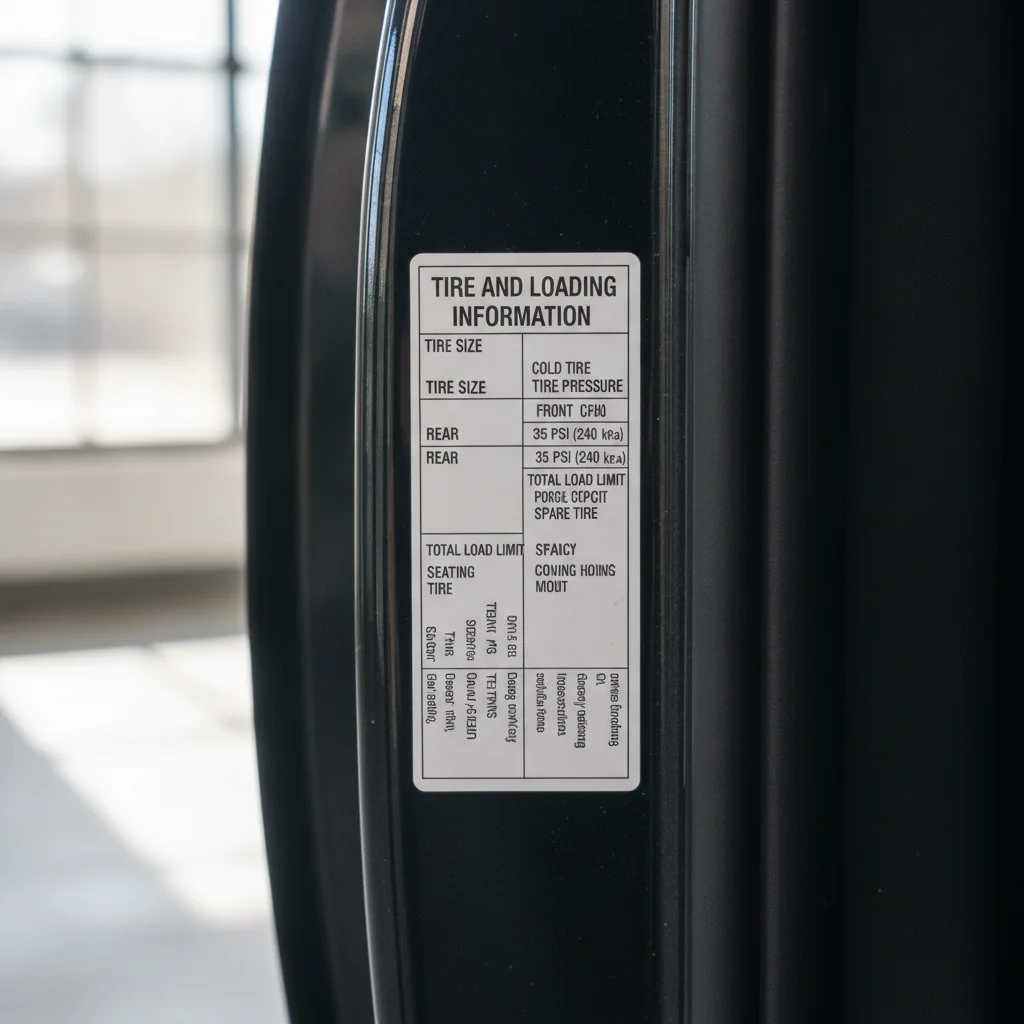
For most passenger vehicles, the recommended pressure falls between 30 and 35 PSI. SUVs and trucks often run slightly higher, sometimes up to 40 PSI. What matters isn't the exact number — it's matching your specific vehicle's specification.
Set a Monthly Phone Reminder
The single most effective habit for maintaining correct tire pressure is a calendar reminder — same day every month, five minutes before you leave for work. Consistency matters more than precision here. A tire that stays within 2 PSI of specification all year long will outperform one that's corrected twice a year and ignored in between.
Add Air Before a Long Trip, Not During
Always check and correct tire pressure before a highway trip, not after you've already been driving. Highway speeds build heat inside tires, which raises pressure readings artificially. If you inflate to spec mid-trip, you'll likely be adding air to an already hot tire — and when it cools, you'll be right back to where you started or slightly over. A cold-tire check the morning of a trip is the right approach.
Keep a Gauge in Your Glove Box
Having a tire pressure gauge in your car removes the friction from checking. You don't need to plan a trip to the gas station or remember to grab anything — the tool is already with you. A compact digital gauge costs about $15, fits easily alongside your registration and insurance cards, and gives consistent readings for years.
If you drive a vehicle where the front and rear axles carry different loads — a pickup truck, for instance, or a rear-engine car — the door sticker may list different pressures for front and rear tires. Check both.
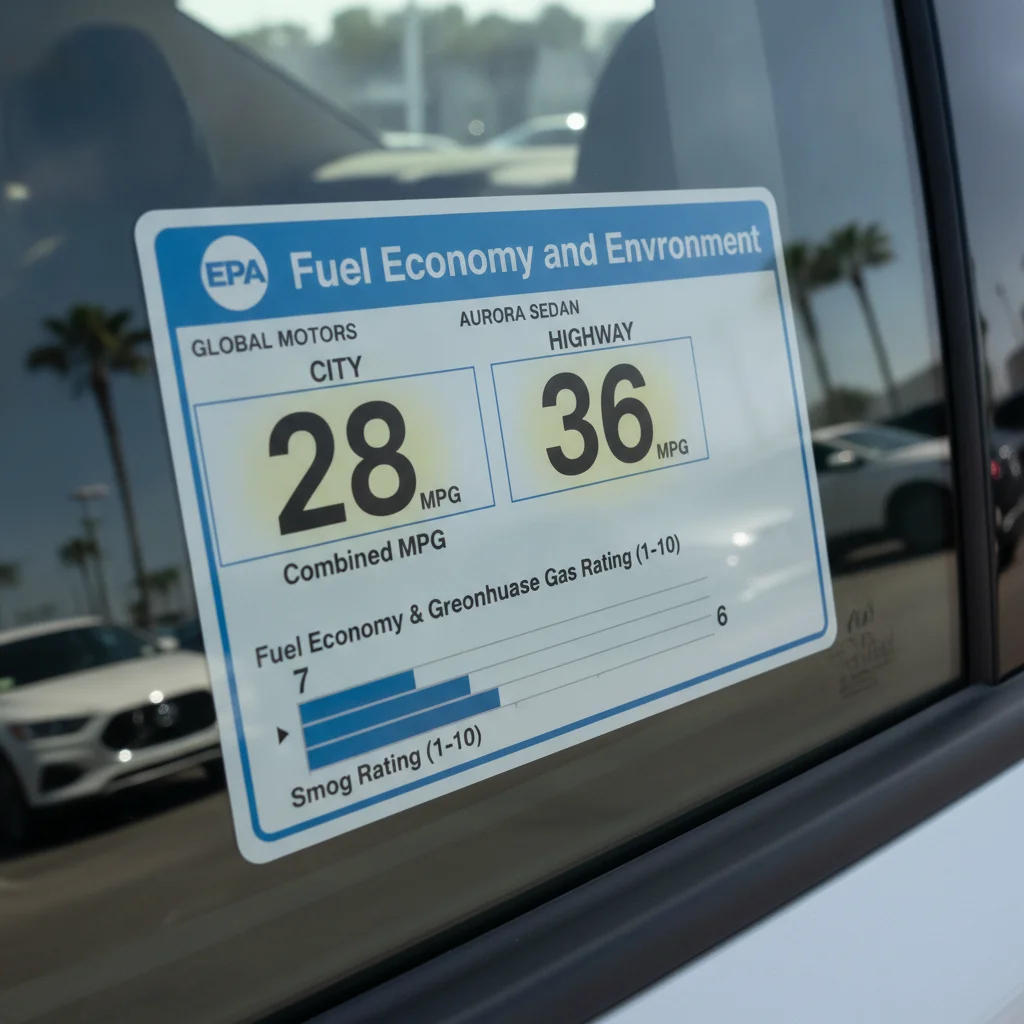
For those curious how EPA fuel ratings connect to real-world performance, understanding EPA test conditions helps clarify why your actual MPG can differ significantly from the window sticker — and tire pressure is one of the real-world variables EPA tests don't account for.
Up to 3%
Fuel economy loss from underinflated tires
The U.S. Department of Energy estimates properly inflated tires can improve MPG by up to 3% compared to tires running low.
1–2 PSI
Natural monthly tire pressure loss
Tires lose pressure through normal air permeation even without leaks, making monthly checks a practical necessity.
~1 PSI
Pressure drop per 10°F temperature decrease
Cold weather accelerates pressure loss — a key reason TPMS lights appear more often in autumn and winter.
25%
Pressure drop needed to trigger TPMS warning
Federal TPMS standards only require a warning at 25% below the recommended PSI, leaving a wide efficiency gap uncovered.
$10–$20
Cost of a quality tire pressure gauge
A basic dial or digital gauge from any auto parts store lasts years and provides reliable readings for regular home checks.
How Rolling Resistance Translates to Dollars
Rolling resistance is what engineers call the energy lost as a tire rotates. It's not just about air pressure — tire compound, tread design, and vehicle weight all play a role — but inflation pressure is the single factor most directly in a driver's control.
The U.S. Department of Energy estimates that for every 1 PSI drop below the recommended level, fuel economy decreases by about 0.2%. That sounds small, but tires are rarely just 1 PSI low. A car running 4–5 PSI underinflated on all four tires could realistically be 3–4% less fuel-efficient than properly inflated.
“Keeping your tires inflated to the correct pressure is one of the easiest and most effective ways to improve fuel economy. It costs nothing and takes minutes.”
— U.S. Department of Energy, Federal agency overseeing fuel efficiency and energy conservation programs
Run the numbers for a typical driver: someone averaging 15,000 miles a year in a car rated at 28 MPG uses about 535 gallons of fuel annually. A 3% efficiency penalty adds roughly 16 gallons — at $3.50 per gallon, that's around $56 per year. Not devastating, but entirely avoidable with a five-minute monthly check.
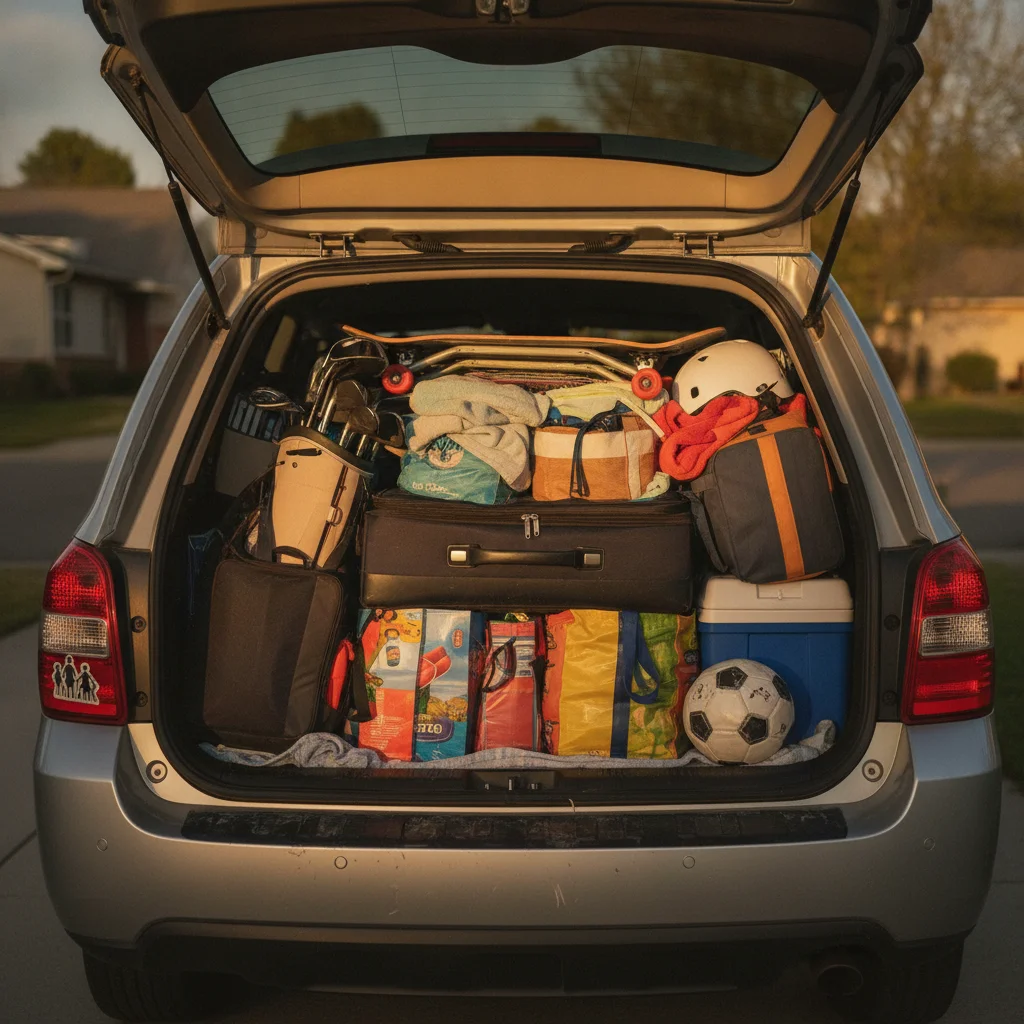
The fuel cost compounds with other efficiency drains. Excess cargo weight reduces MPG independently, and so does aerodynamic drag from roof racks. These variables stack — underinflated tires on a loaded vehicle with a roof rack can produce a noticeably worse efficiency outcome than any single factor alone.
For electric vehicles, the relationship is even more pointed. Rolling resistance directly shortens range, and EVs are engineered with tighter efficiency margins than gas vehicles. If you drive an EV, tire pressure and EV range deserve special attention.
The Right Way to Check and Correct Tire Pressure
Checking tire pressure correctly takes about five minutes. Done improperly, you'll get a reading that's off by 2–5 PSI — enough to matter.
Check When Tires Are Cold
Driving heats up the air inside your tires, which raises the pressure reading. "Cold" means the car has been parked for at least three hours or driven fewer than a mile at low speed. If you drive to a gas station to check pressure, the reading will be somewhat elevated. Either check at home with a gauge or factor in that a reading taken after highway driving may read 4–6 PSI higher than the cold pressure.
Use a Quality Gauge
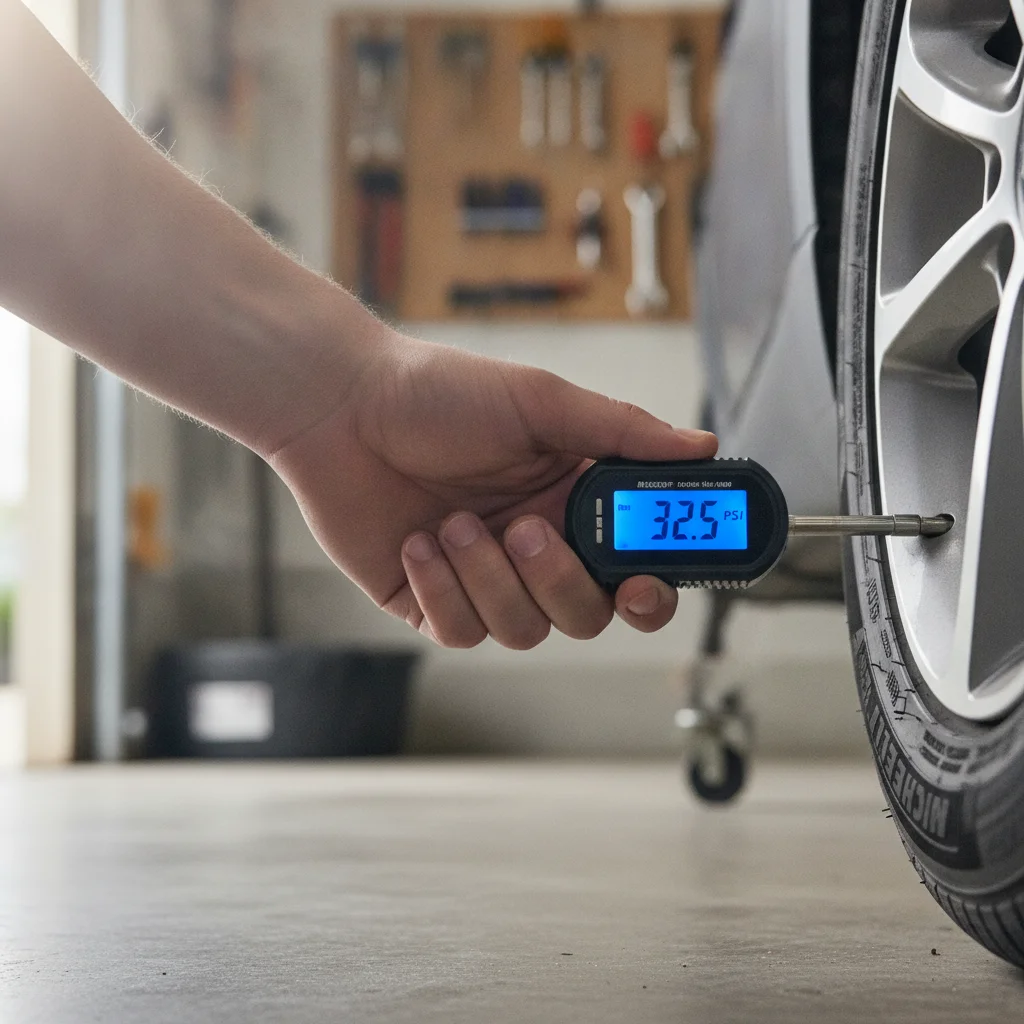
The free pencil gauges at some gas stations can be inaccurate. A dial gauge or digital gauge from an auto parts store costs $10–$20 and will last years. It's worth owning one.
The Process
- Remove the valve stem cap from each tire.
- Press your gauge firmly and squarely onto the valve — any hissing means the seal isn't tight.
- Read the pressure and compare it to the door sticker specification.
- Add air if low, or release small amounts if slightly over (most gauges have a release mechanism).
- Replace the valve caps.
Set a Monthly Phone Reminder
The single most effective habit for maintaining correct tire pressure is a calendar reminder — same day every month, five minutes before you leave for work. Consistency matters more than precision here. A tire that stays within 2 PSI of specification all year long will outperform one that's corrected twice a year and ignored in between.
Add Air Before a Long Trip, Not During
Always check and correct tire pressure before a highway trip, not after you've already been driving. Highway speeds build heat inside tires, which raises pressure readings artificially. If you inflate to spec mid-trip, you'll likely be adding air to an already hot tire — and when it cools, you'll be right back to where you started or slightly over. A cold-tire check the morning of a trip is the right approach.
Keep a Gauge in Your Glove Box
Having a tire pressure gauge in your car removes the friction from checking. You don't need to plan a trip to the gas station or remember to grab anything — the tool is already with you. A compact digital gauge costs about $15, fits easily alongside your registration and insurance cards, and gives consistent readings for years.
Don't Rely on TPMS Alone
Your Tire Pressure Monitoring System is a useful backup alarm, not a maintenance tool. Federal regulations require TPMS to warn you when pressure drops 25% or more below specification. For a tire recommended at 32 PSI, that warning triggers around 24 PSI — a significant deficit you've been running in for some time before the light appears. Manual checks catch the smaller, efficiency-sapping drops that TPMS never flags.
Tire pressure is also deeply connected to safety beyond just efficiency. Research from NHTSA links underinflated tires to longer braking distances and elevated blowout risk — two consequences that dwarf any fuel savings conversation.
Pressure, Alignment, and the Full Picture
Tire pressure doesn't exist in isolation. It's part of a cluster of tire-related variables that affect how efficiently and safely your car moves down the road.
Alignment is the angle at which your tires meet the road. Misaligned wheels create uneven rolling resistance and cause tires to scrub sideways slightly with every rotation — wasting energy and wearing tires unevenly. A car that drifts to one side when you release the wheel likely has an alignment problem that's quietly hurting fuel economy alongside tire pressure issues.
Pressure and alignment together represent the most underappreciated maintenance pair in everyday driving. Fixing one without addressing the other means you're only solving half the problem.
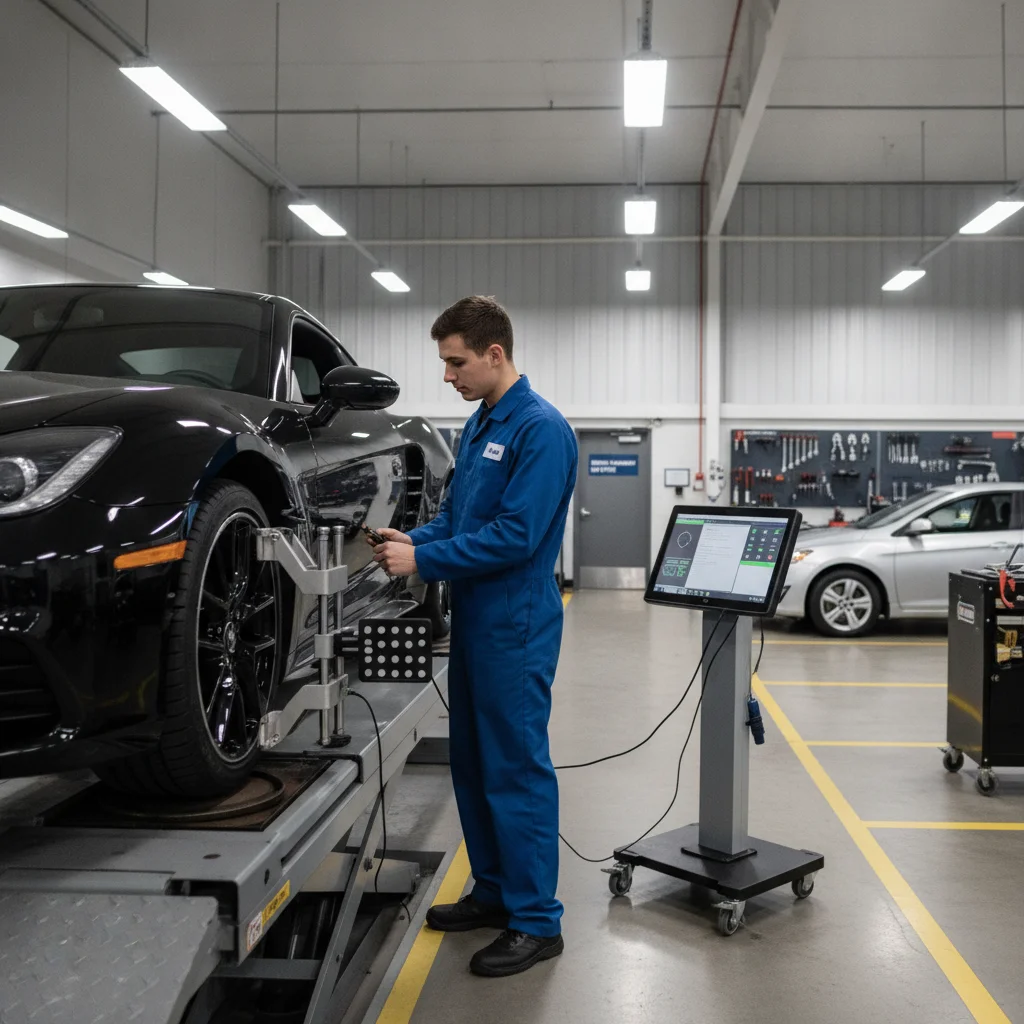
Tire condition and tread depth also matter. Worn tires can't hold pressure as reliably and provide less efficient rolling characteristics. If your tires are consistently losing pressure faster than 2 PSI per month, it's worth having them inspected for slow leaks at the valve stem or bead seal.
The practical takeaway: build a brief monthly check into your routine. Tire pressure, a visual inspection of tread wear, and a glance at how the car tracks on the road — these three habits address the majority of tire-related efficiency and safety issues before they become expensive problems.
Nitrogen vs. Regular Air: Does It Matter?
Some tire shops and dealerships offer nitrogen inflation instead of compressed air. Nitrogen molecules are slightly larger than oxygen molecules, so they permeate rubber more slowly — meaning pressure stays stable longer. The real-world benefit is modest: a tire inflated with nitrogen might lose pressure a bit more slowly over months. For most drivers, the practical impact is small compared to simply checking pressure regularly. If nitrogen is free or very cheap at your dealer, it's a reasonable choice, but it's not worth paying a premium for.
Spare Tire Pressure: Don't Forget It
Your spare tire loses pressure over time just like the tires you're driving on. A full-size spare should be checked whenever you check the other four tires. Compact spare ("donut") spares are typically specified at 60 PSI — much higher than regular tires — and can lose a significant portion of that sitting in your trunk for months. The worst time to discover a flat spare is when you're already dealing with a flat tire on the roadside.
When to Check Pressure After a Temperature Swing
If overnight temperatures dropped sharply — say, 20°F or more — it's worth checking pressure before your first drive, not after. Driving on underinflated tires for even a short commute means you're already incurring the rolling resistance penalty. A quick morning check takes 90 seconds with a gauge kept in your glove box.
Seasonal Pressure Changes: A Practical Calendar
Temperature is the variable most drivers don't account for. The relationship is predictable and manageable once you understand it.
For every 10°F change in ambient temperature, tire pressure changes by approximately 1 PSI in the same direction — pressure drops when it gets colder, rises when it gets warmer. In regions with distinct seasons, this means:
- Fall to winter: Expect to add 2–4 PSI as temperatures drop. Check in October and again in December.
- Winter to spring: Pressure naturally rises. Check in March to make sure you haven't drifted over the recommended level.
- Summer heat: Long highway drives in hot weather build internal tire temperature. Your gauge reading will be higher after driving — this is normal and expected, not a problem.
A practical habit: check tire pressure at the start of each season, plus once monthly in between. If you live somewhere with mild, stable temperatures year-round, a monthly check is usually sufficient.
Set a Monthly Phone Reminder
The single most effective habit for maintaining correct tire pressure is a calendar reminder — same day every month, five minutes before you leave for work. Consistency matters more than precision here. A tire that stays within 2 PSI of specification all year long will outperform one that's corrected twice a year and ignored in between.
Add Air Before a Long Trip, Not During
Always check and correct tire pressure before a highway trip, not after you've already been driving. Highway speeds build heat inside tires, which raises pressure readings artificially. If you inflate to spec mid-trip, you'll likely be adding air to an already hot tire — and when it cools, you'll be right back to where you started or slightly over. A cold-tire check the morning of a trip is the right approach.
Keep a Gauge in Your Glove Box
Having a tire pressure gauge in your car removes the friction from checking. You don't need to plan a trip to the gas station or remember to grab anything — the tool is already with you. A compact digital gauge costs about $15, fits easily alongside your registration and insurance cards, and gives consistent readings for years.
The goal is simply to stay within a PSI or two of the recommended specification as consistently as possible. Tires don't need to be perfect — they need to be close. A car running 32 PSI in tires spec'd at 33 PSI is doing fine. A car running 26 PSI in those same tires is leaving fuel economy and safety on the table.

All claims are backed by peer-reviewed research. Sources on request.