
Key Takeaways
The Confidence Problem at the Heart of American Driving
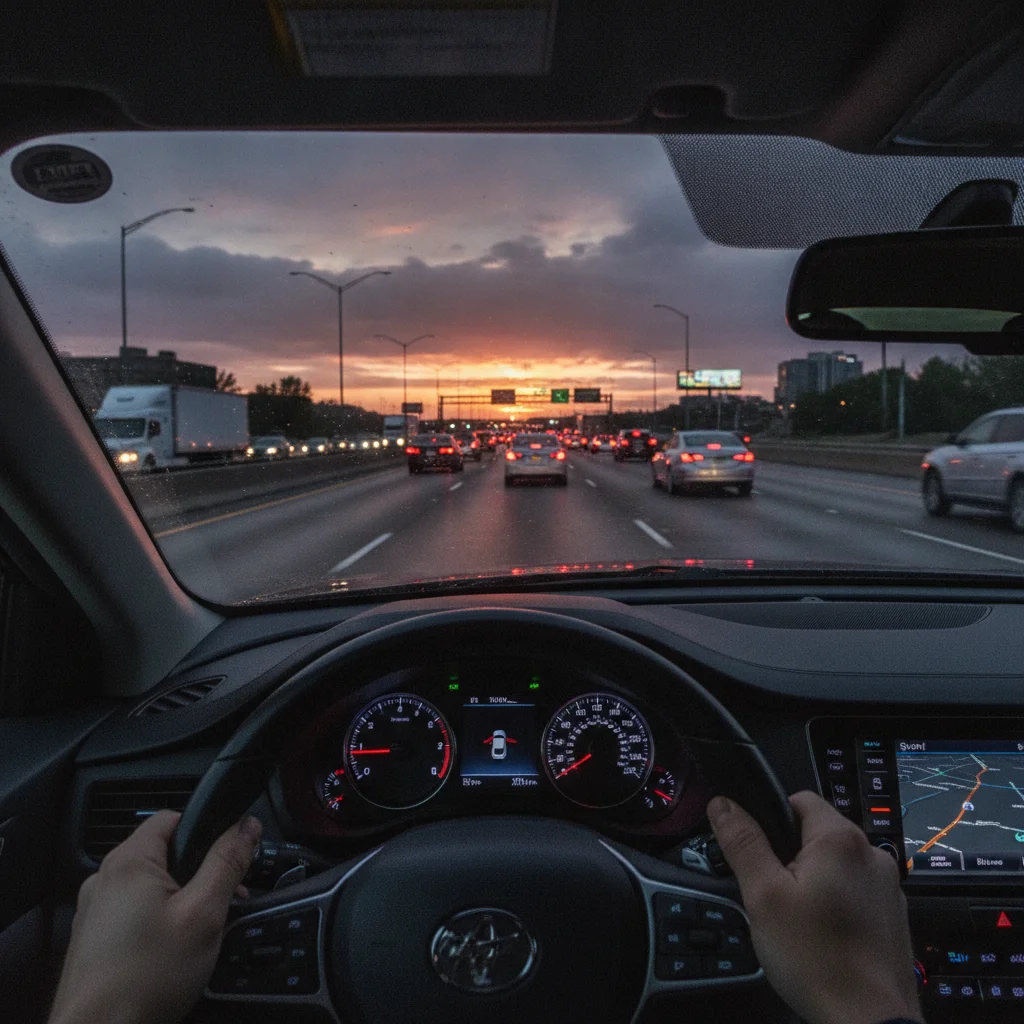
Ask most American drivers to rate their own skill behind the wheel, and the majority will place themselves above average — a statistical impossibility that researchers call the illusory superiority bias. A 2018 study published in the journal Transportation Research Part F found that roughly 80% of drivers considered themselves safer than the median. The National Highway Traffic Safety Administration (NHTSA) has identified overconfidence as a behavioral underpinning in a significant share of at-fault crashes, because drivers who believe they are skilled tend to monitor their environment less rigorously and accept higher-risk situations more readily.
This isn't a story about reckless drivers weaving through traffic at triple-digit speeds. It's a story about ordinary people — commuters, parents on school runs, retirees on familiar routes — who are making small, habitual errors they are completely unaware of. The crashes that result feel like accidents. The research suggests many of them are anything but.
Understanding which behaviors cause crashes — and why those behaviors feel safe in the moment — is the first step toward actually driving more safely. What follows draws on NHTSA crash data, IIHS research, and established traffic psychology to identify the mistakes most likely to put you at risk, even when you believe you're doing everything right.
For a broader framework on evidence-based safe driving, see our guide to what defensive driving actually means on American roads.
The Mistakes Behind the Crashes
Each of the following behaviors has a documented relationship to crash causation in U.S. research. None of them requires speeding, intoxication, or obvious recklessness. They are the quiet errors of otherwise conscientious drivers.
Under-scanning intersections before entering, even on a green light or familiar road.
Why it happens: Drivers use the signal state as a proxy for safety, assuming a green light means cross traffic has stopped. Familiarity with a route further reduces the instinct to visually verify.
Maintaining following distances that feel safe but are physically insufficient to stop in time.
Why it happens: Drivers calibrate following distance by how much space looks comfortable from the driver's seat, not by stopping-distance physics. At 65 mph, perception-reaction time alone requires over 140 feet before brakes engage.
Treating lane changes as a mirror check rather than a full shoulder-check maneuver.
Why it happens: Modern vehicles have mirrors positioned to reduce blind spots, but no mirror configuration eliminates them. Drivers who rely exclusively on mirrors have been trained — by habit, not instruction — to skip the physical head turn.
Engaging in subtle aggressive behaviors — brake-checking, gap-blocking, extended honking — without recognizing them as aggression.
Why it happens: These behaviors feel retaliatory or self-protective in the moment rather than aggressive. Drivers classify them as responses to another driver's poor behavior, not as independent risks they are creating.
Allowing cognitive distraction — mentally rehearsing a conversation, processing work stress, or navigating emotionally — while driving.
Why it happens: Visual attention on the road feels sufficient for safety, so drivers don't register that their mental bandwidth is already heavily committed to non-driving tasks. Cognitive load reduces hazard detection even when eyes are forward.
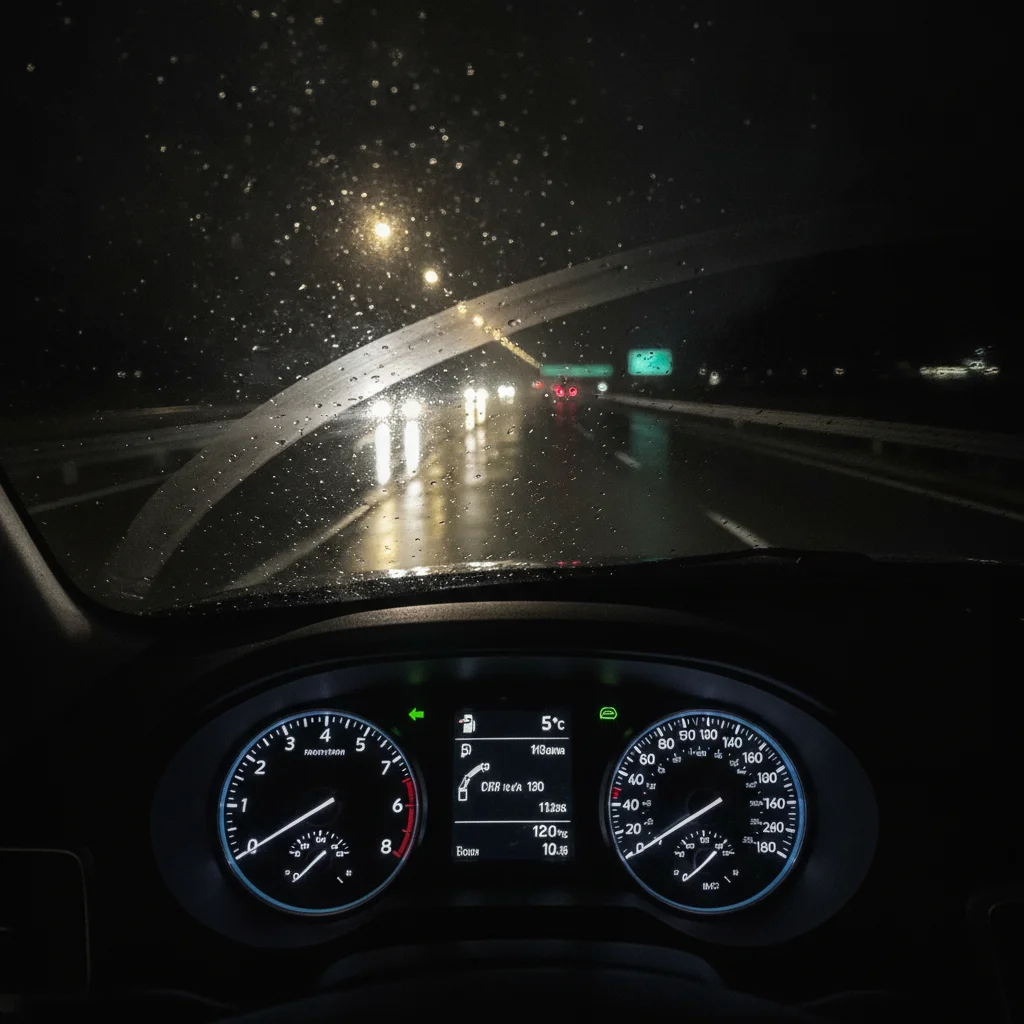
Failing to adjust speed for road conditions beyond the posted limit — specifically in rain, glare, fog, and heavy traffic.
Why it happens: Drivers interpret the speed limit as the safe speed, without accounting for the physical reality that posted limits reflect dry, clear, well-maintained conditions. Driving 55 mph in heavy rain on a highway posted at 55 mph still feels legal and therefore safe.
Merging without fully matching freeway traffic speed before entering the travel lane.
Why it happens: Shorter on-ramps, hesitation, or concern about cutting in front of other vehicles leads drivers to merge at speeds significantly below traffic flow, forcing trailing vehicles to brake suddenly.
Overbraking in curves and corners instead of entering at an appropriate speed and maintaining smooth throttle.
Why it happens: Drivers underestimate curve severity on approach and then brake mid-corner when they realize they are carrying too much speed. Braking in a turn shifts weight forward and reduces the tire grip needed for cornering.

Intersection behavior deserves particular attention here. Research into intersection crash patterns shows that over 40% of all U.S. crashes occur at these junctions — and driver behavior, not road design, is the dominant factor in most of them. Drivers who feel they are proceeding legally and safely still collide because they scan too narrowly and assume oncoming traffic will behave predictably.
94%
Of crashes involving driver behavior as a factor
NHTSA's 2015 Critical Reasons report attributed 94% of serious crashes to driver choice or error, rather than vehicle failure or environmental conditions.
80%
Of drivers who rate themselves above average
Transportation Research Part F research found roughly 80% of surveyed drivers considered themselves safer than the median — a statistical impossibility reflecting widespread overconfidence.
40%+
Of U.S. crashes occurring at intersections
NHTSA intersection studies consistently find that more than 40% of all reported crashes in the U.S. occur at or within intersections, with driver behavior as the primary causal factor.
100,000+
Annual crashes attributed to drowsy driving
NHTSA estimates that drowsy driving is responsible for more than 100,000 police-reported crashes each year, with the true number likely higher due to underreporting.
1.5 sec
Average driver perception-reaction time
Traffic engineering standards use 1.5 seconds as the baseline human perception-reaction time — meaning at 65 mph, a vehicle travels roughly 143 feet before brakes are even applied.
Familiarity Is a Hidden Risk Factor
Naturalistic driving studies show that drivers make significantly more errors on routes they know well than on unfamiliar roads. The brain's autopilot mode reduces active hazard scanning, making routine commutes statistically riskier per mile than novel drives. Treat familiar routes as deserving of the same attentiveness you'd apply to driving in an unfamiliar city.
Safety Tech Can Increase Behavioral Risk
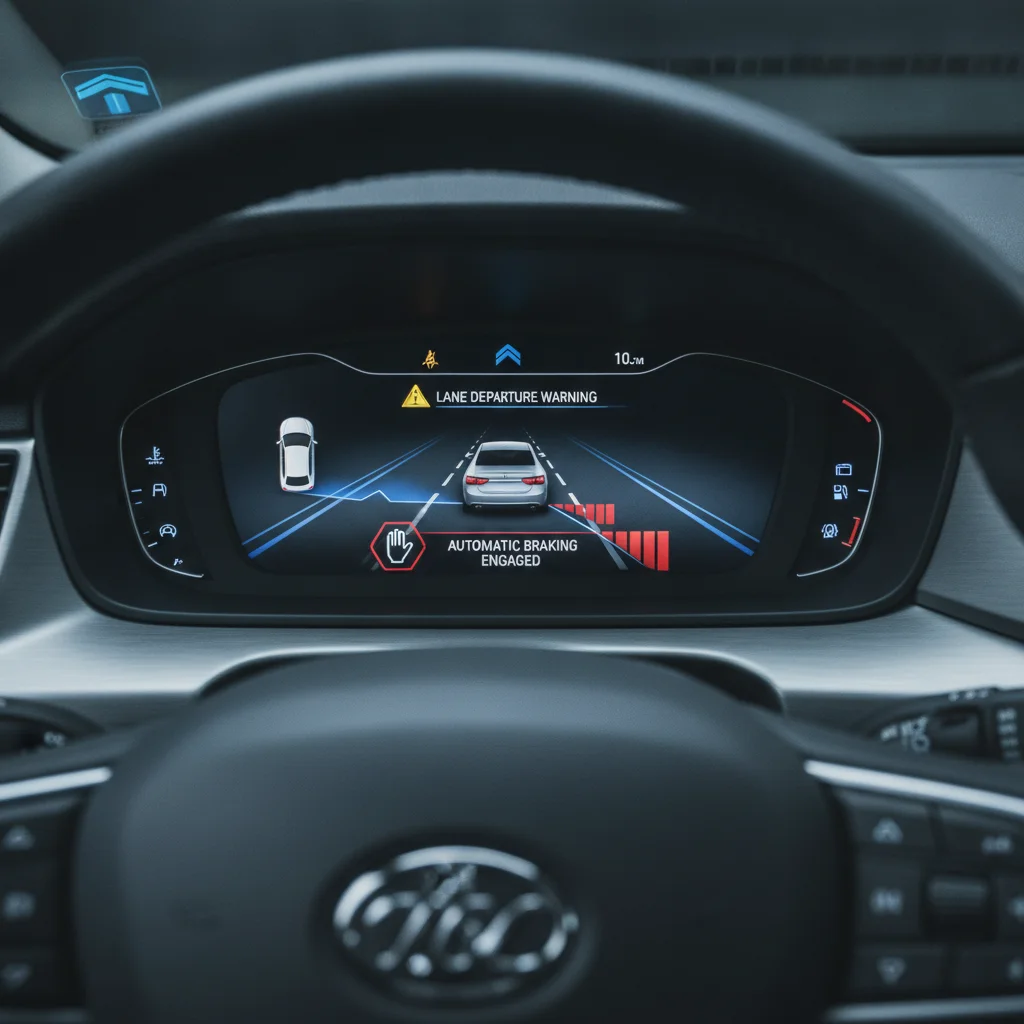
Vehicles equipped with advanced driver assistance systems (ADAS) show a documented pattern of behavioral adaptation: drivers follow more closely, check mirrors less often, and accept riskier merges. These systems are designed as supplements to attentive driving, not replacements for it. Overreliance on ADAS has been linked to crashes in NHTSA and IIHS investigation reports.
Cognitive Distraction Has No Visual Tell
Unlike phone use, cognitive distraction — thinking hard about something other than driving — is invisible to other drivers and to law enforcement. Research using driving simulators shows that cognitively distracted drivers fixate on a narrower field of view and miss peripherally-presented hazards at rates comparable to drivers at the legal alcohol limit. There is no external sign that it is happening, which makes self-monitoring the only defense.
Why Safe-Feeling Behaviors Can Still Be High-Risk
Traffic psychology offers a concept called risk homeostasis: when drivers perceive themselves to be safer — because they are driving a large SUV, have advanced safety tech, or are on a familiar road — they unconsciously compensate by accepting greater behavioral risks. The net result is that safety improvements in one dimension get offset by behavioral degradation in another.
Modern vehicles equipped with automatic emergency braking, lane-keep assist, and blind-spot monitoring are measurably effective at preventing crashes. But IIHS and NHTSA testing of road safety technology consistently finds that drivers with these systems installed tend to monitor their mirrors less frequently and maintain shorter following distances, partially negating the technology's protective benefit.
The same dynamic applies to familiarity. Studies using naturalistic driving data — instrumented vehicles that record real behavior over months — show that drivers are significantly more likely to run stop signs, exceed speed limits, and skip shoulder checks on routes they drive every day compared to unfamiliar roads. Familiarity breeds inattention, and inattention breeds crashes on roads where the driver is absolutely certain nothing will go wrong.
Overconfidence Actively Degrades Driving Safety
Drivers who rate their own skills highly have been shown in multiple studies to scan less frequently, maintain shorter following distances, and engage in more risky behaviors than drivers with more calibrated self-assessments. Believing you are a good driver is not a protective factor — it is, in measurable ways, a risk factor. The antidote is behavioral: adopt structured habits that operate independently of how safe you feel in the moment.
Risk Homeostasis Erases Safety Gains
When drivers feel safer — due to vehicle size, advanced safety technology, or road familiarity — they unconsciously accept more behavioral risk to restore their internal 'acceptable risk' level. This is not a character flaw; it is a well-documented psychological mechanism. The practical implication is that good habits must be maintained deliberately, not left to intuition, because intuition adjusts to perceived safety rather than actual safety.
Fatigue compounds every one of these patterns. Drowsy driving causes over 100,000 crashes per year, according to NHTSA estimates — and crucially, fatigued drivers are among the least likely to self-identify as impaired. The warning signs arrive well before the eyelid-drooping stage that most people associate with dangerous tiredness.
Behaviors Specific to High-Frequency Crash Scenarios
Certain driving environments concentrate behavioral risk in ways that deserve individual attention. Parking lots, for instance, are responsible for approximately 20% of all vehicle accidents — a share that surprises most drivers. The low speeds involved create a false sense of safety that leads to reduced scanning, abrupt reversals without checking mirrors, and pedestrian conflicts. Our guide to backing up safely documents the specific errors that turn parking lots into collision zones.
Construction zones present a different risk profile. Drivers who correctly slow down often still follow too closely in work zones, misjudge the reduced lane widths, and fail to anticipate sudden stops from lead vehicles. Work zone crashes kill more than 800 people annually in the U.S., with a significant share of fatalities involving workers struck by errant vehicles whose drivers had adequate warning distance to stop.
Tailgating is perhaps the behavior most commonly rationalized by its practitioners. Drivers who follow closely often believe they are maintaining traffic flow, pressuring a slow driver to move over, or simply matching the pace of traffic. None of these justifications hold up against crash data. Common tailgating beliefs don't hold up under crash research, and the stopping-distance math is unambiguous: at 65 mph, a vehicle travels approximately 95 feet per second, and human reaction time alone consumes 1.5 seconds before brakes are even applied.
For teen drivers, who lack both experience and a calibrated sense of personal risk, these behavioral patterns are amplified. Drivers aged 16–19 have crash rates nearly three times higher than adults, and the underlying causes map closely to the mistakes outlined above: overconfidence, under-scanning, and inadequate following distance chief among them.
Building Habits That Actually Reduce Your Risk
The research on crash causation is sobering, but it is also actionable. The behaviors that cause crashes are, by definition, behaviors that can be changed. Traffic safety researchers have identified several evidence-based habits that produce consistent reductions in crash involvement when practiced regularly.
- The two-second rule, applied honestly. Most drivers who believe they maintain a two-second following gap are actually following at less than one second when measured by instrumented vehicle research. Count deliberately: pick a fixed point on the road ahead, watch the vehicle in front pass it, and count. Two full seconds is longer than it feels at highway speeds.
- Structured mirror scanning. Professional driver training programs teach a specific mirror-check cadence — center mirror every five to eight seconds, side mirrors incorporated into a regular sweep. This isn't how most drivers were taught, and it isn't how most drive. A deliberate, timed routine transforms mirror use from reactive to proactive.
- Intersection approach protocol. Treat every green light as potentially yellow. Ease off the accelerator slightly before entering, scan left-right-left for cross traffic, and resist the reflex to accelerate immediately when a light turns green. The first second of green is when intersection-clearing violations most commonly occur.
- Managing your own aggression honestly. Brake-checking, gap-blocking, and extended horn use are forms of aggression that most drivers do not categorize as such in the moment. The test: if the other driver described the same behavior, would you recognize it as aggressive? If yes, it is.
- Reintroducing unfamiliarity to familiar routes. Consciously treating a known route as if it were new — attending to signage, scanning driveways and side streets, checking mirrors at habitual intervals — counteracts the inattention that familiarity generates.
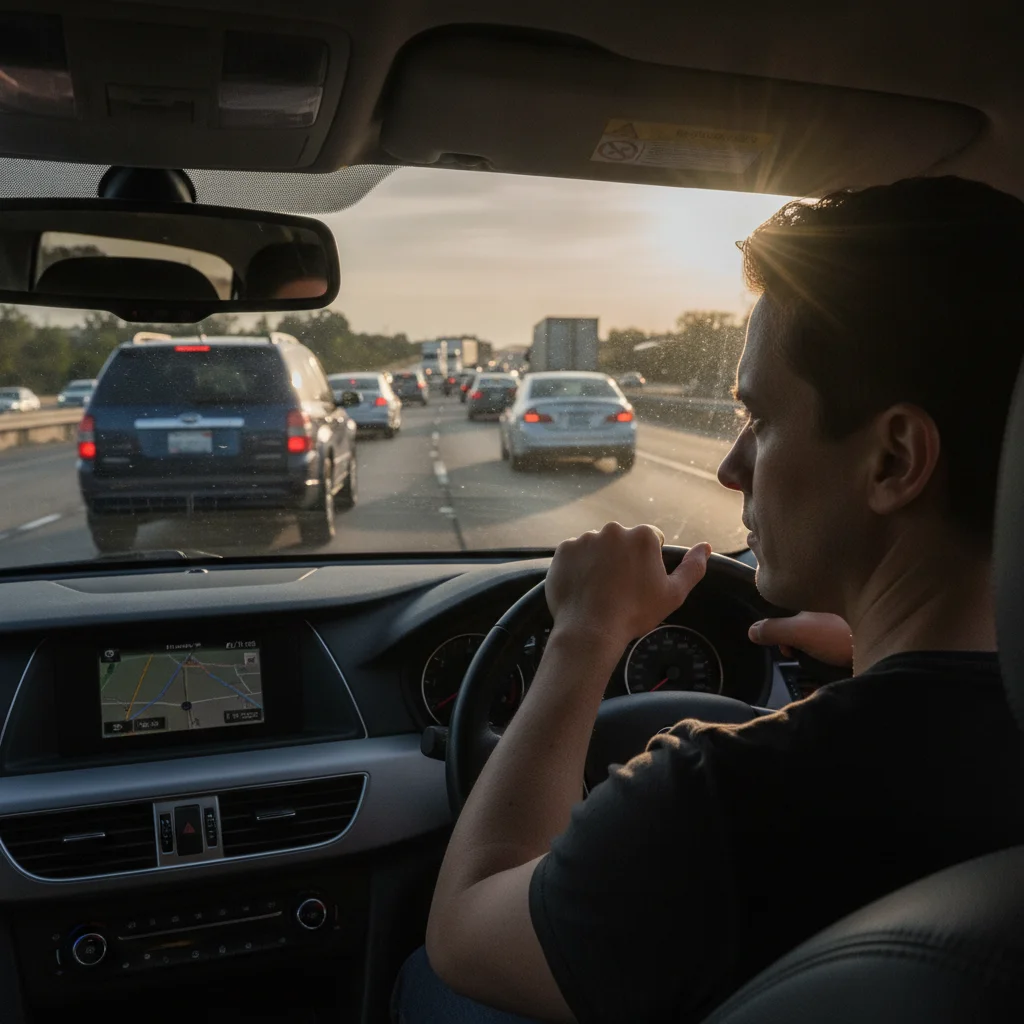
If you are ever involved in a crash despite your best precautions, having a clear procedure ready matters. Our accident procedures guide covers what to do in the immediate aftermath, from scene safety to documentation and insurance contact.
Ultimately, safer driving is less about dramatic interventions and more about consistent, low-level attentiveness. The crashes avoided by good driving habits are invisible — they never appear in any data set because they never happen. That invisibility is what makes the effort easy to undervalue, and what makes the research worth taking seriously.

All claims are backed by peer-reviewed research. Sources on request.