Key Takeaways
What the TPMS Light Actually Is — and Why Drivers Get It Wrong
The tire pressure monitoring system, universally abbreviated as TPMS, became federally mandated on all new passenger vehicles sold in the United States after September 1, 2007. That small amber horseshoe icon with an exclamation point has been staring at drivers for nearly two decades — and yet the myths surrounding it are still remarkably persistent.
Part of the confusion is understandable. The light behaves differently depending on whether it's solid or flashing, whether the day started cold or warm, and even what brand of tire you're running. Most drivers receive zero explanation about any of this when they pick up a new vehicle. So they develop their own theories — and those theories often lead them to make the wrong call.
In this article, we'll walk through the most common misconceptions about the TPMS warning light, correct them with facts, and explain the practical steps you should take when that light comes on. Think of it as the owner's manual chapter that the automakers forgot to write. For a broader look at every warning symbol on your dashboard, see our complete dashboard warning lights guide.
The Myths vs. The Facts
Below you'll find the most widespread beliefs drivers hold about the TPMS light — and the accurate reality behind each one. Read through each pair carefully; even experienced drivers are often surprised by at least one of these.
Myth
If the TPMS light is on, my tires are dangerously flat and I shouldn't drive at all.
Fact
The TPMS light activates when pressure drops 25% below the vehicle's recommended level — which is significant but typically not an immediate roadside emergency.
The federal standard requires TPMS systems to alert the driver when any tire drops 25% or more below the vehicle manufacturer's recommended inflation pressure. For a car spec'd at 35 PSI, that means the light triggers around 26 PSI — low, but not a flat tire. At that pressure, you can safely continue to a gas station or tire shop at reduced speed without causing immediate tire damage.
What you should not do is highway driving at high speeds for extended distances on a significantly under-inflated tire. The excessive heat buildup from flexion is what eventually causes catastrophic sidewall failure. But a calm, reduced-speed drive to get air is a reasonable and safe response in almost all cases.
Myth
The TPMS light tells me exactly which tire has low pressure.
Fact
Basic indirect TPMS systems only tell you that one or more tires is low — not which one. Only direct TPMS systems with individual sensors display tire-specific readings.
There are two fundamentally different types of TPMS. Indirect TPMS uses your vehicle's ABS wheel-speed sensors to detect when one wheel is spinning slightly faster than the others — which happens when it has a smaller diameter due to low pressure. This system cannot tell you which tire is low, and it won't show you an actual PSI number. Many vehicles made in the late 2000s and early 2010s use this approach.
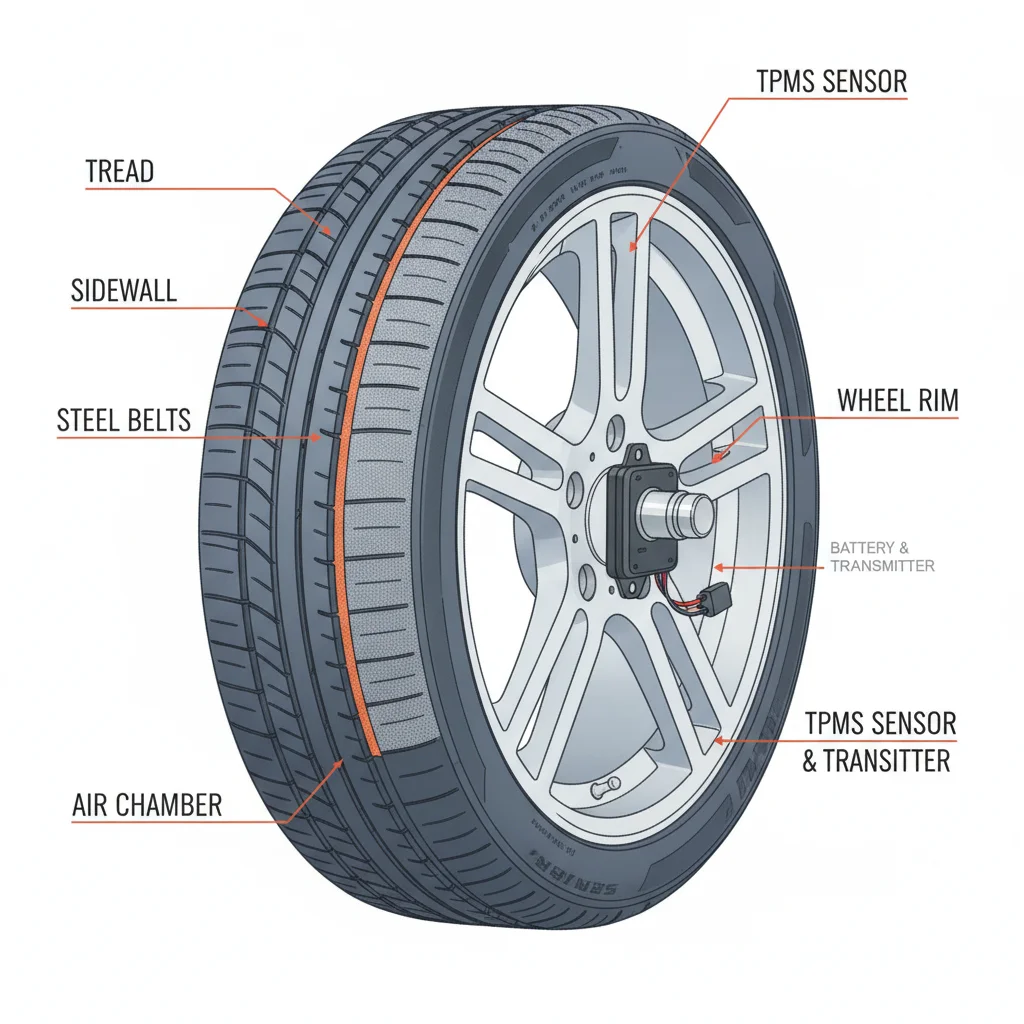
Direct TPMS uses a pressure sensor physically mounted inside each wheel that transmits live PSI data to the vehicle's computer. Most vehicles from roughly 2013 onward use direct TPMS, and many display the individual pressure for each tire on the driver information screen. If yours does, use it — but still verify with a manual gauge, since display readings can occasionally lag behind actual pressure by a few minutes after you add air.
Not sure which type you have? Check your owner's manual or simply look at the instrument cluster after the light comes on. If you see four individual tire positions with PSI numbers, you have direct TPMS. If you just see a generic light, you have indirect.
Myth
Once I add air to my tires, the TPMS light will turn off right away.
Fact
Most vehicles require a deliberate reset procedure or a sustained period of driving above a certain speed before the TPMS light clears.
Adding air is the necessary first step, but it is rarely the last one. On most vehicles, after you inflate all tires to the correct pressure, you need to either:
- Hold the TPMS reset button (typically located beneath the steering wheel or inside the glove box) for several seconds until the warning light blinks three times and goes out, or
- Drive at or above 25 mph for 10–20 minutes, which allows the system to re-learn the correct wheel speeds (for indirect TPMS) or verify stable readings (for direct TPMS).
If you add air and the light stays on, don't assume something is still wrong. Follow the specific reset procedure in your owner's manual. If the light returns after a confirmed reset and a day of normal driving, that's when you look for a slow leak or a sensor fault — not before.
Myth
A flashing TPMS light means my tires are extremely low on air.
Fact
A flashing or blinking TPMS light indicates a fault in the TPMS system itself — usually a failed sensor — not necessarily low tire pressure.
This distinction matters enormously in terms of your response. A solid, steady TPMS light means one or more tires is below the pressure threshold. A light that flashes for 60–90 seconds after startup and then stays solid means there is a malfunction in the TPMS system — typically a dead sensor battery, a sensor that was damaged during a tire change, or one that failed to pair correctly with the vehicle's receiver after a wheel swap.
When you see a flashing TPMS light, check your tire pressures manually with a gauge. If the pressures are all correct and the flashing persists, you have a sensor or receiver fault that needs professional diagnosis. Driving indefinitely with a faulty sensor is a problem because you've effectively disabled the early-warning system that TPMS is supposed to provide. The repair isn't always cheap, but it restores the protection the system was designed to give you.
Myth
The TPMS system means I don't need to check my tire pressure manually anymore.
Fact
TPMS is a minimum-threshold alert system, not a tire pressure management tool. You should still check pressures manually at least once a month.
Think of TPMS the way you'd think of a smoke detector. A smoke detector doesn't mean your kitchen is fireproof — it means you'll get an alert when something is critically wrong. TPMS is the same idea. It alerts you when you've already crossed a significant low-pressure threshold, but it tells you nothing about gradual pressure loss that hasn't yet hit that 25% mark.
Tires naturally lose 1–3 PSI per month through normal permeation of air through the rubber. That means your tires can be 5–8 PSI low — enough to meaningfully impact fuel economy, handling, and tire wear — without the TPMS light ever coming on. The only way to catch that is with a manual check using a quality gauge. Build the habit of checking all four tires on the first of each month. It takes three minutes and costs nothing.
Myth
If my TPMS light comes on in cold weather, something is wrong with my tires.
Fact
Cold temperatures cause air inside tires to contract, reducing pressure — this can trigger the TPMS light with no defect present.
Tire pressure and ambient temperature are directly linked through basic physics (Gay-Lussac's Law, for anyone who remembers high school chemistry). As temperature drops, the air molecules inside your tires slow down, reducing the pressure they exert against the tire walls. The rule of thumb is approximately 1 PSI lost for every 10°F drop in temperature.
So if you properly inflate your tires to 35 PSI on a 60°F afternoon, and the next morning is 20°F, your tires will read closer to 31 PSI — a loss of roughly 4 PSI simply from the temperature swing. On a car where 25% below spec is 26 PSI, you're not there yet. But if your tires were already at 33 PSI when you last checked, a 4 PSI overnight drop brings you to 29 PSI — still above threshold but getting close. Add another cold night and you've crossed the line with no leak whatsoever.
The practical takeaway: if your TPMS light comes on during or after a cold snap, check pressures and add air to the correct spec. If the light goes off and doesn't return, you've solved it. If it returns repeatedly despite correct inflation, then you look for a leak.
What to Actually Do When the Light Comes On
Knowing what the light doesn't mean is half the battle. Knowing what to actually do is the other half. Here's the practical sequence a mechanic would walk you through.
- Don't panic — but don't ignore it either. The TPMS light at 25% below recommended pressure still gives you meaningful driving range in most conditions. You do not need to pull over immediately on a freeway unless the car is visibly pulling to one side, you hear a thumping, or the steering feels unusual.
- Find the recommended PSI for your vehicle. This is printed on a sticker inside the driver's door jamb — not on the tire sidewall. The sidewall number is the tire's maximum capacity, which is different and almost always higher than what you should actually run.
- Check all four tires with a reliable gauge. Pressure readings vary tire to tire. A single cold-weather PSI drop might only trigger the light in the two front tires, while the rears are fine. A manual gauge gives you the truth; the dashboard display on most direct TPMS vehicles is close but can lag.
- Add air to spec and reset the system. On most vehicles you hold the TPMS reset button (usually under the steering column or inside the glove box) until the light blinks three times. Some vehicles reset automatically after driving 10–20 miles above 25 mph. Consult your owner's manual for the specific procedure.
- If the light returns within 24–48 hours, suspect a slow leak. Have the tire inspected. A nail, screw, or damaged valve stem is far more common than a cracked rim or sidewall. Repairs for a simple puncture typically run $15–$30 — a fraction of the cost of a replaced tire or the aftermath of a blowout.
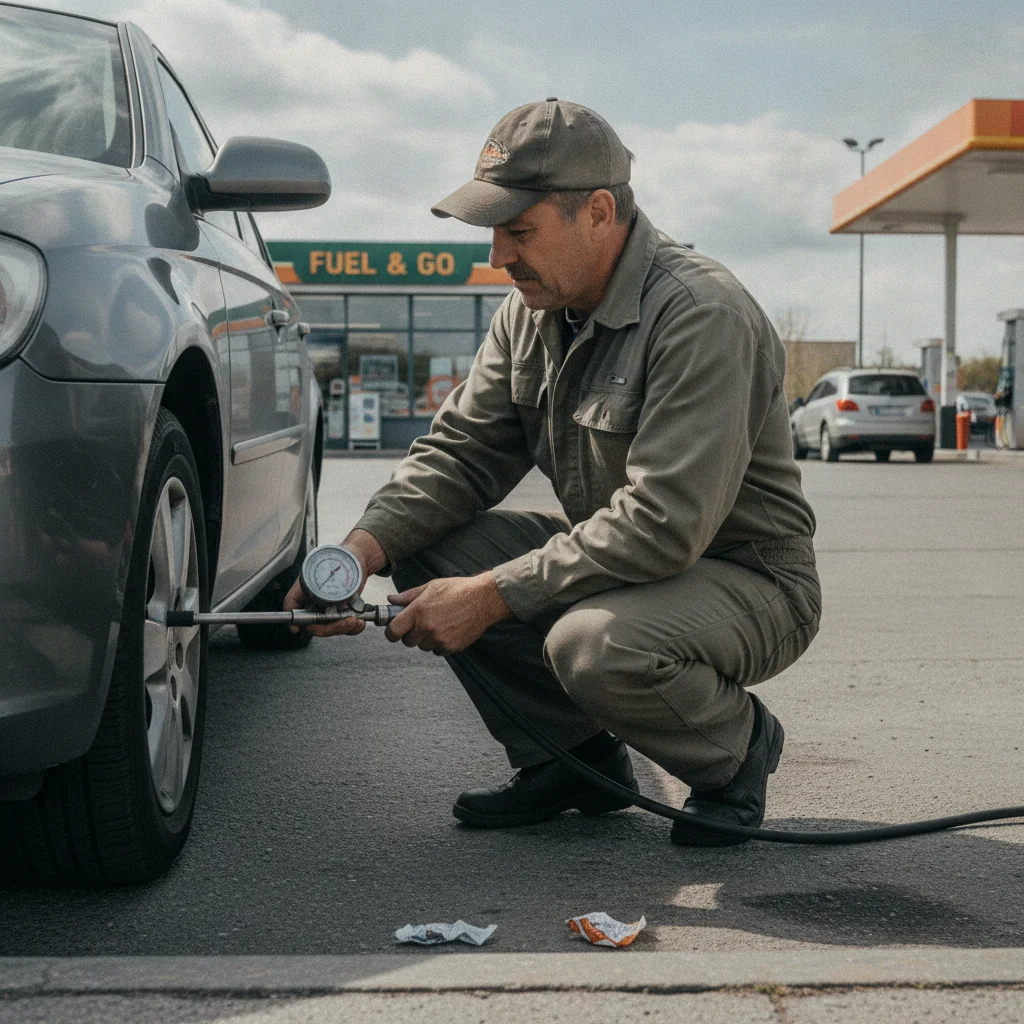
For a deeper look at how under-inflated tires affect your stopping distance and blowout risk, the NHTSA research on tire pressure and road safety is worth reading before you put off that repair any longer.
Don't Drive on a Visibly Deflated Tire
If a tire appears visibly flat or you hear a rhythmic thumping from one corner of the vehicle, do not attempt to drive to a shop. Driving on a flat can destroy the tire carcass, damage the wheel, and compromise steering control — turning a $25 repair into a $400 replacement. Pull over safely and use your spare or call for roadside assistance.
Valve Stems Are a Common Culprit
If your TPMS light keeps returning after you add air, don't assume the tire has a nail — check the valve stem first. Cracked, corroded, or improperly seated valve stems are a leading cause of slow leaks and are often overlooked during casual inspections. A new valve stem costs under $5 at any tire shop.
Using Nitrogen Doesn't Eliminate the Need to Check Pressure
Some shops market nitrogen-filled tires as a way to reduce pressure fluctuation with temperature changes. While nitrogen does permeate rubber slightly more slowly than air, it doesn't make TPMS monitoring or manual checks unnecessary. If your nitrogen-filled tire develops a slow leak, the TPMS light will appear just the same — and you'll need to find a shop that can top off with nitrogen or simply use regular air in the interim.
The Financial Case for Taking This Light Seriously
Mechanics see it constantly: a driver comes in for a blowout-related suspension repair — bent control arm, damaged wheel, torn inner fender — and when you ask when the TPMS light first appeared, the answer is usually "a few weeks ago." What would have been a $25 tire plug or a $5 fill-up of air turns into a $600–$1,200 repair bill.
11,000+
Annual tire-related crashes in the US
According to NHTSA data, tire failures contribute to over 11,000 crashes per year in the United States, many of which are linked to under-inflation.
25%
Pressure drop required to trigger TPMS light
Federal FMVSS 138 requires TPMS systems to alert drivers when any tire falls 25% or more below the vehicle manufacturer's recommended cold inflation pressure.
1–3 PSI
Natural monthly tire pressure loss
Tires lose pressure through normal air permeation even with no puncture or leak, meaning monthly manual checks are essential regardless of TPMS.
$600–$1,200
Typical blowout-related suspension repair cost
A blowout caused by prolonged under-inflation can damage rims, control arms, and inner fenders — repairs that dwarf the cost of a simple $25 tire plug.
0.2%
Fuel economy lost per 1 PSI under-inflation
The U.S. Department of Energy estimates fuel economy decreases by roughly 0.2% for every 1 PSI drop across all four tires.
Beyond catastrophic failure, under-inflation quietly drains your wallet through two mechanisms. First, fuel economy: for every 1 PSI drop across all four tires, you lose roughly 0.2% in fuel efficiency. That sounds trivial until you realize that most drivers who ignore the TPMS light are running 10–15 PSI low. At that point you're burning 2–3% more fuel than you need to — adding up to $50–$100 per year for the average driver at current gas prices.
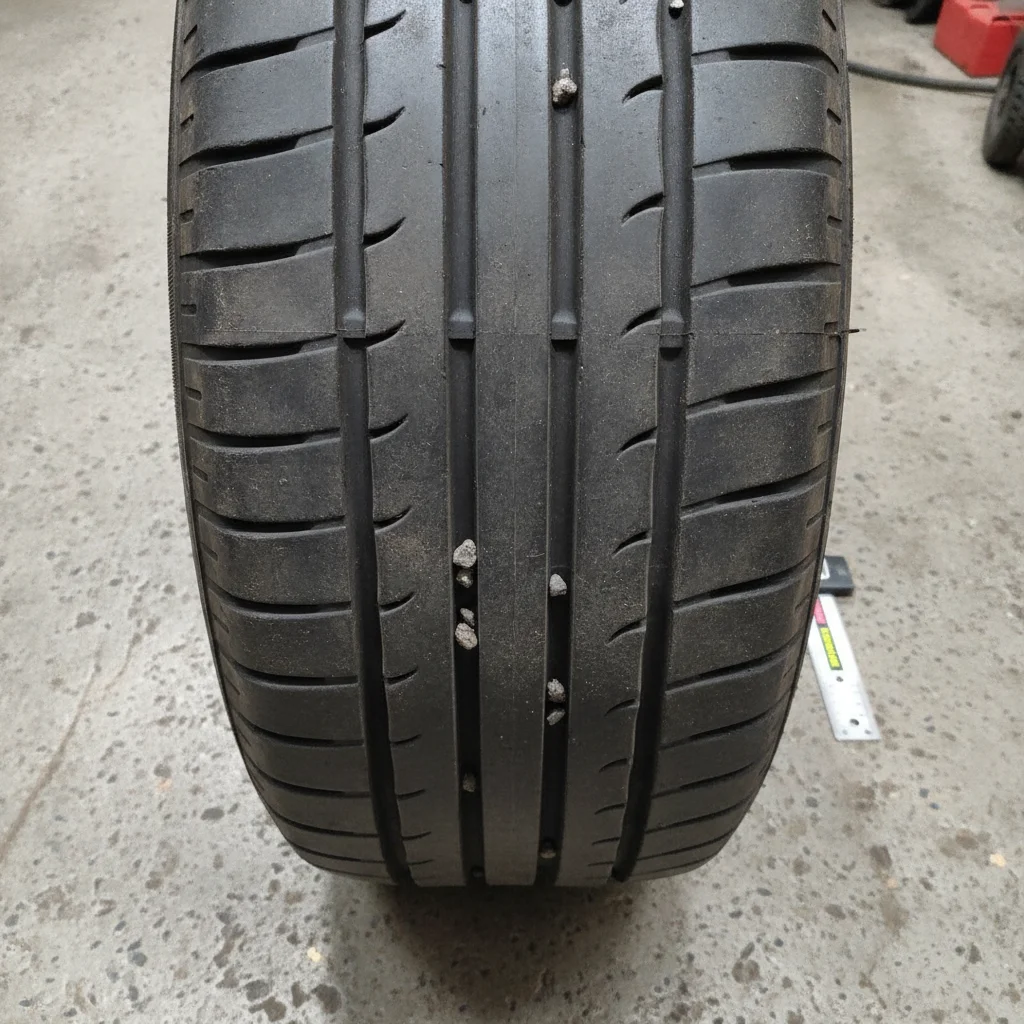
Second, tire wear accelerates dramatically. Under-inflated tires flex more, generating excessive heat, and they wear the outer edges faster than the center. A tire that might last 50,000 miles at correct pressure could wear out at 35,000 miles when chronically under-inflated. At $150–$250 per tire, that's $600–$1,000 in unnecessary early replacement cost across all four.
Ignoring TPMS for Weeks Has Real Costs
A driver who ignores the TPMS light for two to three weeks of highway commuting can suffer accelerated tire wear equivalent to losing 10,000–15,000 miles of tire life. At $150–$250 per tire, that's $600–$1,000 of unnecessary expense — all to avoid a five-minute stop at a gas station. The light is not optional information.
The TPMS light is often lumped in with other dashboard symbols as "not urgent." That's a dangerous mental category. Unlike the oil pressure warning light, which can cause catastrophic engine failure in seconds, the TPMS light rarely demands you stop immediately. But it does demand a response within the day — not the week.
Cold Weather and the TPMS Light: A Special Case
Winter is the season when TPMS calls and shop visits spike. Drivers wake up to a lit dashboard, assume something is wrong with their tires, and drive straight to a shop — only to be told the tires are fine and the air just contracted overnight.
Tire pressure drops approximately 1 PSI for every 10°F decrease in ambient temperature. So if you set your tires to the correct 35 PSI on a 70°F afternoon, they'll read closer to 31–32 PSI on a 30°F morning. On a vehicle spec'd for 35 PSI, that 25% threshold calculates to roughly 26 PSI — so you're not necessarily triggering the light. But if your tires were already a few PSI low going into winter, the temperature swing pushes them over the line.
The good habit: check and top off all four tires at the start of every winter season, before the first cold snap. This takes about five minutes at any gas station with a working air pump and eliminates the majority of false-alarm TPMS visits entirely. See our companion piece on which warning lights come on in cold weather and which ones to take seriously for the full cold-weather dashboard picture.
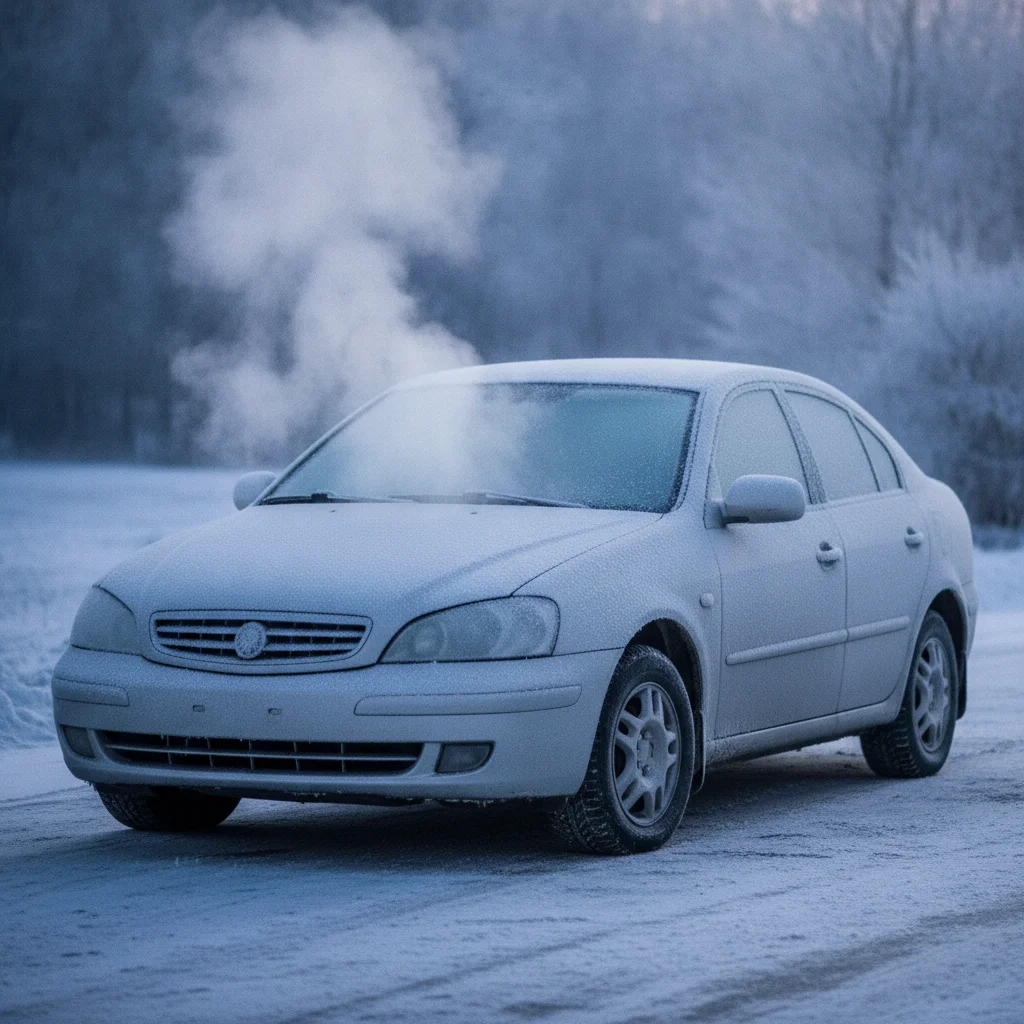
One more cold-weather nuance worth knowing: if the light comes on during a cold morning commute and then turns off 15–20 minutes into your drive, that's the system working correctly. The air inside the tires warmed up, pressure rose back above threshold, and the light extinguished itself. This is not a problem you solved — it's a warning you temporarily bypassed. Check the pressures when the tires are cold again and correct to spec.
TPMS Sensors: The Hidden Maintenance Item Most Drivers Don't Know About
Here's the piece of the puzzle that surprises even attentive car owners: the TPMS sensors themselves require maintenance. Each sensor contains a small battery — typically rated for 5–10 years of service — and when it fails, the system can no longer report tire pressure accurately. On most vehicles, a dead or failing sensor triggers the TPMS light to flash rather than glow steadily.
Sensor replacement typically runs $50–$100 per wheel, including the sensor unit, labor to dismount and remount the tire, and reprogramming the sensor to the vehicle's receiver. If you buy a used vehicle, it's worth asking whether the sensors have ever been replaced and confirming the light behavior under normal conditions before you commit.
There's also a common seasonal hazard: swapping to winter tires. If your winter tire set is mounted on separate steel wheels and those wheels don't have TPMS sensors installed, your vehicle will immediately throw the TPMS fault light the moment you drive off with them. Many drivers interpret this as a tire pressure problem when it's actually a missing-sensor fault. Solutions include purchasing a second set of sensors for the winter wheels, using a compatible TPMS bypass tool, or simply checking pressures manually and manually on those tires throughout the winter season.
Dashboard lights as a category are more nuanced than most drivers realize. The TPMS light is a good reminder that not every warning is a single-cause alarm — sometimes it's pressure, sometimes it's temperature, sometimes it's a sensor battery. Many maintenance issues announce themselves through sounds, smells, and feel as well as lights, so developing a habit of full awareness pays dividends over the life of any vehicle.
Bottom line: the TPMS system is a genuinely useful safety tool that has, by most estimates, prevented thousands of blowout-related accidents since its mandatory introduction. But it only works as well as you respond to it — and responding correctly starts with understanding what it actually means.

All claims are backed by peer-reviewed research. Sources on request.