Key Takeaways
Police Report After an Accident
A police report is an official document created by a law enforcement officer who responds to an accident scene. It records the facts of the collision—vehicles involved, driver information, witness statements, visible damage, and the officer's preliminary assessment of fault. Insurers and courts rely on it as an objective third-party account of what happened.
In many states, a police report is distinct from a self-reported DMV or SR-1 form, which drivers may be required to file independently when no officer responds to the scene.
When State Law Requires You to File
Every state has statutes that spell out exactly when a police report is mandatory after a crash. The triggering factors are almost always one or more of the following:
- Physical injury or death to any person involved
- Property damage that exceeds a statutory dollar threshold
- A vehicle that must be towed from the scene due to damage
- A hit-and-run where the other driver fled
That property damage threshold is where most drivers get tripped up. It ranges from as low as $500 in some states to $2,500 or more in others. In the moment, it's nearly impossible to accurately assess $1,800 worth of bumper and sensor damage on a modern vehicle. When in doubt, assume the threshold is met.
Beyond accident scene reporting, many states have a separate requirement for self-reporting. If police don't respond—because you're in a rural area, the call volume is high, or the damage appears minor—you may still be obligated to file a written report with your state's DMV or motor vehicle authority within a set window, sometimes as short as 24 hours. Skipping that step can lead to license suspension in states that take it seriously.
For a clear breakdown of how police reports differ from DMV filings and other accident paperwork, see Accident Reports, Police Reports, and DMV Filings: Understanding the Difference—it's worth reading before you're ever in a situation where you need it.
State Laws Vary Significantly
There is no single national standard for when accident reporting is legally required. Dollar thresholds, timeframes, and self-reporting requirements all differ by state. Before you're ever in an accident, it's worth looking up your own state's requirements—your DMV website is usually the clearest source. Some insurers also include a summary of your state's rules in your policy documents.
A Report Is Not the Same as an Admission of Fault
Some drivers hesitate to call police because they fear it will be used against them. In reality, involving police doesn't create liability—it documents the facts. Your insurer, not the police report, makes the formal fault determination. And if the facts are on your side, having them officially recorded works in your favor, not against you.
Why You Should File Even When It Isn't Required
The legal threshold is a floor, not a guide to smart decision-making. Here's the scenario that plays out more often than you'd expect: two drivers agree at the scene that everything looks fine, exchange information, and drive away. Three days later, one of them claims neck pain, hires an attorney, and insists the accident was your fault. You have no report. They have nothing to contradict their version of events.
A police report creates an objective, contemporaneous record. That matters because:
- Injuries don't always appear immediately. Whiplash and soft tissue injuries can take 24–72 hours to manifest. What felt like nothing at the scene becomes a medical claim a week later.
- The other driver can change their story. Without a third-party document, it becomes your word against theirs.
- Witnesses disperse quickly. An officer can collect bystander contact information and statements in real time—something you may not think to do under stress.
- Insurers trust police reports. A report number is typically one of the first things your insurer asks for when you open a claim. Having it speeds the process; not having it raises questions.
Even a low-speed parking lot collision—which rarely triggers a legal reporting requirement—can produce a disputed claim weeks later. The question to ask yourself isn't just am I required to file? but would I be protected if this situation gets complicated?
If you're uncertain whether to make the call, Should You Call the Police After a Minor Fender-Bender? walks through the specific factors worth weighing.
Always Get the Report Number Before Leaving
Ask the responding officer for the incident or report number before you leave the scene. You won't have the full written report for a day or two, but the number lets your insurer start the claim process immediately. Write it down—don't rely on memory after a stressful accident.
Take Your Own Photos Even When Police Respond
An officer's report may not capture every detail you'll need later—especially interior damage, tire marks, or the exact position of road markings. Your own photos, timestamped by your phone, supplement the official record and can be invaluable if damage claims expand beyond what was initially visible.
What the Police Report Actually Captures
Understanding what goes into the report helps you make sure the right information gets recorded. A standard accident report typically includes:
| Section | What It Documents |
|---|---|
| Driver information | Names, license numbers, addresses, insurance details for all parties |
| Vehicle information | Make, model, year, VIN, plate numbers |
| Scene description | Road conditions, weather, time of day, traffic controls present |
| Damage assessment | Visible damage noted by the officer at the time of response |
| Witness statements | Names and contact information of any bystanders who saw the crash |
| Officer's narrative | A written account of what likely occurred based on evidence |
| Citations issued | Any traffic violations cited (failure to yield, running a red light, etc.) |
| Diagram | A rough sketch of vehicle positions and direction of travel |
The citations section is particularly important. If the officer tickets the other driver for running a stop sign, that citation creates a strong presumption of fault in both insurance investigations and any subsequent litigation.
“The police report is the anchor document in any accident claim. Everything else—photos, repair estimates, medical records—gets evaluated in relation to what that report says. Contradicting it is possible, but it's an uphill battle.”
— Amy Danise, Insurance analyst and editor covering auto claims and consumer policy
One thing drivers often don't realize: you can—and should—review the report after it's filed. Errors happen. If your name is misspelled, your vehicle description is wrong, or the officer's narrative contains a factual mistake, you can request a correction. This is not about disputing the officer's conclusions; it's about ensuring the basic facts are accurate.
Once you have your report number, that documentation becomes the foundation for the next step: filing your insurance claim. See Filing a Claim for a full overview of the process, or jump directly to Filing a Liability Claim: What to Do from Accident Scene to Settlement if another driver is at fault.
How to File If Police Didn't Respond to the Scene
In many cities, police dispatch won't send officers to accidents that don't involve injuries or major road blockages. That doesn't mean you're off the hook for documentation—it means the responsibility shifts to you.
Here's what to do when you're on your own at the scene:
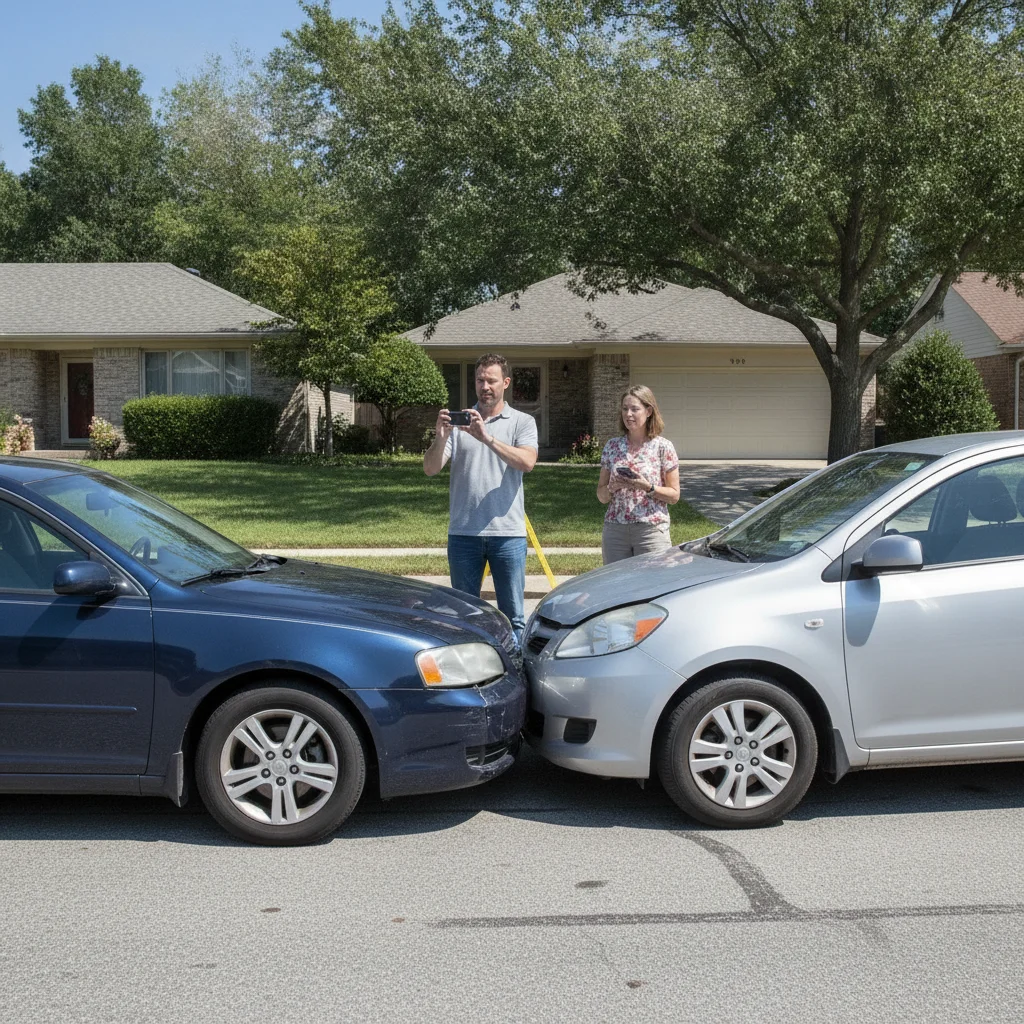
- Document everything yourself. Photograph all vehicles from multiple angles, close-up damage shots, the surrounding area including street signs and traffic controls, and any skid marks or debris.
- Exchange full information. Name, license number, plate, insurance company, policy number, and phone number from the other driver. Get the same from any passengers who may have been injured.
- Collect witness contact information. Even a name and phone number is enough to follow up later.
- File a report at the station or online. Most jurisdictions allow you to walk into the nearest precinct and file a report. Many now offer online self-reporting portals. Search your city or county's police department website for "online accident report" or "collision report."
- Check your state's DMV self-reporting requirement. This is separate from a police report. Some states require drivers to file an SR-1 or equivalent form directly with the DMV when damage exceeds the statutory threshold and no officer filed a report.
~6M
Police-reported crashes in the U.S. annually
According to the National Highway Traffic Safety Administration's most recent crash statistics report.
38 states
States with mandatory self-reporting laws for certain accidents
When no officer responds, most states require drivers to file their own report with a state agency within a specified timeframe.
$500–$2,500
Typical property damage threshold triggering mandatory reporting
Threshold amounts vary widely by state; some have not updated their thresholds in decades, making even minor visible damage reportable.
72 hours
Common deadline for self-filing accident reports
Many states impose a 24–72 hour window for drivers to file a report when law enforcement did not respond to the scene.
If you're handling the situation without a responding officer, it's also worth knowing your options around notification and claims. Reporting an Accident to Your Insurer Without Triggering a Formal Claim explains how to keep your insurer in the loop without automatically opening a claim you may not need.
Always Get the Report Number Before Leaving
Ask the responding officer for the incident or report number before you leave the scene. You won't have the full written report for a day or two, but the number lets your insurer start the claim process immediately. Write it down—don't rely on memory after a stressful accident.
Take Your Own Photos Even When Police Respond
An officer's report may not capture every detail you'll need later—especially interior damage, tire marks, or the exact position of road markings. Your own photos, timestamped by your phone, supplement the official record and can be invaluable if damage claims expand beyond what was initially visible.
The Situations Where a Report Matters Most
Not all accidents carry the same risk profile. These are the scenarios where skipping a police report is most likely to hurt you:
There's also the question of timing. Insurers have reporting windows that can be surprisingly short—sometimes 30 days, sometimes less depending on your policy language. The police report timeline and the insurance reporting timeline are not the same thing, and conflating them is a costly mistake. Review How Long You Have to Report an Accident to Your Insurance Company to make sure you're not inadvertently voiding coverage by waiting.
Finally, if the accident involves significant injury, a commercial vehicle, disputed liability, or any suggestion of criminal behavior (DUI, road rage), don't rely on the police report alone. Those situations may require legal representation. When You Should Hire an Attorney After a Car Accident outlines the warning signs that a standard insurance claim isn't enough.
Using the Report to Navigate Your Insurance Claim
Once you have the report in hand—or at least the report number—your next decision is how to file. Depending on who was at fault and what coverage both drivers carry, you have options: file through your own insurer or file directly against the at-fault driver's policy. Both approaches involve the police report as foundational evidence, but they work differently.
Your own insurer uses the report to assess liability and process payment under your collision or uninsured motorist coverage. The other driver's insurer uses it to evaluate their policyholder's fault and determine what they owe you. In both cases, the citations, officer narrative, and scene documentation in the report carry real weight.
For a side-by-side look at how these two paths compare—including when each one works in your favor—see Filing Directly With Your Insurer vs. Going Through the At-Fault Driver's Policy.
State Laws Vary Significantly
There is no single national standard for when accident reporting is legally required. Dollar thresholds, timeframes, and self-reporting requirements all differ by state. Before you're ever in an accident, it's worth looking up your own state's requirements—your DMV website is usually the clearest source. Some insurers also include a summary of your state's rules in your policy documents.
A Report Is Not the Same as an Admission of Fault
Some drivers hesitate to call police because they fear it will be used against them. In reality, involving police doesn't create liability—it documents the facts. Your insurer, not the police report, makes the formal fault determination. And if the facts are on your side, having them officially recorded works in your favor, not against you.
The bottom line: a police report doesn't guarantee a smooth claim, but the absence of one almost always makes the process harder. It's the single most reliable piece of documentation you can have going into any dispute—and it costs you nothing but time to obtain.

All claims are backed by peer-reviewed research. Sources on request.