
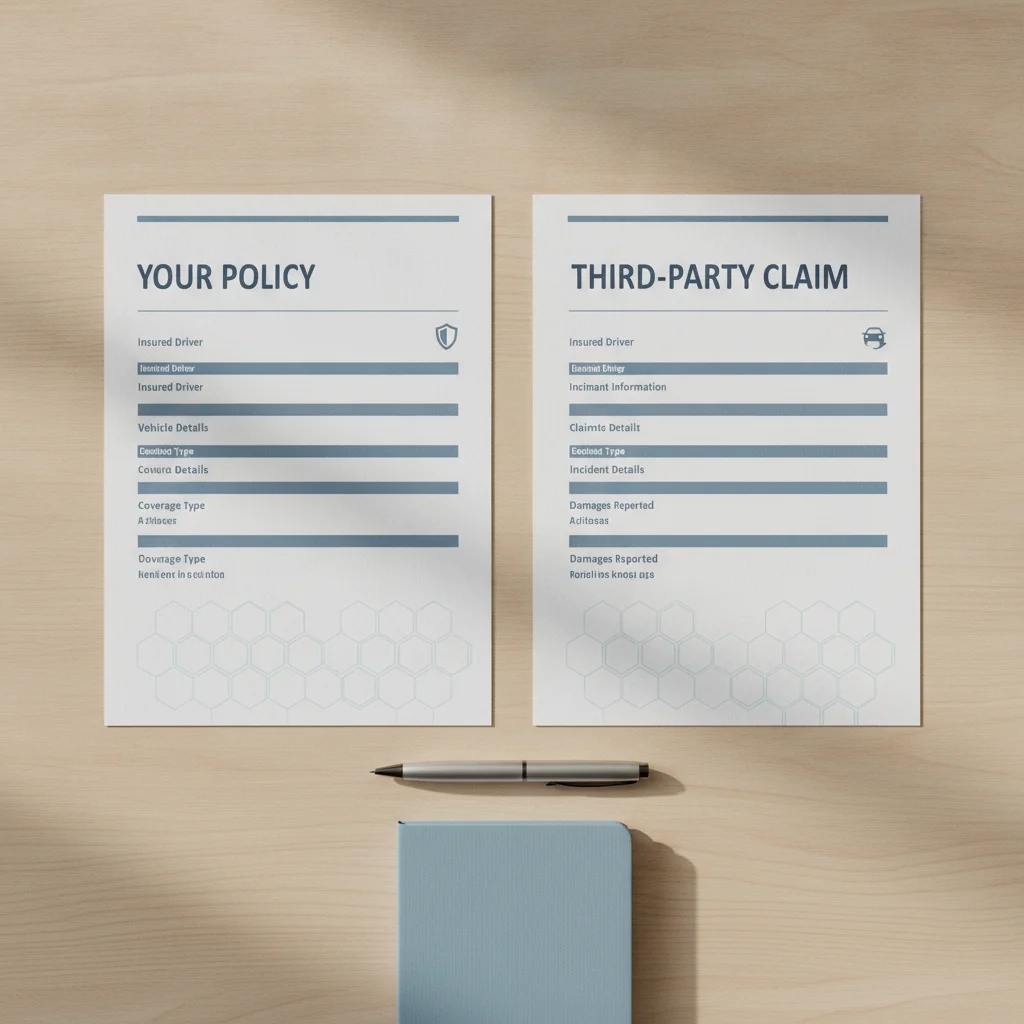
Key Takeaways
Option A
Filing With Your Own Insurer (First-Party Claim)
The faster, more predictable route you control.
Best for: Drivers who want quick vehicle repairs, have collision coverage, and don't want to wait on fault determinations.
Option B
Filing Against the At-Fault Driver's Policy (Third-Party Claim)
The route that keeps your record clean — if it works.
Best for: Drivers clearly not at fault who want to avoid a deductible and protect their premium from rising.
If you need your car repaired as fast as possible
Filing With Your Own Insurer (First-Party Claim)
Your insurer is obligated to move quickly on your claim. You won't be waiting for the other driver's company to accept liability before scheduling repairs.
If fault is clear and you want to avoid paying a deductible
Filing Against the At-Fault Driver's Policy (Third-Party Claim)
When the other driver is clearly at fault and their insurer is cooperative, you can often get your car repaired and your deductible waived entirely.
If the other driver's coverage is uncertain or disputed
Filing With Your Own Insurer (First-Party Claim)
Relying on the at-fault driver's insurer when coverage limits or liability are in question can leave you waiting indefinitely — your own policy gives you a guaranteed path forward.
If you sustained injuries in addition to vehicle damage
Filing Against the At-Fault Driver's Policy (Third-Party Claim)
Bodily injury compensation — pain, suffering, lost wages — comes from the at-fault driver's liability policy, not your own collision coverage.
If the at-fault driver has no insurance
Filing With Your Own Insurer (First-Party Claim)
Your uninsured motorist or collision coverage steps in when the other driver can't pay. The third-party route simply isn't available without a viable policy to file against.
Understanding the Two Paths After an Accident
Getting into an accident — even a minor one — puts you at a decision point that most drivers haven't thought much about beforehand. Once the dust settles and everyone is safe, one of the first questions you'll face is: whose insurance do I call?
The short answer is that you have two options. You can file a claim with your own auto insurance company — what's called a first-party claim — using your collision coverage to pay for repairs. Or, if another driver caused the accident, you can file directly against their liability insurance — a third-party claim — and hold their policy responsible for your losses.
Neither path is universally better. Each comes with trade-offs that depend on your specific situation: how clear-cut the fault is, how quickly you need your car repaired, whether injuries are involved, and what kind of coverage each driver actually carries. The goal of this guide is to help you think through those trade-offs calmly, so you can make a confident choice rather than a rushed one.
If you're also weighing whether to handle things informally, it's worth reading about settling an accident privately vs. going through insurance before you decide anything.

How Each Claim Type Works
Filing With Your Own Insurer
When you file a first-party claim, you contact your own insurance company and invoke your collision coverage. Your insurer assigns an adjuster, assesses the damage, and arranges for your vehicle to be repaired — typically through a network of preferred shops, though you often have the right to choose your own. (More on that in a moment.)
The catch: you'll pay your collision deductible upfront. If your deductible is $500 and the repair costs $4,000, your insurer covers $3,500 and you pay $500 out of pocket. The good news is that if the other driver is found at fault, your insurer may pursue subrogation — essentially suing or negotiating with the at-fault driver's insurer to recover what they paid out, including your deductible. This process can take weeks or months, and reimbursement isn't guaranteed, but it does happen regularly.
Filing Against the At-Fault Driver's Insurer
With a third-party claim, you bypass your own policy and file directly with the other driver's insurance company. Their liability coverage — specifically the property damage and bodily injury portions — is what you're making a claim against. If the claim is accepted, you pay no deductible and your own insurer doesn't technically enter the picture.
The catch here: you're at the mercy of the other driver's insurer. They have no contractual obligation to you the way your own insurer does. Their adjuster's job is to protect their policyholder's interests, which means they'll investigate fault carefully before agreeing to pay anything. If fault is disputed, shared, or the other driver wasn't fully insured, this route can stall — sometimes for weeks.
Before you speak with the other driver's adjuster, take a few minutes to understand what to say and what to skip when talking to the other driver's insurance adjuster. Adjusters are trained professionals — and what you say early in the process can affect your outcome.
| Criterion | Your Own Insurer (First-Party) | At-Fault Driver's Insurer (Third-Party) |
|---|---|---|
| Deductible required | Yes — paid upfront | No deductible if claim accepted |
| Speed of repair | Typically faster | Depends on liability acceptance |
| Fault determination needed | No — coverage applies regardless | Yes — their insurer must accept liability |
| Premium impact risk | Possible, varies by insurer and state | Generally none to your own policy |
| Covers bodily injury compensation | No — collision covers vehicle only | Yes — via bodily injury liability |
| Available if other driver uninsured | Yes — with collision or UM coverage | No — no policy to file against |
| Subrogation (deductible recovery) | Possible if other driver at fault | Not applicable |
| Control over process | High — your insurer works for you | Low — their insurer controls timeline |
~6%
U.S. drivers with no insurance
According to the Insurance Research Council, an estimated 1 in 8 drivers on U.S. roads lacked insurance coverage, making the third-party route unavailable in those collisions.
7–10 days
Typical first-party claim processing time
Most state regulations require insurers to acknowledge a claim within a few days and resolve it within 30–45 days, but straightforward first-party claims often resolve much faster.
50%+
Subrogation recovery success rate
Industry data suggests insurers recover deductibles for policyholders through subrogation in a meaningful share of not-at-fault claims, though timelines vary widely.
Key Differences That Should Drive Your Decision
Speed and Control
If your vehicle is your lifeline — you commute daily, have kids to shuttle, or can't afford to be without transportation — speed matters enormously. Filing with your own insurer almost always gets things moving faster. Your company has a direct duty to service your claim promptly. The other driver's insurer? They owe you a fair investigation, but they set their own pace.
The Deductible Factor
Your deductible is real money, and for many drivers it's a meaningful amount — $500, $1,000, or more. If you file with your own insurer, that money comes out of your pocket today, even if you eventually get it back through subrogation. If you file third-party and the claim is accepted cleanly, you pay nothing out of pocket.
However, if there's any dispute about fault — even a small one — the third-party route could drag on long enough that you'd have been better off paying your deductible and getting repaired quickly through your own policy.
Premium Impact
Many drivers fear that filing with their own insurer will raise their rates. That fear is understandable but somewhat overstated. Not-at-fault accidents don't always trigger premium increases, and many states restrict insurers from penalizing you for accidents where you weren't responsible. That said, it varies by insurer and state, so it's worth asking your agent directly before you decide. Filing a third-party claim, by contrast, typically leaves no mark on your own policy at all.

Injury Claims Are Different
If you or your passengers were injured, the conversation changes significantly. Your collision coverage only applies to your vehicle. Compensation for medical expenses, lost wages, and pain and suffering comes from the at-fault driver's bodily injury liability coverage — which means you need a third-party claim regardless of what you do about the vehicle damage. In serious injury cases, it's often worth consulting an attorney before accepting any settlement. See when you should hire an attorney after a car accident for clear guidance on when legal help is warranted.
No-Fault States Work Differently
If you live in a no-fault state — such as Florida, Michigan, New York, or Pennsylvania — the rules change. In these states, your own Personal Injury Protection (PIP) coverage pays your medical bills regardless of who caused the accident. You can only step outside the no-fault system to pursue the at-fault driver's liability policy if your injuries meet a certain severity threshold defined by state law. Property damage, however, is still typically handled through traditional fault-based claims. Check your state's specific rules before assuming which route applies to you.
Repair Shop Choice
Whichever route you take, you generally have the right to choose your own repair facility. Insurers — both yours and the other driver's — may steer you toward preferred shops in their network, but that doesn't mean you're required to go there. Understanding that trade-off matters: choosing a repair shop: what your insurer recommends vs. your right to choose.
When the Third-Party Route Breaks Down
There are situations where filing against the at-fault driver's insurer simply isn't viable — and knowing them in advance saves you from a frustrating dead end.
- The other driver is uninsured. If they have no coverage, there's no policy to file against. This is when your own uninsured motorist coverage becomes critical. Learn more about uninsured motorist claims and how to file when the other driver has no coverage.
- Fault is genuinely disputed. If both drivers have conflicting accounts and there are no witnesses or cameras, the other insurer may deny or partially deny liability. You could wait months for resolution.
- The other driver's coverage limits are low. Even if liability is clear, their property damage limit might cap out at $10,000 in a state with minimal requirements — not enough if your car is newer or the damage is extensive.
- The other driver doesn't report the claim promptly. Insurers can and do delay claims when their own policyholder is uncooperative.
In any of these scenarios, your own collision coverage acts as a safety net. You pay your deductible, get your car repaired, and let your insurer handle the recovery effort on the back end. It's not a perfect solution — but it keeps you moving forward. For a full walkthrough of the steps involved in filing a collision claim, see filing a collision claim: a step-by-step walkthrough.

A Practical Framework for Making Your Choice
Rather than a rigid rule, think of this as a simple decision filter. Ask yourself three questions:
- Is fault clearly established in my favor? If yes, and the other driver is insured with sufficient coverage, the third-party route is worth pursuing. If no, or if there's any gray area, start the process with your own insurer as a backup.
- How urgently do I need my vehicle repaired? If you can't wait more than a few days, use your own insurance. If you have a rental or alternate transportation and can afford to wait, a third-party claim may save you the deductible.
- Were there injuries? If yes, you'll need a third-party claim for medical compensation regardless. Consider getting legal advice before settling anything — especially if injuries are serious or ongoing.
One practical tip: you can contact both insurers simultaneously to preserve your options. Reporting the accident to your own insurer doesn't obligate you to file a claim through them — it simply keeps your options open. Most policies require prompt notification of accidents anyway, so there's rarely a downside to making that call early.
For a broader look at how a liability claim moves from the accident scene to a final settlement, the step-by-step liability claim guide walks through the entire process clearly. And if you're unsure which type of coverage applies to your specific situation, collision vs. comprehensive claims can help you sort that out before you file anything.
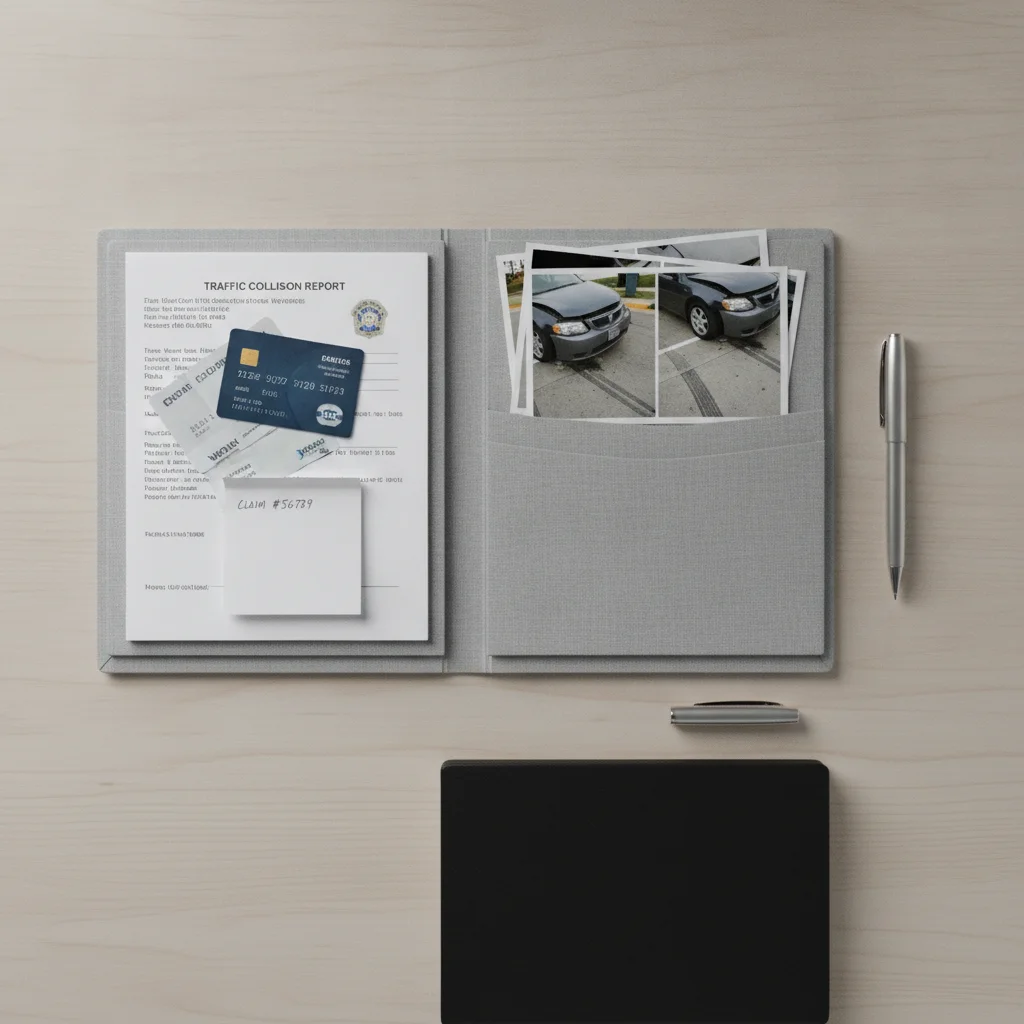
The most important thing to remember: you are not locked into one path from the start. Keep both options open, document everything thoroughly, and give yourself the time to make a considered decision rather than a panicked one. The claims process can feel overwhelming in the moment — but with the right information, it's entirely manageable.

All claims are backed by peer-reviewed research. Sources on request.