Key Takeaways
Creates an official, neutral third-party record
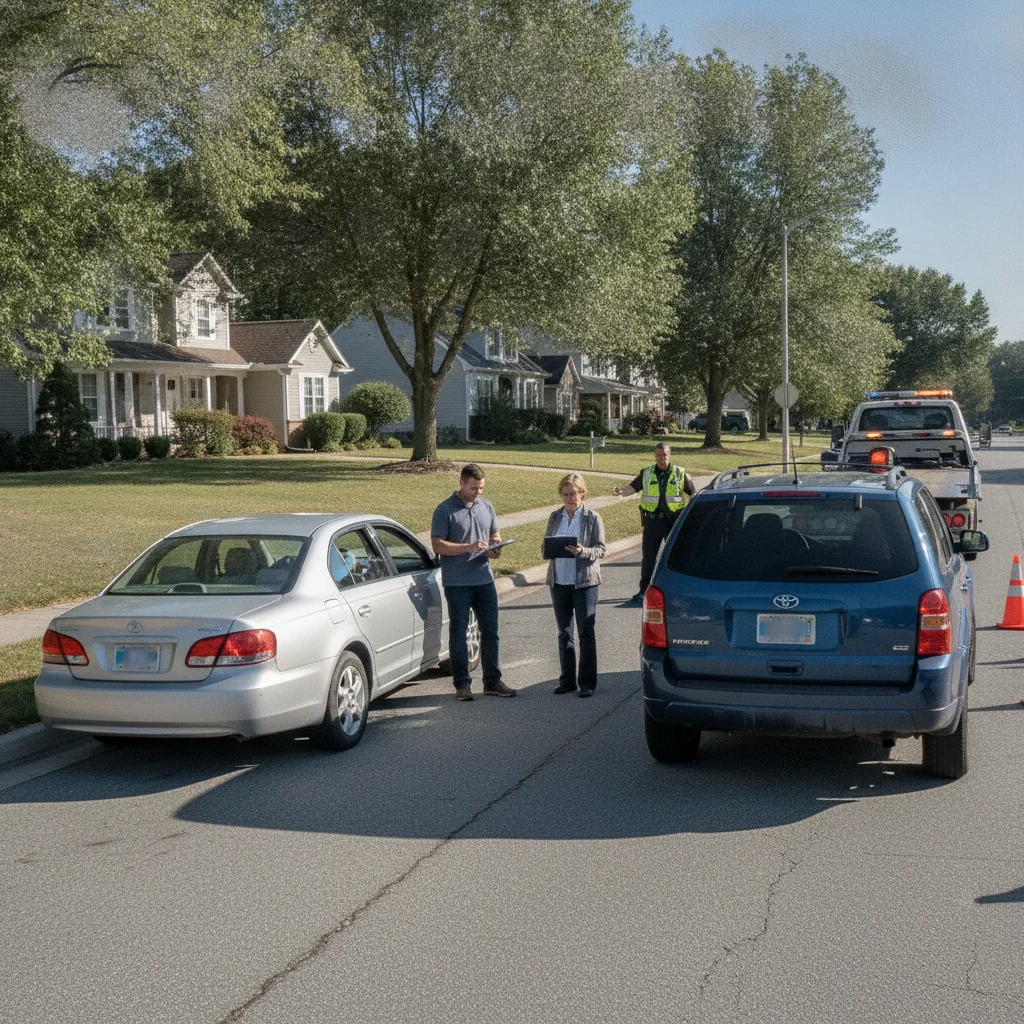
A police report documents the scene conditions, both drivers' accounts, and the officer's initial liability assessment—making it far harder for either party to revise the facts later.
Protects you if the other driver later claims injury
Soft tissue injuries like whiplash often don't produce immediate symptoms. A contemporaneous police report can establish whether the reported injury is plausible given the actual collision circumstances.
Required by many insurers for specific claim types
Uninsured motorist claims and hit-and-run coverage almost always require a police report—skipping it may result in a denied claim even if you have the right coverage.
Deters bad-faith behavior by the other driver
Drivers who intend to exaggerate damage or fabricate injuries are significantly less likely to pursue that path when a formal police record exists.
Complies with state reporting laws without guesswork
Rather than estimating whether damage crosses your state's reporting threshold—which is easy to underestimate at the scene—calling police ensures you're automatically in compliance.
Provides documentation your attorney can use
If the situation escalates to a legal dispute, a police report is one of the first documents an attorney will request. Not having one limits your options.
Can trigger a formal claim and premium impact
A police report often prompts an insurer notification, which can result in a formal claim on your record—even if you're not at fault. Some insurers raise rates based on claim frequency regardless of fault.
Long wait times in many jurisdictions
Urban police departments frequently deprioritize non-injury, private-property accidents. Waiting 60 to 90 minutes for a report that says 'minor contact' may be an impractical use of time.
Officers may not respond at all to low-level incidents
Many departments have policies against dispatching officers to non-injury accidents on private property like parking lots, meaning the call yields no report anyway.
Unnecessary escalation in genuinely clear-cut situations
When fault is obvious, damage is minimal, both drivers are cooperative, and all insurance information is exchanged, a police report adds process without meaningful protection.
May complicate purely private cash settlements
If both parties agree to settle minor damage privately—without insurer involvement—a police report creates an official record that can make a clean private resolution more complicated.
Our Verdict
Calling police after a minor fender-bender is rarely a waste of time and often a significant protective measure. The cases where skipping it makes sense are narrow: clear liability, cooperative parties, documented evidence, and damage that's obviously below your state's reporting threshold. When any of those conditions are uncertain, make the call.
Drivers who are in a clear-cut, low-damage situation with a cooperative other party and strong personal documentation skills may reasonably skip the police—but most drivers are better protected by filing a report.
Why a 'Minor' Accident Is Rarely a Simple Decision
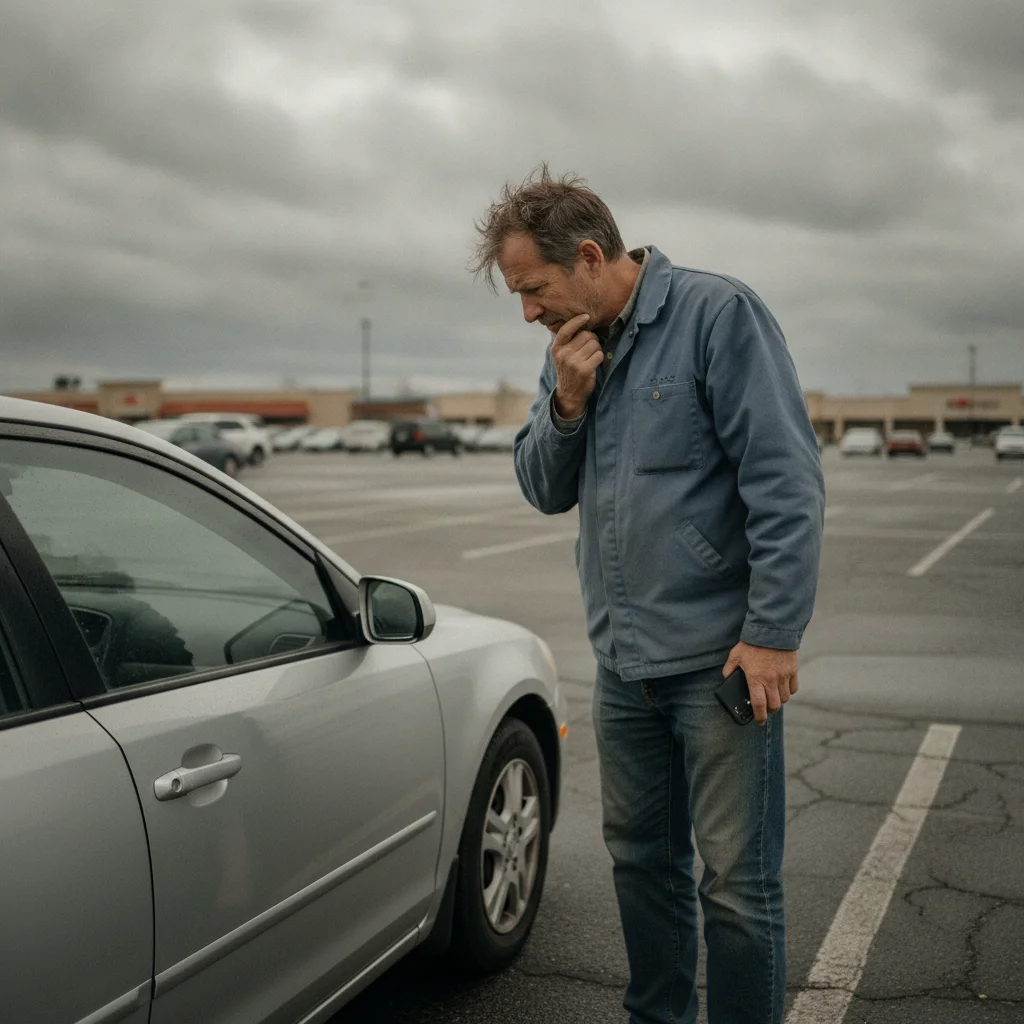
A slow-speed tap in a parking lot. A gentle rear-end nudge at a red light. Your first instinct is to get out, confirm nobody's hurt, and handle it quietly between yourselves. That instinct isn't wrong—but acting on it without thinking through the consequences can leave you legally exposed and financially blindsided weeks later.
The question of whether to call police after a minor fender-bender hinges on more than the visible damage in front of you. It depends on your state's reporting laws, the other driver's behavior, what your insurer actually needs to process a claim, and how certain you are that today's "minor" situation won't become tomorrow's personal injury lawsuit.
This isn't about being overly cautious or assuming bad faith. It's about knowing your options so you can make a deliberate, informed decision rather than a reflexive one. See our guide to the first 10 minutes after an accident for a broader checklist of what to prioritize at the scene.
When You're Legally Required to Call (Know Your State's Rules)
Before weighing the pros and cons philosophically, check the legal baseline first. Most states mandate that drivers report accidents when damage exceeds a specific dollar threshold—commonly somewhere between $500 and $1,500—or when any injury is involved, however minor it appears. Some states require reporting if an airbag deploys, regardless of visible damage.
Failing to report a qualifying accident can result in license suspension, fines, or complications with your insurance coverage. These aren't theoretical risks; insurers have denied claims on the basis that a driver failed to comply with state reporting requirements.
State Reporting Thresholds Vary Widely
Damage thresholds for mandatory accident reporting range from $500 in some states to $2,000 or more in others. Some states also require reporting whenever an airbag deploys or a vehicle cannot be driven from the scene. Check your state's DMV website—many publish a one-page accident reporting guide that covers these specifics. Don't rely on what you heard from a friend in another state.
Private Property Accidents Are a Gray Area
Accidents that occur in parking lots or on private property fall outside normal traffic law jurisdiction in many states, which can affect both the police response and the reporting requirement. However, your insurance obligations don't disappear just because the accident happened on private property. Document thoroughly and notify your insurer either way.
You Can File a Report After the Fact
If police don't respond to the scene, you can often file a report directly at your local police station or online through your department's self-reporting portal within the required timeframe. This creates an official record even without an officer attending the scene. Some insurers will accept this type of report for claim processing purposes—confirm with your insurer before assuming.
Even in states where a police response to the scene isn't required, you may still be obligated to file a report with the DMV or state police within a set number of days—typically 5 to 10. Check your state's motor vehicle authority website to confirm the exact threshold and timeline.
If you're not certain whether the damage clears your state's threshold—and in a parking lot collision it's genuinely hard to tell—defaulting to calling police is the lower-risk move. Body panel damage that looks like $300 at the scene routinely runs $1,200 to $2,000 once a shop gets a proper look.
$1,000+
Average cost of 'minor' bumper repair
According to repair industry data, rear bumper repairs that look cosmetic at the scene frequently run $1,000 to $2,500 once sensors, brackets, and paint are accounted for.
38 states
States requiring accident reporting above a damage threshold
The majority of U.S. states legally require drivers to file a report when estimated damage exceeds a set threshold, typically ranging from $500 to $1,500.
72 hours
Typical window for delayed whiplash symptoms
Medical literature consistently shows soft tissue injuries from rear-end collisions may not produce noticeable symptoms for 24 to 72 hours after impact.
~30%
Claims denied for missing documentation
Insurance industry analysts estimate a significant share of disputed minor-accident claims are complicated or denied partly due to missing police reports or inadequate scene documentation.
The Case for Calling the Police
There are concrete, practical reasons to make that call even when the collision seems trivially minor.
Creates an official, neutral third-party record
A police report documents the scene conditions, both drivers' accounts, and the officer's initial liability assessment—making it far harder for either party to revise the facts later.
Protects you if the other driver later claims injury
Soft tissue injuries like whiplash often don't produce immediate symptoms. A contemporaneous police report can establish whether the reported injury is plausible given the actual collision circumstances.
Required by many insurers for specific claim types
Uninsured motorist claims and hit-and-run coverage almost always require a police report—skipping it may result in a denied claim even if you have the right coverage.
Deters bad-faith behavior by the other driver
Drivers who intend to exaggerate damage or fabricate injuries are significantly less likely to pursue that path when a formal police record exists.
Complies with state reporting laws without guesswork
Rather than estimating whether damage crosses your state's reporting threshold—which is easy to underestimate at the scene—calling police ensures you're automatically in compliance.
Provides documentation your attorney can use
If the situation escalates to a legal dispute, a police report is one of the first documents an attorney will request. Not having one limits your options.
The single biggest risk in skipping the police is what's sometimes called the "parking lot flip"—the other driver agrees to handle things privately at the scene, then files a claim days later claiming injuries or greater damage, with a version of events that differs sharply from yours. Without a police report, it's your word against theirs, and insurers will often treat the dispute conservatively—which can mean treating you as partially at fault.
A police report doesn't guarantee you win that dispute, but it establishes an official contemporaneous record: who was present, what the scene looked like, what both drivers said, and the officer's initial assessment of fault. That's a significant evidentiary advantage.
There's also the injury latency issue. Whiplash, soft tissue injuries, and concussions frequently don't produce immediate symptoms. If the other driver or a passenger later reports an injury—even days after the accident—a police report documents the original scene conditions and can become a critical piece of evidence in determining whether the claimed injury is consistent with the collision as it actually occurred. For more on when incidents escalate beyond a standard insurance claim, see when you should consider hiring an attorney.
The Case Against Calling the Police
Calling isn't always the right answer. There are legitimate scenarios where skipping the police response is a reasonable, defensible choice.
Can trigger a formal claim and premium impact
A police report often prompts an insurer notification, which can result in a formal claim on your record—even if you're not at fault. Some insurers raise rates based on claim frequency regardless of fault.
Long wait times in many jurisdictions
Urban police departments frequently deprioritize non-injury, private-property accidents. Waiting 60 to 90 minutes for a report that says 'minor contact' may be an impractical use of time.
Officers may not respond at all to low-level incidents
Many departments have policies against dispatching officers to non-injury accidents on private property like parking lots, meaning the call yields no report anyway.
Unnecessary escalation in genuinely clear-cut situations
When fault is obvious, damage is minimal, both drivers are cooperative, and all insurance information is exchanged, a police report adds process without meaningful protection.
May complicate purely private cash settlements
If both parties agree to settle minor damage privately—without insurer involvement—a police report creates an official record that can make a clean private resolution more complicated.
The most practical objection is resource allocation. In many urban departments, officers won't respond to non-injury accidents on private property at all—or response times stretch to an hour or more. Waiting in a parking lot for 90 minutes to generate a report that ultimately says "minor contact, no injuries" isn't always a good use of anyone's time.
There's also a financial consideration that many drivers overlook. A police report often triggers a formal insurance claim, and a formal claim—even one where you're the victim—can affect your premium at renewal. If the damage is genuinely below your deductible and both parties agree, settling privately may be cleaner. Our piece on the hidden costs of filing a small claim breaks down exactly how even minor claims can affect your rate history.
If You Decide Not to Call: What You Must Do Instead
Choosing to skip the police call doesn't mean you can be casual about documentation. In fact, the lower your formal paper trail, the more rigorous your personal documentation needs to be. Cutting both corners is how drivers end up defenseless.
Minimum documentation checklist
- Photos of both vehicles — every angle, close-ups of all damage, license plates, and the surrounding scene. Timestamp metadata matters.
- Driver's license and insurance card exchange — photograph both; don't rely on written notes.
- Contact information for all passengers — not just the other driver.
- Witness names and phone numbers — anyone who saw the collision, even if they weren't involved.
- Written account — within an hour of the incident, write down what happened in your own words. Include road conditions, speed estimates, what each driver said.
- Vehicle identification numbers (VIN) — photograph the VIN plate on the other vehicle's dashboard if you can do so without conflict.
Consider sending the other driver a text or email summarizing the agreed facts of the incident. That creates a timestamped written record of what both parties acknowledged at the scene—surprisingly useful if the account changes later.
Even without a police report, you should still notify your insurer promptly. Most policies require you to report accidents within a reasonable time, regardless of whether you intend to file a claim. Failing to do so can complicate future claims. If you're weighing whether to use your own coverage or pursue the other driver's insurer, our breakdown of filing directly vs. going through the at-fault driver's policy covers the trade-offs clearly.
Red Flags That Should Override Your Hesitation
There are specific circumstances where calling police isn't optional—not legally, but practically. If any of these apply, make the call regardless of how minor the damage appears:
- The other driver is uncooperative or evasive — refuses to share insurance info, moves the vehicle, or tries to leave.
- Suspected impairment — any signs of alcohol or drug use. This is a legal obligation in most states.
- Commercial vehicles or rideshare drivers — liability and insurance structures are more complex; a police report is almost always warranted.
- Hit-and-run — even if the damage is minor, a police report is required to pursue an uninsured motorist claim with your own insurer.
- Disagreement about fault at the scene — if both drivers aren't on the same page about what happened, don't try to resolve it informally.
- Any reported pain or discomfort — if either driver or any passenger mentions any discomfort, treat it as a potential injury and call police.
State Reporting Thresholds Vary Widely
Damage thresholds for mandatory accident reporting range from $500 in some states to $2,000 or more in others. Some states also require reporting whenever an airbag deploys or a vehicle cannot be driven from the scene. Check your state's DMV website—many publish a one-page accident reporting guide that covers these specifics. Don't rely on what you heard from a friend in another state.
Private Property Accidents Are a Gray Area
Accidents that occur in parking lots or on private property fall outside normal traffic law jurisdiction in many states, which can affect both the police response and the reporting requirement. However, your insurance obligations don't disappear just because the accident happened on private property. Document thoroughly and notify your insurer either way.
You Can File a Report After the Fact
If police don't respond to the scene, you can often file a report directly at your local police station or online through your department's self-reporting portal within the required timeframe. This creates an official record even without an officer attending the scene. Some insurers will accept this type of report for claim processing purposes—confirm with your insurer before assuming.
For a detailed look at when a police report is legally required vs. strategically advisable, see our companion article: filing a police report after an accident — when it's required and when it helps.
What Insurers Actually Need From You
Your insurance policy's requirements may settle this question faster than any legal analysis. Review your policy documents—most have a section titled "Duties After Loss" or "Your Obligations After an Accident." Common requirements include:
- Prompt notification of any accident, regardless of fault or claim intent.
- Cooperation with the insurer's investigation.
- Documentation of the other party's insurance and contact information.
Some policies explicitly require a police report for specific claim types. Uninsured motorist coverage almost universally requires one if the other driver fled or cannot be identified. Hit-and-run claims without a police report are routinely denied. Comprehensive claims involving another vehicle may also require documentation beyond your own photos.
If your damage is below your deductible and the other driver is paying out of pocket, you may never need to involve your insurer at all—but you should still notify them. The cost of not reporting is higher than the perceived friction of making a quick call. If you later need to make a claim and your insurer discovers you knew about the accident and said nothing, that creates a coverage complication you don't want.
State Reporting Thresholds Vary Widely
Damage thresholds for mandatory accident reporting range from $500 in some states to $2,000 or more in others. Some states also require reporting whenever an airbag deploys or a vehicle cannot be driven from the scene. Check your state's DMV website—many publish a one-page accident reporting guide that covers these specifics. Don't rely on what you heard from a friend in another state.
Private Property Accidents Are a Gray Area
Accidents that occur in parking lots or on private property fall outside normal traffic law jurisdiction in many states, which can affect both the police response and the reporting requirement. However, your insurance obligations don't disappear just because the accident happened on private property. Document thoroughly and notify your insurer either way.
You Can File a Report After the Fact
If police don't respond to the scene, you can often file a report directly at your local police station or online through your department's self-reporting portal within the required timeframe. This creates an official record even without an officer attending the scene. Some insurers will accept this type of report for claim processing purposes—confirm with your insurer before assuming.
Making the Call: A Simple Decision Framework
Most accident scenes don't give you time for extended deliberation. Here's a quick mental framework:
- Is anyone reporting pain or discomfort? → Call police. No exceptions.
- Is the other driver uncooperative, impaired, or trying to leave? → Call police immediately.
- Does the damage clearly exceed your state's reporting threshold? → You're legally required to report. Call police or file a report within the required timeframe.
- Is the damage genuinely minor, both drivers are cooperative, and liability is clear? → Calling is still lower-risk, but skipping is defensible if your documentation is thorough.
- Does the accident involve a commercial vehicle, rideshare, or government vehicle? → Call police regardless of damage level.
When in doubt, call. The downside of an unnecessary police report is mild inconvenience and a 20-minute delay. The downside of not having one when you needed it can be a disputed liability determination or a denied insurance claim.
$1,000+
Average cost of 'minor' bumper repair
According to repair industry data, rear bumper repairs that look cosmetic at the scene frequently run $1,000 to $2,500 once sensors, brackets, and paint are accounted for.
38 states
States requiring accident reporting above a damage threshold
The majority of U.S. states legally require drivers to file a report when estimated damage exceeds a set threshold, typically ranging from $500 to $1,500.
72 hours
Typical window for delayed whiplash symptoms
Medical literature consistently shows soft tissue injuries from rear-end collisions may not produce noticeable symptoms for 24 to 72 hours after impact.
~30%
Claims denied for missing documentation
Insurance industry analysts estimate a significant share of disputed minor-accident claims are complicated or denied partly due to missing police reports or inadequate scene documentation.

All claims are backed by peer-reviewed research. Sources on request.