
Key Takeaways
Vehicle Service Schedule
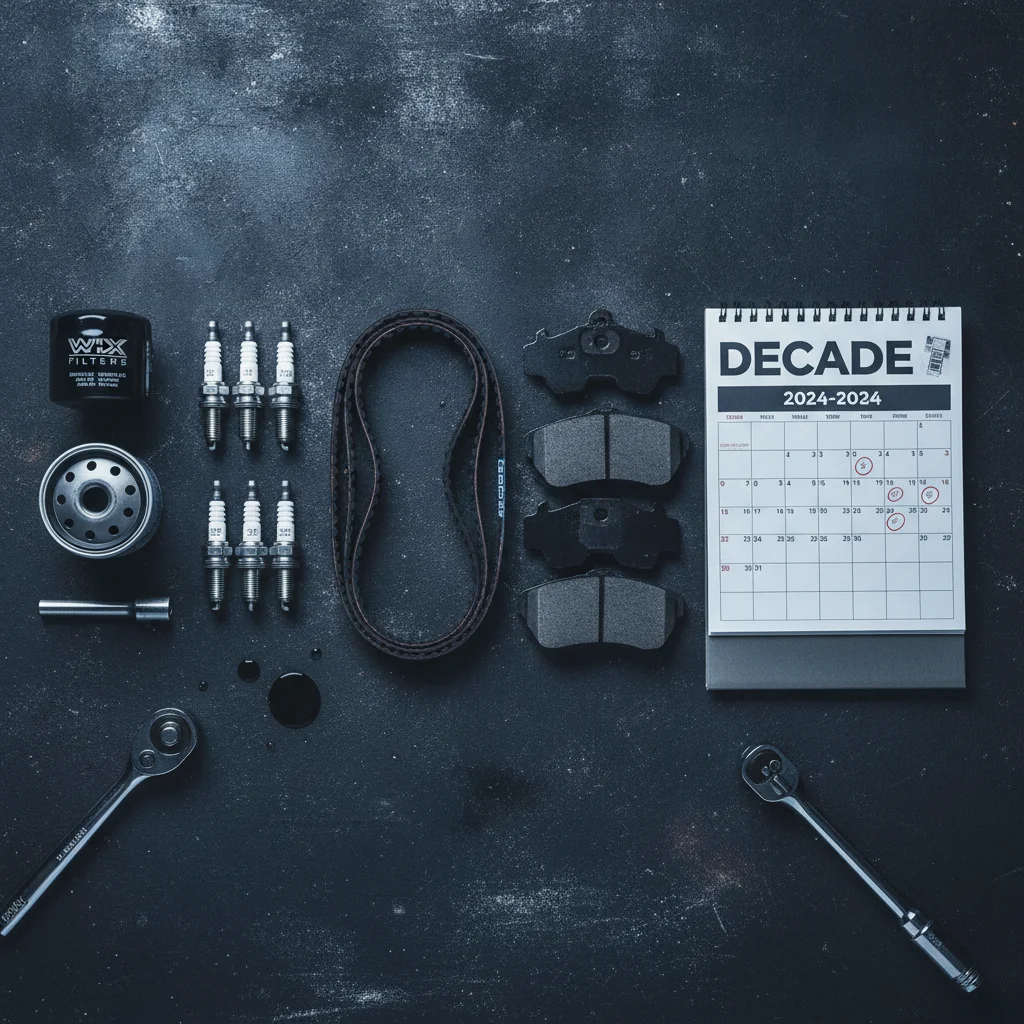
A vehicle service schedule is a manufacturer-recommended timeline that tells you when specific maintenance tasks should be performed on your car. It's typically organized by mileage intervals — such as every 5,000, 15,000, or 30,000 miles — and sometimes by time elapsed, whichever comes first. Think of it as a health calendar for your car, outlining everything from routine oil changes to major component inspections.
Manufacturers derive service intervals from engineering data, material degradation rates, and real-world durability testing. Modern vehicles with oil life monitoring systems may dynamically adjust oil change intervals based on driving conditions and engine load rather than a fixed mileage number.
Why Service Schedules Exist — and Why They're Often Ignored
Every new car rolls off the assembly line with a roadmap for its own care. That roadmap — the manufacturer's service schedule — is the product of thousands of engineering hours, materials testing, and real-world durability data. It tells you precisely when your engine oil needs changing, when your brakes deserve a look, and when major systems like the transmission or cooling circuit need attention.
Yet surveys consistently show that a large share of American drivers don't follow these schedules closely. Some assume the dealer's reminder sticker on the windshield is all they need. Others wait until a warning light appears. A surprising number simply don't know the schedule exists beyond the oil change interval.
The result is predictable: accelerated wear, unexpected repair bills, and in the worst cases, premature vehicle failure. Understanding what your service schedule actually says — and why it says it — is one of the highest-return habits a car owner can develop. This guide breaks it down milestone by milestone.
Normal vs. Severe: Know Which Applies to You
Manufacturers define 'normal' driving more narrowly than most people assume. If you regularly make short trips under five miles, drive in heavy stop-and-go traffic, operate in extreme temperatures, or tow a trailer, you almost certainly fall under the 'severe' category. Check your owner's manual for the exact definitions — using the wrong schedule means your maintenance intervals may be too long for your actual driving conditions.
Oil Life Monitors Aren't Infallible
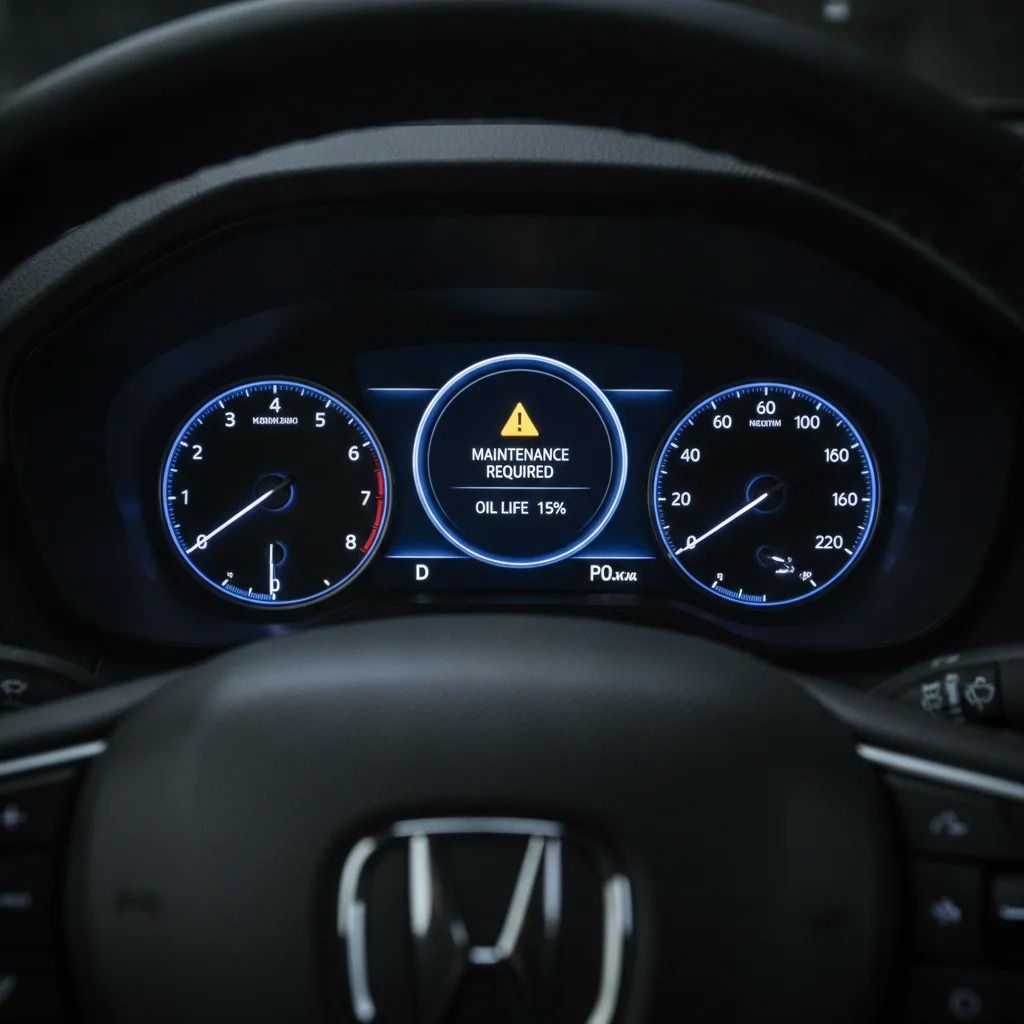
Onboard oil life monitoring systems are useful tools, but they're models — not sensors that directly measure oil degradation. They use algorithms based on driving patterns and estimated conditions. In unusual driving situations, such as sustained towing in extreme heat, the monitor may underestimate oil stress. When in doubt, an earlier change is always the safer choice.
The Anatomy of a Service Schedule: Mileage vs. Time
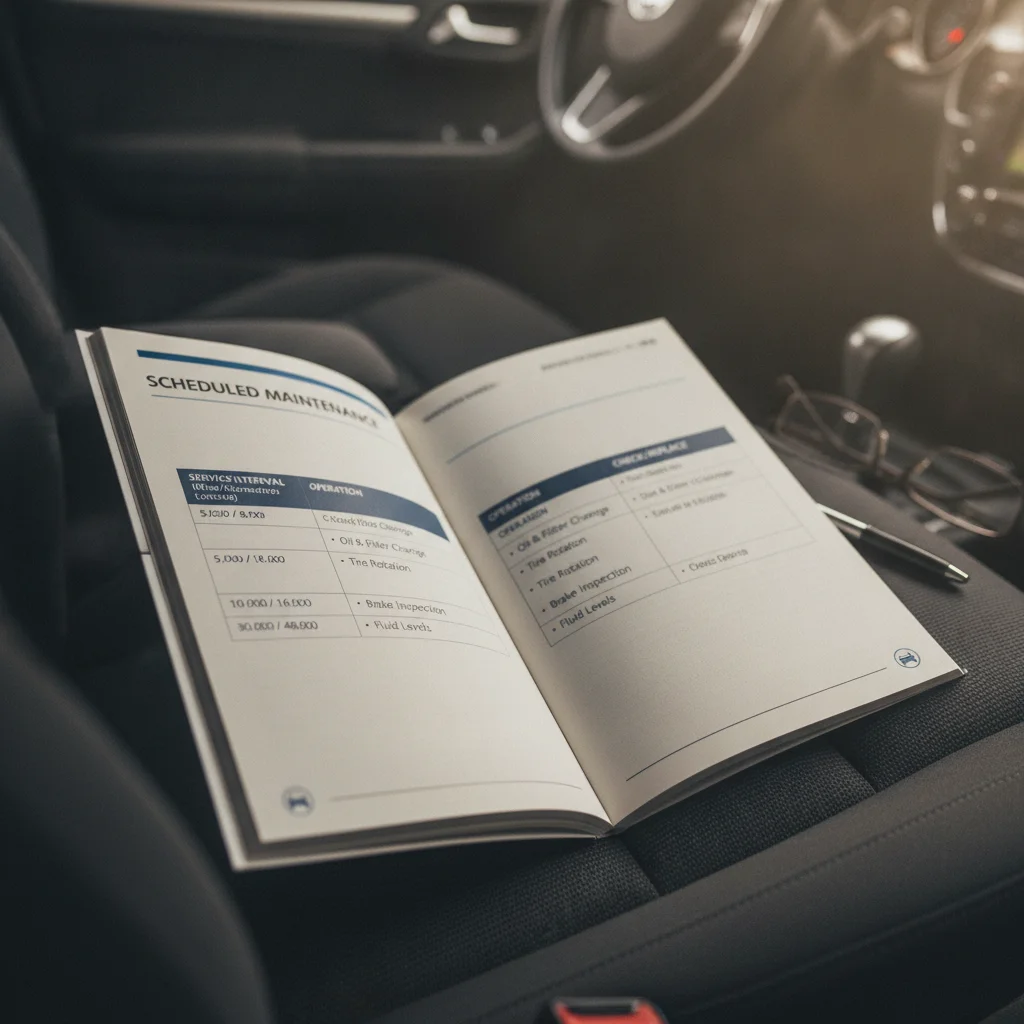
Most manufacturer service schedules are built around two parallel axes: mileage and elapsed time. The operative rule is almost always whichever comes first. This distinction matters more than many drivers realize.
Consider a retired driver who puts just 6,000 miles a year on their sedan. Following only mileage intervals could mean waiting almost two years between oil changes — long past the point where oil chemistry remains effective. Manufacturers know this, which is why a typical schedule might read: Change engine oil every 7,500 miles or 12 months, whichever occurs first.
Most modern service schedules follow a tiered structure:
- Minor service intervals (every 5,000–10,000 miles): Oil and filter change, tire rotation, visual safety inspection, fluid top-offs.
- Intermediate intervals (every 20,000–25,000 miles): Air filter inspection, cabin air filter replacement, brake inspection, battery check.
- Major service intervals (every 30,000–60,000 miles): Transmission fluid, coolant flush, spark plugs, drive belts, fuel system inspection.
- Long-interval services (every 60,000–100,000+ miles): Timing belt or chain inspection, differential fluid, major drivetrain components.
For a comprehensive look at how these intervals stack up across a vehicle's entire lifespan, see the full ownership maintenance timeline.
35%
Drivers who skip or delay recommended service
According to the Car Care Council, approximately 35% of vehicles on the road are operating with overdue scheduled maintenance.
$1,200
Average annual vehicle maintenance cost
AAA estimates the average American driver spends around $1,200 per year on routine maintenance — a fraction of typical unplanned repair costs.
3x
Repair cost multiplier for neglected maintenance
Industry data suggests deferred maintenance issues cost, on average, three times more to repair than they would have to prevent through scheduled service.
150,000+
Miles modern vehicles can last with proper care
Consumer Reports and manufacturer durability data consistently show well-maintained modern vehicles routinely exceed 150,000 miles before major mechanical failure.
$500–$900
Resale value premium for documented service history
Carfax and independent dealer surveys suggest vehicles with complete, verifiable service records command a measurable premium over comparable vehicles without documentation.
The Critical Milestones, Explained
Breaking down the specific milestones helps drivers understand what's actually happening at each service point — and why skipping it carries real consequences.
5,000–10,000 Miles: The Foundation Service
This is your most frequent touchpoint. Modern full-synthetic oils in late-model vehicles can often stretch to 7,500 or even 10,000 miles between changes, but the interval isn't just about oil. Technicians performing this service should also rotate tires — equalizing wear across all four corners — and conduct a visual inspection of fluid levels, lights, and brake condition. A tire rotation alone can extend tire life by thousands of miles and costs next to nothing when bundled with an oil change.
15,000–25,000 Miles: Filters and Brakes
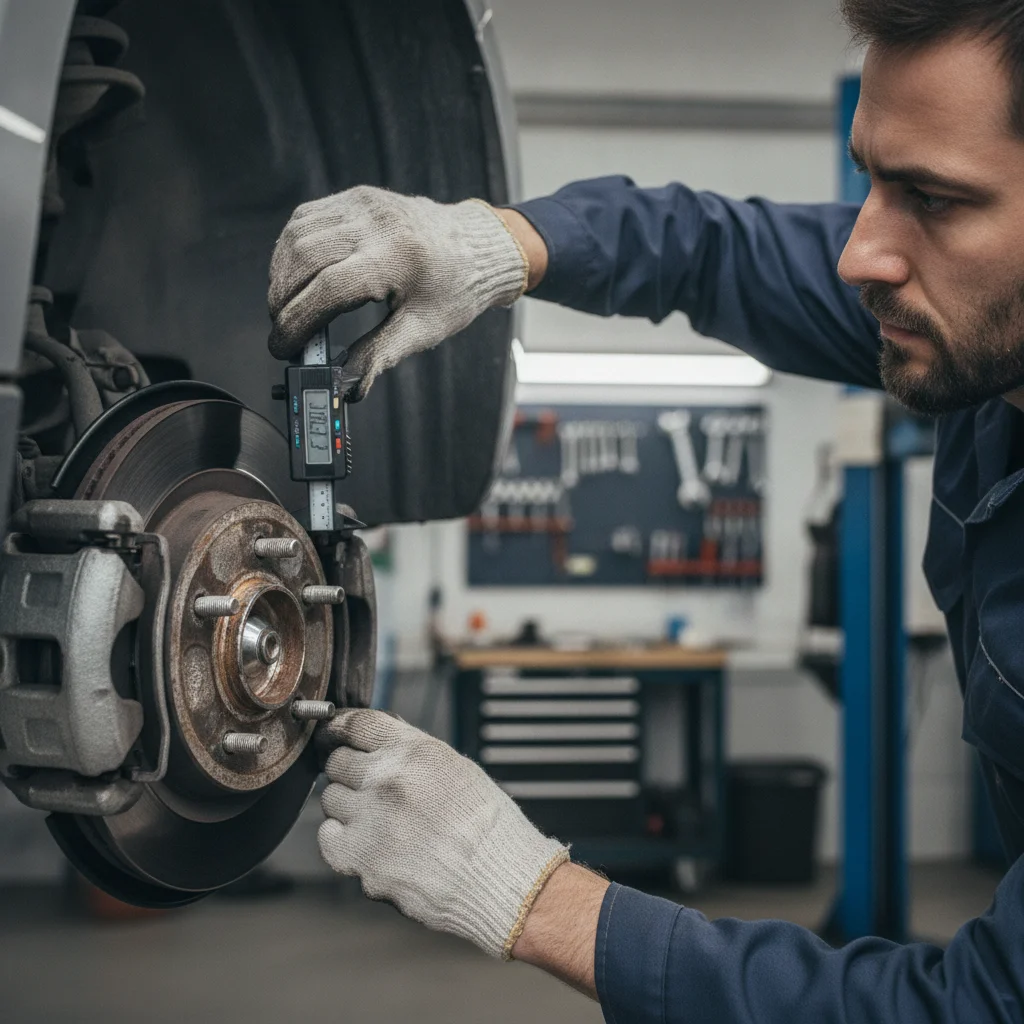
By this point, your engine air filter and cabin air filter have been doing serious work. A clogged engine air filter reduces combustion efficiency and can measurably hurt fuel economy. A dirty cabin filter degrades in-car air quality and strains the HVAC system. Brake pads should be measured at this interval — not just eyeballed — because worn pads caught early cost roughly $150–$250 per axle to replace, compared to $400–$700 or more if rotors are damaged by metal-on-metal contact.
30,000 Miles: The First Major Service
The 30,000-mile mark is often where drivers encounter their first sticker shock — not because the service is unreasonable, but because it's more comprehensive. Expect a transmission fluid inspection or change (critical for smooth shifting and long gearbox life), spark plug evaluation on some engines, a coolant condition check, and a thorough brake system review. Some manufacturers also call for fresh differential fluid at this point on all-wheel and four-wheel drive vehicles.
“Preventive maintenance is the best investment you can make in a vehicle. The cost of doing it right the first time is always less than the cost of fixing it after something breaks.”
— John Nielsen, Former Managing Director of Automotive Engineering and Repair, AAA
60,000 Miles: The Midlife Checkpoint
At 60,000 miles, your vehicle has experienced significant thermal cycling, road vibration, and chemical exposure. This is typically when manufacturers call for spark plug replacement on vehicles that use conventional plugs (iridium or platinum plugs in many modern engines can last 100,000 miles). Serpentine belts — which drive the alternator, power steering pump, and air conditioning compressor — should be inspected carefully here. A belt failure on the highway isn't just inconvenient; it can cause complete loss of power steering or engine overheating within minutes.
100,000 Miles: The High-Mileage Threshold
Reaching six figures on the odometer is no longer the engineering achievement it once was — modern vehicles are routinely designed to run well beyond 150,000 miles with proper care. But the 100,000-mile service is nonetheless significant. Timing belts (if your vehicle uses one rather than a chain) are typically due for replacement here, and the consequences of a belt failure are severe: in interference engines, a snapped timing belt can destroy the engine within milliseconds. Coolant, transmission fluid, and power steering fluid should all be freshened, and suspension components warrant careful inspection for worn bushings, ball joints, and tie rod ends.
For drivers entering this territory, high-mileage vehicle service adjustments covers the specific shifts in care strategy that keep older vehicles reliable.
Bundle Services to Save Time and Money
Many minor and intermediate services overlap conveniently. An oil change at 5,000 miles and a tire rotation at 7,500 miles can often be combined at the same visit with minimal added cost. Ask your service advisor to flag any upcoming milestones when you come in — a proactive technician can help you consolidate visits and avoid unnecessary return trips.
Photograph Your Odometer at Every Service Visit
A simple smartphone photo of your odometer reading each time you have service done creates a timestamped, geolocated record that supplements paper receipts. Combined with a service log, this makes it straightforward to demonstrate documented care to a future buyer or a warranty department.
Severe vs. Normal Driving Conditions
Most owner's manuals include two distinct service tracks: one for normal conditions and one for severe conditions. Many drivers assume their commute qualifies as normal. In practice, the severe-duty definition is broader than most expect.
Manufacturers typically classify driving as severe if it regularly involves:
- Frequent short trips under 5 miles, especially in cold weather
- Stop-and-go city driving for extended periods
- Towing or hauling heavy loads
- Driving on dusty, unpaved, or salted roads
- Extreme temperature climates — both hot and cold
- High-altitude driving
Under severe conditions, service intervals are compressed — often by 30 to 50 percent. An oil change interval of 7,500 miles under normal use might drop to 5,000 miles for a driver who makes multiple short cold-start trips daily in Chicago winters. Short trips are particularly hard on engines because the oil never fully reaches operating temperature, allowing moisture and contaminants to accumulate in the crankcase.
Normal vs. Severe: Know Which Applies to You
Manufacturers define 'normal' driving more narrowly than most people assume. If you regularly make short trips under five miles, drive in heavy stop-and-go traffic, operate in extreme temperatures, or tow a trailer, you almost certainly fall under the 'severe' category. Check your owner's manual for the exact definitions — using the wrong schedule means your maintenance intervals may be too long for your actual driving conditions.
Oil Life Monitors Aren't Infallible
Onboard oil life monitoring systems are useful tools, but they're models — not sensors that directly measure oil degradation. They use algorithms based on driving patterns and estimated conditions. In unusual driving situations, such as sustained towing in extreme heat, the monitor may underestimate oil stress. When in doubt, an earlier change is always the safer choice.
If you're unsure which category applies to your driving, default to the severe schedule — the incremental cost of more frequent service is trivial compared to the potential cost of premature wear.
What Skipping Services Actually Costs You
The economic argument for following your service schedule is compelling. Consider the chain of consequences from a single neglected item:
Skipped oil change → Sludge buildup → Increased friction → Accelerated bearing wear → Engine failure. A full engine replacement on a typical midsize sedan runs $4,000–$10,000 or more in parts and labor. The oil changes that might have prevented it cost $50–$100 each.
Beyond direct repair costs, deferred maintenance affects your car's resale value. Buyers — and dealers offering trade-in values — have increasingly sophisticated tools to assess a vehicle's service history. A car with documented, on-schedule maintenance consistently commands higher prices than a comparable vehicle with gaps in its records.
For buyers considering a used vehicle, understanding how a previous owner managed the service schedule is critical. Certified pre-owned programs offer one layer of protection here, as vehicles typically must meet service and inspection standards to qualify. But even CPO vehicles benefit from buyer scrutiny of maintenance records.
New car owners just getting started should also consult everything new car owners need to know about scheduled maintenance to establish good habits from day one.

How to Track and Stay Ahead of Your Schedule
Knowing the schedule exists is half the battle. Staying organized is the other half. Several approaches work well depending on your habits:
Use Your Owner's Manual as the Primary Reference
The manual isn't optional reading — it's the definitive document for your vehicle's maintenance requirements. Reading the maintenance section without getting lost walks through how to extract exactly the information you need from what can feel like an intimidating document.
Leverage Onboard Maintenance Reminders
Most vehicles sold in the past decade include a dashboard maintenance reminder system. Some simply count mileage; more sophisticated systems — like GM's Oil Life Monitor or BMW's Condition Based Servicing — factor in driving patterns, temperature, and engine load to produce dynamic recommendations. These systems are useful but should supplement, not replace, the owner's manual schedule.
Keep a Digital or Physical Service Log
Every time your car is serviced — whether by a dealer, an independent shop, or yourself — record the date, mileage, and work performed. Store receipts. A complete service history is worth real money at trade-in and sale time, and it's indispensable if you ever need to make a warranty claim.
Set Calendar Reminders
For time-based intervals, a simple calendar reminder set to repeat annually or semi-annually removes the risk of forgetting. Pair it with a mileage check at the start of each year to confirm whether the time or mileage trigger will come first.
Bundle Services to Save Time and Money
Many minor and intermediate services overlap conveniently. An oil change at 5,000 miles and a tire rotation at 7,500 miles can often be combined at the same visit with minimal added cost. Ask your service advisor to flag any upcoming milestones when you come in — a proactive technician can help you consolidate visits and avoid unnecessary return trips.
Photograph Your Odometer at Every Service Visit
A simple smartphone photo of your odometer reading each time you have service done creates a timestamped, geolocated record that supplements paper receipts. Combined with a service log, this makes it straightforward to demonstrate documented care to a future buyer or a warranty department.
If you're considering switching to an electric vehicle and wondering how maintenance demands change, the EV maintenance schedule provides a direct comparison of what gets eliminated and what remains.

All claims are backed by peer-reviewed research. Sources on request.