Key Takeaways
Start here
Why Scheduled Maintenance Matters for New Cars
Next
The Break-In Period: What to Do in the First 1,000 Miles
Then
Understanding Your Maintenance Schedule
Core knowledge
The Major Service Milestones Every New Owner Should Know
Make a smart choice
Dealer vs. Independent Shop: Where Should You Go?
Protect your investment
How Maintenance Connects to Your Warranty and Insurance
Why Scheduled Maintenance Matters for New Cars
Buying a new car comes with a certain comfort: everything is fresh, under warranty, and — for the moment — problem-free. It's easy to assume that means nothing needs attention for a while. That assumption is one of the most common and costly mistakes new car owners make.
Manufacturers design maintenance schedules not as suggestions but as engineering requirements. The intervals exist because specific components wear at predictable rates, fluids degrade on measurable timelines, and systems need periodic inspection to catch minor issues before they cascade into major failures. According to the Car Care Council, Americans spend an estimated $105 billion annually on avoidable vehicle repairs — many of which trace back to neglected scheduled services.
For new car owners specifically, the stakes are higher than they might seem. Missed services don't just risk mechanical problems — they can void your manufacturer's warranty, eliminate any goodwill repairs a dealer might otherwise offer, and quietly chip away at resale value. A vehicle with a documented, complete maintenance history can command hundreds to thousands of dollars more at trade-in or private sale than an identical model with spotty records.

If you're driving an electric vehicle instead of a gas-powered car, the service landscape looks quite different. See EV maintenance from day one for a breakdown specific to electric ownership. For everyone else, here's how the world of scheduled maintenance works — starting from the moment you leave the dealership lot.
The Break-In Period: What to Do in the First 1,000 Miles
The break-in period is a concept that dates to the early days of internal combustion, and while modern manufacturing precision has reduced its importance, it hasn't eliminated it. Most manufacturers still recommend specific operating habits during the first 500 to 1,500 miles of a new vehicle's life.
What the break-in period actually involves
During early operation, metal engine components — pistons, cylinder walls, bearings — undergo microscopic smoothing as they mate together under real-world conditions. This process, called engine bedding or seating, is influenced by how the engine is stressed in those early miles.
Common manufacturer recommendations during break-in include:
- Avoiding sustained high-RPM operation (typically staying below 4,000–4,500 RPM)
- Not towing heavy loads or carrying maximum payload
- Varying your speed rather than holding one speed on long highway drives
- Avoiding aggressive braking when possible (new brake pads and rotors also benefit from gradual bedding)
Do You Need That Early Oil Change?
Some manufacturers recommend a first oil change as early as 1,000 miles to flush metal particles from the break-in process. Others consider modern filtration systems sufficient to skip this step. Check your owner's manual for guidance — if it's not listed, ask your dealer's service department directly at your first visit.
Vet Your Independent Shop Before You Need It
The best time to find a trustworthy independent mechanic is before something goes wrong. Ask for referrals from friends or neighbors, look for ASE-certified technicians, and read recent reviews on Google and Yelp. Making one introductory visit for an oil change lets you evaluate their communication and transparency before stakes are higher.
After the break-in period, your first oil change takes on added importance. Some manufacturers recommend an early oil change at around 1,000 miles specifically to flush out microscopic metal particles shed during the seating process. Check your owner's manual — some automakers include this early change in their schedule, while others consider modern oil filtration sufficient to handle it without an extra service stop.
What break-in does not mean
Break-in does not mean babying the car indefinitely. Driving too gingerly — never allowing the engine to rev, always tiptoeing — can actually impede proper piston ring seating on some engines. Normal, varied driving is the goal. Think of it less as restriction and more as intentional moderation during a brief window.
Understanding Your Maintenance Schedule
Every new vehicle comes with an owner's manual, and buried somewhere within its pages — typically in a dedicated section labeled "Maintenance" or "Scheduled Maintenance" — is the most authoritative document you have for keeping your car healthy. No online guide, including this one, supersedes it.
Scheduled maintenance
A set of specific service tasks defined by the vehicle manufacturer to be performed at designated mileage or time intervals, designed to keep the car running reliably and safely.
Break-in period
The first 500 to 1,500 miles of a new vehicle's life, during which gentle, varied driving helps engine and brake components seat properly for long-term reliability.
OEM parts
Original Equipment Manufacturer parts — components made to the exact specifications of those installed when the vehicle was built, as opposed to aftermarket alternatives.
Severe service schedule
A more frequent maintenance interval recommended for vehicles regularly subjected to demanding conditions such as towing, extreme temperatures, short trips, or heavy traffic.
Magnuson-Moss Warranty Act
A federal law that prevents manufacturers from voiding a vehicle warranty solely because the owner chose an independent shop for service, as long as proper maintenance standards are met.
Powertrain warranty
A manufacturer guarantee covering the engine, transmission, and drivetrain components — typically the longest warranty offered with a new vehicle, commonly 5 years or 60,000 miles.
Mechanical breakdown insurance
An optional insurance product that covers the cost of unexpected mechanical failures not caused by an accident — functioning similarly to an extended warranty.
ASE certification
A credential issued by the National Institute for Automotive Service Excellence that certifies a mechanic's competency in specific areas of vehicle repair and maintenance.
Maintenance schedules are organized in one of two ways, or a combination of both:
- Mileage-based intervals
- Services are triggered when the odometer hits specific thresholds — every 5,000, 7,500, 15,000, or 30,000 miles, for example. This is the most common structure for drivers who put on significant mileage.
- Time-based intervals
- Some services are recommended on a calendar basis regardless of mileage — typically every six or twelve months. This matters for low-mileage drivers whose cars age even while sitting. Coolant, brake fluid, and certain belts degrade chemically over time, not just through use.
Most modern vehicles also include an onboard maintenance reminder system — a dashboard notification that tracks driving conditions and alerts you when service is due. These systems are useful, but they are not a replacement for understanding what your manual calls for. Dashboard reminders typically flag oil changes but may not surface every scheduled item, such as transmission fluid, differential service, or spark plug replacement.
For a more detailed walkthrough of how to interpret your owner's manual's maintenance section, see how to read your owner's manual maintenance section.

Normal vs. severe service schedules
Many owner's manuals include two separate maintenance schedules: one for normal driving conditions and one for severe or special operating conditions. Severe conditions include:
- Frequent short trips under five miles, especially in cold weather
- Driving in extreme heat or cold climates
- Frequent towing or hauling heavy loads
- Stop-and-go city driving or heavy traffic commuting
- Driving on dusty, unpaved roads
If any of these apply to you consistently, follow the severe schedule — it calls for more frequent service intervals. Many drivers who think they're under normal conditions actually qualify as severe given urban stop-and-go commuting patterns.
Normal vs. Severe: Which Schedule Is Yours?
Drivers who commute in urban traffic, take frequent short trips, or live in regions with extreme seasonal temperatures often qualify for the severe service schedule without realizing it. Using the normal schedule when severe applies can leave your vehicle under-serviced. When in doubt, defaulting to the more frequent intervals is the conservative — and safer — choice.
Third-Party Warranties May Have Stricter Requirements
If your vehicle has an extended warranty from a third-party provider rather than the manufacturer, maintenance requirements may differ from what your owner's manual specifies. Review your extended warranty contract carefully — some require services at specific intervals or from specific types of shops, and failure to comply can complicate claims. Keep copies of all relevant documentation in a dedicated folder.
The Major Service Milestones Every New Owner Should Know
While every car is different, most conventional gasoline-powered vehicles share a recognizable structure of maintenance milestones. Here's what typically happens at each major interval — and what's at stake if you skip it.
Every 5,000–10,000 miles: Oil and filter change
This is the cornerstone of engine maintenance. Modern full synthetic oils in most new cars allow for extended intervals — commonly 7,500 or 10,000 miles, with some vehicles (notably certain BMW and Porsche models) rated for up to 15,000 miles. Ignore the 3,000-mile myth unless your manual explicitly calls for it; changing oil more frequently than necessary wastes money without providing meaningful benefit for modern engines.
Each oil change is also an opportunity for a quick inspection of tire pressure, fluid levels, and visible underhood components. Many shops include these checks as standard practice.
Every 5,000–10,000 miles: Tire rotation
Tires wear unevenly depending on their position. Front tires on front-wheel-drive vehicles wear faster due to steering and drive forces. Rotating tires on a regular schedule — typically aligned with oil changes — evens out wear patterns and extends the life of the full set significantly. Skipping rotations is a quiet way to cut thousands of miles off your tire lifespan.
Around 15,000–30,000 miles: Air filter and cabin air filter
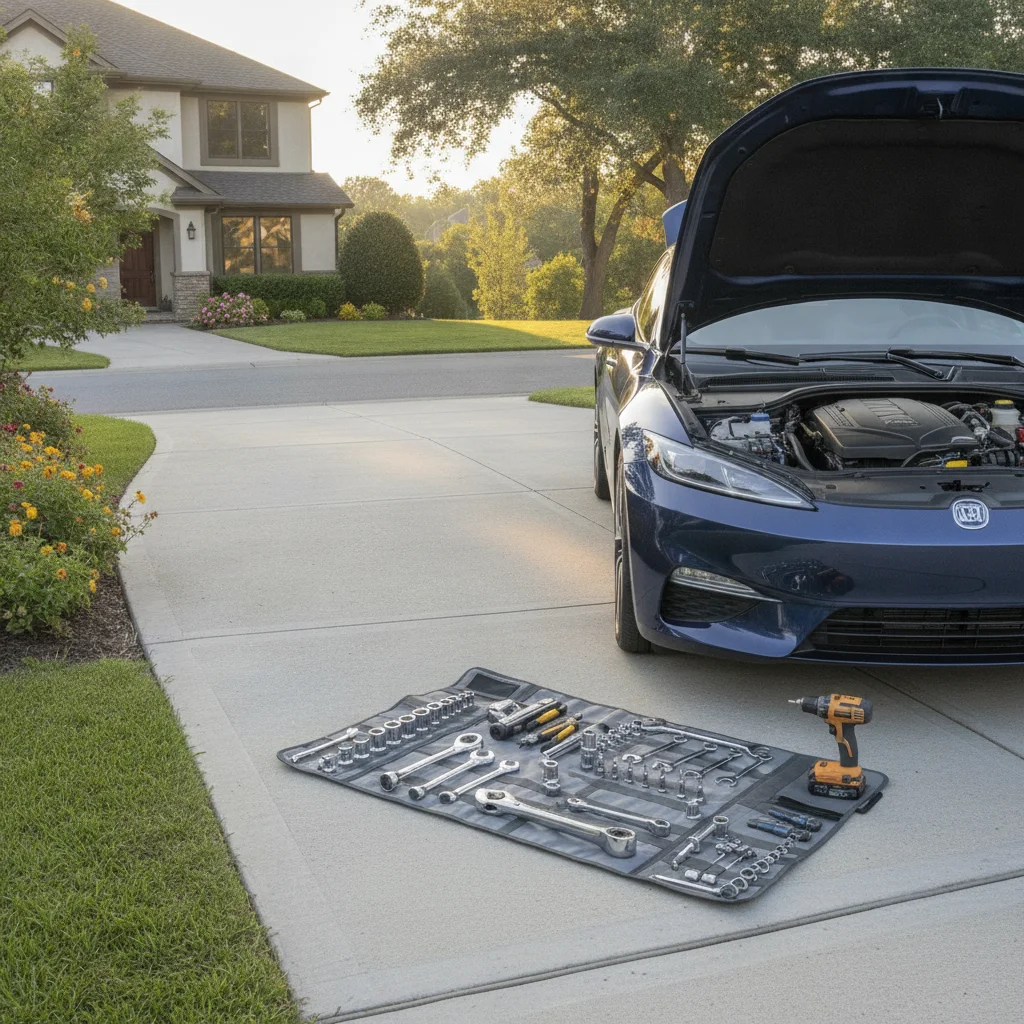
The engine air filter prevents debris from entering the intake. A clogged filter reduces fuel efficiency and can stress the engine. Cabin air filters keep the air conditioning and heating system clean and protect interior air quality. Both are inexpensive and straightforward to replace — one of the better DIY maintenance tasks for owners comfortable doing basic work themselves.
30,000-mile service: The first major checkpoint
The 30,000-mile service is often the first significant maintenance investment a new car owner faces. Depending on the manufacturer, this service may include:
- Oil and filter change
- Tire rotation and balance
- Brake system inspection
- Spark plug inspection (or replacement on some vehicles)
- Transmission fluid check
- Coolant system inspection
- Battery test
- Inspection of belts and hoses
Dealership Upsells at Service Time
Service visits — especially early ones — often come with a list of recommended add-ons: fuel system flushes, tire sealants, paint protection treatments, and more. Many of these are not manufacturer-required and may not be necessary for a new vehicle. Cross-reference any recommendation against your owner's manual before authorizing it. If it's not in the schedule, ask for a written explanation of why it's being suggested.
60,000-mile service: Mid-life mechanical attention
At 60,000 miles, many components that were new at purchase are approaching the end of their service lives. Spark plugs on non-extended-life vehicles typically need replacement. Brake pads may need changing depending on driving style. Transmission fluid replacement (if not done at 30k), serpentine belt inspection, and battery health assessment are common at this interval. This is when the cumulative cost of deferred maintenance becomes most apparent.
Beyond 60,000 miles
For a full picture of what lies ahead across the life of your vehicle, the complete ownership maintenance timeline from month 1 to year 10 maps every major service milestone through high-mileage ownership.
Reference: Common maintenance milestones at a glance
| Milestone | Typical Interval | Key Services |
|---|---|---|
| Early oil change | ~1,000 miles (if recommended) | Oil & filter flush of break-in particles |
| Routine oil service | 7,500–10,000 miles | Oil change, tire rotation, fluid check |
| Air filter service | 15,000–30,000 miles | Engine & cabin air filter replacement |
| First major service | 30,000 miles | Brakes, spark plugs, full inspection |
| Mid-life service | 60,000 miles | Plugs, belts, transmission fluid, battery |
Car Care Council Maintenance Guide
The Car Care Council offers free, vehicle-agnostic maintenance guides and service interval reminders that help new owners understand what to expect at each mileage milestone.
NHTSA Recall Database
The National Highway Traffic Safety Administration's recall lookup tool lets you check whether your new vehicle has any open safety recalls that require manufacturer-covered service.
ASE Mechanic Locator
The official ASE locator helps you find certified technicians and repair shops in your area, useful when searching for a trustworthy independent mechanic.
The Full-Ownership Maintenance Timeline: Month 1 to Year 10
A comprehensive roadmap of every scheduled service milestone across a vehicle's lifespan — the natural next read after understanding the basics covered here.
Dealer vs. Independent Shop: Where Should You Go?
One of the first decisions new car owners face is where to have their vehicle serviced. The dealership feels like the safe, obvious choice — but it's not always the best one. Understanding your options puts you in a stronger position.
What the law says
Many new car owners believe they must return to the dealership for all services to keep the warranty intact. This is a misconception. The federal Magnuson-Moss Warranty Act of 1975 explicitly prohibits manufacturers from requiring you to use dealer service as a condition of warranty coverage — unless they provide the services free of charge. An independent shop that uses proper parts and documents the work correctly is fully warranty-compliant.
Dealership service: strengths and trade-offs
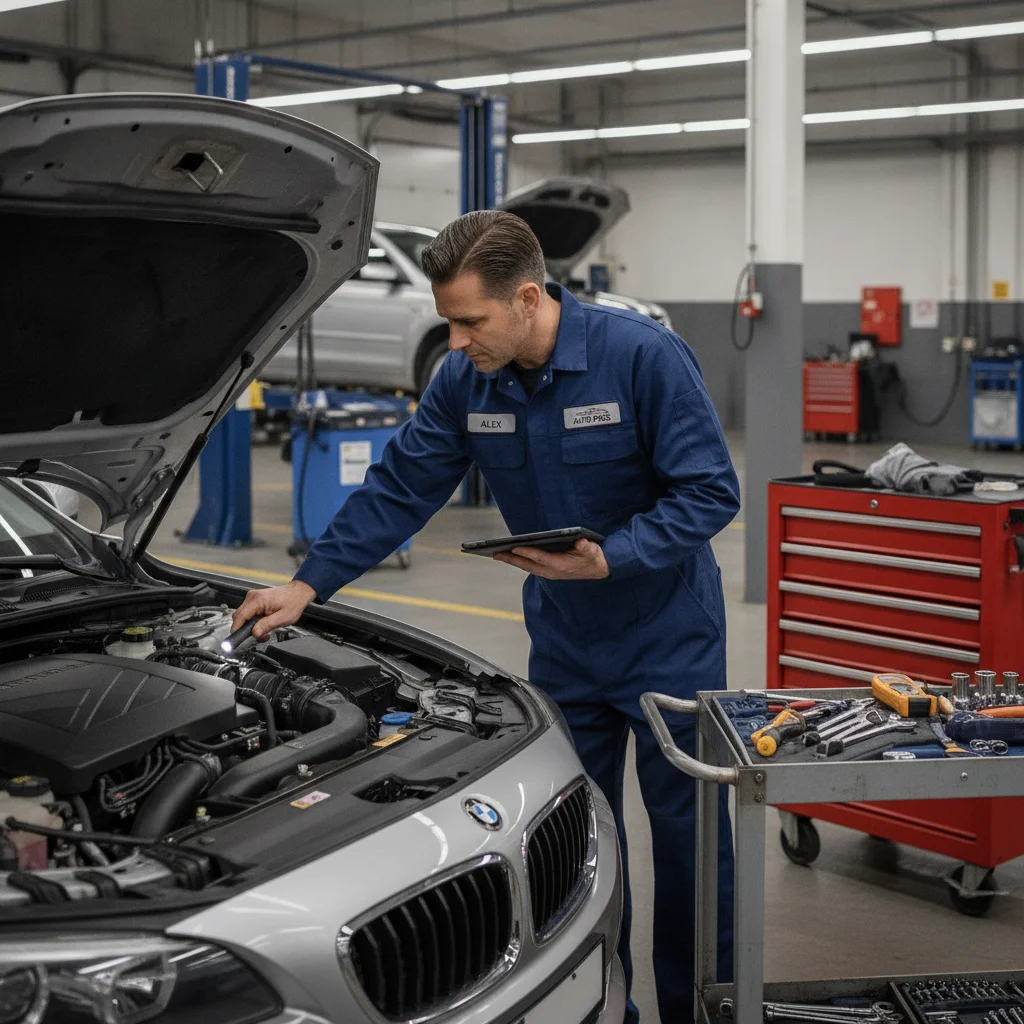
Dealerships employ factory-trained technicians with direct access to manufacturer technical service bulletins, proprietary diagnostic tools, and genuine OEM parts. For complex warranty repairs, software updates, or recalls, the dealership is often the right call. The trade-off is typically cost — labor rates at dealerships run higher than most independent shops, and service advisors are often incentivized to upsell.
Independent shops: strengths and trade-offs
Independent mechanics — especially those certified by ASE (the National Institute for Automotive Service Excellence) — frequently offer comparable quality at lower prices for routine services like oil changes, tire rotations, brake work, and filter replacements. The key is selecting a shop with strong reviews, transparent pricing, and a willingness to provide written estimates. The risk is variability: shop quality varies widely, and finding a trustworthy mechanic takes some vetting.
Do You Need That Early Oil Change?
Some manufacturers recommend a first oil change as early as 1,000 miles to flush metal particles from the break-in process. Others consider modern filtration systems sufficient to skip this step. Check your owner's manual for guidance — if it's not listed, ask your dealer's service department directly at your first visit.
Vet Your Independent Shop Before You Need It
The best time to find a trustworthy independent mechanic is before something goes wrong. Ask for referrals from friends or neighbors, look for ASE-certified technicians, and read recent reviews on Google and Yelp. Making one introductory visit for an oil change lets you evaluate their communication and transparency before stakes are higher.
What to look for in either case
- Written estimate before any work begins
- ASE-certified technicians (for independent shops)
- Use of parts that meet or exceed OEM specifications
- Itemized receipt with parts, labor, and mileage documented
- A willingness to show you what was found and explain why service is needed
For the most straightforward routine tasks, price-shopping between a dealership and a well-reviewed independent shop is completely reasonable and can save meaningful money over your ownership period.
How Maintenance Connects to Your Warranty and Insurance
Scheduled maintenance doesn't exist in isolation — it directly affects two of the most significant financial protections tied to your vehicle: your manufacturer's warranty and, in some scenarios, your auto insurance coverage.
Warranties and maintenance documentation
New vehicles typically come with a bumper-to-bumper warranty (commonly 3 years/36,000 miles) and a powertrain warranty (commonly 5 years/60,000 miles), though these vary by manufacturer. To successfully make a warranty claim on a covered component, manufacturers can and do investigate whether the vehicle was properly maintained. If a dealer can demonstrate that neglect contributed to a failure — contaminated oil causing engine damage, for example — your warranty claim can be denied.
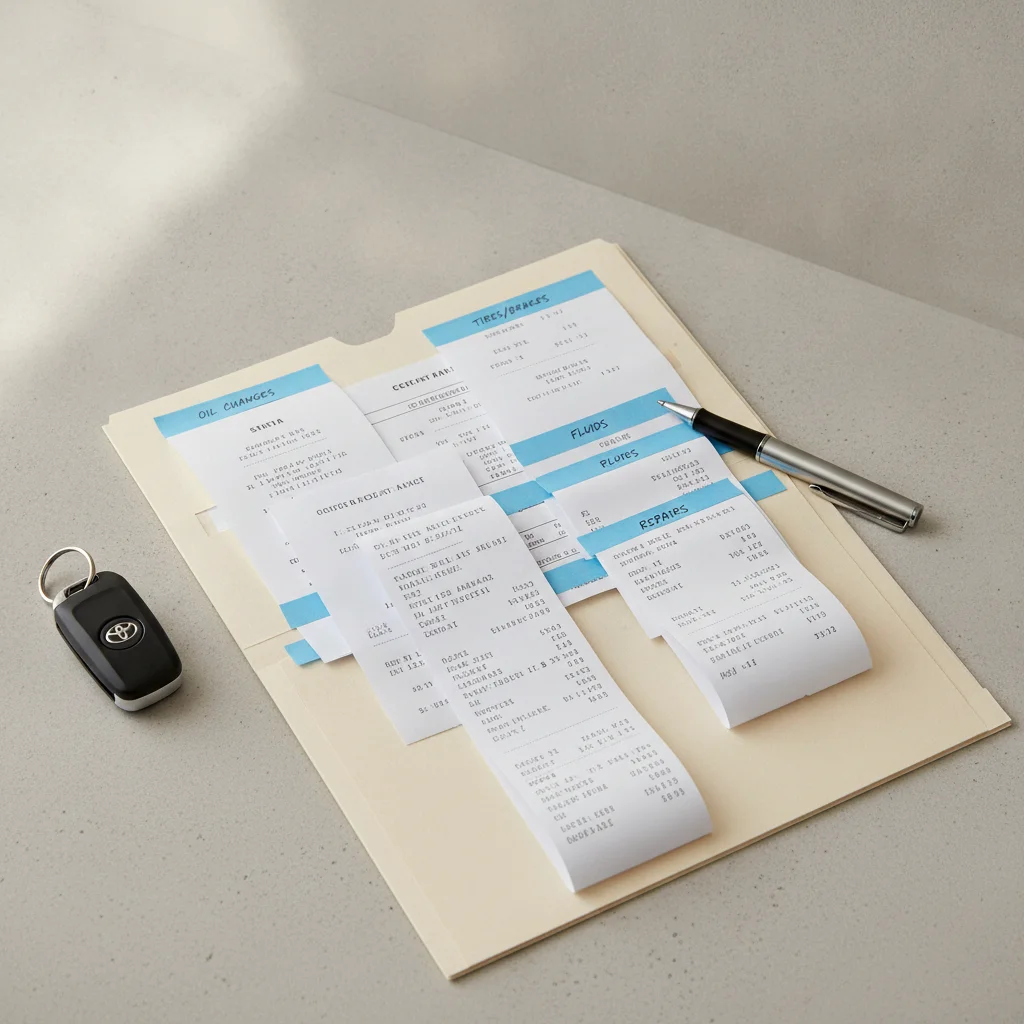
The practical implication: keep every service receipt. A complete, well-organized maintenance log is your evidence of good stewardship. Digital backup (photographing receipts and storing them in cloud storage) is a smart habit from day one.
Normal vs. Severe: Which Schedule Is Yours?
Drivers who commute in urban traffic, take frequent short trips, or live in regions with extreme seasonal temperatures often qualify for the severe service schedule without realizing it. Using the normal schedule when severe applies can leave your vehicle under-serviced. When in doubt, defaulting to the more frequent intervals is the conservative — and safer — choice.
Third-Party Warranties May Have Stricter Requirements
If your vehicle has an extended warranty from a third-party provider rather than the manufacturer, maintenance requirements may differ from what your owner's manual specifies. Review your extended warranty contract carefully — some require services at specific intervals or from specific types of shops, and failure to comply can complicate claims. Keep copies of all relevant documentation in a dedicated folder.
Insurance and mechanical failure
Standard auto insurance policies — including comprehensive and collision coverage — do not cover mechanical breakdown from normal wear or neglect. A failed transmission or seized engine is not a covered loss under a typical policy. Some insurers offer separate mechanical breakdown insurance (MBI), which functions similarly to an extended warranty and can be worth evaluating for high-mileage drivers. But MBI policies also typically require documented maintenance compliance, reinforcing why keeping records matters.
Where maintenance intersects most directly with insurance is in accident scenarios. Well-maintained tires with proper tread depth, functional brakes, and properly inflated tires all reduce stopping distances — and their condition may be examined as part of accident investigations when determining fault or liability.
Thinking ahead: resale and long-term value
A car with a clean maintenance history is a fundamentally different asset than an identical car without one. Certified Pre-Owned (CPO) programs require documented service history. Private buyers increasingly ask for it. Dealerships factor it into trade-in appraisals. Starting strong maintenance habits in month one of ownership pays dividends that compound across years. For a detailed roadmap of how that value accrues over time, see the full-ownership maintenance timeline.

All claims are backed by peer-reviewed research. Sources on request.