Key Takeaways
Our Verdict
Neither transmission type is inherently cheaper to maintain, but they fail in different ways and demand different oversight. Automatic transmissions require more disciplined fluid-change schedules and are more sensitive to fluid degradation, while manuals place the maintenance burden heavily on clutch wear and driver technique. Understanding which system your vehicle uses — and following the correct service protocol — is the most effective way to avoid a repair bill that can easily top $3,000.
| Best for | Recommended |
|---|---|
| Drivers who want simpler, more predictable service intervals | Automatic Transmission |
| Those comfortable with hands-on maintenance and driver-controlled wear variables | Manual Transmission |
| City commuters in heavy stop-and-go traffic | Automatic Transmission (with shortened fluid intervals) |
| Performance or mountain drivers who want direct control over gear engagement | Manual Transmission (with attention to clutch and fluid heat) |
Why Transmission Type Determines Your Service Strategy
Your transmission is the mechanical bridge between engine power and the wheels that move your car. But the way it bridges that gap — and the way it wears over time — depends almost entirely on whether it's automatic or manual. These aren't superficial differences. They translate into different fluids, different intervals, different failure modes, and different repair costs.
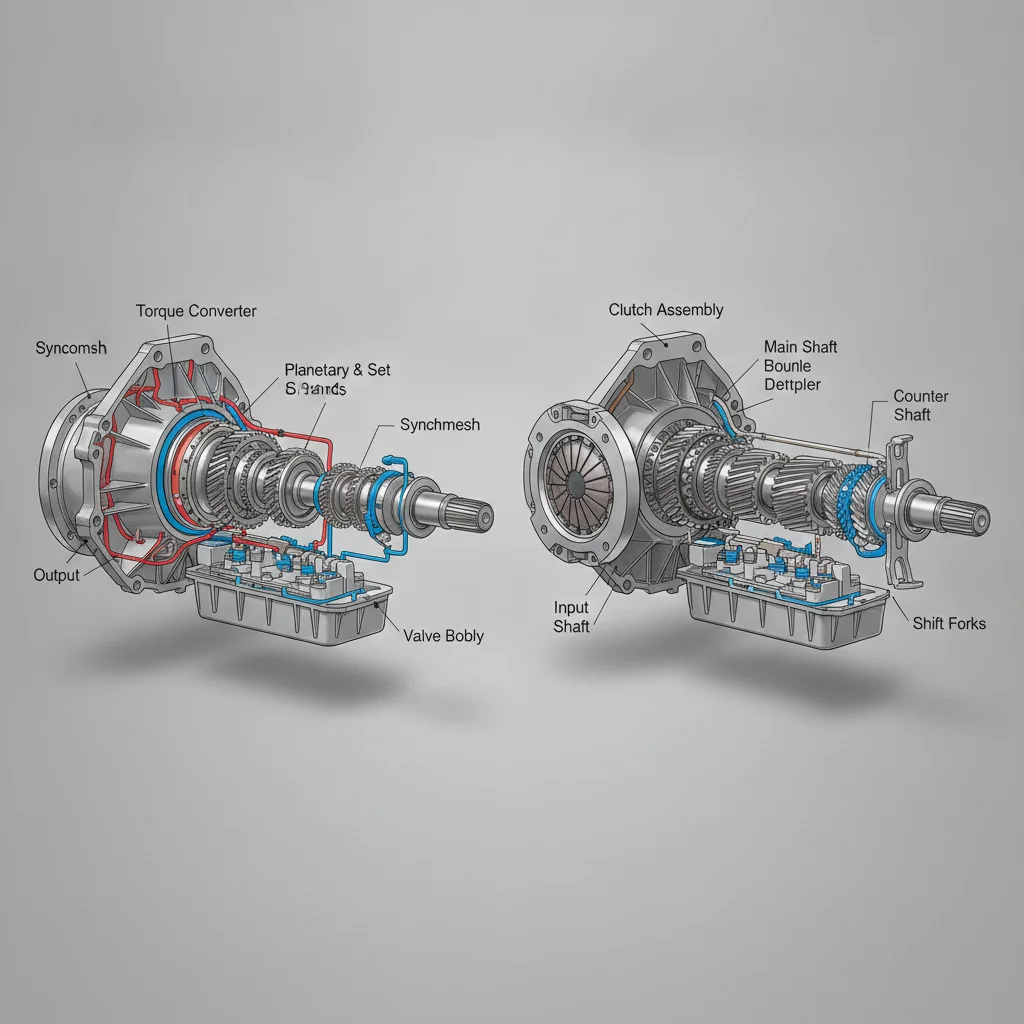
Automatic transmissions are hydraulically controlled systems built around a torque converter, a planetary gear set, and an intricate network of clutch packs and solenoids. Manual transmissions rely on a driver-operated clutch, a countershaft gear arrangement, and synchronizers. The mechanical differences between them are fundamental, which is why treating them with the same maintenance plan is a mistake many owners make.
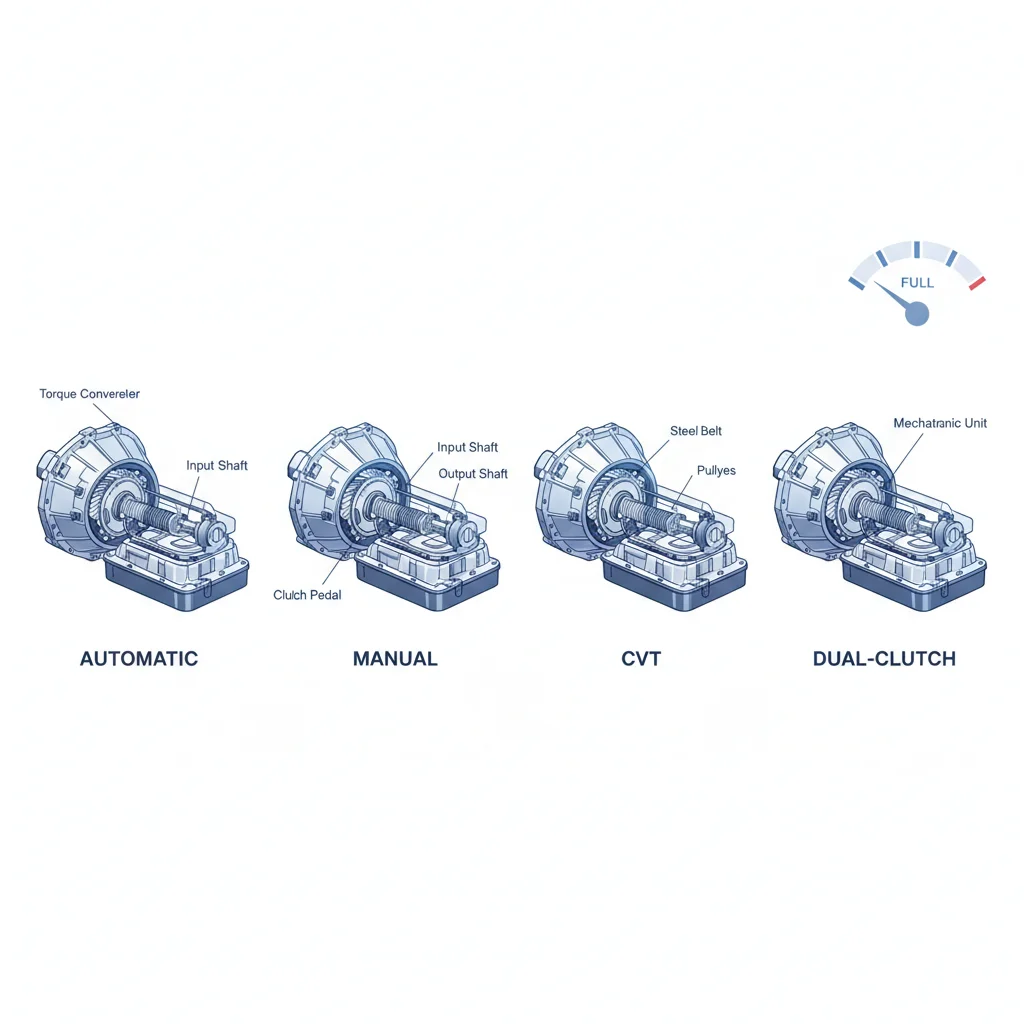
Making matters more complex, the "automatic" category now includes traditional torque-converter automatics, continuously variable transmissions (CVTs), and dual-clutch transmissions (DCTs) — each with its own fluid type and service schedule. Meanwhile, manuals vary in whether they share fluid with the engine, use gear oil, or specify a modern multi-vehicle fluid. For context on how these transmission types also affect your fuel costs, see how transmission type affects fuel economy.
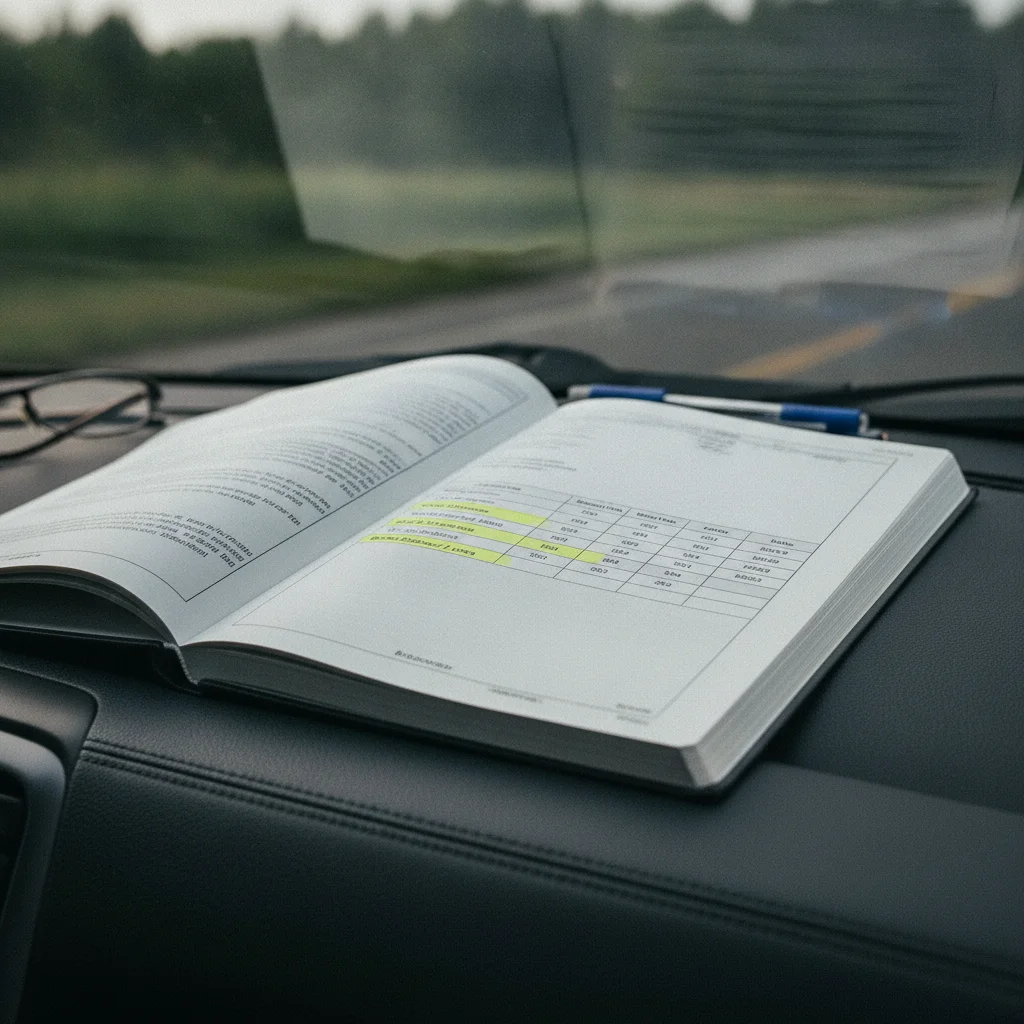
The starting point for any transmission service plan is your owner's manual — not a shop's upsell recommendation or a generic online interval chart. As covered in our guide to reading your owner's manual maintenance section, manufacturers publish specific fluid specifications and mileage intervals that are the authoritative baseline for your exact vehicle.
Automatic Transmission Service: Intervals, Fluids, and the CVT Factor
The most common service task for any automatic transmission is a fluid change. Automatic transmission fluid (ATF) performs multiple jobs simultaneously: it lubricates moving parts, transfers hydraulic pressure to engage gears, cools internal components, and carries away contaminants. When it degrades, the entire system suffers.
Traditional Torque-Converter Automatics
For conventional automatics, most manufacturers recommend a fluid drain and refill every 30,000 to 60,000 miles under normal driving conditions. However, many modern vehicles list intervals as high as 100,000 miles for what manufacturers call "lifetime" fluid — a designation that transmission specialists routinely dispute. In practice, fluid that has seen 100,000 miles of heat cycling in a torque-converter automatic is oxidized, contaminated with clutch pack debris, and no longer meeting its viscosity specification.
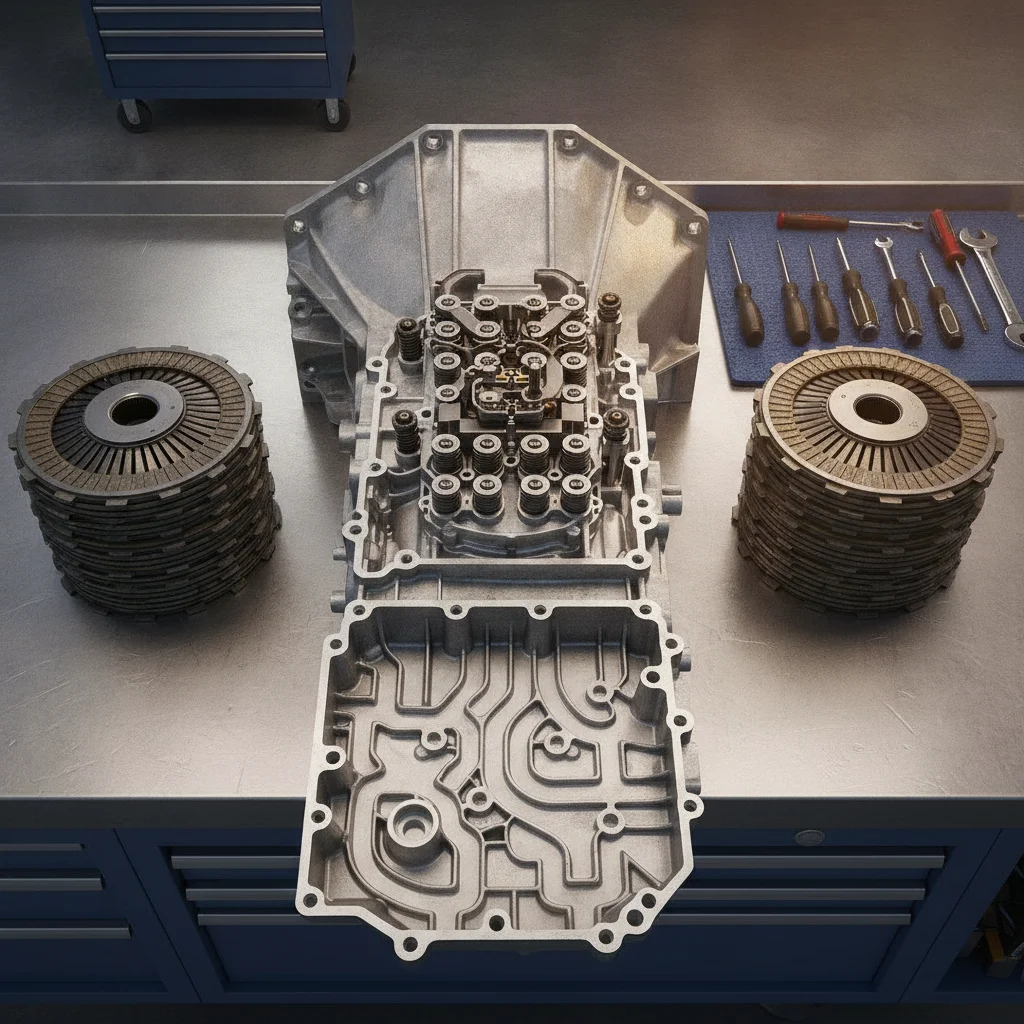
A full fluid change on a torque-converter automatic ideally includes a pan drop to inspect for metal debris, a new filter (where one exists), a pan gasket replacement, and fresh ATF to the manufacturer's specification. A simple drain-and-fill replaces only the fluid in the pan — typically 30 to 50 percent of total system capacity — leaving degraded fluid in the torque converter and valve body.
| Automatic (Torque Converter) | CVT | Dual-Clutch (DCT) | Manual | |
|---|---|---|---|---|
| Fluid change interval (normal use) | 30,000–60,000 miles | 25,000–40,000 miles | 40,000 miles (wet clutch) | 30,000–60,000 miles |
| Fluid type | OEM-spec ATF | CVT-specific fluid | DCT-specific fluid or ATF | GL-4/GL-5 gear oil or ATF |
| Filter service required | Yes (where applicable) | Rarely | Rarely | No |
| Unique wear component | Internal clutch packs | Drive belt and pulleys | Dual clutch packs | Clutch disc and pressure plate |
| Typical fluid change cost | $150–$350 | $150–$300 | $150–$300 | $100–$200 |
| Severity of neglect consequences | High — clutch pack damage | Very high — belt failure | High — clutch pack damage | Moderate — gear wear, clutch burn |
| Driver behavior impact on wear | Low–moderate | Moderate (heat sensitive) | Moderate | High (clutch technique) |
CVTs: The Overlooked Service Case
Continuously variable transmissions use a belt-and-pulley system instead of fixed gear ratios, and they require a completely different fluid — one that must maintain specific friction characteristics to prevent belt slippage. CVT fluid degrades faster than conventional ATF under stress, and many manufacturers recommend changes every 25,000 to 40,000 miles for vehicles used in severe conditions.
The consequences of neglected CVT fluid are severe: belt slippage, shuddering during acceleration, and ultimately belt failure — a repair that typically runs $3,500 to $8,000 depending on the vehicle. CVTs are particularly sensitive to towing, mountain driving, and sustained high-speed use.
Dual-Clutch Transmissions
DCTs combine elements of both automatics and manuals: they use two clutch packs (one for odd gears, one for even) operated automatically but without a torque converter. Wet-clutch DCTs require their own specific fluid changed roughly every 40,000 miles. Dry-clutch DCTs — found on some Ford, VW, and Fiat models — have no fluid to service but their clutch packs wear like manual clutches and require inspection.
$3,500–$8,000
Average CVT replacement cost
Industry estimates from transmission specialists place CVT assembly replacement in this range for most front-wheel-drive passenger vehicles when fluid neglect leads to belt failure.
80,000–100,000 mi
Typical clutch lifespan (normal use)
According to transmission technicians, a manual clutch driven with good technique in commuter use typically reaches this range before requiring replacement.
30–50%
Fluid replaced by drain-and-fill
A simple drain-and-fill on a torque-converter automatic replaces only the fluid in the pan, leaving degraded fluid in the converter and valve body — a key limitation versus a full service.
$500–$2,000+
Manual clutch replacement cost range
Labor intensity drives the wide range; compact front-wheel-drive vehicles sit at the lower end while trucks and performance cars with difficult access can exceed $2,000.
Manual Transmission Service: Gear Oil, Clutch Wear, and Driver Variables
Manual transmissions have fewer hydraulic components than automatics, which generally means fewer catastrophic failure modes — but that doesn't mean they're maintenance-free. The two primary service concerns are gear oil condition and clutch system wear.
Gear Oil Service Intervals
Most manual transmissions use a dedicated gear oil — commonly a GL-4 or GL-5 rated lubricant with a viscosity grade like 75W-90 — though some Honda manuals specify regular motor oil, and some modern manuals call for ATF. This is another reason to verify your owner's manual rather than assume.
Typical manufacturer intervals for manual transmission fluid changes range from 30,000 to 60,000 miles, comparable to automatics. However, because manuals don't have the heat-generating torque converter and clutch packs of an automatic, their fluid degrades somewhat more slowly under equivalent normal-use conditions. Severe-duty use — frequent towing, mountain driving, track days — compresses those intervals meaningfully.
The service procedure is straightforward: drain the old fluid, inspect for metallic particles (fine grey powder is normal; large shiny flakes are not), and refill to the correct specification and level. Most manual transmission drain-and-fills cost $100 to $200 at an independent shop.
Clutch System: The Manual's Unique Maintenance Variable
The clutch is the maintenance element that has no automatic equivalent. A manual clutch system consists of the clutch disc, pressure plate, flywheel, release bearing, and the hydraulic or cable linkage that operates it. The clutch disc is a wear item — it degrades with every engagement — and its lifespan varies enormously based on driver technique and use conditions.
A clutch in typical commuter use might last 80,000 to 100,000 miles. A clutch driven aggressively in traffic, used for performance launches, or operated on mountain roads might wear out in 40,000 miles or fewer. There's no fixed service interval for clutch replacement because it's wear-dependent, not time-dependent. Most drivers notice the warning signs: a higher engagement point, slippage under load, shuddering at takeoff, or difficulty selecting gears.
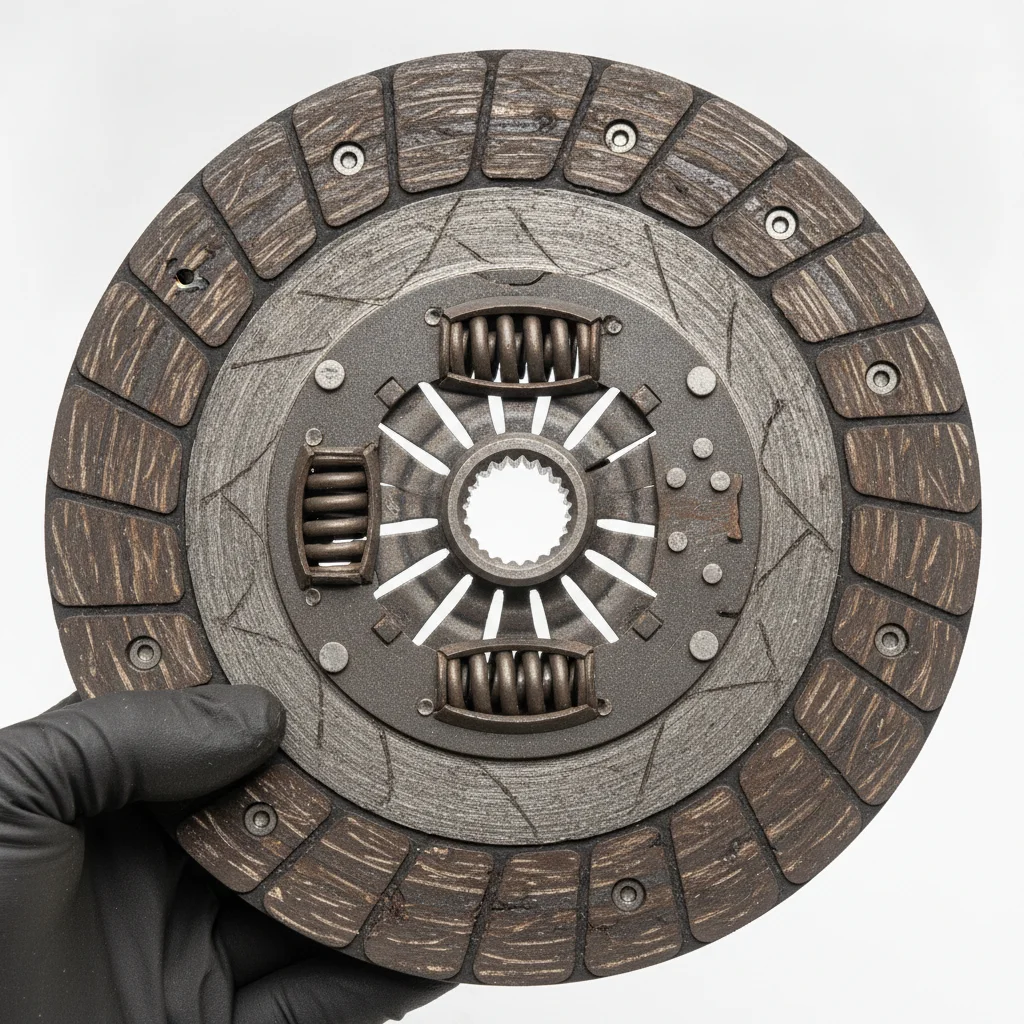
Clutch replacement typically costs between $500 and $1,500 at an independent shop, depending on vehicle access complexity. Some sports cars and trucks with difficult transmission access can run $2,000 or more. Because labor dominates the cost, shops often recommend replacing the pressure plate, release bearing, and flywheel resurfacing at the same time — turning a clutch job into a complete clutch kit installation.
Use the Clutch Pedal as a Diagnostic Tool
Pay attention to where your clutch engages in the pedal travel — ideally in the middle third of its range. If you notice the engagement point creeping toward the top of the stroke over several weeks, have the hydraulics and disc wear evaluated before it becomes a failure. Early intervention on clutch hydraulics is often a $50 fluid flush; ignoring it can lead to a full clutch replacement.
Document Every Transmission Service
Keep receipts or a digital record of every fluid change, filter replacement, and clutch service with the mileage noted. This history not only helps you stay on schedule but adds demonstrable value when selling the vehicle. A documented transmission service history is one of the most reassuring items a used car buyer can see — and one of the rarest.
Hydraulic clutch systems add a fluid reservoir (often shared with the brake master cylinder) that should be inspected at every brake service. Contaminated or low hydraulic clutch fluid causes soft pedal feel and imprecise engagement — often misread as clutch wear when the real fix is a fluid flush.
Severe vs. Normal Driving Conditions: How Your Habits Reshape the Schedule
Every manufacturer publishes two sets of maintenance intervals: one for "normal" driving and one for "severe" or "heavy-duty" conditions. Most American drivers actually fall into the severe category more often than they realize — and their transmission service schedules should reflect that.
Conditions that qualify as severe driving include:
- Frequent short trips under five miles (especially in cold weather)
- Sustained stop-and-go urban commuting
- Towing or hauling near the vehicle's rated capacity
- Extended idling (taxi, rideshare, delivery use)
- Driving in extreme heat or high altitude
- Off-road or unpaved road use
For automatic transmissions, severe conditions elevate fluid temperature consistently, accelerating oxidation and depleting the fluid's friction modifier additives — the compounds that enable smooth, controlled clutch pack engagement inside the transmission. A fluid that might last 60,000 miles under normal use could be degraded at 30,000 miles under a daily rideshare schedule in Phoenix in August.
Manual transmissions are more resilient to thermal stress in the gear oil itself, but the clutch is far more sensitive to driving style. Riding the clutch pedal in traffic, using the clutch to hold position on a hill, or slipping it through low-speed maneuvers all generate friction heat that burns the disc material faster than any other factor. Our article on how driving habits affect how often your car needs service covers this dynamic in detail across all vehicle systems.
Never Mix Transmission Fluid Types
Using the wrong ATF specification — or mixing a new fluid with an incompatible old one — can cause immediate damage to clutch packs, seals, and solenoids. Modern transmissions are increasingly specific: some require a proprietary OEM fluid unavailable at general auto parts stores. Always cross-reference the fluid specification printed on the transmission dipstick or listed in the owner's manual before purchasing any fluid. When in doubt, use the OEM dealer fluid.
Beware 'Lifetime' Fluid Claims on High-Mileage Vehicles
Some manufacturers label factory-fill fluid as 'lifetime,' implying no change is needed. Transmission specialists broadly disagree with this designation for vehicles driven beyond 100,000 miles in real-world conditions. However, performing a fluid change on a high-mileage, neglected automatic can occasionally destabilize a transmission that has adapted to degraded fluid. Consult a certified transmission technician — not a quick-lube service advisor — before proceeding on vehicles with unknown service histories above 80,000 miles.
Warning Signs That Service Is Overdue
Transmission problems rarely appear without warning. The difficulty is that the warning signs for automatic and manual transmissions are different enough that knowing which to watch for matters as much as watching for them at all. A comprehensive breakdown of early indicators appears in our feature on transmission warning signs every driver should recognize.
Automatic Transmission Red Flags
- Delayed or harsh engagement: A pause when shifting from Park to Drive, or a noticeable thud when the transmission locks into gear, often indicates degraded fluid or a solenoid issue.
- Slipping gears: The engine revs rise without a corresponding increase in vehicle speed — a classic sign of clutch pack wear or low fluid pressure.
- Shuddering at highway speed: Particularly in CVTs, shuddering during acceleration or at cruising speed indicates fluid breakdown or belt wear.
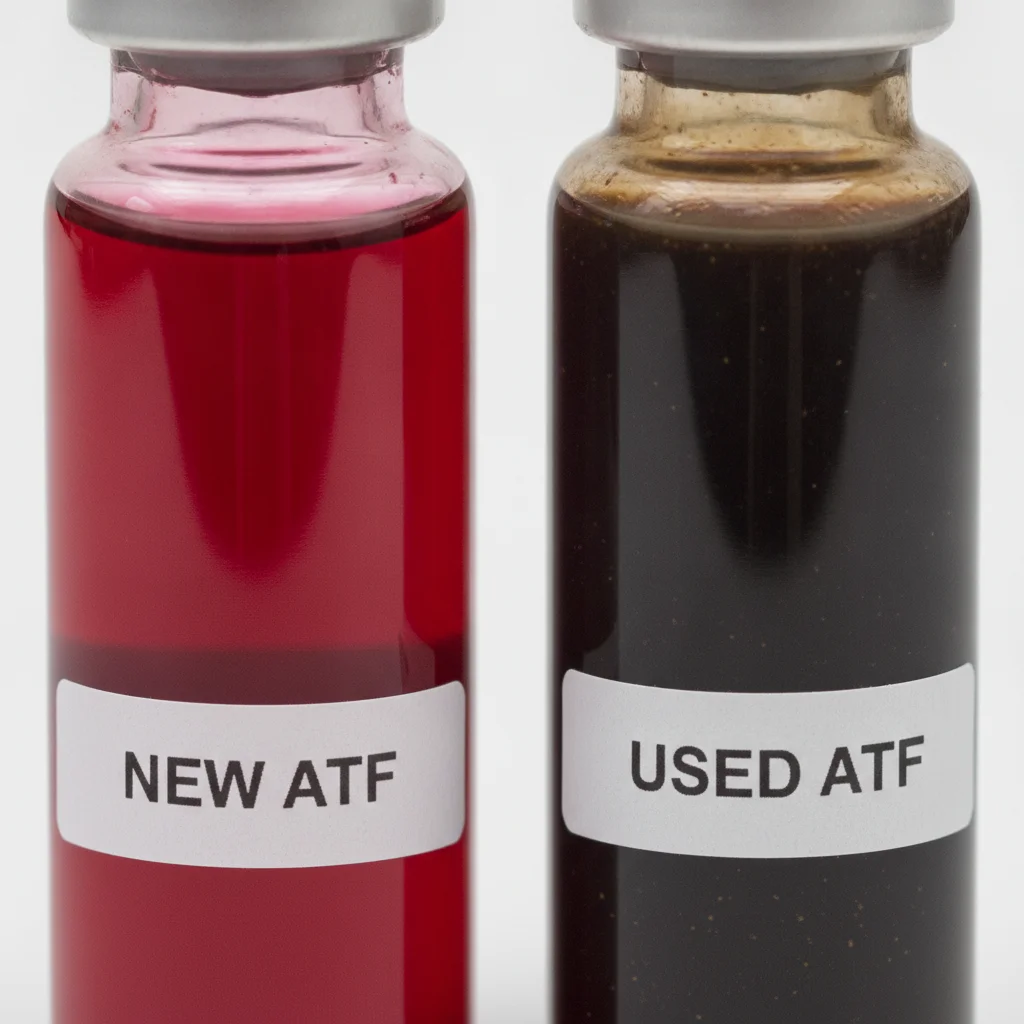
- Burnt-smelling fluid: Transmission fluid should be bright red or light pink and nearly odorless when new. Dark brown, black, or burnt-smelling fluid on the dipstick (where accessible) means the fluid is long overdue.
- Check engine or transmission warning light: Modern transmissions have dozens of sensors. A stored code doesn't always mean catastrophic failure, but it warrants immediate diagnosis.
Manual Transmission Red Flags
- High clutch engagement point: If the clutch begins to engage near the top of the pedal travel rather than in the middle, the disc is worn or the hydraulics need adjustment.
- Difficulty shifting into gear: Grinding when engaging first or reverse, or resistance moving between gears, can signal synchronizer wear or incorrect fluid viscosity.
- Gear popping out under load: If the transmission jumps out of a gear — particularly third or fifth on older vehicles — the synchronizer hub or shift fork is likely worn.
- Whining or grinding noise in neutral: A consistent whine with the clutch engaged and the transmission in neutral that disappears when the clutch is depressed points to input shaft bearing wear.
- Clutch shudder at engagement: Vibration as the clutch releases can indicate a glazed or oil-contaminated clutch disc — or a flywheel that needs resurfacing.
What Transmission Service Actually Costs — and What to Watch Out For
Transmission service pricing varies significantly by vehicle, region, and shop type. Understanding the typical cost ranges — and the upsells to question — helps owners make informed decisions without being pressured into unnecessary work.
Typical Service Cost Ranges
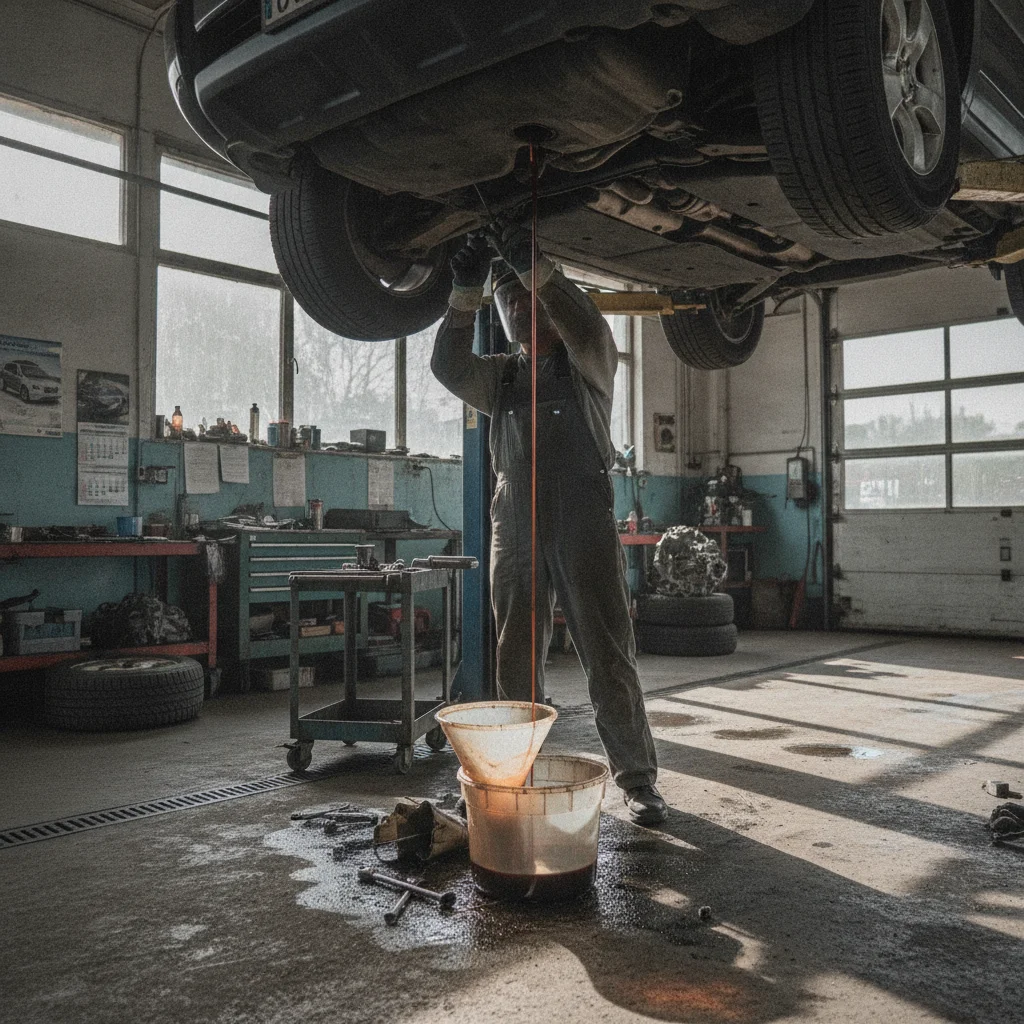
- Conventional automatic fluid change (drain and fill)
- $80–$200 at an independent shop; $150–$300 at a dealership
- Automatic transmission service with pan drop, filter, and gasket
- $150–$350 at an independent shop; $250–$500 at a dealership
- CVT fluid change
- $150–$300, depending on fluid cost (CVT fluid is typically more expensive than ATF)
- Manual transmission fluid change
- $100–$200 at most shops
- Clutch replacement (full kit)
- $500–$2,000+ depending on vehicle; sports cars and trucks often at the higher end
Services to Scrutinize
The transmission flush is one of the most debated services in the industry. Using a machine to force new fluid through the system while the old fluid is expelled sounds thorough, but on high-mileage transmissions with degraded seals, the pressure can dislodge debris and accelerate seal failure. Many independent transmission specialists recommend drain-and-fill procedures done more frequently rather than a single machine flush. Always ask what method a shop uses and why.
Be cautious of any shop that recommends a transmission fluid change on a vehicle with no documented prior service history and over 100,000 miles. In some cases — particularly with neglected automatics — a fluid change can actually trigger failure by removing the friction-generating properties of heavily degraded fluid that the transmission has essentially adapted to. It's a counterintuitive situation, but a real one. A pre-service inspection and honest conversation with a certified transmission technician is worth the time.
For context on what legitimate scheduled maintenance looks like versus dealer upsells, see our breakdown of the real difference between a tune-up and scheduled maintenance.
Transmission Maintenance When Buying a Used Vehicle
Transmission service history — or the absence of it — is one of the most important questions to ask when purchasing any used vehicle. A car with 80,000 miles and no documented transmission service is a meaningful financial risk, particularly for CVTs and dual-clutch transmissions that are sensitive to fluid degradation.
During a pre-purchase inspection, request that the technician check the transmission fluid condition (color, smell, and — where accessible — debris on the dipstick or fill plug magnet), listen for abnormal noise during a test drive through all gear ranges, and look for signs of leakage around the pan gasket and output shaft seals. Our guide to test drives and inspections outlines the full pre-purchase inspection process.
If service records are unavailable, budget conservatively for a fluid service shortly after purchase — with the caveats about high-mileage, neglected transmissions noted above. For a manual transmission vehicle, also have the clutch engagement point evaluated; a high or inconsistent engagement point tells you how much life the disc has left.
It's worth noting that electric vehicles sidestep this entire category of maintenance: most EVs use a single-speed reduction drive with a sealed gear unit that rarely requires attention. If you're comparing long-term ownership costs across powertrains, the EV maintenance basics hub provides a detailed look at what EVs do and don't require.
Use the Clutch Pedal as a Diagnostic Tool
Pay attention to where your clutch engages in the pedal travel — ideally in the middle third of its range. If you notice the engagement point creeping toward the top of the stroke over several weeks, have the hydraulics and disc wear evaluated before it becomes a failure. Early intervention on clutch hydraulics is often a $50 fluid flush; ignoring it can lead to a full clutch replacement.
Document Every Transmission Service
Keep receipts or a digital record of every fluid change, filter replacement, and clutch service with the mileage noted. This history not only helps you stay on schedule but adds demonstrable value when selling the vehicle. A documented transmission service history is one of the most reassuring items a used car buyer can see — and one of the rarest.

All claims are backed by peer-reviewed research. Sources on request.