Key Takeaways
Option A
Timing Belt
The scheduled-replacement component that requires proactive attention.
Best for: Drivers who want to budget for predictable, interval-based service and prefer quieter engine operation.
Option B
Timing Chain
The durable, metal alternative designed to last the engine's lifetime.
Best for: Drivers who want to minimize scheduled replacement services and prefer a lower long-term maintenance burden.
If you're buying a used car and want to minimize surprise repair bills
Timing Chain
A timing chain engine removes one major scheduled service from the equation, reducing the risk of inheriting a vehicle with an overdue belt replacement.
If you prefer to plan and budget maintenance costs in advance
Timing Belt
Timing belts follow predictable replacement intervals, making it easier to budget for the service and address related components like the water pump at the same time.
If you keep a vehicle well past 150,000 miles
Timing Chain
Over a long ownership period, avoiding multiple timing belt replacements saves both money and scheduling hassle, provided oil changes are kept current.
If you drive a higher-mileage vehicle and are unsure of its service history
Timing Belt (inspect immediately)
If your engine uses a belt and service records are unclear, prompt inspection is essential — an overdue belt is a ticking clock regardless of which type is 'better' in theory.
What Each Component Actually Does
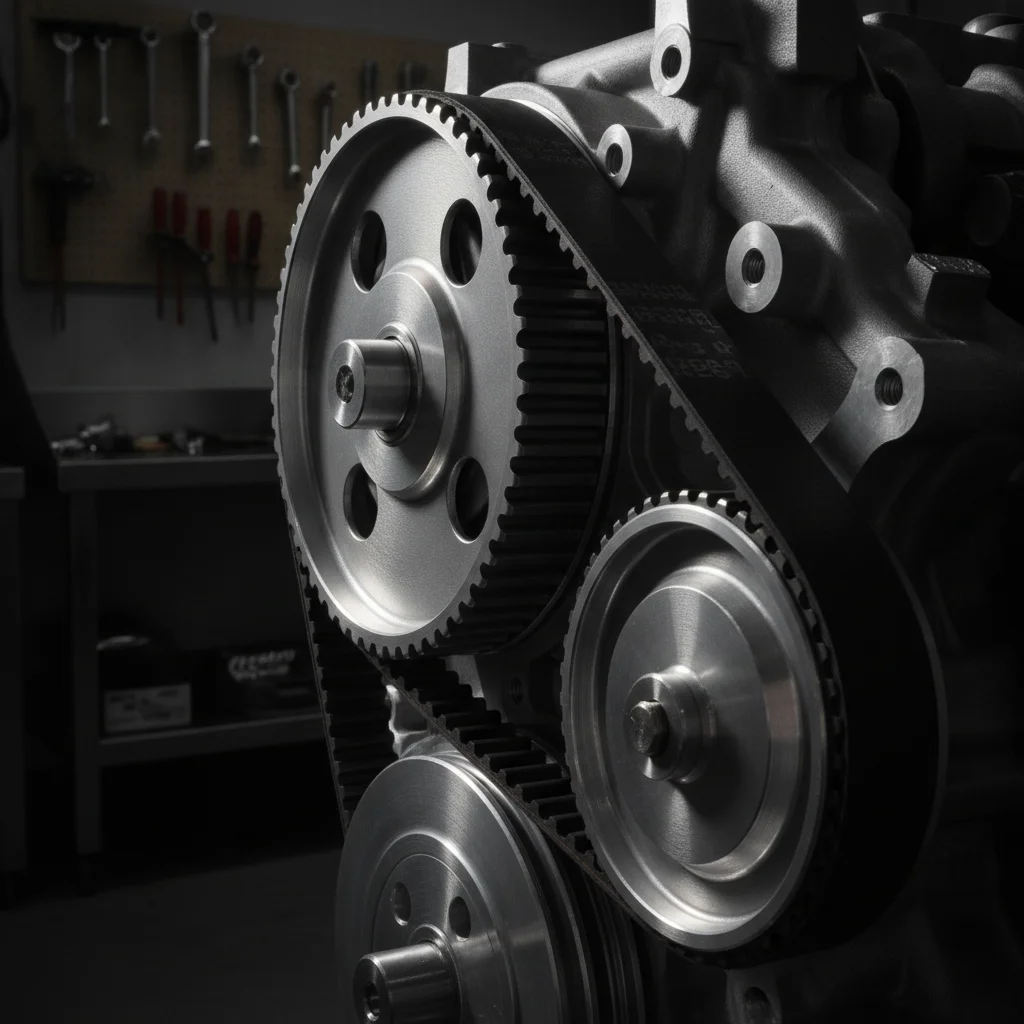
Both the timing belt and the timing chain perform the same fundamental job: they synchronize the rotation of the crankshaft and the camshaft (or camshafts) so that your engine's intake and exhaust valves open and close at precisely the right moment during each combustion cycle. Get that synchronization wrong — even by a fraction — and the engine runs poorly or not at all. Lose it entirely, and the consequences can be catastrophic.
Despite their shared purpose, the two components differ significantly in material, service life, noise profile, and what happens when they fail. The timing belt is made of reinforced rubber with nylon or fiberglass cords running through it to maintain its shape under tension. It is lighter than a chain, operates more quietly, and costs less to manufacture — which is part of why it became the dominant design choice for passenger cars from the 1970s through much of the 2000s.
The timing chain, by contrast, is a metal link chain — similar in construction to a bicycle chain but engineered to much tighter tolerances. It runs on metal sprockets and is bathed in engine oil throughout its life. Because it is made of steel rather than rubber, it does not degrade from heat and ozone exposure the same way a belt does. Modern automakers have largely shifted back toward chains in new engine designs, with manufacturers including BMW, Ford, Honda, Toyota, and GM using chain-driven timing systems across most of their current lineups.
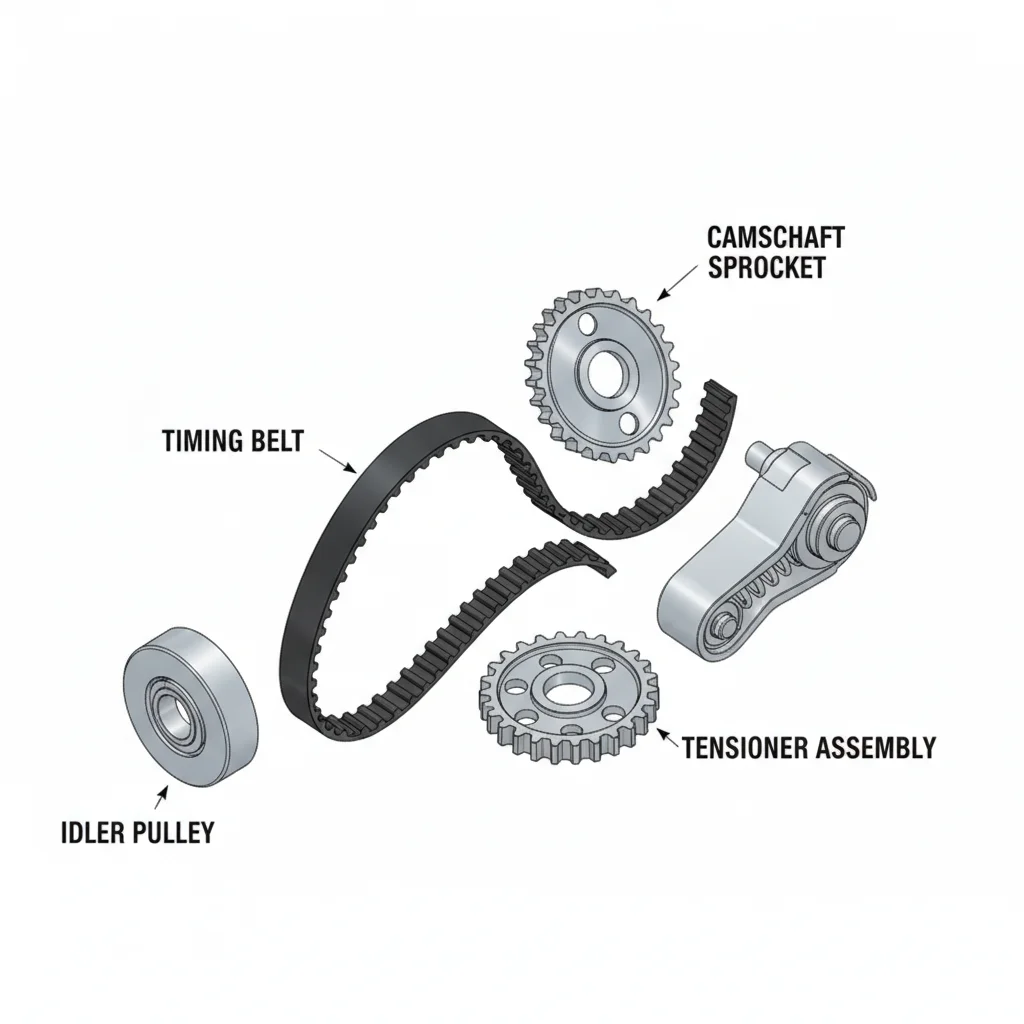
One key distinction worth understanding early: the timing system is an internal component. You typically cannot see it without removing engine covers. That invisibility is part of what makes service scheduling so important — there is no visual warning that a belt is nearing the end of its useful life until it fails.
Service Intervals: The Core Difference for Owners
This is where the practical ownership implications diverge most sharply. Timing belts are consumable components with manufacturer-specified replacement intervals. Those intervals are not suggestions — they are engineering limits based on the material's expected lifespan under normal operating conditions.
Most manufacturers specify timing belt replacement somewhere between 60,000 and 105,000 miles, though some older designs called for replacement as early as 40,000 to 50,000 miles. Time matters too: even on a low-mileage vehicle, rubber degrades from heat cycling and ozone exposure. Many manufacturers include a time-based limit of five to seven years alongside the mileage figure, whichever comes first. A car driven only 8,000 miles per year that is eight years old may have a belt that is due on calendar age alone.
| Criterion | Timing Belt | Timing Chain |
|---|---|---|
| Material | Reinforced rubber | Metal links (steel) |
| Replacement interval | 60,000–105,000 miles | Lifetime (no scheduled interval) |
| Typical replacement cost | $500–$1,200 (with water pump) | $1,000–$2,500 if needed |
| Failure warning signs | Usually none — fails suddenly | Rattling, timing codes, startup noise |
| Catastrophic failure risk | High (interference engines) | Lower — typically degrades gradually |
| Oil dependency | None — runs dry | High — requires clean, pressurized oil |
| Noise level | Quiet operation | Slight mechanical noise (normal) |
| Common in new vehicles | Declining — being phased out | Dominant in modern engine designs |
Timing chains, by contrast, carry no manufacturer-specified replacement interval in most cases. They are engineered to outlast the engine when properly maintained. However, "properly maintained" carries real weight here: chains depend on clean, properly pressurized engine oil for lubrication. A chain that has been starved of oil — whether from neglected oil changes, a slow leak, or low oil level — will stretch prematurely. Chain stretch leads to timing deviation, which triggers a check engine light and rattling on startup before it becomes a failure. See our oil change interval guide for specific recommendations on keeping oil fresh, since it directly affects chain longevity.
$4,000+
Average engine repair cost after belt failure
Interference engine repairs following timing belt failure routinely exceed $4,000 in labor and parts, according to repair cost data compiled by RepairPal and AAA.
60–105K
Typical timing belt replacement interval in miles
Manufacturer specifications vary widely — always verify the exact interval for your vehicle in the owner's manual or manufacturer database.
$700–$1,200
Full timing belt kit service cost (with water pump)
Bundling the water pump, tensioner, and idler pulleys during the belt job avoids paying the same labor cost a second time if adjacent parts fail.
~5–7 yrs
Time-based belt replacement limit
Many manufacturers specify a calendar-based limit alongside mileage — rubber degrades from heat and ozone exposure even on low-mileage vehicles.
It is also worth noting that some engines are hybrids of both systems — using a chain to drive one shaft and a belt to drive another, or a chain on the primary timing and a separate belt for an overhead cam. Your owner's manual is the only reliable source for your specific engine configuration. For help navigating that document, reading your owner's manual maintenance section is a practical starting point.
What Happens When Each One Fails
The failure profile of a timing belt versus a timing chain is as different as their service schedules — and understanding the consequences is what gives the service interval its urgency.
Timing Belt Failure
When a timing belt snaps, it does so suddenly and without warning in most cases. The result depends entirely on your engine type. In a non-interference engine (also called a free-wheeling engine), the pistons and valves occupy separate space in the combustion chamber. If the belt breaks, the engine stalls and won't restart, but the components don't collide. The repair is expensive but limited to belt replacement.
In an interference engine — which describes the majority of modern passenger car engines — the pistons and valves share the same space and are prevented from colliding only by precise timing. When the belt snaps at operating speed, pistons can strike open valves within milliseconds. The result is bent valves, damaged pistons, and potentially a destroyed cylinder head. Engine repair or replacement in this scenario routinely runs $3,000 to $5,000 or more, far exceeding the cost of the belt service that was skipped.
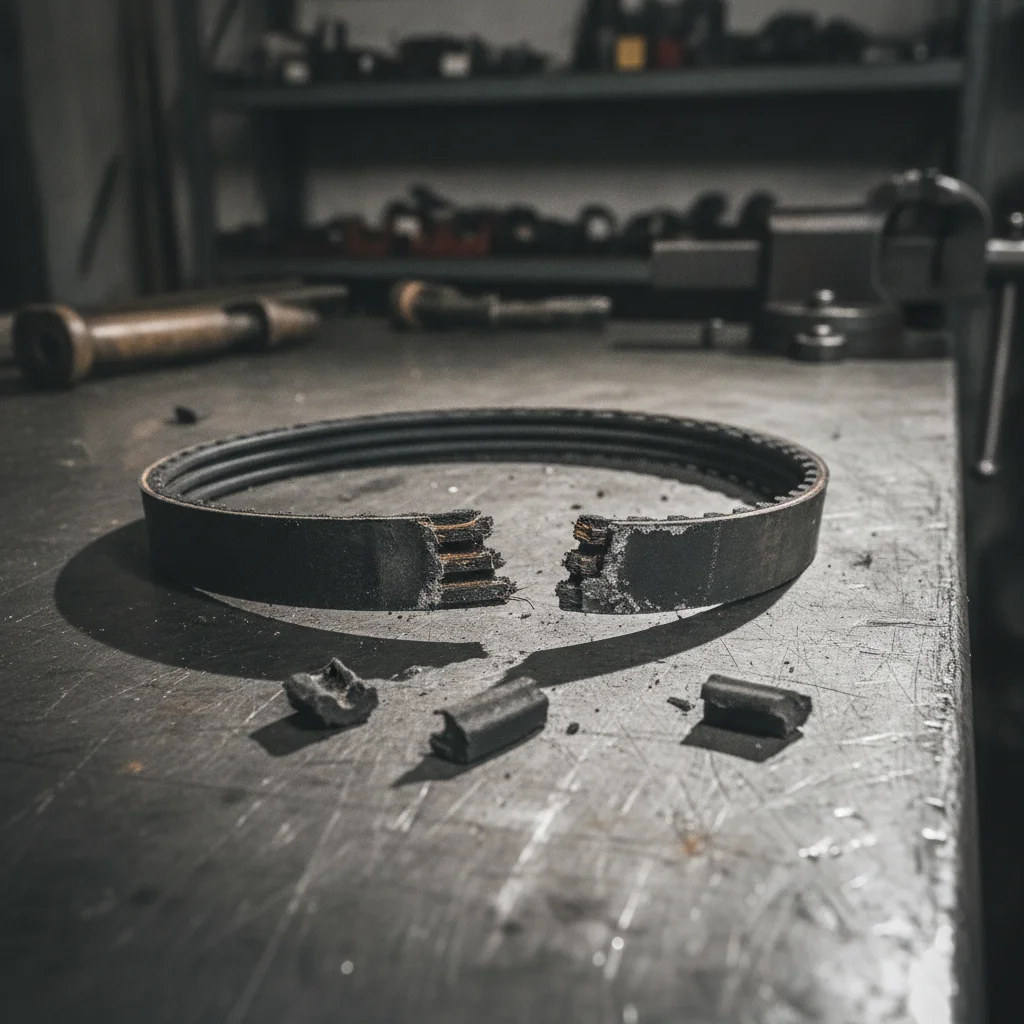
Whether your engine is an interference design is information your owner's manual or a quick VIN-based lookup can confirm. It is not a theoretical concern — a large proportion of four-cylinder engines sold in the U.S. over the past three decades are interference designs.
Timing Chain Failure
Chains rarely snap without warning. The more common failure mode is gradual stretch and slack, which creates a rattling sound — typically most pronounced at cold startup when oil pressure is lowest. A stretched chain can also cause the check engine light to illuminate with codes related to camshaft position timing error. These are early-warning signals that the chain or its tensioner needs attention before failure occurs.
When a chain does fail catastrophically, the engine damage is comparable to a belt failure in an interference engine. But because chains typically provide more warning signs along the way, attentive owners have a better chance of catching the problem before it becomes terminal.
Not All Engines Are Purely One or the Other
Some engine configurations use both a timing chain and a timing belt — for example, a chain on the primary drive and a belt for the balance shaft or an accessory. Others use a timing chain paired with a secondary cam-to-cam chain on dual overhead cam engines. Always verify your specific engine's configuration rather than assuming one system applies throughout. Your owner's manual or a VIN-based lookup will clarify exactly what your engine requires.
Variable Valve Timing Adds Complexity
Many modern engines equipped with variable valve timing (VVT) — including engines from Honda (VTEC), Toyota (VVT-i), BMW (VANOS), and others — place additional demands on the timing system. VVT actuators rely on oil pressure to function, meaning oil quality affects not just chain longevity but cam timing accuracy as well. On VVT-equipped engines, following oil change intervals is even more critical than on simpler designs.
Total Cost of Ownership: Crunching the Real Numbers
For many owners, the decision of which engine to buy comes down to total cost over time. Here is how the math typically shakes out.
Timing Belt Service Cost
A timing belt replacement is a labor-intensive job because the belt is not externally accessible. Technicians must remove accessory drive components, covers, and sometimes ancillary parts depending on the engine layout. Labor alone often accounts for the majority of the bill.
Most shops charge between $500 and $1,000 for a standard timing belt service, with some complex or performance engine setups running higher. Because the labor to access the belt also exposes the water pump, idler pulleys, and tensioner, most mechanics strongly recommend replacing those components at the same time — they are often driven by or adjacent to the belt, and replacing them proactively avoids paying the same labor cost twice if one fails shortly after the belt job. A complete timing belt kit including water pump typically runs $700 to $1,200 depending on vehicle and shop rates.
Over a 150,000-mile ownership period, a driver might face one or two timing belt replacements depending on the vehicle's specified interval. That is $1,000 to $2,400 in predictable maintenance costs — significant, but manageable when planned for. For context on where timing belt service fits within the broader ownership timeline, the full ownership maintenance timeline shows how it stacks up against other major milestones.
Timing Chain Service Cost
If a timing chain requires replacement — whether due to stretch, tensioner failure, or worn guides — the repair is generally more expensive than a belt job, often running $1,000 to $2,500 or more. The irony is that chains are supposed to last the life of the engine, so when they do fail, it often signals other underlying issues. However, the frequency is far lower, and many chain-engine vehicles never require chain replacement at all.
The real cost lever for chain engines is oil maintenance. Neglected oil changes are the leading cause of premature chain wear. The incremental cost of staying current on oil changes is minimal compared to the cost of a chain replacement — or worse, a seized engine.
How to Find Out Which System Your Engine Uses
There is no universal external sign that tells you whether your engine has a belt or a chain. The most reliable approaches are straightforward.
- Check your owner's manual. The scheduled maintenance section will list timing belt replacement if your engine has one. If there is no timing belt entry, your engine almost certainly uses a chain. Your car's service schedule, decoded walks through how to interpret those manufacturer intervals in detail.
- Look at the engine cover. Belt-driven timing systems are housed under a plastic timing cover on the front of the engine (or sometimes the side or rear in transversely mounted engines). Chain-driven systems also have a cover, but the engine will often have an oil-filled timing chain cavity rather than a dry belt housing.
- Check the vehicle's service records. If the previous owner had a timing belt replaced, it will appear in the maintenance history.
- Use a VIN decoder or manufacturer database. Many online tools can identify your exact engine configuration from your VIN, and manufacturer sites often publish this information in owner resources sections.
- Ask a trusted mechanic. Any shop can identify your timing system during a routine inspection.
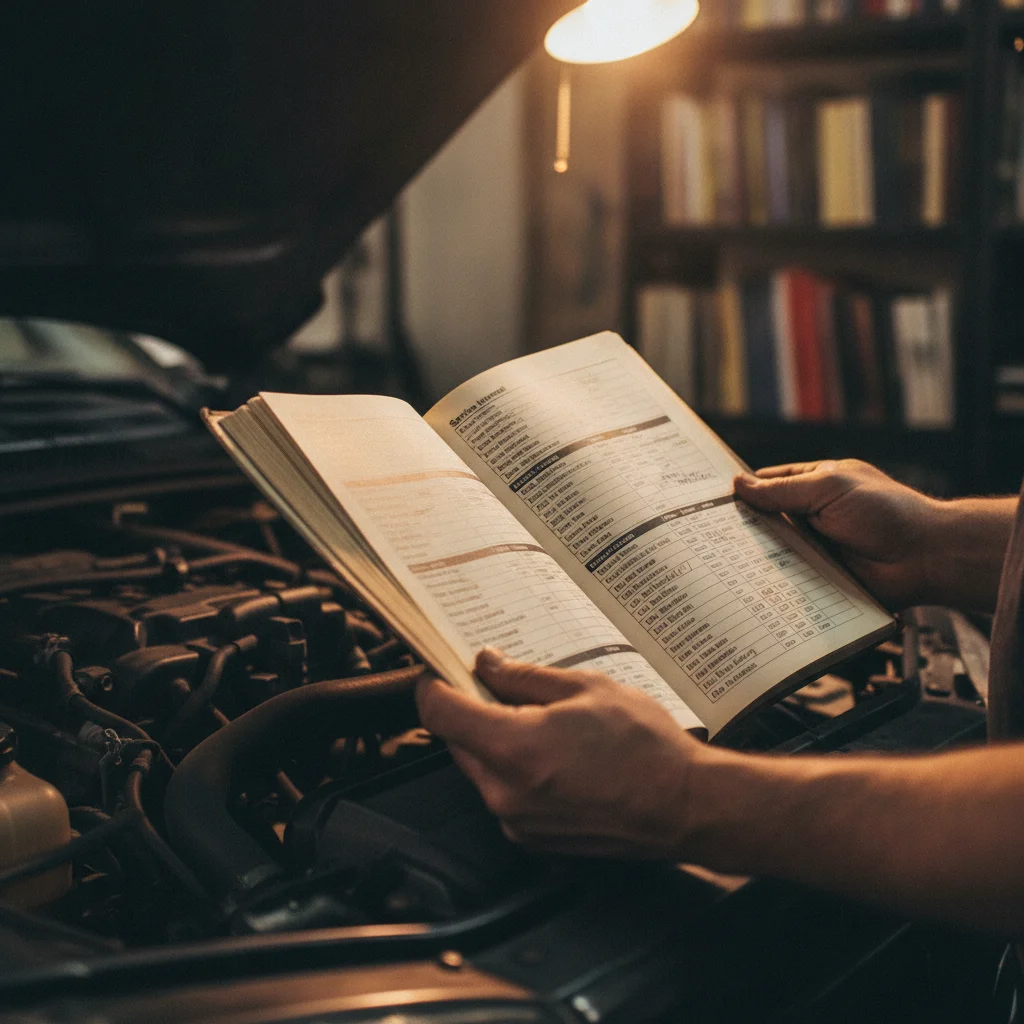
If you are purchasing a used vehicle with a timing belt engine, one of your first questions should be whether the belt has been replaced and when. An overdue belt on a used car purchase is a negotiating point — or a dealbreaker, depending on the interval gap and whether your engine is an interference design. This kind of due diligence fits naturally alongside the broader service history review that should accompany any used car purchase.
For timing chain vehicles, the key question is oil change history. A chain engine with 90,000 miles and documented regular oil changes is in a very different position than one with unknown service history and low oil on the dipstick at purchase.
Maintenance Best Practices for Each System
Knowing which system you have is only the first step. Here is how to manage each one effectively.
If Your Engine Has a Timing Belt
- Know your interval exactly. Look it up in the owner's manual or manufacturer database — do not rely on general rules of thumb. Intervals vary significantly even among models from the same manufacturer.
- Set a calendar reminder. Because time-based limits often apply alongside mileage, low annual mileage drivers should track both.
- Bundle related components. When you have the belt replaced, ask your mechanic to inspect and, if warranted, replace the water pump, tensioner, and idler pulleys. The additional parts cost is a fraction of what re-entering that labor bill would cost.
- Do not delay once you reach the interval. There is no grace period engineered into the rubber. A belt that has reached its mileage limit has reached it regardless of how it looks.
- Maintain records. Keep receipts for the timing belt service. They increase resale value and provide critical information for future owners or mechanics.
If Your Engine Has a Timing Chain
- Prioritize oil change adherence. This is non-negotiable. Engine oil is what lubricates and cools the chain — degraded oil accelerates wear on chain links and tensioners alike.
- Use the correct oil specification. Modern engines with variable valve timing systems and timing chain tensioners are often sensitive to oil viscosity. Using the manufacturer-specified grade matters more than it did on older engines.
- Listen for rattles on cold startup. A brief rattle that disappears as the engine warms can be an early indicator of a worn chain tensioner or stretched chain. Get it inspected before it progresses.
- Address oil leaks promptly. A chain engine running low on oil is far more vulnerable to chain damage than a belt engine — the belt doesn't rely on oil at all.
Regardless of which system your vehicle uses, staying current on all scheduled services is the most effective protection against expensive repairs. Understanding your full service schedule puts the timing system in context alongside every other maintenance item your engine depends on.

All claims are backed by peer-reviewed research. Sources on request.