Key Takeaways
EV Power Inverter
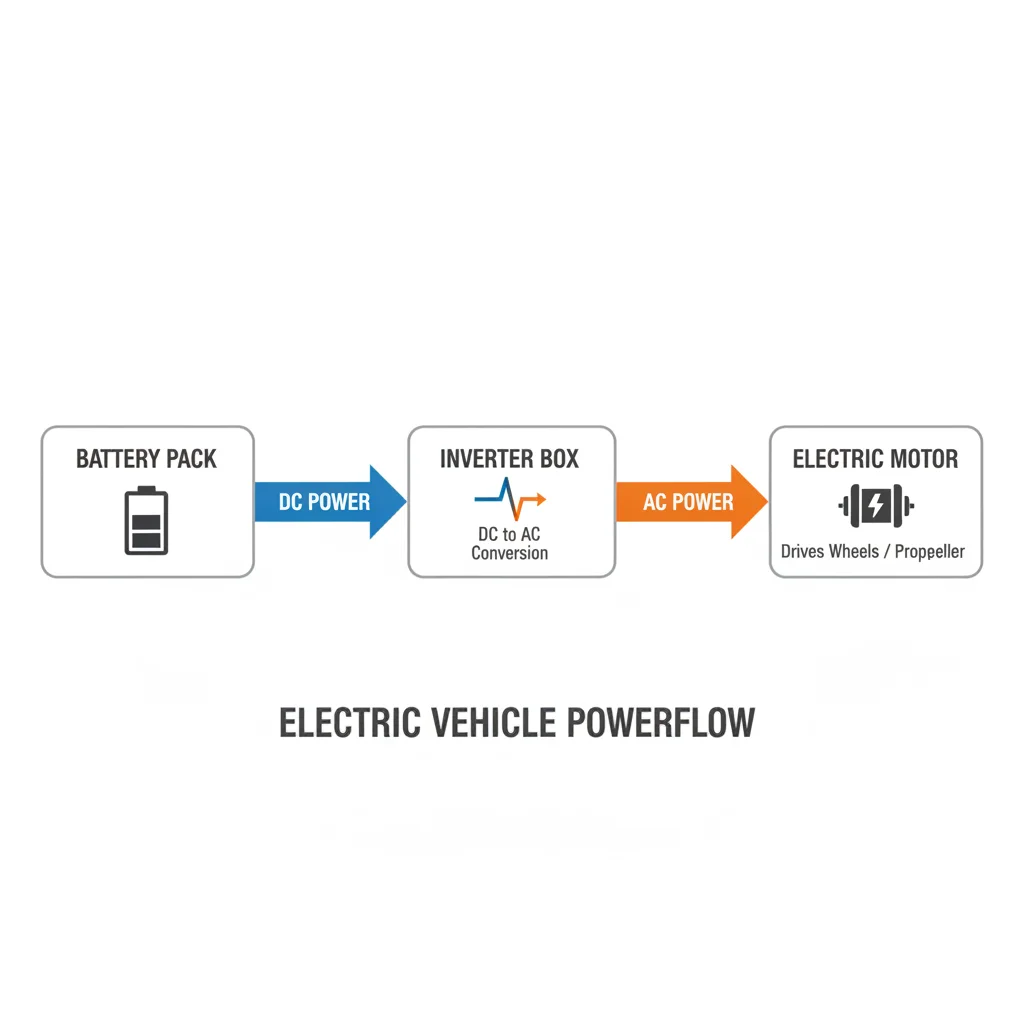
An EV inverter is an electronic device that converts the direct current (DC) stored in the battery pack into the alternating current (AC) that the electric motor needs to run. Without the inverter, the motor can't spin — the battery speaks one electrical language, the motor speaks another, and the inverter translates. It also controls how much power gets delivered at any moment, which is why it directly influences acceleration, efficiency, and overall driving feel.
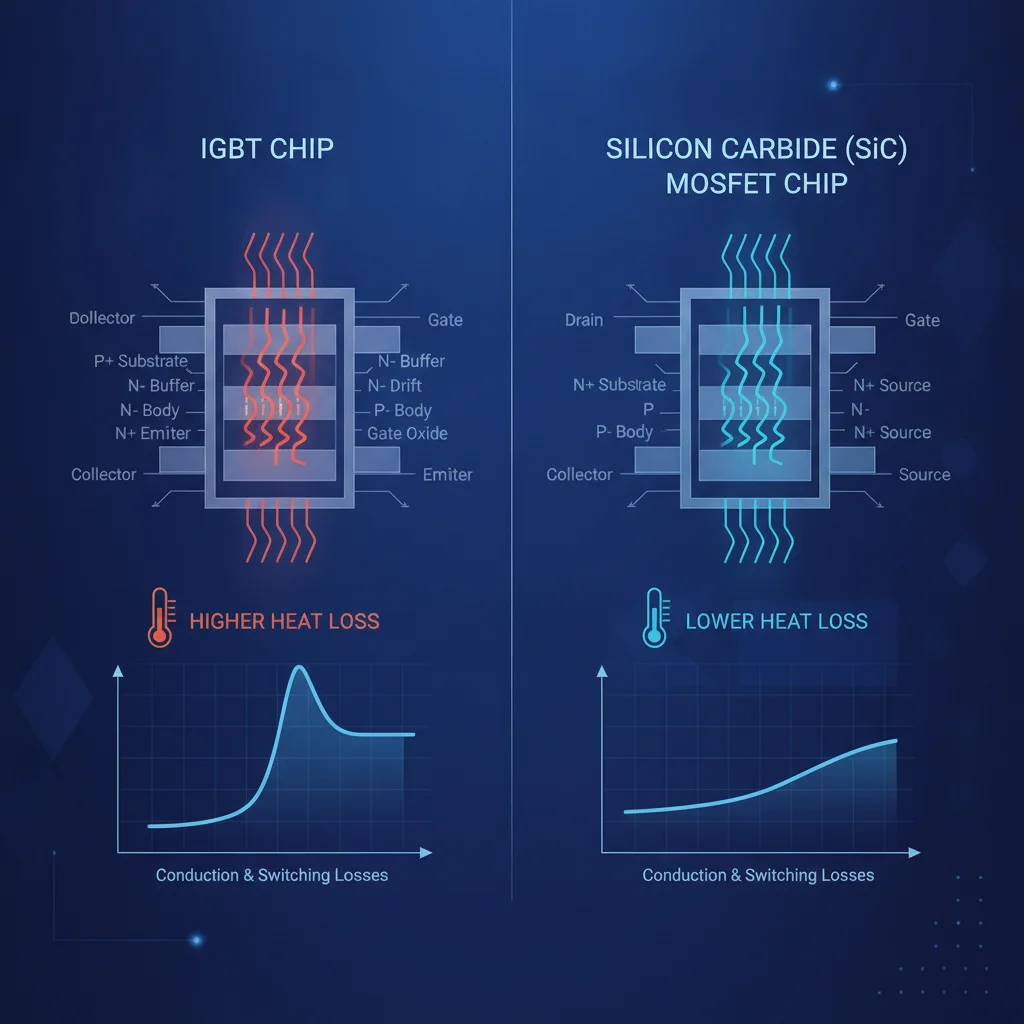
Modern EV inverters use insulated-gate bipolar transistors (IGBTs) or silicon carbide (SiC) MOSFETs to switch current at tens of thousands of times per second, synthesizing precise AC waveforms. SiC-based inverters run cooler and more efficiently than older IGBT designs, which is why they're increasingly common in premium EVs.
Why the Inverter Exists at All
Every EV battery pack stores energy as direct current — electrons moving steadily in one direction, like water flowing through a pipe. But the motors in nearly every mainstream electric vehicle are AC motors, designed to run on alternating current that reverses direction many times per second. These two electrical formats are fundamentally incompatible. You can't plug an AC motor directly into a DC battery any more than you can run a European appliance on a U.S. outlet without a converter.
The inverter bridges that gap. It takes the flat, steady DC from the battery and rapidly switches it on and off — back and forth — to create a controlled AC waveform. That waveform is what the motor uses to generate torque. No inverter, no rotation. It's that foundational.
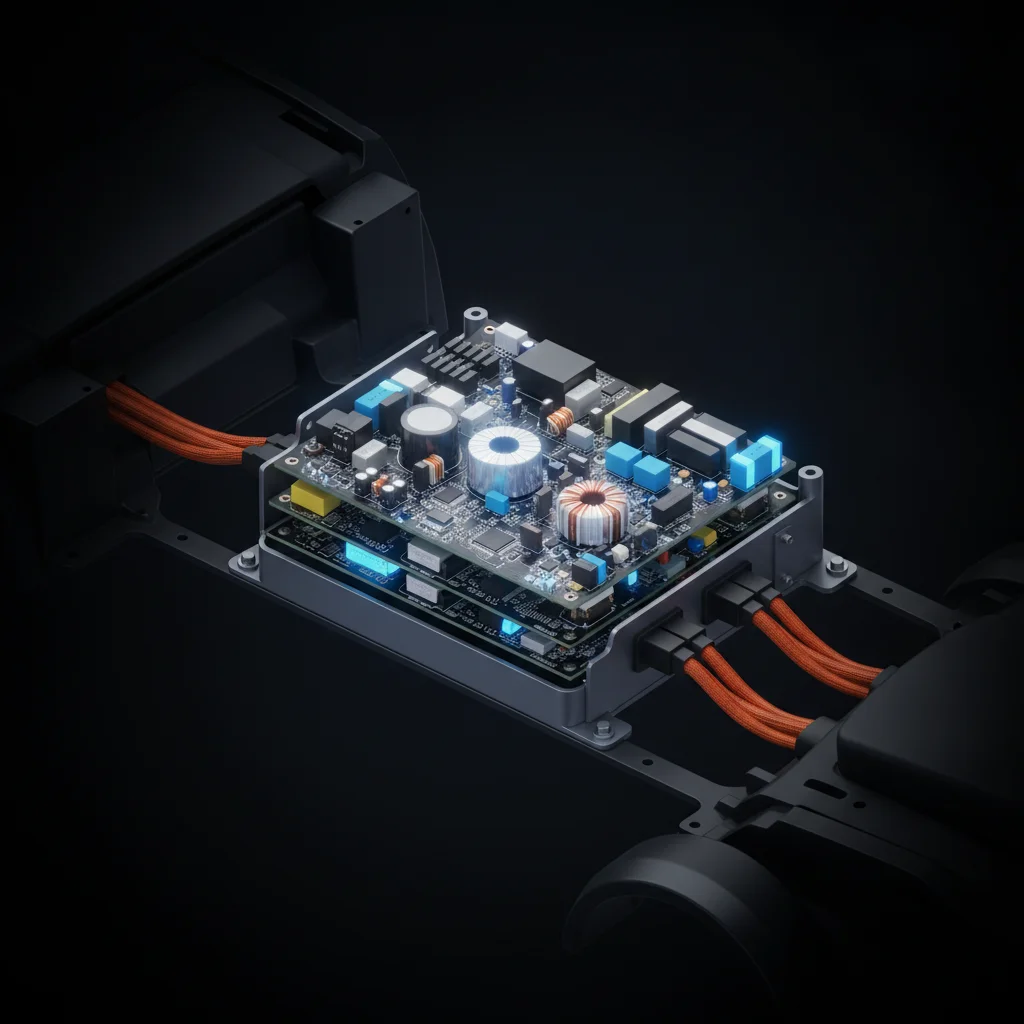
But the inverter does more than just reformat electricity. It also acts as the motor's throttle controller. When you press the accelerator, you're not directly opening a valve or releasing stored energy — you're telling the inverter to send more power to the motor, faster. The inverter modulates frequency and voltage in real time, managing acceleration, top speed, and efficiency simultaneously. It's doing an enormous amount of computational and electrical work inside a box that most buyers never see.
For a broader look at how each component in an EV drivetrain connects, the EV Mechanics 101 guide walks through the full picture before you set foot in a dealership.
How the Inverter Actually Works
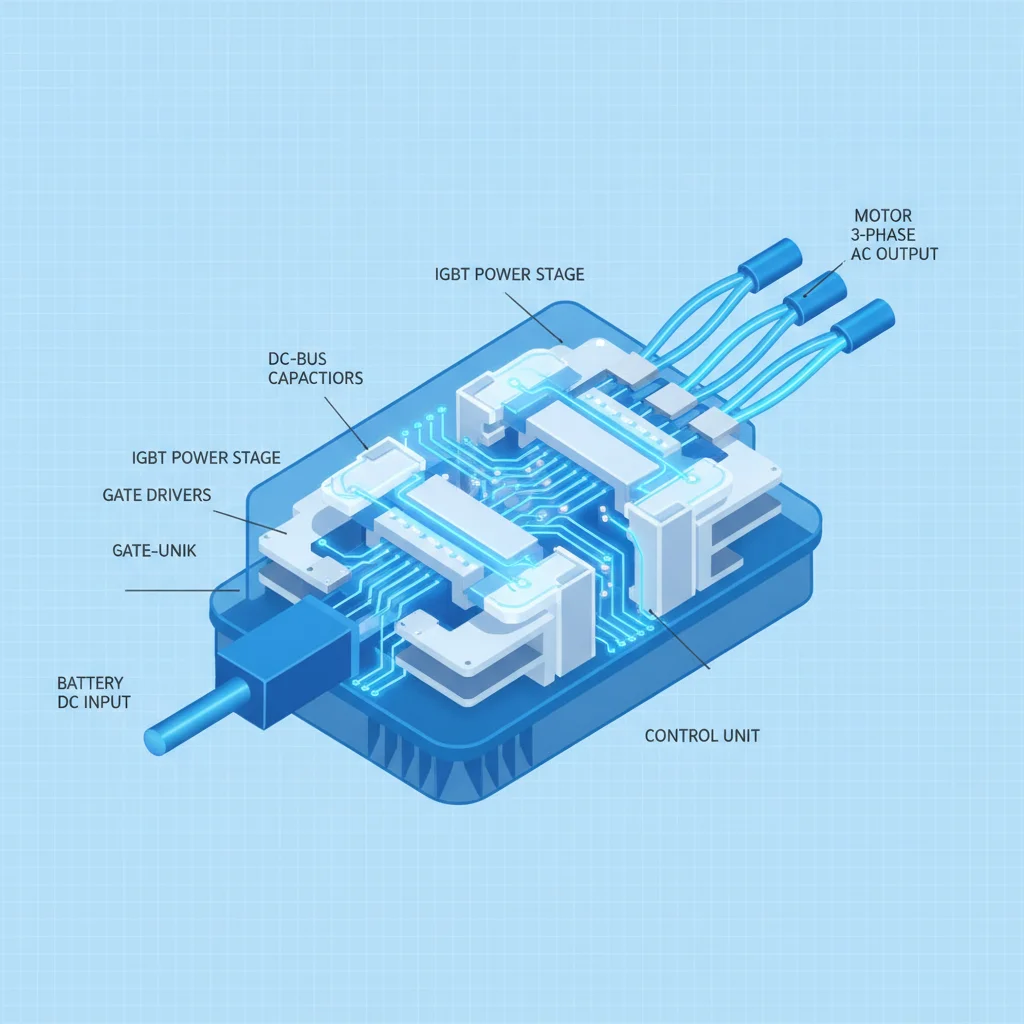
The core of an inverter is a set of fast-switching transistors — semiconductor switches that can open and close thousands of times per second. Older inverters used components called insulated-gate bipolar transistors (IGBTs). Newer, higher-performance designs increasingly use silicon carbide (SiC) MOSFETs, which switch faster, generate less heat, and lose less energy in the process.
Here's the basic sequence:
- DC arrives from the battery. The pack delivers high-voltage DC — anywhere from 400V to 800V depending on the vehicle architecture.
- Transistors switch the current on and off at high frequency. By toggling current flow in a precisely timed pattern, the inverter synthesizes a waveform that approximates the smooth sine wave of alternating current. This technique is called pulse-width modulation (PWM).
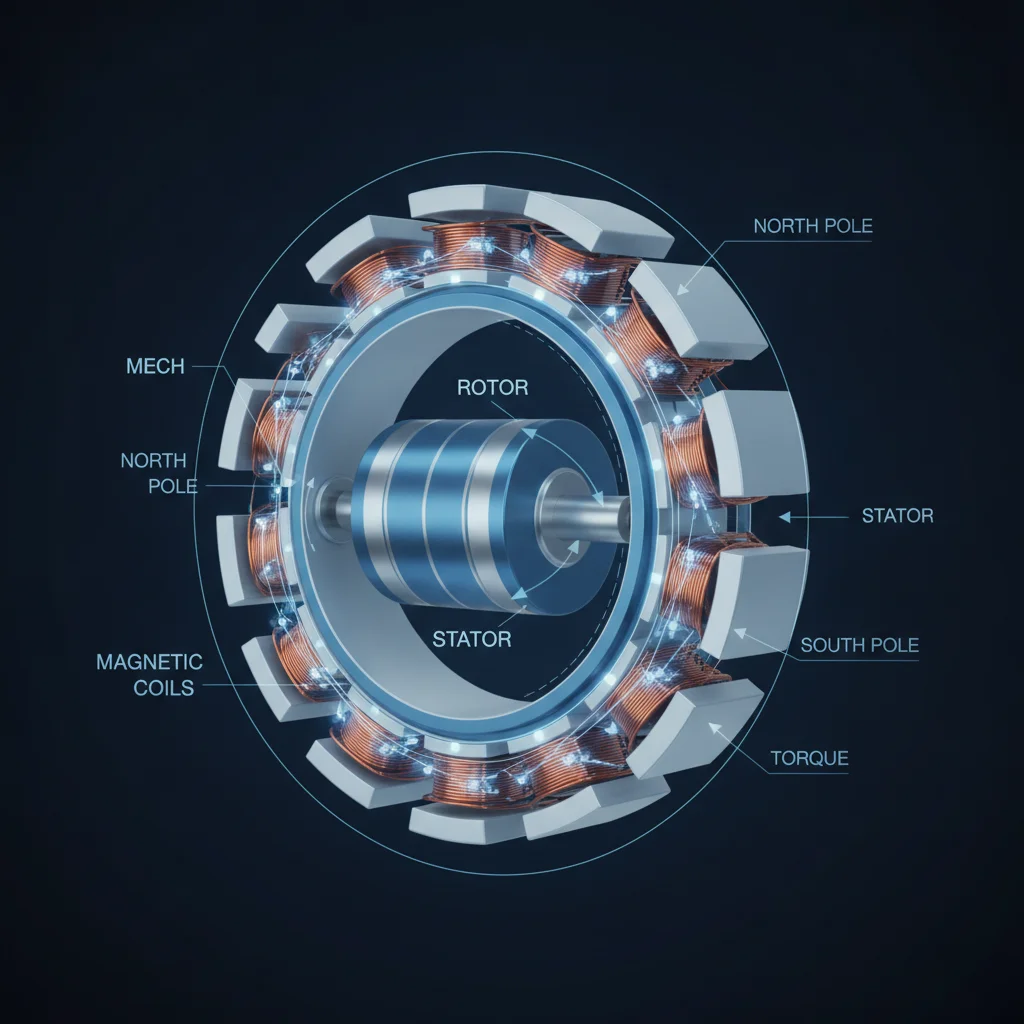
- The synthesized AC goes to the motor. The motor's electromagnets respond to the alternating current, creating the rotating magnetic field that spins the rotor and produces torque at the wheels.
- The inverter adjusts in real time. As throttle input changes, the inverter modifies the frequency and amplitude of the AC output — lower frequency for lower speeds, higher frequency for higher speeds.
“The inverter is arguably the most intellectually demanding component in an electric vehicle. It's doing real-time power electronics, motor control, and energy recovery — all in a package most drivers never think about.”
— Jessy Cavazos, Industry Director, Powertrain & EV, Frost & Sullivan
One underappreciated detail: in a three-phase AC motor (the most common type in EVs), the inverter is actually managing three separate AC signals, each offset by 120 degrees. Coordinating those three phases precisely is part of what makes modern inverter software so complex — and why software updates can sometimes improve motor performance without any hardware change.
DC Motors Also Exist in Some EVs
Not every electric motor requires AC power. Older EVs and some low-cost designs used DC motors, which can run directly from battery power without an inverter. However, AC motors — particularly three-phase induction and permanent magnet motors — are more efficient, more powerful for their size, and more durable. They've become the dominant choice for mainstream passenger EVs, which is why the inverter is a universal fixture in modern electric drivetrains.
Inverter Efficiency and What It Means for Your Range
No inverter is 100% efficient. Every time the transistors switch, a small amount of energy is lost as heat. The more efficiently an inverter converts DC to AC, the more of the battery's stored energy actually reaches the wheels — which translates directly to real-world driving range.
97–99%
Typical inverter conversion efficiency
Modern SiC-based EV inverters operate at 97–99% efficiency, versus 95–97% for older IGBT designs — a meaningful difference at high sustained power levels.
800V
High-voltage architecture in premium EVs
800-volt systems, used in vehicles like the Hyundai Ioniq 6 and Porsche Taycan, allow inverters to operate more efficiently and support DC fast-charging rates above 200 kW.
~20kHz+
Switching frequency of SiC inverters
Silicon carbide inverters can switch at 20,000 Hz or higher, enabling smoother motor control and lower energy losses compared to IGBT-based predecessors.
$3,000–$7,000+
Typical inverter replacement cost
Out-of-warranty inverter repairs represent one of the larger potential EV ownership expenses, underscoring the value of remaining powertrain warranty coverage.
This is why the shift from silicon IGBTs to silicon carbide is more than a spec-sheet detail. SiC components can operate at higher switching frequencies with lower resistive losses, which means less heat generated and more energy delivered. Tesla was among the first to adopt SiC inverters at scale (in the Model 3), and that decision contributed meaningfully to the car's efficiency figures. Other manufacturers have since followed.
For buyers comparing EVs, inverter architecture rarely appears in marketing materials — but it influences the efficiency ratings that do appear. A vehicle rated at 4 miles per kWh versus one rated at 3.2 miles per kWh isn't just benefiting from better aerodynamics or a lighter battery; inverter efficiency is part of that stack.
To understand how the inverter's work connects to the broader energy chain — from wall outlet to wheel — see how the onboard charger manages incoming power before it even reaches the battery.
Check Efficiency, Not Just Range
When comparing EVs, look at the EPA's miles-per-kWh figure alongside the headline range number. A car with 300 miles of range at 3.0 mi/kWh will cost more to fuel than one with 270 miles at 4.0 mi/kWh — especially if you drive primarily at highway speeds where inverter efficiency matters most. The EPA's fueleconomy.gov site lists these figures for every rated EV.
Ask About Powertrain Warranty Coverage
Most EV manufacturers offer an 8-year/100,000-mile warranty on the battery and powertrain — which typically includes the inverter. Before buying new or used, confirm whether this coverage is still active or transferable. An out-of-warranty inverter failure is one of the more expensive repairs in EV ownership, and knowing your coverage status is basic due diligence.
Regenerative Braking: The Inverter Works in Both Directions
Most EV buyers know about regenerative braking — the ability to recapture kinetic energy when slowing down. What's less understood is that the inverter is the hardware making it possible.
When you lift off the throttle or apply the brakes, the electric motor switches roles: it becomes a generator, converting the car's kinetic energy into electrical energy. That generated energy is AC. To send it back into the battery, it needs to be converted to DC. The inverter reverses its operation and performs exactly that conversion.
This bidirectional capability — DC to AC for driving, AC to DC for braking — is one of the reasons inverters are among the most technically sophisticated components in an EV. The same hardware handles both jobs, often switching between them in milliseconds depending on driver inputs.
The efficiency of this regenerative loop also matters. A more efficient inverter wastes less energy during the AC-to-DC conversion on the way back in, meaning more of that recaptured energy actually makes it into the battery. In stop-and-go city driving, where regen events happen constantly, that adds up.
For a fuller picture of how the motor and inverter interact during both drive and regen cycles, this breakdown of electric motor mechanics explains the hardware on the other end of the inverter's output.
What This Means When You're Shopping for an EV
You probably won't find "inverter type" listed on a window sticker. But the inverter's influence shows up in specs and ownership costs in ways that are worth tracking.
Look at the efficiency rating, not just range
EPA range figures are tested under controlled conditions and can vary significantly from real-world results. Efficiency ratings — expressed as MPGe or miles per kWh — give you a better sense of how effectively a vehicle uses stored energy. Higher efficiency often reflects, in part, a better-performing inverter.
Ask about 800V architecture
Some newer EVs use 800-volt electrical architectures rather than the traditional 400V. Higher-voltage systems allow the inverter to do its job more efficiently at the same power level (higher voltage, lower current, less resistive heat loss). They also enable faster DC fast charging. If you're considering a Hyundai Ioniq 6, Kia EV6, Porsche Taycan, or similar vehicle, this is a meaningful differentiator.
Factor in inverter health when buying used
Inverter failures are uncommon but expensive when they happen. When evaluating a used EV, ask whether there's any history of powertrain warnings, and look for service records. A pre-purchase inspection from an EV-familiar mechanic can catch early signs of inverter stress. Replacement costs vary but can run $3,000–$7,000 or more depending on the make and model.
Software matters, too
Because the inverter is controlled by software, over-the-air updates can legitimately improve motor response, efficiency, or regen behavior. This is one reason a used EV with current software may perform better than its original spec sheet suggested.
The all-electric powertrain guide pulls all of these components together and explains how they interact — useful reading before you negotiate a price on any BEV.
The Inverter's Place in the Bigger EV Picture
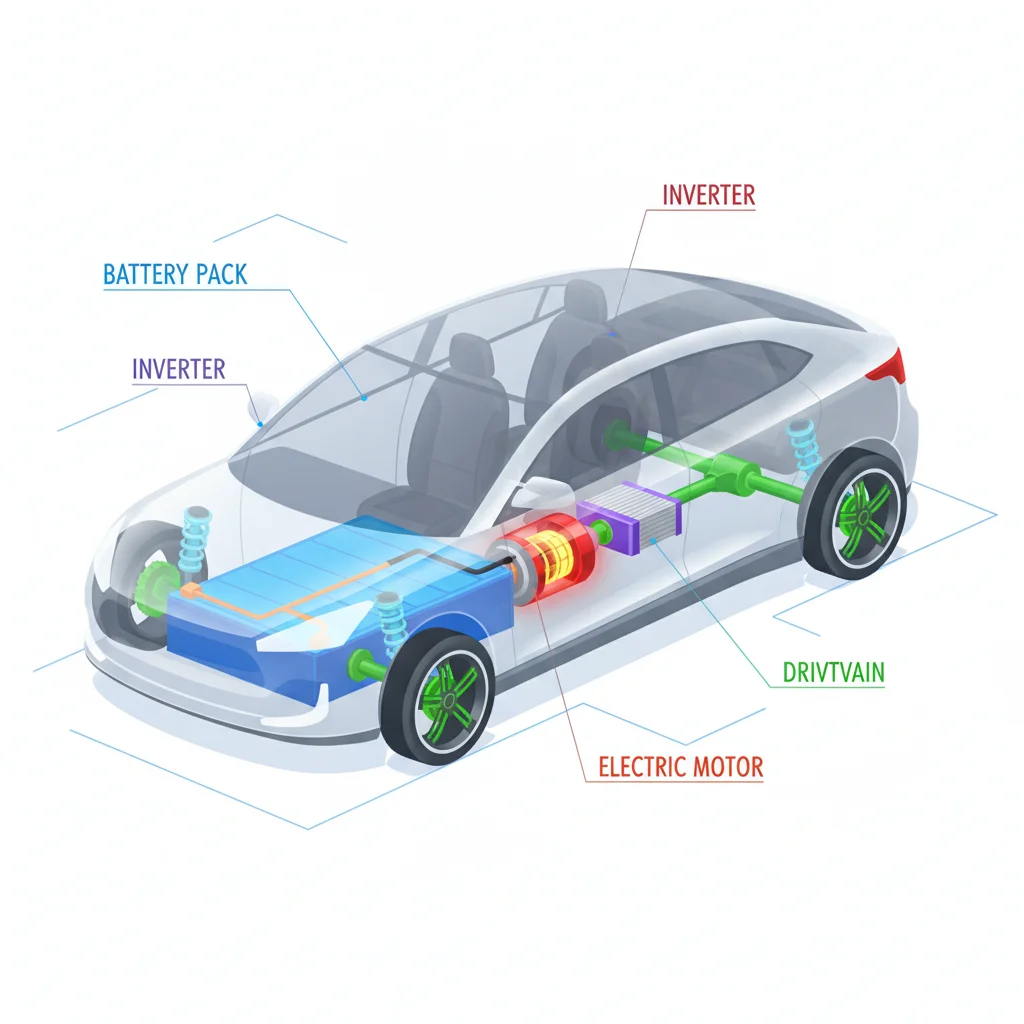
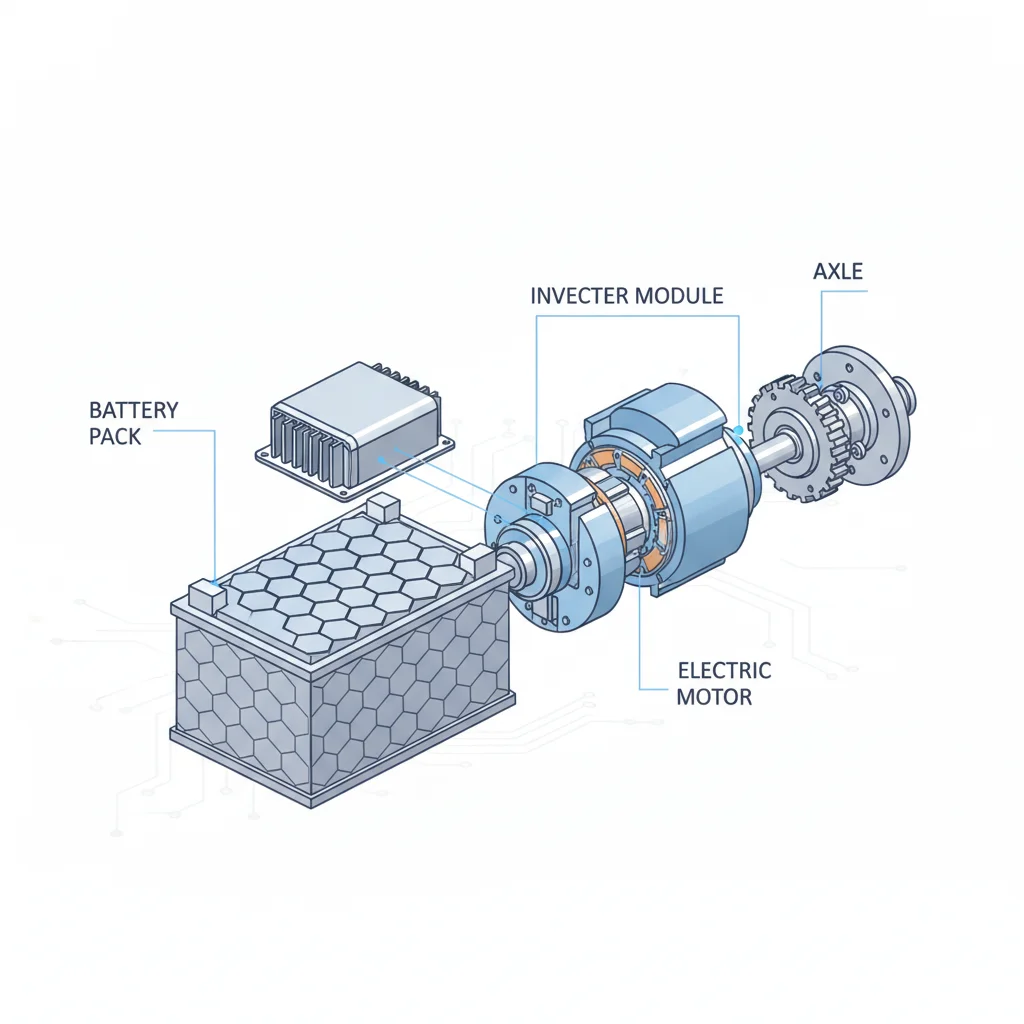
It helps to think of the EV powertrain as a chain with four major links: the battery stores energy, the inverter translates it, the motor converts it into rotation, and the drivetrain delivers that rotation to the wheels. Each link affects overall performance, and a weakness in any one of them limits the system.
The inverter is the link that most buyers overlook because it's invisible and unsexy — no moving parts, no dramatic engineering story. But it's arguably the most intellectually complex component in the chain. It performs high-speed power electronics, real-time torque control, and bidirectional energy conversion, all while staying cool enough to avoid damage and responsive enough to translate driver input into motion within milliseconds.
Understanding this doesn't make you an engineer — but it does make you a more informed buyer. When a salesperson cites a 0–60 time or an efficiency rating, you now know that the inverter is partly responsible for both. When an automaker announces a next-generation powertrain with a new inverter design, you know that's a substantive claim worth paying attention to, not marketing filler.
How a BEV converts stored energy into motion covers the full energy pathway — from chemistry in the battery cells all the way to the road — if you want to complete the picture.
Check Efficiency, Not Just Range
When comparing EVs, look at the EPA's miles-per-kWh figure alongside the headline range number. A car with 300 miles of range at 3.0 mi/kWh will cost more to fuel than one with 270 miles at 4.0 mi/kWh — especially if you drive primarily at highway speeds where inverter efficiency matters most. The EPA's fueleconomy.gov site lists these figures for every rated EV.
Ask About Powertrain Warranty Coverage
Most EV manufacturers offer an 8-year/100,000-mile warranty on the battery and powertrain — which typically includes the inverter. Before buying new or used, confirm whether this coverage is still active or transferable. An out-of-warranty inverter failure is one of the more expensive repairs in EV ownership, and knowing your coverage status is basic due diligence.

All claims are backed by peer-reviewed research. Sources on request.