
| MPG loss per 100 lbs of added weight | 1–2% (U.S. Department of Energy, fueleconomy.gov) |
| Typical weight of 4 adult passengers | 600–800 lbs |
| Driving condition where weight hurts most | City stop-and-go |
| Vehicle type most affected by added weight | Smaller, lighter cars (Weight penalty is proportionally larger vs. total vehicle mass) |
| EV range loss from heavy towing | 30–50% (Multiple manufacturer range estimates under tow load) |
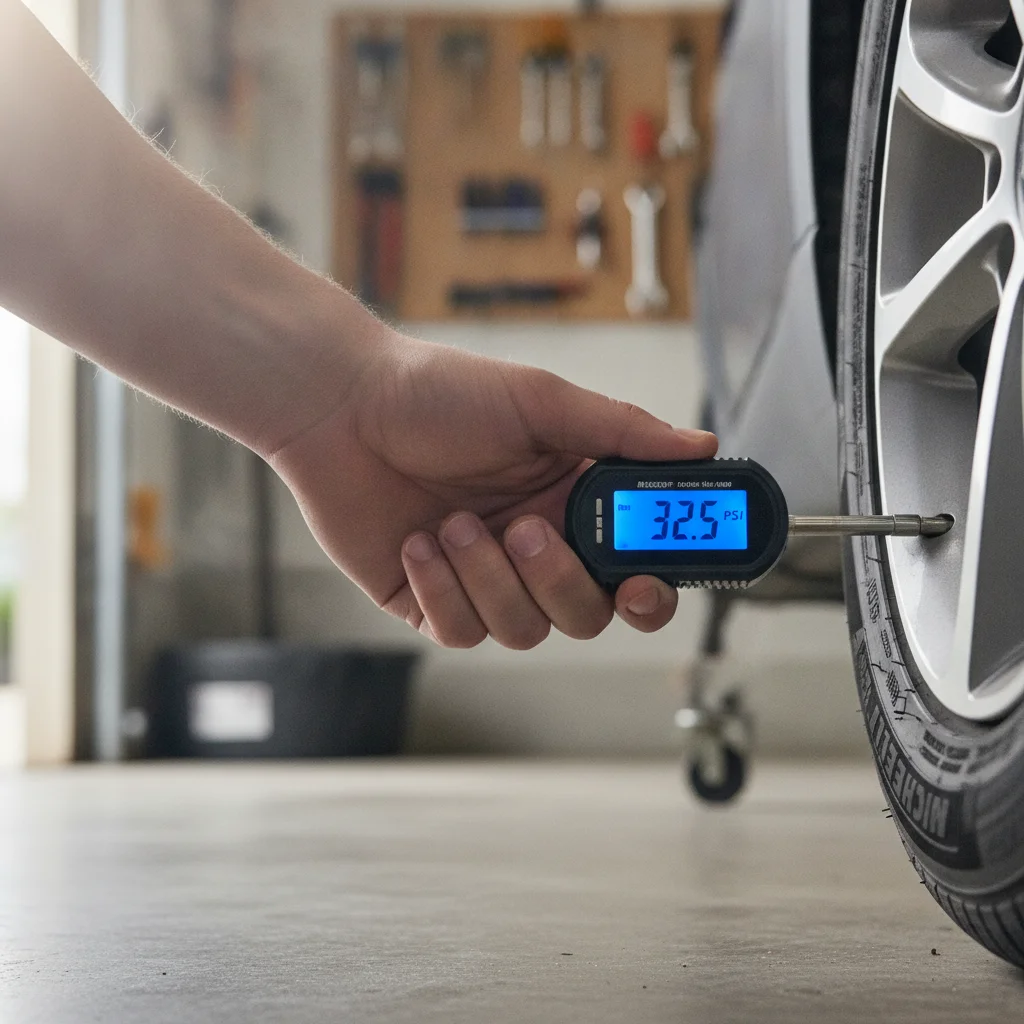
| MPG penalty from underinflated tires | 0.2–0.5% per PSI low (U.S. Department of Energy) |
| Estimated annual extra cost (200 lbs, 30 MPG, 12k miles) | ~$42/year (At $3.50/gallon) |
| Best way to offset weight penalty without changing loads | Maintain correct tire pressure |
The Simple Rule: Every 100 Pounds Costs You MPG
There's a straightforward relationship between what you carry and how much fuel you burn: for every 100 pounds of extra weight, your fuel economy drops by roughly 1–2%. That's the figure the U.S. Department of Energy consistently cites, and it holds up well across most passenger vehicles under normal driving conditions.
It sounds small — and in isolation, it is. But weight compounds quickly. A family of four with luggage, a stroller, and a full tank of gas can easily add 600–700 pounds to a midsize sedan. At that point, you're looking at a 6–14% fuel economy penalty before you've even hit the highway.
| MPG loss per 100 lbs of added weight | 1–2% (U.S. Department of Energy, fueleconomy.gov) |
| Typical weight of 4 adult passengers | 600–800 lbs |
| Driving condition where weight hurts most | City stop-and-go |
| Vehicle type most affected by added weight | Smaller, lighter cars (Weight penalty is proportionally larger vs. total vehicle mass) |
| EV range loss from heavy towing | 30–50% (Multiple manufacturer range estimates under tow load) |
| MPG penalty from underinflated tires | 0.2–0.5% per PSI low (U.S. Department of Energy) |
| Estimated annual extra cost (200 lbs, 30 MPG, 12k miles) | ~$42/year (At $3.50/gallon) |
| Best way to offset weight penalty without changing loads | Maintain correct tire pressure |
The effect is most pronounced in smaller, lighter vehicles. A 100-pound load means more to a compact car (which might weigh 2,800 lbs) than to a full-size pickup (which might weigh 5,000+ lbs). The percentage hit lands harder on lighter vehicles because the added weight is a larger share of the total mass the engine must move.
Weight also matters more in city driving than on the highway. Stop-and-go traffic means your engine is constantly accelerating from a dead stop — exactly the moment when extra mass demands the most energy. Highway cruising at a steady speed is comparatively efficient even under load, though you still pay a penalty.
What Common Cargo Actually Weighs
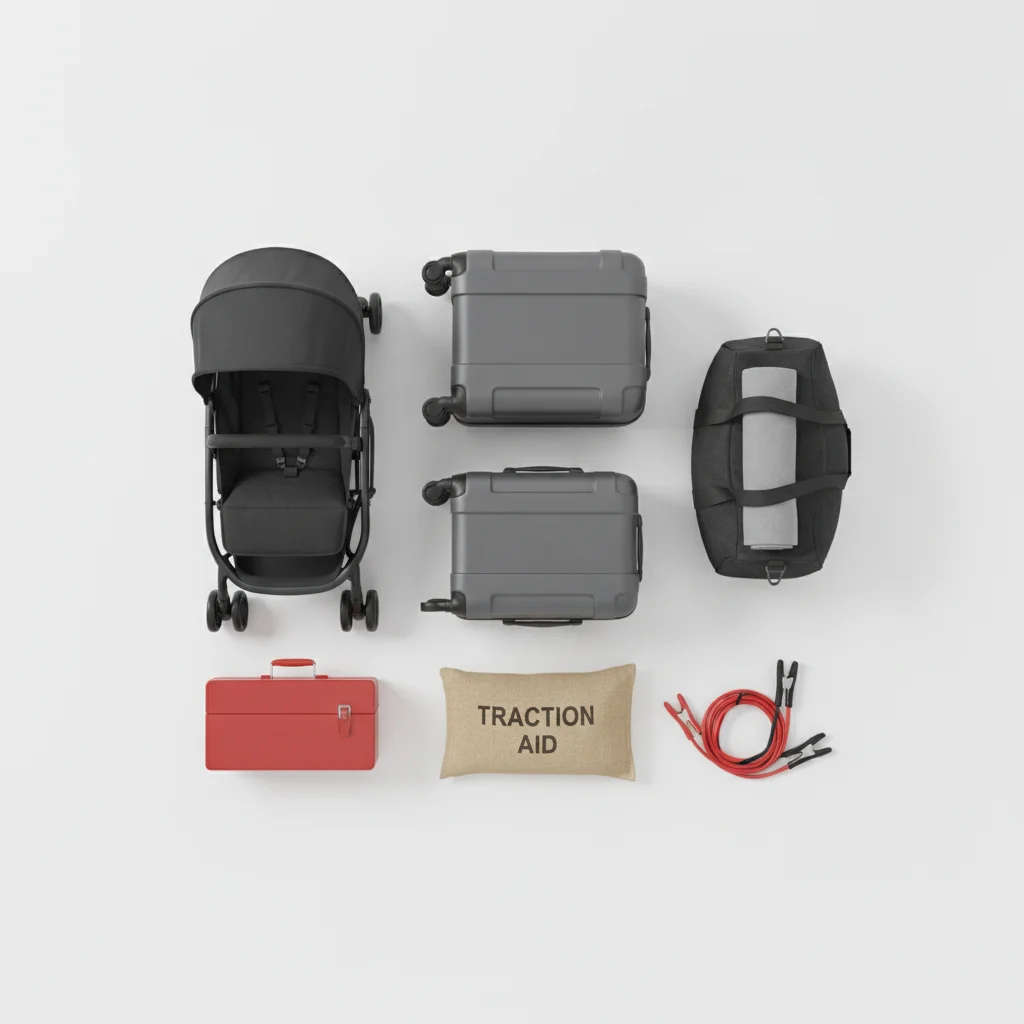
Most drivers underestimate how much ordinary stuff weighs. Here's a practical reference for the items that tend to accumulate in cars and trucks.
| Item | Approximate Weight |
|---|---|
| Adult passenger | 150–200 lbs |
| Child in car seat (seat + child) | 50–80 lbs |
| Full-size spare tire + wheel | 40–60 lbs |
| Suitcase (checked luggage, full) | 40–50 lbs |
| Stroller (standard) | 20–30 lbs |
| Toolbox (loaded) | 40–80 lbs |
| Sandbags (pickup bed, winter traction) | 50–200 lbs |
| Bag of mulch or topsoil | 40–50 lbs |
| Dog (large breed) | 60–100 lbs |
| Full 5-gallon water jug | ~42 lbs |
| Golf clubs + bag | 30–40 lbs |
| Cases of bottled water (24-pack × 2) | ~60 lbs |
Notice how quickly passengers dominate this list. Four adults in a vehicle easily adds 600–800 pounds — more than almost any cargo scenario outside of commercial use. The weight of passengers is unavoidable, but cargo is often a choice.
One common source of unnecessary weight: items that live permanently in the trunk. Gym bags you don't use, emergency kits packed heavier than necessary, tools left over from a weekend project. A quick audit of your trunk every few months is worth the effort.
Curb weight
The weight of a vehicle as it sits with no passengers or cargo, but with all standard fluids (fuel, oil, coolant) topped off. This is the baseline from which payload capacity is calculated.
Payload capacity
The maximum additional weight a vehicle is rated to carry, including passengers, cargo, and any equipment. Exceeding this number affects both fuel economy and vehicle safety.
Rolling resistance
The friction force that opposes a tire's motion as it rolls along a surface. Heavier loads increase rolling resistance, requiring more energy to maintain speed.
Gross Vehicle Weight Rating (GVWR)
The maximum total weight of a fully loaded vehicle as specified by the manufacturer. This includes curb weight plus all passengers, cargo, and fuel.
Regenerative braking
A feature in electric and hybrid vehicles that captures kinetic energy during deceleration and converts it back into stored electrical energy, partially offsetting the efficiency cost of carrying extra weight.
Aerodynamic drag
The resistance force caused by air pushing against a moving vehicle. Unlike weight-related losses, drag increases exponentially with speed and is the dominant efficiency factor at highway velocities.
Calculating Your Annual Fuel Cost from Extra Weight
Let's put real dollar numbers on this. The math isn't complicated, and once you see it laid out, the incentive to lighten your load becomes concrete.
1–2%
MPG lost per 100 lbs of extra weight
According to the U.S. Department of Energy's fueleconomy.gov, this rule applies broadly to most passenger vehicles.
~$160/yr
Fuel cost of 800 lbs extra in a pickup (15k miles)
Estimated at 20 MPG baseline and $3.50/gallon, illustrating how weight penalties compound for trucks and large SUVs.
30–50%
EV range reduction under heavy tow load
Multiple EV manufacturers report this range of efficiency loss when towing near maximum rated capacity.
25%
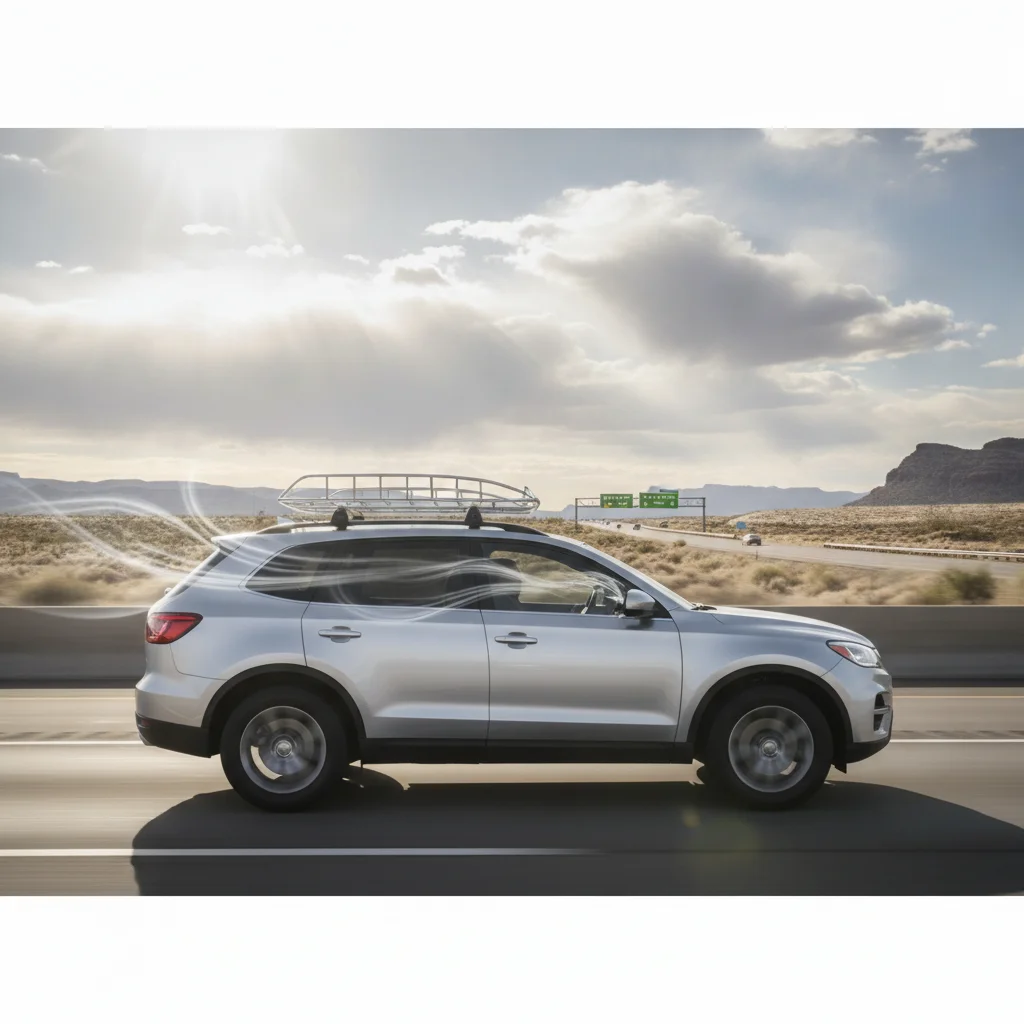
MPG loss from an empty roof rack at highway speeds
Research from the National Renewable Energy Laboratory found significant drag penalties even from unloaded roof racks.
6–14%
Fuel economy penalty for a fully loaded family sedan
A realistic family load of 4 passengers plus luggage and gear can easily total 600–700 lbs above the empty vehicle weight.
Here's the formula to estimate your extra annual fuel cost from a given load:
- Identify your baseline MPG (check your window sticker or fuel log)
- Estimate your extra weight in pounds
- Calculate your MPG penalty: (extra weight ÷ 100) × 1.5% × baseline MPG
- Find your new effective MPG: baseline MPG − penalty MPG
- Apply to annual miles: compare gallons used at both MPG figures, multiply by your local gas price
Example: You drive 12,000 miles per year in a car rated at 30 MPG. You routinely carry 200 pounds of extra cargo (tools, sports gear, miscellaneous trunk items). Your MPG penalty is roughly 3%, bringing effective MPG to ~29.1 MPG.
- At 30 MPG: 400 gallons per year
- At 29.1 MPG: ~412 gallons per year
- At $3.50/gallon: about $42 extra per year
That's a modest number for 200 pounds — but scale it up. A pickup truck hauling 800 pounds of extra gear regularly, at 20 MPG baseline, loses about 1.2 MPG. Over 15,000 miles at $3.50/gallon, that's nearly $160 per year in avoidable fuel cost.
Weight isn't the only factor working against you. If you also carry a roof rack, the drag penalty stacks on top. See our guide to how roof racks drain your fuel economy to understand how those two penalties compound each other.
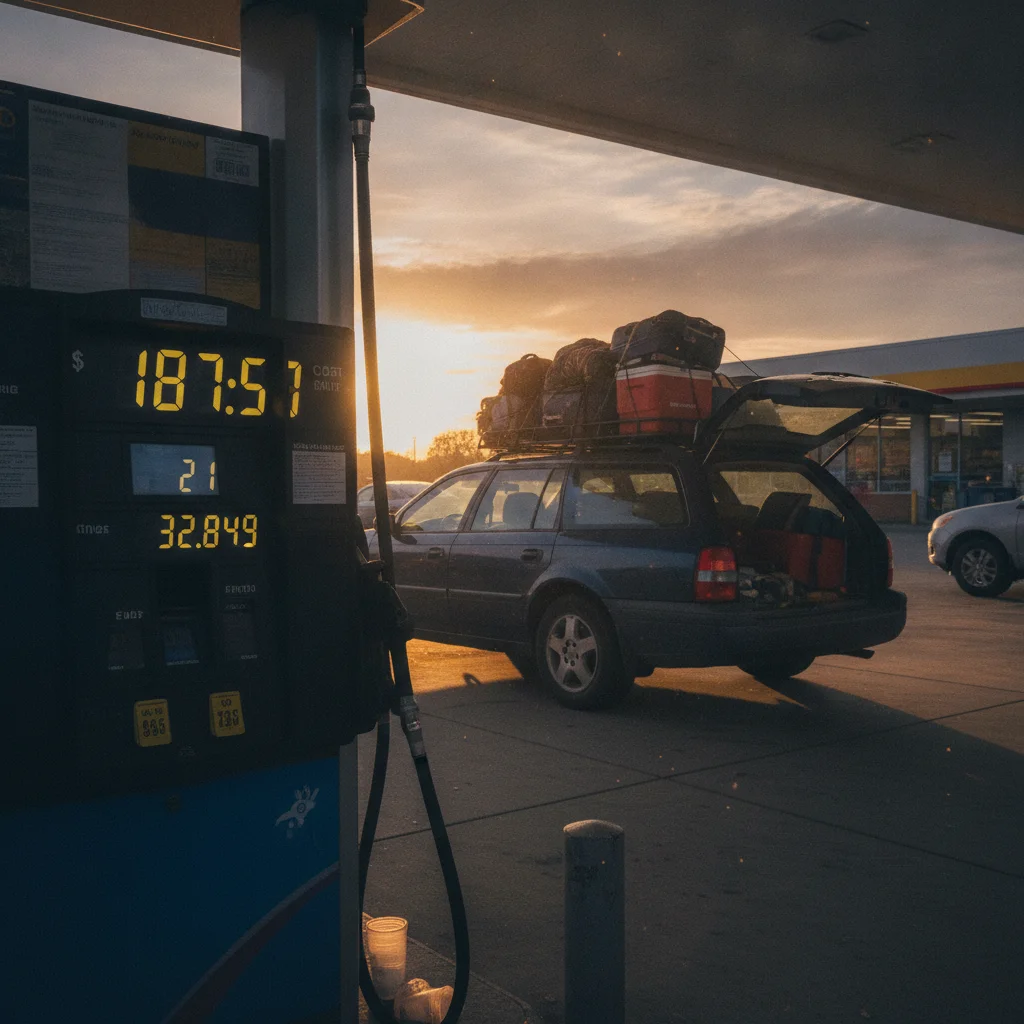
Weight vs. Other Fuel Economy Killers
To keep weight in perspective, it helps to compare it against other factors that drain your MPG. Weight is real and worth addressing — but it's not the most powerful lever in your control.
Here's a rough ranking of common fuel economy factors by typical impact:
- Aggressive acceleration and hard braking — up to 30–40% penalty in city driving
- Excess highway speed — significant drag increase above 55–60 mph (see our breakdown of what each extra 10 mph costs you)
- Underinflated tires — 0.2–0.5% per PSI below recommendation (our tire pressure and fuel economy guide explains this clearly)
- Roof racks and cargo carriers — up to 25% at highway speeds due to aerodynamic drag
- Cargo weight in the cabin or trunk — 1–2% per 100 lbs
The takeaway: if you're focused on maximizing fuel economy, your driving behavior and tire pressure are worth more attention than your trunk weight. That said, weight is the easiest thing to fix without changing how you drive — it just takes a few minutes to clean out the car. For a full picture of what's worth addressing first, our ranked list of fuel economy killers is a useful starting point.
Weight Limits Exist for Safety, Not Just Efficiency
Every vehicle has a published payload capacity in its owner's manual and on a sticker inside the driver's door jamb. Exceeding this limit doesn't just hurt fuel economy — it can affect braking distances, handling stability, and tire wear. If you regularly haul heavy loads, check your vehicle's GVWR and payload rating before assuming it's safe to add more.
Hybrid Vehicles Handle Weight Differently
In a hybrid, the electric motor provides extra torque at low speeds, which partially offsets the energy cost of accelerating a heavier load. This means hybrids see a slightly smaller percentage fuel economy penalty from added weight compared to conventional gas vehicles, especially in city driving. The EPA's testing methodology accounts for this, but real-world results still show a measurable hit under heavy loads.
Weight and EV Range: A Different Conversation
If you drive an electric vehicle, the weight equation works differently — and the stakes are somewhat higher. EVs don't have the same thermal losses as combustion engines, which means weight has a more direct proportional effect on energy use. There's no engine heat to mask inefficiency.
More importantly, towing and cargo loading interact with regenerative braking and battery chemistry in ways that don't apply to gas vehicles. A heavily loaded EV may not recover as much energy during braking because the system is managing thermal load alongside kinetic energy.
Our article on how towing and cargo load affect EV range goes deep on why the range loss from towing can reach 30–50% — far beyond what weight alone would predict. And if you want a broader look at passengers and cargo in EVs specifically, this guide on weight and EV range covers trip planning strategies as well.
The practical upshot: EV drivers have even more reason to pack light and leave unnecessary items at home, especially on longer trips where range anxiety is already a concern.
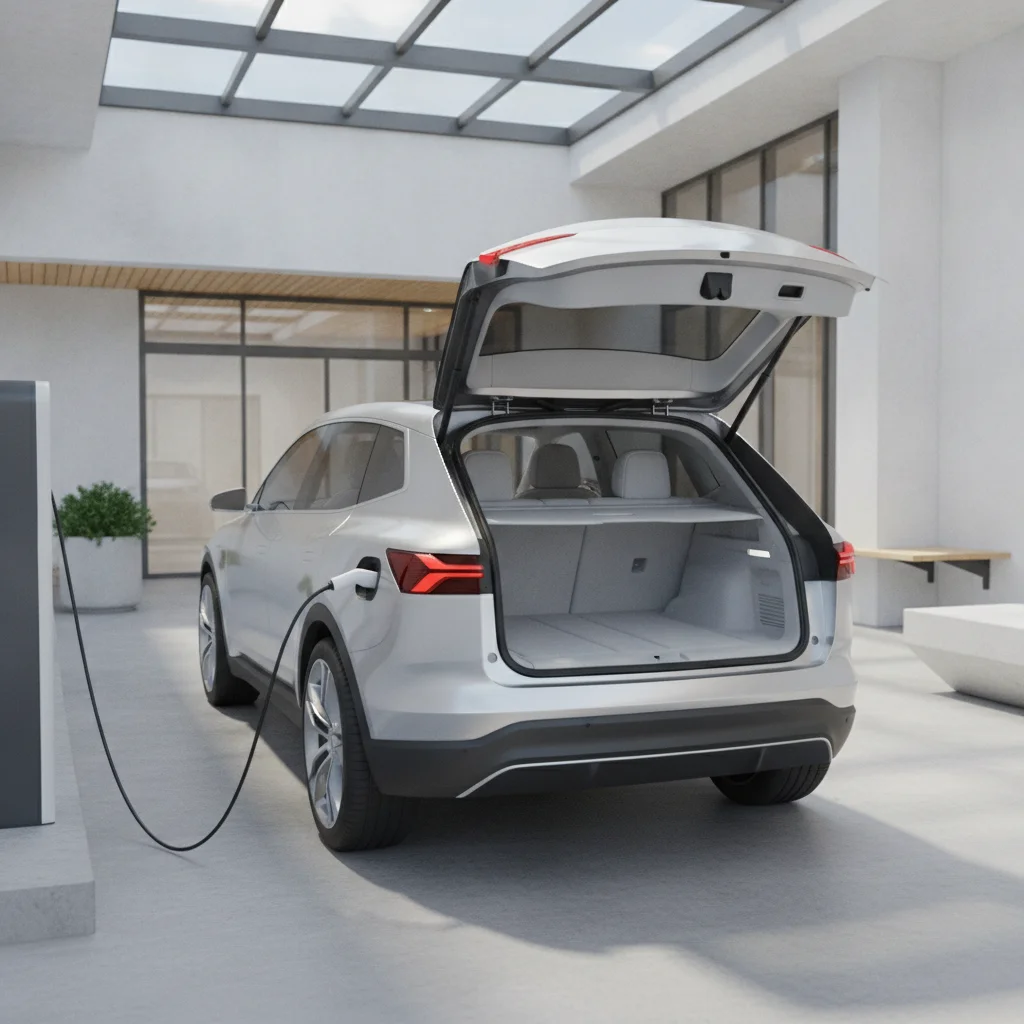
Simple Habits to Reduce Unnecessary Load
You don't need to obsess over every pound to capture most of the benefit. A few consistent habits will do it.
Do a trunk audit every season
Set a reminder every three months to check what's living in your trunk, cargo area, or back seat permanently. Remove anything you haven't used in 60 days. Common offenders: old gym equipment, emergency gear packed heavier than needed, tools from past projects, reusable shopping bags multiplying quietly over time.
Right-size your emergency kit
A well-stocked emergency kit is worth carrying — but many drivers accumulate far more than necessary. A compact kit with jumper cables (or a battery jump-starter), a basic first-aid kit, a reflective triangle, and a small flashlight covers most scenarios at under 15 pounds. You don't need 80 pounds of gear for a daily commuter.
Avoid carrying winter gear in summer (and vice versa)
Sandbags in a pickup bed for winter traction are smart in January. In July, they're just dead weight. Snow chains, ice scrapers, and heavy blankets take up room and add weight through seasons where they're irrelevant.
Choose cargo placement wisely
When you do need to haul heavy items, keep weight low and centered in the vehicle. High loads (especially on roof racks) raise your center of gravity and increase drag — both of which hurt efficiency and handling. Keep dense, heavy items on the floor rather than stacked in back seats.
Don't top off the gas tank
A full tank in a midsize vehicle holds about 50–70 lbs of gasoline. You can't eliminate this weight, but there's no reason to run on a full tank constantly if your driving patterns allow for smaller, more frequent fill-ups. This is a marginal gain for most people, but it's worth knowing.
fueleconomy.gov Trip Calculator
The U.S. Department of Energy's official tool for estimating fuel costs by vehicle and driving distance. Useful for comparing how load assumptions change your cost per trip.
Driving Habits That Hurt Fuel Economy Most — Ranked by Impact
Our ranked breakdown of the behaviors that drain fuel efficiency most, so you can prioritize the changes that yield the biggest savings alongside reducing cargo weight.
Tire Pressure and Fuel Economy: What the Numbers Actually Mean
A focused guide on how even modest tire pressure drops quietly reduce your MPG — and how to check and maintain the right PSI for your specific vehicle.
How Roof Racks and Cargo Carriers Quietly Drain Your Tank
Explains the aerodynamic drag penalty of roof-mounted cargo, which compounds on top of weight losses and can cut highway MPG by up to 25% even with an empty rack.
GasBuddy
Track real-time local gas prices and log your fuel-ups to measure your actual MPG over time — helpful for seeing whether cargo reduction efforts are making a real difference.

All claims are backed by peer-reviewed research. Sources on request.