Key Takeaways
200-Amp Panel Upgrade
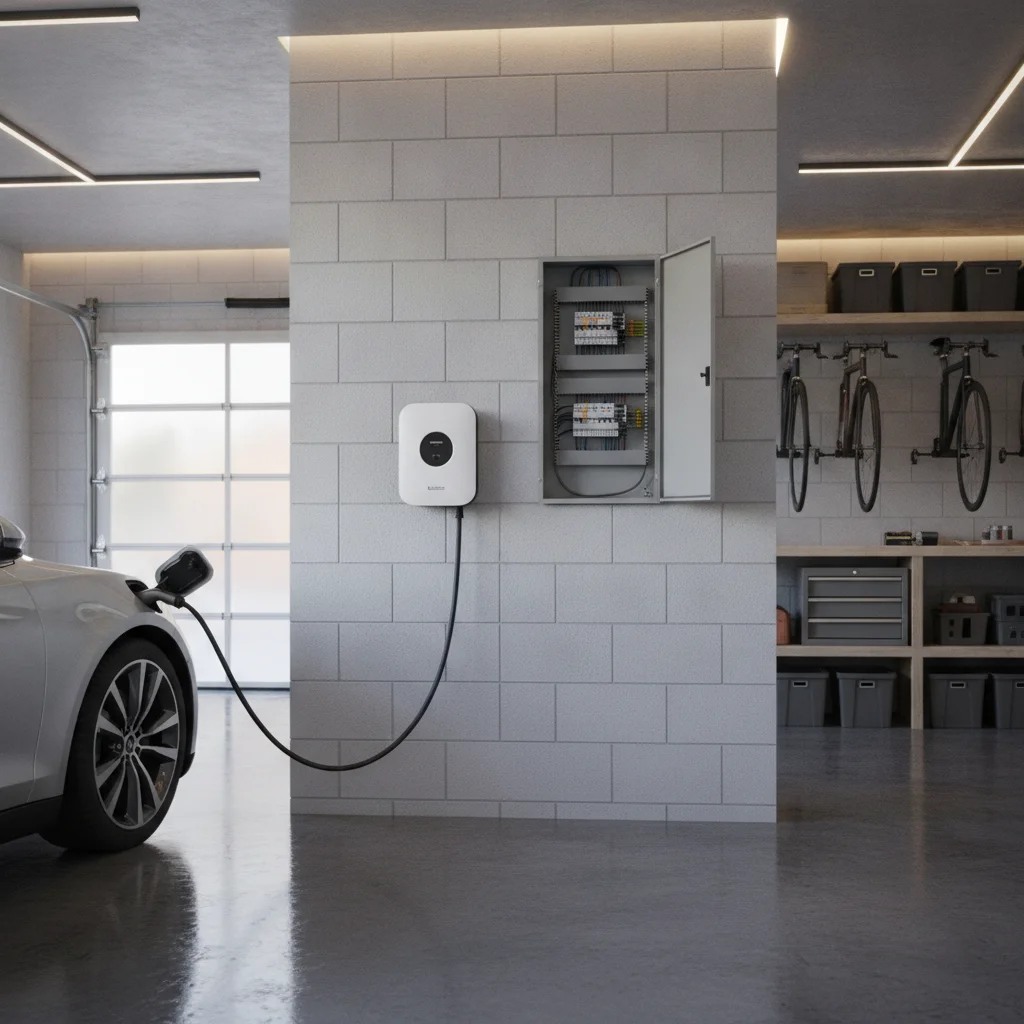
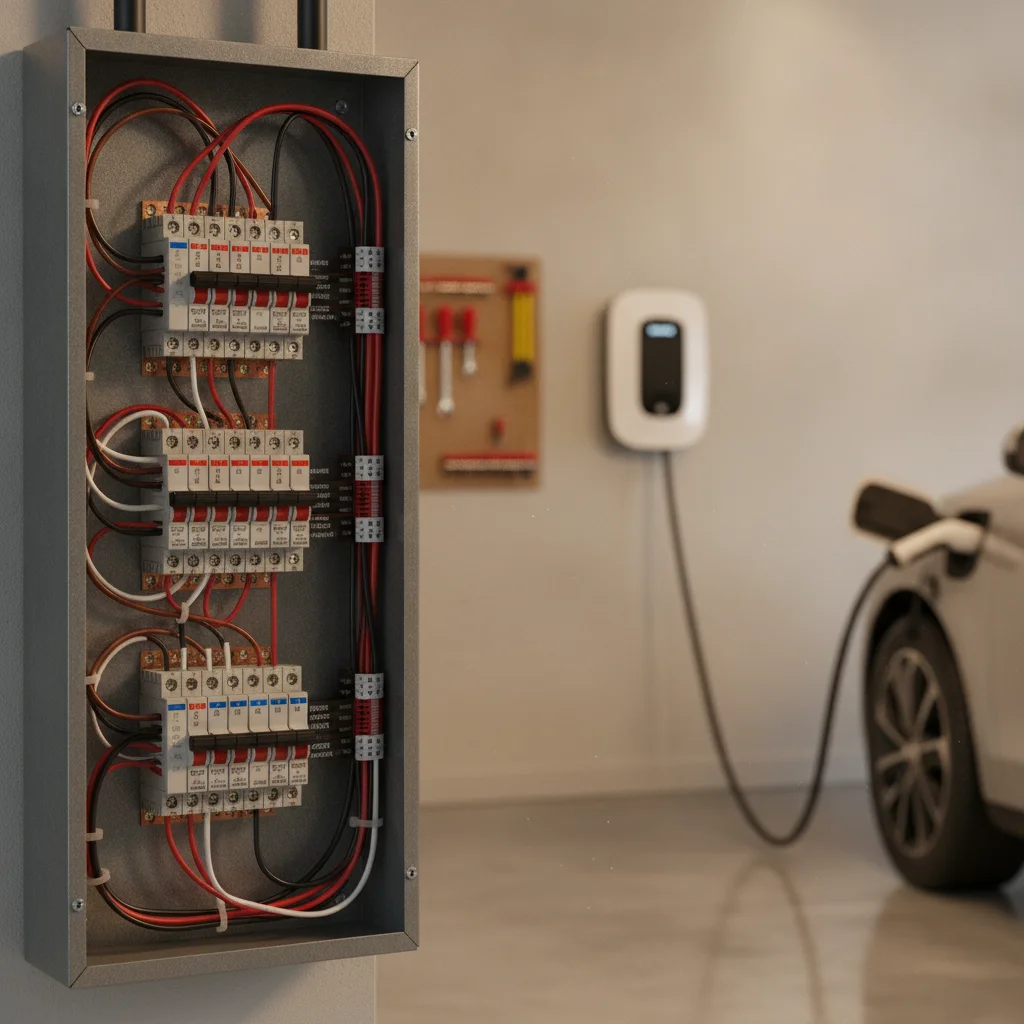
A 200-amp panel upgrade replaces your home's existing electrical service panel with one rated to handle 200 amperes of total current. Most older homes have 100-amp panels, which were adequate before high-draw appliances like EV chargers became common. The upgrade involves new wiring, a new breaker box, coordination with your utility company, and a permit and inspection from your local authority. It's one of the larger residential electrical projects a homeowner can undertake.
The upgrade requires replacing not just the breaker panel but often the service entrance conductors, meter socket, and grounding system to meet current NEC (National Electrical Code) requirements. Total ampacity delivered depends on both the panel rating and the utility's service drop capacity.
Why This Question Comes Up
You've bought an EV — or you're seriously considering one — and somewhere along the way someone told you that you'll need a 200-amp electrical panel upgrade before you can charge at home. Maybe it was the dealership, a neighbor, or a contractor who handed you an estimate before you even asked for one.
Here's the reality: that statement is sometimes true, often overstated, and occasionally a sales pitch. Understanding what a panel upgrade actually involves — the physical work, the cost, the timeline, and the alternatives — puts you in a position to make a genuinely informed decision rather than an expensive reflex one.
This article focuses specifically on the panel upgrade piece of the home charging puzzle. If you want the full picture of what home charging installation involves from start to finish, see Charging Your EV at Home: What the Setup Actually Involves. For a plain-English explanation of how your panel interacts with EV charging loads, Your Home Electrical Panel and EV Charging: A Plain-English Explainer covers that ground in detail.
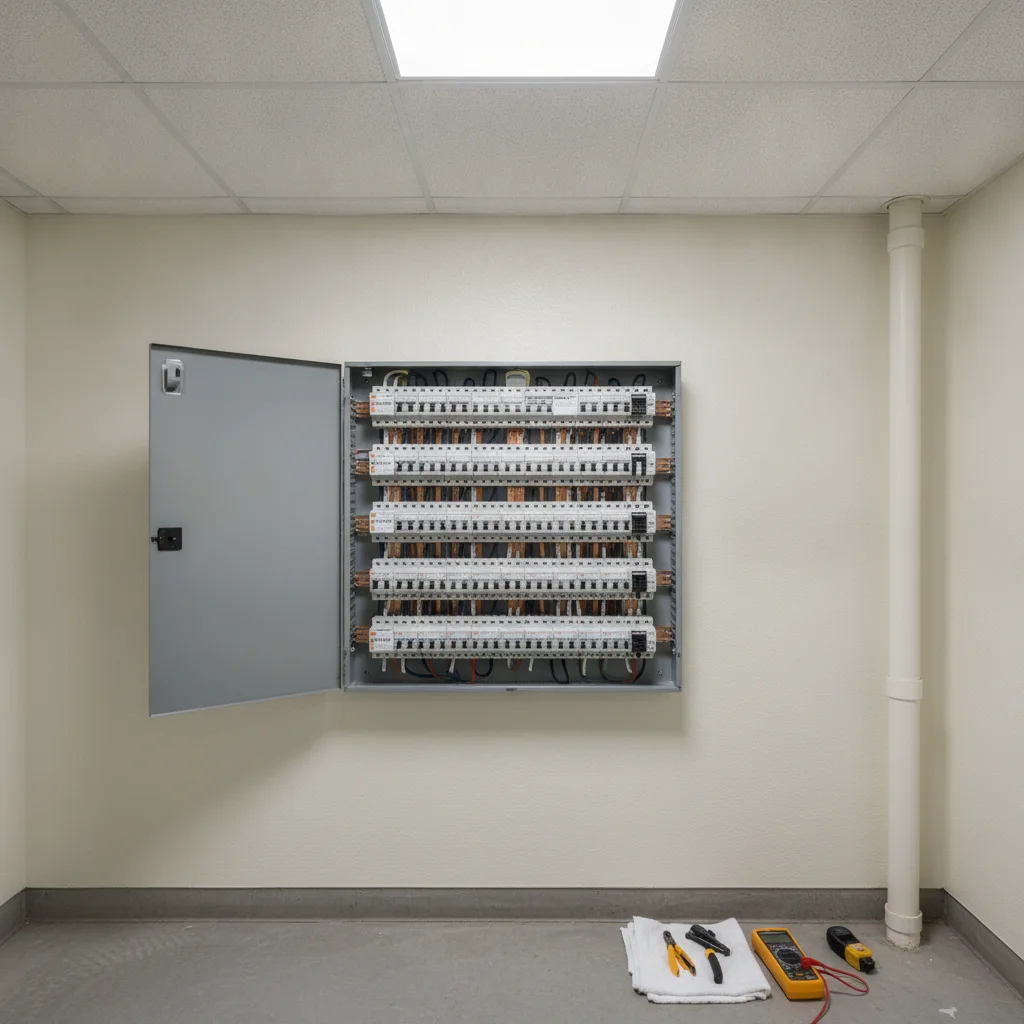
What a 200-Amp Panel Upgrade Actually Involves
A panel upgrade is not simply swapping one breaker box for another. It's a coordinated electrical project that touches multiple systems and requires licensed work, permits, and utility involvement. Here's what the process looks like in practice:
1. Load Calculation and Assessment
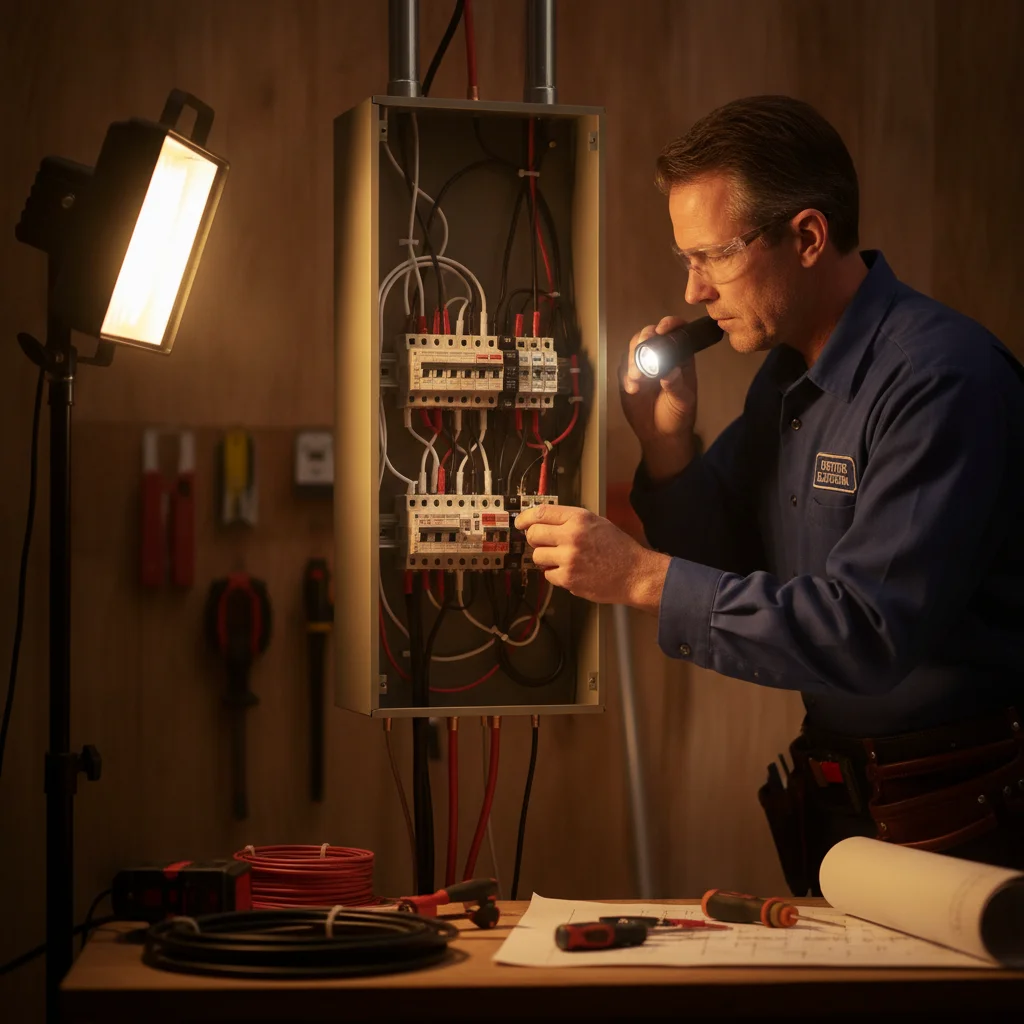
Before anything is purchased or scheduled, a licensed electrician performs a load calculation — a structured assessment of your home's total electrical demand based on appliances, square footage, HVAC, and other factors. This step determines whether an upgrade is genuinely necessary or whether your existing panel has headroom. Skip to the bottom of this article if you want to understand what triggers a genuine need vs. a premature recommendation.
2. Permit Application
Panel upgrades require a permit from your local authority having jurisdiction (AHJ), which is typically the city or county building department. Permits exist because this is high-stakes work — improperly done, it can create fire hazards or fail to meet utility interconnection requirements. Permit timelines vary widely: same-day in some rural jurisdictions, two to four weeks in busy urban markets.
3. Utility Coordination
Your electrician coordinates with your utility company to schedule a service disconnect. The utility must physically disconnect power at the meter before the panel can be replaced. In some cases — particularly in older neighborhoods — the utility's service drop (the wires from the street to your home) also needs upgrading, which the utility handles separately and which can add weeks to the timeline.
4. The Physical Work
The actual installation includes removing the old panel, installing the new 200-amp panel, replacing or upgrading the service entrance conductors and meter socket as required, updating the grounding system to current NEC code, and installing new main and branch breakers. The electrician may also replace corroded or undersized wiring near the panel during this process. Total labor time is typically four to eight hours for a straightforward replacement.
5. Inspection and Reconnect
After installation, an inspector from the AHJ visits to verify the work meets code. Once the inspection passes, your electrician coordinates the utility reconnect. If the inspection reveals deficiencies, those must be corrected before reconnect — adding time and potentially cost.
Panel Upgrade vs. EV Charger Circuit: Two Separate Projects
A panel upgrade and a Level 2 EVSE installation are distinct projects, though they're often bundled. If your panel already has sufficient capacity and an open breaker slot, an electrician only needs to run a new 240V dedicated circuit — no panel work required. Make sure any quote you receive breaks out these two scopes of work separately so you understand what you're actually paying for.
When a 60-Amp Panel Is a Non-Negotiable Upgrade
Homes with 60-amp fuse panels — common in houses built before 1960 — are operating at the margins of modern electrical demand even without an EV. If your home has one of these panels, upgrading isn't just about EV charging; it's a safety and insurance issue. Some homeowner's insurance carriers are reluctant to cover or renew policies on homes with original fuse panels.
After the panel is upgraded, your electrician can then run the dedicated 240V circuit for your Level 2 EVSE. That's a separate step, though it's often scheduled immediately after the panel work is complete. For guidance on choosing the right circuit size for your charger, see Choosing the Right Amperage for Your Home EV Charger.
What It Costs — and What Drives the Price
A 200-amp panel upgrade in the United States typically costs between $1,500 and $4,000 when you include labor, materials, permit fees, and utility coordination. The wide range reflects real variables:
- Geographic labor rates: Electricians in San Francisco or Boston charge significantly more per hour than those in smaller Midwestern markets.
- Service entrance condition: If your service entrance conductors or meter socket also need replacement, expect the higher end of that range.
- Panel location: A panel in an accessible utility room is easier to work on than one embedded in a finished wall or located far from the meter.
- Permit complexity: Some AHJs charge higher permit fees; others require more inspection steps.
- Utility service upgrade: If your utility needs to upgrade their equipment on your property, that cost is typically theirs — but it can delay your timeline significantly.
$1,500–$4,000
Typical 200-amp panel upgrade cost
National average range including labor, materials, permit fees, and utility coordination, per contractor data aggregated by Angi and HomeAdvisor (2024).
30%
Federal tax credit for EV charger installation
The 30C Alternative Fuel Vehicle Refueling Property Credit covers 30% of qualified installation costs, up to $1,000 for homeowners, through 2032 under the Inflation Reduction Act.
~48%
U.S. homes with 100-amp or smaller panels
Estimates from electrical industry sources suggest nearly half of American housing stock has 100-amp or sub-100-amp service, reflecting construction norms before modern electrical loads became common.
3–5 mi
Range added per hour at Level 1 (120V)
Standard Level 1 charging from a 120V/12A outlet delivers approximately 1.4 kW, translating to 3–5 miles of EV range per hour depending on vehicle efficiency.
1–3 weeks
Typical total project timeline
Including permit approval, utility scheduling, installation, and inspection, most 200-amp panel upgrades take one to three weeks from quote to completed reconnect in most U.S. markets.
The good news: if you're upgrading specifically for EV charging, the federal 30C tax credit covers 30% of qualified EV charger installation costs (up to $1,000 for homeowners) through 2032. Many state and utility programs offer additional rebates. Always check your utility's website and the Database of State Incentives for Renewables & Efficiency (DSIRE) before committing to the full out-of-pocket cost.
Ask for the Load Calculation in Writing
When you get quotes for a panel upgrade, ask each electrician to provide their load calculation results in writing. A reputable contractor will produce this document as a matter of course. If someone can't or won't provide it, that's a strong signal to look elsewhere. The calculation is also useful if you want a second opinion — you can hand it to another electrician to review without starting from scratch.
Smart EVSE as a First Step
If your panel is borderline, consider installing a smart EVSE before committing to a panel upgrade. Units with built-in load management — like those from Emporia or Wallbox — can often make a 100-amp panel workable for one EV indefinitely. You can always upgrade the panel later if your electrical demands grow, and the smart EVSE remains useful even in a 200-amp home.
Do You Actually Need One? How to Tell
This is the question that matters most for most EV buyers, and the honest answer is: it depends on a load calculation, not on a contractor's assumption.
Signs You Probably Don't Need an Upgrade
- Your home has a 100-amp or 150-amp panel and is relatively modern (built after 1990).
- You don't have an electric dryer, electric water heater, electric range, and central air conditioning all running simultaneously.
- You plan to charge at Level 1 (120V standard outlet) — this requires no electrical work at all in the vast majority of homes.
- You're willing to use a 32-amp EVSE instead of a 48-amp unit — lower amperage chargers impose less load on your panel.
- A smart EVSE with load management can throttle charging during peak household demand.
Signs You Likely Do Need an Upgrade
- Your home still has a 60-amp panel — these are genuinely inadequate for modern loads with or without an EV.
- Your load calculation leaves fewer than 20–30 amps of spare capacity after accounting for all existing loads.
- You plan to add a second EV and need simultaneous charging capability.
- Your panel is full — no open breaker slots — and a tandem breaker solution isn't feasible or code-compliant in your panel.
- Your electrician identifies safety issues (corrosion, improper wiring, outdated fuse box) that justify replacement regardless of the EV.
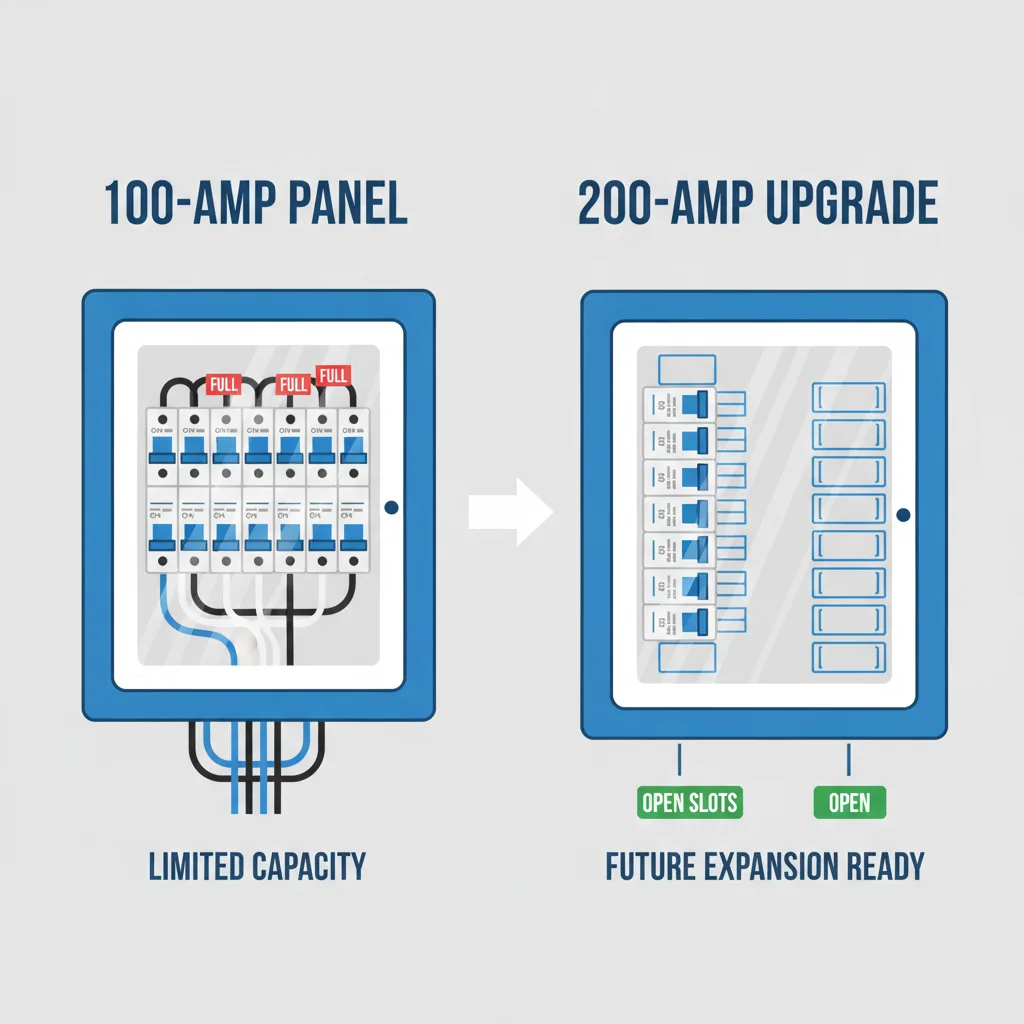
If you have two EVs or are planning to add a second, the panel upgrade calculus changes. Load Management for Homes With Multiple EVs: A Practical Overview walks through how intelligent load management systems handle dual-EV households without necessarily requiring a full upgrade.
Panel Upgrade vs. EV Charger Circuit: Two Separate Projects
A panel upgrade and a Level 2 EVSE installation are distinct projects, though they're often bundled. If your panel already has sufficient capacity and an open breaker slot, an electrician only needs to run a new 240V dedicated circuit — no panel work required. Make sure any quote you receive breaks out these two scopes of work separately so you understand what you're actually paying for.
When a 60-Amp Panel Is a Non-Negotiable Upgrade
Homes with 60-amp fuse panels — common in houses built before 1960 — are operating at the margins of modern electrical demand even without an EV. If your home has one of these panels, upgrading isn't just about EV charging; it's a safety and insurance issue. Some homeowner's insurance carriers are reluctant to cover or renew policies on homes with original fuse panels.
The Alternatives Worth Knowing About
Before signing off on a $2,500 panel upgrade, make sure your electrician has walked you through these alternatives:
Level 1 Charging (120V)
If you drive fewer than 30–40 miles per day, a standard 120V outlet may be all you need. Level 1 adds roughly 3–5 miles of range per hour of charging. Overnight, that's 35–50 miles — enough for most daily commutes. No panel upgrade, no new circuit, no permit in most jurisdictions. It's unglamorous but practical. See the full breakdown in Charging Your EV at Home.
Lower-Amperage Level 2 EVSE
A 32-amp EVSE on a 40-amp dedicated circuit pulls roughly 7.7 kW — fast enough to fully charge most EVs overnight — but draws significantly less power than a 48-amp unit. If your panel is borderline, sizing down your charger's amperage may resolve the capacity issue without touching the panel. Choosing the Right Amperage for Your Home EV Charger covers exactly this tradeoff.
Smart Load Management EVSE
Smart EVSE units — such as those using the OpenADR protocol or proprietary energy management systems from brands like Emporia, Wallbox, or ChargePoint — monitor your home's total real-time consumption and dynamically reduce charging speed when other loads spike. For many 100-amp panel homes, this is a complete solution. Devices typically cost $200–$600 more than a basic EVSE but are a fraction of a panel upgrade's cost.
Subpanel Addition
In some cases, adding a subpanel fed from spare capacity in the main panel — rather than replacing the main panel — can provide the additional circuit space needed at lower cost. This is situation-specific but worth asking about.
Ask for the Load Calculation in Writing
When you get quotes for a panel upgrade, ask each electrician to provide their load calculation results in writing. A reputable contractor will produce this document as a matter of course. If someone can't or won't provide it, that's a strong signal to look elsewhere. The calculation is also useful if you want a second opinion — you can hand it to another electrician to review without starting from scratch.
Smart EVSE as a First Step
If your panel is borderline, consider installing a smart EVSE before committing to a panel upgrade. Units with built-in load management — like those from Emporia or Wallbox — can often make a 100-amp panel workable for one EV indefinitely. You can always upgrade the panel later if your electrical demands grow, and the smart EVSE remains useful even in a 200-amp home.
Before your electrician arrives, work through the Home EV Charging Pre-Installation Checklist to document your panel's current state, available breaker slots, and existing loads. Walking in informed speeds the assessment and reduces the risk of paying for work you don't need.
“The number one mistake EV owners make is agreeing to a panel upgrade before anyone has run a load calculation. Half the time, the existing panel is perfectly adequate once you account for off-peak charging behavior and smart EVSE technology.”
— Brett Dobbins, Master Electrician and EV infrastructure contractor, Pacific Northwest
Making the Decision: A Practical Framework
Here's how to approach the panel upgrade decision without getting steamrolled by a contractor or a salesperson:
- Get a load calculation first. If any contractor quotes you a panel upgrade without performing or reviewing a load calculation, treat that as a yellow flag. The calculation is the evidence base for the recommendation.
- Get two quotes. Panel upgrade pricing varies meaningfully between electricians. A second opinion also gives you a baseline for whether the first recommendation was accurate.
- Ask specifically about alternatives. A good electrician will walk you through load management options, lower-amperage EVSE sizing, and subpanel possibilities before defaulting to a full upgrade.
- Check incentives before committing. Your utility, state energy office, or DSIRE database may have rebates that change the math significantly. Some utilities even subsidize panel upgrades directly as part of EV adoption programs.
- Consider the broader value. If your panel is genuinely old, undersized, or safety-questionable, upgrading it to 200 amps has value beyond EV charging — it supports future electrification (heat pumps, induction ranges) and may improve your home's resale value. In that context, the EV charging need may be the final nudge to do work that was already warranted.
For a complete view of EV ownership costs beyond the charging setup — including maintenance and insurance considerations — see EV Maintenance Basics and EV Insurance Guide.

All claims are backed by peer-reviewed research. Sources on request.