Key Takeaways
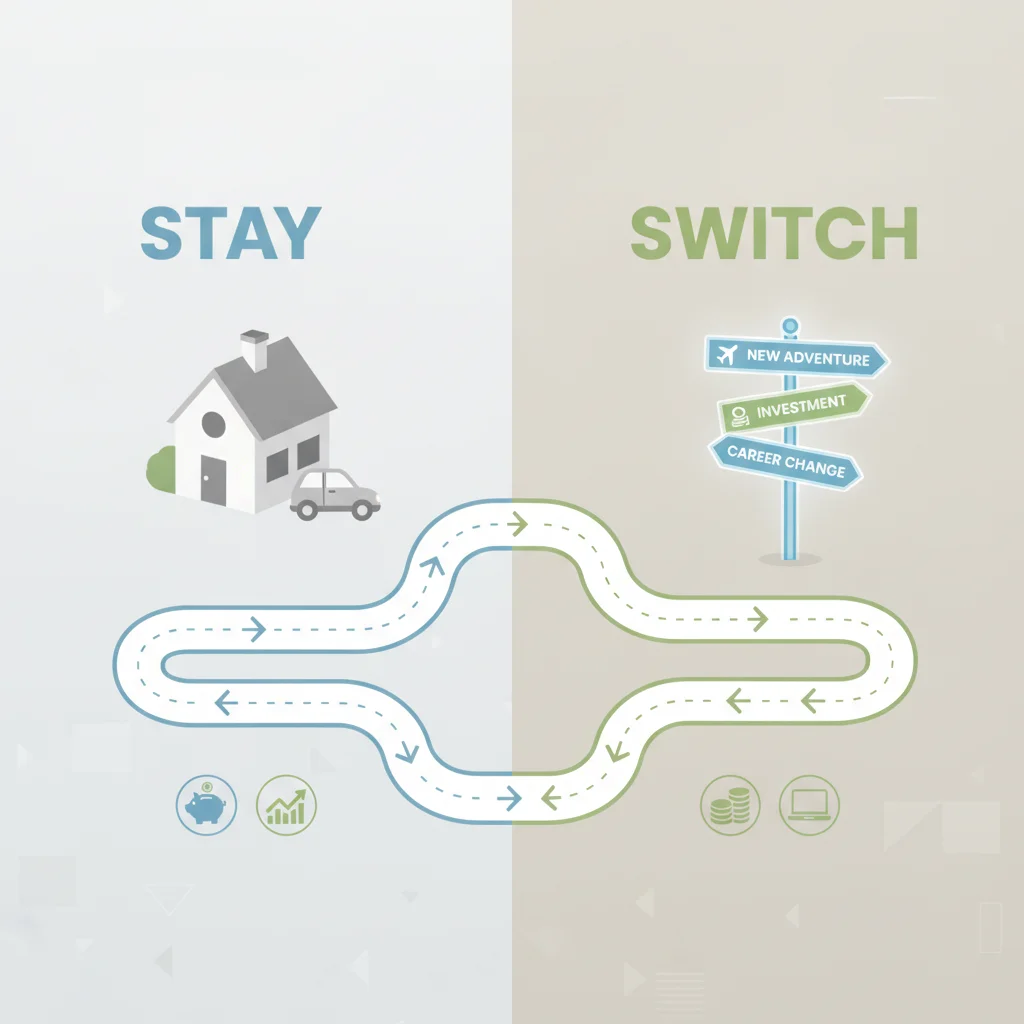
Option A
Loyalty Discounts
The reward for staying put — but often smaller than advertised.
Best for: Long-term policyholders who have built up accident forgiveness, claims-free history, or bundled policies that are genuinely competitive.
Option B
Switching Bonuses
The new-customer incentive — potentially bigger, but with strings attached.
Best for: Drivers whose current premiums have crept up without explanation and who are willing to do the legwork of comparing multiple quotes.
If you have accident forgiveness or a long claims-free streak
Loyalty Discounts
These perks have real dollar value and reset when you leave. Losing accident forgiveness before a future incident could cost far more than any switching bonus saves.
If your premium has risen more than 10% without a claim
Switching Bonuses
Unexplained rate increases — often tied to regional loss trends, not your record — are the clearest signal to shop around and let a new insurer compete for your business.
If you bundle home and auto with the same carrier
Loyalty Discounts
Multi-policy bundles can represent 10–25% savings across both policies. Re-shop the bundle as a package, not just the auto portion, before deciding to leave.
If you're a clean-record driver under 35 who's never compared rates
Switching Bonuses
New-customer pricing is most aggressive for low-risk drivers. If you've never shopped, there's a strong chance you're leaving real money on the table every six months.
If you've filed a claim in the last 12 months
Loyalty Discounts
Recent claims make you a higher-risk applicant to new insurers, meaning switching quotes may not be favorable. Stay put, ask about claims-forgiveness options, and wait 12–24 months.
The Loyalty Penalty: What Your Insurer Isn't Telling You
There's an uncomfortable truth buried in most auto insurance renewal notices: the longer you stay with the same insurer without shopping around, the more you're likely overpaying. The insurance industry calls this "price optimization" — the practice of raising rates incrementally on customers who show low propensity to shop. It's legal in most states, and it's widespread.
Loyalty discounts exist, but they rarely keep pace with these gradual increases. A 5% loyalty discount on a policy that's crept up 20% over four years isn't a reward — it's a consolation prize. According to a 2023 Consumer Federation of America analysis, long-term auto insurance customers paid an average of 6–9% more than new customers for equivalent coverage at the same insurer.
6–9%
Premium premium paid by loyal customers vs. new customers
Consumer Federation of America analysis found long-term auto insurance customers paid 6–9% more than new customers for equivalent coverage at the same insurer (2023).
$461
Average annual savings reported by drivers who switched insurers
J.D. Power's 2023 U.S. Auto Insurance Study cited average self-reported savings of $461 among drivers who switched carriers in the prior 12 months.
22%
Switchers dissatisfied at second renewal
J.D. Power found that 22% of customers who switched primarily on price were dissatisfied at their first renewal, often due to a significant rate increase.
36%
Drivers who never comparison-shop at renewal
A 2022 Insurance Research Council survey found that roughly one-third of auto insurance customers auto-renew every year without requesting a competing quote.
15%
Accident forgiveness rate increase avoided after first at-fault claim
Industry averages suggest a first at-fault accident raises premiums 15–40% without accident forgiveness, depending on carrier and state — a benefit worth preserving.
That doesn't mean loyalty is always the losing strategy. Some loyalty perks carry genuine, quantifiable value. The key is knowing what you actually have versus what's just marketing language on your declarations page.
What counts as a real loyalty benefit:
- Accident forgiveness: Your first at-fault accident doesn't trigger a rate increase. This can be worth $300–$700 annually for three to five years after an incident.
- Claims-free discount: Typically 5–15% off your premium after three to five years with no claims. This is real, stackable, and portable — but only at your current carrier.
- Diminishing deductible: Some insurers reduce your collision or comprehensive deductible by $50–$100 per year of claims-free driving, up to a cap. Geico, Nationwide, and Liberty Mutual each offer versions of this.
- Renewal guarantee: A small number of carriers promise not to cancel or non-renew a long-term customer after a single claim. Rare, but worth verifying in your policy documents.
If you have none of these — if your "loyalty discount" amounts to paperless billing credit and a 3% tenure discount — your insurer has given you very little reason to stay.
Switching Bonuses: How New-Customer Pricing Really Works
Every major insurer advertises switching savings. Geico promises 15 minutes saves 15%. Progressive runs Flo. State Farm runs Jake. What they're all selling is new-customer pricing — an initial rate that's structured to win your business, sometimes at a loss for the carrier, with the expectation that rates will normalize (or increase) over the following renewal cycles.
This is not a conspiracy; it's a standard customer acquisition model. The practical implication for you as a driver: the best rates often go to shoppers, not loyalists.

Here's how the math typically plays out. When you switch insurers with a clean driving record, you may qualify for:
- New-customer discount: Rarely labeled as such, but embedded in the initial quote. Effective value: 8–15% below your current rate for comparable coverage.
- Early shopper discount: Carriers like Progressive and Allstate offer discounts of up to 7% if you start your policy at least 7–10 days before your current policy expires. This rewards proactive shoppers.
- Competitor-rate match incentive: Some regional carriers will beat a competitor's verified quote by a defined percentage to win the business outright.
The catch — and it matters — is that these initial rates are not guaranteed at renewal. J.D. Power's 2023 U.S. Auto Insurance Study found that 22% of customers who switched primarily on price were dissatisfied at renewal, often because their second-year rate rose significantly. What those advertised switching savings actually mean is often quite different from the headline number.
The smarter move: treat switching bonuses as a price anchor, not a permanent discount. If you switch and save $400 in year one, set a calendar reminder to re-shop before your second renewal.
What 'Early Shopper' Discounts Actually Require
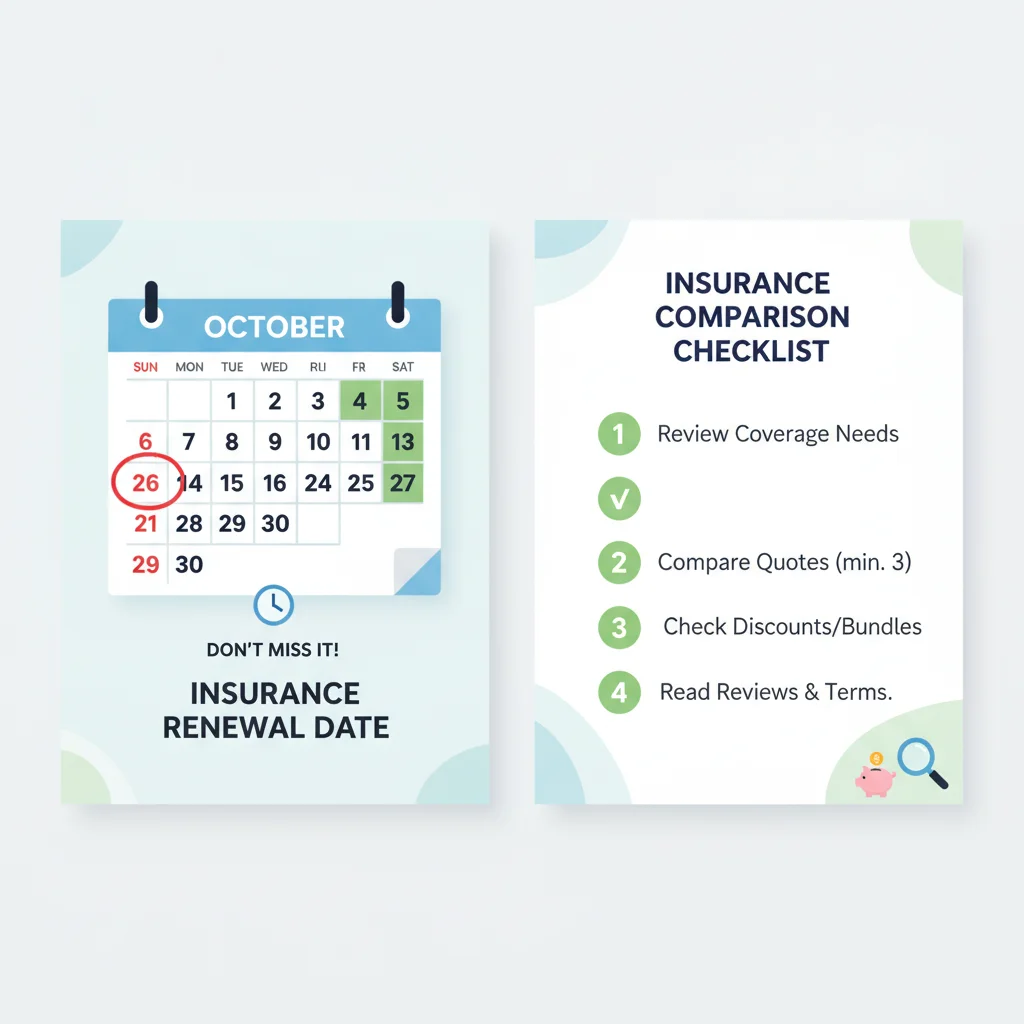
Several major insurers — including Progressive, Allstate, and Travelers — offer discounts of up to 7% if you initiate a new policy at least 7 to 10 days before your current policy expires. This is sometimes called a 'prior insurance' or 'early signing' discount. To qualify, you typically need to show proof of continuous coverage with no lapses. If you're switching, start the quote process at least two weeks before your renewal date to capture this benefit.
Price Optimization Is Legal in Most States
Price optimization — the practice of raising rates on customers who are statistically unlikely to shop around — is banned in California, Maryland, and a handful of other states, but is permitted in most of the country. This means your insurer may have data suggesting you're unlikely to leave, and they price accordingly. Shopping your policy annually is the simplest countermeasure, regardless of which strategy you ultimately choose.
Telematics Programs Can Work Alongside Either Strategy
Usage-based insurance programs (Progressive Snapshot, State Farm Drive Safe & Save, Allstate Drivewise) generate discounts based on your actual driving behavior — separate from loyalty or switching credits. If you're a low-mileage or smooth-braking driver, these programs can add 5–30% in additional savings on top of whatever base rate you negotiate. They're worth activating whether you stay or switch.
Side-by-Side: Loyalty vs. Switching on the Key Variables
Let's break down how both strategies compare across the dimensions that actually affect your wallet and your coverage.
| Criterion | Loyalty Discounts | Switching Bonuses |
|---|---|---|
| Typical savings range | 5–15% off premium | 8–20% off comparable rate |
| Dollar value (avg. $1,400 policy) | $70–$210/year | $112–$280/year |
| Savings durability | Ongoing, but eroded by rate creep | Strong year one; may normalize at renewal |
| Accident forgiveness preserved | Yes | No — resets at new carrier |
| Claims-free discount | Retained and grows over time | Starts over from zero |
| Effort required | Low — just renew | Moderate — quote, compare, switch |
| Risk of coverage gap | None | Low if timed at renewal; higher mid-policy |
| Best for bundled policies | Yes — bundle savings compound | Requires re-bundling; may not match |
| Negotiating leverage | Low — carrier knows you're staying | High — competing quotes create pressure |
| Ideal driver profile | Claims history, bundled, or near-incident | Clean record, single policy, rate-creeped |
One variable the table can't fully capture: the complexity of your situation. A driver with a bundled home-and-auto policy, a teenage child on the policy, and a recent fender-bender is in a very different position than a single adult with a 10-year clean record and one car. Comparing policies effectively requires running both scenarios with current and prospective carriers before committing either way.
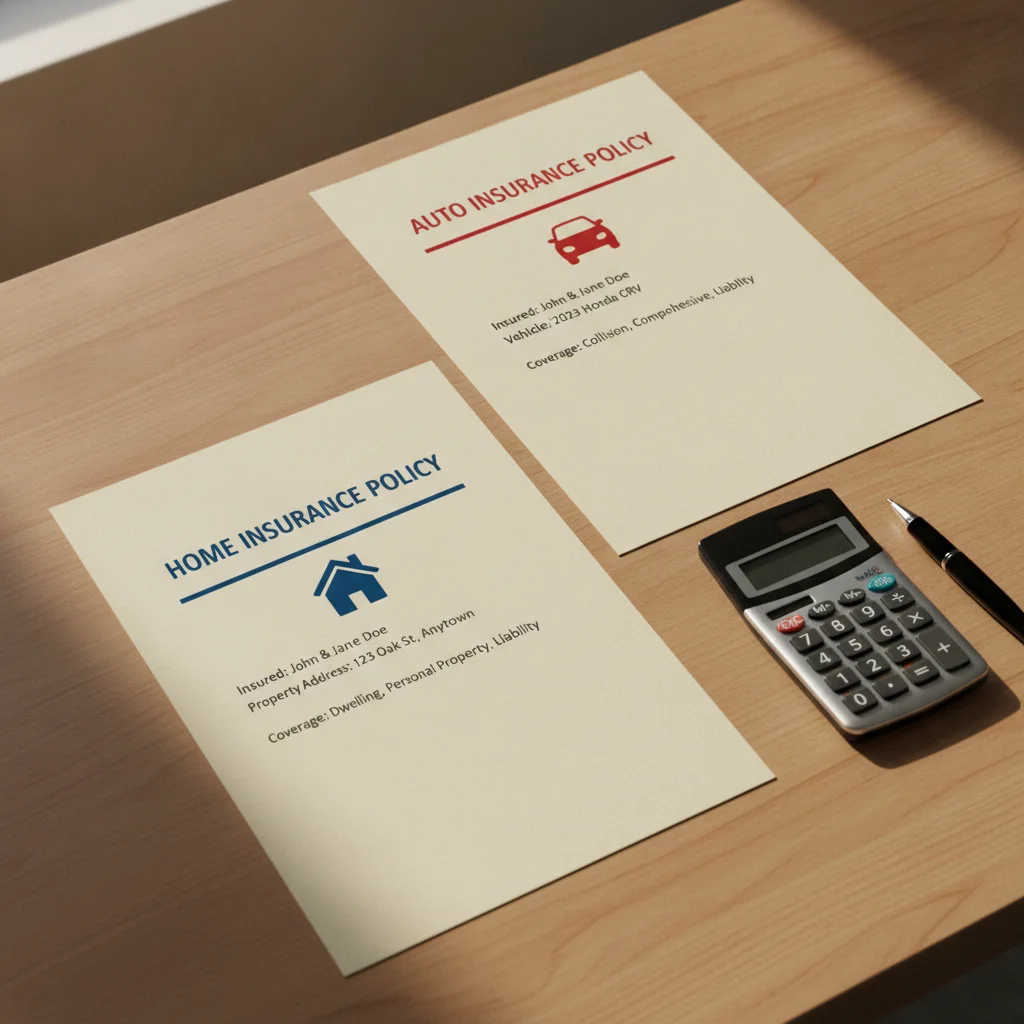
Bundling deserves special attention here. If your loyalty discount includes a multi-policy bundle with homeowners or renters insurance, switching your auto policy means potentially losing the bundle discount on both. See how that calculation shakes out in our analysis of when bundling home and auto is actually worth it.
How to Run the Numbers Before You Decide
The decision framework is straightforward, even if the math requires a few minutes of real work. Here's the process worth following every renewal cycle.
Step 1: Get your current loyalty value in dollars, not percentages
Ask your insurer — or check your declarations page — for a line-item breakdown of every discount applied to your policy. Convert each percentage to a dollar amount. A 10% loyalty discount on a $1,400 annual premium is worth $140. A claims-free discount of 8% is worth $112. Combined, that's $252 in genuine savings you'd lose on day one at a new carrier.
Step 2: Price your current coverage at three competing carriers
Use the same coverage limits and deductibles — don't let a low quote obscure itself with reduced coverage. Get quotes from at least one national carrier, one regional carrier, and one direct-to-consumer insurer (like USAA if you're eligible, or Erie if you're in their footprint). If the cheapest competing quote saves you less than $200 annually after accounting for the loyalty value you'd lose, staying is likely the better call.
Step 3: Factor in transition costs and risks
Switching is not free in every sense. Review: cancellation fees (rare but possible mid-policy), potential coverage gap if timing is mishandled, and the hassle of updating payment information, lender notifications, and mortgage servicer records if your lender requires proof of insurance. When switching insurers saves you money and when it creates a coverage gap walks through the timing risks in detail.
Step 4: Negotiate before you leave
This is the step most drivers skip entirely: call your current insurer, tell them you have a competing quote, and ask what they can do. Retention departments have more pricing flexibility than front-line customer service. In many cases, they can match or come within $50 of the competitor's quote — without you having to switch anything. If they can't match it, you've confirmed that switching is the right call.
Also worth stacking while you're at it: smaller discounts like paperless billing and auto-pay may not move the needle dramatically but add up over time within any policy.
Special Cases: When the Standard Advice Doesn't Apply
A few driver profiles break the general rules above and deserve separate consideration.
Young and new drivers
If you're under 25 or have fewer than three years of driving history, you're already in a high-rate bracket regardless of insurer. Switching bonuses are less likely to generate dramatic savings because your risk profile dominates the pricing. Focus instead on discounts tied specifically to your situation: good student discounts, driver training credits, and telematics programs that reward safe driving behavior. Which discounts actually move the needle for young drivers is worth reading before you shop.
Drivers with a recent at-fault accident or DUI
New carriers will see your record through the same motor vehicle report your current insurer has. You won't be hiding anything, and high-risk pricing will follow you. In this situation, loyalty — especially if you have accident forgiveness in place — is almost always the financially superior strategy. Wait until the incident ages off your record (typically three years for accidents, five to seven for serious violations) before aggressively shopping.
Drivers approaching retirement or reducing mileage significantly
If you're transitioning to low annual mileage — say, under 7,500 miles per year — make sure any new or existing insurer knows this. Low-mileage discounts and pay-per-mile programs (Metromile, now part of Lemonade; Allstate Milewise; Nationwide SmartMiles) may outperform either a loyalty discount or a standard switching bonus. The right category of insurer matters more than the loyalty-vs-switching question in this case.
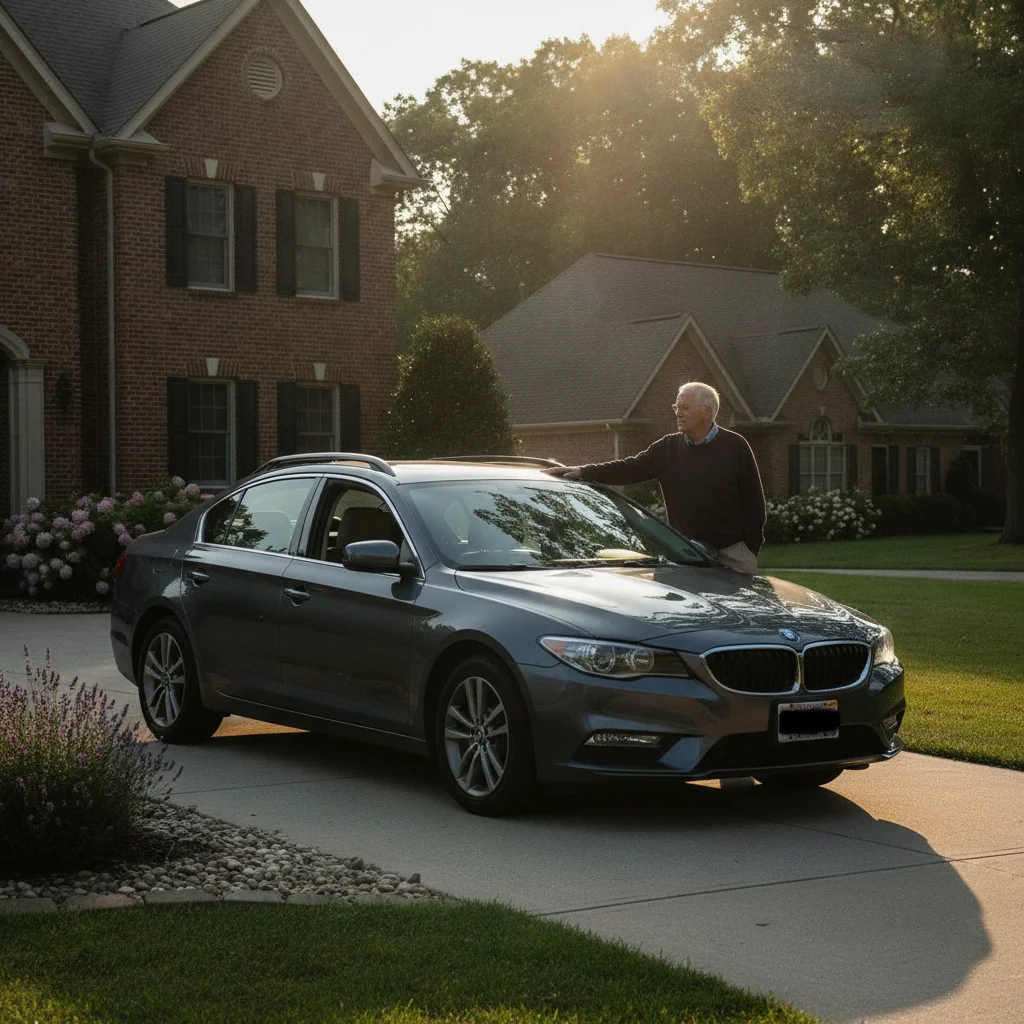
Renewal timing and the mid-policy switch question
If you decide switching wins on the numbers, timing matters. Switching at renewal is cleaner — no cancellation processing, no proration complexity, no risk of a gap. Switching at renewal vs. mid-policy covers the practical differences in detail, but the short version is: unless your current carrier has done something egregious (dramatic mid-term rate hike, claim handling failure), wait for your renewal date.
The Bottom Line: Shop Every Year, Stay Only If It Pencils Out
The loyalty vs. switching debate isn't really about brand preference or relationship value — it's a straightforward math problem that too many drivers never actually run. The data is consistent: drivers who shop their auto insurance at every renewal pay less over time than those who auto-renew without comparison. That's true even for drivers who ultimately stay with their current carrier after shopping.
The process of getting competing quotes is itself valuable. It either confirms your current rate is fair and gives you peace of mind, or it surfaces a better option. There's no downside to knowing.
Loyalty discounts are worth keeping — when they're real. Accident forgiveness, diminishing deductibles, and genuine claims-free credits represent tangible value that deserves a dollar figure in your comparison. But a loyalty discount that amounts to a 3% tenure credit on a policy that's risen 18% in three years is not a reason to stay.
Switching bonuses are worth taking — when the savings hold at renewal. The best switching strategy is a disciplined one: get the new-customer pricing, set a renewal reminder, and re-shop before the second-year rate normalizes. Repeat as needed.
If you want to go deeper on other ways to reduce what you're paying without compromising coverage, the comparison between raising your deductible vs. stacking discounts is a useful next read — both strategies operate on different levers and can complement a smart switching or loyalty decision.

All claims are backed by peer-reviewed research. Sources on request.