Key Takeaways
Meaningful premium savings when both policies are competitive
Multi-policy discounts typically range from 5% to 25% depending on the carrier and state. When both the home and auto policies are priced at or below standalone market rates, that discount represents genuine net savings — not just a lower price on inferior coverage.
Single point of contact for billing and policy management
Managing one account, one renewal cycle, and one customer service relationship reduces administrative overhead. This matters most when you need to update coverage limits, add a vehicle, or change your address — one call handles both policies.
Coordinated claims handling for simultaneous losses
When a single event — a hailstorm, for instance — damages both your vehicle and your home, having one carrier handle both claims can streamline the process and reduce the risk of disputes about which policy covers what.
Potential to stack additional loyalty discounts over time
Many carriers layer loyalty pricing on top of the bundle discount for customers who remain for multiple years. Combined with other available discounts, this can make a bundle increasingly cost-effective the longer it remains competitive.
Simpler coverage review at renewal
A single renewal conversation with one carrier can cover both policies simultaneously, making it easier to keep coverage limits aligned with changes in your home value or auto replacement cost.
Forces a compromise when carriers specialize differently
The insurer offering the best auto rates in your area may have mediocre homeowners underwriting, and vice versa. Bundling with a single carrier often means accepting a weaker product in at least one line rather than optimizing each policy independently.
Claims on one policy can affect rates on the other
With both policies at the same carrier, a significant home claim can sometimes trigger rate increases at auto renewal — even with a clean driving record. Separate carriers can't connect those events, protecting each policy's pricing from the other.
Discount may not offset coverage gaps or exclusions
Bundled home policies sometimes carry sublimits or exclusions not found in standalone policies from specialized carriers. A 10% premium discount is poor compensation for $50,000 less in dwelling coverage or an excluded peril relevant to your region.
Encourages complacency about shopping the market
Customers with two policies at the same carrier are statistically less likely to comparison-shop at renewal. Insurers know this, and bundled premiums can drift upward over time as carriers rely on switching inertia to retain customers.
May not be competitive for high-risk or specialty home situations
Coastal, wildfire-zone, or flood-prone homeowners often need specialized carriers that generalist bundling insurers either won't write or will price with significant coverage gaps. The bundle discount rarely compensates for inadequate catastrophic coverage.
Cancellation complications when switching mid-term
Exiting a bundle mid-term — because you found better pricing elsewhere — often means coordinating two separate cancellations and replacements simultaneously, increasing the risk of a temporary coverage lapse if timing isn't managed carefully.
Our Verdict
Bundling home and auto insurance is worth pursuing when both policies from a single carrier are genuinely competitive on price and coverage — not just cheaper in aggregate. When one policy is mediocre, you're subsidizing the discount with inferior protection. Run the numbers every 12–18 months, because the value of a bundle can erode as your risk profile changes or carriers reprice your market.
Best for homeowners in stable risk profiles who have already confirmed that their bundled carrier ranks well for claims handling in both home and auto — not just for drivers chasing the biggest headline discount.
What Bundling Actually Means — and What It Doesn't Guarantee
Bundling home and auto insurance means purchasing both policies from the same carrier, typically in exchange for a multi-policy discount applied to one or both premiums. Insurers market these discounts aggressively because a customer holding two policies is far less likely to shop around. That's worth understanding upfront: bundling is a retention tool as much as it is a savings vehicle.
What bundling does not guarantee is that you're getting the best available coverage in either category. A carrier that excels at auto insurance may have mediocre homeowners underwriting, weaker claims service for property damage, or restrictive home policy exclusions in your region. The reverse is equally common. Combining two average products and getting a 12% discount doesn't make them good products.
Before evaluating any bundle offer, establish your baseline: get separate quotes for home and auto from multiple carriers, then compare the bundled package to that baseline — not just to your current premiums. That comparison is the only honest way to assess what you're actually getting. See our guide on when bundling savings are real for a detailed walkthrough of that comparison process.

The Real Pros of Bundling Home and Auto
Done right, bundling can deliver meaningful benefits beyond a smaller premium bill. Here's what goes in the plus column when the conditions are right.
Meaningful premium savings when both policies are competitive
Multi-policy discounts typically range from 5% to 25% depending on the carrier and state. When both the home and auto policies are priced at or below standalone market rates, that discount represents genuine net savings — not just a lower price on inferior coverage.
Single point of contact for billing and policy management
Managing one account, one renewal cycle, and one customer service relationship reduces administrative overhead. This matters most when you need to update coverage limits, add a vehicle, or change your address — one call handles both policies.
Coordinated claims handling for simultaneous losses
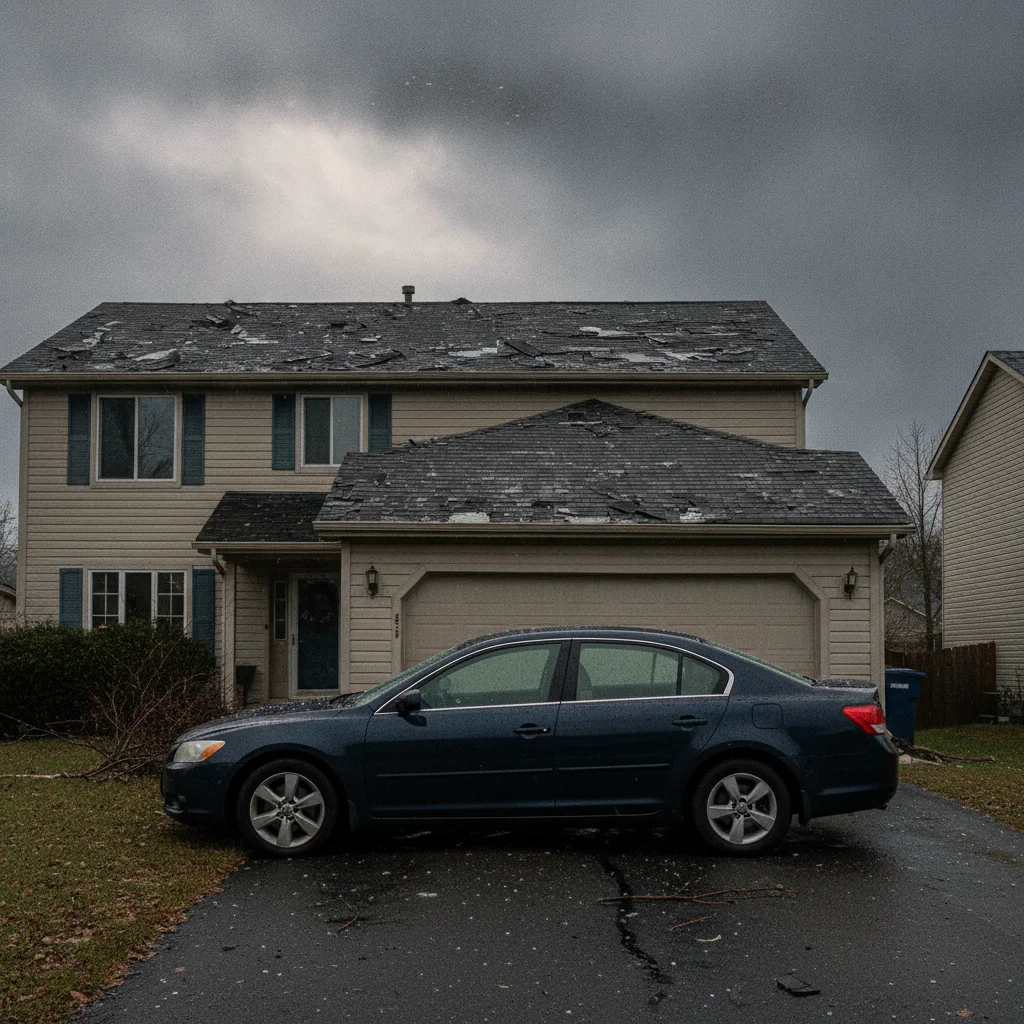
When a single event — a hailstorm, for instance — damages both your vehicle and your home, having one carrier handle both claims can streamline the process and reduce the risk of disputes about which policy covers what.
Potential to stack additional loyalty discounts over time
Many carriers layer loyalty pricing on top of the bundle discount for customers who remain for multiple years. Combined with other available discounts, this can make a bundle increasingly cost-effective the longer it remains competitive.
Simpler coverage review at renewal
A single renewal conversation with one carrier can cover both policies simultaneously, making it easier to keep coverage limits aligned with changes in your home value or auto replacement cost.
The administrative convenience alone is underrated. Drivers who have filed both an auto and a home claim in the same year — after, say, a storm that damaged their car and roof simultaneously — often find that having a single adjuster coordinating both claims cuts weeks off the resolution time. That's not universal, but it's a real operational advantage some carriers explicitly offer as a feature of bundled policies.
Where Bundling Falls Short
The discount percentage is real. The question is what you're giving up to get it. These are the disadvantages that don't show up in the marketing materials.
Forces a compromise when carriers specialize differently
The insurer offering the best auto rates in your area may have mediocre homeowners underwriting, and vice versa. Bundling with a single carrier often means accepting a weaker product in at least one line rather than optimizing each policy independently.
Claims on one policy can affect rates on the other
With both policies at the same carrier, a significant home claim can sometimes trigger rate increases at auto renewal — even with a clean driving record. Separate carriers can't connect those events, protecting each policy's pricing from the other.
Discount may not offset coverage gaps or exclusions
Bundled home policies sometimes carry sublimits or exclusions not found in standalone policies from specialized carriers. A 10% premium discount is poor compensation for $50,000 less in dwelling coverage or an excluded peril relevant to your region.
Encourages complacency about shopping the market
Customers with two policies at the same carrier are statistically less likely to comparison-shop at renewal. Insurers know this, and bundled premiums can drift upward over time as carriers rely on switching inertia to retain customers.
May not be competitive for high-risk or specialty home situations
Coastal, wildfire-zone, or flood-prone homeowners often need specialized carriers that generalist bundling insurers either won't write or will price with significant coverage gaps. The bundle discount rarely compensates for inadequate catastrophic coverage.
Cancellation complications when switching mid-term
Exiting a bundle mid-term — because you found better pricing elsewhere — often means coordinating two separate cancellations and replacements simultaneously, increasing the risk of a temporary coverage lapse if timing isn't managed carefully.
One risk that catches policyholders off guard: a major claim on one policy can sometimes trigger a rate review on the other. If your bundled home policy sees a large water damage claim, your auto premium — housed at the same carrier — may increase at renewal even though your driving record is clean. Separate carriers can't connect those dots. For a deeper look at scenarios where splitting policies wins, see when bundling backfires.
How to Compare Coverage Quality, Not Just Price
Most people compare insurance policies by premium. That's the wrong starting point. Premium is the cost of the policy; coverage is the value. Here's a practical framework for evaluating a bundle offer correctly.
Step 1: Isolate Each Policy and Score It Independently
Before you look at the combined price, evaluate the home policy against standalone homeowners quotes and the auto policy against standalone auto quotes. Use the same coverage limits and deductibles across all quotes to make the comparison honest. If either policy is priced above the standalone market average for equivalent coverage, the bundle discount is partially or fully offset.
Step 2: Check Claims Satisfaction Ratings by Line
J.D. Power publishes separate customer satisfaction studies for auto insurance and homeowners insurance. A carrier ranked highly for auto claims may rank poorly for property claims, or vice versa. Look up both scores before committing. The AM Best financial strength rating tells you whether the carrier can actually pay claims — that matters more than any discount if you're filing a large loss.
Step 3: Read the Exclusions, Not Just the Declarations Page
Bundled home policies sometimes carry exclusions or sublimits that standalone policies from specialist carriers don't include. Common issues: lower coverage sublimits for jewelry, electronics, or outbuildings; mold exclusions; or higher wind/hail deductibles in storm-prone states. These aren't visible on the summary page — they're in the policy form.
Step 4: Calculate the True Net Savings
Add up the total annual cost of the bundled home and auto package. Then add up the total annual cost of your best standalone home quote plus your best standalone auto quote. The difference is your real savings — or your real cost. Don't forget to factor in whether the coverage limits are equivalent. A bundle that's $300 cheaper but carries $50,000 less in dwelling coverage is not a better deal.
5–25%
Typical multi-policy discount range
According to the Insurance Information Institute, bundling home and auto typically yields a 5–25% discount, though the actual savings vary significantly by carrier, state, and individual risk profile.
~$646/yr
Average annual homeowners insurance premium
The National Association of Insurance Commissioners (NAIC) reports an average homeowners premium in this range nationally, though coastal and high-risk states can run two to three times higher.
1 in 3
Bundled customers who don't reshop at renewal
Industry research consistently shows that bundled policyholders are significantly less likely to comparison-shop at renewal, making them a reliable retention asset for carriers regardless of whether pricing remains competitive.
15%
Average gap between best and worst auto rates
A 2023 analysis by Consumer Reports found that for identical driver profiles, the spread between the lowest and highest auto insurance quotes from major carriers frequently exceeds 15%, meaning a bundle discount rarely offsets choosing the wrong carrier.
For additional strategies that don't require bundling, check out overlooked auto insurance discounts that may be available on your current policy regardless of whether you bundle.
Bundling Doesn't Require the Same Renewal Date
Many drivers assume bundling home and auto means both policies must renew at the same time. Most carriers will pro-rate one policy to align renewal dates, or simply manage them separately within the same account. Don't delay bundling — or avoid it — over a timing mismatch. Ask your carrier how they handle dual renewals before you assume it's a problem.
State Insurance Markets Vary Significantly
Bundling value is heavily influenced by your state's insurance regulatory environment and carrier competition. In states like Florida or California, where homeowners insurance markets are constrained or in crisis, the pool of carriers willing to bundle may be very small — and the ones that do may not be the strongest options. Always verify carrier financial strength ratings (AM Best A- or above is a reasonable baseline) regardless of bundle pricing.
Renters Can Bundle Too
Bundling isn't limited to homeowners. Renters insurance paired with auto insurance at the same carrier typically qualifies for a multi-policy discount, often in the 5–10% range. The same evaluation logic applies: confirm both policies are competitive on coverage and price, not just combined cost.
Situations Where Bundling Is Clearly Worth It
There are scenarios where bundling is the straightforward right call. If you're in one of these situations, consolidating makes practical sense:
- Your carrier has top-tier ratings in both lines. A carrier ranked in the top tier for both auto and homeowners claims satisfaction eliminates the quality compromise concern. You're not sacrificing anything to get the discount.
- You own a home in a low-risk region. In areas without frequent hurricanes, wildfires, or flooding, the specialized carrier advantage diminishes. A generalist insurer can price your home competitively because the risk profile is straightforward.
- You have multiple cars. Combining a multi-car discount with a bundling discount at the same carrier can stack meaningfully. See how that math plays out in our multi-car discount guide.
- You recently got married and are combining households. Merging policies is a natural transition point. Our guide to combining auto policies after marriage covers the logistics without losing coverage mid-transition.
- The net savings exceed $400/year with equivalent coverage. At that threshold, even if one policy is slightly below best-in-class, the financial benefit typically justifies staying bundled — as long as claims service is acceptable.
Situations Where Bundling Usually Isn't Worth It
These are the red flags that suggest you should keep your policies separate, or at least verify before consolidating:
- You live in a high-risk area for home insurance. Coastal homeowners, those in wildfire corridors, and residents of flood-prone regions often need specialized homeowners coverage that generalist carriers either won't offer or will significantly underprice at the policy limit. Forcing a bundle here can mean dangerously inadequate home coverage.
- The carrier has poor claims ratings in one line. A bundled policy is only as strong as its weakest component. If the carrier's home claims satisfaction is rated below average, a 15% discount is cold comfort when you're waiting six weeks for a roof settlement.
- Your auto risk profile is unusual. Young drivers, high-performance vehicles, or commercial use situations often mean specialized auto carriers offer dramatically better rates. A bundle discount rarely closes a 30–40% gap with a niche-market auto insurer.
- Loyalty is being rewarded with stagnation. Some bundled customers haven't had their coverage reviewed in years. Premiums drift upward while coverage stays static. Compare what loyalty discounts versus switching bonuses actually delivers over a multi-year period.
It's also worth noting that simply owning a home can lower your auto premium at many carriers — without bundling. How homeownership affects your auto rate explains why and how to use that to your advantage even if you keep policies separate.
Reviewing Your Bundle: When and How Often
A bundle that made sense three years ago may not make sense today. Carrier pricing shifts, your home's replacement cost changes, your driving record improves, and new carriers enter your market. The discount that justified consolidation can quietly erode while you're busy with other things.
Set a calendar reminder to run a full comparison — bundled versus separate — every 12 to 18 months, ideally 45–60 days before your renewal dates. That's enough lead time to switch without a lapse in coverage. If you're only shopping once every three or four years, you're almost certainly leaving money on the table.
When you do shop, use the same methodology as when you first bundled: compare equivalent coverage limits, check current claims ratings, and calculate the true net cost. Don't let the inconvenience of switching prevent you from making the rational financial decision. The full discounts and deals hub is a good starting point for understanding what else might be available when you do shop around.

One final point: if you decide to split your policies, time the transitions carefully. Cancel the policy you're replacing only after the new one is confirmed active. A one-day lapse in homeowners coverage can complicate your mortgage escrow; a lapse in auto coverage will almost certainly raise your next renewal quote with any carrier.

All claims are backed by peer-reviewed research. Sources on request.