Key Takeaways
Paperless Billing & Auto-Pay Discounts
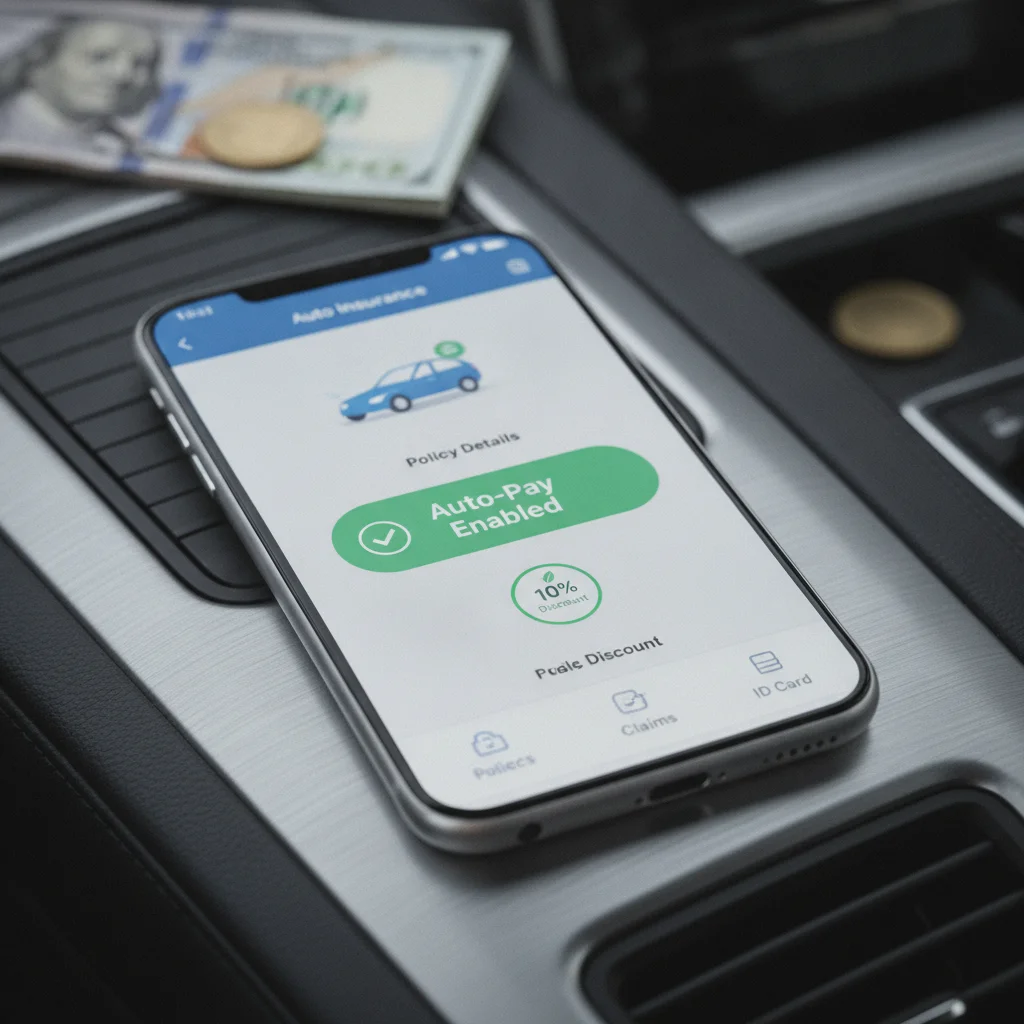
Paperless billing and auto-pay discounts are small premium reductions that insurers offer when you agree to receive policy documents electronically and allow your insurer to automatically charge your payment method each billing cycle. They are administrative savings that insurers pass along — at least partially — to policyholders who reduce paper handling and eliminate late or missed payments. Most discounts range from $2 to $10 per policy period, but across a full year and multiple vehicles, they can meaningfully trim your insurance bill.
These discounts are typically applied at the policy level, not per-vehicle, and may be structured as a flat dollar amount rather than a percentage — which means their relative value varies depending on your total premium.
Why Insurers Offer These Discounts in the First Place
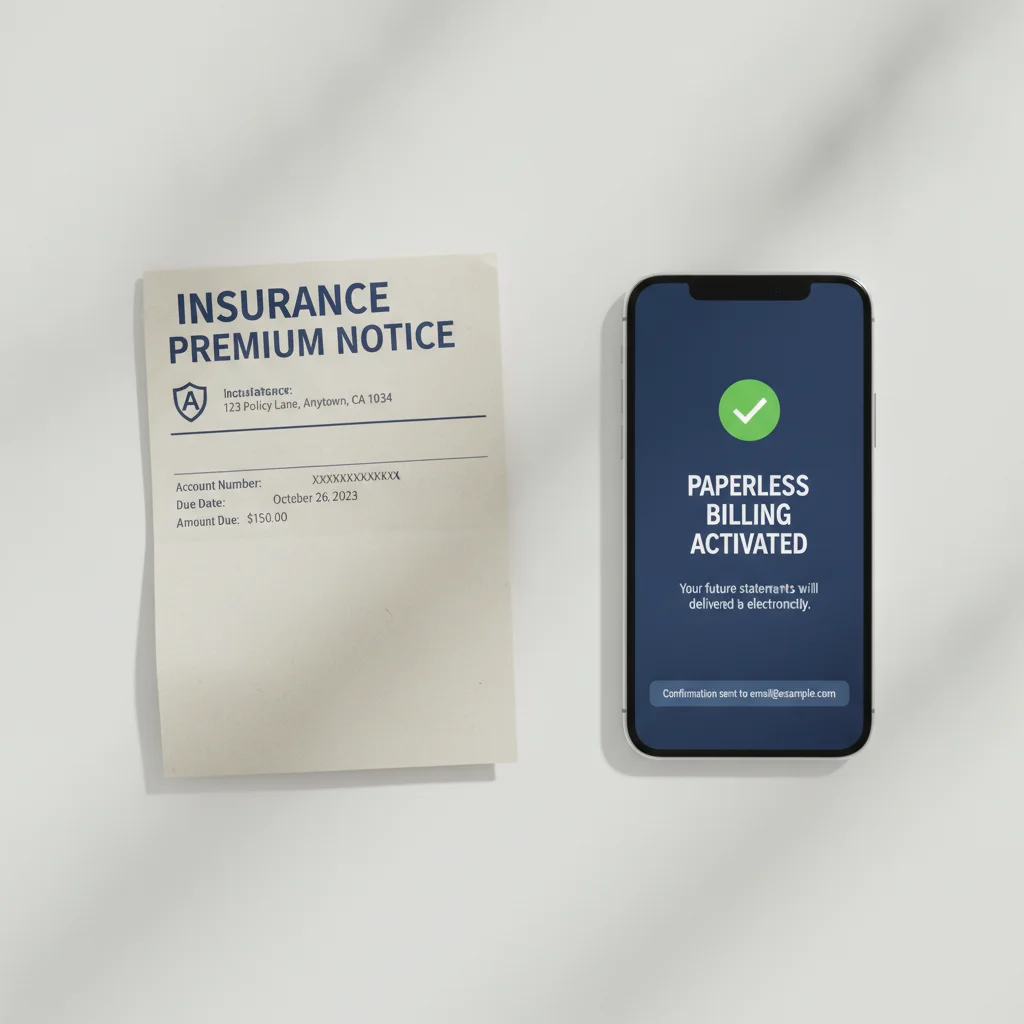
Insurance companies are not handing out discounts out of generosity — they're making a straightforward business calculation. Processing paper statements costs money: printing, postage, envelope stuffing, return mail handling. Industry estimates put the cost of paper billing at $1–$3 per statement for large organizations. Multiply that across millions of policyholders and you're looking at a meaningful operational line item. By nudging customers to go paperless, insurers reduce those costs, and they share a slice of the savings as an incentive.
Auto-pay serves a different purpose. When customers set up automatic payment, the insurer's accounts receivable problem gets dramatically simpler. Fewer missed payments means fewer cancellation notices, fewer reinstatements, and less administrative labor chasing down overdue premiums. From the insurer's perspective, an auto-pay customer is a more reliable revenue stream — and that reliability is worth a small concession on price.
Understanding this calculus is useful for a couple of reasons. First, it tells you why the discounts exist and why they're here to stay. Second, it reminds you that the savings being offered are genuinely smaller than the operational benefit to the insurer — which means you should never feel like you're getting a favor. You're agreeing to something that benefits the company; the discount is simply fair compensation.
See our guide to commonly missed auto insurance discounts for a broader look at reductions most drivers overlook entirely.
What the Numbers Actually Look Like at Major Insurers
Exact discount amounts are policy-specific and vary by state, coverage level, and insurer pricing rules. That said, here's a realistic picture of what most drivers encounter at the major carriers:
$50/yr
Maximum paperless discount at select carriers
Progressive and Allstate have advertised paperless billing savings up to $50 annually in certain states, per their publicly available discount pages.
$1–$3
Insurer cost per paper statement mailed
Industry estimates for large-volume mailers place the all-in cost of paper billing at $1–$3 per statement, covering print, postage, and handling.
2–4%
Typical combined discount for paperless + auto-pay
Based on average premium ranges and publicly stated discount amounts across major U.S. auto insurers, most drivers see a 2–4% effective reduction when claiming both discounts.
5 min
Time to enroll in both discounts online
Most major insurer portals and apps allow full enrollment in paperless billing and auto-pay in under five minutes once you're logged into your account.
$80–$100
Estimated combined annual value with rewards card
For a driver paying $1,400 semi-annually, stacking paperless discount, auto-pay discount, and 2% credit card cash-back can yield $80–$100 in annual savings.
| Insurer | Paperless Discount | Auto-Pay Discount | Notes |
|---|---|---|---|
| GEICO | Up to $2–$5/term | Up to $3–$6/term | Both available; enrolled via account portal |
| Progressive | Up to $50/year | Varies by state | Paperless discount applied at policy level |
| State Farm | Minimal to none | Available in most states | Focus is on Snapshot/Drive Safe programs |
| Allstate | Up to $50/year | Available; amount varies | Drivewise users may see additional stacking |
| Nationwide | Available | Available | SmartRide users can combine with both |
These figures are approximate ranges drawn from publicly available insurer resources and consumer reporting. Your actual discount will appear on your declarations page after you enroll. The key takeaway: paperless and auto-pay discounts are rarely transformative on their own, but they require almost zero effort to claim and stack cleanly on top of other reductions.
State Regulations Can Affect Discount Availability
Insurance is regulated at the state level, which means the same insurer may offer a $50 paperless discount in one state and nothing in another. California, in particular, has strict rate-filing rules that limit the types of discounts insurers can advertise. Always check your specific state's available discounts through your insurer's portal rather than relying on national advertising.
Mid-Term Enrollment Usually Applies at Next Billing Cycle
If you enroll in paperless or auto-pay partway through a policy term, most insurers won't retroactively adjust your current bill. The discount typically kicks in on your next billing cycle or at renewal. Don't assume a discount applied the day you enrolled — verify it on your next statement.
Paperless Doesn't Mean Paperless Everywhere
Some insurers still mail physical ID cards and certain state-required notices even when you're enrolled in paperless billing. This is a legal requirement in some states, not an oversight. Your day-to-day policy documents — statements, renewal packages, coverage summaries — will be digital, but don't be surprised if a physical piece of mail still arrives occasionally.
Progressive has historically been one of the more generous carriers on the paperless side, advertising savings as high as $50 annually in certain states. That's an outlier — but it illustrates why it's worth checking your specific carrier rather than assuming a generic $5 figure applies to your situation.
How to Actually Enroll (and Make Sure It Sticks)
The biggest reason drivers don't have these discounts is simple: they never signed up. The default for most policies, especially those quoted over the phone or through an agent, is paper billing and manual payment. Enrolling takes less than five minutes through most insurer portals.
- Log into your insurer's online account or mobile app. Every major carrier has one. If you've never set up your account, you'll need your policy number and the email address associated with the policy.
- Navigate to billing settings. Look for a section labeled "Billing & Payments," "Account Preferences," or "Policy Settings." Paperless enrollment is usually here, sometimes under "Communications" or "Delivery Preferences."
- Opt into paperless statements. You'll typically enter or confirm an email address. Read the confirmation — some carriers require you to verify via a link sent to that email before the discount activates.
- Set up auto-pay. Add your bank account (routing + account number) or a debit/credit card. Choose the payment date if the insurer allows it — pick a date a few days after your regular payday to avoid overdraft risk.
- Confirm both discounts appear on your account. After enrolling, check your policy summary or billing page. The discounts should be reflected within 24–48 hours or at your next billing cycle. If they aren't showing, call your insurer — some require a manual update by an agent.
Enroll Every Policy You Hold With the Insurer
If you have multiple vehicles or a bundled home-and-auto policy, enroll each one separately in paperless and auto-pay. Discounts are typically applied per policy, not per account — so failing to enroll all your policies means leaving savings unclaimed. Check each policy's billing settings individually in the portal.
Whitelist Your Insurer's Email Domain
After going paperless, add your insurer's email domain to your safe-sender list or contacts immediately. Rate change notices, renewal reminders, and cancellation warnings all come via email once you're enrolled. Missing one of these messages because it landed in spam can have real financial and coverage consequences.
Verify the Discount Appears on Your Next Statement
Enrollment and discount application are two separate steps that don't always happen simultaneously. After signing up for paperless billing or auto-pay, pull up your next policy statement and confirm both discounts are listed under your premium breakdown. Screenshot your enrollment confirmation in case you need to dispute a missing discount.
If you manage multiple vehicles or have a bundled home-and-auto policy, enroll each policy separately for paperless and auto-pay. The discounts may apply independently to each policy, potentially doubling or tripling your total savings with no additional action.
Stacking These Discounts With Others for Maximum Effect
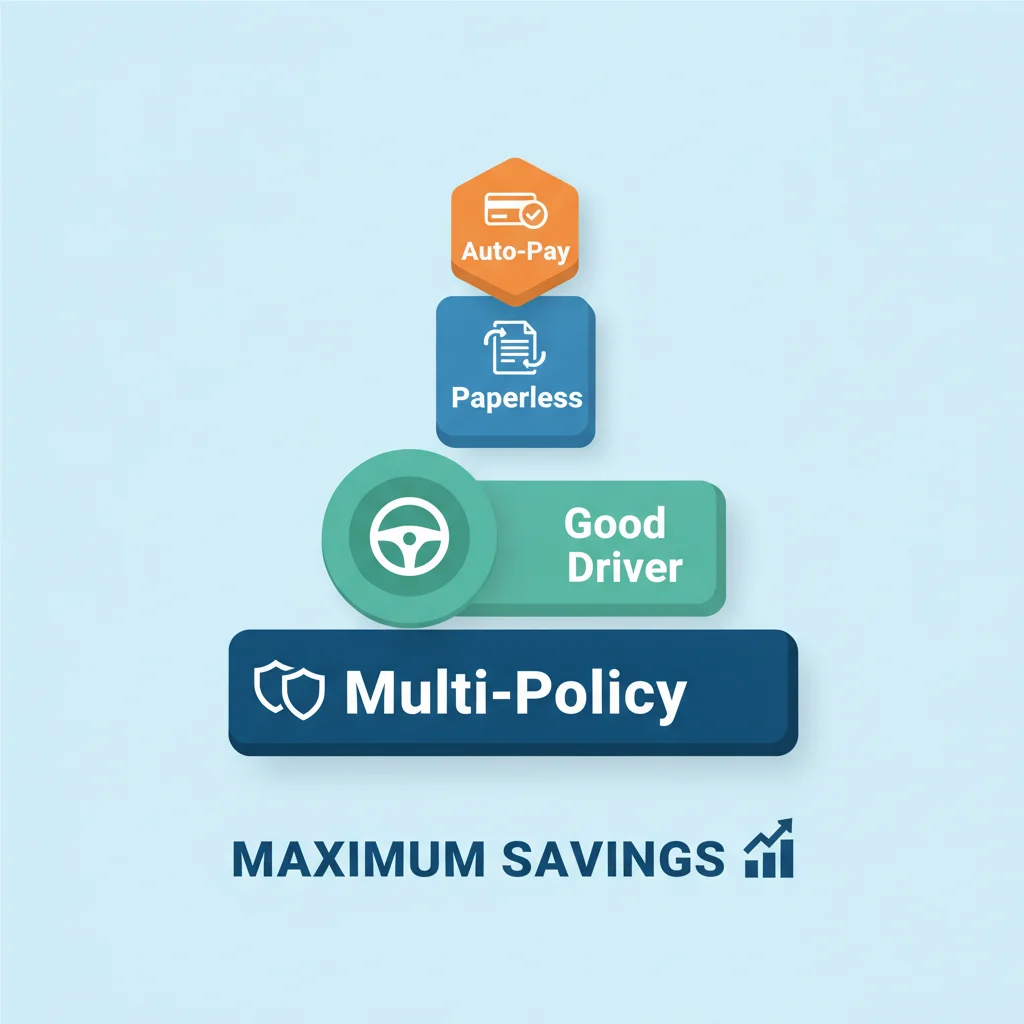
Paperless and auto-pay discounts are best understood as the low-hanging fruit in your broader discount strategy — not a complete strategy in themselves. Their real value emerges when you layer them on top of reductions you already qualify for.
Consider a driver who has already claimed a multi-policy bundle discount (10–15%), a good driver discount (5–10%), and a low-mileage discount. Adding paperless and auto-pay might only move the needle another 2–4%, but in percentage terms that's compounding — and in dollar terms it could mean $30–$80 annually across a household with two vehicles.
For young drivers, who face the steepest base premiums, even small percentage-equivalent savings matter disproportionately. Our article on which discounts actually move the needle for young drivers covers this dynamic in detail.
Another smart pairing: if your insurer offers a telematics or usage-based program, enroll in that alongside paperless and auto-pay. Usage-based insurance programs can yield 5–30% reductions for safe, low-mileage drivers — and they typically don't conflict with administrative discounts like paperless billing.
One thing to keep in mind: if you're considering switching carriers, make sure to factor in whether your current paperless and auto-pay savings are replicated by the new insurer. Our analysis of loyalty discounts versus switching bonuses can help you make that comparison systematically.
Credit Cards vs. Bank Accounts for Auto-Pay: A Small But Real Decision
When setting up auto-pay, you'll typically choose between a bank account (ACH direct debit) or a credit card. Most insurers accept both, though some charge a convenience fee for card payments — if that's the case, the fee can easily wipe out the auto-pay discount, so check first.
If your insurer accepts credit card auto-pay with no fee, consider using a card that earns rewards. A 1.5–2% cash-back card applied to, say, $1,200 in annual premiums yields another $18–$24 back — stacked on top of the auto-pay discount itself. That's not life-changing money, but it's real value requiring zero additional action.
“The drivers who pay the least for auto insurance aren't necessarily the safest drivers — they're the most organized ones. They know every discount they qualify for, they've enrolled in every low-effort program available, and they check their policy every year to make sure nothing has slipped.”
— J.D. Power Auto Insurance Study Commentary, Annual consumer satisfaction benchmark for U.S. auto insurance
Bank account (ACH) auto-pay is the safer default if you want to guarantee no convenience fees and maintain a cleaner paper trail for your premium payments. It also tends to process more reliably than card payments, reducing the risk of a declined transaction causing a coverage lapse.
Enroll Every Policy You Hold With the Insurer
If you have multiple vehicles or a bundled home-and-auto policy, enroll each one separately in paperless and auto-pay. Discounts are typically applied per policy, not per account — so failing to enroll all your policies means leaving savings unclaimed. Check each policy's billing settings individually in the portal.
Whitelist Your Insurer's Email Domain
After going paperless, add your insurer's email domain to your safe-sender list or contacts immediately. Rate change notices, renewal reminders, and cancellation warnings all come via email once you're enrolled. Missing one of these messages because it landed in spam can have real financial and coverage consequences.
Verify the Discount Appears on Your Next Statement
Enrollment and discount application are two separate steps that don't always happen simultaneously. After signing up for paperless billing or auto-pay, pull up your next policy statement and confirm both discounts are listed under your premium breakdown. Screenshot your enrollment confirmation in case you need to dispute a missing discount.
Before finalizing your auto-pay setup, confirm whether your insurer offers the full auto-pay discount regardless of payment method, or only for ACH bank transfers. Call or check the FAQ in your account portal — this single detail can determine whether a rewards card actually adds value for you.
Risks to Watch and How to Stay Protected
Neither of these discounts comes with meaningful risk, but a few edge cases are worth knowing about before you enroll.
Payment failures
Auto-pay only works if the underlying payment method stays valid. A card expiring, a bank account changing, or an overdraft can all cause a missed payment. Most insurers give a short grace period — typically 10–30 days — before canceling coverage, but a lapse on your record can affect future rates. Set a calendar reminder two weeks before your estimated billing date to verify your payment info is current.
Missing important policy communications
Going paperless means rate change notices, renewal documents, and coverage updates land in your email inbox. If your insurer's emails end up in spam, you could miss a significant premium increase and not realize it until money is already drafted. Whitelist your insurer's email domain and do a quick policy review each renewal cycle. For a deeper look at how digital management affects your overall policy relationship, see what's changed for auto insurance in the digital era.
Discount not appearing on your policy
Enrollment confirmation doesn't always mean the discount has been applied. After signing up, check your next billing statement or policy declarations page to verify both discounts are reflected. If they're missing, a short call to your insurer typically resolves it. Keep a screenshot of your enrollment confirmation as documentation.
State Regulations Can Affect Discount Availability
Insurance is regulated at the state level, which means the same insurer may offer a $50 paperless discount in one state and nothing in another. California, in particular, has strict rate-filing rules that limit the types of discounts insurers can advertise. Always check your specific state's available discounts through your insurer's portal rather than relying on national advertising.
Mid-Term Enrollment Usually Applies at Next Billing Cycle
If you enroll in paperless or auto-pay partway through a policy term, most insurers won't retroactively adjust your current bill. The discount typically kicks in on your next billing cycle or at renewal. Don't assume a discount applied the day you enrolled — verify it on your next statement.
Paperless Doesn't Mean Paperless Everywhere
Some insurers still mail physical ID cards and certain state-required notices even when you're enrolled in paperless billing. This is a legal requirement in some states, not an oversight. Your day-to-day policy documents — statements, renewal packages, coverage summaries — will be digital, but don't be surprised if a physical piece of mail still arrives occasionally.

All claims are backed by peer-reviewed research. Sources on request.