Key Takeaways
Upside-Down Car Loan
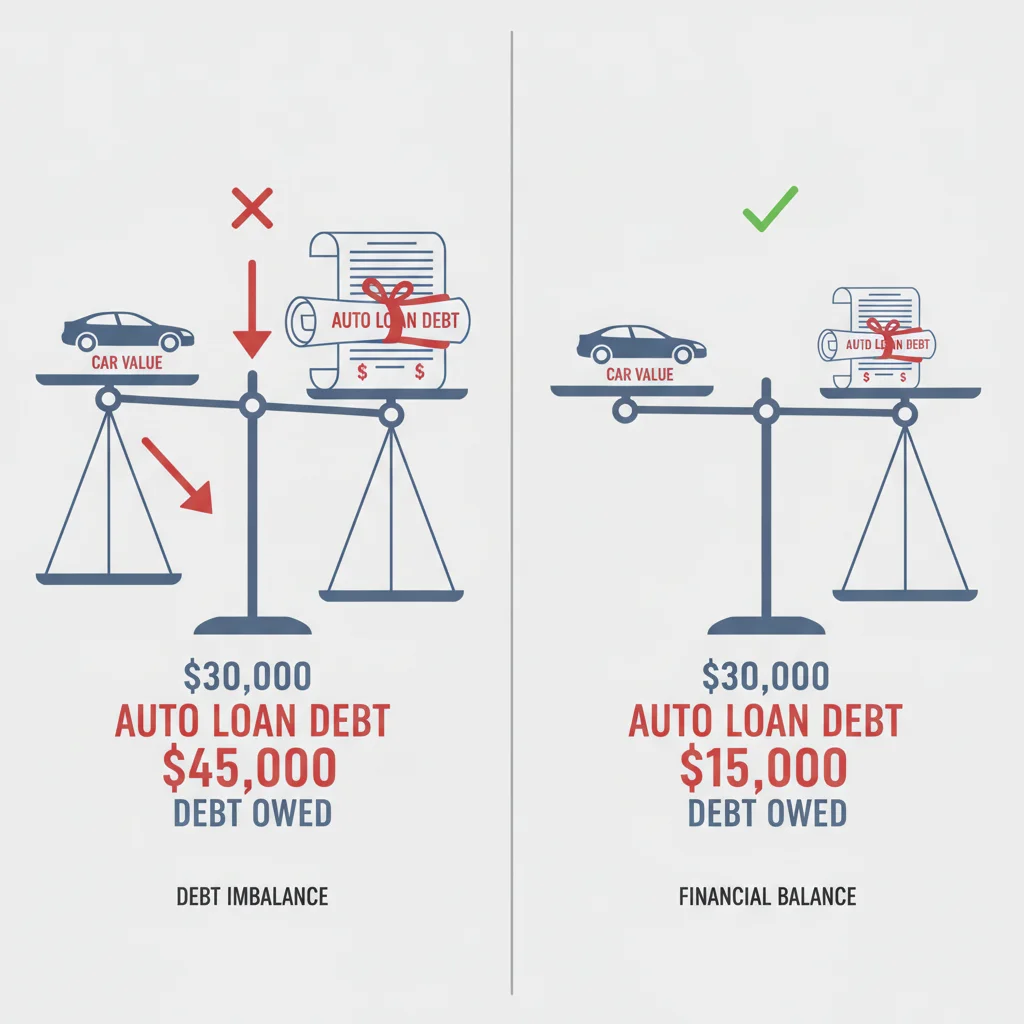
An upside-down car loan — also called being "underwater" or having negative equity — means you owe more on your auto loan than your car is currently worth on the market. For example, if your loan balance is $22,000 but your car's trade-in value is only $16,000, you're $6,000 upside down. This situation creates financial risk because if you need to sell, trade in, or total the car, you still owe that gap out of pocket.
Negative equity is calculated as: current loan balance minus current market value (often measured by trade-in or private-party value from sources like Kelley Blue Book or Edmunds). The gap can widen as depreciation accelerates or loan amortization front-loads interest.
Why Negative Equity Happens in the First Place
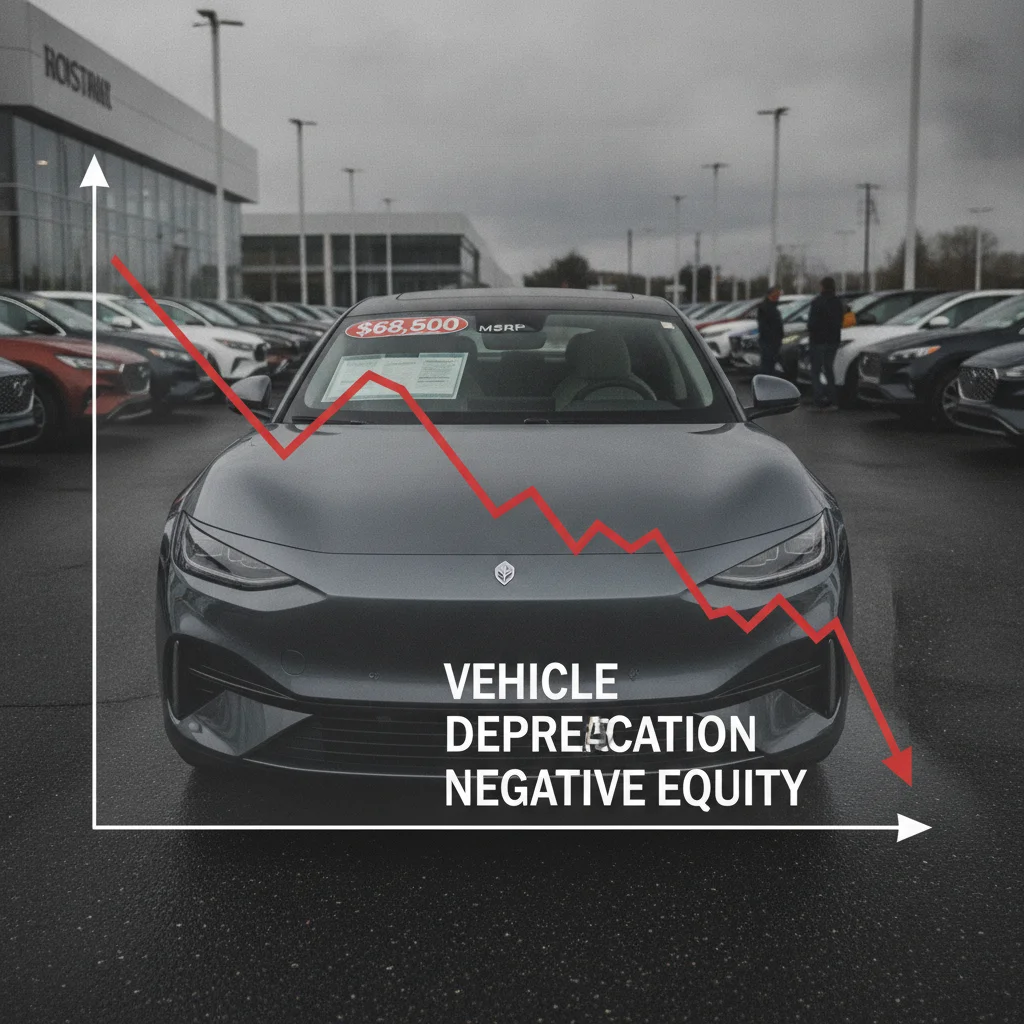
The upside-down car loan problem has a straightforward cause: cars depreciate faster than most loan balances decrease. The moment you drive a new vehicle off the lot, it can lose 10% or more of its retail value. By the end of the first year, that figure often climbs to 20–25%. Your loan balance, meanwhile, shrinks much more slowly — especially in the early months when your payments are weighted heavily toward interest rather than principal.
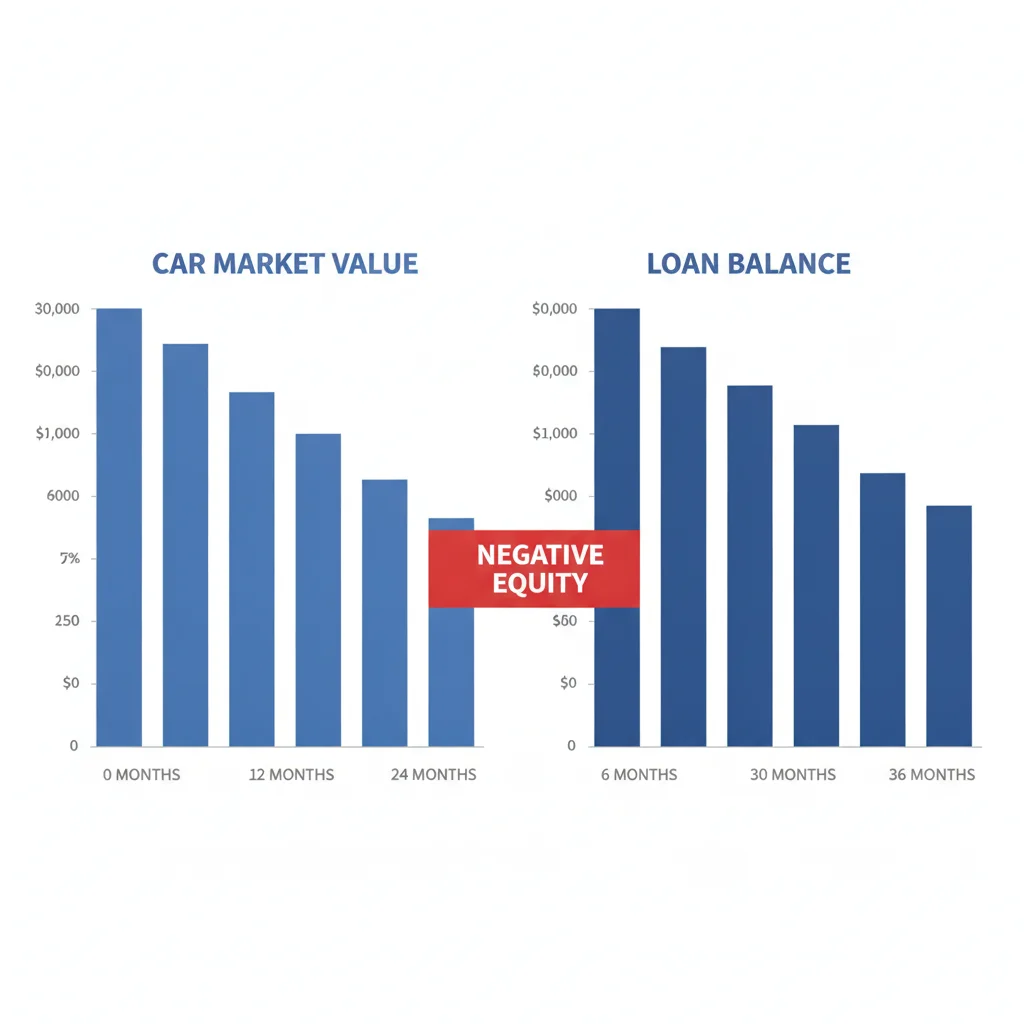
Here's a concrete illustration. Suppose you buy a new car for $35,000 with no money down. After one year, the car might be worth $27,000. If you took a 72-month loan at 7% interest, your balance after 12 payments is roughly $30,200. That means you're already about $3,200 underwater — and you've never missed a payment.
This isn't unusual. It's the predictable result of how auto loan amortization works. Early payments cover mostly interest. Combined with rapid early depreciation, the math almost always produces a gap. The question is whether you can control how large that gap gets — and a down payment is your primary lever.
Depreciation Varies Significantly by Vehicle Type
Luxury vehicles, sports cars, and certain pickups and SUVs can depreciate at very different rates. Some full-size trucks actually hold their value better than compact sedans, while some luxury brands lose 40% in two years. Before committing to a vehicle, look up its historical depreciation rate — it directly affects how long you'll carry negative equity.
Gap Insurance Has Real Limits
Gap insurance covers the difference between your loan balance and the insurer's actual cash value payout if your car is totaled. However, it doesn't protect you during a sale or trade-in, and many policies have a cap — often 25% above the vehicle's value — that may not cover deeply underwater balances. Read the policy carefully before relying on it as a backstop.
Preapproval Helps You Budget Precisely
Getting preapproved for an auto loan before you shop tells you your rate and your borrowing limit, allowing you to calculate exactly how much down payment you need for different vehicle prices. It also separates the financing conversation from the purchase negotiation, which typically leads to better outcomes on both fronts.
For a deeper look at how depreciation curves create this dynamic, see our article on why being underwater is easier than you think.
How a Down Payment Shifts the Math in Your Favor
A down payment does something simple but powerful: it reduces the amount you borrow from day one. That smaller loan balance has to chase the same depreciating car, which means it's more likely to stay at or below the car's actual market value throughout the loan term.
~25%
New car value lost in year one
Industry data from Edmunds and Kelley Blue Book consistently shows new vehicles lose 15–25% of their value within the first 12 months of ownership.
31%
Car owners with negative equity at trade-in
According to Edmunds' 2023 market data, nearly one in three trade-in transactions involved a vehicle with outstanding negative equity.
$6,054
Average negative equity rolled into new loans
Edmunds reported that in 2023, buyers who traded in underwater vehicles carried an average of over $6,000 in negative equity into their next purchase.
72–84 mo
Most common high-risk loan terms
Experian's 2023 State of the Automotive Finance Market report found that loans of 73–84 months accounted for over 32% of new vehicle financing.
20%
Recommended minimum down payment on new cars
Consumer finance experts widely recommend at least 20% down on new vehicles to offset first-year depreciation and keep loan balances below market value.
Let's run the same $35,000 car example with a $7,000 down payment (20%). Now you're financing $28,000. At the same 7% rate over 72 months, your balance after year one is about $24,200. The car is still worth roughly $27,000 — meaning you now have about $2,800 in positive equity. That's a swing of roughly $6,000 compared to the no-money-down scenario, simply from putting cash in at the start.
The benefits don't stop at equity position. A smaller loan balance also means:
- Lower monthly payments — freeing up cash flow for other priorities
- Less total interest paid — because you're borrowing less for a shorter effective period
- Faster equity building — as more of each payment goes toward principal
- More flexibility — if you need to sell, refinance, or switch vehicles before the loan ends
Use the 20% Rule as Your Starting Point
For new cars, aim to put at least 20% down to offset the first-year depreciation hit. For used vehicles, 10% is often sufficient since the steepest depreciation has already occurred. If you can't hit those thresholds, consider a less expensive vehicle rather than stretching the loan term.
Avoid Financing Taxes and Fees When Possible
Dealer fees, sales tax, registration, and documentation charges can add $2,000–$5,000 to your transaction. When you finance these costs, you're borrowing money for expenses that have zero residual value — pushing your loan balance further above the car's worth from day one. Pay them out of pocket if at all possible.
Check Your Payoff Amount Before Trading In
Before visiting a dealership, request your official payoff amount from your lender — not just your remaining balance, since these can differ by hundreds of dollars due to interest accrual. Then compare it to your vehicle's current market value using Kelley Blue Book or Edmunds. Knowing your equity position before negotiating gives you real leverage.
The 20% rule applies most strongly to new vehicles. For used cars — which have already absorbed the steepest depreciation — 10% down is often sufficient. If you're buying a getting loan preapproval before you shop, you'll already know your borrowing ceiling and can plan your down payment accordingly.
The Hidden Danger of Long Loan Terms
Down payment size isn't the only variable at play. The length of your loan term has an enormous effect on how quickly your balance tracks the car's value — and how long you stay exposed to negative equity.
A 48-month loan amortizes aggressively. Your balance drops fast enough that even with normal depreciation, most borrowers build equity within 18–24 months. A 72-month or 84-month loan is a different story. In the first two years of an 84-month loan, you might pay off only 18–20% of the principal. Meanwhile, the car has depreciated 30–40%. That gap can persist for three to four years.
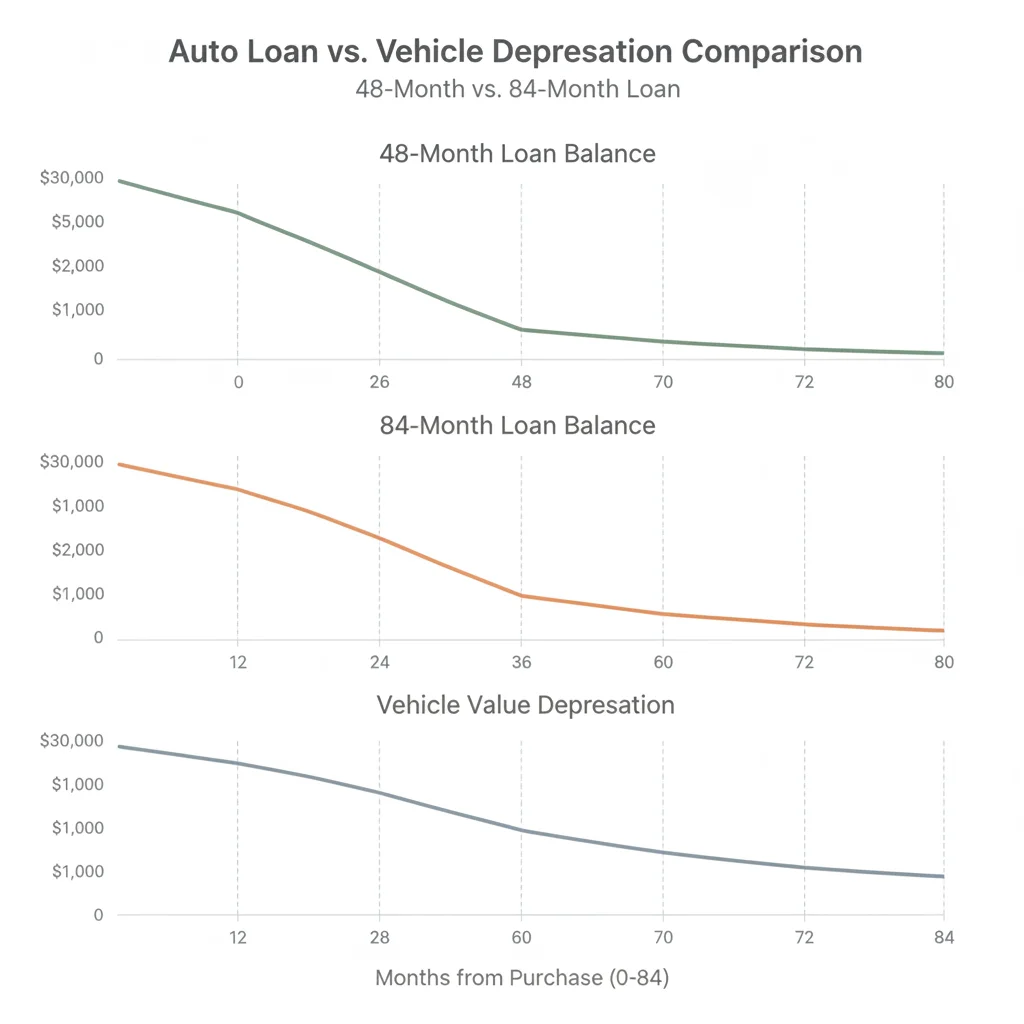
Longer loan terms became popular because they lower the monthly payment, making more expensive vehicles feel affordable on paper. But that lower payment often masks the full cost: more total interest, longer exposure to negative equity, and a longer wait before you have any real financial cushion in the vehicle.
The combination that creates the most risk: no down payment plus a 72- or 84-month loan on a fast-depreciating vehicle. If you need a long loan term to afford the monthly payment, that's a strong signal that the vehicle is beyond your comfortable budget.
“The monthly payment is not the price of the car. It's the price of the financing. When buyers focus only on what they can afford per month, they often end up financing far more than the vehicle is worth — and that gap can follow them for years.”
— Ivan Drury, Director of Insights, Edmunds
Rolling Negative Equity Into a New Loan: A Compounding Trap
One of the most common ways people end up deeply underwater is by trading in a vehicle before the loan is paid off. When you owe more than the car is worth at trade-in time, dealers will typically offer to "roll" the negative equity into your new loan. It sounds convenient, but it's financially damaging.
Here's how it compounds. Say you're $4,000 upside down when you trade in. That $4,000 gets added to the purchase price of your next vehicle. You're now starting a brand-new loan already $4,000 underwater — before that car even depreciates. If you repeat this pattern two or three times, you can end up financing $8,000 to $15,000 in rolled-over negative equity stacked on top of a vehicle's actual price.
This is one reason why the same $30,000 car that should cost $30,000 ends up being financed at $38,000 or $42,000 for some buyers. At that point, even a strong down payment may not protect you, because you're starting from an artificially inflated loan balance.
If you find yourself in this position, the safest path is usually to pay down the existing loan aggressively before trading or to wait until you've built positive equity. For more on that strategy, see our guide on early payoff when you're underwater on your car loan.
What to Do If You're Already Upside Down
Prevention is easier than recovery, but if you're already underwater, you have options — though none are quick fixes. The core strategy is simple: close the gap between your loan balance and your car's value as fast as possible.
Make Extra Principal Payments
Even one extra payment per year, directed entirely at principal, meaningfully accelerates equity building. Check that your lender applies extra payments to principal rather than future interest — this matters. Some lenders require you to specify this explicitly.
Hold the Vehicle Longer
Time works in your favor once you're past the steepest depreciation curve. A car that lost 25% of its value in year one might only lose 8–10% in year three or four. Meanwhile, your loan balance is still dropping. If you can hold the vehicle, the gap often closes on its own.
Consider Refinancing — Carefully
Refinancing while upside down is complicated, but not always impossible. Some lenders will refinance underwater loans, particularly if you have strong credit and the negative equity isn't extreme. See our full breakdown of whether you can refinance when upside down to understand what lenders look for and when it makes sense to wait.
Use the 20% Rule as Your Starting Point
For new cars, aim to put at least 20% down to offset the first-year depreciation hit. For used vehicles, 10% is often sufficient since the steepest depreciation has already occurred. If you can't hit those thresholds, consider a less expensive vehicle rather than stretching the loan term.
Avoid Financing Taxes and Fees When Possible
Dealer fees, sales tax, registration, and documentation charges can add $2,000–$5,000 to your transaction. When you finance these costs, you're borrowing money for expenses that have zero residual value — pushing your loan balance further above the car's worth from day one. Pay them out of pocket if at all possible.
Check Your Payoff Amount Before Trading In
Before visiting a dealership, request your official payoff amount from your lender — not just your remaining balance, since these can differ by hundreds of dollars due to interest accrual. Then compare it to your vehicle's current market value using Kelley Blue Book or Edmunds. Knowing your equity position before negotiating gives you real leverage.
Use Gap Insurance as a Partial Safety Net
If your car is totaled while you're underwater, gap insurance can cover the difference between the insurance payout (actual cash value) and your remaining loan balance. But it's not a complete solution — it doesn't help with trade-ins, sales, or refinancing, and some policies have caps. Learn more about why gap insurance doesn't help every upside-down borrower before relying on it.
Special Considerations for Bad-Credit Borrowers
Borrowers with poor credit face compounded risk when it comes to negative equity. Lenders who work with lower credit scores typically charge higher interest rates — sometimes in the 15–25% APR range. At those rates, loan amortization is even more front-loaded with interest, meaning your balance drops even more slowly in the early years.
That's why a meaningful down payment is arguably more important for bad-credit borrowers than for anyone else. A larger down payment reduces the loan balance, which helps offset the impact of a high interest rate. It also signals to lenders that you're a lower-risk borrower, which can sometimes influence the rate you're offered.
If you're working with a limited credit history or past financial problems, see our resource hub on bad credit auto loans for financing options and strategies suited to your situation.
Depreciation Varies Significantly by Vehicle Type
Luxury vehicles, sports cars, and certain pickups and SUVs can depreciate at very different rates. Some full-size trucks actually hold their value better than compact sedans, while some luxury brands lose 40% in two years. Before committing to a vehicle, look up its historical depreciation rate — it directly affects how long you'll carry negative equity.
Gap Insurance Has Real Limits
Gap insurance covers the difference between your loan balance and the insurer's actual cash value payout if your car is totaled. However, it doesn't protect you during a sale or trade-in, and many policies have a cap — often 25% above the vehicle's value — that may not cover deeply underwater balances. Read the policy carefully before relying on it as a backstop.
Preapproval Helps You Budget Precisely
Getting preapproved for an auto loan before you shop tells you your rate and your borrowing limit, allowing you to calculate exactly how much down payment you need for different vehicle prices. It also separates the financing conversation from the purchase negotiation, which typically leads to better outcomes on both fronts.
For bad-credit buyers who can't afford a large down payment, saving for 60–90 days before purchasing can make a meaningful difference. Even moving from 3% down to 10% down on a $20,000 vehicle reduces your financed amount by $1,400 — enough to shift your negative equity timeline by several months.
Building a Down Payment Strategy Before You Buy
If you're planning a car purchase in the next 6–12 months, treating the down payment as a savings goal rather than an afterthought gives you the most protection. Here's a practical framework:
- Set a target purchase price based on your monthly budget, not just the sticker price you like.
- Apply the 20/10 rule: 20% down for new, 10% for used — or more if you're choosing a long loan term.
- Calculate your savings target: On a $28,000 used car, 10% is $2,800. On a $40,000 new car, 20% is $8,000.
- Factor in taxes, fees, and registration — these can add $1,500 to $4,000 to your cost and should be paid out of pocket, not financed.
- Get preapproved before you shop — knowing your rate and limit in advance lets you negotiate the vehicle price separately from financing. Learn how at our loan preapproval hub.
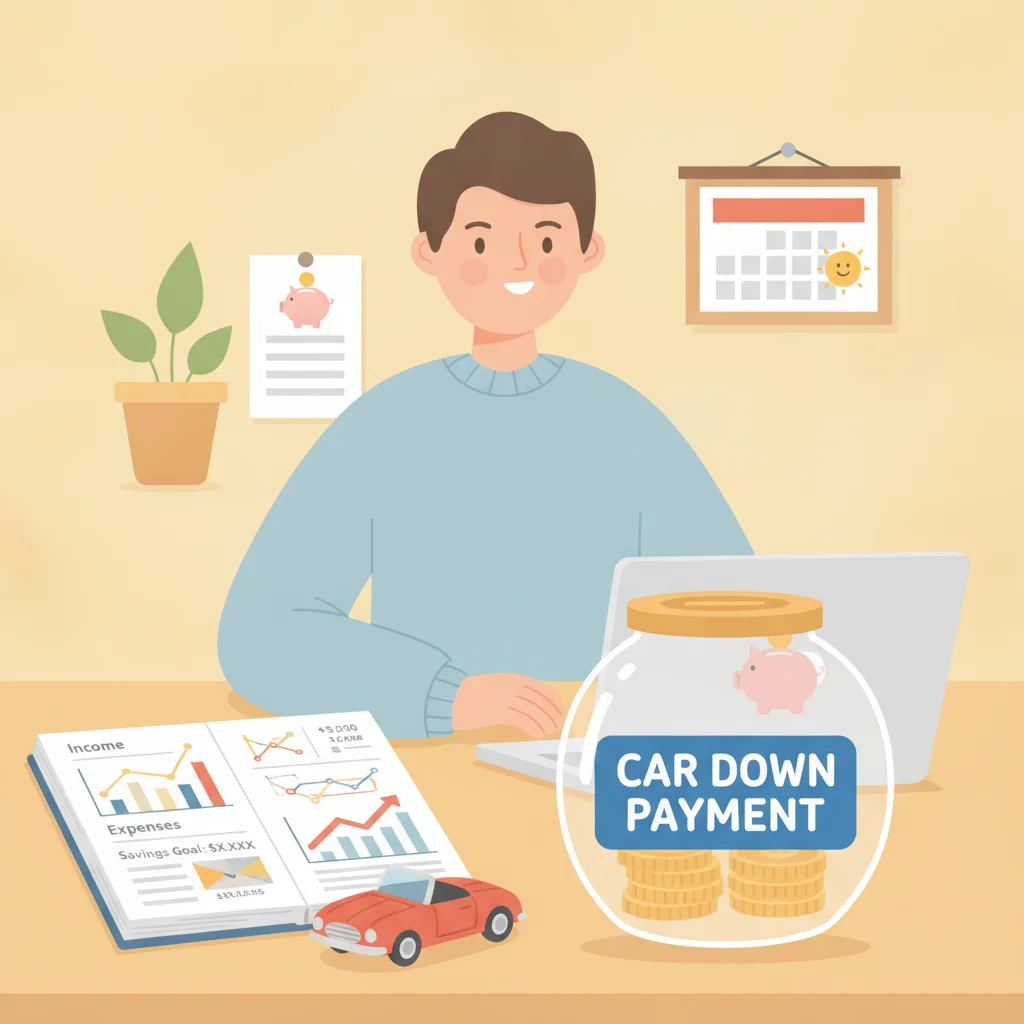
The goal is to walk into the dealership with enough cash down that your loan balance starts below — or at worst equal to — your car's immediate post-purchase value. Do that, choose a loan term of 60 months or less, and you've taken the two most effective steps to stay right-side-up throughout your ownership.
Depreciation Varies Significantly by Vehicle Type
Luxury vehicles, sports cars, and certain pickups and SUVs can depreciate at very different rates. Some full-size trucks actually hold their value better than compact sedans, while some luxury brands lose 40% in two years. Before committing to a vehicle, look up its historical depreciation rate — it directly affects how long you'll carry negative equity.
Gap Insurance Has Real Limits
Gap insurance covers the difference between your loan balance and the insurer's actual cash value payout if your car is totaled. However, it doesn't protect you during a sale or trade-in, and many policies have a cap — often 25% above the vehicle's value — that may not cover deeply underwater balances. Read the policy carefully before relying on it as a backstop.
Preapproval Helps You Budget Precisely
Getting preapproved for an auto loan before you shop tells you your rate and your borrowing limit, allowing you to calculate exactly how much down payment you need for different vehicle prices. It also separates the financing conversation from the purchase negotiation, which typically leads to better outcomes on both fronts.

All claims are backed by peer-reviewed research. Sources on request.