Key Takeaways
Option A
Rental Reimbursement Add-On
The auto policy add-on built for claim-related rental needs.
Best for: Daily commuters who need a replacement vehicle specifically when their car is in the shop after a covered claim.
Option B
Travel Insurance with Rental Coverage
The trip-focused policy that bundles rental protection into broader travel benefits.
Best for: Frequent travelers who rent vehicles on vacations or business trips and want collision, liability, and trip-interruption coverage under one plan.
If your main concern is staying mobile while your car is repaired after an accident
Rental Reimbursement Add-On
This add-on is purpose-built for exactly that scenario. It activates after a covered claim and pays for a rental up to your policy's daily and total limits while repairs are underway.
If you frequently rent cars on business or vacation trips
Travel Insurance with Rental Coverage
Travel insurance rental coverage protects you from collision damage waivers and liability exposure at the rental counter, covering scenarios your auto policy's rental add-on was never designed to handle.
If you're a daily commuter who rarely travels but wants peace of mind after a crash
Rental Reimbursement Add-On
At $2–$15 per month, it's the lowest-cost way to protect against being stranded without transportation during what can be a weeks-long repair process.
If you want one product to handle both travel rentals and a post-claim replacement vehicle
Rental Reimbursement Add-On
No single product covers both perfectly. The better move is pairing a rental reimbursement add-on with a credit card that offers rental collision coverage, keeping costs low and coverage broad.
If you're an infrequent driver who rarely files claims but travels internationally several times a year
Travel Insurance with Rental Coverage
Domestic rental reimbursement would rarely trigger for you, while travel insurance rental coverage directly protects the situations — overseas rentals, unfamiliar roads — where your financial exposure is highest.
What Each Product Actually Covers
The naming overlap here is the root cause of most buyer confusion. Both products reference rentals, but they're solving entirely different problems — and conflating them is how drivers end up either over-insured, under-protected, or paying twice for coverage they already have.
Rental Reimbursement Add-On: The Claim-Period Safety Net
A rental reimbursement add-on is an optional endorsement attached to your personal auto insurance policy. It pays for a rental car only when your vehicle is undergoing repairs following a covered claim — typically a collision, comprehensive event like hail or theft, or an at-fault accident. The key constraint: it does not pay a dollar unless an underlying claim has been filed and accepted.
Coverage is expressed as a daily limit and a per-claim maximum. A common structure is $30 per day / $900 per claim. If repairs take 20 days and you rent a mid-size sedan at $45 per day, you're out-of-pocket $300. The add-on didn't fail — it simply has limits, and many drivers don't read them until they're already at the rental counter. For a deeper breakdown of how these limits work in practice, see how rental reimbursement coverage works and what it pays.
Travel Insurance with Rental Coverage: The Trip-Focused Shield
Travel insurance is a standalone product — or sometimes a credit card benefit — that covers financial losses associated with a trip. Policies that include rental car coverage typically address two risks the auto policy rental add-on never touches: collision damage to the rented vehicle and, in some plans, liability exposure while driving it.
When you decline the collision damage waiver (CDW) at the rental counter and rely on travel insurance instead, the policy steps in if the car is damaged or stolen during your rental period. Some premium travel policies also include secondary or primary liability coverage, though this is far less common and almost always comes with sub-limits.
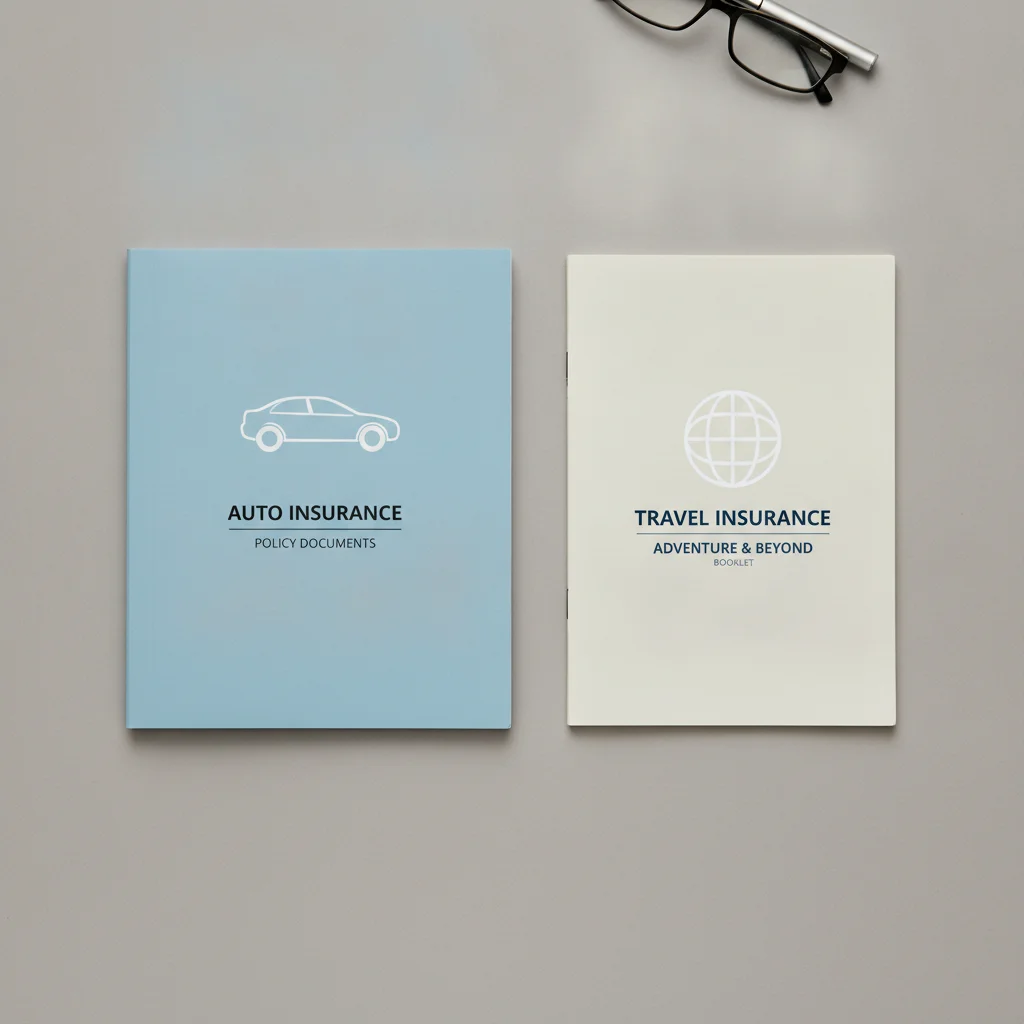
What travel insurance rental coverage does not do is replace your car while it's in a repair shop after a claim back home. These are categorically different coverage triggers — geography, context, and purpose all differ.
Cost Comparison: What You're Actually Paying Per Scenario
Cost comparisons between these two products only make sense when you anchor them to the scenario they're protecting. A raw monthly premium comparison is misleading because the products don't activate under the same circumstances.
| Criterion | Rental Reimbursement Add-On | Travel Insurance with Rental Coverage |
|---|---|---|
| When it activates | Only after a covered auto claim | During any qualifying rental trip |
| What it covers | Cost of a replacement rental vehicle | Collision damage on rented car; sometimes liability |
| Typical cost | $2–$15/month added to auto policy | $50–$250+ per trip; $200–$700/year annual plan |
| Geographic scope | Domestic only (home auto policy territory) | Domestic and international rentals |
| Liability protection | None (covered by underlying auto policy) | Rarely included; read policy closely |
| Applies to leisure travel rentals | No | Yes |
| Applies during claim repair period | Yes — primary purpose | No |
| Daily/total limits | Yes — hard caps (e.g., $30/day, $900/claim) | Varies; often tied to actual rental cost |
| Credit card alternative available | No equivalent for claim-period transportation | Yes — many cards offer free CDW coverage |
Rental Reimbursement: Low Monthly Cost, Capped Upside
Adding rental reimbursement to an existing auto policy typically runs $2 to $15 per month depending on your insurer, state, and the daily/total limits you select. A full year of coverage costs between $24 and $180. Since most drivers file a collision or comprehensive claim once every several years — if at all — you may pay for years of coverage before it activates. That's not a flaw; it's how insurance works. The question is whether the per-claim value justifies the ongoing premium.
Consider: if repairs take three weeks and your rental runs $40 per day, your total rental cost is $840. A policy limit of $900 covers nearly all of it. At $10/month, you've paid $120/year — a strong return in a claim year, negligible friction in claim-free years.
Travel Insurance: Per-Trip Cost with Broader Bundle Value
Travel insurance is typically purchased per trip, though annual multi-trip plans exist. A single-trip policy for a domestic vacation can run $50 to $150; international trips with medical evacuation riders and rental coverage can push $250 or more. Annual plans that include rental car coverage range from roughly $200 to $700 per year depending on traveler age, destination types, and coverage tiers.
If you travel four times per year and rent a car on each trip, an annual plan often undercuts buying individual policies per trip. But if you only travel once or twice annually, per-trip coverage is typically more cost-efficient — especially if your credit card already covers collision damage on rentals for free.
$1,400
Average rental cost during a collision repair
Based on industry repair timelines of 15–20 days and average U.S. rental rates of $70–$90/day for mid-size vehicles as of 2024.
40%
Drivers who decline rental reimbursement add-on
Industry estimates suggest roughly four in ten personal auto policyholders opt out of rental reimbursement, often citing low likelihood of needing it.
35+ days
Average EV collision repair timeline
Mitchell Industry Trends Report data indicates EV repair cycles run significantly longer than ICE vehicles due to parts and labor constraints.
$54/day
Average U.S. daily rental car rate (2024)
According to AAA's 2024 travel cost data, daily rental rates in the U.S. averaged $54 for a compact vehicle, with airport locations running higher.
Primary
CDW coverage type to prioritize in any policy
Primary coverage pays before your auto insurer is involved, avoiding potential premium impacts — only a minority of credit cards and travel plans offer true primary CDW.
Frequent travelers should also scrutinize the definition of "primary" vs. "secondary" coverage in any travel policy. Primary coverage pays first, before your auto insurer is involved. Secondary coverage only fills gaps after your auto policy has paid — which can create claim delays and potential premium impact on your home policy.
The Exclusions That Actually Matter
Every experienced claims professional knows: policies are sold on the coverage page but disputed on the exclusions page. Both products carry exclusions that can blindside you at the worst moment.
Rental Reimbursement Add-On Exclusions to Know
- No active claim, no coverage. If your car breaks down from a mechanical failure — not a covered peril — the add-on doesn't apply. Only collision, comprehensive, or other covered loss events trigger it.
- Daily and total caps are hard limits. If the repair shop is backed up for five weeks and your daily limit is $30, you're paying the gap. Parts shortages and body shop backlogs are real, especially for EVs and luxury vehicles.
- The rental must be for personal transportation. You can't use the reimbursement to rent a cargo van for a move or a truck for a job site.
- Coverage ends when repairs are complete, not when you return the car. If the shop finishes on a Friday and you return the rental Monday, you likely owe those three days.
Knowing these ahead of time lets you negotiate with the shop on delivery timing and choose a rental vehicle that fits within your daily limit. See what rental reimbursement actually provides during an active claim for a claims-process walkthrough.

Travel Insurance Rental Coverage Exclusions to Watch
- Certain vehicle types are excluded. Luxury vehicles, exotic cars, trucks, motorcycles, and 15-passenger vans are commonly excluded from collision coverage. Always check the vehicle category list before declining the CDW at the counter.
- Unauthorized driver clauses. If someone not listed on the rental agreement drives the car and causes damage, the travel insurer can deny the claim.
- Pre-existing damage disputes. Always photograph the vehicle on pickup. Travel insurers will contest claims where pre-existing damage isn't documented, and rental agencies have an incentive to assign it to you.
- Countries with mandatory CDW laws. In some countries — Ireland and Italy are commonly cited — local law requires you to purchase the CDW regardless of outside coverage. Your travel insurer won't reimburse CDW fees in these markets.
- Liability gaps. Most travel insurance rental coverage is collision-only. Liability — if you injure someone or damage their property — typically falls back on your personal auto policy or, if you're abroad, on local minimums that may be catastrophically low.
Your Auto Liability Follows You (Domestically)
In most U.S. states, your personal auto policy's liability coverage extends to rental vehicles you drive domestically. This means you typically don't need to purchase the rental agency's liability supplement when renting within the country. However, this extension does not apply internationally — if you're driving a rental in Mexico, Canada, or overseas, separate liability coverage is essential. Always confirm your policy's territorial limits before relying on this extension.
Annual Travel Plans: Read the Rental Coverage Tier Carefully
Not all annual travel insurance plans treat rental coverage equally. Some include it as a core benefit; others offer it only as an optional rider at additional cost. A handful of plans cap the rental coverage benefit at an amount that barely covers one incident. Before purchasing an annual plan primarily for rental coverage, confirm the per-incident limit, whether coverage is primary or secondary, and which vehicle classes qualify. The marketing summary and the Certificate of Insurance are rarely the same document.
The Credit Card Overlap You Might Be Missing
If you carry a Visa Signature, World Mastercard, or certain American Express cards, you may already have rental collision damage waiver coverage at no additional cost. This doesn't eliminate the value of either product discussed here — it covers collision only, not liability, and not claim-period transportation — but it does mean that paying for travel insurance primarily for CDW protection may be unnecessary. Check your card's benefits guide specifically, not the general benefits page, for the actual terms.
Everyday Commuter vs. Frequent Traveler: Who Needs What
Rather than treating this as an either/or debate, map the products to the specific driver profiles where each delivers genuine value — and identify where the credit card rental benefit quietly covers the gap in between.
The Daily Commuter (Owns One Car, Rarely Travels)
This is the rental reimbursement add-on's natural customer. If you rely on a single vehicle for work, school runs, and errands, being without it for two to four weeks after an accident is a genuine financial hardship. Ride-share and transit costs can easily exceed $600–$900 during a typical repair window.
For this driver, travel insurance rental coverage offers almost no value for day-to-day life. On the rare vacation, a credit card with rental collision coverage — many Visa Signature and World Mastercard products include it — covers the collision damage waiver, and your existing auto liability coverage extends to rental cars in most states. That combination costs nothing extra.
The commuter's move: add rental reimbursement to their auto policy at $5–$15/month and rely on credit card coverage for vacation rentals. Total incremental cost: under $180/year. Don't overlook this option when comparing policies — it's one of the features drivers most often overlook when comparing quotes.
The Frequent Traveler (Multiple Trips Per Year, Rents Cars Regularly)
This driver is a strong candidate for an annual travel insurance plan with rental car coverage as a core feature. If they're renting four to eight times per year — particularly internationally, where their personal auto liability doesn't follow them — the collision protection alone justifies the premium. Liability exposure abroad is the sleeper risk most travelers don't consider until they're standing in a Lisbon police station filing a damage report.
The traveler should also keep rental reimbursement on their home auto policy. The annual cost is modest, and the scenario it covers — car in the shop after a fender-bender, weeks of repair time — isn't mitigated by travel insurance at all. These two products don't overlap; they run parallel.
The Hybrid Driver (EV Owner, Commuter, Occasional Traveler)
EV owners face a compounding problem: repair timelines for EVs are frequently longer than for gas-powered vehicles due to parts availability, specialized labor, and battery assessment protocols. A rental reimbursement cap of $900 that covers a three-week repair on a conventional sedan may fall significantly short on a six-to-eight-week EV repair. EV owners should actively negotiate higher per-claim limits when adding the endorsement — and should understand that EV insurance carries its own cost dynamics that can affect both premiums and coverage structures.

Making the Decision: A Practical Framework
After years watching drivers sign paperwork they didn't understand at the F&I desk, I'll tell you the real problem isn't which product is "better" — it's that most people buy or skip these coverages based on the monthly premium line item rather than their actual risk exposure. Here's the framework I'd use.
Step 1: Audit What You Already Have
Before buying anything, check three sources:
- Your current auto policy. Does liability coverage extend to rental vehicles? Most personal auto policies extend collision and comprehensive if you have those coverages on your own vehicle — but rental reimbursement is a separate add-on.
- Your credit card benefits. Log into your card's benefits portal (not the main site — the dedicated benefits portal). Look for "Auto Rental Collision Damage Waiver" or similar. Note whether it's primary or secondary coverage.
- Your employer's travel policy. Many corporate travel policies include rental coverage when you rent on company business. Using personal travel insurance in that scenario is redundant.
Step 2: Quantify Your Actual Exposure
Rental reimbursement value = (average local rental car daily rate) × (typical repair timeline in your area) minus your policy limit. If that number is negative — your limit covers the full repair window — the add-on fully protects you. If it's positive, either upgrade your limits or budget for the gap.
Travel insurance value = (number of trips per year) × (average rental duration) × (CDW daily rate at your typical destination). Compare that to the annual plan premium. If CDW avoidance alone covers the premium, everything else in the policy — trip cancellation, medical, baggage — is essentially free. You can also find discounts on bundled insurance products that reduce overall costs when you shop strategically.
Step 3: Fill Gaps, Don't Duplicate
If your credit card already covers rental collision on domestic trips, a travel insurance plan's rental benefit is partially redundant for those trips. In that case, look for a travel plan where rental coverage is not the primary value driver — where medical evacuation, trip cancellation, or international liability fills a gap your other coverage doesn't.
And if you're currently running without rental reimbursement on your auto policy because it seemed like an unnecessary add-on, the out-of-pocket impact of filing a claim without it is worth calculating before your next renewal.
Your Auto Liability Follows You (Domestically)
In most U.S. states, your personal auto policy's liability coverage extends to rental vehicles you drive domestically. This means you typically don't need to purchase the rental agency's liability supplement when renting within the country. However, this extension does not apply internationally — if you're driving a rental in Mexico, Canada, or overseas, separate liability coverage is essential. Always confirm your policy's territorial limits before relying on this extension.
Annual Travel Plans: Read the Rental Coverage Tier Carefully
Not all annual travel insurance plans treat rental coverage equally. Some include it as a core benefit; others offer it only as an optional rider at additional cost. A handful of plans cap the rental coverage benefit at an amount that barely covers one incident. Before purchasing an annual plan primarily for rental coverage, confirm the per-incident limit, whether coverage is primary or secondary, and which vehicle classes qualify. The marketing summary and the Certificate of Insurance are rarely the same document.
The Credit Card Overlap You Might Be Missing
If you carry a Visa Signature, World Mastercard, or certain American Express cards, you may already have rental collision damage waiver coverage at no additional cost. This doesn't eliminate the value of either product discussed here — it covers collision only, not liability, and not claim-period transportation — but it does mean that paying for travel insurance primarily for CDW protection may be unnecessary. Check your card's benefits guide specifically, not the general benefits page, for the actual terms.
Finally, review the full landscape of optional auto insurance coverages at renewal time — not just rental reimbursement. Gap coverage, roadside assistance, and new car replacement each have their own activation conditions and value calculus, and most drivers are either missing one they need or paying for one they don't.

All claims are backed by peer-reviewed research. Sources on request.