Key Takeaways
Why the Cheapest Quote Rarely Tells the Whole Story
When drivers compare car insurance quotes, most of them are doing the same thing: sorting by monthly premium and picking the lowest number. It's a rational instinct — nobody wants to overpay. But that approach treats fundamentally different products as if they're identical, and that's where coverage gaps quietly form.
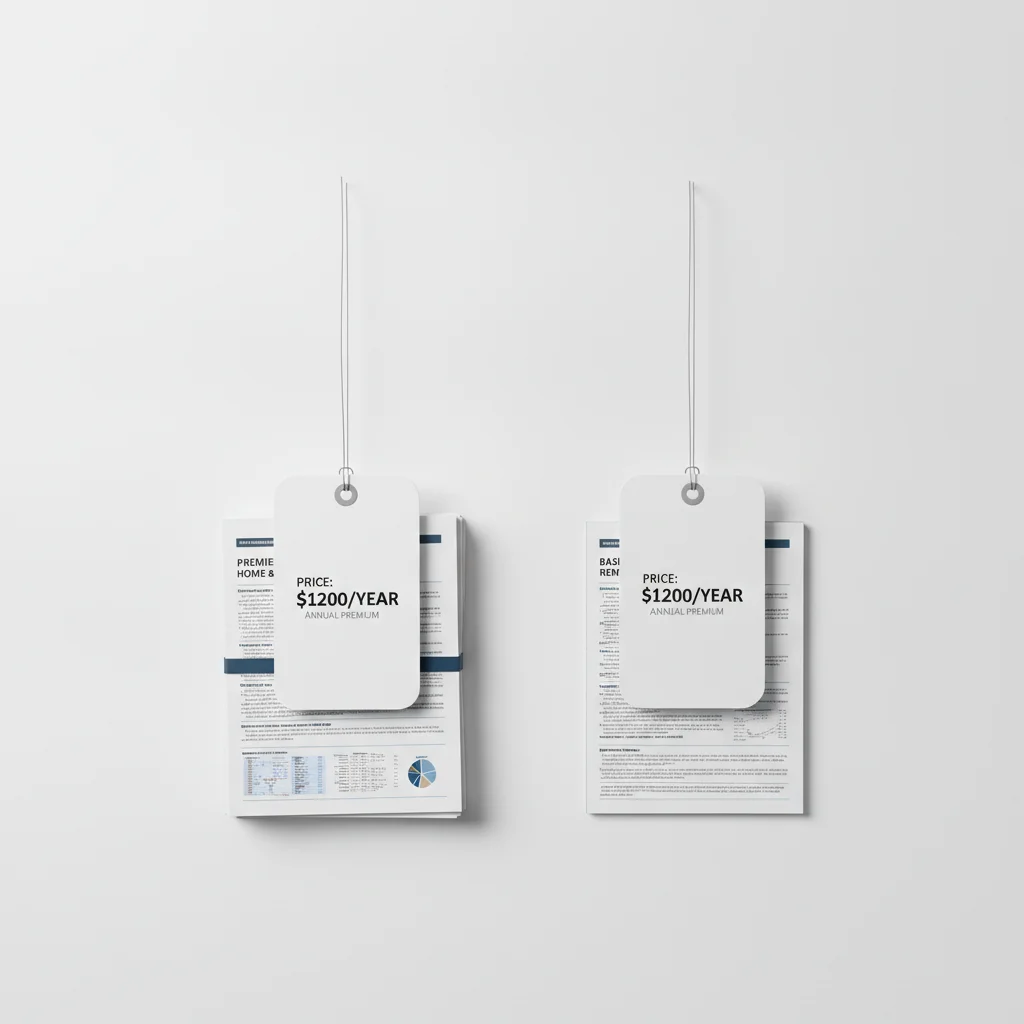
Two policies with identical premiums can perform very differently when you actually file a claim. The difference shows up in the fine print: daily rental limits, deductible structures, which add-ons are bundled vs. optional, and how the insurer handles total-loss valuations. See our breakdown of same-premium policies for a closer look at this structural problem.
The features below aren't obscure riders buried in a 40-page document. Most are standard options available from every major insurer. They're overlooked not because they're hidden, but because comparison tools don't surface them prominently — and shoppers aren't always sure what to ask about.
Here are the specific features worth scrutinizing before you sign.
Rental Reimbursement Daily Limits and Duration Caps
Rental reimbursement coverage sounds simple: your insurer pays for a rental car while yours is being repaired after a covered claim. The problem is that the actual limits vary enough to matter significantly in practice.
A policy might advertise rental reimbursement but cap it at $30 per day for a maximum of 30 days. In many markets, a compact rental runs $50–$80 per day. If your vehicle requires two weeks of repairs after a collision, you're personally covering $20–$50 per day out of pocket — potentially $280–$700 total — even though you have rental coverage.
When comparing quotes, check both the daily maximum and the total-days cap. Better policies typically offer $40–$75 per day with 30-day limits. Some insurers also allow you to increase these limits for a small additional premium. If you drive a truck or SUV, make sure the daily limit is high enough to cover a comparable vehicle class — a $30-per-day cap won't get you into anything useful.
[in_content_images:0]Also note: rental reimbursement usually only activates for covered claims — not mechanical breakdowns. For travel-related rental scenarios, the comparison is more nuanced. See our article on rental reimbursement vs. travel insurance with rental coverage for when you might want both.
A $30/day rental cap can leave you personally paying $700 during a two-week repair — even with coverage.
Gap Coverage for Financed or Leased Vehicles
Gap insurance covers the difference between what your insurer pays in a total-loss settlement and what you still owe on your auto loan or lease. Without it, that gap comes directly out of your pocket — and it can easily reach $3,000–$8,000 in the first two years of ownership.
Here's why: insurers pay actual cash value (ACV) in a total loss, not what you paid or what you owe. New vehicles depreciate 15–25% in the first year. If you financed with a small down payment or extended the loan to 72–84 months, you're likely underwater for the first several years of ownership.
Many drivers assume the dealership's gap coverage is their only option. It's not. Your auto insurer typically offers it for $20–$40 per year — far less than the dealer add-on price, which can roll several hundred dollars into the loan and accrue interest. When comparing quotes, check whether gap coverage is available and what it costs. If you're financing or leasing, it should be near the top of your must-have list.
Gap coverage becomes less necessary as your loan balance drops below the vehicle's market value. Use online valuation tools to monitor this annually and drop the coverage when the math no longer justifies it.
Your insurer's gap coverage typically costs $20–$40 per year — a fraction of the dealer add-on price.
Roadside Assistance: What's Actually Included
Roadside assistance is one of the most commonly duplicated coverages in a driver's financial life. Many people pay for it through their auto insurer, their vehicle manufacturer's warranty, a credit card benefit, and AAA — simultaneously. That's money wasted.
But before you assume your existing coverage is sufficient, verify what it actually includes. Roadside assistance varies substantially across providers:
- Towing limits: Some policies tow you to the nearest shop; others cover up to a specified mileage. If you break down rurally, that distinction matters.
- Battery service: Most include jump-starts; fewer include battery replacement on-site.
- Lockout service: Standard, but check whether it covers smart key or keyless entry systems, which require specialized equipment.
- Fuel delivery: Some programs cover delivery but charge for the fuel itself; others cover both.
- Winching/extraction: Critical if you drive off-road or in snow-heavy climates — not universally included.
When comparing policies, pull the roadside terms from each, not just whether it's included. If you already have robust coverage through AAA or your manufacturer, removing the insurer's roadside add-on and saving $15–$30 per year is a reasonable call. If you don't, it's one of the cheaper add-ons worth keeping.
Roadside assistance varies widely — towing limits, fuel delivery, and winching aren't always included.
Diminishing Deductible Programs
Some insurers offer a diminishing (or disappearing) deductible program: for every year you remain claim-free, your collision deductible drops by a set amount — typically $50–$100 — until it reaches zero. This is genuinely valuable for safe drivers and not something that shows up in a premium comparison.
The structure varies by insurer. Some reduce the deductible only for collision; others apply it to comprehensive as well. Some programs have a floor (the deductible never drops below $100, for instance). Others reset the deductible to its original amount if you file a claim, then start the countdown again.
If you're a low-mileage driver with a clean record, this feature can save you real money on your next at-fault claim. A $1,000 deductible reduced to $600 after four claim-free years means $400 more in your pocket when you need it. Across two or three insurers quoting you similar premiums, the presence or absence of this feature can be the deciding factor.
[in_content_images:1]Ask specifically whether the program is automatic or requires enrollment. Some insurers include it by default; others treat it as an opt-in add-on with a small additional cost.
A diminishing deductible can quietly save you hundreds on your next collision claim — if you know to look for it.
New Car Replacement and OEM Parts Coverage
Standard collision coverage pays actual cash value — meaning depreciation is factored in from day one. If your two-year-old vehicle is totaled, you won't receive enough to replace it with a comparable new model. New car replacement coverage addresses this by paying to replace the vehicle with a brand-new equivalent model, not a depreciated payout.
This coverage is typically available only for newer vehicles (often within the first two or three model years) and comes with an additional premium. For drivers who bought new and plan to keep the car, it's worth pricing out — particularly in the first 18 months before depreciation levels off.
Separate but related: OEM parts coverage specifies that repairs use original manufacturer parts rather than aftermarket alternatives. Insurers often default to aftermarket parts to control repair costs, and while they're functionally acceptable in many cases, they can affect resale value, fit, and in some cases, safety system calibration — particularly on newer vehicles with integrated sensors and cameras.
For more detail on how these features stack up against each other in terms of real-world value, our add-ons analysis breaks down which optional coverages tend to pay off and which are primarily insurer margin.
OEM parts coverage ensures factory components are used in repairs — not aftermarket substitutes that may affect sensor calibration.
Uninsured/Underinsured Motorist Coverage Limits
Most drivers know uninsured motorist (UM) coverage exists. Far fewer pay attention to the actual limits they've selected — and whether those limits are adequate relative to their liability coverage.
The rough rule: your UM/UIM limits should mirror your liability limits. If you carry $100,000/$300,000 in bodily injury liability, your UM/UIM should be the same. Many online quote flows default to minimum state limits for UM/UIM, which in some states means as little as $15,000 per person. That's unlikely to cover serious medical bills after an accident with an uninsured driver.
Some states allow stacking, which lets you multiply UM coverage limits across multiple vehicles on the same policy — a meaningful benefit for multi-car households. Others prohibit it. When comparing quotes across states or policies, confirm the stacking rules in your state and whether stacking is included or costs extra.
Also check whether the policy includes underinsured motorist property damage (UMPD) in addition to bodily injury. This covers vehicle damage when the at-fault driver's liability limit is too low to pay for your repairs — a distinct coverage that isn't universally included.
Your UM/UIM limits should mirror your liability limits — defaulting to state minimums leaves a serious gap.
Claims Handling Quality and Insurer Financial Stability
This isn't a coverage feature in the traditional sense, but it's arguably the most consequential factor when choosing between similar policies. A policy is only as good as the insurer's willingness and ability to pay claims promptly and fairly.
Two metrics worth checking before you commit:
- J.D. Power Claims Satisfaction Score: Published annually, this survey measures policyholder satisfaction across the full claims experience — first notice of loss, repair process, rental experience, and settlement. Companies in the bottom tier are consistently associated with delayed payouts, lowball settlements, and difficult communication.
- State Insurance Commissioner Complaint Ratio: Every state insurance department publishes a complaint index comparing the number of justified complaints against a company relative to its market share. A ratio above 1.0 means more complaints than average. This data is free and publicly available at your state's insurance department website.
When two quotes are within $5–$15 per month of each other, these quality metrics should be the tiebreaker. Paying slightly more for an insurer with a strong track record on claims is almost always the right call — especially if you live in a high-risk area for weather events or traffic density.
For a broader look at the structural differences that separate a well-designed policy from a cheap one, see the coverage details that separate a good policy from a cheap one.
A state complaint ratio above 1.0 is a warning sign — more complaints than average relative to market share.
Policy Exclusions That Vary Between Insurers
Exclusions define what your insurer won't cover — and they're not identical across policies. Most drivers don't read their exclusions until after a claim is denied, which is exactly the wrong time to discover a gap.
A few exclusions that vary meaningfully between policies:
- Rideshare driving: Standard personal auto policies typically exclude coverage during the period when you've accepted a ride request through an app. Some insurers now offer rideshare endorsements; others have integrated it into standard coverage. If you drive for Uber, Lyft, or a similar service, this is non-negotiable to verify.
- Business use: Occasionally commuting to a work site vs. regularly transporting clients or equipment can affect coverage. Some policies draw this line differently.
- Vehicle modifications: Aftermarket performance upgrades may void coverage or reduce payouts. If you've modified your vehicle, confirm the policy's position explicitly.
- Named driver exclusions: Some states allow insurers to exclude specific household members from coverage — verify whether any household drivers have been unilaterally excluded from a policy you're considering.
Understanding how to spot exclusions before you buy is one of the more underrated skills in insurance shopping — and it takes less time than most people assume.
Rideshare exclusions, modification clauses, and named driver exclusions vary by insurer and can void claims unexpectedly.
How to Use This Information When Shopping
Going through these features one by one might feel like a lot of work upfront, but it's considerably less work than dealing with a coverage shortfall after an accident. The goal isn't to buy every add-on — it's to make deliberate choices instead of defaulting to whatever the comparison site pre-selects.
Endorsements Can Modify Any Feature Listed Here
Many of the features described in this article — rental reimbursement limits, OEM parts, diminishing deductibles — can be modified after purchase through policy endorsements. An endorsement is a formal amendment to your existing policy. If you discover a coverage gap after signing, you may be able to correct it mid-term rather than waiting for renewal. See our article on <a href="/car-insurance/claims-and-policies/policy-management/what-a-policy-endorsement-actually-does-to-your-coverage">what policy endorsements actually do</a> for a clear explanation of how this works.
When you request quotes, ask each insurer to provide a coverage summary sheet — not just a premium total. Most will comply, and it makes side-by-side comparison much more useful. If an agent resists explaining specific coverage limits, that's a signal worth noting.
Also worth reviewing: common policy management mistakes that cause coverage to lapse or underperform. Choosing the right features at sign-up only helps if the policy stays correctly maintained.
Ask for a Coverage Summary Sheet
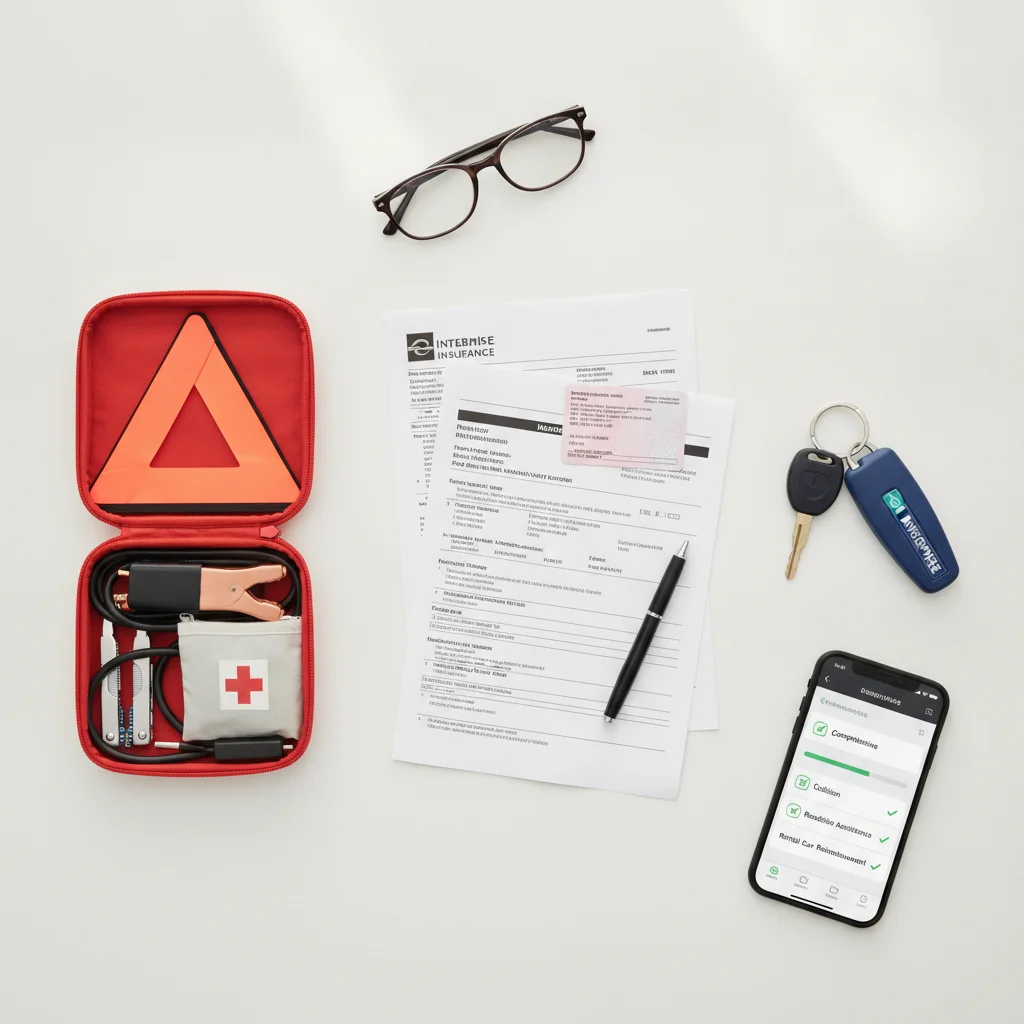
When requesting quotes, explicitly ask each insurer or agent for a line-item coverage summary — not just a premium total. This document should list every included and excluded coverage with its specific limits. Comparing these documents side by side takes about 15 minutes and is far more informative than comparing premium totals alone.
Review Add-Ons You Already Have Elsewhere
Before adding roadside assistance, rental reimbursement, or travel protection to a new policy, check your existing coverage: credit card benefits, manufacturer warranties, and membership programs like AAA may already cover these scenarios. Eliminating duplicates can reduce your premium without reducing actual protection. See our <a href="/car-insurance/coverage-types/optional-add-ons/the-add-ons-that-rarely-pay-off-and-the-ones-that-routinely-do">add-ons value analysis</a> for guidance on which ones consistently pay off.
Finally, look beyond the coverage itself to the company's track record. J.D. Power's annual claims satisfaction study and your state insurance commissioner's complaint ratio data are both publicly available and free. A policy that pays out quickly and fairly is worth more than one that's slightly cheaper but difficult to work with at claim time.
For a comprehensive view of every optional coverage available — not just the ones most commonly overlooked — see our full landscape of optional car insurance coverages.

All claims are backed by peer-reviewed research. Sources on request.