Key Takeaways
Start here
Why Physical Damage Coverage Exists
Next
What Collision Coverage Actually Pays For
Then
What Comprehensive Coverage Actually Pays For
Key mechanics
How Deductibles Work for Both Coverages
When required
When You're Required to Carry Both
Make your decision
How to Decide What You Actually Need
Why Physical Damage Coverage Exists
When most people buy their first car insurance policy, they focus on the number at the bottom of the quote — the monthly premium. The line items above it, like "collision" and "comprehensive," tend to blur together. That's a costly mistake.
Auto insurance is divided into distinct coverage types, each designed to protect against a specific category of risk. Liability coverage — the part that's legally required in almost every state — pays for damage you cause to others. But it does nothing to fix your own car after an accident. That's where physical damage coverage steps in.
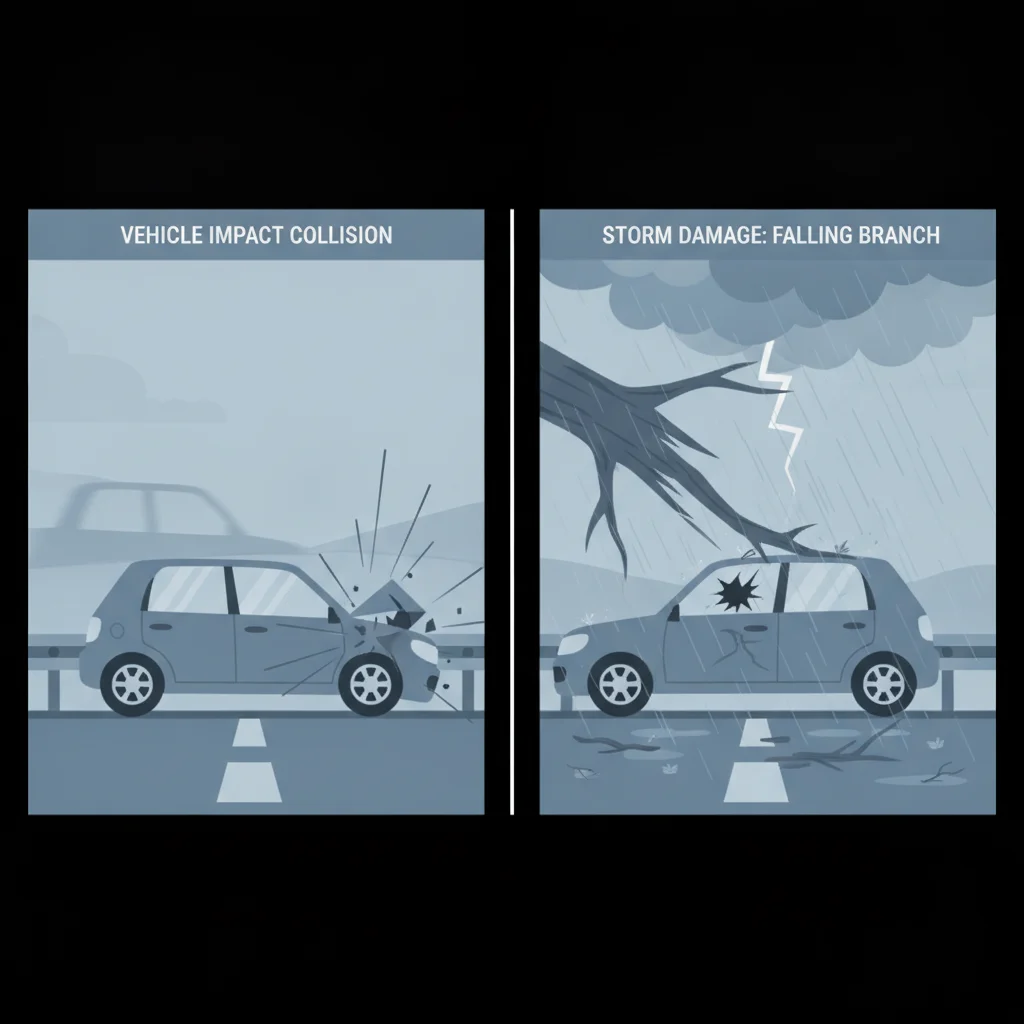
Physical damage coverage is an umbrella term for two separate policies: collision and comprehensive. Together, they protect the monetary value of the vehicle you own or are financing. Neither is legally mandated by state law, but both matter enormously depending on your situation.
Collision Coverage
A type of auto insurance that pays to repair or replace your vehicle when it's damaged in a crash — whether you caused the accident or another driver did.
Comprehensive Coverage
A type of auto insurance that covers damage to your vehicle from non-collision events, including theft, weather, fire, falling objects, and animal strikes.
Deductible
The amount you agree to pay out of pocket before your insurance company pays the rest of a covered claim. Higher deductibles mean lower premiums but more costs after a claim.
Actual Cash Value (ACV)
The current market value of your car at the time of a loss, accounting for depreciation. This is what your insurer pays out if your car is declared a total loss.
Physical Damage Coverage
An umbrella term for the combination of collision and comprehensive insurance — both of which protect the monetary value of your own vehicle.
Total Loss
When the cost to repair a damaged vehicle exceeds a certain percentage of its actual cash value, insurers declare it a total loss and pay out the ACV instead of repairing it.
Liability Coverage
The legally required part of auto insurance that pays for damage or injuries you cause to other people — but it does not cover damage to your own vehicle.
If you're signing loan or lease paperwork for the first time, understanding these coverages isn't optional — lenders require them. And even if you're paying cash, knowing what each one does lets you make an informed choice rather than defaulting to whatever the dealership's F&I office sells you. See our guide to car-buying contracts for more on what you're agreeing to at the dealership.
What Collision Coverage Actually Pays For
Collision coverage is triggered when your vehicle physically strikes or is struck by another object. The name is literal. Despite what some drivers assume, fault doesn't determine whether the coverage applies — it applies regardless of who caused the crash.
Common scenarios collision covers:
- You rear-end another vehicle at a stoplight
- Another driver runs a red light and hits your door
- You back into a concrete pillar in a parking garage
- Your car slides on ice and hits a guardrail
- You swerve to avoid an animal and hit a fence
In each of these cases, collision coverage pays to repair your vehicle — or, if the damage exceeds your car's market value, it pays out the actual cash value (ACV) of the vehicle. You receive the settlement minus your deductible.
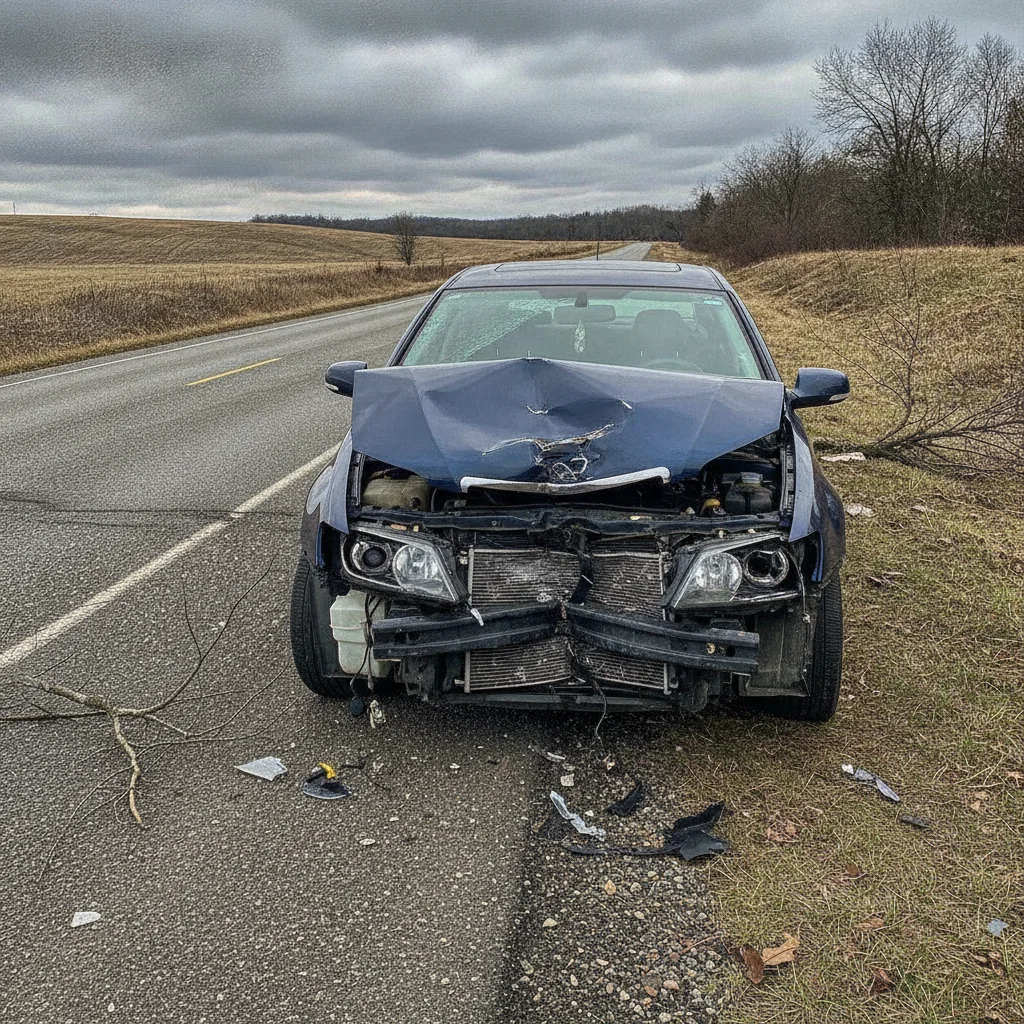
One point that surprises many first-time policyholders: if another driver hits you and they have liability insurance, their policy should cover your repairs through a third-party claim. In that case, you wouldn't even need to use your own collision coverage. But if the other driver is uninsured, underinsured, or disputes fault, having collision coverage means you're not stuck waiting for a legal resolution to get your car fixed.
Always File Through the At-Fault Driver First
If another driver caused the accident and they have liability insurance, filing a third-party claim against their policy means you won't pay your own deductible. Use your collision coverage as a backup when the other driver is uninsured, underinsured, or when fault is disputed. This approach can save you hundreds on out-of-pocket costs.
Run the 10% Rule Before Dropping Coverage
Divide your annual collision and comprehensive premiums by your car's current market value. If that number exceeds 10%, the coverage may cost more than it's worth on a financial basis. Just make sure you have enough savings to replace the vehicle if something happens before you make the switch.
For a more detailed breakdown of what falls on each side of the coverage line, the Collision vs. Comprehensive coverage comparison goes deeper into specific scenarios.
What Comprehensive Coverage Actually Pays For
Comprehensive coverage fills the gap for everything that isn't a collision. The Insurance Information Institute describes it as covering "other than collision" events — and the range of scenarios is wider than most new drivers expect.
Common scenarios comprehensive covers:
- Your car is stolen from a parking lot
- A hailstorm dents your hood and cracks your windshield
- A deer runs into the side of your vehicle on a rural road
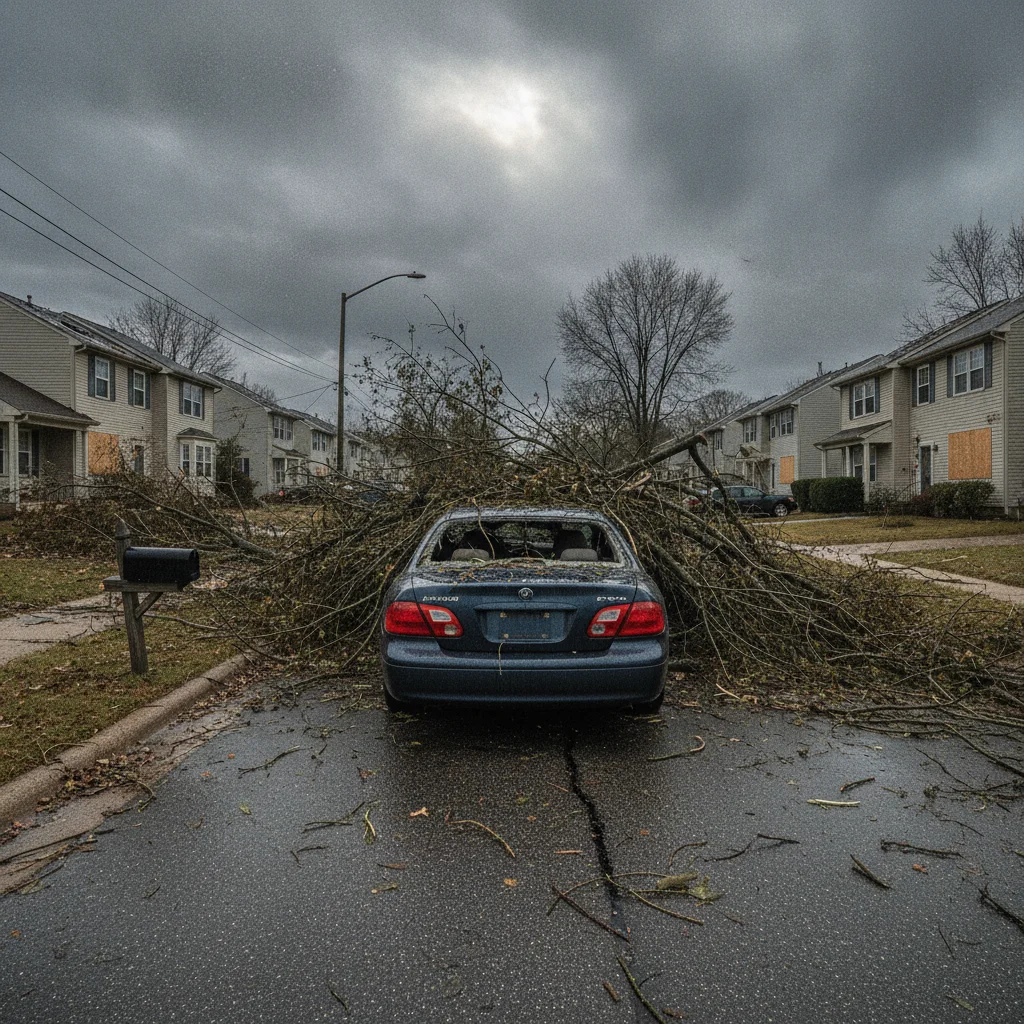
- A falling tree branch crushes your roof during a storm
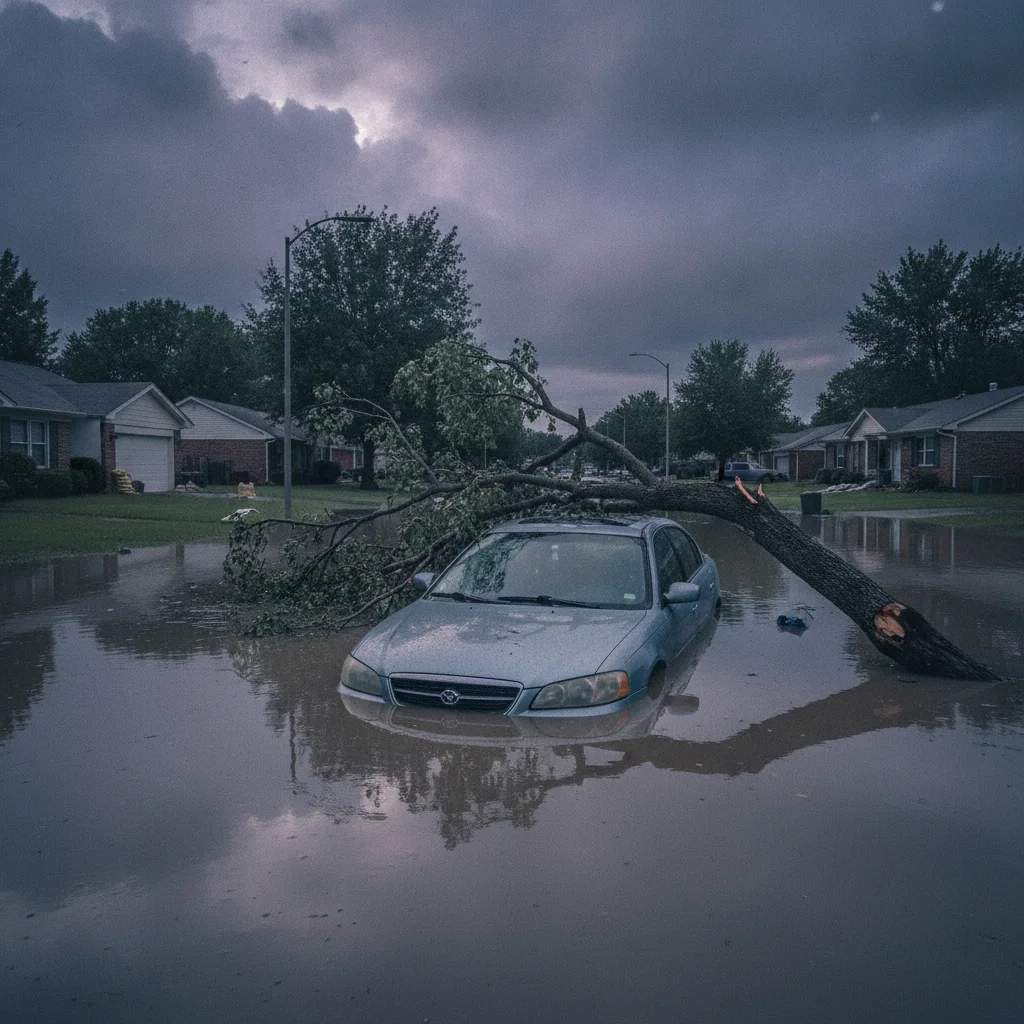
- Your car is damaged in a flood
- A fire breaks out in the engine bay
- Vandals key your paint or smash a window
The key distinction is that comprehensive losses are generally outside your control as a driver. You weren't operating the vehicle when the hailstorm hit. You couldn't have reasonably avoided the deer. The coverage reflects that reality.
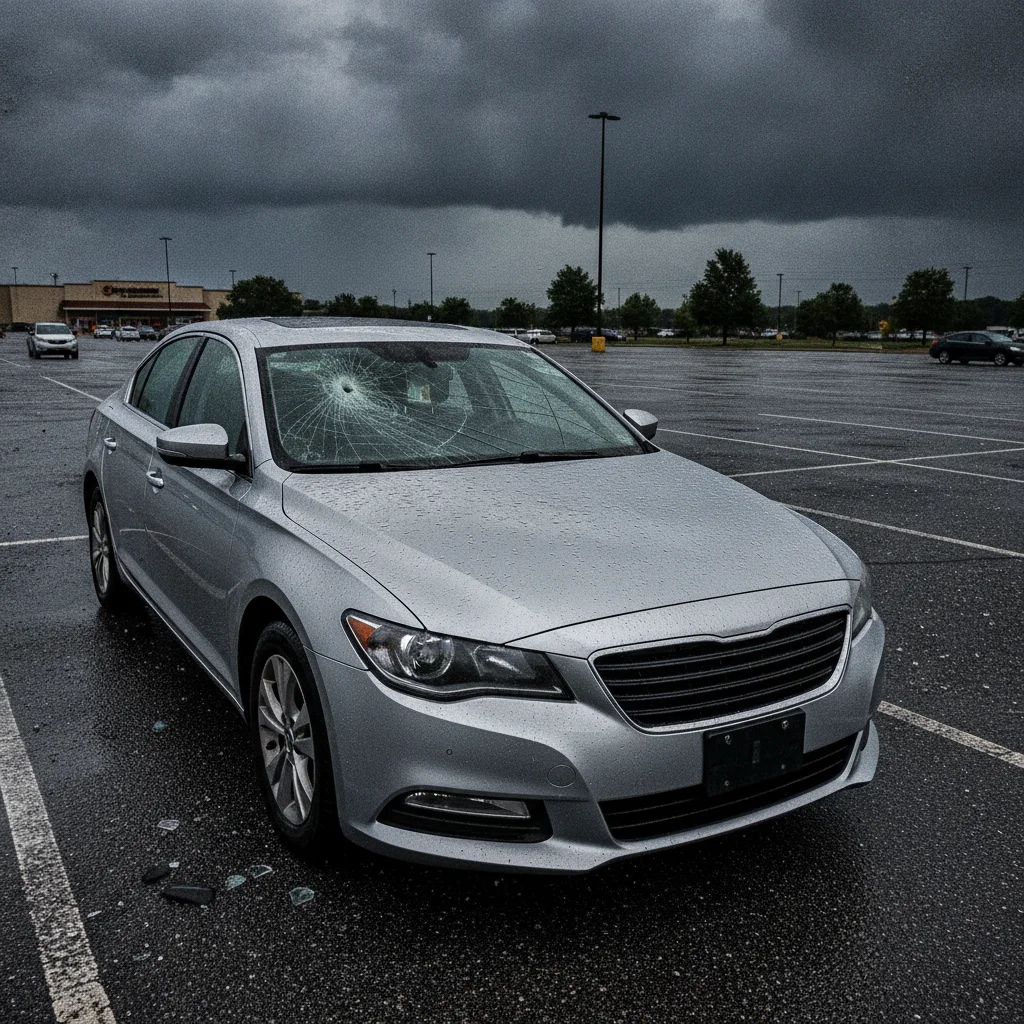
One persistent misconception: hitting a deer is covered by comprehensive, not collision — even though it feels like a collision. The logic is that an animal darting into your path is an environmental event, not a traffic accident. This matters because your deductibles for each coverage type may differ.
Deer Strikes Go Under Comprehensive, Not Collision
This surprises a lot of first-time claimants: hitting a deer is classified as a comprehensive claim, not a collision claim. Insurers categorize it as an uncontrolled environmental event rather than a traffic accident. This distinction matters if your collision and comprehensive deductibles are different amounts.
Lender Requirements Disappear After Payoff
Your loan agreement mandates certain coverage levels to protect the lender's financial interest in your vehicle. Once your loan is fully paid off and you receive the title, those requirements no longer apply. At that point, you can reassess whether carrying both coverages still makes financial sense for your situation.
Want to see the full picture of what comprehensive handles that collision never will? The article What Comprehensive Insurance Covers That Collision Never Will maps out the full scope. And if you've heard the phrase "full coverage" used loosely, common comprehensive coverage misconceptions is worth reading before you assume your policy covers everything.
How Deductibles Work for Both Coverages
Every collision and comprehensive claim involves a deductible — the dollar amount you pay out of pocket before your insurer covers the rest. Deductibles are set when you buy or renew your policy, and you choose them independently for each coverage type.
Here's how the math works in practice: If a hailstorm causes $2,200 in damage and your comprehensive deductible is $500, your insurer pays $1,700. You cover the first $500.
| Deductible Amount | Effect on Premium | Your Out-of-Pocket After a Claim |
|---|---|---|
| $250 | Higher monthly premium | Lower per claim |
| $500 | Mid-range premium | Moderate per claim |
| $1,000 | Lower monthly premium | Higher per claim |
| $2,000 | Significantly lower premium | Substantial per claim |
Most drivers land somewhere between $500 and $1,000 for collision, and $250 to $500 for comprehensive. The logic: comprehensive claims (think: weather damage, theft) often arrive unexpectedly and can be harder to budget for, so some drivers prefer a lower deductible there. Collision events, while disruptive, are something you have somewhat more control over through safe driving.
Don't Confuse 'Full Coverage' With Complete Protection
"Full coverage" is an industry shorthand — not an actual insurance product. It typically means you carry liability, collision, and comprehensive together, but it doesn't mean every scenario is covered. Things like mechanical breakdowns, personal belongings stolen from your car, or custom equipment may still fall outside your policy. Always read your declarations page carefully.
For a full glossary of terms like ACV, total loss threshold, and how coverage limits interact with your deductible, see Collision and Comprehensive Coverage Limits: Key Terms You Should Know.
When You're Required to Carry Both
If you financed your car through a bank, credit union, or dealership loan — or if you're leasing — your lender almost certainly requires you to carry both collision and comprehensive coverage. This is standard in loan and lease contracts, and it protects the lender's financial interest in the vehicle.
From the lender's perspective, your car is their collateral. If it's totaled in an accident or stolen and you have no physical damage coverage, they lose their security. The required coverages ensure that even in a worst-case scenario, the vehicle's value can be recovered — either repaired or paid out.
Lenders typically also specify a maximum deductible allowed under your policy — often $1,000, sometimes $500. Going above that limit could technically put you in violation of your loan agreement, though lenders rarely audit this unless a claim occurs.
Deer Strikes Go Under Comprehensive, Not Collision
This surprises a lot of first-time claimants: hitting a deer is classified as a comprehensive claim, not a collision claim. Insurers categorize it as an uncontrolled environmental event rather than a traffic accident. This distinction matters if your collision and comprehensive deductibles are different amounts.
Lender Requirements Disappear After Payoff
Your loan agreement mandates certain coverage levels to protect the lender's financial interest in your vehicle. Once your loan is fully paid off and you receive the title, those requirements no longer apply. At that point, you can reassess whether carrying both coverages still makes financial sense for your situation.
Once the car is paid off, the lender's requirements disappear. At that point, carrying both coverages becomes your choice — not a contractual obligation.
How to Decide What You Actually Need
For drivers with an active loan or lease, the decision is made for you. But once a car is paid off — or if you're paying cash for a vehicle — you'll need to weigh the coverages on their merits.
Questions worth asking:
- What is your car's current market value? Tools like Kelley Blue Book or Edmunds can give you a realistic estimate. If your car is worth $3,500, paying $900 per year in collision premiums starts to look like poor math.
- Could you cover repairs or replacement out of pocket? If losing this vehicle would put you in a genuine financial bind, keeping coverage is the safer call regardless of the car's age.
- Where do you live and park? High-theft zip codes, areas prone to severe weather, or regions with high deer populations make comprehensive a stronger value. Urban environments with tight parking and heavy traffic increase collision risk.
- What's your driving history? If you've had multiple at-fault accidents in recent years, collision coverage is worth keeping even on a lower-value car.
A commonly cited rule of thumb: if your annual collision and comprehensive premiums combined exceed 10% of your car's market value, the math favors dropping one or both. But that formula doesn't account for your personal risk tolerance or savings cushion — factors only you can weigh.
Always File Through the At-Fault Driver First
If another driver caused the accident and they have liability insurance, filing a third-party claim against their policy means you won't pay your own deductible. Use your collision coverage as a backup when the other driver is uninsured, underinsured, or when fault is disputed. This approach can save you hundreds on out-of-pocket costs.
Run the 10% Rule Before Dropping Coverage
Divide your annual collision and comprehensive premiums by your car's current market value. If that number exceeds 10%, the coverage may cost more than it's worth on a financial basis. Just make sure you have enough savings to replace the vehicle if something happens before you make the switch.
For drivers evaluating multiple policies side by side, the comparing policies hub is a practical starting point for understanding how to read quotes and spot differences in coverage. For a comprehensive deep-dive into how these coverages function end-to-end, Everything You Need to Know About Collision and Comprehensive Insurance covers the full picture including how claims are filed and processed.
Kelley Blue Book Vehicle Valuation Tool
Get an instant estimate of your car's current market value. Use it to determine whether keeping collision and comprehensive coverage still makes financial sense for your vehicle.
Collision vs. Comprehensive: Full Coverage Breakdown
A detailed comparison of exactly what each coverage type pays for and when it applies. Useful for drivers who want more than the basics before shopping for a policy.
Comparing Policies Hub
A structured guide to reading auto insurance quotes side by side, spotting coverage gaps, and understanding how insurers price physical damage coverage differently.
Coverage Limits Key Terms Glossary
A quick-reference glossary covering ACV, deductibles, total loss thresholds, and other vocabulary that shows up in every collision and comprehensive policy.

All claims are backed by peer-reviewed research. Sources on request.