Key Takeaways
Summary
22 items · 30–60 minutes
Why Physical Damage Coverage Decisions Start Before You Sign
Most used-car buyers spend weeks researching makes, models, mileage, and price — and about ten minutes thinking about insurance. That's a costly sequencing error. The moment you drive a purchased vehicle off a dealership lot, or accept the keys from a private seller, you own whatever happens to it next. If a deer jumps onto the road, a hailstorm hammers the parking lot, or another driver clips you on the way home, the bill lands squarely on you unless the right coverage is already in place.
Physical damage coverage is the umbrella term for two distinct policies: collision and comprehensive. They are sold separately, priced separately, and triggered by different events — but together they protect the vehicle itself, regardless of who's liable. Understanding the difference before you shop puts you in a far stronger position to negotiate the right deductibles, avoid lender penalties, and avoid paying for coverage that doesn't make financial sense given the car's age and value.
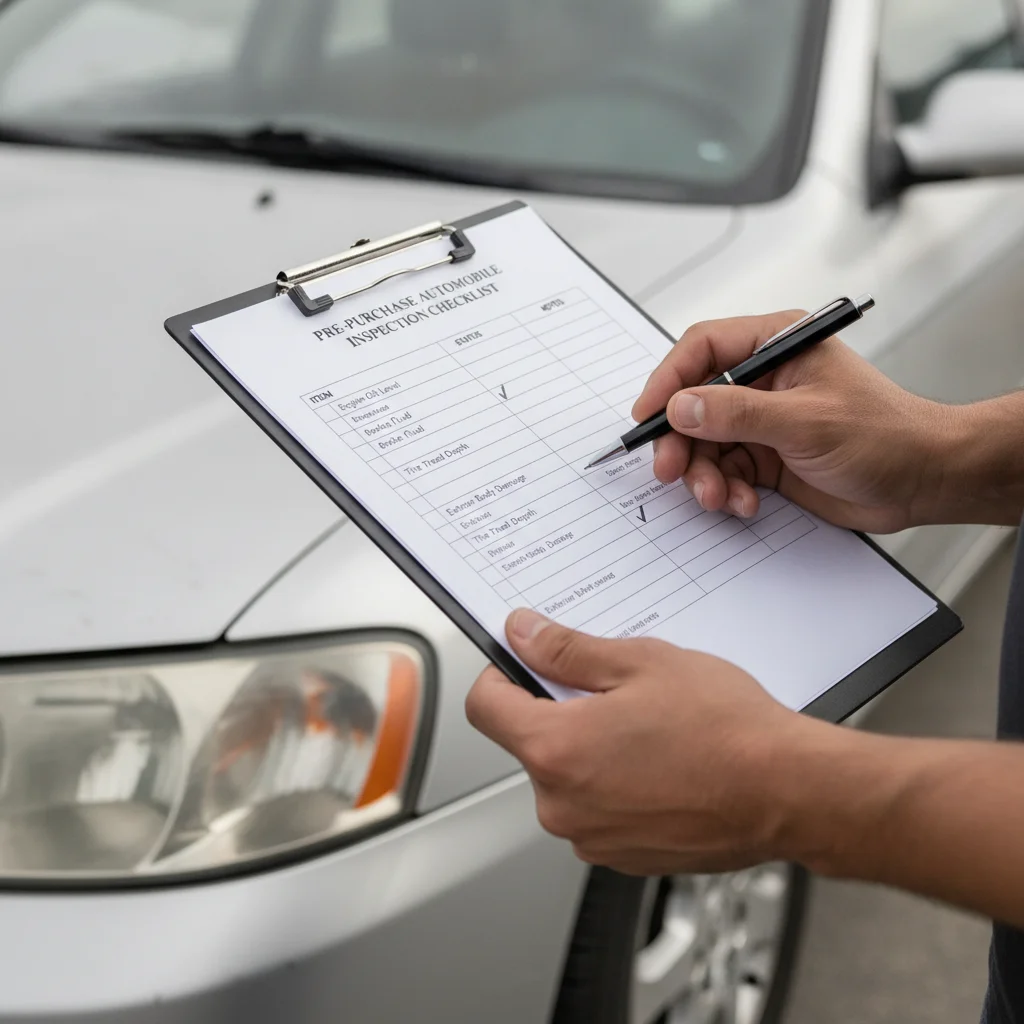
This checklist walks through every decision point in sequence: from confirming the vehicle's market value to binding coverage before pickup. Use it alongside The Used Car Buyer's Pre-Drive Checklist for a complete pre-purchase workflow.
Collision vs. Comprehensive: A Clear Distinction
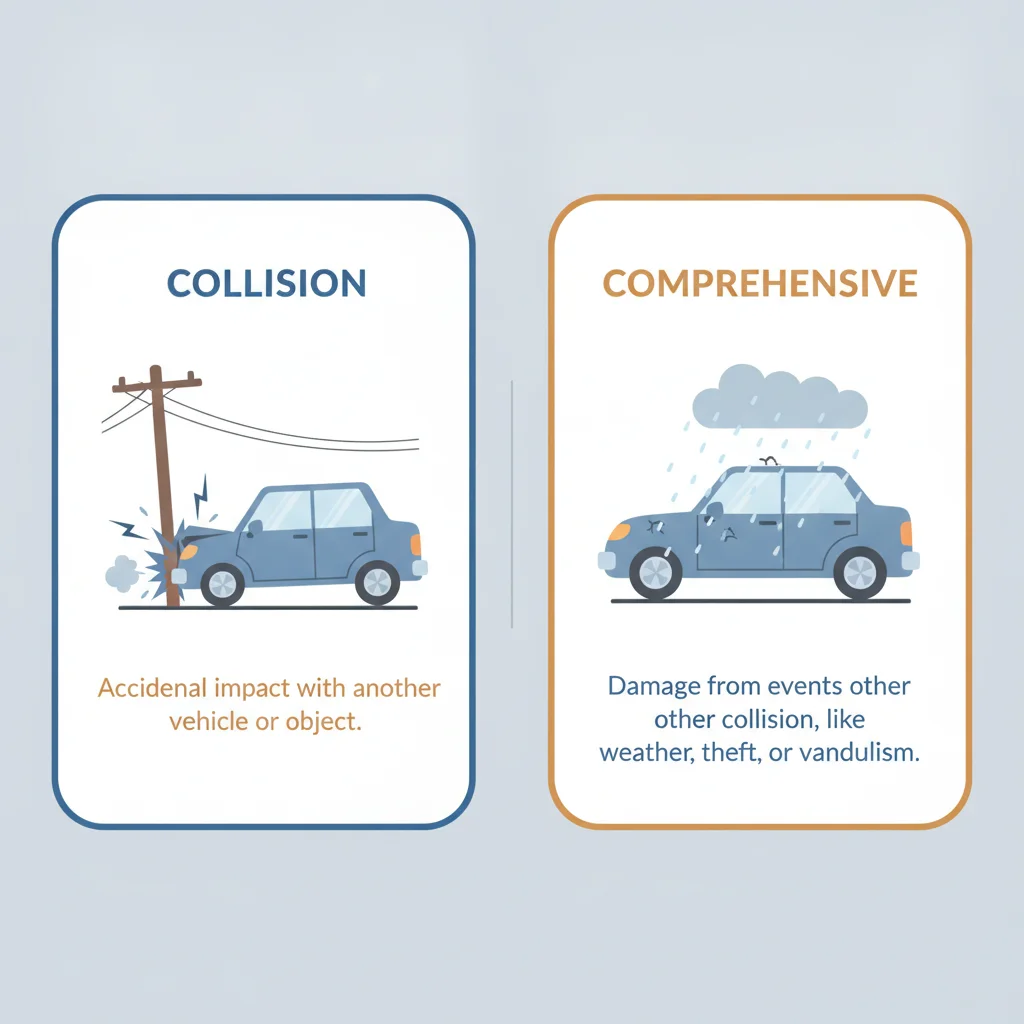
Before working through the checklist, it's worth locking in the core distinction because many buyers — and even some insurance agents — blur the line between these two coverages.
- Collision coverage pays for damage to your vehicle resulting from a crash with another car, a stationary object (a pole, guardrail, or parked vehicle), or a rollover — regardless of fault. If you rear-end someone, collision pays for your car's repairs. If someone rear-ends you and is uninsured, collision can step in while subrogation sorts out liability.
- Comprehensive coverage pays for damage caused by events outside a collision: theft, vandalism, fire, flooding, hail, falling objects, and animal strikes. It is sometimes called "other than collision" coverage on policy documents.
Neither coverage pays for mechanical failures, wear-and-tear, or pre-existing damage — an important consideration when you're buying used. A thorough mechanical inspection beforehand is essential; see The Complete Pre-Purchase Vehicle Inspection Checklist for a structured approach.
For a deeper dive into how claims actually work under each coverage type, Everything You Need to Know About Collision and Comprehensive Insurance is the most thorough resource available on this site.
With that foundation in place, move through the checklist below before finalizing any used-car purchase.
Kelley Blue Book (KBB)
Look up the used vehicle's private-party value, trade-in value, and fair market range to establish a realistic ACV baseline.
Edmunds True Market Value
Cross-reference the vehicle's market value with a second independent source for a more accurate ACV estimate.
Carfax or AutoCheck
Pull the vehicle history report to identify accidents, flood damage, or salvage title flags that affect insurability and ACV.
NICB VINCheck
Verify the vehicle has not been reported as stolen and check whether it's been flagged by the National Insurance Crime Bureau.
Your State's DMV Website
Confirm the minimum liability coverage required in your state and check whether electronic proof of insurance is accepted.
Insurance Comparison Platform (e.g., The Zebra, Policygenius)
Collect multiple physical damage coverage quotes simultaneously using the vehicle's VIN for an accurate, apples-to-apples rate comparison.
NADA Guides
A third valuation source useful for trucks, RVs, and vehicles where KBB and Edmunds may have thinner data.
The Physical Damage Coverage Checklist
Work through these items in order. Steps in the first two groups are best completed while you're still evaluating the vehicle — before negotiating a purchase price. The remaining steps should be finished at least 24 hours before your planned pickup date.
Know the Vehicle's Value Before You Insure It
Understand Your Lender's Requirements
Evaluate Whether Physical Damage Coverage Makes Financial Sense
Choose the Right Deductible
Get an Insurance Quote Before Finalizing the Deal
Bind Coverage Before Taking Possession
Grace Periods Are Not Universal
Some insurers extend a short grace period — typically 7 to 30 days — when you add a vehicle to an existing policy. However, this is not guaranteed, and it varies by insurer and state. Never assume a grace period applies to your situation. Confirm coverage activation in writing before you take possession of any vehicle.
Salvage and Rebuilt-Title Vehicles Can Be Difficult to Fully Insure
Many insurers will offer liability coverage on a rebuilt-title vehicle but decline to write comprehensive or collision — or will only do so at significantly higher premiums. If the vehicle you're considering has a branded title, check insurer eligibility before committing to the purchase. Being unable to obtain physical damage coverage on a financed vehicle could put your loan in default.
Private-Party Sales Offer No Built-In Insurance Buffer
When buying from a dealership, there may be brief administrative time to arrange logistics. Private-party sales often move faster, with the seller expecting same-day pickup once payment clears. Do not transfer payment or title before your coverage is confirmed active — once the title transfers, the risk is yours.
Coverage Must Be Active Before You Drive
In all 50 states, driving an uninsured vehicle on public roads is illegal. Beyond the legal risk, the financial exposure is severe: if you're involved in an accident driving an uninsured car home from the dealership, you bear 100% of the cost for vehicle damage and any liability. Do not accept the keys until you have a policy number and written confirmation that collision and comprehensive coverage are active on that specific VIN.
Your Payout Cap Is ACV — Not What You Paid
If your used car is totaled, your insurer pays the vehicle's actual cash value at the time of the loss — not your purchase price, not what you owe on the loan, and not the cost of a comparable replacement at current market prices. On a financed used vehicle, this can leave a meaningful gap between the insurance payout and your outstanding loan balance. Evaluate gap coverage before finalizing your purchase, not after a claim.
Making the Math Work: When Physical Damage Coverage Pays Off
Physical damage coverage isn't always the right call for every used car. The decision hinges on two numbers: the vehicle's actual cash value (ACV) — what an insurer would pay if it were totaled — and the annual cost of the coverage including both collision and comprehensive premiums.
A rough rule of thumb used by many financial planners: if the combined annual cost of collision and comprehensive exceeds 10% of the vehicle's ACV, the coverage may not be cost-effective. For example, if a used car is worth $6,000 and combined physical damage premiums run $900 per year, that's exactly 15% of the car's value — a threshold many advisors consider too high.
That said, this calculation doesn't account for your personal financial resilience. If a $6,000 loss would genuinely strain your finances, retaining the coverage makes sense regardless of the ratio. The 10% rule is a starting point, not a law.
For a structured framework tailored to older vehicles, Older Cars and Physical Damage Coverage: A Decision Framework walks through exactly this kind of cost-benefit analysis.
Also consider how much value the car is still likely to shed. A vehicle that has already absorbed the steepest portion of its depreciation curve carries less risk of a dramatic ACV drop during your ownership. What to Check Before Buying a Used Car to Gauge Its Remaining Depreciation Risk offers a pre-purchase checklist specifically for assessing how much more value a vehicle is likely to lose.

Add-Ons Worth Considering Alongside Physical Damage Coverage
Once collision and comprehensive are in place, a handful of optional endorsements can meaningfully strengthen your protection on a used car without dramatically increasing your premium.
- Gap coverage: If you financed the used vehicle, gap coverage pays the difference between what you owe on the loan and the car's ACV if it's totaled. This is especially relevant on used cars purchased with low down payments, where the loan balance can exceed the car's market value in the early months.
- Rental reimbursement: Covers a daily rental car expense while your vehicle is being repaired after a covered claim. On a used car that may spend more time in the shop, this endorsement earns its modest cost.
- Roadside assistance: Towing, battery jump-starts, lockout service, and fuel delivery. Useful on older vehicles with a less predictable mechanical track record.
- New car replacement or better car replacement: Typically not available on used vehicles, but worth confirming with your insurer if the used car is recent model year.
For a comprehensive look at how to evaluate all optional add-ons before signing, Evaluating Optional Add-Ons Before Buying a Car: A Pre-Purchase Checklist walks through each option with a buy/skip framework.
Also worth noting: the insurance considerations for a used car differ substantially from those for a new vehicle. Buying New Cars introduces a different set of coverage priorities — primarily around new car replacement and dealer add-ons — that don't apply to the used market in the same way.
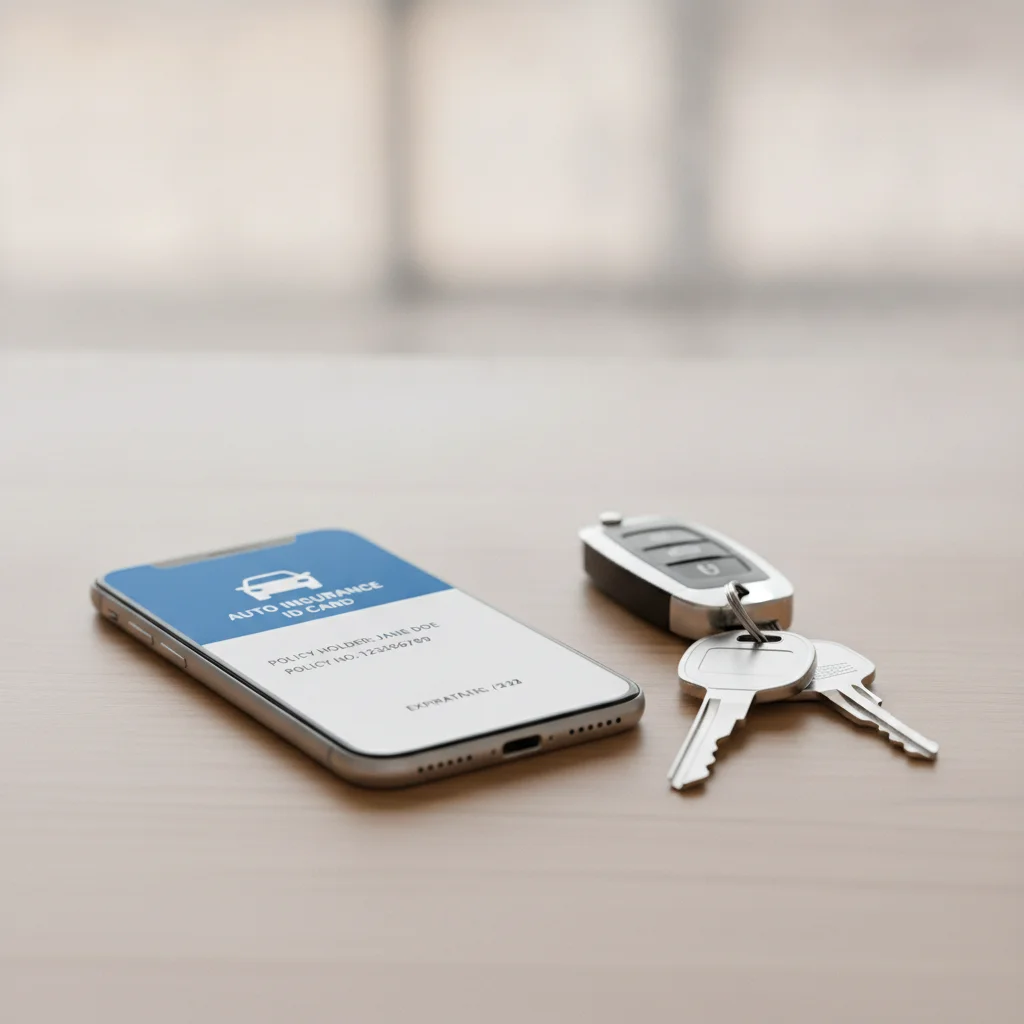
Once you've confirmed coverage is bound and active, keep a digital copy of your insurance ID card accessible on your phone. Most states accept electronic proof of insurance during a traffic stop, and having it ready eliminates one more variable on pickup day.

All claims are backed by peer-reviewed research. Sources on request.