Key Takeaways
Summary
24 items · 45–90 minutes
Why Depreciation Risk Matters When Buying Used
Most buyers focus entirely on the purchase price. That's only half the math. The other half is how much more that car will lose between the day you buy it and the day you sell or trade it. That gap — your remaining depreciation exposure — is what actually determines whether this deal is good for your finances.
Depreciation doesn't happen at a flat rate. New cars take the hardest hit in the first one to three years, sometimes shedding 20–30% of their original MSRP in that window alone. By years five through seven, the drop slows considerably. So when you buy used, you're essentially stepping into the curve mid-ride. The question is: how much of the drop is already behind you, and how much is still ahead?
That's what this checklist is designed to answer. It won't replace a full pre-drive inspection, but it will specifically flag the factors that accelerate or protect a car's value going forward. Work through it before you negotiate a price or sign anything.
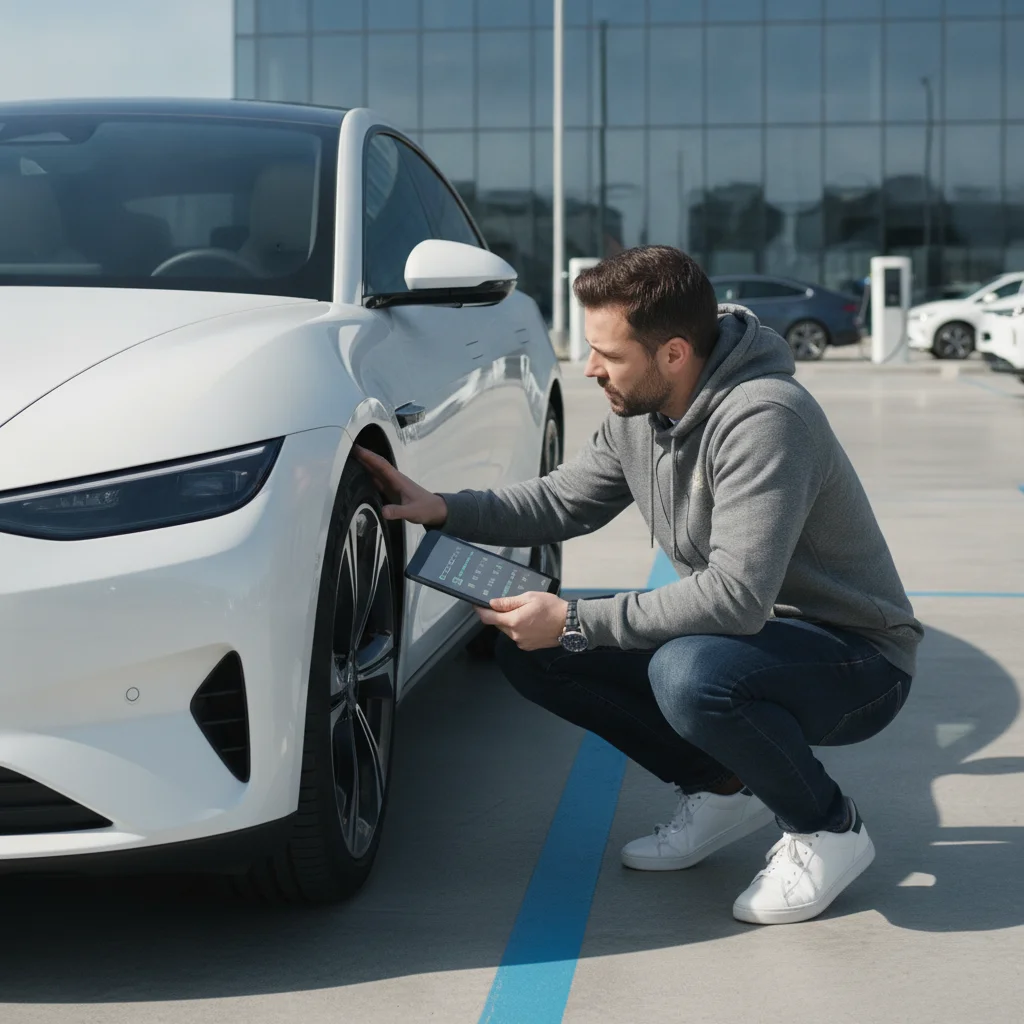
If you're weighing a used EV purchase, note that depreciation mechanics differ significantly from gas vehicles — particularly around battery degradation. That scenario gets its own treatment in our pre-purchase EV inspection checklist. This checklist focuses on conventional internal combustion vehicles.
Tools You'll Need Before You Start
You don't need to be a mechanic to work through this checklist, but you do need a few resources lined up before you show up to look at a car. Half of the depreciation-risk signals come from data you can pull before you even see the vehicle in person.
Carfax or AutoCheck
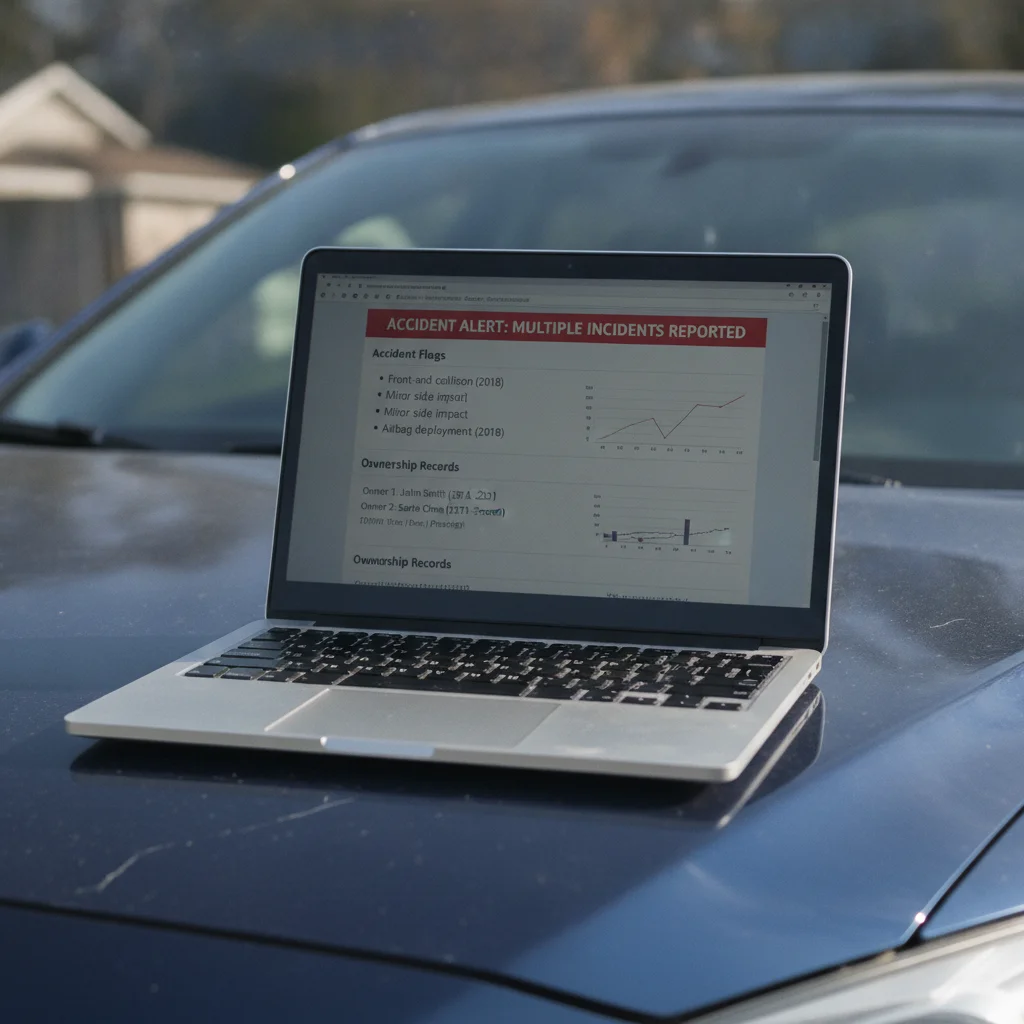
Pull the vehicle history report to verify title status, accident history, number of owners, and fleet use.
NHTSA VIN Lookup (nhtsa.gov)
Check for open safety recalls that haven't been completed by the current owner.
iSeeCars or CarEdge Depreciation Data
Research the model's historical depreciation rate and compare it to similar vehicles in the same segment.
Kelley Blue Book or Edmunds
Establish the current private-party and trade-in value benchmarks so you can gauge whether the asking price reflects depreciation risk accurately.
Paint Depth Gauge
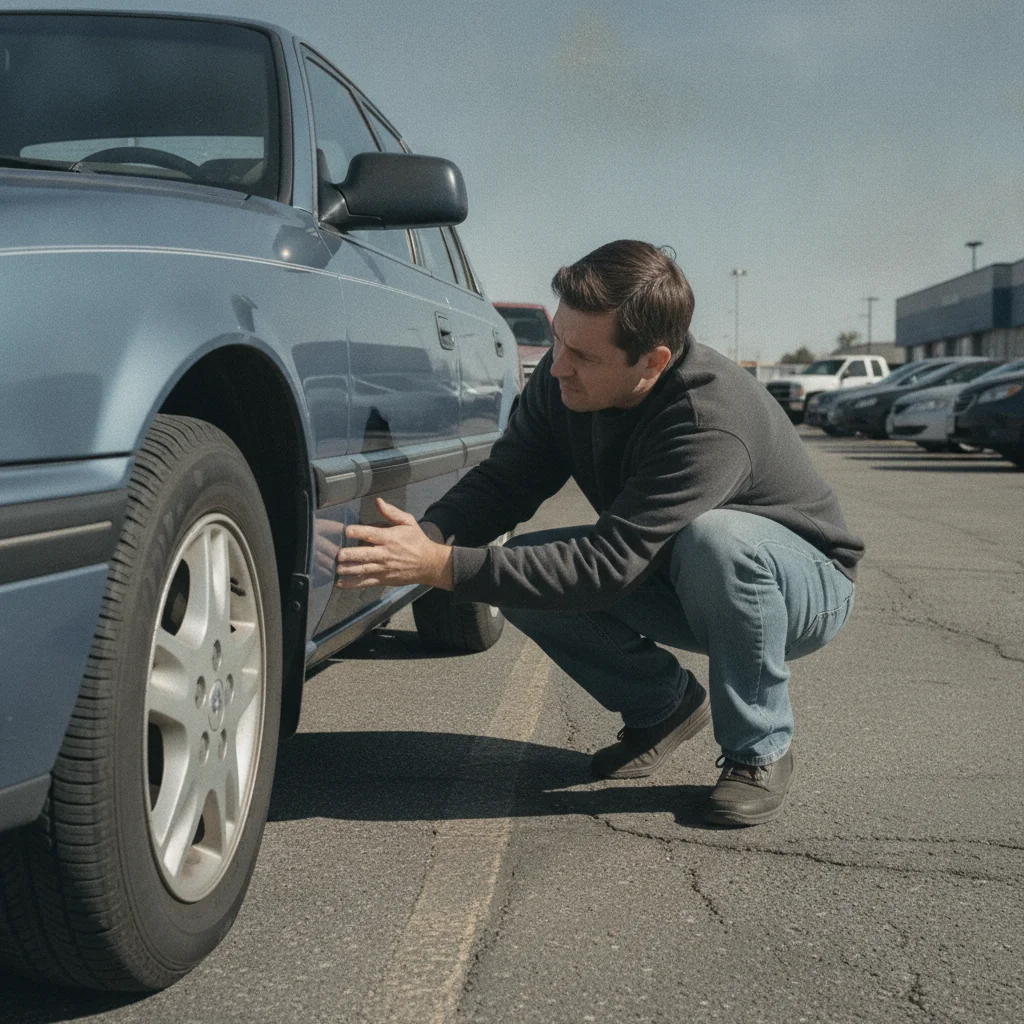
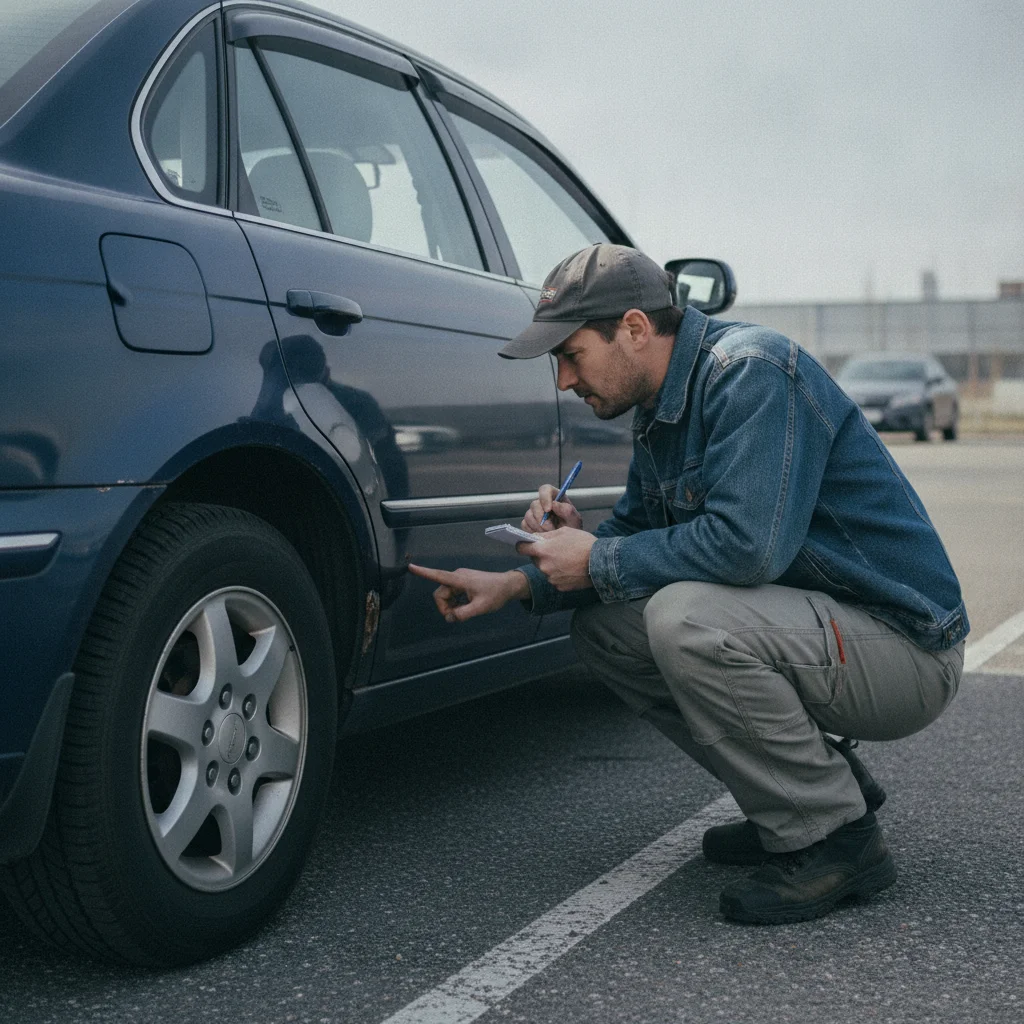
Detect body filler and repainted panels that could indicate repaired accident damage not disclosed in the history report.
OBD-II Scanner
Read any stored or pending diagnostic trouble codes before a test drive to identify mechanical issues the seller may not have disclosed.
Independent Pre-Purchase Mechanic Inspection
Get a lift inspection and mechanical assessment from a trusted shop unaffiliated with the seller — typically costs $100–$200 and can save thousands.
With those tools in hand, you can cross-reference what the seller tells you against real data — which is where most red flags show up.
The Depreciation Risk Checklist
Work through these checks in order. The first groups cover information you can gather remotely; later groups require hands-on inspection or a mechanic's help. Each item either adds or removes risk from your exposure estimate.
Market & Model Research
Title & Ownership History
Mileage & Age Position on the Curve
Accident & Structural History
Mechanical Condition & Maintenance Records
Trim, Color & Options
Don't Skip the Independent Mechanic
A dealership's in-house inspection is not a substitute for an independent pre-purchase inspection. The seller has a financial interest in closing the deal; your mechanic does not. Budget $100–$200 for this step — it's the single most cost-effective line item in any used car purchase. Hidden mechanical problems, deferred maintenance, and suspension damage are the fastest ways a used car's value can continue to crater after you own it.
Verbal History Claims Are Not Binding
If a seller tells you a car 'was never in an accident' or 'was only driven by one owner,' those statements are not legally binding in most states and are easy to misrepresent. Verify every claim against the vehicle history report and a physical inspection. Discrepancies between what a seller says and what the data shows are immediate negotiating leverage — or grounds to walk away.
Once you've completed the checklist, tally the risk signals. A car with clean history, low mileage for its age, strong resale reputation, and no structural damage will typically depreciate much more slowly than market averages. One with multiple risk flags isn't necessarily a bad buy — but it needs to be priced accordingly. Use the findings to negotiate, not just to walk away.
For the math side of things — converting your findings into an actual dollar estimate — see our guide on calculating a vehicle's depreciated value. It walks through how to plug age, mileage, and condition data into a working estimate.

How the Depreciation Curve Affects Your Timing
Knowing where a car sits on its depreciation curve is one of the most underrated buying skills. Here's a rough breakdown of how value loss typically behaves by age:
| Vehicle Age | Cumulative Value Lost (Approx.) | Annual Rate Going Forward |
|---|---|---|
| 1 year | 15–25% | Still steep (10–15%/yr) |
| 3 years | 35–45% | Moderating (8–12%/yr) |
| 5 years | 50–60% | Slowing (5–8%/yr) |
| 7+ years | 60–75% | Gradual (3–5%/yr) |
This is why a three-year-old car with 35,000 miles can actually carry more depreciation risk than a six-year-old car with 55,000 miles, even if the sticker price is similar. The three-year-old still has a steeper annual drop ahead of it.
The make and model matter just as much as the age. Trucks and SUVs from brands known for reliability — think Toyota, Honda, and certain domestic truck lines — tend to flatten their curve earlier. Luxury sedans and vehicles in crowded segments can keep dropping sharply well past the five-year mark simply because supply outpaces demand in the used market.
For a direct comparison of depreciation risk between buying new versus used, this breakdown on new vs. used depreciation exposure is worth reading before you commit to either path.
Branded Titles Kill Resale Value Permanently
A salvage, rebuilt, or flood-damaged title is not simply a discount — it fundamentally changes the car's resale market. Most lenders won't finance a branded-title vehicle, most insurers won't offer comprehensive coverage, and private buyers will often walk away entirely. If you're buying a branded-title car, plan to own it until it has no resale value. Do not assume you can flip it or trade it in at anywhere near market rates.
Upcoming Model Redesigns Accelerate Depreciation
When a manufacturer announces or releases a significantly redesigned version of a model, the outgoing generation's resale value drops faster than the depreciation curve would otherwise predict. Before you buy, check automotive news sources for any confirmed redesign cycles. Buying a car in the final year of its generation — especially one in a competitive segment — can mean absorbing depreciation at a faster clip than historical data suggests.
Sellers — including dealerships — rarely volunteer information that increases their negotiating disadvantage. It's on you to ask specifically about accident history, title status, prior use (rental, fleet, rideshare), and any outstanding recalls. Don't assume a clean presentation means clean history.
After completing your depreciation risk assessment, make sure you're also thinking about insurance before you drive off. Getting physical damage coverage right before you take ownership matters more than most buyers anticipate, especially on a car with existing cosmetic or mechanical risk factors.
What to Do With Your Findings
This checklist gives you a risk profile, not a verdict. A car with several yellow flags isn't automatically a pass — it just needs to be priced to reflect the added exposure. Here's how to translate your findings into action:
- Low risk profile (1–3 flags): The car is likely priced near fair market value. Focus your negotiation on condition-specific items — minor cosmetic wear, upcoming maintenance milestones, or tire life remaining.
- Moderate risk profile (4–6 flags): There's meaningful depreciation exposure ahead. Look up comparable vehicles with fewer flags and use the price gap as your negotiating leverage. A $1,500–$2,500 discount is reasonable to request.
- High risk profile (7+ flags): Proceed only if the price reflects deep discount from market comps, or walk away. High-risk vehicles can still be fine transportation — they just should not be treated as assets. Expect further value erosion.
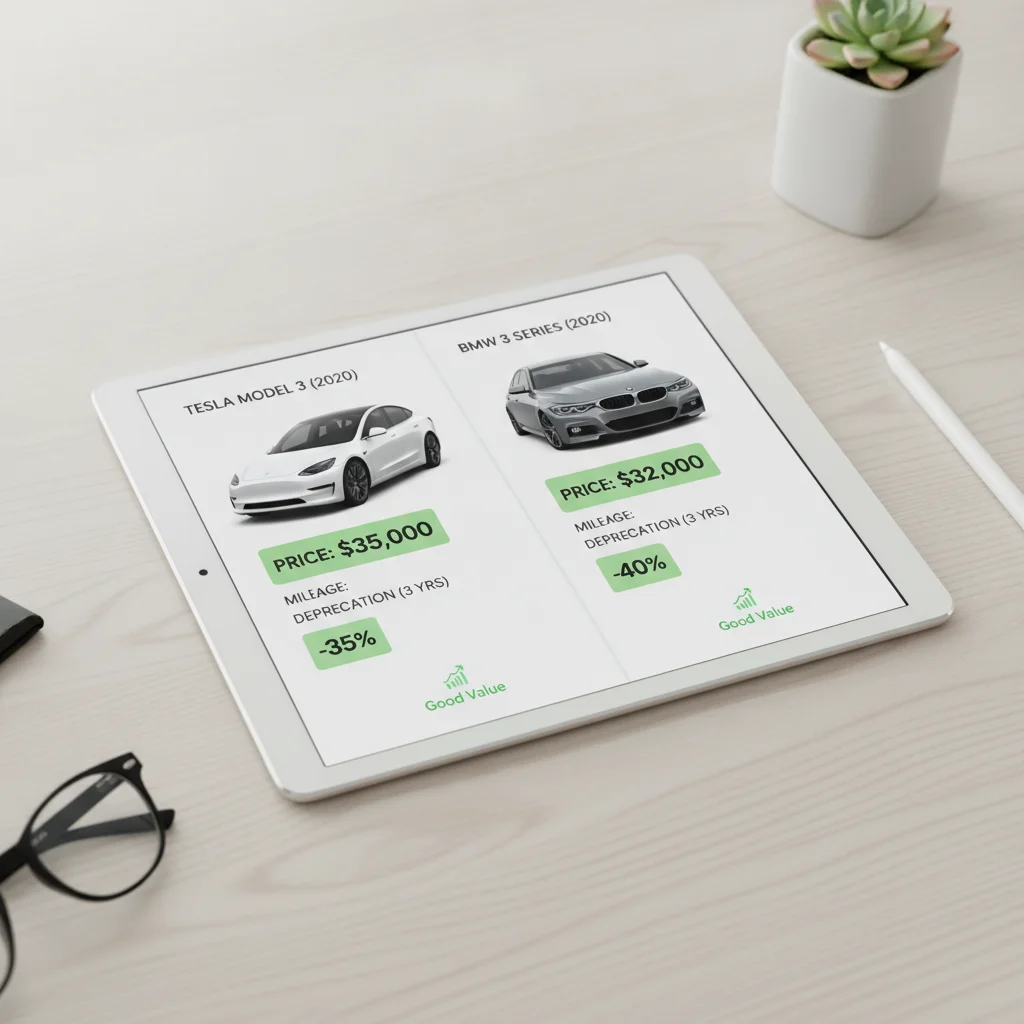
Also consider the broader market. If inventory is tight for this model in your region, sellers have more leverage and the car may hold value better near-term. If there's a glut of similar vehicles, you have negotiating room and the resale outlook is softer. Check current used listings in your zip code on at least two major platforms before you negotiate.
For more context on what drives value in either direction — from trim level to accident history to color — the key depreciation factors sellers audit before pricing article gives you a seller's-eye view that's just as useful from the buyer's side. Understanding what the other party is thinking about is always a negotiating advantage.
The Depreciation Basics hub is also worth bookmarking — it's where we collect all our guides on how age, mileage, and condition interact to drive value, whether you're buying or eventually planning to sell.

All claims are backed by peer-reviewed research. Sources on request.