Key Takeaways
Summary
38 items · 45–90 minutes on-site
Why This Checklist Exists — and How to Use It
Most buyers show up to look at a used car with good intentions and zero structure. They kick a tire, glance at the odometer, and take it for a spin. Twenty minutes later they're shaking hands on a price. Three weeks later they're at a shop getting a $1,400 estimate for a problem that was plainly visible if they'd known where to look.
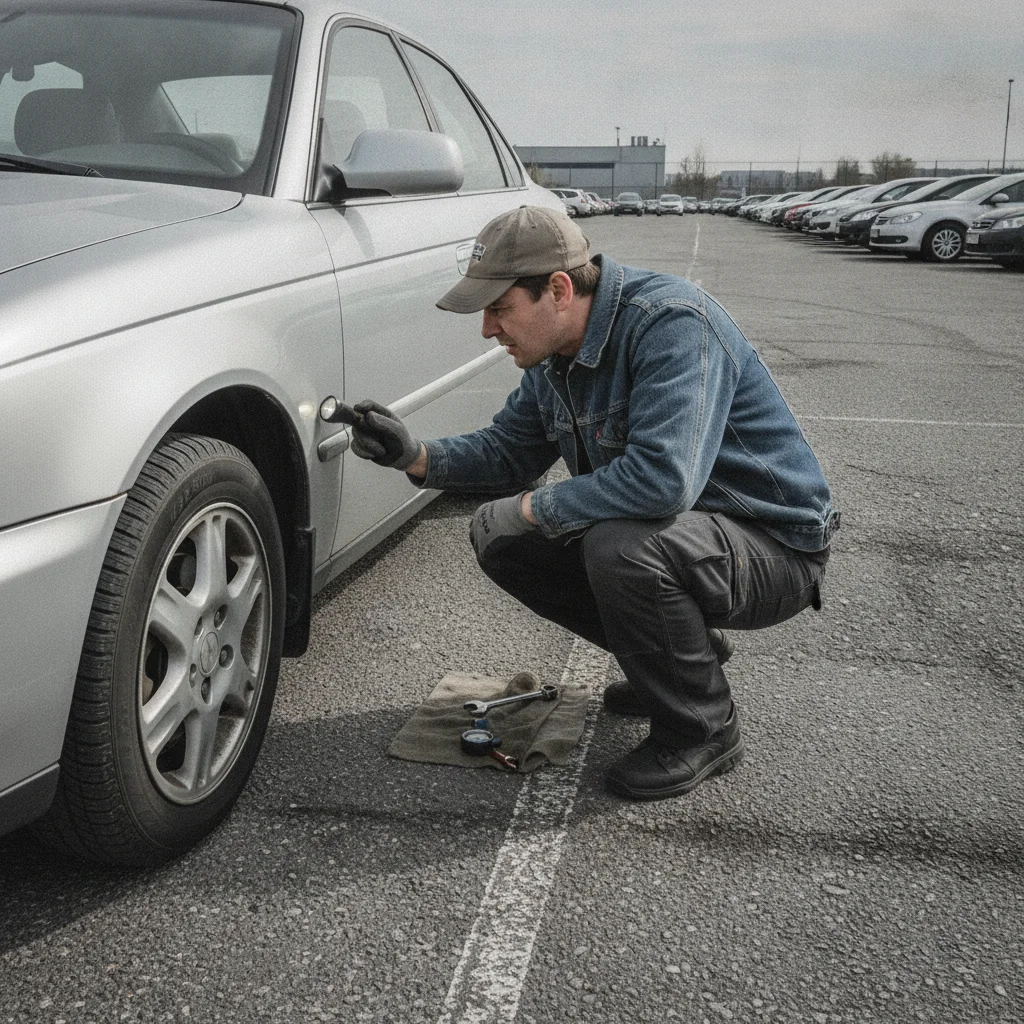
This checklist gives you structure. It walks you through the car in a deliberate sequence — exterior first, then interior, then under the hood, then underneath — so nothing slips through because you were distracted by the leather seats or the clean CarPlay screen. Print it out or pull it up on your phone before you arrive. Work through it methodically. Take photos at every step.
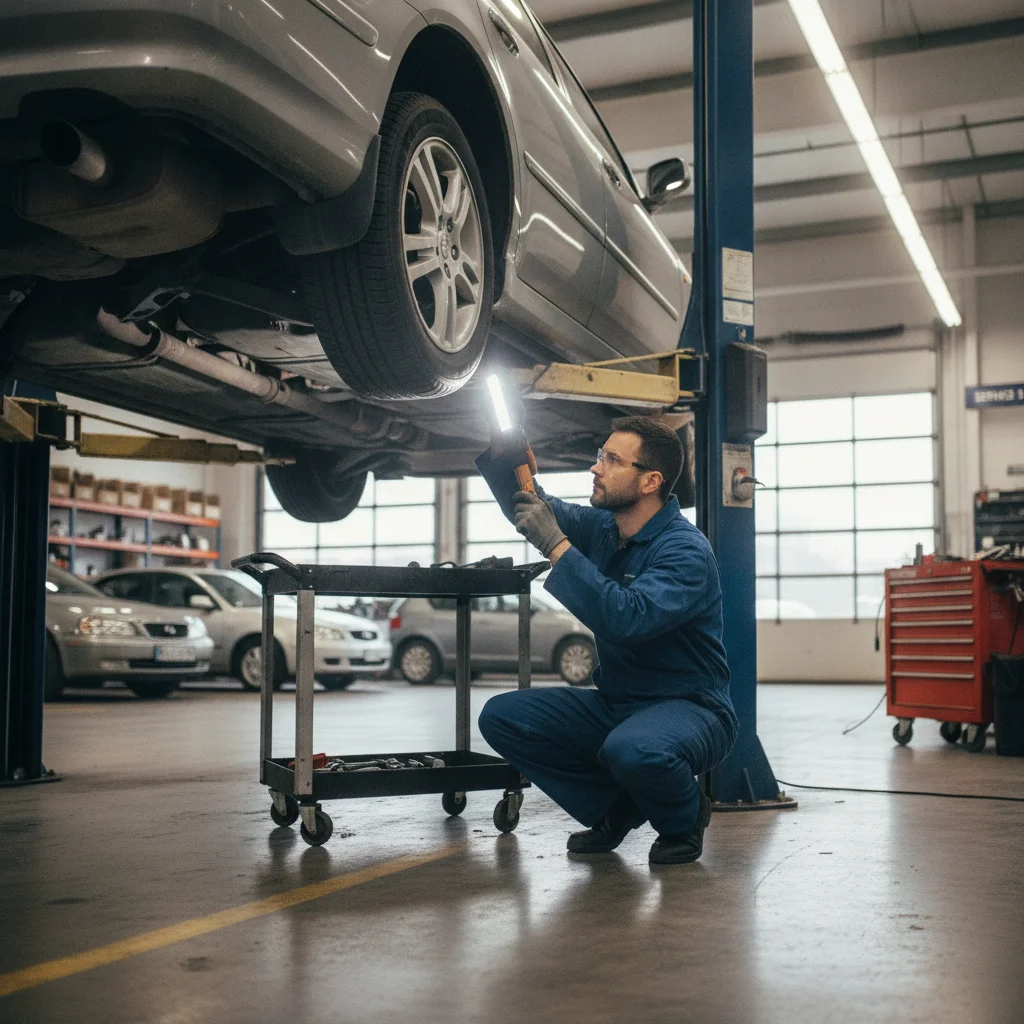
A note on scope: this checklist covers the in-person walkthrough you do yourself. It is not a substitute for a professional mechanical inspection. Those are two separate steps, and both matter. See what a qualified mechanic looks for in a pre-purchase inspection to understand how those two layers complement each other.
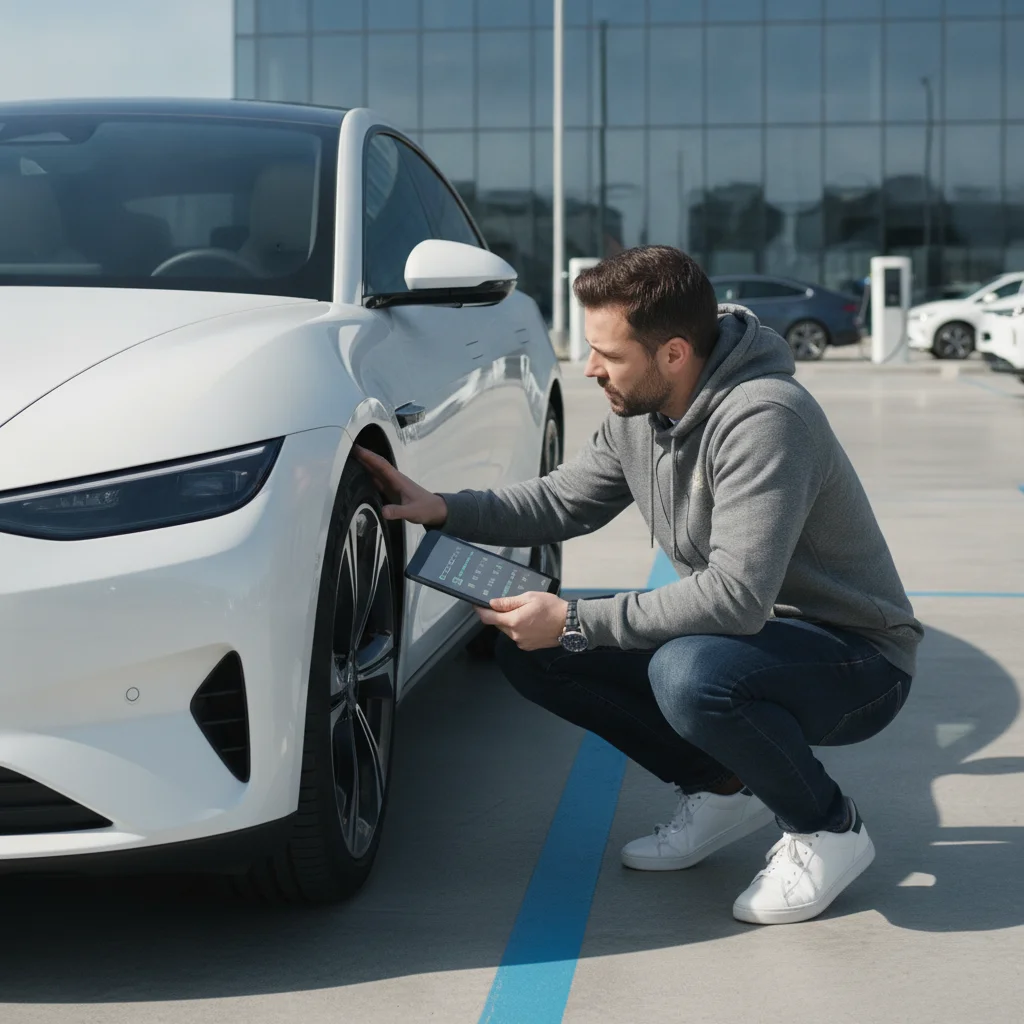
If you're evaluating a certified pre-owned vehicle specifically, the process has some additional wrinkles — warranty terms, inspection records, and manufacturer certification standards. Check out the CPO buyer's pre-purchase checklist for that scenario. And if you're buying a used electric vehicle, the battery evaluation process is different enough to warrant its own guide: pre-purchase EV inspection checklist.
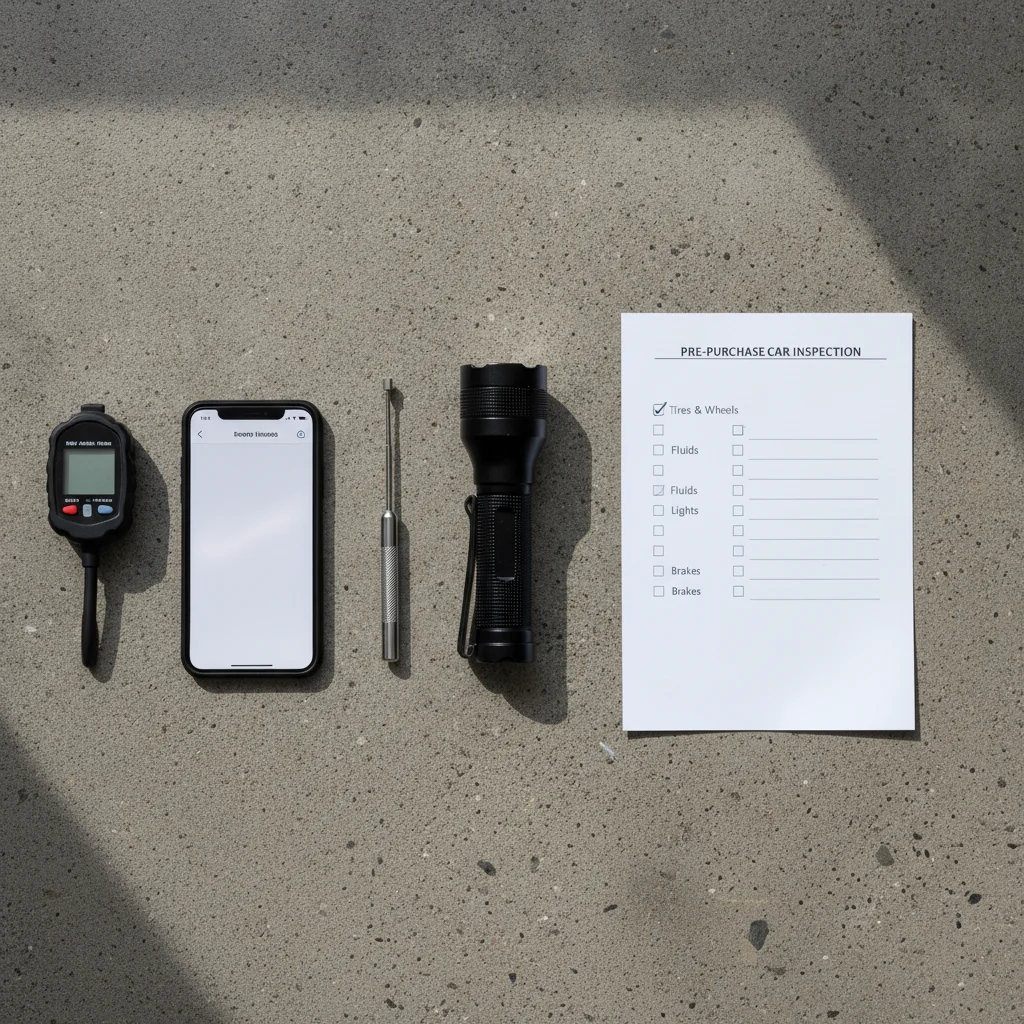
Set aside at least 45 minutes on-site. Bring a flashlight, a magnet (for detecting body filler), a tire pressure gauge, and ideally a friend. Two sets of eyes catch more than one.
Tools You'll Need on-Site
You don't need a mechanic's toolbox, but a few inexpensive items make a significant difference in what you can detect during a walkaround.
Flashlight
Illuminating the engine bay, undercarriage, exhaust components, and interior floor seams where water damage and rust hide.
Refrigerator magnet or small craft magnet
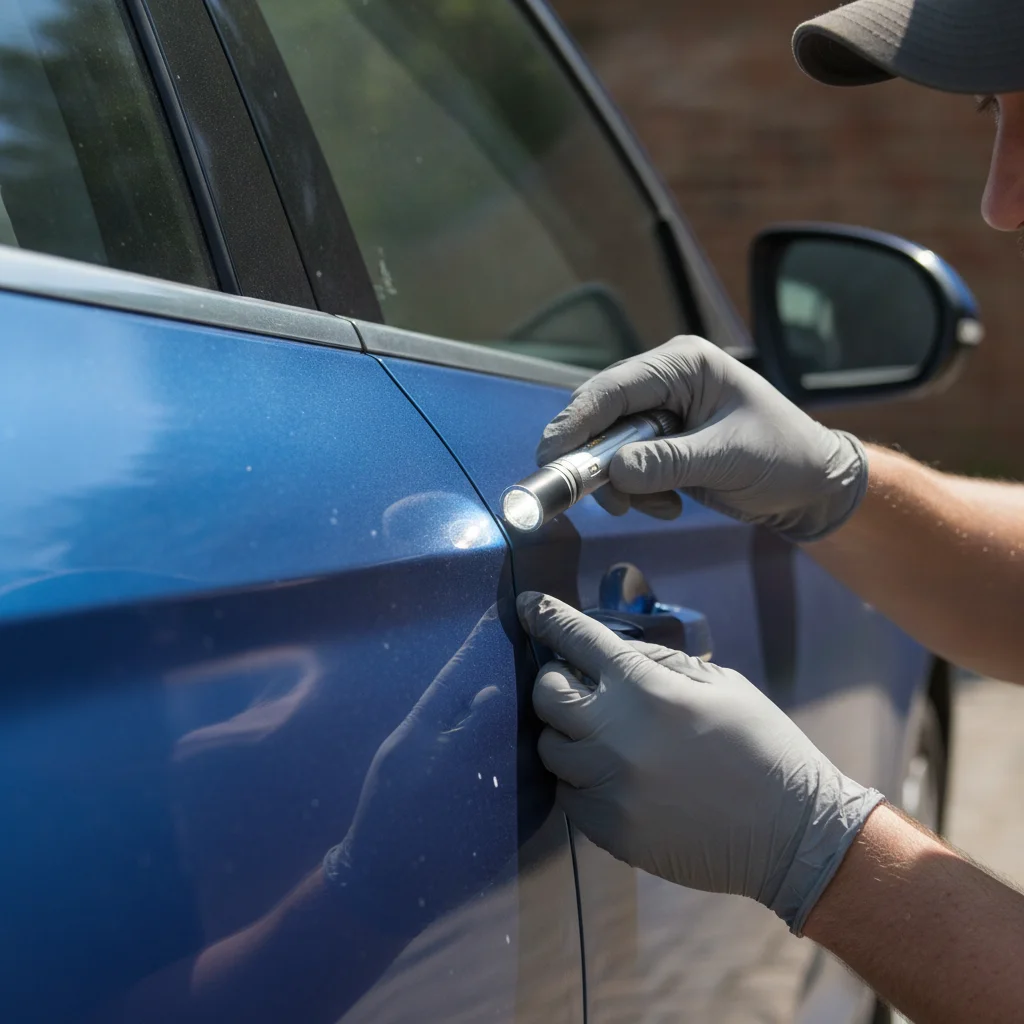
Detecting body filler (Bondo) beneath paint on repaired panels — a magnet won't stick where thick filler is present.
Tire pressure gauge
Checking that all four tires are inflated to the manufacturer's spec — significant differences between tires can indicate a slow leak or suspension issue.
VIN history report (Carfax or AutoCheck)
Revealing prior accidents, title problems, odometer discrepancies, and ownership history before you spend time on an in-person inspection.
Tread depth gauge
Measuring remaining tire tread precisely — more accurate than the penny test, and useful for calculating replacement costs into your offer.
OBD-II Bluetooth scanner
Reading stored and pending diagnostic trouble codes from the car's computer, including codes that a seller may have recently cleared before showing the car.
Smartphone with camera
Documenting every finding — photos and video give you negotiating leverage and a record of the car's condition at purchase.
Beyond physical tools, pull the VIN history report before you drive out. Services like Carfax or AutoCheck run $25–$45 for a single report. A clean report doesn't guarantee a clean car, but a report showing a salvage title, flood damage, or an odometer discrepancy tells you to walk away immediately — no inspection needed.
The Full Inspection Checklist
Work through each group in sequence. The order matters: exterior first catches structural damage before you fall in love with the interior, and under-hood checks before the test drive mean you're not driving a car that's already overheating.
Never Buy Without a VIN History Report
A VIN report takes two minutes and costs less than $45. It can reveal a salvage title, flood damage designation, odometer rollback, or a lemon law buyback — any of which should end the deal immediately. Sellers occasionally clear recent check engine codes before a showing; a report showing a dealer auction transfer shortly before the private listing is a hint that a pro already passed on this car.
Independent Inspection Is Not Optional on Cars Over $5,000
Your visual walkthrough filters obvious red flags, but it won't catch a failing transmission, compression loss in a cylinder, or a coolant leak hiding behind the intake manifold. An independent pre-purchase inspection at a qualified shop costs $100–$200 and gives you a professional assessment plus leverage to negotiate repair costs. Any private seller who refuses to allow an independent inspection deserves serious skepticism.
Before You Arrive
Exterior Inspection
Interior Inspection
Under the Hood
Undercarriage and Suspension
Test Drive Checks
Documentation Review
Sellers Sometimes Clear Codes Before Showings
A check engine light that's absent doesn't mean the problem is fixed — it may mean the seller cleared the code within the past few drive cycles. An OBD-II scanner can read pending codes that haven't yet triggered the dash light. If you don't have one, ask the mechanic doing your pre-purchase inspection to check for pending codes specifically.
Don't Inspect a Freshly Washed Engine Bay
A sparkling clean engine bay looks impressive, but it can hide active oil leaks and fluid seepage that would otherwise be obvious. If the engine bay looks like it was pressure-washed recently, ask the seller why and run your flashlight along every gasket, hose connection, and seam looking for fresh dampness or residue.
Flood Cars Can Look Perfectly Fine Visually
Flood-damaged vehicles are often professionally detailed and resold quickly, sometimes with a clean title if the damage occurred in a state with lax title branding laws. Key tells include musty or chemical odor in the interior, sand or silt in door jambs and under floor mats, corrosion on electrical connectors under the dash, and inconsistent interior wear. Always pull the VIN report and check flood damage designations.
For a more focused look at just the pre-drive portion, the used car buyer's pre-drive checklist drills deeper into exterior and under-hood checks before you turn the key. Use both together for complete coverage.
What to Do With What You Find
Most used cars will have at least a few issues. The question isn't whether there are problems — it's whether they're priced into the deal and whether you're comfortable taking them on.
Minor Issues (Negotiate, Don't Walk)
Worn wiper blades, a cracked cabin air filter, tires at 4/32" tread depth, a scratched door handle, a missing floor mat — these are all normal wear items on a used car. Add up the cost to fix them (use a quick parts search to get real numbers) and factor that into your offer. If a car is listed at $14,500 and you identify $600 in clear, documented wear items, open at $13,800 and let the seller counter.
Medium Issues (Get a Quote First)
Brake pads at or near the wear limit, a power window that moves slowly, a check engine light, a tire that's significantly underinflated when the others are fine, coolant that looks rusty — these require a repair quote before you commit to a number. Ask the seller if you can take the car to an independent shop before you finalize the deal. A seller who refuses this request on a private party sale is telling you something important.
Serious Issues (Consider Walking Away)
Evidence of frame damage or structural repairs, oil in the coolant or coolant in the oil, visible rust perforation on structural panels, a salvage or rebuilt title you weren't told about, significant mismatched paint on major panels — these are deal-breakers for most buyers, or at minimum require a thorough independent mechanical inspection before you go any further.
Once you've worked through the physical car, the next step is paperwork. Understanding the documents and contracts involved in a car purchase is where most buyers lose money after a solid inspection — so take that step as seriously as this one. And before you finalize anything, run through the pre-signing checklist for car purchase contracts to catch errors before your signature is on paper.
Finally, don't overlook insurance. Getting physical damage coverage in place before you drive off matters more than most buyers realize — get a quote on the specific vehicle before you finalize your budget.
When to Bring in a Professional
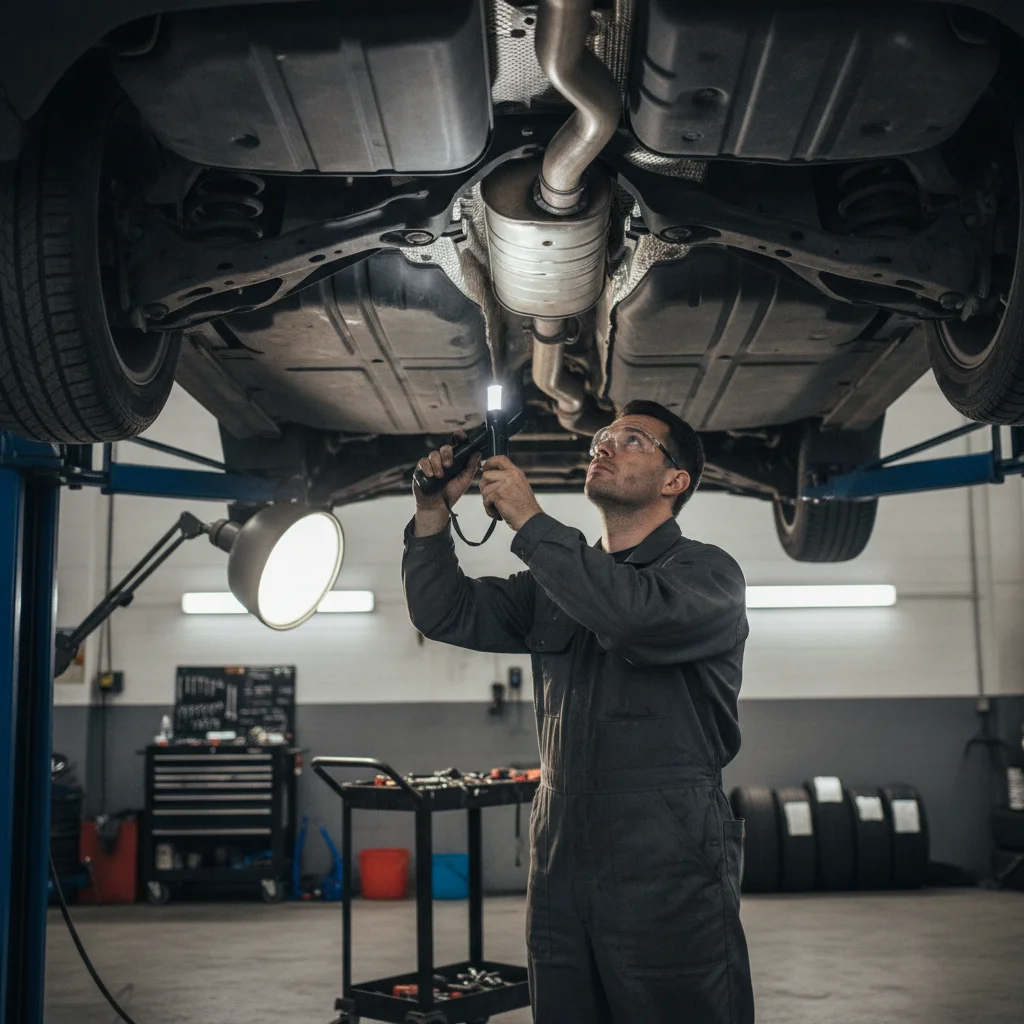
Your visual inspection is a filter, not a verdict. It tells you whether a car is worth paying for a professional to look at — and it arms you with specific questions to ask that mechanic.
The rule of thumb: on any car priced above $5,000, a pre-purchase inspection by an independent mechanic pays for itself. Typical PPI cost is $100–$200. On a $12,000 car, that's less than 2% of the purchase price, and it can surface transmission wear, suspension problems, or pending major service intervals that completely change the calculus.
Never Buy Without a VIN History Report
A VIN report takes two minutes and costs less than $45. It can reveal a salvage title, flood damage designation, odometer rollback, or a lemon law buyback — any of which should end the deal immediately. Sellers occasionally clear recent check engine codes before a showing; a report showing a dealer auction transfer shortly before the private listing is a hint that a pro already passed on this car.
Independent Inspection Is Not Optional on Cars Over $5,000
Your visual walkthrough filters obvious red flags, but it won't catch a failing transmission, compression loss in a cylinder, or a coolant leak hiding behind the intake manifold. An independent pre-purchase inspection at a qualified shop costs $100–$200 and gives you a professional assessment plus leverage to negotiate repair costs. Any private seller who refuses to allow an independent inspection deserves serious skepticism.
To arrange a PPI, tell the seller you'd like to have the car inspected by your mechanic before finalizing the deal. Most legitimate private sellers will agree. If you're at a dealership, you have the legal right in most states to have the vehicle inspected by an outside party before purchase — though some dealers will resist. Chains like Firestone, Pep Boys, or any independent shop can perform the inspection, but ideally choose a mechanic who specializes in the make you're buying.
The complete roadmap to buying a used car covers how the PPI fits into the full purchase sequence — from initial research through closing the deal — if you want a broader view of where this step lands in the process.

All claims are backed by peer-reviewed research. Sources on request.