
| Collision Coverage Covers | Crashes with vehicles or objects, rollovers |
| Comprehensive Coverage Covers | Theft, weather damage, fire, animal strikes, vandalism |
| Payout Basis | Actual Cash Value (ACV) minus deductible |
| Common Drop Threshold | Annual premium exceeds 10% of vehicle ACV (Industry rule of thumb; individual circumstances vary) |
| Average First-Year Depreciation | 15–20% of original vehicle value (Kelley Blue Book depreciation data) |
| Lender Requirement | Collision and comprehensive required for any financed vehicle |
| Comprehensive vs. Collision Cost | Comprehensive is typically less expensive than collision (National Association of Insurance Commissioners data) |
| Reassessment Frequency | At every policy renewal (every 6–12 months) |
What Physical Damage Coverage Actually Covers
Physical damage coverage is an umbrella term for two distinct policy components: collision and comprehensive. They're often sold together and sometimes confused for one another, but they respond to entirely different loss events — and that distinction matters when you're deciding how much coverage an aging car actually warrants.
Actual Cash Value (ACV)
The market value of a vehicle at the time of a covered loss, accounting for age, mileage, condition, and depreciation. This is the maximum an insurer will pay on a physical damage claim — not the replacement cost of a new equivalent vehicle.
Collision Coverage
Auto insurance that pays for damage to your vehicle resulting from a collision with another vehicle or object, regardless of fault. Subject to the policy deductible.
Comprehensive Coverage
Auto insurance that pays for vehicle damage from non-collision events such as theft, vandalism, fire, flooding, hail, and animal strikes. Despite the name, it covers a specific (not exhaustive) list of perils.
Deductible
The amount a policyholder pays out of pocket before insurance coverage applies to a claim. Higher deductibles reduce premiums but increase the out-of-pocket cost when a claim occurs.
Physical Damage Coverage
An umbrella term for the collision and comprehensive components of an auto insurance policy — the portions that protect your own vehicle against damage, as opposed to liability coverage that protects others.
Total Loss
An insurance determination that the cost of repairing a damaged vehicle exceeds its actual cash value (or a defined percentage threshold). When a vehicle is totaled, the insurer pays out ACV minus the deductible rather than paying for repairs.
Force-Placed Insurance
Coverage arranged by a lender and billed to the borrower when the borrower fails to maintain required insurance. It is typically more expensive and less protective than voluntary market coverage.
Depreciation
The ongoing reduction in a vehicle's market value over time due to age, accumulated mileage, and wear. Depreciation is the primary reason physical damage coverage becomes less financially compelling as a car ages.
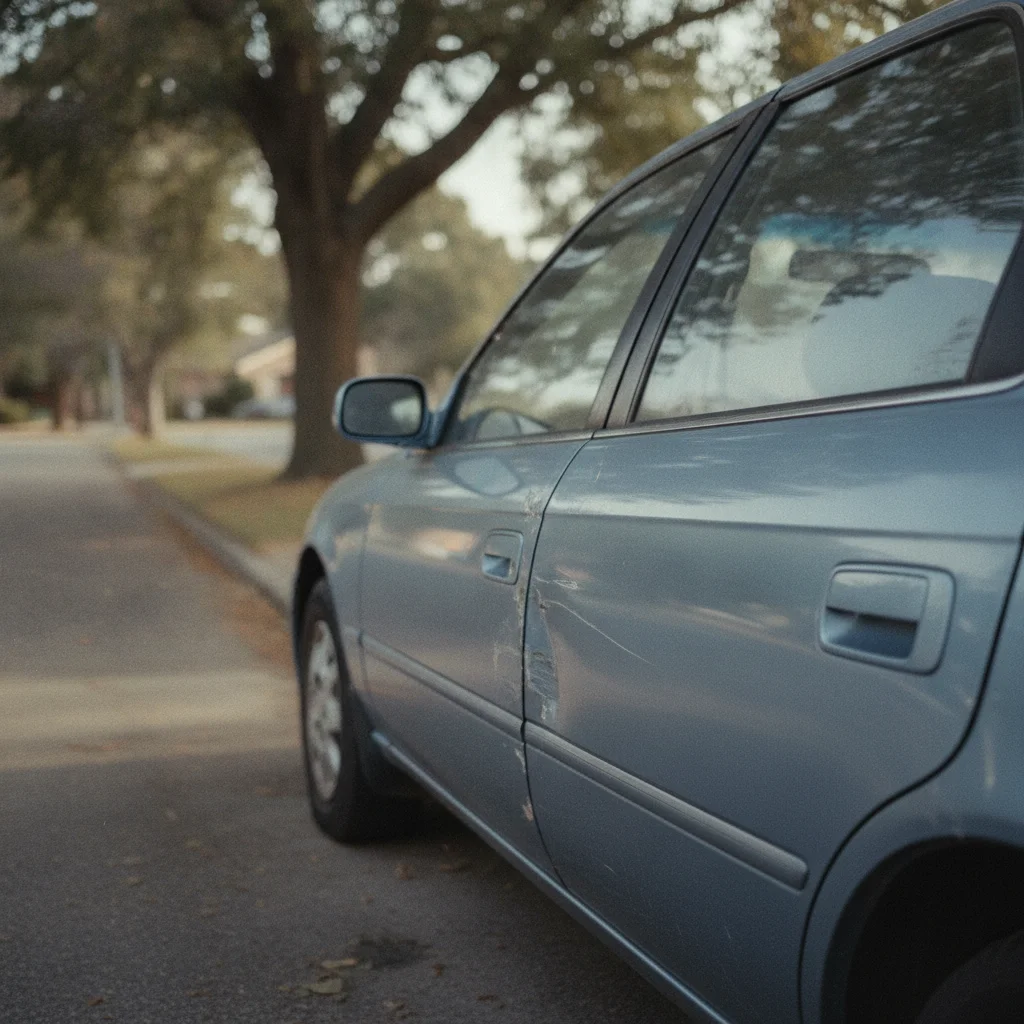
Collision pays for damage to your vehicle resulting from an impact with another vehicle or object — a rear-end crash, a guardrail strike, a rollover. The at-fault driver's liability coverage doesn't protect your car; collision does. If you're hit by an uninsured driver, your collision coverage still applies (subject to your deductible), though uninsured motorist property damage coverage is a separate option in many states.
Comprehensive, despite the name, is actually the narrower of the two in everyday usage. It covers damage from events outside your control: theft, vandalism, fire, flooding, hail, falling objects, and animal strikes. Hitting a deer is a comprehensive claim; swerving to avoid the deer and hitting a tree is collision.
Both coverages pay out based on actual cash value (ACV) — the market value of your vehicle at the time of loss, minus your deductible. This is the critical variable for older vehicles. As ACV declines, the maximum payout shrinks even as premiums may remain relatively stable. That gap is where the decision framework begins.
| Collision Coverage Covers | Crashes with vehicles or objects, rollovers |
| Comprehensive Coverage Covers | Theft, weather damage, fire, animal strikes, vandalism |
| Payout Basis | Actual Cash Value (ACV) minus deductible |
| Common Drop Threshold | Annual premium exceeds 10% of vehicle ACV (Industry rule of thumb; individual circumstances vary) |
| Average First-Year Depreciation | 15–20% of original vehicle value (Kelley Blue Book depreciation data) |
| Lender Requirement | Collision and comprehensive required for any financed vehicle |
| Comprehensive vs. Collision Cost | Comprehensive is typically less expensive than collision (National Association of Insurance Commissioners data) |
| Reassessment Frequency | At every policy renewal (every 6–12 months) |
How Depreciation Reshapes the Math
New vehicles lose value rapidly. A typical car depreciates roughly 15–20% in its first year, and another 10–15% each subsequent year, though rates vary significantly by make, model, and market conditions. By year five, many mainstream vehicles are worth 40–50% of their original sticker price. By year ten, that figure can fall to 25% or less.
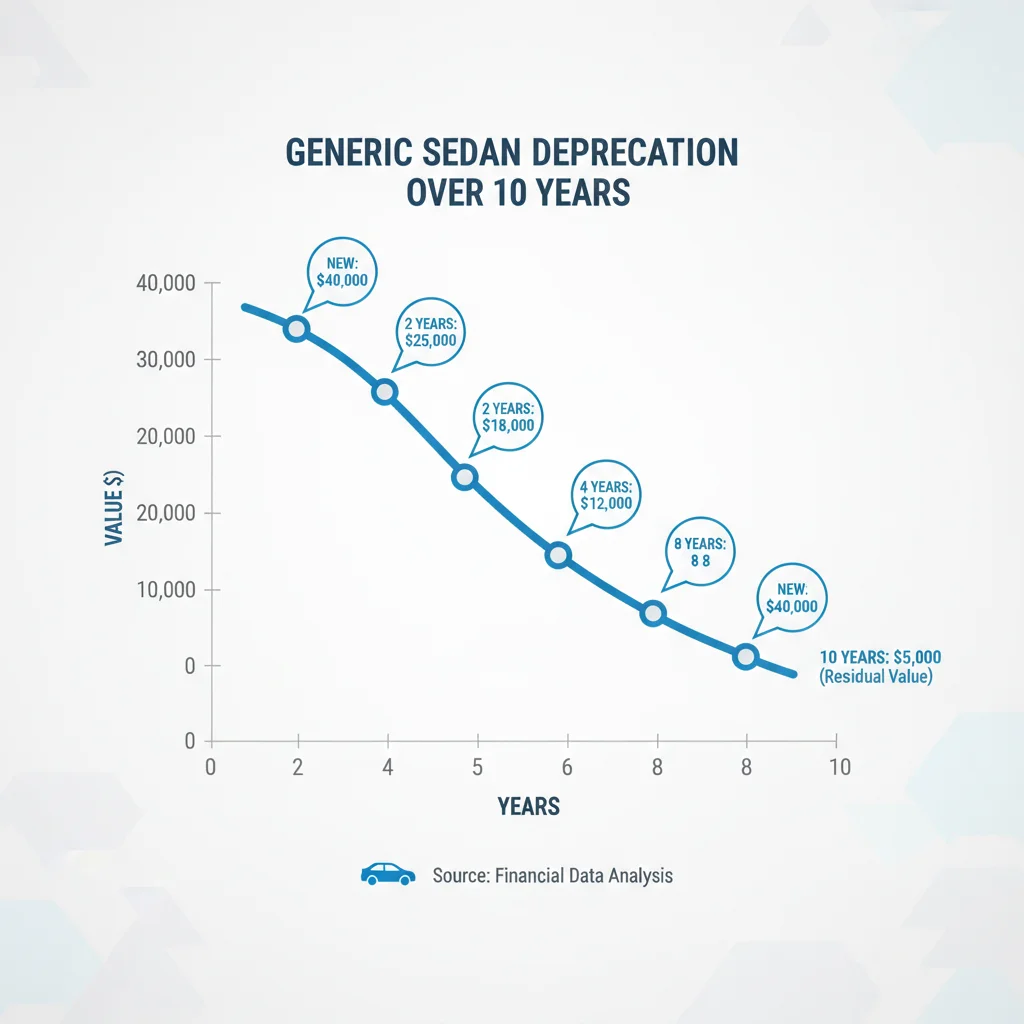
This depreciation curve is the engine behind every coverage reassessment decision. When a car is worth $25,000, a comprehensive or collision payout after a total loss is meaningful. When that same car is worth $4,500, the calculus shifts — especially once you factor in the deductible.
49%
Average value retained after 5 years
According to Kelley Blue Book analysis, a typical mainstream vehicle retains roughly 49% of its original value after five years of ownership.
$1,000+
Average annual collision premium per vehicle
The National Association of Insurance Commissioners reported average collision premiums exceeding $1,000 per year across insured vehicles nationally.
10%
Premium-to-ACV threshold for coverage review
Consumer finance and insurance advisors widely cite the 10% rule: when annual physical damage premiums exceed 10% of a vehicle's ACV, dropping coverage warrants serious evaluation.
~25%
Typical value retained after 10 years
Most mainstream vehicles are worth approximately 20–30% of their original sticker price by the decade mark, depending on brand, model, and condition.
6–7 years
Break-even horizon on low-ACV collision coverage
On a $5,000 vehicle with a $1,000 deductible and $600 annual premium, a driver would need nearly seven consecutive claim-free years to recoup premium costs relative to the maximum payout.
Consider a concrete example: a 10-year-old mid-size sedan with an ACV of $5,000. If your combined collision and comprehensive premium runs $600 per year and your deductible is $1,000, a total-loss claim would net you just $4,000. You'd need to go nearly seven claim-free years to "break even" on premiums relative to maximum payout — before accounting for the opportunity cost of that premium spending.
The standard industry rule of thumb holds that when annual premiums for collision and comprehensive exceed 10% of the vehicle's ACV, dropping one or both coverages deserves serious consideration. That's a starting point, not a verdict — but it provides a useful anchor. For a deeper look at how depreciation drives down vehicle value over time, that context is essential to any coverage decision.
It's also worth separating the two coverages analytically. Comprehensive is generally less expensive than collision — often significantly so. The risk profile is also different: theft and weather events, while unpredictable, may be lower-probability in your specific geography than collision risk is in a dense urban commute. Running the numbers on each independently often produces a more nuanced answer than treating them as a bundle.
The Decision Framework: Four Questions to Work Through
No single threshold fits every driver or every vehicle. The right approach is a structured set of questions that weighs ACV, premium cost, deductible, financial resilience, and vehicle-specific risk. Work through these in order.
1. What is the car actually worth today?
Start with a current market valuation — not the original purchase price, not the loan payoff balance, not what you think the car is worth. Use a recognized pricing tool such as Kelley Blue Book or NADA Guides, and check private-party value in your region. Insurance companies use their own valuation tools, which often closely track these sources. If you're uncertain about the car's condition tier, be conservative; insurers will be.
2. What are you actually paying for physical damage coverage?
Pull your declarations page and isolate the collision and comprehensive line items. Many drivers know their total premium but not how it's allocated across coverages. If your insurer doesn't break it out clearly, call and ask — they're required to provide it. Once you have the annual cost for each coverage separately, you can apply the 10% rule and also compare each against realistic loss scenarios.
3. What does your deductible do to the net payout?
If your deductible is $1,000 and the car is worth $4,500, your maximum net payout after a total loss is $3,500. After a partial repair, the math is even thinner — minor to moderate damage estimates below your deductible produce zero payout and still count as a claim on your record in some states, potentially affecting future premiums. A high deductible on a low-ACV vehicle dramatically narrows the practical benefit of coverage.
4. Could you absorb the loss without coverage?
This is the most personal variable in the framework and the one most often glossed over. Dropping collision and comprehensive is, in effect, self-insuring against vehicle loss. If your car were totaled tomorrow, would you be able to replace it — or cover transportation costs while you arranged alternative mobility — without financial hardship? If the answer is yes, dropping coverage may be rational. If the answer is no, the premium may be genuine risk transfer worth maintaining even at a high ratio to ACV.
Knowing the specific triggers that justify dropping coverage goes beyond just the ACV ratio — personal financial circumstances and vehicle condition both play a role.

One additional consideration: if you're carrying the car on an auto loan or lease, this decision is not yours to make unilaterally. Virtually all lenders require comprehensive and collision coverage for the duration of the loan term. Dropping it while a balance remains is a contract violation that can trigger force-placed insurance — typically far more expensive than your original policy. Confirm your loan status before making any changes.
Financed Vehicles: Coverage Is Not Optional
If you're still making payments on the vehicle in question, your lender almost certainly requires you to carry both collision and comprehensive coverage for the life of the loan. Dropping either coverage without paying off the loan first constitutes a breach of your financing agreement. The lender can respond by purchasing force-placed insurance on your behalf — at your expense — which is typically far more costly and offers you far less protection than a standard voluntary policy.
Dropping Coverage Doesn't End Your Risk
Choosing to self-insure by dropping collision or comprehensive doesn't eliminate the financial exposure — it transfers it entirely to you. Before dropping coverage, make sure you have a concrete plan for how you'd handle a total loss or major repair: an emergency fund earmarked for vehicle replacement, access to alternative transportation, or a realistic plan for financing a replacement. The coverage decision and the financial preparedness decision need to be made together.
Partial Drops Are a Valid Middle Ground
Collision and comprehensive don't have to be treated as a single on/off decision. Because comprehensive typically costs significantly less than collision, dropping collision while retaining comprehensive is a legitimate and commonly used intermediate step for vehicles in the $5,000–$9,000 ACV range. This preserves protection against theft and weather events — which feel more random and harder to predict — while eliminating the larger collision premium on a vehicle where the net payout ceiling is already constrained.
Coverage Scenarios by Vehicle Age and Value
Rather than a single recommendation, the framework produces a range of outcomes depending on where a vehicle falls on the age-value curve. The scenarios below represent general patterns — actual decisions should always be individualized.
Vehicles 5–8 years old / ACV $8,000–$15,000
In this range, maintaining both collision and comprehensive usually still makes financial sense for most drivers. ACV is still meaningful, and total-loss or major repair payouts can represent a significant portion of what a replacement vehicle would cost. The math at this tier rarely triggers the 10% rule unless premiums are unusually high or deductibles unusually low.
Vehicles 9–12 years old / ACV $4,000–$8,000
This is the gray zone where the framework earns its keep. Many drivers in this range are still paying full collision and comprehensive premiums on vehicles whose ACV has dropped substantially. Run the numbers carefully here. Dropping collision while retaining the lower-cost comprehensive is often the most defensible intermediate step — it reduces premium spend while preserving protection against theft, weather events, and other non-collision losses that tend to feel more random and harder to self-insure against psychologically.
Vehicles 13+ years old / ACV under $4,000
At this tier, the 10% rule is frequently exceeded, particularly for collision. Unless premiums are exceptionally low or the driver's financial cushion is thin, dropping collision coverage is commonly the rational choice. Comprehensive may still be worth retaining if the car is garaged in a high-theft area or a region with severe weather exposure, since the premium is typically modest. Each coverage should be evaluated independently at this stage.
It's also worth noting that older vehicles can have their own value complexities — a well-maintained classic or a model with cult following may retain value above what standard depreciation curves suggest. If you're unsure whether your older vehicle falls into a higher-value category, see how specialized physical damage coverage works for high-value vehicles — the considerations are quite different from standard older cars.
Renewal as a Built-In Reassessment Window
The framework described here isn't a one-time exercise. Vehicle value depreciates continuously, and the decision that was right at your last renewal may not hold today. Policy renewal — typically every six or twelve months — is the natural moment to run these numbers again.
Reviewing your collision and comprehensive coverage at renewal is one of the highest-leverage financial maintenance tasks available to car owners. Premium adjustments don't require waiting for a life event; they can be made at renewal without penalty in most cases.
A few practical steps for renewal review:
- Re-value the vehicle using current market data, not last year's figure. In some market conditions — used car shortages, regional scarcity — values hold or even rise. In most, they continue declining.
- Compare quotes from multiple carriers. Premiums for the same coverage can vary substantially between insurers, and the competitive landscape changes. What was the best rate last year may not be this year.
- Check your deductible settings. If you've maintained both coverages but raised your deductible to control cost, recalculate whether the higher deductible has already moved you into effective self-insurance territory for small losses.
- Review the full policy context. Physical damage is one component of an auto policy. Liability limits, uninsured motorist coverage, and personal injury protection are separate lines — and their adequacy should be assessed independently of the physical damage question.
If you're approaching a used car purchase and haven't yet thought through physical damage coverage timing, the physical damage coverage checklist for used car buyers walks through what to have in place before you take delivery.
And for drivers who want a broader view of how to recalibrate the entire policy as a vehicle ages — not just physical damage but overall coverage appropriateness — the right way to adjust coverage as your car ages provides a policy-wide lens on the same depreciation reality.
Financed Vehicles: Coverage Is Not Optional
If you're still making payments on the vehicle in question, your lender almost certainly requires you to carry both collision and comprehensive coverage for the life of the loan. Dropping either coverage without paying off the loan first constitutes a breach of your financing agreement. The lender can respond by purchasing force-placed insurance on your behalf — at your expense — which is typically far more costly and offers you far less protection than a standard voluntary policy.
Dropping Coverage Doesn't End Your Risk
Choosing to self-insure by dropping collision or comprehensive doesn't eliminate the financial exposure — it transfers it entirely to you. Before dropping coverage, make sure you have a concrete plan for how you'd handle a total loss or major repair: an emergency fund earmarked for vehicle replacement, access to alternative transportation, or a realistic plan for financing a replacement. The coverage decision and the financial preparedness decision need to be made together.
Partial Drops Are a Valid Middle Ground
Collision and comprehensive don't have to be treated as a single on/off decision. Because comprehensive typically costs significantly less than collision, dropping collision while retaining comprehensive is a legitimate and commonly used intermediate step for vehicles in the $5,000–$9,000 ACV range. This preserves protection against theft and weather events — which feel more random and harder to predict — while eliminating the larger collision premium on a vehicle where the net payout ceiling is already constrained.
What the Framework Doesn't Decide For You
A decision framework clarifies variables and surfaces trade-offs; it doesn't make the final call. Two drivers with identical vehicles and identical premiums may rationally reach different conclusions based on their financial position, risk tolerance, and how they use the car.
A driver who relies on that 12-year-old sedan as their only vehicle — who commutes daily, has no emergency savings cushion, and couldn't replace the car quickly — has a stronger case for maintaining coverage even when the math looks thin. A driver who keeps the older car as a secondary vehicle, has substantial savings, and could absorb a total loss without hardship has a weaker case for paying ongoing premiums.
The framework also doesn't account for accident history. A driver with multiple at-fault claims may face significant premium increases regardless of vehicle ACV, and the cost-benefit calculation changes in that context. Conversely, a long-tenured customer with no claims may have access to loyalty discounts or accident-forgiveness provisions that make premiums more competitive.

Finally, geography matters. Comprehensive risk is not uniform across the country. Hail exposure in the southern Plains, flooding risk in coastal regions, and vehicle theft rates in dense urban markets all affect the independent calculus for comprehensive coverage in ways that the national averages embedded in most rule-of-thumb guidance can't capture.
The goal of this framework is to replace gut instinct and inertia with a structured, data-grounded process. Too many drivers carry collision and comprehensive coverage on older vehicles because they've always carried it — without ever running the numbers that would tell them whether it still makes sense. And some drop it reflexively the moment a car hits a certain age, without considering whether their financial situation actually supports self-insuring the loss. Neither default is reliable. The framework replaces both with a repeatable process that fits your actual circumstances.
Kelley Blue Book Vehicle Valuation
Look up the current private-party and trade-in value of your specific vehicle by year, make, model, mileage, and condition. Essential for running the 10% premium-to-ACV calculation accurately.
NADA Guides Used Car Values
An alternative to KBB that provides vehicle valuations used by dealers and lenders. Running both tools and comparing outputs gives a more reliable ACV range for your coverage decision.
Reviewing Coverage at Renewal Guide
A structured walkthrough of how to reassess collision and comprehensive coverage at every policy renewal, including which numbers to pull and how to compare carrier quotes side by side.
Auto Insurance Premium Comparison Tool
Compare collision and comprehensive premium quotes across multiple carriers for your specific vehicle and driver profile. Premiums for the same coverage vary significantly between insurers.
Dropping Collision or Comprehensive: Decision Guide
A detailed look at the specific financial and situational triggers that indicate it's time to drop one or both physical damage coverages on an older vehicle.

All claims are backed by peer-reviewed research. Sources on request.