Key Takeaways
Our Verdict
For most drivers, waiting until renewal is the lowest-friction, lowest-cost way to switch insurers. Mid-policy switching makes sense when a significant life change or a large rate discrepancy tips the financial math in your favor — but only after accounting for cancellation fees and prorated refunds. In either case, preparation and overlap management are what separate a smooth switch from a costly one.
| Best for | Recommended |
|---|---|
| Drivers whose renewal is within 30–60 days | Switch at Renewal |
| Drivers facing a major rate hike or life event mid-policy | Switch Mid-Policy |
| Those who want maximum simplicity and zero cancellation fees | Switch at Renewal |
| Drivers who just bought a new car or moved to a new state | Switch Mid-Policy |
Why Timing Your Switch Actually Matters
Most drivers know they can switch auto insurers whenever they want. What fewer understand is that when they switch has real financial and logistical consequences — prorated refunds, short-rate penalties, coverage gaps, and even rate impacts on the next policy. The decision isn't just about who offers the lowest quote; it's about timing that switch to maximize savings and minimize friction.
Two windows exist for making a move: at your policy's renewal date, or at any point during the active term. Both are valid, and both have distinct trade-offs. Understanding those differences is what lets you make a genuinely informed choice rather than an impulsive one driven by a competitor's mailer.
Before going further, it's worth being clear on one baseline rule: never cancel an existing policy before your new one is bound and active. A lapse in coverage — even 24 hours — can flag your record with insurers, raise your future premiums, and leave you legally exposed on the road. That principle applies whether you're switching at renewal or mid-term. For a detailed look at what else to verify before pulling the trigger, see our auto insurance comparison checklist before you make any moves.

Switching at Renewal: The Clean Break
Renewal is the natural seam in your policy. Every six or twelve months (depending on your term), your insurer sends a renewal notice — typically 30 to 45 days in advance — outlining your new rate and coverage terms. That window is the single best moment to shop around and, if you find a better deal, exit without penalty.
What Makes Renewal Switching Straightforward
- No cancellation fee. When your policy expires at the end of its term, you're simply choosing not to renew — not canceling mid-contract. Most insurers don't charge a fee for this.
- No prorated refund math. You've already paid through the end of the term, so there's nothing to calculate or dispute.
- Clean start date alignment. Your new policy begins exactly when your old one ends, eliminating any coverage gap risk.
- Leverage over your current insurer. The renewal conversation is also a negotiation opportunity. See the discount conversation to have before renewing for a structured approach to this.
The One Catch: You Have to Be Paying Attention
Renewal switches require you to act within a narrow window. If you miss the renewal date without setting up a new policy, most insurers automatically renew — meaning you're locked into another term and back to the mid-policy scenario. Set a calendar reminder 45 days before your policy expires so you have enough time to gather quotes, compare them carefully, and bind new coverage before the deadline.
Set Your Shopping Calendar Now
Pull up your current declarations page and note the policy expiration date. Set a reminder for 45 days before that date — that's when you should start gathering quotes. Most online comparison tools can return multiple quotes in under 10 minutes, so there's no reason to wait until the last week. The more time you have, the better deal you're likely to secure.
Get Everything in Writing Before Canceling
When you bind a new policy, ask for the declarations page and the insurance ID card via email before you contact your old insurer. A verbal confirmation or a quote number is not proof of active coverage. Only a bound policy with a confirmed start date and a written confirmation constitutes real protection. This one habit eliminates the most common cause of accidental coverage gaps.
Renewal is also the moment your insurer reassesses your risk profile. If your rate has crept up — due to a claim, a ticket, or just ambient market conditions — that notice is your signal to shop aggressively. To understand what's driving the new number, see how insurers calculate your renewal rate.
| Switch at Renewal | Switch Mid-Policy | |
|---|---|---|
| Cancellation fee | None in most cases | Possible short-rate penalty (10–15% of unused premium) |
| Refund complexity | None — term is paid through | Prorated refund calculation required |
| Coverage gap risk | Minimal if dates aligned | Higher if not carefully managed |
| Flexibility | Limited to renewal window | Any time during the term |
| Best for | Routine rate shopping | Life events, major rate disparities |
| Advance planning needed | 30–45 days | Immediate, but with overlap buffer |
| Impact on insurer relationship | Clean exit, no penalties | May affect return eligibility or discounts |
Switching Mid-Policy: When It's Worth the Complexity
Mid-policy switching — leaving your insurer before your current term expires — is legal in every U.S. state. You have the right to cancel at any time. The question is whether the financial math justifies it.
The Short-Rate Penalty Problem
When you cancel mid-term, most insurers don't simply refund you the exact pro-rata amount of your unused premium. Instead, they apply a short-rate calculation — a penalty built into the cancellation formula that means you get back slightly less than the straight daily-rate math would suggest. The penalty varies by insurer and state, but it typically runs 10% to 15% of the unused premium. On a $1,200 annual policy with six months remaining, that could mean losing $60–$90 you'd otherwise keep.
Some states regulate short-rate penalties or require true pro-rata refunds, so it's worth checking your state's insurance department rules — but don't count on that protection being in place everywhere.
Life Events That Justify the Exit Cost
Despite the penalty friction, certain situations make mid-policy switching the financially rational call:
- You bought a new or different vehicle. A new car — especially an EV or a vehicle with a very different risk profile — often means your existing policy's rates no longer reflect current market pricing for your specific situation.
- You moved to a different state or ZIP code. Auto insurance is intensely geography-dependent. A move can dramatically change your risk rating, and your current insurer may not even be licensed in your new state.
- You had a major life event. Marriage, adding a teen driver, or removing a driver from the household all shift your risk profile enough to justify a fresh market comparison.
- You found a substantially lower rate. If a competitor is quoting 20% or more below your current rate, the savings over the remaining term may dwarf any short-rate penalty. Run the math explicitly: new annual premium minus penalty minus any switching fees should still clear a meaningful threshold.

For a deeper look at how mid-term timing intersects with coverage continuity, see when switching insurers saves you money and when it creates a coverage gap. And if you're weighing whether to update your coverage mid-term versus waiting, mid-term policy changes vs. waiting for renewal walks through the decision framework in detail.
Don't Let a Competitor's Mailer Drive the Decision
Mid-policy switching triggered by a marketing piece often doesn't pencil out once you factor in the short-rate penalty and the time cost of transitioning. The scenarios where mid-policy switching clearly wins are the ones involving genuine life changes — not a promotional rate that may not reflect what you'll actually pay after the first term. Always get a formal quote, not a marketing estimate, and read the fine print on any introductory pricing.
The Financial Math: Running the Numbers
Before acting, do a simple break-even calculation. Here's the framework:
- Identify your remaining premium. How much have you prepaid for the rest of the current term?
- Estimate your short-rate penalty. Ask your insurer directly — they're required to tell you the cancellation refund amount before you pull the trigger. Assume 10–15% of unused premium as a baseline if they won't quote it upfront.
- Calculate the new policy cost through your original end date. What would you pay the new insurer for the same period?
- Compare net costs. Refund minus penalty, subtracted from what you'd have paid staying — versus the new insurer's cost for that same window.
~47%
Drivers who shopped for new coverage at renewal
According to J.D. Power's 2023 U.S. Auto Insurance Study, roughly half of customers who received a rate increase shopped for a new insurer at renewal.
$540
Average annual auto insurance premium increase in 2023
The Insurance Information Institute reported average premium growth accelerating sharply in 2023, making the cost of staying put more significant.
10–15%
Typical short-rate cancellation penalty on unused premium
Industry standard short-rate penalties are applied by most insurers on mid-term cancellations, though state regulation varies.
Example: You're 3 months into a 6-month, $900 policy (paid in full). You have $450 of premium remaining. A 12% short-rate penalty on $450 = $54 penalty, so your refund is $396. A new insurer quotes $320 for the same 3-month period. Your net saving: $396 – $320 = $76. That's worth doing — not transformative, but real money.
If the new insurer quotes $390 for the same period, you'd net only $6. In that case, waiting for renewal is almost certainly the smarter move. The math doesn't have to be complex, but it does have to be done.
Also worth factoring in: some new insurers offer a paid-in-full discount or a new customer discount that can shift the math further in your favor. Compare the loyalty discounts vs. switching bonuses article for context on how those incentives stack up in practice.
Coverage Gaps and Continuity: What's Actually at Risk
The most underappreciated risk in any insurer switch — regardless of timing — is the coverage gap. A single day without active auto insurance can have consequences that outlast the switch itself.
Why Gaps Matter Beyond the Legal Requirement
Every state except New Hampshire requires minimum liability coverage, so a gap puts you in legal jeopardy if you're driving. But beyond that immediate risk, insurers check for prior coverage gaps when pricing new policies. Even a brief lapse — sometimes as short as one day — can result in a higher base rate with your new insurer, partially negating the savings you switched to capture.
The Mechanics of a Safe Handoff
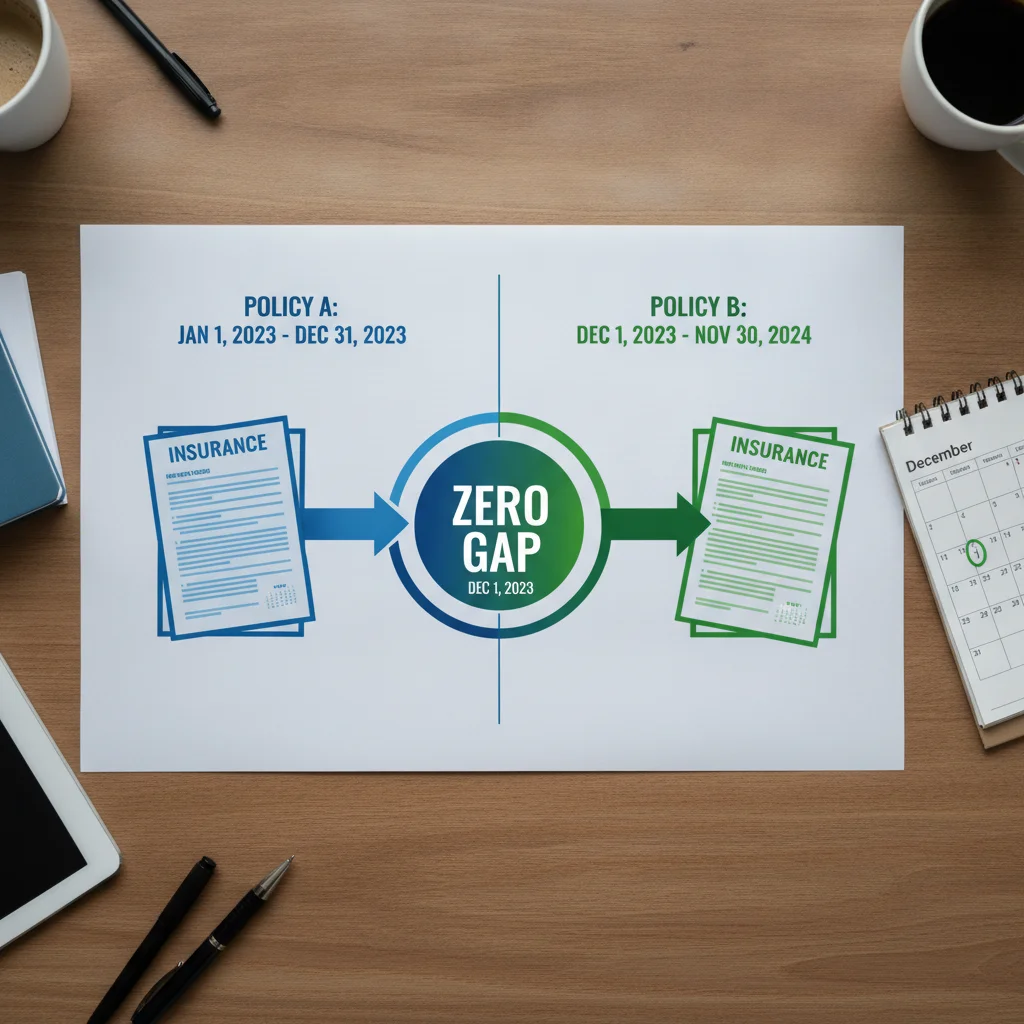
- Bind your new policy first. Get written confirmation — an ID card and a declarations page — before contacting your old insurer to cancel.
- Set the new policy start date for the same day as your old policy's cancellation date, not the day after.
- If you're switching at renewal, time the new policy to start at 12:01 a.m. on the renewal date — the standard industry convention for zero-gap continuity.
- If you're switching mid-policy, confirm with your old insurer in writing that coverage doesn't terminate until the date you specify.
It's also worth understanding the difference between what happens when you choose to leave and what happens when your insurer acts against you. The difference between policy cancellation and non-renewal affects your insurability record differently, so clarifying which scenario applies to your situation matters.
Practical Steps: Executing the Switch Cleanly
Whether you're switching at renewal or mid-term, the execution process is nearly identical — only the timing and the cancellation conversation differ.
Step-by-Step Switch Checklist
- Gather quotes at least 3–4 weeks before your intended switch date. This gives you time to compare meaningfully and resolve any questions about coverage equivalence.
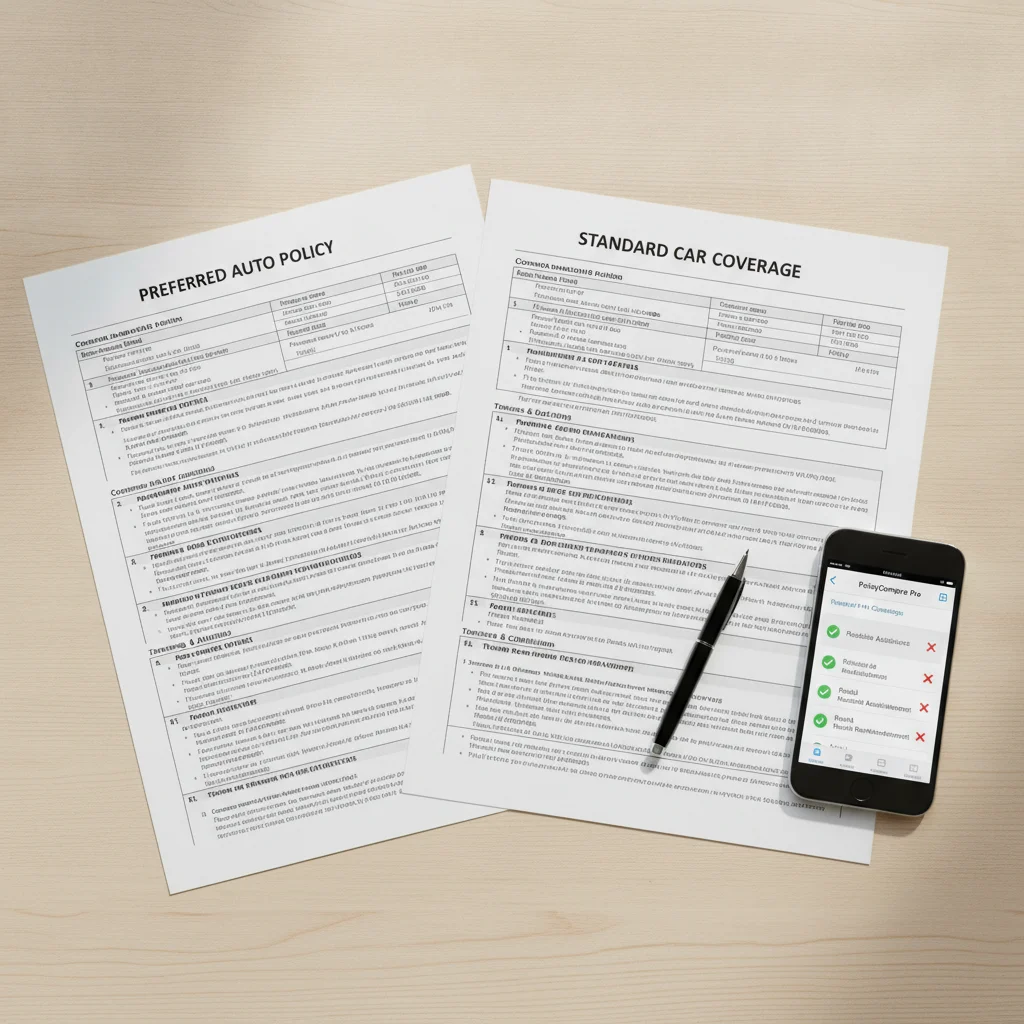
- Verify apples-to-apples coverage. Make sure liability limits, deductibles, and optional coverages (uninsured motorist, comprehensive, collision, rental reimbursement) match or improve on your current policy. Use our comparison checklist for this step.
- Bind the new policy in writing. Don't rely on a verbal quote. Get a declarations page and proof of insurance card before proceeding.
- Contact your old insurer to cancel. Ask them to confirm in writing: the cancellation effective date and the refund amount you'll receive and when.
- Check for any installment fees. If you were paying monthly, verify there are no final installment charges triggered by cancellation.
- Update your vehicle registration and lienholder if required. If you have a car loan or lease, the lender needs to be listed on the new policy. Some lenders require advance notice of insurer changes.
For drivers navigating a significant life change alongside a switch — a new purchase, a relocation — the comparing policies hub has additional resources on evaluating quotes in context.
Set Your Shopping Calendar Now
Pull up your current declarations page and note the policy expiration date. Set a reminder for 45 days before that date — that's when you should start gathering quotes. Most online comparison tools can return multiple quotes in under 10 minutes, so there's no reason to wait until the last week. The more time you have, the better deal you're likely to secure.
Get Everything in Writing Before Canceling
When you bind a new policy, ask for the declarations page and the insurance ID card via email before you contact your old insurer. A verbal confirmation or a quote number is not proof of active coverage. Only a bound policy with a confirmed start date and a written confirmation constitutes real protection. This one habit eliminates the most common cause of accidental coverage gaps.
Special Scenarios: When the Standard Advice Doesn't Quite Fit
A few situations deserve specific attention because they don't fit cleanly into the renewal-vs-mid-policy binary.
Your Insurer Non-Renews You
If your insurer decides not to renew your policy (as opposed to you choosing to leave), you're effectively in a forced mid-policy transition. You'll typically get 30–45 days' notice and your existing coverage runs through the end of the term. This is different from a mid-term cancellation by the insurer — which has tighter legal requirements. Understand those distinctions via when insurers can legally cancel your policy mid-term.
You're Financing or Leasing the Vehicle
Lenders and lessors require uninterrupted comprehensive and collision coverage as a condition of the loan or lease. A gap — even accidental — can trigger force-placed insurance from the lender, which is almost always dramatically more expensive and covers only the lender's interest, not yours. This makes the zero-gap handoff non-negotiable if there's a lienholder involved.
You're Moving Between States
Not every insurer is licensed in every state, so a relocation may force a mid-policy switch regardless of timing preference. In this case, the mid-policy exit is unavoidable, and your focus should be entirely on securing equivalent (or better) coverage in the new state before your move date. Some larger national carriers can transfer your policy to the new state — ask directly before assuming you need to find a new insurer entirely.

You're Considering an Umbrella Policy
If you're adding a personal umbrella policy, many umbrella insurers require your underlying auto policy to be with the same carrier. This can make switching auto insurers more consequential — or conversely, may push you toward a specific timing to align both policies at renewal simultaneously.
Across all of these edge cases, the framework remains the same: calculate the exit costs, eliminate the coverage gap, and verify that the new policy actually covers what the old one did. Everything else is execution.

All claims are backed by peer-reviewed research. Sources on request.