Key Takeaways
Insurance Renewal Rate
Your renewal rate is the premium your insurer charges when your existing auto insurance policy comes up for renewal — typically every six or twelve months. It's calculated by re-evaluating a combination of your personal risk profile, claims history, and external market data. Unlike your original quote, the renewal rate reflects what's changed for you and your insurer since you last signed up.
Insurers use proprietary actuarial models to assign risk scores at renewal. These models incorporate loss-cost trends, reinsurance costs, and state-approved rating factors that may differ from those used in initial underwriting.
Why Renewal Pricing Is a Separate Calculation
Many drivers assume their renewal premium is simply last year's rate adjusted for inflation. That's not how it works. When your policy comes up for renewal, your insurer runs what amounts to a fresh underwriting pass on your account — pulling updated data on your driving record, claims history, credit profile, and vehicle, then layering in current market conditions.
The result is a rate that can look quite different from what you were paying, even if nothing obvious changed in your life. That's not a billing error. It reflects the reality that both your personal risk profile and the external cost environment your insurer operates in are constantly moving.
Understanding what goes into that calculation puts you in a much stronger position — whether you're deciding to renew, renegotiate, or shop elsewhere. See our renewal checklist for a structured way to evaluate everything before you commit to another term.

The Personal Risk Factors Insurers Re-Evaluate
At the core of every renewal calculation is your individual risk profile. These are the factors that are specific to you, your household, and your vehicle. Insurers typically pull fresh data on each of these at renewal:
Driving Record
Tickets, at-fault accidents, and DUIs from the prior policy term are the highest-impact personal factors. A single at-fault accident can raise your premium by 30% to 50% depending on the carrier and state. Conversely, if a violation that was on your record has now aged off — most states allow violations to affect rates for three years — your renewal could actually come down.
Claims History
Filing a claim, even a not-at-fault claim, can influence your renewal rate with some carriers. More significantly, your insurer may also check a shared industry database called CLUE (Comprehensive Loss Underwriting Exchange), which tracks claims across carriers. Prior claims from a different insurer can show up here.
Credit-Based Insurance Score
In states where permitted, insurers re-pull a version of your credit profile at renewal. This is not the same score lenders use — it's weighted specifically for insurance risk prediction. A decline in your credit standing between terms can trigger a higher renewal rate, even if your driving record is spotless.
Vehicle Value and Age
As your car depreciates, the cost to replace it drops. This typically reduces the comprehensive and collision portions of your premium over time. However, if you've added a newer vehicle, financed a car with required full coverage, or upgraded to a more expensive model, renewal is when those changes get fully priced in. You can get a sense of current vehicle value using tools covered in our valuation tools hub.
Drivers on the Policy
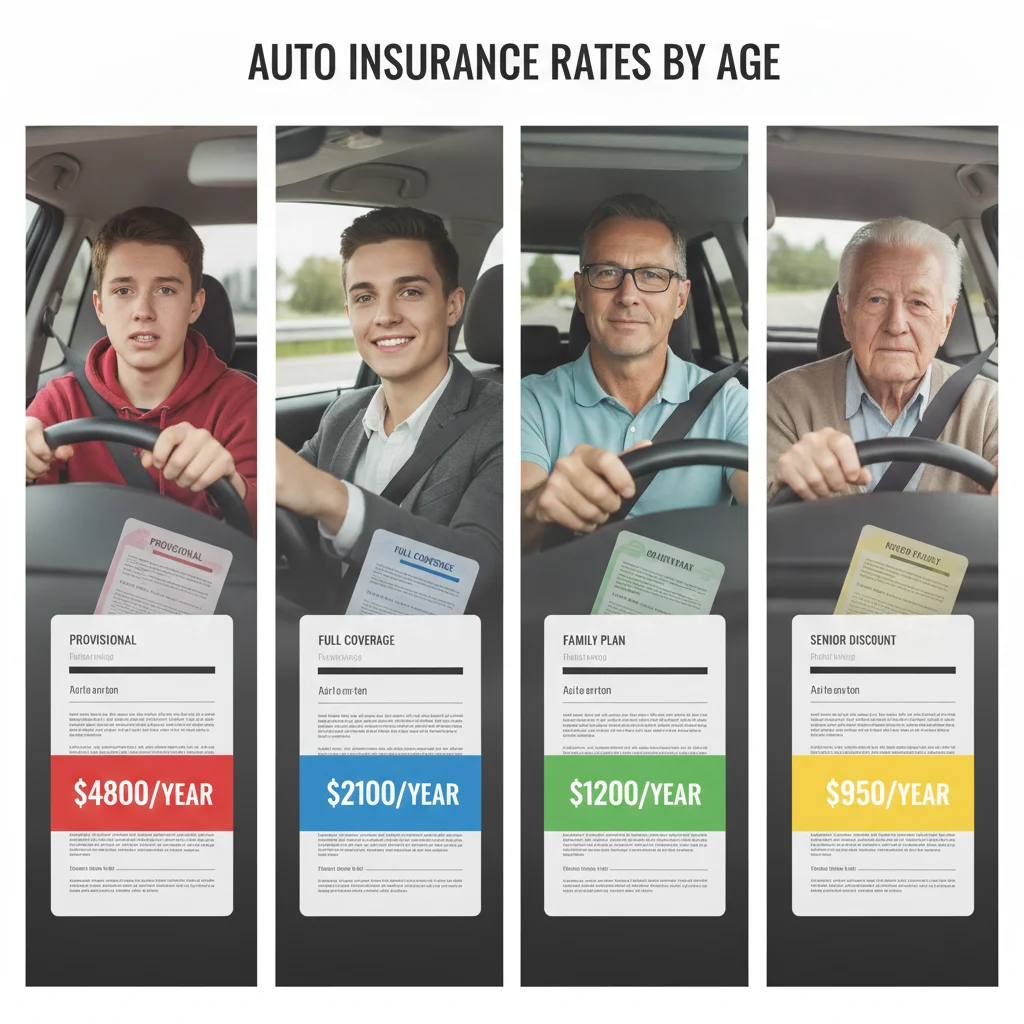
Adding or removing a driver — especially a young driver or someone with a spotty record — has an outsized effect on renewal pricing. Insurers look at the risk profile of every licensed driver in your household, even occasionally. Age is a significant rating variable, and a teen reaching driving age mid-term will hit the renewal rate hard.
26%
Average U.S. auto insurance rate increase in 2023
According to S&P Global Market Intelligence, personal auto insurance rates rose an average of 26% across the U.S. in 2023, driven by elevated repair costs and claims severity.
3 years
Typical window a violation affects your rate
Most U.S. states allow insurers to rate surcharges on at-fault accidents and moving violations for up to three years from the date of the incident.
30–50%
Premium increase after a single at-fault accident
Industry data from the Insurance Information Institute indicates that a single at-fault accident raises the average policyholder's annual premium by 30% to 50% at renewal.
$644
Average annual premium swing by ZIP code within same city
A 2023 analysis by the Consumer Federation of America found that premiums for identical coverage can vary by more than $600 per year between ZIP codes within the same metro area.
58%
Drivers who don't shop competing quotes at renewal
A J.D. Power survey found that roughly 58% of auto insurance customers simply accept their renewal rate without requesting a competing quote, leaving potential savings uncaptured.
“Insurance pricing is not static — it's a continuous recalibration of expected loss costs against a constantly changing risk environment. Policyholders who treat renewal as a passive event are essentially letting the insurer set the terms without any market pressure.”
— J. Robert Hunter, Former Insurance Commissioner and Director of Insurance, Consumer Federation of America
External Factors That Drive Rates Up (Even When You Haven't)
This is the piece most policyholders don't see coming. Your renewal rate is affected by things entirely outside your control — and they can swing your premium significantly.

Location-Based Loss Trends
Insurers track claims frequency and severity by ZIP code, county, and state. If accidents, theft, or weather events have increased in your area since your last renewal, your rate can rise even if you personally filed no claims. Your address is one of the most powerful rate factors your insurer uses.
Medical and Repair Cost Inflation
Auto insurers pay out claims that cover vehicle repairs and medical expenses. As labor rates at body shops increase, parts become harder to source, and medical billing rises, the average cost per claim goes up. Insurers build those trends into their actuarial models and file rate adjustments with state regulators to keep pace. This is a primary reason your premium increases even when nothing happened.
Reinsurance and Catastrophe Costs
Insurers buy their own insurance — called reinsurance — to protect against large-scale losses from hurricanes, wildfires, and hailstorms. When reinsurance costs rise (which they have sharply in recent years), primary insurers pass some of that burden through to policyholders via higher renewal rates.
State-Approved Rate Filings
Before an insurer can change its rates, it must file that change with your state's department of insurance and receive approval. This means a broad rate increase you see at renewal isn't arbitrary — it went through a regulatory process. It also means there's a lag: the rate increase you're experiencing today may reflect loss trends from 12 to 18 months ago.
State Regulators Must Approve Rate Changes
Auto insurance is regulated at the state level, and insurers cannot simply raise your renewal rate at will. Every change to a rate structure must be filed with and approved by your state's department of insurance. This means there's a formal process behind every increase — but it also means consumers have a point of recourse. If you believe a rate change is unjustified, your state insurance commissioner's office can provide information on the filing that authorized it.
CLUE Reports Can Contain Errors
Your Comprehensive Loss Underwriting Exchange (CLUE) report is one of the key inputs insurers use when pricing your renewal. Errors do appear — incorrectly attributed claims, duplicate entries, or outdated information that should have aged off. You're entitled to a free annual copy from LexisNexis, and you have the right to dispute inaccuracies under the Fair Credit Reporting Act. An error on your CLUE report can cost you significantly more at renewal than the dispute process is worth ignoring.
How the Actuarial Model Combines These Factors
Insurers don't simply add up risk factors and assign a dollar amount. They use actuarial models — statistical systems trained on millions of policies — to assign each factor a weight based on its historical correlation to claims. Those weights are multiplied together to produce a final risk score, which then maps to a base rate tier.
Here's a simplified version of how the inputs interact:
| Factor Category | Examples | Direction of Influence |
|---|---|---|
| Driving history | Tickets, at-fault accidents, DUIs | Increases rate |
| Claims filed | Comprehensive, collision, liability claims | Usually increases rate |
| Credit-based score | Credit utilization, payment history | Higher score = lower rate |
| Vehicle factors | Make, model, age, safety ratings, theft rate | Varies by vehicle |
| Location | ZIP code loss trends, traffic density, weather risk | Often increases in high-risk areas |
| Household drivers | Age, experience, record of each driver | Young/inexperienced drivers increase rate |
| Coverage selected | Limits, deductibles, endorsements | Higher limits increase rate; higher deductibles reduce it |
| Market conditions | Repair costs, medical costs, reinsurance rates | Generally increases rate over time |
Each insurer's proprietary model weighs these factors differently, which is why competing quotes for the same coverage can vary by hundreds of dollars. The model that rates you favorably at one carrier may penalize you at another. This is also why your risk profile on the rate factors hub matters across every renewal cycle.
Time Your Quote Shopping Right
Start shopping competing quotes 30 to 45 days before your renewal date — not the week of expiration. This gives you enough time to compare, apply, and have new coverage in place without a gap. It also gives you leverage: if you find a better price and call your current insurer, they may be able to match it or offer a retention discount before you leave.
Report Life Changes Proactively
Don't wait for renewal to tell your insurer about changes that could lower your rate — like a move to a lower-risk area, reduced annual mileage, or a marriage. Some of these changes can be applied mid-term and result in a partial premium credit. Waiting until renewal means leaving money on the table for months.
Life Changes That Trigger a Rate Recalculation
Some of the most significant renewal rate shifts happen because your life circumstances changed — and those changes altered how the insurer's model evaluates you.

Moving to a New Address
Relocating — even within the same city — resets your location-based pricing entirely. Moving from a suburban ZIP with low theft and accident rates to an urban ZIP with high traffic density can push your premium up substantially. The reverse is also true: moving to a lower-risk area can produce a welcome surprise at renewal.
Change in Annual Mileage
If you started working from home, retired, or changed jobs and are now driving significantly fewer miles, that change reduces your statistical exposure to accidents. Many insurers offer low-mileage discounts — but they typically won't apply them automatically unless you report the change.
A New Financed or Leased Vehicle
Financing or leasing a car typically requires full coverage (comprehensive and collision), which is significantly more expensive than liability-only. If you traded in a paid-off car for a financed one, your renewal — or mid-term endorsement — will reflect those required coverage additions.
Marital Status
In most states, marriage is a rate-reducing life event. Statistically, married drivers file fewer claims than single drivers, and insurers price that in. Divorce has the opposite effect with some carriers.
Any of these changes should prompt you to contact your insurer proactively — not wait for renewal. And if a change is significant, it's worth shopping alternatives in parallel. Our guide to switching insurers at renewal vs. mid-policy covers the mechanics of timing a move effectively.
Using Renewal as a Moment to Act
Renewal isn't just a billing event — it's the most natural moment to take action on your coverage. Here's how to use the calculation process to your advantage.
Pull Your Own CLUE Report
You're entitled to a free copy of your insurance claims history from LexisNexis once per year. Reviewing it before renewal lets you catch errors that might be inflating your rate and gives you a clear picture of what your insurer sees.
Shop Three to Four Competing Quotes
Request quotes using identical coverage limits and deductibles. This is the only apples-to-apples comparison. Collect these 30 to 45 days before your renewal date — the same window your insurer is finalizing your rate — so you have time to act on the results.
Audit Your Discounts
Discounts aren't always applied automatically at renewal. Safe driver discounts, multi-policy bundling, good student discounts, or pay-in-full discounts may have changed or expired. Before renewal, go line-by-line with your insurer or broker. Our guide to the discount conversation at renewal gives you the specific questions to ask.
Reconsider Your Coverage Structure
Renewal is a good time to ask whether your deductibles, liability limits, and optional endorsements still match your actual situation. If your car has depreciated significantly, the value of carrying collision coverage may no longer justify the cost. A higher deductible on an older vehicle is worth modeling out — especially if you have savings to cover the out-of-pocket portion in a claim.
Time Your Quote Shopping Right
Start shopping competing quotes 30 to 45 days before your renewal date — not the week of expiration. This gives you enough time to compare, apply, and have new coverage in place without a gap. It also gives you leverage: if you find a better price and call your current insurer, they may be able to match it or offer a retention discount before you leave.
Report Life Changes Proactively
Don't wait for renewal to tell your insurer about changes that could lower your rate — like a move to a lower-risk area, reduced annual mileage, or a marriage. Some of these changes can be applied mid-term and result in a partial premium credit. Waiting until renewal means leaving money on the table for months.
The renewal notice you receive isn't the end of a process — it's an invitation to evaluate. Insurers count on most policyholders to auto-renew without scrutiny. Don't be that policyholder.

All claims are backed by peer-reviewed research. Sources on request.