Key Takeaways
Summary
28 items · 30–60 minutes
Why Price Alone Is a Dangerous Comparison Point
Every few months, a new round of ads reminds you that you could be saving hundreds on car insurance. What those ads never mention is what you might be giving up to get there. Lower premiums frequently mean lower liability limits, higher deductibles, stripped rental reimbursement, or gutted roadside assistance — details that are invisible in a headline quote but painfully obvious when you file a claim.
Switching auto insurers is a smart financial move when done right. Done carelessly, it's a way to trade a known policy for an unknown one that looks cheaper on paper but underperforms when it matters. This checklist helps you close that gap.
The goal isn't to talk you out of switching. It's to make sure that if you switch, you switch up — to a policy that genuinely serves your situation better. See our practical framework for evaluating policies end to end if you want a deeper walkthrough of every evaluation dimension before you work through this checklist.

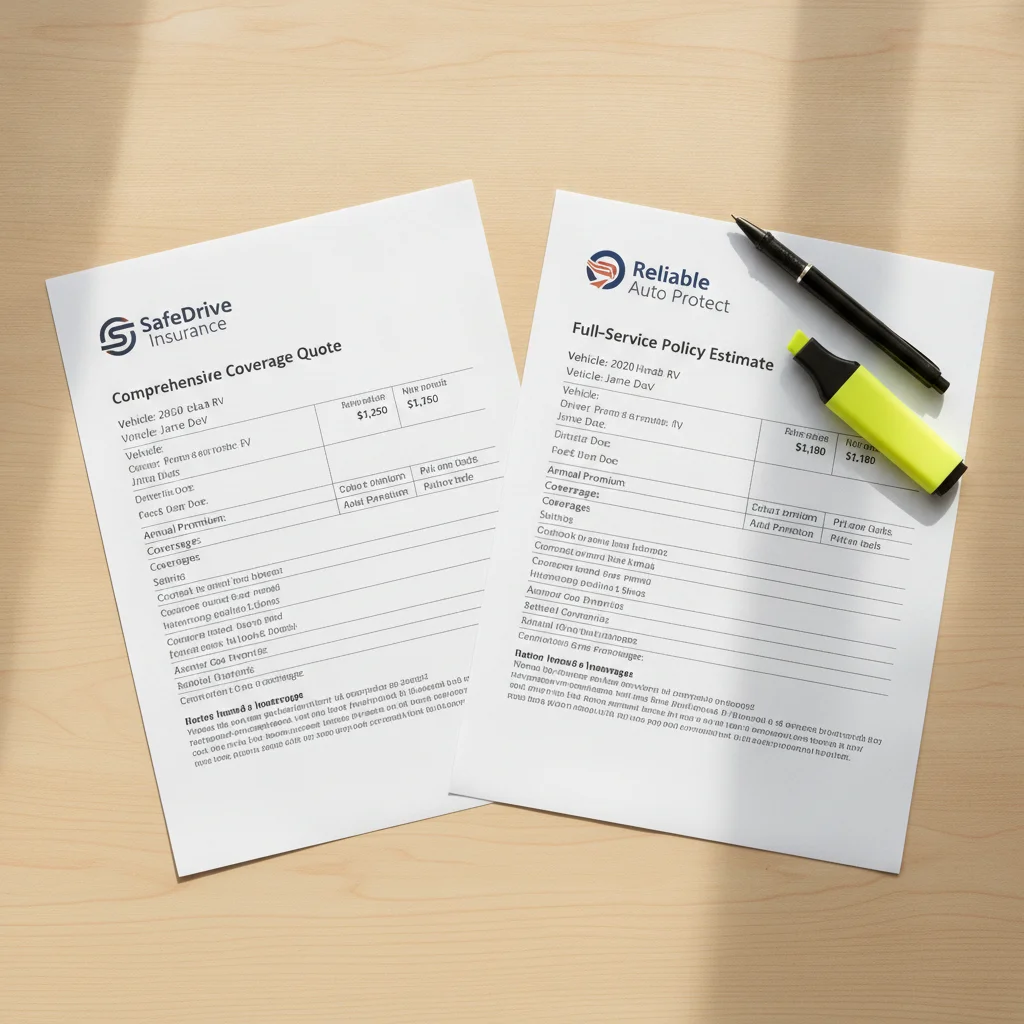
Before you run through the checklist items below, gather these materials: your current declarations page, any new quotes you've received, and a notepad or spreadsheet to track side-by-side differences. The comparison only works when you're looking at real numbers — not estimated ranges from an online widget.
Current Declarations Page
Your baseline — use it to record existing limits, deductibles, and endorsements so you can compare apples to apples.
New Insurer Quote Documents
The full quote (not just the summary email) including coverage breakdown, exclusions, and applied discounts.
NAIC Consumer Information Source
Free government database to look up the complaint index for any licensed insurer in your state.
J.D. Power Auto Claims Satisfaction Study
Annual ranking of major insurers on claims handling quality — free and publicly available at jdpower.com.
AM Best Rating Lookup
Verify the financial strength rating of any insurer before committing to a policy.
Comparison Spreadsheet
Track limit, deductible, exclusion, and discount data side by side across two or more quotes.
State Insurance Department Website
Verify that your prospective insurer is licensed in your state and check for any regulatory actions against them.
The Comparison Checklist
Work through each group in order. The first groups address the non-negotiable coverage mechanics — the items that directly determine your financial exposure in a crash. Later groups cover service quality and logistics that affect how smoothly the policy actually works for you.
Don't Cancel Until You Have Written Confirmation
Verbal assurances from an agent that your new policy is active are not enough. Request a declarations page or binder in writing — email counts — before you contact your current insurer to cancel. Even a single day without coverage can trigger a lapse on your insurance history, which future insurers use to justify higher rates.
Mid-Term Switches May Carry Cancellation Fees
Some insurers charge a flat cancellation fee or use a short-rate calculation (rather than pro-rata) to determine your refund when you cancel mid-term. Factor this cost into your real savings calculation before deciding whether switching now or waiting until renewal makes more financial sense.
Coverage Limits
Exclusions and Policy Language
Add-On Coverages and Endorsements
Insurer Quality and Financial Stability
Discounts and Savings Verification
Transition and Timing
Once you've checked off every item, you should have a clear picture of whether the new policy is a genuine upgrade, a lateral move, or a downgrade disguised by a lower sticker price. If you're switching for savings, that's legitimate — just make sure the savings aren't coming from coverage you'd miss.
Reading Exclusions: The Section Most Drivers Skip
Exclusions are buried in policy language for a reason — they're the conditions under which your insurer won't pay, and they're rarely highlighted in quotes. The most consequential exclusions to check for involve:
- Household member exclusions: Some policies exclude coverage when a listed driver in your household is behind the wheel during an incident. This matters if you have a teenager or a partner with a poor driving record.
- Business use exclusions: Personal auto policies typically exclude accidents that occur while using your vehicle for commercial purposes — including rideshare driving, delivery work, or even frequent client visits. If any of this applies to you, you need a policy that explicitly addresses it or a separate endorsement.
- Named driver exclusions: Some budget policies will exclude a specific driver entirely rather than rate them. If that excluded driver ever causes an accident in your car, you bear the full cost.
- Gap in coverage clauses: If your vehicle is financed or leased, check whether the new policy includes gap coverage or whether your lender requires it separately.
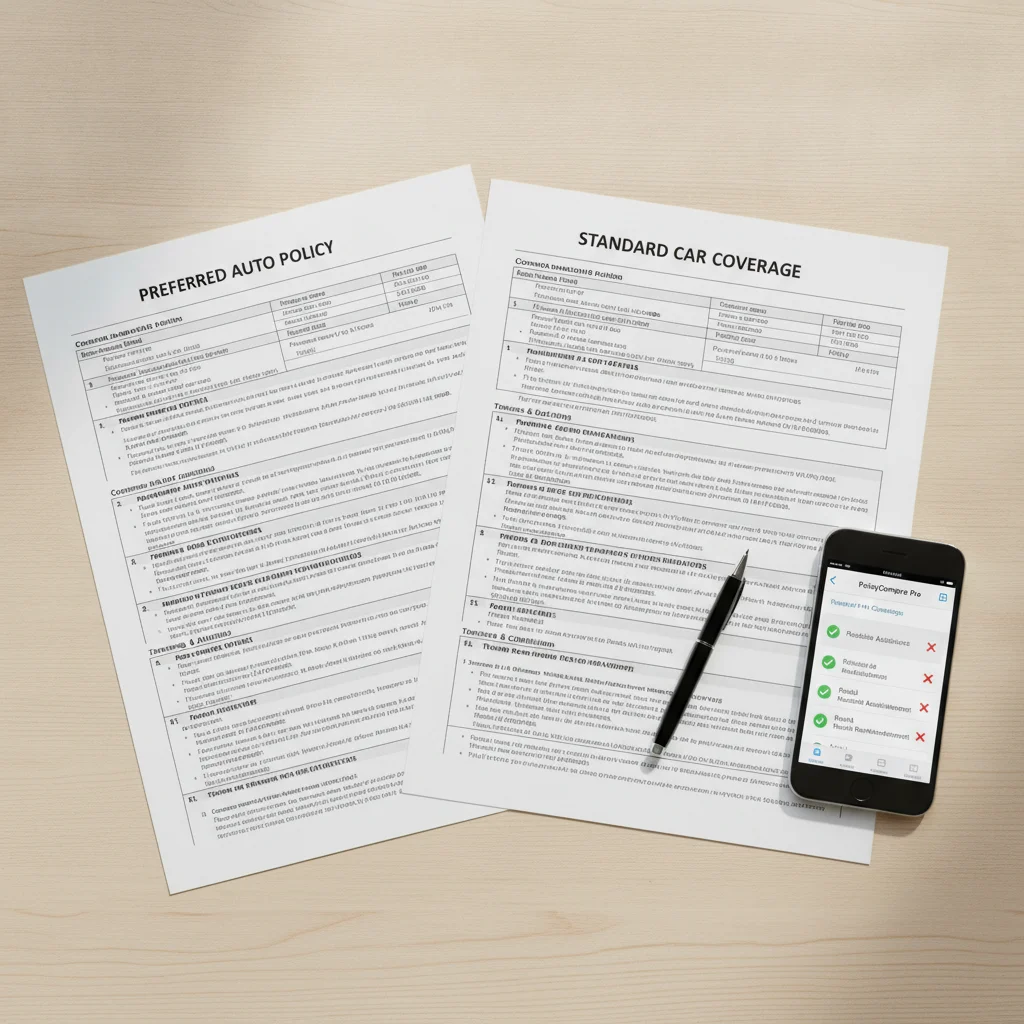
For a structured way to read two policies against each other on these points, check out our guide to reading two auto insurance quotes at the same time.
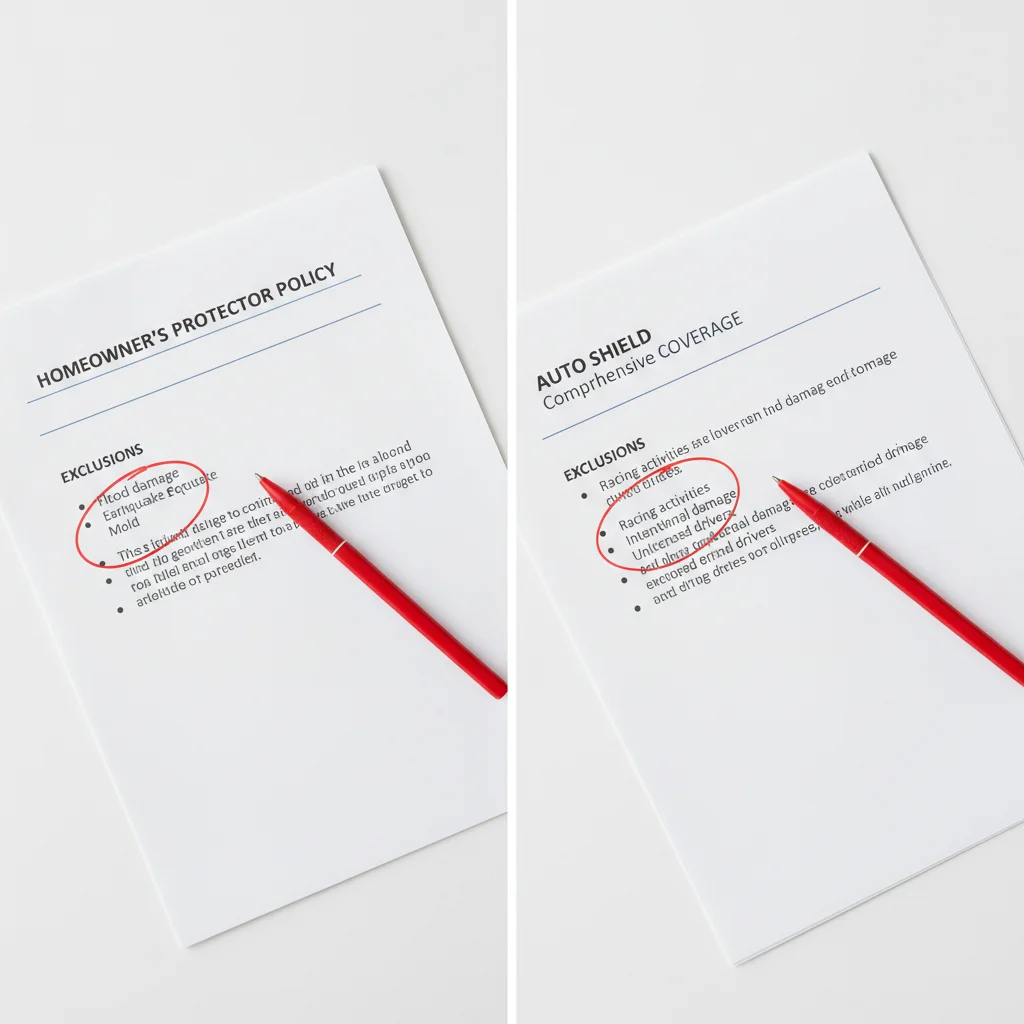
Exclusions Can Void Coverage Entirely
A policy exclusion isn't a coverage reduction — it's a complete denial of a claim under specified conditions. If you drive for a rideshare platform even occasionally, or if a household member has been named as an exclusion to lower your premium, you could find yourself facing a five- or six-figure liability with no insurer to call. Read the exclusions section in full, not just the summary page, before signing any new policy.
Claims Service: The Performance Test Insurers Don't Advertise
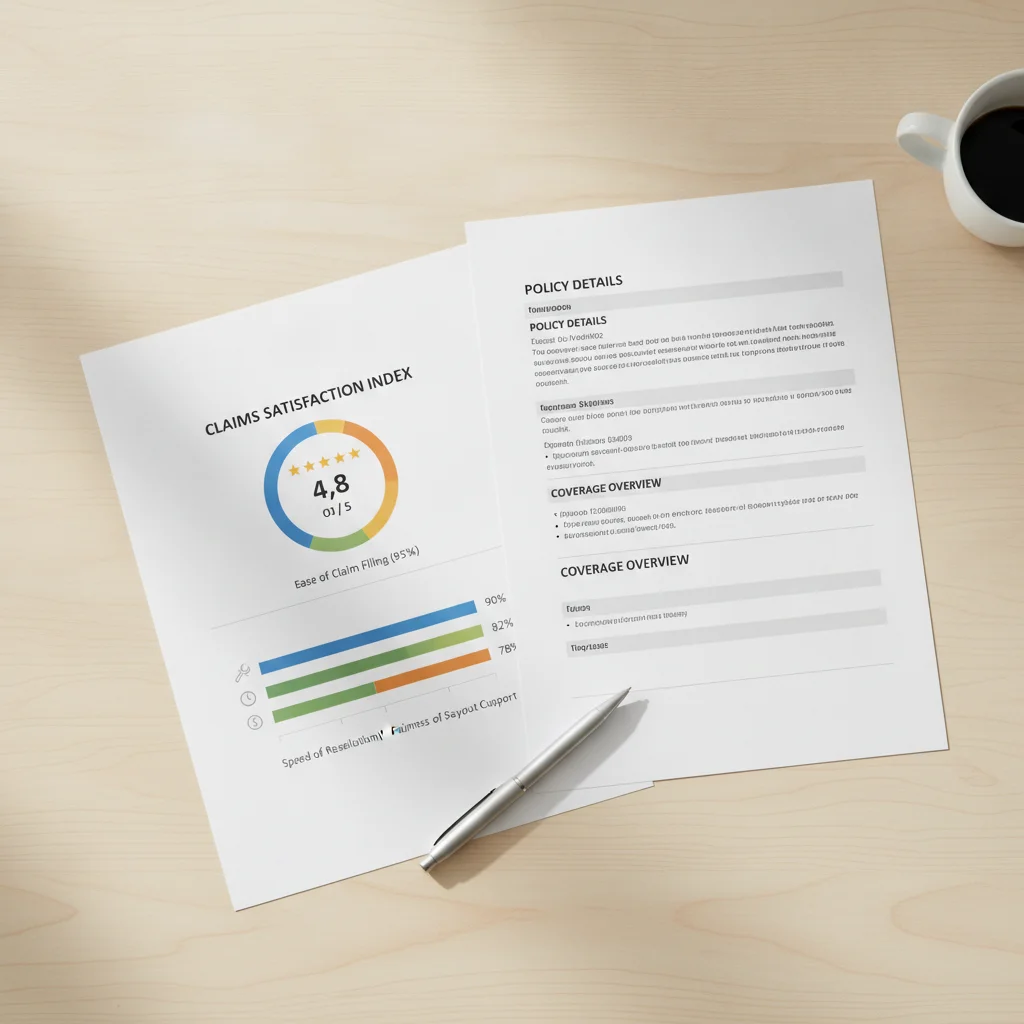
An insurer's claims handling is the actual product you're buying. The premium is just the price tag. Two policies can have identical limits and deductibles but deliver completely different outcomes when you file a claim — because one insurer answers calls, assigns adjusters quickly, and cuts checks fast, while the other drags its feet through every step.
Here's where to find useful, objective data on claims service quality:
- J.D. Power Auto Claims Satisfaction Study
- Published annually, this study ranks major insurers on overall satisfaction, first notice of loss, repair process, rental experience, and settlement. It's free and publicly available at jdpower.com.
- NAIC Complaint Index
- The National Association of Insurance Commissioners publishes a complaint ratio for every licensed insurer. A score above 1.0 means the company receives more complaints than average for its size. This is a red flag worth taking seriously.
- AM Best Financial Strength Rating
- Tells you whether the insurer is financially stable enough to pay claims. Look for an A- rating or higher. A company with a weaker rating may be cheaper today but riskier long-term.
Our dedicated article on comparing insurers on claims satisfaction — not just price walks through exactly how to interpret this data and what score thresholds to watch for.
Beyond the data, call the insurer's claims line before you buy. Note how long you hold, whether you reach a live person, and how clearly they explain the process. That interaction tells you a lot about what your actual claim experience will look like.
Discounts, Timing, and How to Avoid a Coverage Gap
Two operational details that trip up otherwise careful switchers: making sure you capture all available discounts with the new insurer, and making sure you don't accidentally go uninsured during the transition.
Discount Verification
Insurers don't automatically apply every discount you qualify for — you often have to ask. When comparing quotes, specifically ask about:
- Multi-policy bundling (home, renters, or umbrella with auto)
- Low-mileage or pay-per-mile programs
- Telematics or usage-based insurance programs that reward safe driving
- Good driver and accident-free discounts
- Vehicle safety feature discounts (automatic emergency braking, lane assist, etc.)
- Professional or alumni group affiliations
For a comprehensive audit of every discount category, see our guide on auditing your own auto insurance policy for missed discounts. The same logic applies when setting up a new policy — start clean and claim everything you qualify for.

Avoiding a Coverage Gap
A coverage gap — even one day without active insurance — creates two problems: it's illegal in most states, and it can be used against you by future insurers who treat any lapse as a risk signal that raises your rates.
To avoid this: don't cancel your current policy until your new policy's effective date is confirmed in writing. Ask your new insurer for a declarations page or binder before you call your current insurer to cancel. If you're switching mid-term, check whether your current insurer charges a cancellation fee — some do, some don't, and it affects the real cost of switching.
Finally, if you're reviewing your current policy ahead of renewal rather than switching outright, our auto insurance renewal checklist covers the same coverage and discount audit process specifically for the renewal context.
Don't Cancel Until You Have Written Confirmation
Verbal assurances from an agent that your new policy is active are not enough. Request a declarations page or binder in writing — email counts — before you contact your current insurer to cancel. Even a single day without coverage can trigger a lapse on your insurance history, which future insurers use to justify higher rates.
Mid-Term Switches May Carry Cancellation Fees
Some insurers charge a flat cancellation fee or use a short-rate calculation (rather than pro-rata) to determine your refund when you cancel mid-term. Factor this cost into your real savings calculation before deciding whether switching now or waiting until renewal makes more financial sense.
Once your new policy is active and your old policy is cancelled with written confirmation, keep a copy of your new declarations page in your glove box. And while you're at it, pair it with our auto insurance claim checklist — so you know exactly what to do if you ever need to use the policy you just carefully chose.

All claims are backed by peer-reviewed research. Sources on request.