
| Most common reason claims are denied | Policy exclusion or failure to meet conditions (Insurance Information Institute, 2023) |
| Typical policy period | 6 or 12 months |
| Standard CLUE report lookback | 7 years (LexisNexis, per FCRA requirements) |
| Advance notice required before cancellation | 10–30 days (varies by state) |
| Common deductible range | $250–$1,500 (Industry norm across major carriers) |
| Violation surcharge duration | 3–5 years (state and insurer dependent) |
| Renewal notice lead time | 30–45 days before expiration |
Why Policy Language Trips Drivers Up
Most drivers only open their auto insurance policy when something goes wrong — and that's exactly when unfamiliar terms hit hardest. Words like endorsement, exclusion, and subrogation can determine whether a claim pays out or gets denied, yet most policyholders have never looked them up.
This reference guide covers the terms that appear most often on declarations pages, renewal notices, and policy documents — the ones that actually affect your coverage and your costs. Whether you just switched carriers, added a driver, or received a renewal with a rate change you don't understand, knowing this vocabulary helps you make better decisions.
For a deeper dive into the specific language tied to what your insurer will and won't pay, see how to spot policy exclusions before you buy. And if you're shopping right now, the auto insurance terms you need to know before comparing policies is a solid companion piece.
| Most common reason claims are denied | Policy exclusion or failure to meet conditions (Insurance Information Institute, 2023) |
| Typical policy period | 6 or 12 months |
| Standard CLUE report lookback | 7 years (LexisNexis, per FCRA requirements) |
| Advance notice required before cancellation | 10–30 days (varies by state) |
| Common deductible range | $250–$1,500 (Industry norm across major carriers) |
| Violation surcharge duration | 3–5 years (state and insurer dependent) |
| Renewal notice lead time | 30–45 days before expiration |
Core Policy Structure Terms
These are the building blocks — the terms that define who is covered, what is covered, and how the policy is organized. You'll see them on your declarations page and in the opening sections of any standard policy.
Declarations Page
The summary page at the front of your auto insurance policy listing the named insured, covered vehicles, policy period, coverage types, limits, deductibles, and premium. It is the fastest way to confirm what coverage you have.
Endorsement
A written modification that changes, adds, or removes specific terms in your base policy. Endorsements override the base policy language they address and are the formal mechanism for customizing coverage.
Exclusion
A specific situation, person, or type of damage your policy explicitly does not cover. Exclusions define the outer limits of coverage and are among the most important sections to read before a claim arises.
Named Insured
The individual or entity listed on the policy as the primary policyholder, with full rights to make changes, cancel coverage, and receive refunds. This person carries more responsibility — and more authority — than other covered drivers.
Deductible
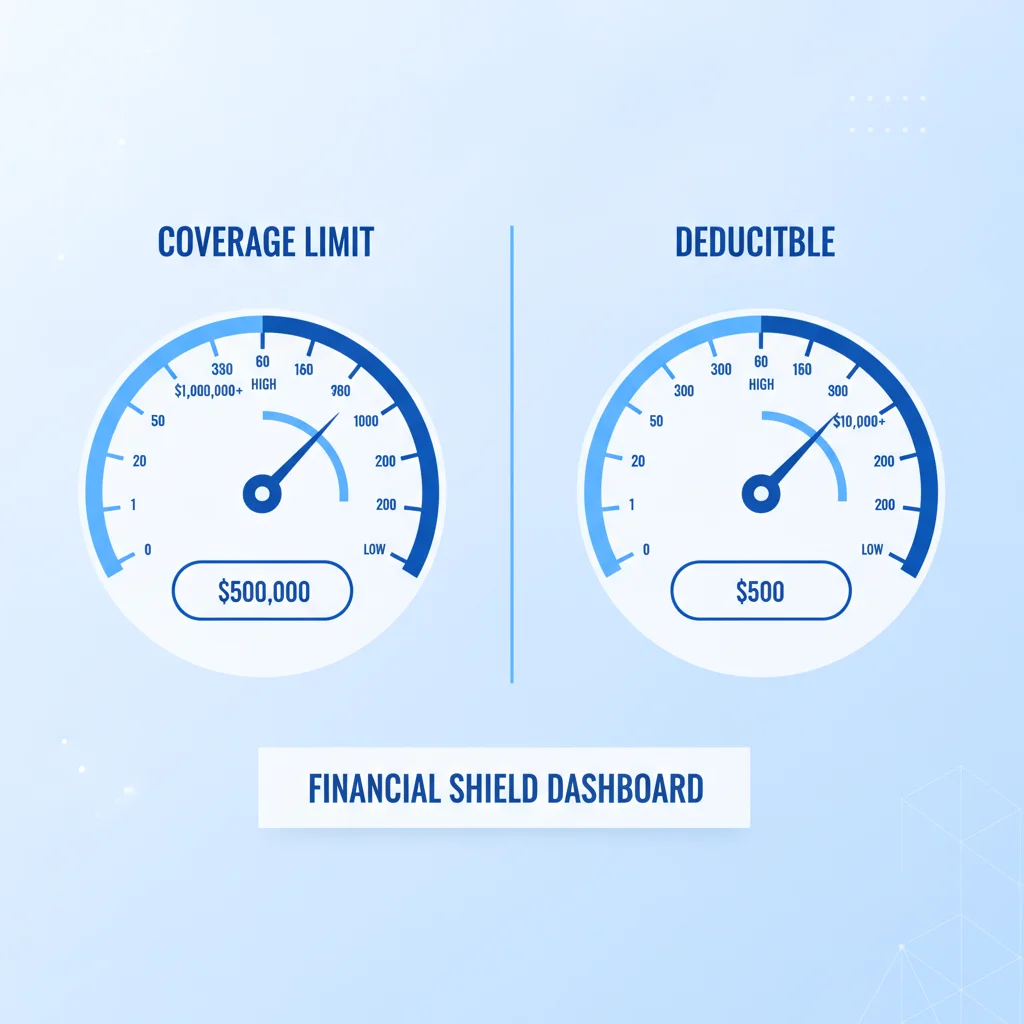
The dollar amount you pay out of pocket before your insurer covers the rest of a claim. Deductibles apply to collision and comprehensive coverage, not to liability. Higher deductibles lower your premium but increase your per-claim cost.
Coverage Limit
The maximum amount your insurer will pay for a covered loss. Once the limit is reached, you are personally responsible for costs beyond it. Limits can be expressed as split limits (per person/per accident/property damage) or as a combined single limit.
Non-Renewal
When your insurer declines to offer a new policy at the end of your current term. Unlike a mid-term cancellation, non-renewal requires advance notice and cannot be issued for arbitrary reasons, but it is easier for insurers to initiate than a mid-term cancel.
Surcharge
A premium increase applied after a specific triggering event, such as an at-fault accident or moving violation. Surcharges follow state-approved rate schedules and typically remain on your record for three to five years.
CLUE Report
A Comprehensive Loss Underwriting Exchange report, generated by LexisNexis, that compiles your claims history across insurers. Insurers use it when underwriting new policies and at renewal. You can request a free copy annually.
Telematics
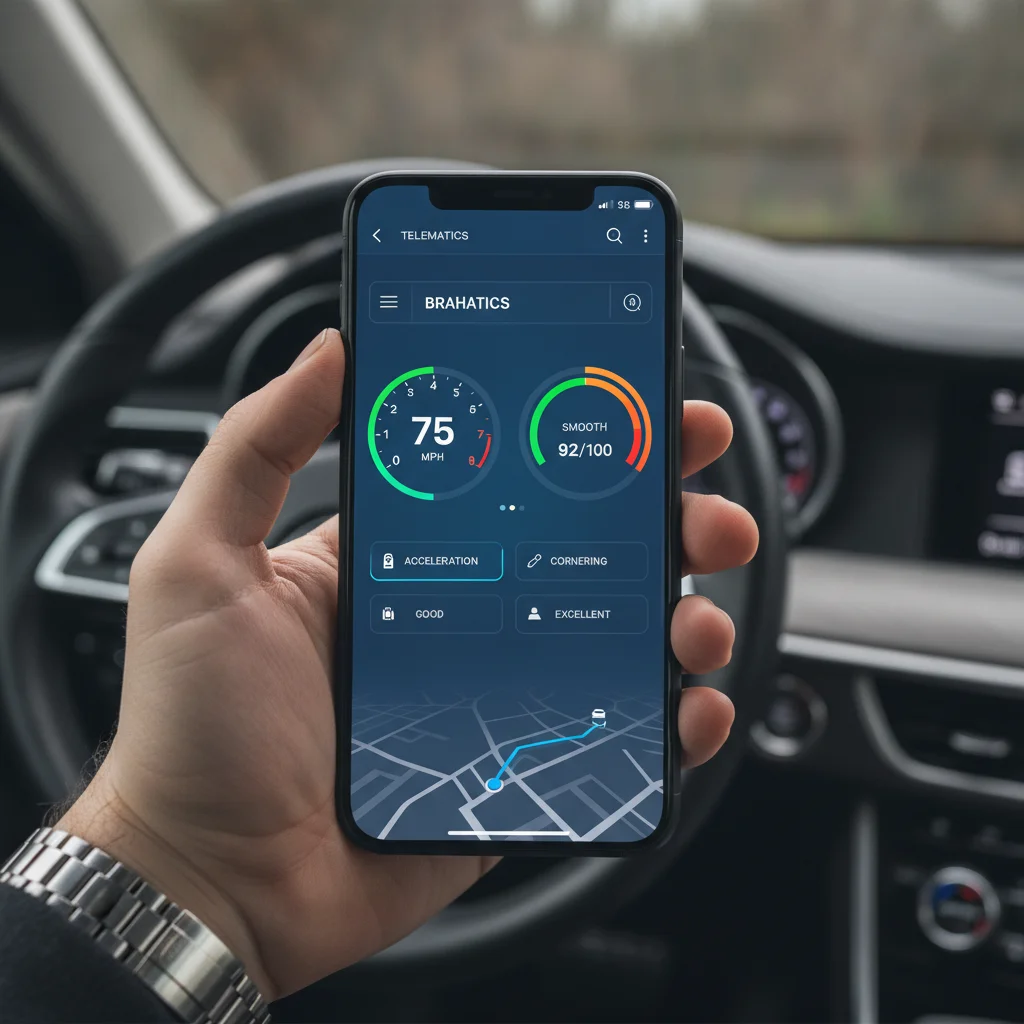
A technology-based insurance pricing method that uses app or device data to monitor your actual driving behavior — braking, speed, mileage, time of day — and adjust your premium based on how you drive rather than demographic factors alone.
Pro-Rata Cancellation
An early cancellation method where your refund equals the exact unused portion of your premium, with no penalty. The alternative, short-rate cancellation, deducts an administrative fee from the refund.
Conditions
The obligations you must meet to keep your policy valid and receive claim payments. These include promptly reporting losses, cooperating with investigations, and submitting proof of loss within specified deadlines.

Declarations Page
Often called the dec page, this is the one-page summary at the front of your policy. It lists the named insured, covered vehicles, policy period, coverage types, limits, deductibles, and premium. When insurers and agents refer to your policy details, this is usually what they mean. Keep this page somewhere accessible — you'll need it for claims and for comparing quotes.
Named Insured vs. Additional Insured
The named insured is the person (or persons) explicitly listed on the policy as the primary policyholder — typically the person who purchased coverage. They have full rights: they can make changes, cancel the policy, and receive refunds. An additional insured may have coverage under the policy but with more limited rights. For a full breakdown of why this distinction matters, see what 'named insured' means on your auto policy.
Policy Period
The dates during which your coverage is active — typically six or twelve months. Coverage lapses the moment the policy period ends without renewal or replacement. Even a one-day gap can affect future rates and, in some states, result in license suspension.
Premium
The amount you pay for coverage — monthly, semi-annually, or annually. Your premium is determined by factors including your driving record, vehicle, location, credit score (in most states), and the coverage options you select.
Endorsement (Rider)
A written modification to your base policy that adds, removes, or changes specific coverage terms. Common endorsements include rental car reimbursement, roadside assistance, and gap coverage. Endorsements take precedence over the base policy language they modify. If you've added any coverage verbally with an agent, confirm it exists as a written endorsement — verbal agreements don't count.
Coverage Limits, Deductibles, and What They Mean for Your Wallet
These terms directly control your out-of-pocket exposure in a claim. Misunderstanding them is one of the most common reasons drivers end up underinsured.
1 in 7
Drivers uninsured on U.S. roads
According to the Insurance Research Council's 2022 Uninsured Motorists report, approximately 14% of drivers carried no auto insurance.
40%
Drivers who never read their full policy
A 2022 J.D. Power U.S. Auto Insurance Study found that a large share of policyholders rely solely on their declarations page and never review full policy terms.
$500
Average collision deductible chosen by drivers
Industry data from multiple carriers indicates $500 remains the most commonly selected collision deductible for personal auto policies.
30%+
Potential savings with UBI programs
Insurers including Progressive, Allstate, and State Farm report that top-performing telematics participants can earn discounts exceeding 30% on their premiums.
Coverage Limit
The maximum dollar amount your insurer will pay for a covered loss. Limits are typically expressed in one of two ways:
- Split limits (e.g., 100/300/100): Per-person bodily injury / per-accident bodily injury / property damage. So 100/300/100 means $100,000 per injured person, $300,000 per accident total for injuries, and $100,000 for property damage.
- Combined single limit (CSL): One pool of money covering both bodily injury and property damage without splitting between categories.
Once your insurer pays up to your limit, you are personally responsible for anything beyond that amount. This is why choosing limits based purely on the state minimum is often a mistake.
Deductible
The amount you pay out of pocket before your insurer covers the rest of a claim. Deductibles apply to collision and comprehensive coverage — not to liability. Higher deductibles mean lower premiums, but more exposure per incident. Common deductibles run from $250 to $1,500. Choose a deductible you can realistically pay without financial strain if you need to file a claim.
Out-of-Pocket Maximum
Less commonly used in auto insurance than in health insurance, but some policies reference a cap on total costs you'll bear in a policy period. If your insurer uses this term, read the definition carefully — it may apply only to specific coverages.
Aggregate Limit
The maximum your insurer will pay across all claims during the policy period. Most personal auto policies don't carry a separate aggregate limit, but commercial auto policies often do. If you see this term, confirm whether it resets per claim or applies across the entire policy term.
Exclusions, Conditions, and Policy Duties
Exclusions define what your policy won't cover. Conditions define what you must do to keep coverage valid. Both sections are where claims most often run into trouble — and where careful reading pays off.
Exclusion
A specific situation, person, or type of damage that your policy explicitly does not cover. Common auto insurance exclusions include:
- Intentional damage
- Racing or track events
- Using a personal vehicle for commercial purposes (rideshare, delivery) without a proper endorsement
- Mechanical breakdown or wear and tear
- Damage to personal property inside the vehicle
Exclusions aren't buried in fine print to deceive you — they define the boundaries of your coverage agreement. Reading them before you need to file a claim is far less painful than discovering them after. For more on how to identify exclusions when shopping, see what policy exclusions mean and how to spot them.
Conditions
The obligations you must fulfill to maintain coverage and receive claim payments. Typical conditions include:
- Promptly notifying the insurer of an accident or loss
- Cooperating with the insurer's investigation
- Submitting proof of loss within a specified time frame
- Not making voluntary payments to another party without insurer approval
Violating a condition — even unintentionally — can give your insurer grounds to deny a claim.
Duty to Cooperate
Your obligation to actively assist your insurer during a claim investigation. This includes providing documentation, giving recorded statements when requested, and appearing at examinations under oath if required. Failure to cooperate is one of the most cited grounds for claim denial.
Proof of Loss
A formal, signed statement you submit to your insurer documenting the details and dollar value of your claim. Some policies require this within 60 to 90 days of a loss. Missing the deadline can jeopardize your claim. For full definitions of claims-specific terms, the complete auto insurance claims glossary covers everything from adjuster to salvage value.
Renewal, Cancellation, and Midterm Policy Changes
Life changes — new car, new address, new driver in the household — almost always require policy updates. Understanding the terms around renewals and cancellations keeps you from accidentally losing coverage or overpaying.

Renewal
When your policy period ends and you continue coverage under a new (often updated) policy, this is a renewal. Insurers typically send a renewal notice 30 to 45 days before expiration. Renewals may come with rate changes, revised terms, or dropped coverages — read every renewal notice, not just the premium line.
Non-Renewal
Your insurer declines to offer you a new policy at the end of the current term. Non-renewal is different from cancellation — it does not go on your record the same way, and insurers have more latitude to non-renew than to mid-term cancel. Common reasons include too many claims, a DUI, or changes in the insurer's underwriting appetite for your risk profile or region.
Cancellation
Termination of the policy before the end of the policy period. Cancellation can be initiated by you (voluntary) or by the insurer (involuntary). State law typically requires insurers to give 10 to 30 days' notice before cancelling, and the permissible reasons for mid-term cancellation are usually limited to nonpayment and fraud. An involuntary cancellation on your record can make it harder and more expensive to get coverage with standard carriers.
Flat Cancellation vs. Pro-Rata Cancellation
When you cancel a policy early, how your refund is calculated depends on the method:
- Pro-rata cancellation: You receive a refund for the unused portion of your premium, dollar for dollar.
- Short-rate cancellation: The insurer charges a penalty — typically 10% — and refunds less than the pro-rata amount. This is sometimes called a short-rate penalty.
Always ask which method applies before you cancel, especially if you prepaid a full-year premium.
Midterm Policy Change (Endorsement Request)
Any change to your policy before the renewal date — adding a vehicle, changing a deductible, adding or removing a driver. Most changes take effect the day the insurer processes them, not the day you request them. Confirm effective dates in writing.
Underwriting Review
A re-evaluation of your risk profile by the insurer, sometimes triggered by a claim, a traffic violation, or a change in credit score. An underwriting review can lead to a premium increase, new exclusions, or non-renewal. You have the right to request an explanation for any underwriting action taken against your policy.
Terms That Come Up During Renewals and Life Changes
Renewals and life changes expose drivers to a second layer of policy vocabulary — terms tied to how insurers assess and price your risk over time.
Loss History Report (CLUE Report)
A claims history report generated by LexisNexis, used by insurers to review your prior claims across carriers. CLUE stands for Comprehensive Loss Underwriting Exchange. Insurers pull this report when you apply for a new policy or at renewal. You're entitled to one free copy per year at annualcreditreport.com. Errors on your CLUE report can inflate your premiums — dispute them directly with LexisNexis.
Motor Vehicle Report (MVR)
A report pulled from your state DMV showing your driving record — violations, accidents, license suspensions. Insurers use MVRs to price your policy at application and sometimes at renewal. Points from violations typically affect your rate for three to five years, depending on the state and the insurer.
Surcharge
A rate increase applied to your premium following a specific event — usually an at-fault accident or a moving violation. Surcharges are governed by state-approved rating plans, so they are not arbitrary. Ask your insurer how long a surcharge will remain on your account and what steps (like accident forgiveness) might offset it.
Accident Forgiveness
A policy feature (often an endorsement or loyalty reward) that prevents your first at-fault accident from triggering a surcharge. Not all policies include it, and not all states allow it. If you have a clean record and your insurer offers it, it's generally worth keeping — but don't assume you have it unless it's explicitly listed on your policy.
Telematics / Usage-Based Insurance (UBI)
A program in which your insurer monitors your actual driving behavior — speed, braking, mileage, time of day — via an app or plug-in device and prices your policy accordingly. Safe drivers can save significantly; aggressive drivers may see increases. Participation is voluntary. For EV drivers, telematics plays an even larger role — see EV insurance terms every owner should know for details.
Discounts tied to safe driving, multi-policy bundling, and loyalty programs are another area worth reviewing at every renewal. common discounts drivers often overlook is a useful reference before your next renewal conversation.
Liability Coverage Terms
Liability coverage has its own sub-vocabulary — terms like indemnity, subrogation, and bodily injury per occurrence appear frequently in liability sections. For a full breakdown, the liability insurance glossary decodes all of them in plain language.
If you're looking at optional add-ons — gap insurance, rental reimbursement, roadside assistance — the optional car insurance add-ons glossary defines every major option in one place.
Liability Insurance Glossary: Key Terms Decoded
Plain-language definitions for every major liability insurance term — from indemnity to subrogation. Essential reading before you compare liability limits across policies.
The Complete Auto Insurance Claims Glossary
Every term you'll encounter during a claim, from adjuster and subrogation to proof of loss and salvage value. Read it before you need to file.
Optional Car Insurance Add-Ons: A Complete Glossary
Defines every major car insurance add-on — gap insurance, rental reimbursement, mechanical breakdown coverage — so you can choose endorsements that match your actual needs.
Discounts & Deals Hub
A curated reference for auto insurance discounts drivers frequently overlook — bundling, telematics, loyalty rewards, and more. Useful at every renewal.
Comparing Policies Hub
Step-by-step guidance on evaluating and comparing auto insurance quotes effectively, including how to read declarations pages and identify coverage gaps.
Annual Credit Report (CLUE Report Access)
Request your free Comprehensive Loss Underwriting Exchange (CLUE) report through AnnualCreditReport.com to verify your claims history and dispute any errors before your next renewal.

All claims are backed by peer-reviewed research. Sources on request.