
Key Takeaways
Transfers financial risk to your insurer
Even a modest repair can strain your budget if it comes at the wrong time. Filing shifts that immediate cost to your insurer, minus your deductible, which is precisely the function insurance is designed to serve.
Protects you when liability is uncertain
If another driver is involved, even a minor-looking accident can escalate into a liability dispute or an injury claim filed weeks later. Your insurer handles the legal and financial exposure on your behalf.
Covers damage that may be worse than it appears
Body shop estimates often uncover hidden damage to sensors, frame components, or structural elements once the outer panels are removed. What looks like a $500 repair can become a $2,500 one.
Comprehensive claims often carry no rate penalty
Incidents covered under comprehensive — weather, theft, falling objects — are not your fault, and many insurers do not apply a surcharge for them. Filing is usually the right call in these cases.
Accident forgiveness may neutralize the downside
Many policies include accident forgiveness that protects your rate after a first at-fault claim. If you have this feature, the premium risk of filing is significantly reduced or eliminated.
Premium increases that last three to five years
An at-fault claim can raise your annual premium by 20% to 50% at renewal, and that surcharge typically stays on your policy for three to five years — often totaling far more than the original repair.
Deductible often makes small payouts negligible
If your repair cost is close to or below your deductible, the actual insurance payout is minimal — sometimes $0 — while the claim still goes on your record and may still trigger a rate review.
Claims stay in the CLUE database for seven years
Every filed claim is recorded in the Comprehensive Loss Underwriting Exchange and follows you to future insurers. A pattern of small claims can make you a higher-risk profile even with a new carrier.
Inquiry can sometimes be logged before you file
Some insurers log the initial contact when you call to report an incident, even if you ultimately choose not to file. This can appear on your claims history and affect how future insurers view your risk.
Reduces leverage when a serious claim arises later
Drivers with a recent claims history have less room to negotiate rates and may face higher surcharges when a genuinely significant claim occurs. Protecting a clean record has long-term financial value.
May jeopardize claim-free discounts
Many insurers offer meaningful discounts for drivers who have gone three or more years without a claim. Filing a small claim resets that clock and eliminates the discount at renewal.
Our Verdict
Filing a small claim is not always the wrong call, but it is rarely the obvious one. Once you factor in your deductible, the likely premium increase over several years, and the lasting mark on your claims history, many minor repairs cost less to handle out of pocket. That said, there are situations — disputed liability, injuries, or damage you genuinely cannot absorb — where filing is exactly the right move.
Drivers with a clean claims history and moderate repair costs will almost always come out ahead by paying minor damages themselves and saving their claims record for when they truly need it.
Why a Small Claim Is a Bigger Decision Than It Looks
You back out of a parking spot and clip another bumper. Or a shopping cart rolls into your door panel. The damage looks minor — maybe a few hundred dollars at most. Your first instinct is to call your insurer, because that's exactly what insurance is for, right?
Not always. Insurance is designed to protect you from losses you cannot comfortably absorb on your own. A $600 repair may fall well within what you can manage financially, and filing a claim for it can set off a chain of consequences that follow your policy for years.
This article walks through exactly what happens when you file a small claim — the legitimate benefits, the costs most drivers don't anticipate, and how to think through the decision clearly before you pick up the phone.
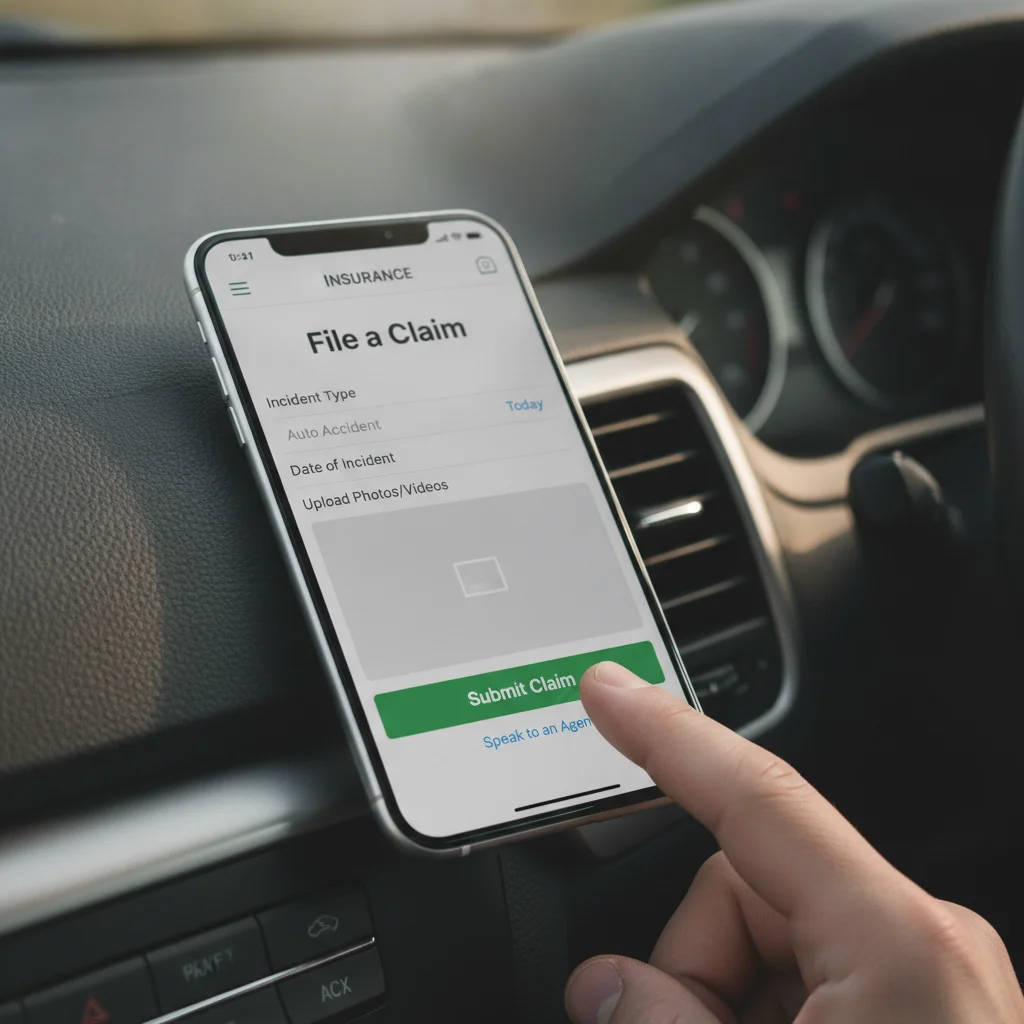
Before anything else, it helps to understand that your insurer doesn't treat every claim the same way. An at-fault collision claim carries far more weight than a comprehensive claim for hail damage. Knowing which type of incident you're dealing with changes the math considerably. See our guide to collision vs. comprehensive claims to understand which coverage applies to your situation.
What Actually Happens When You File
Filing a claim sets a clear sequence of events in motion. Here's what that looks like in practice:
- You notify your insurer. Whether online, by phone, or through an app, you report the incident and provide details about what happened, when, and any other parties involved.
- A claims adjuster reviews the damage. Either remotely through photos or in person, an adjuster estimates the repair cost and determines fault where relevant.
- Your deductible is applied. Your insurer pays the repair cost minus your deductible. If your deductible is $500 and the repair is $650, you receive $150 — before any premium changes are factored in.
- The claim is recorded in CLUE. The Comprehensive Loss Underwriting Exchange (CLUE) is a shared database that insurers use to review your claims history — going back up to seven years. This record follows you even if you switch carriers.
- Your policy is flagged at renewal. Depending on your insurer, your state regulations, and the nature of the claim, your premium may increase at your next renewal.
Does Inquiring Count as Filing?
Some insurers log the initial contact when you call to report an incident, even if you ultimately choose not to file a claim. This preliminary inquiry can sometimes appear on your CLUE report. Before you share the details of an incident with your claims department, it's worth calling your agent separately to ask how your insurer handles inquiry records — that one question can save you from an unintended mark on your history.
Check Your Accident Forgiveness Coverage
Some insurers offer accident forgiveness programs that protect your rate after a first at-fault claim. If you have this feature on your policy, the calculus shifts — filing may cost you very little in premium terms. Check your policy documents or call your agent to confirm before assuming it applies to your situation.
Request Your Free CLUE Report
You're entitled to request your own CLUE report once per year at no cost through LexisNexis. Reviewing it periodically is a smart habit — it shows you exactly what insurers see when they run your history, and it lets you catch any errors that could be unfairly affecting your rate before you renew or shop for coverage.
The CLUE report is one of the most overlooked parts of filing any claim. Most drivers don't realize that simply inquiring about a claim — even if you never proceed with filing — can still be logged by some insurers. It's worth asking your insurer directly how they handle inquiries before you share details.
The Real Pros of Filing a Small Claim
There are genuine reasons to file even for smaller incidents. Dismissing the option outright can leave you exposed in ways that are just as costly as a premium increase.
Transfers financial risk to your insurer
Even a modest repair can strain your budget if it comes at the wrong time. Filing shifts that immediate cost to your insurer, minus your deductible, which is precisely the function insurance is designed to serve.
Protects you when liability is uncertain
If another driver is involved, even a minor-looking accident can escalate into a liability dispute or an injury claim filed weeks later. Your insurer handles the legal and financial exposure on your behalf.
Covers damage that may be worse than it appears
Body shop estimates often uncover hidden damage to sensors, frame components, or structural elements once the outer panels are removed. What looks like a $500 repair can become a $2,500 one.
Comprehensive claims often carry no rate penalty
Incidents covered under comprehensive — weather, theft, falling objects — are not your fault, and many insurers do not apply a surcharge for them. Filing is usually the right call in these cases.
Accident forgiveness may neutralize the downside
Many policies include accident forgiveness that protects your rate after a first at-fault claim. If you have this feature, the premium risk of filing is significantly reduced or eliminated.
One scenario where filing almost always makes sense: when another party is involved and liability isn't clear. Even a low-dollar fender bender can escalate if the other driver later reports injuries or disputes who was at fault. Handing that to your insurer protects you legally. Our guide on what to do after a minor fender-bender covers the related question of when to involve law enforcement.
Another underappreciated case: comprehensive claims. Because comprehensive coverage handles incidents where you're not at fault — theft, weather, falling objects — many insurers do not surcharge your premium for them at all. If a hailstorm just put 40 dents in your hood, filing is usually the right move.
41%
Average premium increase after one at-fault claim
According to a 2023 rate analysis by ValuePenguin, U.S. drivers see an average rate increase of approximately 41% following a single at-fault accident claim.
7 years
How long claims stay in CLUE database
The Comprehensive Loss Underwriting Exchange retains claim records for up to seven years, meaning a small claim today can influence your insurability well into the future.
$500–$1,000
Most common personal auto deductible range
Industry data shows the majority of U.S. drivers carry collision deductibles between $500 and $1,000, a range that frequently exceeds the payout from minor repairs.
3–5 years
Typical surcharge duration after at-fault claim
Most major insurers apply at-fault accident surcharges for three to five policy years before rates return to pre-claim levels, compounding the true cost of a small filing.
The Hidden Costs Most Drivers Don't See Coming
Here's where the real decision lives. Filing a claim for a small, at-fault incident can trigger costs that dwarf the original repair bill — and they tend to compound quietly over time.
Premium increases that last three to five years
An at-fault claim can raise your annual premium by 20% to 50% at renewal, and that surcharge typically stays on your policy for three to five years — often totaling far more than the original repair.
Deductible often makes small payouts negligible
If your repair cost is close to or below your deductible, the actual insurance payout is minimal — sometimes $0 — while the claim still goes on your record and may still trigger a rate review.
Claims stay in the CLUE database for seven years
Every filed claim is recorded in the Comprehensive Loss Underwriting Exchange and follows you to future insurers. A pattern of small claims can make you a higher-risk profile even with a new carrier.
Inquiry can sometimes be logged before you file
Some insurers log the initial contact when you call to report an incident, even if you ultimately choose not to file. This can appear on your claims history and affect how future insurers view your risk.
Reduces leverage when a serious claim arises later
Drivers with a recent claims history have less room to negotiate rates and may face higher surcharges when a genuinely significant claim occurs. Protecting a clean record has long-term financial value.
May jeopardize claim-free discounts
Many insurers offer meaningful discounts for drivers who have gone three or more years without a claim. Filing a small claim resets that clock and eliminates the discount at renewal.
The most significant hidden cost is the multi-year premium increase. Depending on your insurer and your state, an at-fault accident can raise your rate by 20% to 50% at renewal — and that surcharge can stay on your policy for three to five years. On a $1,400 annual premium, even a 25% increase means you're paying an extra $350 per year. Over three years, that's $1,050 in additional premiums — for a repair that might have cost $700 out of pocket.
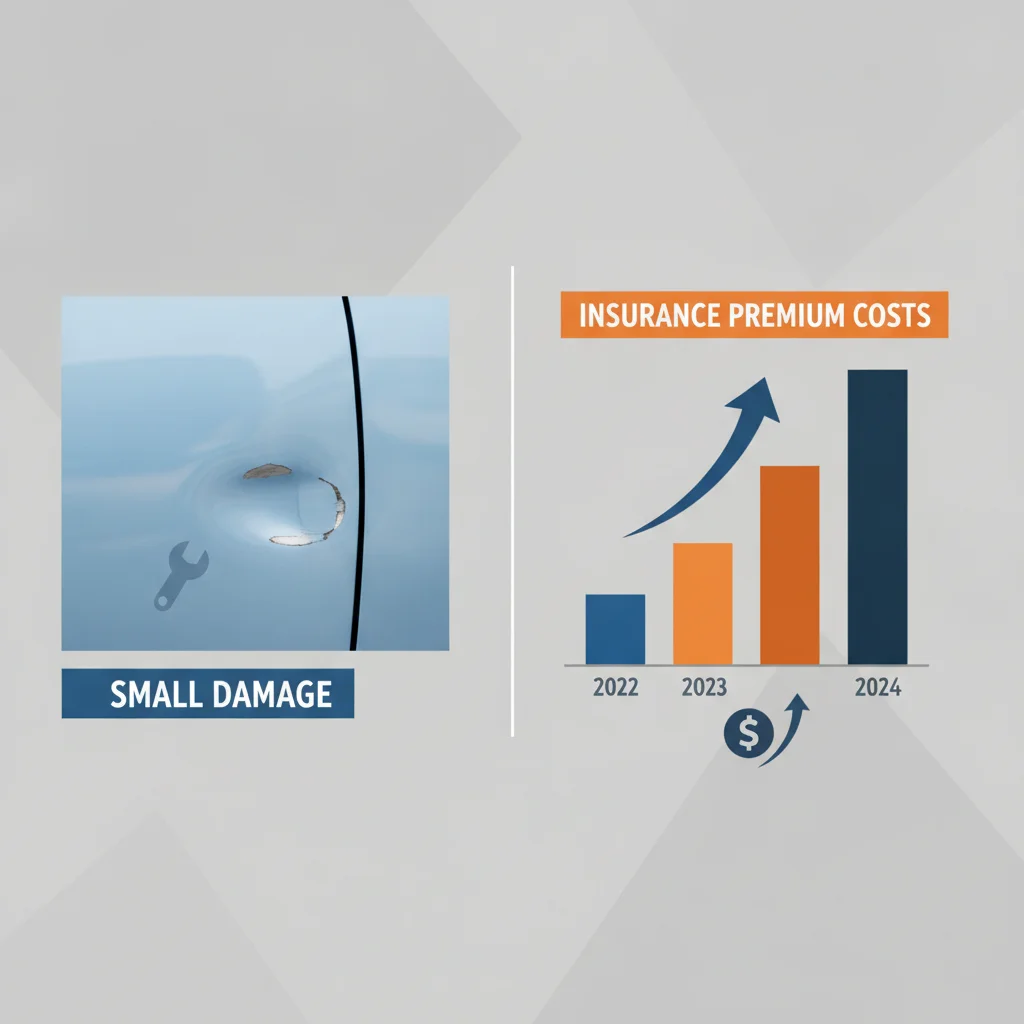
There's also the deductible math that rarely works in your favor on small claims. If your deductible is $500 and the damage totals $700, you're filing a claim for a $200 payout while accepting the risk of a premium hike. That's a trade most drivers would decline if they saw it framed that clearly.
If you've been carrying a low deductible specifically because you wanted the security of small payouts, it's worth reconsidering the true cost of that structure. Our article on the hidden cost of a low deductible policy lays out the math in detail.
How to Run the Numbers Before You Decide
The good news is that this decision is more calculable than it feels in the moment. Here's a simple framework to work through before you file:
- Step 1: Get a repair estimate first
- Before contacting your insurer at all, get a written estimate from a body shop. This gives you the actual cost to compare against everything else — without triggering a claim inquiry.
- Step 2: Subtract your deductible
- This is your actual insurance payout if you file. If the repair is $800 and your deductible is $500, your payout is $300. If it's $450 and your deductible is $500, you'd owe money even after filing.
- Step 3: Estimate your premium impact
- Call your insurer's customer service line (not the claims line) and ask hypothetically how an at-fault claim of that type might affect your rate. Many agents will give you a ballpark. Multiply any increase by three years as your baseline cost.
- Step 4: Compare total costs
- If (repair cost − deductible) is less than (estimated premium increase × 3 years), paying out of pocket is almost certainly the better financial move.
- Step 5: Factor in your claims history
- If you've filed a claim in the past three years, adding another one compounds the rate impact. A clean record is genuinely worth protecting.
Does Inquiring Count as Filing?
Some insurers log the initial contact when you call to report an incident, even if you ultimately choose not to file a claim. This preliminary inquiry can sometimes appear on your CLUE report. Before you share the details of an incident with your claims department, it's worth calling your agent separately to ask how your insurer handles inquiry records — that one question can save you from an unintended mark on your history.
Check Your Accident Forgiveness Coverage
Some insurers offer accident forgiveness programs that protect your rate after a first at-fault claim. If you have this feature on your policy, the calculus shifts — filing may cost you very little in premium terms. Check your policy documents or call your agent to confirm before assuming it applies to your situation.
Request Your Free CLUE Report
You're entitled to request your own CLUE report once per year at no cost through LexisNexis. Reviewing it periodically is a smart habit — it shows you exactly what insurers see when they run your history, and it lets you catch any errors that could be unfairly affecting your rate before you renew or shop for coverage.
Some insurers offer accident forgiveness programs that protect your rate after a first at-fault claim. If you have this feature on your policy, the calculus shifts — filing may cost you very little in premium terms. Check your policy documents or call your agent to confirm before assuming it applies.
When Filing Is Clearly the Right Move
All of this analysis applies to the classic small, single-car, at-fault incident with no injuries. There are situations where filing isn't a gray area — it's the right and necessary step:
- Any injury is involved. Even minor reported injuries can lead to medical claims weeks later. Let your insurer handle the liability exposure immediately.
- The other party is uninsured or underinsured. Your own coverage exists precisely for this scenario.
- Damage is more extensive than it appears. Bumper and body damage often hides frame or sensor damage that repair shops discover once the car is on the lift. Don't assume a small visible dent means a small total repair bill.
- You genuinely cannot cover the cost. Insurance is a financial safety net. Using it when you need it is not a mistake — it's the point.
- The incident was clearly not your fault. Filing against the at-fault party's liability coverage, or through your own insurer to recover costs, is appropriate and typically does not penalize your own rate.
It's also worth thinking about what a car is worth after a claim, even a resolved one. If your vehicle suffers structural damage, a future buyer may still discount it — something a diminished value claim might partially address.

Protecting Your Claims Record Over the Long Term
Your claims history is one of the most durable inputs insurers use to price your policy. Unlike your credit score, which responds fairly quickly to positive behavior, a claims record stays with you for seven years in the CLUE database — and most insurers look back at least three to five years when rating your policy.
Building and maintaining a clean record has real financial value. Drivers with no recent claims often qualify for claim-free discounts and have more leverage when shopping for better rates. That's worth thinking about not just for the current incident, but as an ongoing approach to small repairs.
The habit of paying minor damages out of pocket — particularly anything close to or below your deductible — is one of the most reliable ways to keep your insurance costs predictable over time. It's also worth making sure you're not already underinsured in ways that would make a real loss devastating. Our article on common physical damage mistakes covers the coverage gaps that tend to hurt drivers most at claim time.
Does Inquiring Count as Filing?
Some insurers log the initial contact when you call to report an incident, even if you ultimately choose not to file a claim. This preliminary inquiry can sometimes appear on your CLUE report. Before you share the details of an incident with your claims department, it's worth calling your agent separately to ask how your insurer handles inquiry records — that one question can save you from an unintended mark on your history.
Check Your Accident Forgiveness Coverage
Some insurers offer accident forgiveness programs that protect your rate after a first at-fault claim. If you have this feature on your policy, the calculus shifts — filing may cost you very little in premium terms. Check your policy documents or call your agent to confirm before assuming it applies to your situation.
Request Your Free CLUE Report
You're entitled to request your own CLUE report once per year at no cost through LexisNexis. Reviewing it periodically is a smart habit — it shows you exactly what insurers see when they run your history, and it lets you catch any errors that could be unfairly affecting your rate before you renew or shop for coverage.
You're entitled to request your own CLUE report once per year for free through LexisNexis. Reviewing it periodically is a good habit — it shows you exactly what insurers see when they run your history, and it lets you catch any errors before they affect your rate.
Finally, one more common misconception worth clearing up: many drivers believe that filing always costs them, or that their insurer will never raise rates for a claim that wasn't their fault. Neither is universally true. Auto insurance myths like these can quietly shape bad decisions — it's worth knowing where the reality actually lands.

All claims are backed by peer-reviewed research. Sources on request.