
Key Takeaways
Lower out-of-pocket cost when a claim occurs
With a $250 deductible versus $1,000, you save $750 per covered claim — a meaningful difference if the repair bill arrives unexpectedly. For drivers in accident-prone environments or high-theft areas, this reduction in per-incident cost can justify the premium markup.
More predictable total repair expenses
Knowing your maximum out-of-pocket per claim is capped at $250 or $500 provides budgeting certainty. For households without a dedicated emergency fund, that predictability has real practical value.
Reduces financial stress after an at-fault accident
The aftermath of a collision involves multiple stressors at once. Having a low deductible removes at least one financial variable from an already difficult situation, which some drivers value intrinsically.
Appropriate for high-frequency claim environments
Drivers who commute in dense urban areas, live in hail-prone regions, or regularly park in high-theft zip codes face elevated claim probability. In those conditions, the premium cost of a low deductible is more likely to break even over time.
Useful when financing or leasing a new vehicle
New vehicles are expensive to repair, and lenders require comprehensive and collision coverage anyway. On a car with an average repair cost of $3,500 to $5,000 per incident, shaving $750 off your out-of-pocket is proportionally more significant.
Significantly higher annual premiums compound over time
A $250 deductible can cost $150 to $400 more per year than a $1,000 deductible on the same policy. Over five claim-free years, that's up to $2,000 in additional premiums paid for protection you never used.
Break-even point often requires frequent claim filing
The actuarial math rarely favors the low deductible unless you file claims at a rate higher than the national average. Most drivers break even only if they file at least one claim every two to three years — a pace that itself carries consequences.
Encourages small-claim filing that triggers surcharges
Drivers who pay for a low deductible often feel pressure to use it for minor repairs to 'get their money's worth.' But filing a $900 claim can trigger a 15–30% rate surcharge at renewal, costing far more than the deductible savings.
Doesn't improve your underlying coverage quality
A low deductible says nothing about your liability limits, uninsured motorist coverage, or medical payments — the parts of a policy that matter most in a serious accident. Paying extra for a low deductible while underinsuring on liability is a common and costly mistake.
Opportunity cost of excess premium payments
The extra $200 to $400 per year you might spend on a low deductible, if redirected to an emergency savings account, could fund the deductible gap outright within 12 to 24 months — eliminating the need to insure against it at all.
Less incentive to comparison shop annually
Drivers who feel 'protected' by a low deductible are less motivated to re-evaluate their policies each year. That inertia costs money — insurers routinely raise premiums at renewal, and loyalty rarely produces the best rates.
Our Verdict
A low-deductible policy delivers genuine value in a narrow set of circumstances — primarily when you drive frequently in high-risk environments, have a high-value vehicle, or lack the savings buffer to absorb a sudden out-of-pocket expense. For most drivers with clean records and at least a few months of expenses in the bank, the premium premium you pay for a $250 or $500 deductible rarely pencils out. The math almost always favors a higher deductible paired with a dedicated emergency fund.
Best for drivers with limited savings reserves, those in high-density urban areas with elevated claim frequency, or owners of new, high-value vehicles where repair costs routinely exceed $3,000.
What a Low Deductible Actually Costs You Each Month
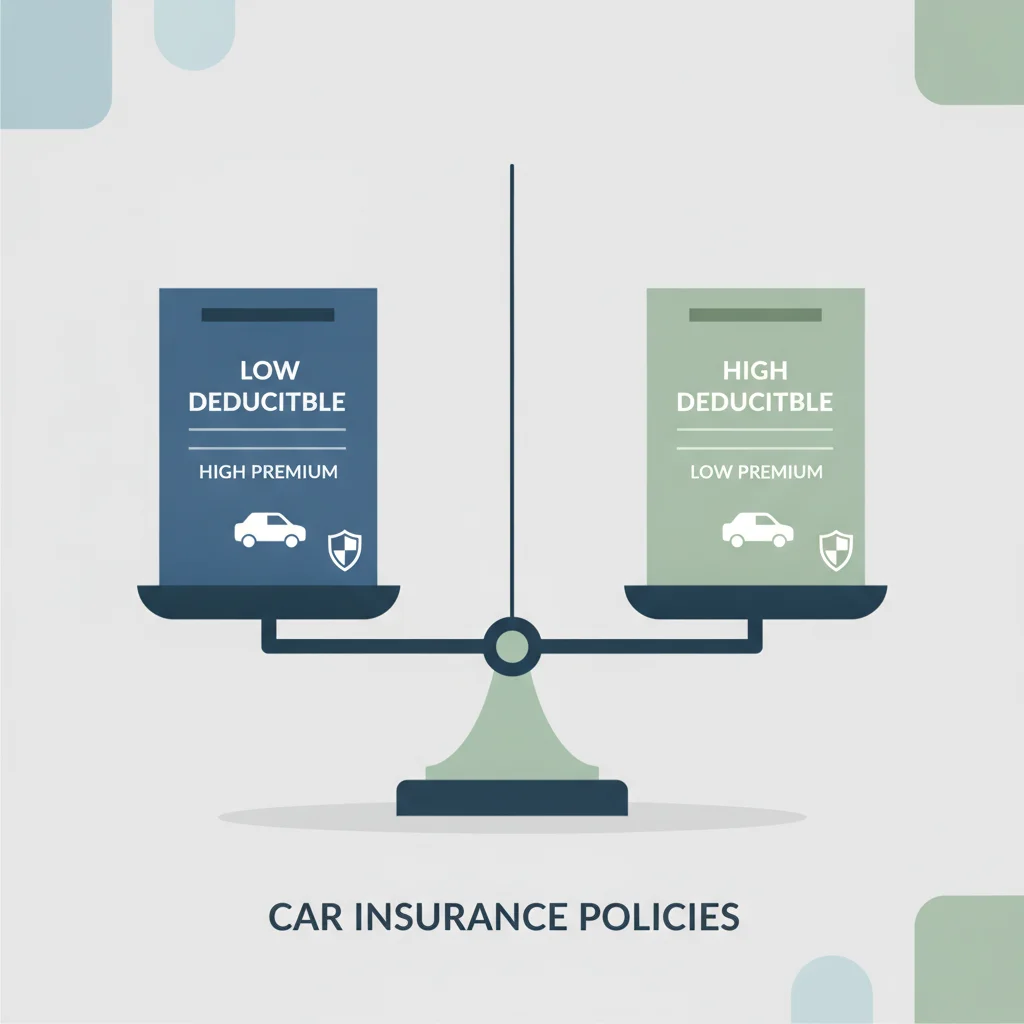
The deductible is the amount you pay out of pocket before your insurer covers the rest of a claim. A low deductible — typically $100 to $500 — means the insurer assumes more financial risk on every covered claim. Insurers price that risk directly into your premium, and the markup is rarely subtle.
On average, moving from a $500 deductible to a $250 deductible on a comprehensive and collision policy increases the annual premium by $150 to $400, depending on your vehicle, location, and driving record. That gap compounds annually. Over five years, a driver paying $250 more per year has spent $1,250 extra in premiums — before filing a single claim.
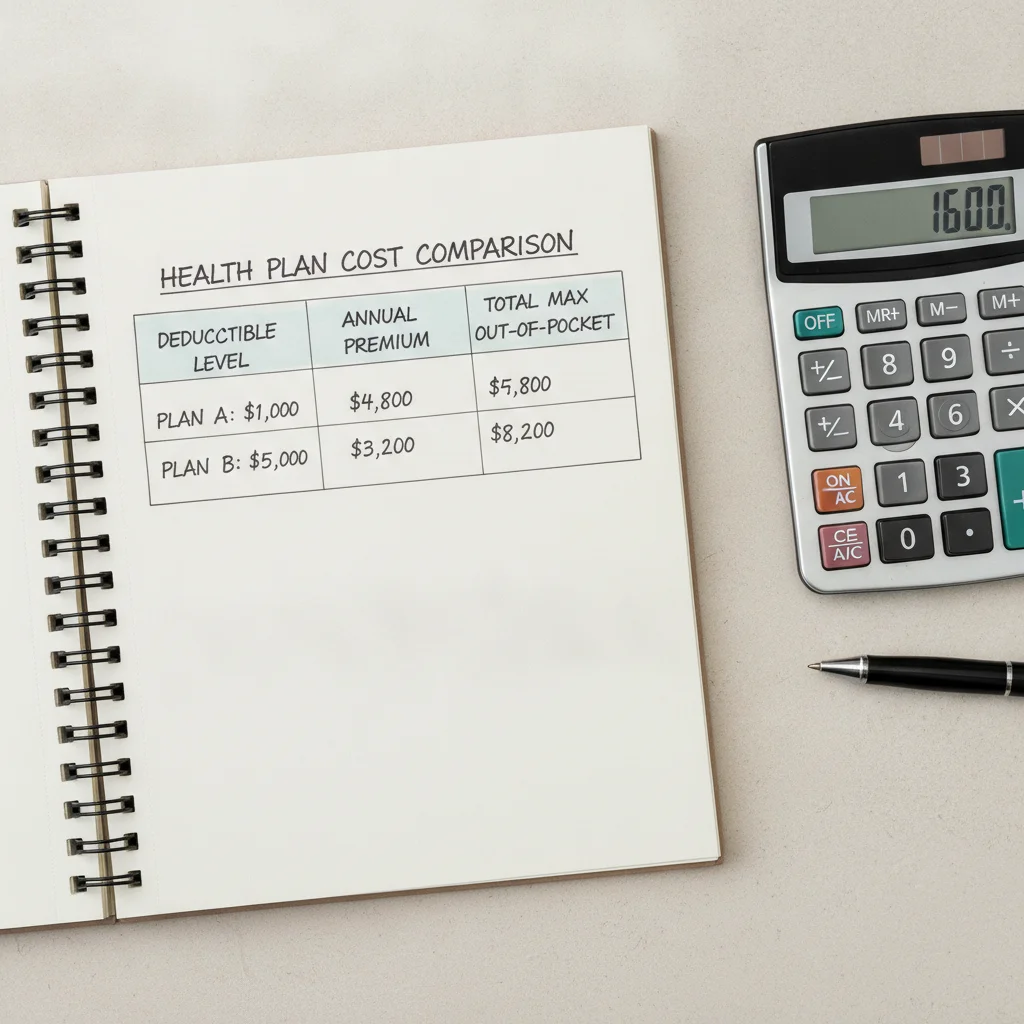
The key question isn't whether a low deductible feels safer. It's whether the premium you're paying for that safety net is actually worth what you'd save in a real claim scenario. For most drivers, the honest answer is no — but context matters, and the math is worth running yourself.
See how your out-of-pocket threshold shapes your policy's value for a full breakdown of how deductible levels interact with premium pricing across different driver profiles.
The Pros of Choosing a Low Deductible
There are legitimate reasons drivers choose low deductibles — and some of them hold up under scrutiny. Here's where the argument for a low deductible is strongest.
Lower out-of-pocket cost when a claim occurs
With a $250 deductible versus $1,000, you save $750 per covered claim — a meaningful difference if the repair bill arrives unexpectedly. For drivers in accident-prone environments or high-theft areas, this reduction in per-incident cost can justify the premium markup.
More predictable total repair expenses
Knowing your maximum out-of-pocket per claim is capped at $250 or $500 provides budgeting certainty. For households without a dedicated emergency fund, that predictability has real practical value.
Reduces financial stress after an at-fault accident
The aftermath of a collision involves multiple stressors at once. Having a low deductible removes at least one financial variable from an already difficult situation, which some drivers value intrinsically.
Appropriate for high-frequency claim environments
Drivers who commute in dense urban areas, live in hail-prone regions, or regularly park in high-theft zip codes face elevated claim probability. In those conditions, the premium cost of a low deductible is more likely to break even over time.
Useful when financing or leasing a new vehicle
New vehicles are expensive to repair, and lenders require comprehensive and collision coverage anyway. On a car with an average repair cost of $3,500 to $5,000 per incident, shaving $750 off your out-of-pocket is proportionally more significant.
The financial predictability argument is real, but it cuts both ways. Yes, you'll pay less per claim — but you're essentially pre-paying that savings through elevated premiums every month, whether or not a claim ever materializes. The next section explains where that logic breaks down.
The Cons of a Low Deductible Policy
The disadvantages of a low deductible are less visible but more consequential for most drivers over a multi-year horizon. Understanding them is how you avoid overpaying for coverage you may never fully use.
Significantly higher annual premiums compound over time
A $250 deductible can cost $150 to $400 more per year than a $1,000 deductible on the same policy. Over five claim-free years, that's up to $2,000 in additional premiums paid for protection you never used.
Break-even point often requires frequent claim filing
The actuarial math rarely favors the low deductible unless you file claims at a rate higher than the national average. Most drivers break even only if they file at least one claim every two to three years — a pace that itself carries consequences.
Encourages small-claim filing that triggers surcharges
Drivers who pay for a low deductible often feel pressure to use it for minor repairs to 'get their money's worth.' But filing a $900 claim can trigger a 15–30% rate surcharge at renewal, costing far more than the deductible savings.
Doesn't improve your underlying coverage quality
A low deductible says nothing about your liability limits, uninsured motorist coverage, or medical payments — the parts of a policy that matter most in a serious accident. Paying extra for a low deductible while underinsuring on liability is a common and costly mistake.
Opportunity cost of excess premium payments
The extra $200 to $400 per year you might spend on a low deductible, if redirected to an emergency savings account, could fund the deductible gap outright within 12 to 24 months — eliminating the need to insure against it at all.
Less incentive to comparison shop annually
Drivers who feel 'protected' by a low deductible are less motivated to re-evaluate their policies each year. That inertia costs money — insurers routinely raise premiums at renewal, and loyalty rarely produces the best rates.
$480
Average annual premium increase for $250 vs. $1,000 deductible
According to Insurance.com rate analysis, lowering a deductible from $1,000 to $250 raises annual comprehensive and collision premiums by an average of $480 for a 35-year-old driver with a clean record.
1 in 6
Drivers who file a comprehensive claim in any given year
The Insurance Information Institute reports that roughly 6% of insured drivers file a collision claim and about 3% file a comprehensive claim annually, meaning most drivers go claim-free in most years.
2.5 years
Average break-even period for $250 vs. $1,000 deductible
Based on a $300 annual premium difference and a $750 deductible gap, a driver must file a claim within approximately 2.5 years to financially justify the lower deductible.
20–40%
Rate surcharge range after a single at-fault claim
The National Association of Insurance Commissioners notes that a single at-fault accident can raise premiums by 20 to 40 percent at renewal, often exceeding the savings from a low deductible over several years.
One of the most counterintuitive pitfalls: drivers with low deductibles are statistically more likely to file small claims — and those claims carry a cost that goes well beyond the deductible math. Filing a small claim can raise your premium for years, which means a driver with a $250 deductible who claims a $900 fender bender might trigger a surcharge that costs more than the claim itself.
Running the Break-Even Calculation
Step 1: Identify the Premium Difference
Get quotes for the same policy at both deductible levels — say, $250 vs. $1,000. Note the annual premium difference. If the $250 deductible costs $300 more per year, that's your baseline cost of the lower deductible.
Step 2: Calculate the Deductible Gap
The gap between $250 and $1,000 is $750. That's the maximum additional out-of-pocket you'd pay per claim with the higher deductible.
Step 3: Compute the Payback Period
Divide the deductible gap by the annual premium difference: $750 ÷ $300 = 2.5 years. That means you'd need to file a claim within 2.5 years just to break even on the extra premiums you paid for the lower deductible. If you go three or four years claim-free, you've already lost money on the deal.
The Emergency Fund Alternative
Financial planners often recommend treating a deductible as a self-insured layer: instead of paying higher premiums for a $250 deductible, open a dedicated savings account and deposit the annual premium difference. After two to three years, you'll have funded your own 'low deductible' — and the money earns interest rather than disappearing into a premium. This approach only works if you have the discipline to set the funds aside and not touch them for non-emergency use.
Diminishing Deductible Programs: Read the Fine Print
Most diminishing deductible programs require you to remain with the same insurer and maintain the same policy structure to retain the annual reduction. Switching carriers — even for a better rate — resets your deductible to its starting level. If you're an active comparison shopper, the accumulated benefit can disappear overnight. Always calculate whether the program's add-on cost is lower than simply choosing a mid-range deductible from the start.
Deductibles Apply Per Claim, Not Per Year
Unlike health insurance deductibles, which typically reset annually, auto insurance deductibles apply per claim event. Filing two separate claims in one policy year means paying your deductible twice. This structure makes it especially important to calculate whether a given repair is worth claiming at all — a $600 repair with a $500 deductible nets you only $100 from the insurer, and you still absorb the rate surcharge risk.
Step 4: Factor In Your Actual Claim History
Be honest about how often you've actually filed claims. If your last claim was five years ago, the probability math doesn't favor the low-deductible premium load. Drivers in high-risk rating categories — dense urban areas, high-traffic commutes, frequent hail zones — have stronger cases for lower deductibles. Everyone else should scrutinize harder.
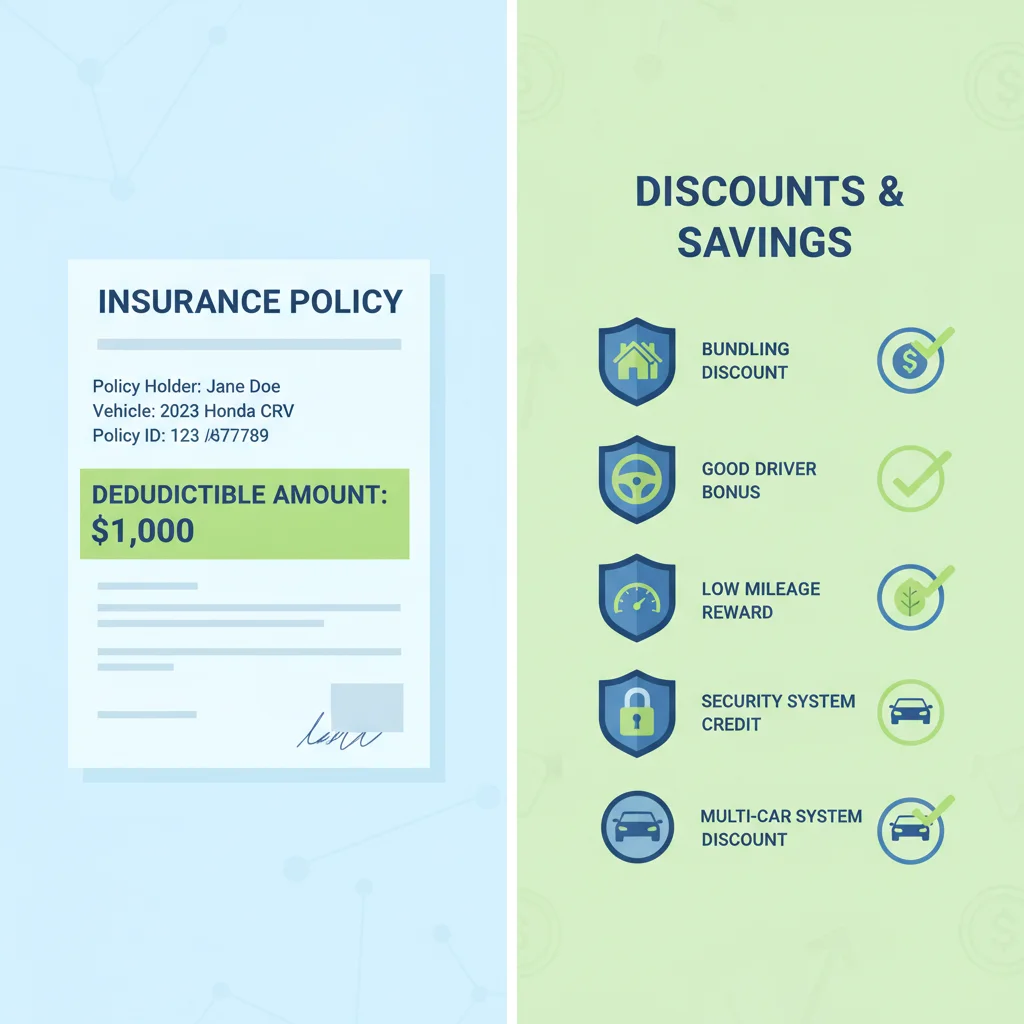
You can also approach this from the savings angle. See how raising your deductible compares to stacking discounts to evaluate which lever cuts your premium more efficiently.
When a Low Deductible Makes Genuine Financial Sense
The case for a low deductible isn't always wrong — it just needs to clear a higher bar. Here are the scenarios where it actually holds up:
- You have no emergency fund. If an unexpected $1,000 out-of-pocket would force you to use high-interest credit, a lower deductible acts as a functional substitute for savings. That's not ideal financial planning, but it's honest risk management.
- You're financing or leasing a new vehicle. Lenders often require comprehensive and collision coverage, and high repair costs on new vehicles mean claims above $3,000 are common. A lower deductible reduces exposure on those claims meaningfully.
- You're insuring an EV. Repair costs for electric vehicles — particularly battery and sensor systems — are substantially higher than conventional vehicles. Underinsuring an EV creates a different risk profile than a standard sedan.
- You live in an area with high claim frequency. Dense urban environments, flood-prone zip codes, and high-theft regions shift the actuarial odds in your favor for a lower deductible.

Outside these scenarios, most drivers are paying a premium surcharge for peace of mind that a basic emergency fund could provide more cost-effectively.
Diminishing Deductible Programs: A Middle Path
Some insurers offer diminishing deductible (also called disappearing deductible or deductible rewards) programs that reduce your deductible each claim-free year. These programs can bridge the gap between wanting a low deductible and not wanting to pay for one outright.
The mechanics vary by insurer. One common structure: you start with a $500 deductible, and it drops by $100 for each claim-free year until it reaches $0 — at which point the insurer covers 100% of covered losses. The catch is that these programs often come with their own add-on cost, and the math isn't always favorable.
The Emergency Fund Alternative
Financial planners often recommend treating a deductible as a self-insured layer: instead of paying higher premiums for a $250 deductible, open a dedicated savings account and deposit the annual premium difference. After two to three years, you'll have funded your own 'low deductible' — and the money earns interest rather than disappearing into a premium. This approach only works if you have the discipline to set the funds aside and not touch them for non-emergency use.
Diminishing Deductible Programs: Read the Fine Print
Most diminishing deductible programs require you to remain with the same insurer and maintain the same policy structure to retain the annual reduction. Switching carriers — even for a better rate — resets your deductible to its starting level. If you're an active comparison shopper, the accumulated benefit can disappear overnight. Always calculate whether the program's add-on cost is lower than simply choosing a mid-range deductible from the start.
Deductibles Apply Per Claim, Not Per Year
Unlike health insurance deductibles, which typically reset annually, auto insurance deductibles apply per claim event. Filing two separate claims in one policy year means paying your deductible twice. This structure makes it especially important to calculate whether a given repair is worth claiming at all — a $600 repair with a $500 deductible nets you only $100 from the insurer, and you still absorb the rate surcharge risk.
Diminishing deductible programs reward claim-free years — but only if you stay with the same insurer long enough to realize the benefit. If you switch carriers before the deductible reaches its minimum, you lose the accrued reduction. For frequent comparison shoppers, the program's value evaporates.
Common Myths That Keep Drivers Overpaying
A few persistent misconceptions push drivers toward low deductibles even when the numbers don't support them:
- Myth: A low deductible means better coverage.
- False. The deductible affects your out-of-pocket per claim, not the breadth or limits of your coverage. A policy with a $1,500 deductible and high liability limits provides far better overall protection than a $250 deductible policy with minimum liability.
- Myth: Filing small claims is what insurance is for.
- Technically true, but practically costly. Insurers track your claims-to-premium ratio, and frequent small claims can make you unprofitable to them — leading to non-renewal or significant rate hikes at your next policy anniversary.
- Myth: You'll definitely need the low deductible eventually.
- This hindsight bias is common. The fact that you had a claim five years ago doesn't mean the premium load of a low deductible was the right call in the years between claims. Each policy period should be evaluated on its own actuarial merits.
Rate factor myths cost drivers real money — and the deductible assumption is one of the more expensive ones to carry unchallenged for years.
The Emergency Fund Alternative
Financial planners often recommend treating a deductible as a self-insured layer: instead of paying higher premiums for a $250 deductible, open a dedicated savings account and deposit the annual premium difference. After two to three years, you'll have funded your own 'low deductible' — and the money earns interest rather than disappearing into a premium. This approach only works if you have the discipline to set the funds aside and not touch them for non-emergency use.
Diminishing Deductible Programs: Read the Fine Print
Most diminishing deductible programs require you to remain with the same insurer and maintain the same policy structure to retain the annual reduction. Switching carriers — even for a better rate — resets your deductible to its starting level. If you're an active comparison shopper, the accumulated benefit can disappear overnight. Always calculate whether the program's add-on cost is lower than simply choosing a mid-range deductible from the start.
Deductibles Apply Per Claim, Not Per Year
Unlike health insurance deductibles, which typically reset annually, auto insurance deductibles apply per claim event. Filing two separate claims in one policy year means paying your deductible twice. This structure makes it especially important to calculate whether a given repair is worth claiming at all — a $600 repair with a $500 deductible nets you only $100 from the insurer, and you still absorb the rate surcharge risk.
Making the Right Call for Your Situation
There's no universal right answer on deductibles, but there is a right process for finding yours. Here's a practical decision framework:
- Check your current emergency savings. If you can absorb a $1,000 to $1,500 out-of-pocket hit without going into high-interest debt, a higher deductible is worth modeling.
- Pull your claim history. How many at-fault or comprehensive claims have you filed in the last five years? Zero to one is common; two or more shifts the math toward a lower deductible.
- Run the break-even calculation using your actual quote data — not industry averages. The three-step process above takes about 10 minutes and will tell you more than any rule of thumb.
- Consider your vehicle's age and value. On a 12-year-old vehicle worth $6,000, a $500 deductible is often more defensible than comprehensive and collision at any deductible level. Insuring an older car for collision can exceed the vehicle's actual cash value recovery in a total-loss scenario.
- Revisit annually. Life circumstances change. Your deductible decision at 28 with no savings and a new lease may be entirely wrong at 35 with a paid-off car and a funded emergency account.
The bottom line: deductible decisions are savings decisions in disguise. Treat them like one, and you'll stop paying for a financial product that doesn't match your actual risk profile.

All claims are backed by peer-reviewed research. Sources on request.