Key Takeaways
Our Verdict
For most buyers, a luxury CPO vehicle purchased at the 24- to 36-month mark offers the best combination of depreciation savings, warranty protection, and financing options. Buying new only makes sense if you want full personalization, the absolute latest technology, or access to manufacturer incentives that aren't available on CPO stock. The depreciation math strongly favors CPO — as long as you choose a brand with a robust certification program.
| Best for | Recommended |
|---|---|
| Buyers who want maximum savings with near-new reliability | Luxury CPO (2–3 years old) |
| Those who want a specific color, trim, or tech package configured their way | New Luxury Vehicle |
| Budget-conscious buyers comfortable with some risk | Non-CPO off-lease used luxury vehicle |
| Long-term owners who plan to keep the car 8+ years | New Luxury Vehicle with full factory warranty |
The Depreciation Advantage: Why Luxury Cars Drop So Far, So Fast
The moment a new luxury vehicle leaves the dealership lot, it begins shedding value at a rate most buyers don't fully appreciate. A $70,000 midsize luxury sedan — think a BMW 5 Series or Mercedes-Benz E-Class — can lose $20,000 to $28,000 of its value within the first 24 months. That's roughly 30–40% of the purchase price, gone before the second set of tires is even needed.
This is the core argument for luxury CPO: someone else absorbs that brutal initial depreciation, and you step in to buy the car at its post-cliff value. The depreciation curve isn't linear, either. It's steepest in years one through three, then it flattens considerably. A three-year-old luxury car that originally stickered at $75,000 might now carry a CPO price of $47,000 to $50,000. From that point forward, it's likely to depreciate only another $8,000 to $12,000 over the next three years — a much gentler slope.
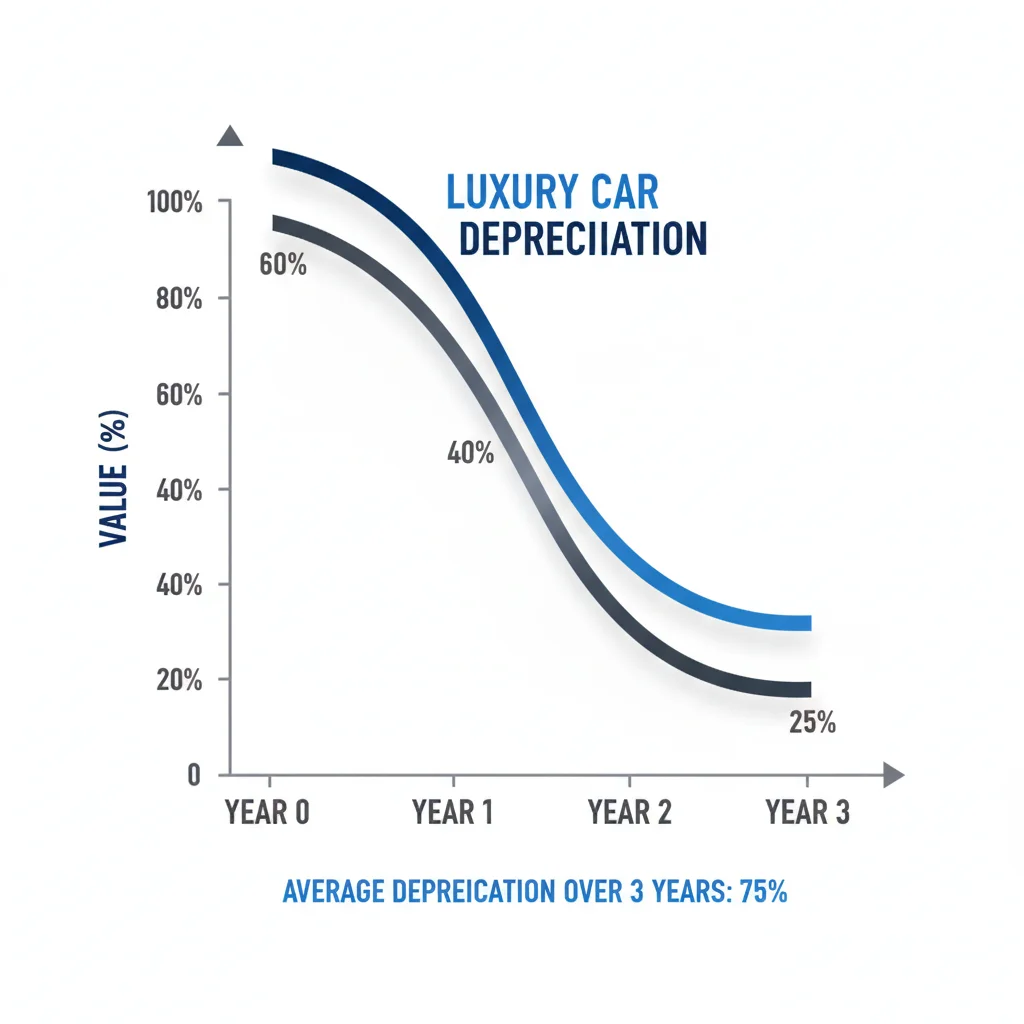
For a deeper look at how to run these numbers yourself, see our guide on CPO vs. new car depreciation math — it walks through the calculations step by step. The key insight is that you're not just saving money at purchase; you're buying into a gentler depreciation phase going forward.
37%
Average luxury car depreciation in year one
According to iSeeCars depreciation studies, luxury sedans and SUVs average 37% value loss in their first 12 months of ownership.
$420/mo
Typical CPO vs. new payment savings
On a $70,000+ luxury sedan, a comparable CPO model financed over 60 months often saves $350–$450 per month compared to buying new.
2.5M+
CPO vehicles sold annually in the U.S.
The National Automobile Dealers Association reported over 2.5 million certified pre-owned vehicles sold in the U.S. in recent years, with luxury brands representing a growing share.
$2,500
Average CPO premium over non-certified used
Edmunds data indicates buyers typically pay $1,500–$3,500 more for a CPO vehicle versus an equivalent non-certified used car of the same year, make, and mileage.
What Luxury CPO Programs Actually Include
A certified pre-owned designation isn't just a marketing label — at least not from the major luxury manufacturers. Each brand runs its own certification process, and the quality of coverage varies significantly. Here's what separates a genuine CPO program from a dealer-applied sticker:
- Inspection checklist: Most luxury CPO programs require a 100- to 300-point inspection. BMW's program, for example, covers 360+ items. This isn't a quick visual scan — it includes compression tests, brake measurements, and electronic diagnostics.
- Warranty extension: This is the headline benefit. Lexus CPO extends powertrain coverage to 6 years/70,000 miles from the original in-service date. Mercedes-Benz CPO adds one year/unlimited miles to the remaining factory warranty, with optional extensions. Audi CPO provides a 2-year/unlimited-mile limited warranty on top of the factory coverage.
- Roadside assistance: Nearly all luxury CPO programs include 24/7 roadside assistance that mirrors what new-car buyers receive.
- Trip interruption coverage: If your CPO vehicle breaks down more than a set distance from home, manufacturers like Lexus and BMW will cover hotel and meal expenses.
What CPO programs generally do not cover: wear items like brake pads and tires, cosmetic damage, and pre-existing conditions that weren't caught in the inspection. Always request the full inspection report before signing.
Time Your CPO Purchase at Model Year End
Dealers receive new-model-year inventory in late summer and fall, which motivates them to move prior-year CPO stock. Shopping between August and November often yields the most negotiating flexibility on CPO pricing. Manufacturers also sometimes run special CPO financing promotions during these periods, stacking the savings further.
Always Get a Pre-Purchase Inspection
Even on a CPO vehicle, spending $100–$200 on an independent pre-purchase inspection from a marque-specialist mechanic is money well spent. CPO inspections are conducted by dealer technicians with an incentive to certify vehicles — an outside mechanic has no such bias. For luxury vehicles with complex systems, this step can surface issues the factory checklist missed.
Check Remaining Factory Warranty First
Before evaluating the CPO extension, confirm how much original factory warranty remains on the vehicle's in-service date. A 2-year-old luxury vehicle may still have 1–2 years of factory bumper-to-bumper coverage. The CPO extension adds on top of that, giving you potentially 3–4 more years of combined coverage — a meaningful advantage over a 4-year-old CPO with no factory warranty left.
Understanding what you're actually paying for with a CPO premium is essential. Our article Is the CPO Premium Worth Paying? breaks down when certification genuinely earns its markup and when it doesn't.
| BMW CPO | Mercedes-Benz CPO | Lexus CPO | Audi CPO | New Luxury (any brand) | |
|---|---|---|---|---|---|
| Warranty extension | 1 yr / unlimited miles | 1 yr / unlimited miles | 2 yr / 100k miles | 2 yr / unlimited miles | Full factory (3–4 yrs) |
| Inspection points | 360+ points | 165+ points | 161+ points | 300+ points | Pre-delivery inspection only |
| Max eligible age | 5 years | 6 years | 6 years | 5 years | N/A (new) |
| Max eligible mileage | 75,000 miles | 75,000 miles | 70,000 miles | 60,000 miles | N/A (new) |
| Typical price vs. new | 25–35% less | 25–35% less | 20–30% less | 20–30% less | Full MSRP |
| CPO financing available | Yes, via BMW FS | Yes, via MBFS | Yes, via Toyota FS | Yes, via Audi FS | Yes, often subsidized |
| Roadside assistance | Included | Included | Included | Included | Included |
| Reliability ranking | Above average | Average | Top tier | Above average | Varies by brand |
Off-Lease Returns: The Best Source for Luxury CPO Inventory
The majority of luxury CPO inventory comes from one specific source: off-lease returns. When a three-year lease on a $70,000 BMW ends, the vehicle goes back to the manufacturer or a franchised dealer. It typically has 30,000 to 45,000 miles, a complete service history, and was driven by someone who knew they'd return it — meaning there's strong incentive to maintain the car properly to avoid wear-and-tear charges.
Off-lease luxury vehicles are the sweet spot of the used car market for several reasons:
- Age and mileage: A 36-month lease return is usually 3 years old with under 45,000 miles — well inside most CPO eligibility windows (typically 5–6 years and under 80,000 miles).
- Service records: Lessees are contractually required to follow manufacturer maintenance schedules. This is documented.
- Condition expectations: Lease agreements include wear-and-tear standards. Vehicles with excessive damage are either repaired before return or sold at auction outside CPO channels.
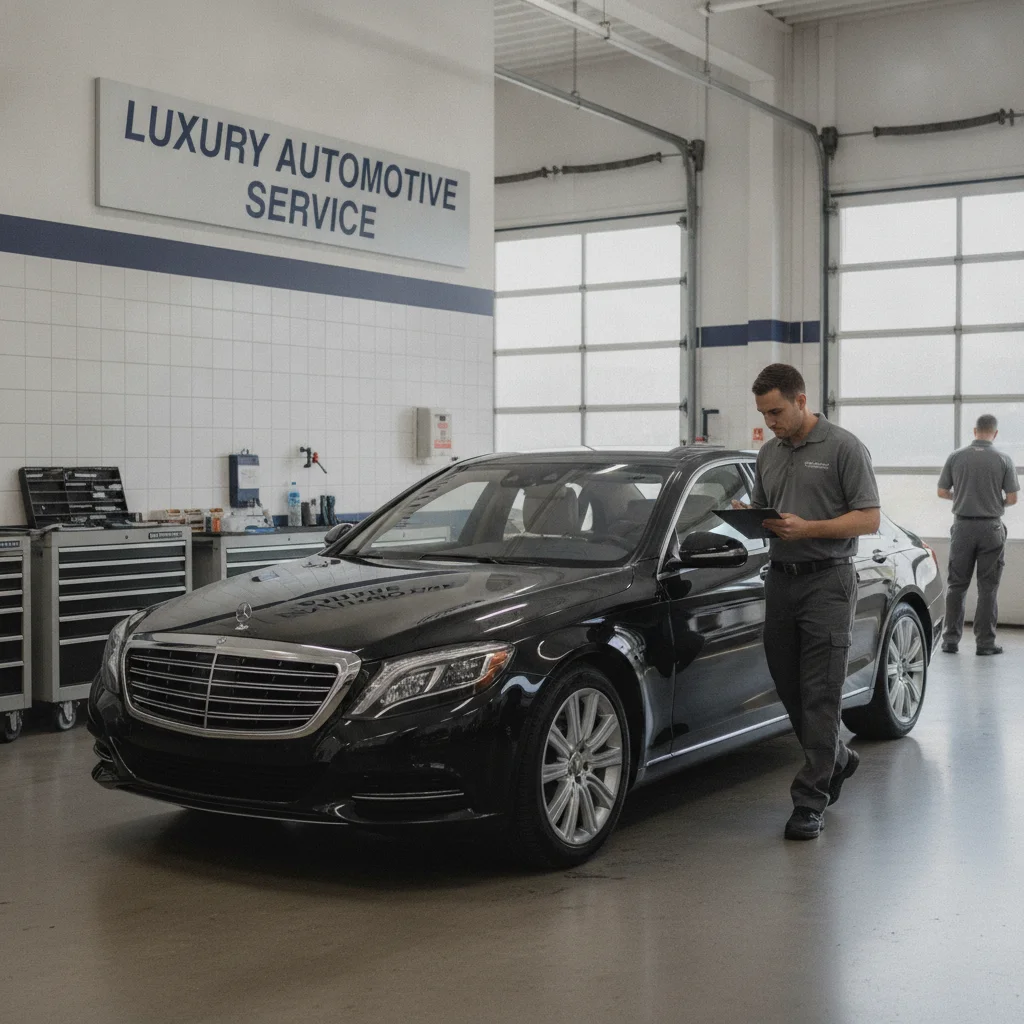
That said, not all off-lease vehicles make it into CPO programs. Dealers cherry-pick the best examples — those that pass the multi-point inspection without requiring costly reconditioning. A car that needs $3,000 in repairs to pass inspection may get wholesaled instead. This natural filtering actually benefits CPO buyers.
For more on how a vehicle's prior use affects its value and reliability, read our piece on off-lease vs. CPO and why the source matters.
Fleet and Rental History Can Disqualify CPO Value
Some CPO vehicles spent part of their life as manufacturer loaner cars or short-term rentals before being sold. These vehicles may meet the mileage and age requirements for CPO certification, but they often have harder use patterns than lease returns. Always check the vehicle history report for fleet codes and ask the dealer directly about the vehicle's prior use before assuming it matches a typical lease-return profile.
Don't Assume New Equals Better Technology
A new base-trim luxury vehicle may actually have fewer features than a well-optioned CPO model from two or three years prior. Carefully compare the specific options on any CPO vehicle against the equivalent new trim level. A CPO car loaded with the premium technology package may offer a better feature set than a new entry-trim model at a similar or lower price — but only if you read the window sticker and option list carefully.
Financing a Luxury CPO: Rates, Terms, and the Real Cost of Money
One of the least-discussed advantages of manufacturer CPO programs is financing. Several luxury brands offer special CPO rates through their captive finance arms — the same in-house lenders that subsidize new-car deals. These rates aren't always advertised prominently, but they're often competitive with what you'd see on a new vehicle.
Consider a concrete example: A new $72,000 Audi A6 financed at 4.9% APR over 60 months produces a monthly payment of about $1,355. A two-year-old, CPO-certified Audi A6 priced at $49,000 at 5.4% APR over 60 months comes to about $935 per month. That's $420 less per month — $25,200 over the life of the loan — even with the slightly higher rate.
The rate gap between CPO and new financing has narrowed considerably as manufacturers push to move certified inventory. In many cases, the CPO rate is within 0.5 to 1.0 percentage points of the new-car rate — a difference that's easily offset by the purchase price discount.
For a detailed side-by-side analysis, see our article on CPO financing vs. used car financing rates. It's worth noting that non-CPO used car loans from banks and credit unions typically carry rates 1–3 percentage points higher than manufacturer CPO financing, which can eat into the savings you'd expect from buying a cheaper vehicle.

Brand-by-Brand: Which Luxury CPO Programs Are Worth It
Not every luxury badge comes with the same CPO safety net. The strength of a CPO program depends on three factors: the depth of the inspection, the length and scope of the warranty, and the brand's underlying reliability record. Here's how the major players stack up.
Lexus: Consistently ranked at or near the top of CPO programs by consumer advocates. The L/Certified program offers a 6-year/70,000-mile powertrain warranty from the original sale date, a 2-year/100,000-mile limited warranty, and Toyota's strong reliability reputation backing the whole thing. Used Lexus vehicles also retain value well, which matters when you eventually sell.
BMW: The CPO program covers vehicles up to 5 years old with under 75,000 miles. It provides a 1-year/unlimited-mile limited warranty extension, plus original factory warranty remainder. The 360-point inspection is among the most thorough in the industry. BMW's maintenance costs are higher than average, so the warranty protection carries real financial weight.
Mercedes-Benz: Offers a 1-year/unlimited-mile CPO warranty extension with optional year-two coverage. The certified program also includes 24/7 roadside assistance and trip interruption benefits. Mercedes vehicles tend to have higher-than-average out-of-warranty repair costs, making CPO coverage especially valuable here.
Audi: CPO vehicles receive a 2-year/unlimited-mile limited warranty on top of remaining factory coverage. Audi's reliability has improved significantly in recent years, and the brand's strong residual values mean CPO pricing is firm — expect less room to negotiate compared to BMW or Mercedes.
Cadillac and Lincoln: Both domestic luxury brands offer CPO programs, but their coverage terms have historically been less generous and their reliability rankings lower than Japanese and German competitors. Proceed with more scrutiny and budget for potential out-of-warranty repairs sooner.
Choosing a brand with a strong CPO program is also an investment in long-term ownership costs. Our guide on why some CPO cars are better long-term investments explains how brand reliability and parts availability affect total cost of ownership well beyond the warranty period.

New vs. Luxury CPO: Running the Full Cost Comparison
To make an honest comparison, you need to look beyond the sticker price. Let's walk through a real-world example using a BMW 5 Series.
New 2024 BMW 530i: MSRP approximately $58,000. Add destination, dealer fees, and taxes and you're at roughly $62,000 out the door. Finance at 5.0% APR over 60 months: approximately $1,170/month. Depreciation over 3 years: approximately $18,000–$22,000.
CPO 2021 BMW 530i (36,000 miles): Market price approximately $38,000–$41,000. Out the door around $44,000. Finance at 5.5% APR over 60 months: approximately $840/month. Depreciation over the next 3 years: approximately $9,000–$12,000.
The monthly payment gap is $330. The depreciation exposure gap is roughly $9,000 over the same holding period. The CPO warranty covers you for an additional year beyond the remaining factory coverage. The only things you give up: the latest model year's tech updates, your preferred build configuration, and the new-car smell.
It's also worth understanding where CPO vehicles sit relative to private-party used car purchases. Our comparison of CPO vs. private-party used cars at the depreciation sweet spot shows that the price premium for CPO over non-certified used typically runs $1,500 to $3,500 — a reasonable cost for the added protection on a high-maintenance luxury vehicle.
Time Your CPO Purchase at Model Year End
Dealers receive new-model-year inventory in late summer and fall, which motivates them to move prior-year CPO stock. Shopping between August and November often yields the most negotiating flexibility on CPO pricing. Manufacturers also sometimes run special CPO financing promotions during these periods, stacking the savings further.
Always Get a Pre-Purchase Inspection
Even on a CPO vehicle, spending $100–$200 on an independent pre-purchase inspection from a marque-specialist mechanic is money well spent. CPO inspections are conducted by dealer technicians with an incentive to certify vehicles — an outside mechanic has no such bias. For luxury vehicles with complex systems, this step can surface issues the factory checklist missed.
Check Remaining Factory Warranty First
Before evaluating the CPO extension, confirm how much original factory warranty remains on the vehicle's in-service date. A 2-year-old luxury vehicle may still have 1–2 years of factory bumper-to-bumper coverage. The CPO extension adds on top of that, giving you potentially 3–4 more years of combined coverage — a meaningful advantage over a 4-year-old CPO with no factory warranty left.
If you're new to the used car buying process overall, our hub on buying used cars covers how to evaluate, inspect, and negotiate a pre-owned purchase from start to finish.
When Buying New Still Makes Sense
The depreciation math favors CPO in most scenarios, but there are legitimate reasons to buy new. Understanding them helps you make the right call for your situation rather than defaulting to one camp.
- You want a specific configuration: CPO inventory is whatever came off lease. If you want a specific exterior color, interior combination, or tech package, new is the only guaranteed path.
- You plan to keep the car 8–10+ years: Over a very long holding period, the initial depreciation hit becomes a smaller percentage of total ownership cost. If you're buying and holding, new-car reliability from mile zero has some appeal.
- Manufacturer incentives are exceptional: Occasionally, slow-selling models or model-year-end periods produce new-car deals — 0% financing, large cash rebates — that compress or eliminate the CPO savings advantage. Always check current incentives before assuming CPO wins on price.
- The technology gap is meaningful to you: A 2021 model year doesn't have the same driver-assistance systems, infotainment, or EV range as a 2024 model. If you commute with semi-autonomous features or care about the latest software, the gap matters.
For buyers weighing the new-car purchase path fully, our hub on buying new cars outlines what to know before walking into a dealership.
Fleet and Rental History Can Disqualify CPO Value
Some CPO vehicles spent part of their life as manufacturer loaner cars or short-term rentals before being sold. These vehicles may meet the mileage and age requirements for CPO certification, but they often have harder use patterns than lease returns. Always check the vehicle history report for fleet codes and ask the dealer directly about the vehicle's prior use before assuming it matches a typical lease-return profile.
Don't Assume New Equals Better Technology
A new base-trim luxury vehicle may actually have fewer features than a well-optioned CPO model from two or three years prior. Carefully compare the specific options on any CPO vehicle against the equivalent new trim level. A CPO car loaded with the premium technology package may offer a better feature set than a new entry-trim model at a similar or lower price — but only if you read the window sticker and option list carefully.
How to Shop Luxury CPO Effectively
Knowing the financial case for luxury CPO is step one. Executing the purchase well is step two. Here's a practical approach:
- Target the 24- to 36-month window: This is where the depreciation curve has done most of its damage but the vehicle still has substantial warranty remaining. Earlier than 18 months and you're paying near-new money. Beyond 48 months and warranty coverage shrinks.
- Request the full inspection report: Every CPO vehicle should come with a completed checklist from the certification inspection. Review it line by line. Ask about anything marked as repaired — what was the issue, what parts were replaced?
- Run the VIN through Carfax and AutoCheck: CPO certification doesn't guarantee a clean history — it guarantees the car passed an inspection at the time of certification. Accident history, odometer anomalies, and title issues can still exist.
- Compare the CPO warranty terms to the vehicle's age: A 5-year-old vehicle with a 1-year warranty extension gives you far less coverage than a 2-year-old vehicle with the same extension. The remaining coverage matters more than the added coverage.
- Negotiate on price, not just monthly payment: CPO vehicles have market values trackable through Edmunds and KBB. Know the fair purchase price before you sit down. Dealers have more margin flexibility on CPO than on new cars with published invoice prices.
- Check manufacturer CPO financing rates on the same day: Rates change monthly. The captive finance rate posted on the manufacturer's website is your baseline — don't accept dealer financing above it without getting a competing offer from your bank or credit union first.
Time Your CPO Purchase at Model Year End
Dealers receive new-model-year inventory in late summer and fall, which motivates them to move prior-year CPO stock. Shopping between August and November often yields the most negotiating flexibility on CPO pricing. Manufacturers also sometimes run special CPO financing promotions during these periods, stacking the savings further.
Always Get a Pre-Purchase Inspection
Even on a CPO vehicle, spending $100–$200 on an independent pre-purchase inspection from a marque-specialist mechanic is money well spent. CPO inspections are conducted by dealer technicians with an incentive to certify vehicles — an outside mechanic has no such bias. For luxury vehicles with complex systems, this step can surface issues the factory checklist missed.
Check Remaining Factory Warranty First
Before evaluating the CPO extension, confirm how much original factory warranty remains on the vehicle's in-service date. A 2-year-old luxury vehicle may still have 1–2 years of factory bumper-to-bumper coverage. The CPO extension adds on top of that, giving you potentially 3–4 more years of combined coverage — a meaningful advantage over a 4-year-old CPO with no factory warranty left.
Whether you're buying CPO or new, the fundamentals of evaluating whether a CPO premium is justified come down to the same question: does the protection you're buying cost less than the risk you're avoiding? For luxury vehicles with high repair costs, the answer is usually yes — if the program is strong.

All claims are backed by peer-reviewed research. Sources on request.