Key Takeaways
Option A
Private Seller Inspection
The higher-stakes, do-it-yourself evaluation.
Best for: Buyers comfortable doing independent research who want the best price and are willing to take on more risk management themselves.
Option B
Dealership Inspection
The structured process with built-in (but limited) protections.
Best for: Buyers who want a more formalized process, access to certified pre-owned programs, and some recourse if something goes wrong after purchase.
If you're a first-time used car buyer with limited mechanical knowledge
Dealership Inspection
Dealers are legally required to provide a Buyers Guide disclosing warranty status, and certified pre-owned programs add a documented inspection layer — giving you more structured recourse if something surfaces post-sale.
If you want the lowest possible purchase price and can hire an independent inspector
Private Seller Inspection
Private sellers typically price 10–20% below dealer retail. If you bring a qualified mechanic for a PPI and do your title homework, you can capture that savings without taking on undue risk.
If you're buying a vehicle that's three or more years old with over 60,000 miles
Private Seller Inspection
Most CPO programs cap eligibility well below this threshold, so dealer 'certification' on older, high-mileage cars is often minimal. A thorough independent PPI levels the playing field at lower cost.
If financing the purchase through the selling party
Dealership Inspection
Private sellers can't offer financing, so if you need it, the dealer route is your path. Just make sure the inspection and paperwork trail are solid before you sign anything — see our guide on <a href="/buying-a-car/car-buying-process/paperwork-and-contracts/power-of-attorney-in-car-sales-when-dealers-ask-you-to-sign-one">dealer paperwork red flags</a>.
If buying a high-value vehicle above $30,000
Dealership Inspection
At this price point, the incremental cost of dealer protections and CPO coverage is proportionally smaller, and the financial downside of a hidden defect is much larger — structured accountability matters more.
Why the Seller Type Changes Everything About Your Inspection
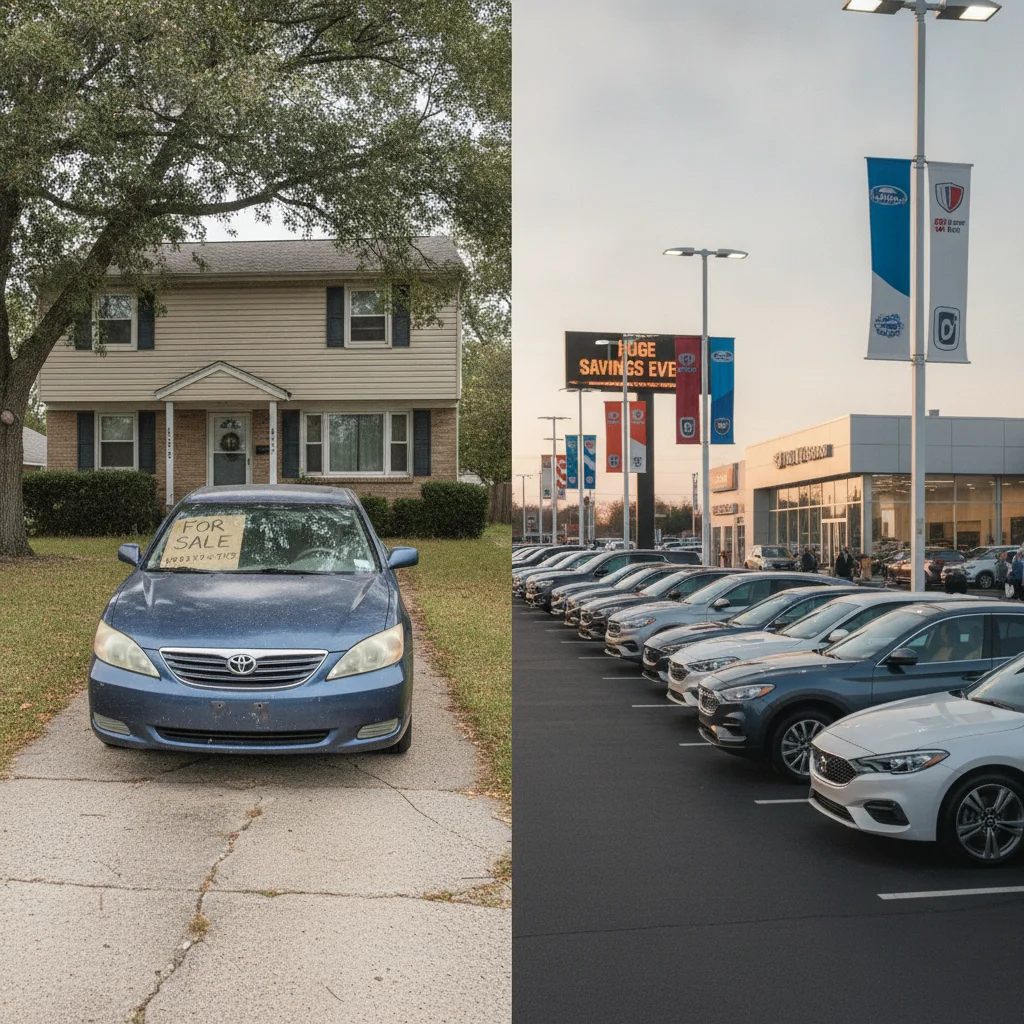
The car you're about to inspect is the same object regardless of who's selling it. The frame rails, the brake rotors, the transmission fluid — physics doesn't care whether there's a franchise sign above the lot or a handwritten price on the windshield. What changes is the information environment around that car, and that's what your inspection strategy has to account for.
When you buy from a private seller, you're operating in an environment with minimal legal backstops. Most states sell used vehicles "as-is" in private transactions, meaning the seller isn't required to disclose defects they don't mention — and in some states, even known defects they stay quiet about are your problem after you sign the title. Your inspection is your entire protection. There is no warranty department to call Monday morning.
Dealerships operate under more regulatory structure. The FTC's Used Car Rule requires dealers to display a Buyers Guide on every used vehicle, stating whether the car is sold as-is or covered by a warranty. Certified pre-owned (CPO) programs layer on additional inspection requirements. None of this guarantees a problem-free car, but it does create documentation trails and defined recourse mechanisms that simply don't exist in private sales.
Understanding these differences doesn't mean one route is always better — it means your inspection checklist needs to be calibrated to the environment. For a broader look at which buying channel suits your situation, compare the full trade-offs of each channel.

Documents: What to Request and Why It Differs
Before you even look at the car, you should be gathering paperwork. What you're entitled to — and what raises a red flag if it's missing — depends entirely on who's across the table.
From a Private Seller
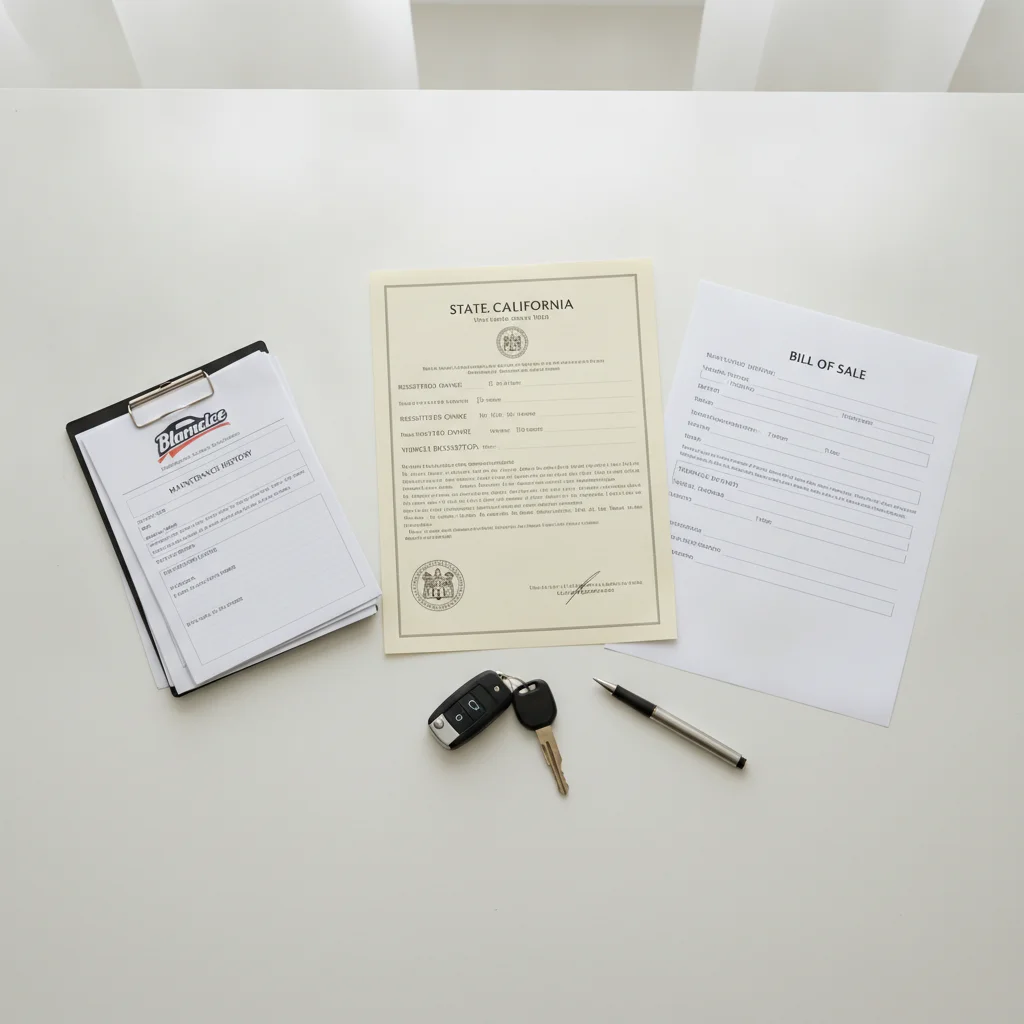
- Clean title in the seller's name. Run the VIN before you meet. If the name on the title doesn't match the person you're meeting, stop. That's either a curbstoner (unlicensed dealer posing as a private party) or a title situation that's not their problem to solve.
- Service records. Not required, but their absence is a yellow flag. A seller who has records shows they had a relationship with the vehicle. Gaps suggest deferred maintenance.
- Lien release or payoff documentation. If the seller still owes money, the lienholder's name appears on the title. Get a written payoff confirmation and understand how the transaction will clear the lien before money changes hands.
- Odometer disclosure statement. Required by federal law for vehicles under 10 years old. A private seller who doesn't know this is either uninformed or hiding something.
From a Dealership
- FTC Buyers Guide. This one-page form is legally required on every used vehicle at a licensed dealer. It tells you warranty status (as-is vs. dealer warranty vs. manufacturer warranty). If a dealer can't produce it, that's an FTC compliance failure — walk away or escalate.
- CPO inspection checklist. If a vehicle is marketed as certified pre-owned, ask for the actual inspection report. A genuine CPO program documents every point checked. A dealer who can't show you the checklist is marketing a label, not a process.
- Title and lien status. Dealers typically handle title transfer for you, but confirm there's a clean title. Understand exactly how dealer title paperwork differs from private party transfers before you get to closing.
- Finance and add-on disclosures. If you're financing through the dealer, you'll see a menu of add-ons — extended warranties, paint protection, GAP insurance. These are almost always negotiable or refusable. Read every line.
| Criterion | Private Seller | Dealership |
|---|---|---|
| Required disclosures | Minimal — varies by state | FTC Buyers Guide mandatory |
| Warranty availability | Almost never | As-is, dealer, or manufacturer CPO |
| Title transfer handled by | Buyer and seller together | Dealer handles most paperwork |
| PPI recommended? | Absolutely required | Still strongly recommended |
| Price vs. market | Typically 10–20% below retail | At or above retail |
| Lien complexity | Buyer must verify and manage | Dealer resolves before sale |
| Fraud risk profile | Higher — title fraud, curbstoners | Lower — licensed, regulated entity |
| Negotiation leverage | Flexible — emotional seller dynamic | Structured — finance office separation |
| Post-sale recourse | Very limited in as-is states | More, especially with CPO warranty |
The Physical Inspection: What's Universal
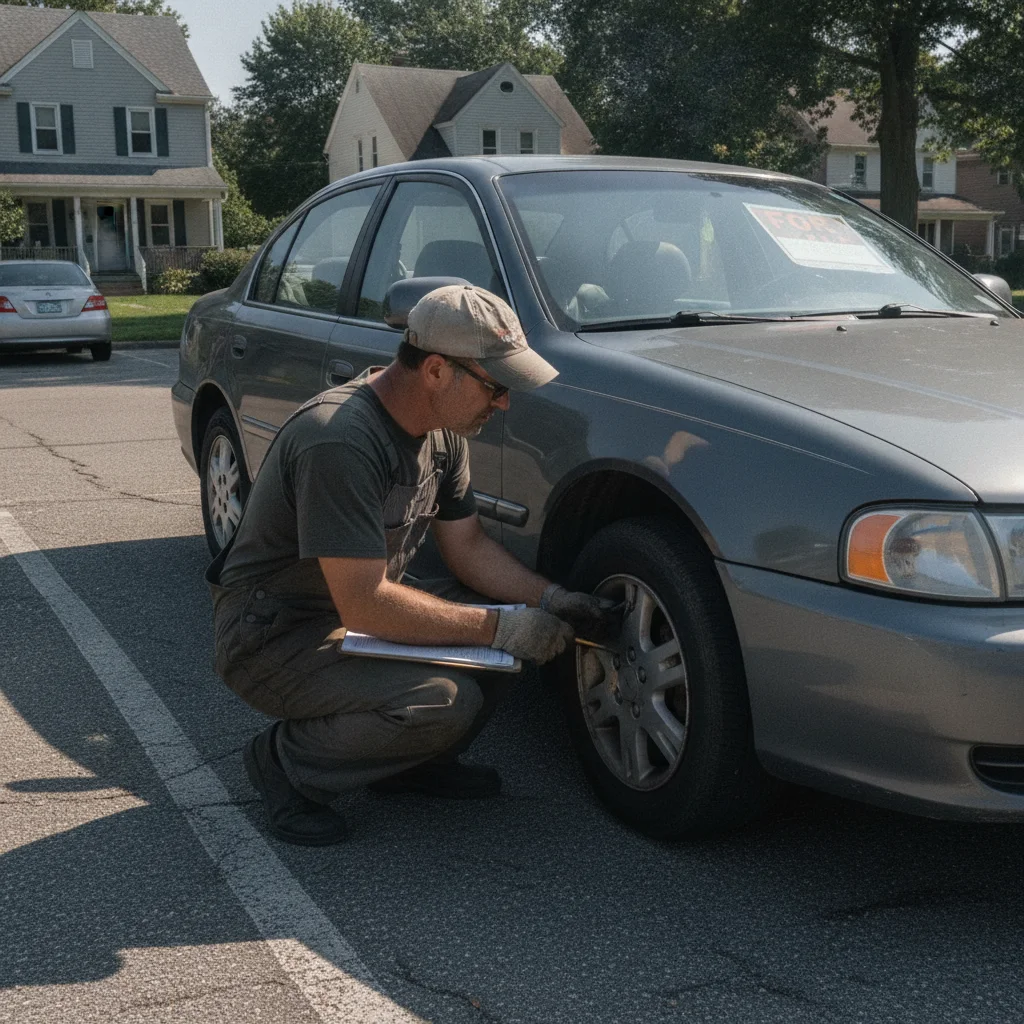
Certain inspection steps are non-negotiable regardless of the seller. These are the mechanical fundamentals — the things that will cost you money whether you bought from a neighbor or a franchised BMW store.
Exterior Walk-Around
Do this in direct sunlight or under bright overhead lights. Look for:
- Panel gaps. Run your eye along every seam — hood to fender, door to door, trunk lid to quarter panel. Inconsistent gaps indicate prior bodywork or a collision repair that involved disassembly. Factory gaps are uniform.
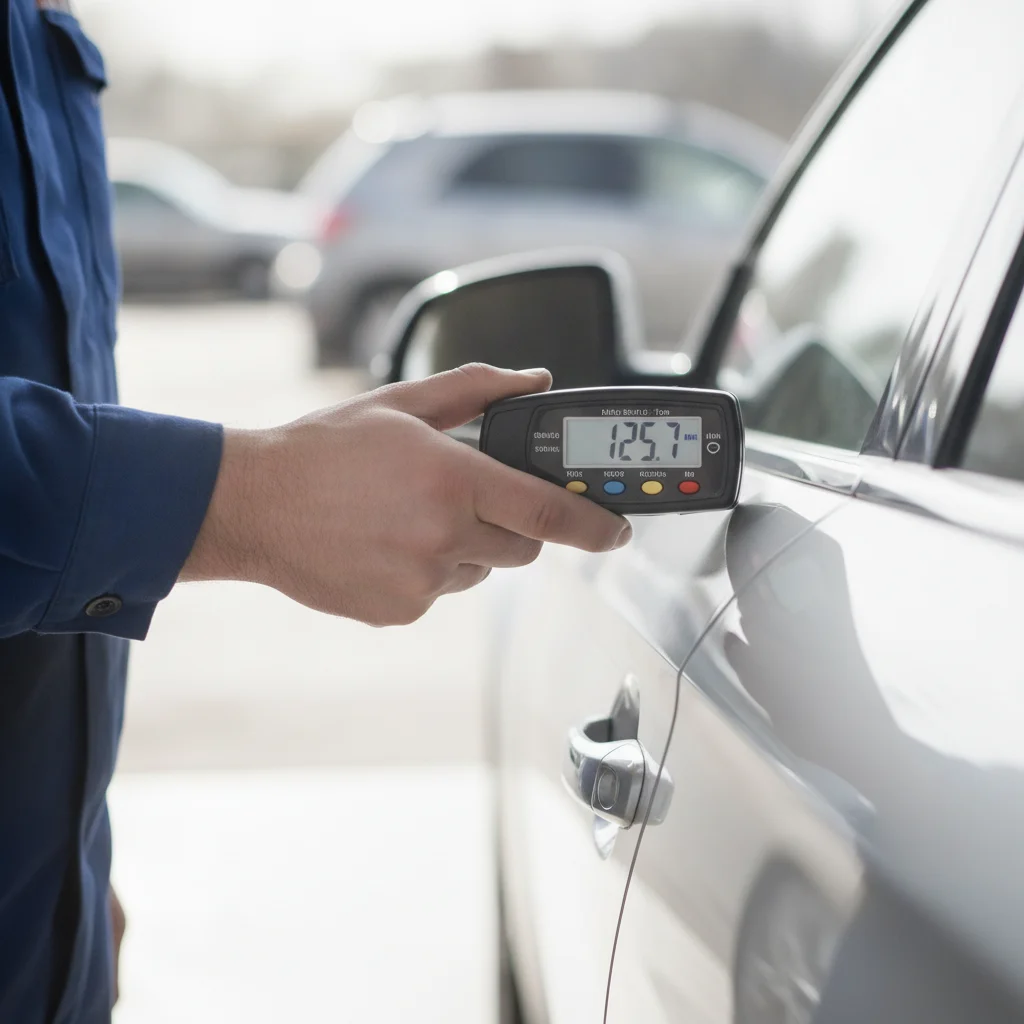
- Paint depth variation. A professional paint depth gauge ($30–$60 on Amazon) reveals repainted panels. Factory paint on steel runs roughly 4–6 mils. Anything above 8–10 mils suggests body filler or respray over damage. Dealers hate when buyers bring these.
- Overspray. Check rubber seals, door jambs, and trim edges. Paint on the weatherstripping means a quick respray, not a factory finish.
Under the Hood
- Check all fluid levels and condition. Brown coolant, black oil, or milky residue on the oil cap all suggest maintenance neglect or something worse (coolant-oil mixing is a head gasket warning sign).
- Look for fresh oil residue around gaskets and valve covers — not a crisis in an older vehicle, but worth noting.
- Check battery terminals for corrosion. A white or blue crust means the battery has been leaking acid, which accelerates terminal failure.
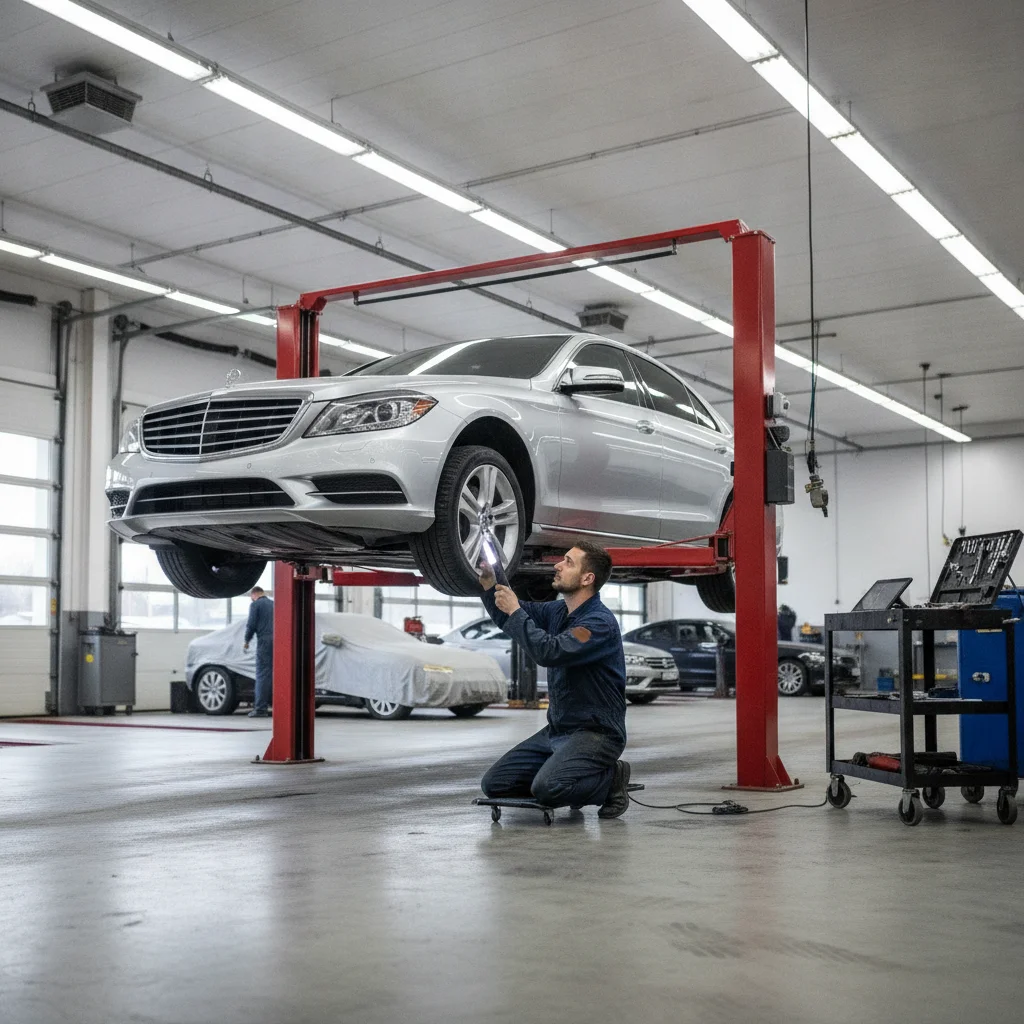
Underneath
If you can't get the car on a lift (always preferred), use a flashlight and get low. Look for:
- Rust on frame rails — surface rust on suspension components is common; rust penetrating structural steel is a different matter entirely.
- Welding beads or mismatched metal on the frame — evidence of prior structural repair.
- Leaks above the exhaust or on the ground beneath where the car was parked.
Test Drive Protocol
Minimum 20 minutes. Include highway speeds, a hard stop from 40+ mph, and a tight turning circle. Listen for:
- Vibration above 55 mph (wheel balance or worn CV joints)
- Pulling under braking (warped rotors or stuck calipers)
- Clunking over bumps (worn struts or end links)
- Hesitation on acceleration (transmission slipping or fuel delivery issues)
Cold-start the car yourself if possible. Many problems only appear in the first 30 seconds of a cold engine — if the seller has already warmed it up when you arrive, ask why and factor that into your assessment.
~$2,000
Average hidden defect cost on used cars
A 2022 CarEdge analysis found that undisclosed mechanical issues cost used car buyers an average of roughly $2,000 in unplanned repairs within the first 12 months of ownership.
10–20%
Private sale discount vs. dealer retail
Industry data from Edmunds and iSeeCars consistently shows private party transaction prices running 10–20% below equivalent dealer-listed prices for the same make, model, and year.
$100–$200
Typical pre-purchase inspection cost
Independent mechanics typically charge $100–$200 for a comprehensive PPI including a lift inspection and OBD-II scan — a fraction of the cost of a missed transmission or engine problem.
1 in 5
Used cars with undisclosed damage history
According to Carfax's 2023 Used Car Market Report, approximately one in five used vehicles on the market has a prior damage event not proactively disclosed by the seller.
Where Private Seller Inspections Require Extra Vigilance
Private sellers operate with less accountability, which means your inspection has to fill gaps that a dealer's legal framework partially covers.
Title Verification Is Your Job Alone
Run a VIN check through the NMVTIS database (free through approved providers) or a paid service like Carfax or AutoCheck. Look for salvage titles, flood damage declarations, odometer rollback flags, and total loss insurance claims. A dealer has legal exposure if they sell a salvage-titled car without disclosure; a private seller in an "as-is" state has much less. Don't rely on the seller's description of the title history.
No Haggle Safety Net
When you find a defect during inspection, you're negotiating directly with an individual. Private sellers often price based on emotion as much as market data. Have comparable listings ready from the same region and use specific repair estimates to anchor your counter-offer. "The front tires are worn to the wear indicators — that's $400 installed for a set of mid-range replacements" is more persuasive than "the tires are bad."
The PPI Is Non-Negotiable
Always hire an independent mechanic for a pre-purchase inspection on a private sale. Budget $100–$200 for a shop inspection, more if you want a lift inspection and OBD-II scan included. If the seller refuses to allow a PPI — full stop, don't buy the car. No legitimate seller objects to a buyer's due diligence. See also: what sellers should prepare before your inspection.
Meet at the Right Location
Insist on meeting at the seller's home or a neutral public location in daylight. Avoid meeting in empty lots at night. If a seller insists on meeting at a third location and won't tell you where the car is normally kept, that's a red flag — it may indicate the car is stolen or the seller is a curbstoner avoiding a trail back to an operation.
What 'As-Is' Actually Means Legally
In most U.S. states, 'as-is' in a private sale means the buyer accepts the vehicle in its current condition with no implied warranties — even if a defect surfaces hours after the transaction. Some states provide limited consumer protections for fraudulent misrepresentation (knowingly lying about a defect is different from simply not disclosing one), but proving it is difficult and expensive. Your inspection is your legal protection; treat it accordingly.
Curbstoners: The Private Sale Fraud to Know
A curbstoner is an unlicensed dealer who flips cars under the guise of a private sale to avoid dealer licensing requirements, lemon law obligations, and FTC disclosure rules. Red flags include multiple listings from the same phone number, sellers who always want to meet at a neutral location, and titles that are recently transferred or in someone else's name. If the seller has sold more than two or three cars in the past year and isn't a licensed dealer, you may be dealing with a curbstoner — and all the protections that come with a regulated dealer sale disappear.
Where Dealership Inspections Require Extra Vigilance
More structured doesn't mean more trustworthy. Dealerships have motivated sales staff, inventory pressure, and a few institutional habits that buyers need to actively counteract.
"Certified" Is a Marketing Word Until Proven Otherwise
CPO programs vary enormously. A manufacturer-backed CPO (Honda, Toyota, Ford, etc.) means a standardized inspection checklist, a warranty backed by the manufacturer, and real recourse. A dealer's own "certified" label means whatever the dealer says it means — there's no federal standard for dealer-branded certification. Ask specifically: Is this manufacturer CPO or dealer CPO? If the latter, request the inspection checklist and warranty terms in writing. Understand what a multi-point inspection actually covers before you assume a checkmark means anything.
Don't Skip the Independent PPI
Yes, even at a dealer. A dealership's service lane did the inspection — they work for the dealer, not for you. An independent inspection at a shop of your choosing gives you an unbiased second opinion. Most dealers will allow it; if they refuse, that's unusual and worth flagging. At minimum, insist on an OBD-II diagnostic scan for active and pending fault codes. A dealer's pre-sale prep often clears codes without fixing the underlying issue.
Finance Office Is a Separate Negotiation
Whatever price you agree on with the salesperson, the finance office is a separate revenue center. Extended warranties, paint sealant packages, tire protection — all of these are almost always negotiable or optional. Don't let the finance manager frame them as required for financing. Read every document before signing. For complex title situations involving limited power of attorney forms, understand exactly what you're authorizing before you put your signature on it.
As-Is Dealers Still Exist
Not every used car on a dealer lot is warranted. The Buyers Guide tells you the status — read it before you negotiate price. An as-is car at a dealer is subject to the same risk profile as a private sale, but you're usually paying closer to retail price. That's a bad deal. Either negotiate a significant discount or walk to the private market where as-is is already priced in.
Red Flags Side by Side: How to Read the Signals Differently
Some warning signs are universal. Others only make sense in context. Here's how to interpret the same behavior differently depending on who you're dealing with.
Refusing a Pre-Purchase Inspection
- Private seller: Walk away. Full stop. There is no legitimate reason a private seller refuses a PPI. Even a seller who genuinely knows nothing wrong with the car should have no objection. Refusal means they know something you don't.
- Dealership: More unusual, but it does happen. A dealer citing liability concerns for off-site inspections is telling you something. Push back — most reputable dealers allow PPIs as a routine part of doing business. If they refuse entirely, escalate to the general manager. If that fails, leave.
Reluctance to Share Service History
- Private seller: Normal if they genuinely don't have records (many people don't). Not an automatic dealbreaker, but adjust your price accordingly and weight the PPI findings more heavily.
- Dealership: A red flag. Dealers have access to service history through manufacturer warranty records, Carfax dealer accounts, and their own service lanes if the vehicle was traded in. A dealer who can't produce any history on a vehicle they're marketing as certified has a documentation problem.
Pressure to Decide Today
- Private seller: Sometimes genuine — they may have other buyers. Verify by confirming the listing date. A car listed yesterday with "three other people coming to look" is a negotiating tactic. A car listed three weeks ago with the same pressure is suspicious.
- Dealership: Almost always a sales tactic. Month-end, quarter-end, "this deal expires tonight" — these are techniques, not facts. The finance rate might change; the car won't disappear overnight. Take the time you need to get an independent inspection.
For a broader comparison of online versus in-person private buying dynamics, see how the risk profile shifts when the transaction moves online. And if you're approaching a dealer with a trade-in alongside your purchase, understand what the dealer's inspector is evaluating on your current vehicle so you're not negotiating blind on two fronts simultaneously.

All claims are backed by peer-reviewed research. Sources on request.