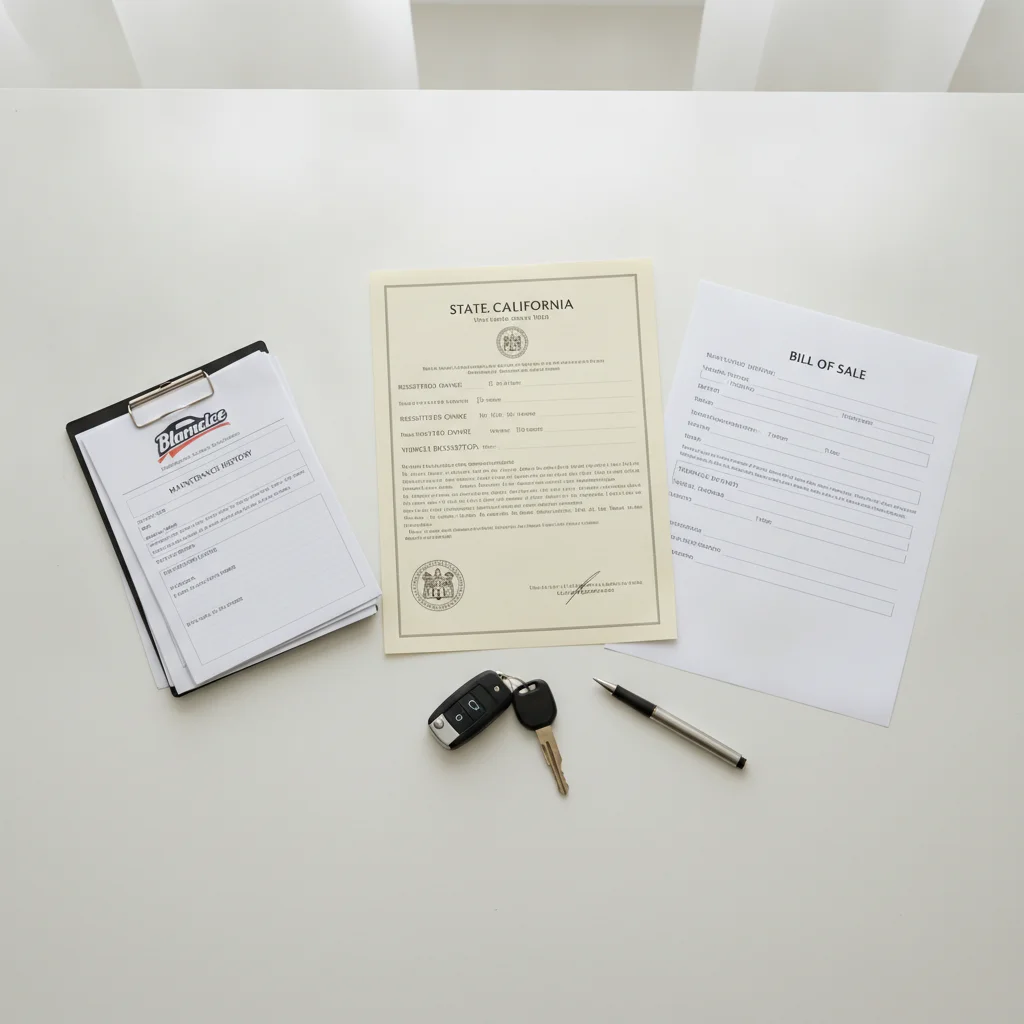
Key Takeaways
Limited Power of Attorney (Auto)
A limited power of attorney in a car sale is a legal document that gives another party — usually the dealership — specific authority to sign documents on your behalf. In the auto context, this is almost always used to handle title paperwork with the DMV or state motor vehicle agency. The authority granted is narrow: it typically covers only title-related tasks for one specific vehicle.
Unlike a general power of attorney, a limited (or special) power of attorney expires once the stated task is complete or the specified date passes. It cannot be used to bind you to other financial obligations or contracts beyond what is explicitly described.
What a Power of Attorney Actually Does in a Car Sale
When you buy a car at a dealership, the stack of paperwork in the finance office includes documents you recognize — the purchase agreement, the loan contract, the odometer disclosure — and a few you might not. One that surprises many buyers is a limited power of attorney (POA). It sounds intimidating, but in the auto context it usually has a very specific, mundane job: letting the dealership submit title paperwork to the state motor vehicle agency so you don't have to go yourself.
Here's the core mechanic. When a car changes hands, the state title must be updated to reflect the new owner. If there's a loan, the lender's name (the lienholder) also needs to appear on that title. The dealer typically handles all of this as part of their standard closing process. But to sign documents at the DMV on your behalf, they need written authorization. That's the POA.
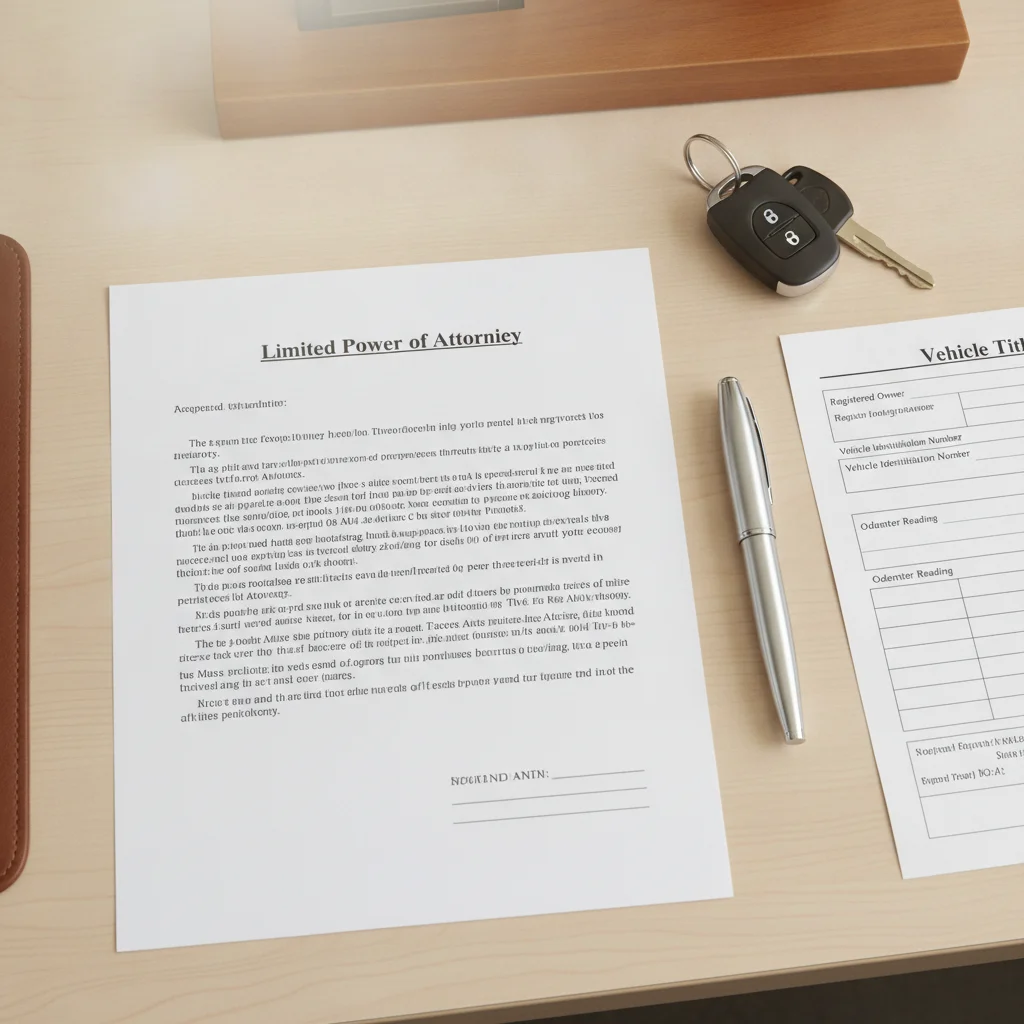
The key word is limited. A general power of attorney would give someone sweeping authority over your financial and legal life — that's the kind used in estate planning or medical emergencies. A limited (sometimes called "special") power of attorney is scoped to one task. In auto sales, that task is almost always title transfer, and the authorization should expire once that task is done.
For a fuller picture of all the documents you'll encounter in the finance office, see every document you'll sign at a car dealership explained. This article focuses specifically on the POA — what it covers, what it should not cover, and how to spot problems before you sign.
The Legitimate Reasons Dealers Request a POA
Not every dealer POA request is a red flag. There are several straightforward, common scenarios where a dealer genuinely needs this authorization to complete a legal transfer.
Title Processing With a Lender
When you finance a vehicle, your lender becomes a lienholder on the title. The dealer needs to file the correct paperwork with the DMV to reflect this. Depending on your state, this may require multiple signatures at multiple steps — and the dealer's staff, not you, will be at the motor vehicle office doing the legwork.
Out-of-State Title Transfers
If you're buying a car that's currently titled in another state — common with used vehicle inventory — the dealer may need to execute a title release in that other state before re-titling it in yours. A POA lets them handle the paperwork for a title that still has your name (or the previous owner's name) in a remote jurisdiction.
Trade-In Payoff Processing
If you have a trade-in with an existing loan, the dealer needs to pay off your lender and obtain a clear title to resell the vehicle. A POA can authorize the dealer to act on your behalf with your lender to release the lien. This is a common and legitimate use — though it's also an area where you want to verify the process was completed correctly. See how trade-in paperwork differs from private party sales for more detail on what the dealer handles in this scenario.
47
U.S. states that allow dealer POA for title transfer
The vast majority of states permit dealerships to act as an agent for title and registration filing, though the specific rules governing scope and duration vary by state DMV.
10–15 days
Typical dealer trade-in payoff window
Most dealers are contractually required to pay off a traded vehicle's existing loan within 10 to 15 business days of the sale; delays beyond this can affect the seller's credit.
30–90 days
Standard POA duration in auto transactions
Industry practice and many state regulations suggest a 30-to-90-day window is sufficient for completing title transfer; POAs without expiration dates are a consumer protection concern.
DMV Backlogs and Processing Delays
Some states have DMV processing queues that stretch weeks. A POA gives the dealer's title clerk the authority to submit corrected or supplemental documents on your behalf if any paperwork comes back incomplete — without needing to track you down for another signature months later.
State Laws Vary on POA Requirements
Some states have specific forms, notarization requirements, or restrictions on dealer POAs. Texas, California, and Florida, for example, each have different DMV rules governing how title transfers must be executed. Before signing, it's worth checking your state's DMV website or calling the agency directly if you have concerns about whether the form the dealer is using complies with state requirements.
POAs Don't Replace a Signed Title
A power of attorney is not a substitute for a properly signed certificate of title. The seller still needs to sign the title over correctly — the POA only covers supplemental tasks like DMV filing, registration, or lien paperwork. If a dealer says you don't need to sign the title because you signed a POA, verify this with your state DMV before proceeding.
What a Dealer POA Should — and Should Not — Include
The single most important thing to understand is the scope of the language. A legitimate limited POA will describe the authorized actions in narrow, specific terms. A problematic one uses vague or expansive language that could authorize actions well beyond title work.
What should be in the document
- The specific vehicle: Year, make, model, and VIN. If the POA doesn't name the exact vehicle, it's too broad.
- The authorized action: Something like "to execute and file title transfer and registration documents with the Department of Motor Vehicles." It should name the task explicitly.
- An expiration date or condition: Either a calendar date (30–90 days is typical) or a condition like "upon completion of title transfer."
- Your name and the dealer's name: Both parties should be clearly identified.
What should NOT be in the document
- Blanket authority to "execute any and all documents" related to the vehicle or the sale
- Authority to modify or enter financing agreements on your behalf
- Any reference to financial accounts, bank routing information, or insurance policies
- Language granting the dealer authority beyond the specific vehicle named
- No expiration date at all
Add an Expiration Date Before You Sign
If the POA you're presented with has no expiration date, write one in yourself before signing — something like '60 days from date of signature' — and initial the addition. Most reputable dealers won't object, because legitimate title work is completed well within that window. This simple step limits your exposure if the document is ever misused.
Keep Your Signed POA With Your Purchase Records
File a copy of the signed POA alongside your purchase agreement, loan contract, and title documents. If a dispute arises later about what authority the dealer had — or didn't have — you'll need the original language. Store these documents somewhere secure for at least three years after the sale.
If the language in the POA is ambiguous, you are within your rights to ask the finance manager to clarify it in writing or to have the specific authority narrowed before you sign. Dealers who respond to this reasonable request with frustration or pressure are displaying a red flag worth noting.

This same vigilance applies to other unusual contract terms. Arbitration clauses in car contracts are another example of standard-looking language that has real legal consequences worth understanding before you sign.
Red Flags That Signal a POA Problem
Most dealers use POA forms that are routine and appropriate. But the combination of pressure, complexity, and unfamiliar paperwork creates conditions where problematic language can slip past an inattentive buyer. Here are the specific warning signs to watch for.
The document is blank or partially filled
Never sign a power of attorney — or any legal document — with blank fields. A blank POA could theoretically be filled in after the fact to authorize actions you never intended. If fields are empty, ask for them to be completed before you sign, or decline to sign until they are.
You're rushed through it
Finance offices move quickly, and some of that pace is genuine (they have other customers). But a finance manager who speeds past the POA specifically, or who dismisses your questions with "it's just standard" without actually explaining it, is not serving your interests. Take whatever time you need.
The language extends to financial agreements
Watch for phrases like "to execute financing documents," "to bind the buyer to loan terms," or "to act as the buyer's agent in all matters related to the purchase." These go far beyond title work. No title POA should grant authority over your financing.
They won't give you a copy
You are entitled to a copy of every document you sign. If a dealer refuses to provide one, that's a serious red flag — not just for the POA, but for the entire transaction. State lemon laws and consumer protection regulations generally require dealers to provide copies of signed documents.
The POA appears after you thought you were done
Some buyers report that dealers present a POA days or weeks after the sale closes, via mail or email, claiming it's needed to "finish the paperwork." This is unusual. If you receive a POA request after leaving the dealership, contact the dealer's general manager directly to understand exactly what it's for — and consult a consumer attorney if the explanation doesn't satisfy you.
“Consumers sign what they're handed in the finance office without reading it, and dealers know this. A power of attorney that's too broad isn't always malicious — but it's always a risk the buyer bears, not the dealer.”
— Rosemary Shahan, President, Consumers for Auto Reliability and Safety (CARS Foundation)
How to Handle the POA Conversation at the Dealership
Walking into the finance office prepared makes this much easier. Here's a step-by-step approach to handling the POA conversation confidently.
- Ask before you sign. When the finance manager slides the POA in front of you, say: "Can you walk me through exactly what this authorizes you to do?" A legitimate dealer will answer clearly. The answer should be some version of: "This lets us file the title and registration paperwork with the DMV on your behalf."
- Check the VIN. Look at the POA and confirm the vehicle identification number matches the car you're buying. If no VIN is listed, ask for it to be added.
- Check the expiration. Find the expiration date or condition. If there isn't one, you can write one in (e.g., "Expires 60 days from date of signature") and initial it. Most dealers will accept this without objection.
- Read the authority language. Skim for any phrases beyond "title transfer" and "registration." Flag anything that seems broader and ask for an explanation.
- Request your copy. Before you leave the finance office, confirm you have a copy of the signed POA in your document packet. File it with your other purchase records.
If you're coming in with a preapproved loan from your bank or credit union, the financing dynamic is different — and that can affect how the finance office interacts with you overall. Shopping with a preapproval changes how the finance office approaches you, which is worth understanding before you sit down.
Add an Expiration Date Before You Sign
If the POA you're presented with has no expiration date, write one in yourself before signing — something like '60 days from date of signature' — and initial the addition. Most reputable dealers won't object, because legitimate title work is completed well within that window. This simple step limits your exposure if the document is ever misused.
Keep Your Signed POA With Your Purchase Records
File a copy of the signed POA alongside your purchase agreement, loan contract, and title documents. If a dispute arises later about what authority the dealer had — or didn't have — you'll need the original language. Store these documents somewhere secure for at least three years after the sale.
If at any point you feel unable to get a satisfactory explanation, you can simply decline to sign the POA and tell the dealer you will handle the title transfer yourself at the DMV. This will add some inconvenience, but it is entirely within your rights. In private party sales, you're already handling the title transfer yourself — see private party car sale contracts to understand what that process looks like.
When You're the Seller: Trade-Ins and Private Sales
The POA conversation usually centers on buyers, but if you're trading in a vehicle with an outstanding loan, you may be signing a POA as the seller — authorizing the dealer to pay off your existing lender and facilitate the lien release. This is a normal part of the trade-in process.
What you want to verify afterward: confirm that your trade-in loan was actually paid off within the timeframe the dealer stated (typically 10–15 business days). If it wasn't, you could face continued billing from your original lender even though you no longer own the car. Pull your credit report about 30 days after the trade to confirm the loan appears as paid.
For private party sales, a POA is rarely used and generally not recommended. When you sell directly to another individual, both parties typically appear at the DMV together, or the buyer handles registration independently using a signed title. The documentation requirements are different — private party car sale contracts outlines what you do need in those transactions instead.
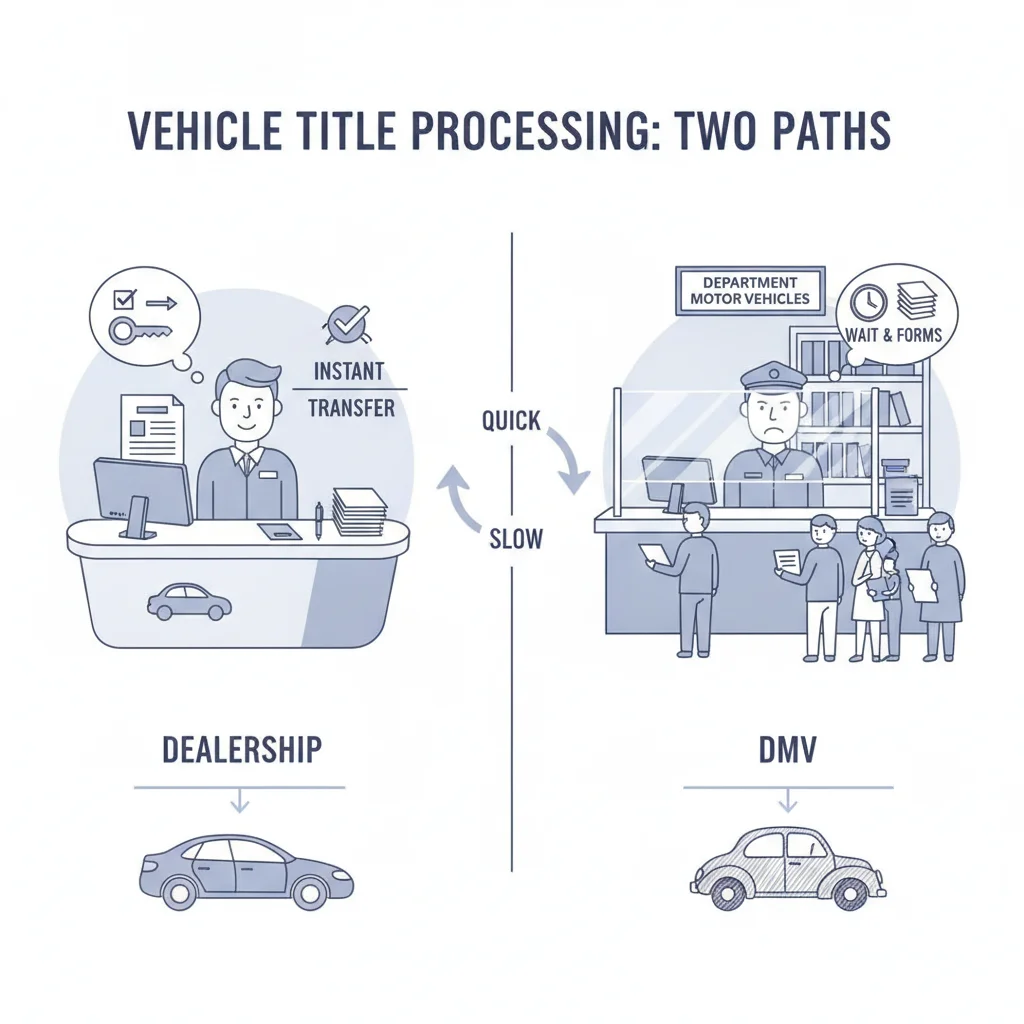
Understanding the full scope of title paperwork before any sale — whether dealer or private — puts you in a stronger position regardless of which side of the transaction you're on.
State Laws Vary on POA Requirements
Some states have specific forms, notarization requirements, or restrictions on dealer POAs. Texas, California, and Florida, for example, each have different DMV rules governing how title transfers must be executed. Before signing, it's worth checking your state's DMV website or calling the agency directly if you have concerns about whether the form the dealer is using complies with state requirements.
POAs Don't Replace a Signed Title
A power of attorney is not a substitute for a properly signed certificate of title. The seller still needs to sign the title over correctly — the POA only covers supplemental tasks like DMV filing, registration, or lien paperwork. If a dealer says you don't need to sign the title because you signed a POA, verify this with your state DMV before proceeding.

All claims are backed by peer-reviewed research. Sources on request.