Key Takeaways
Pre-Purchase Inspection (PPI)
A pre-purchase inspection is an independent, professional evaluation of a used vehicle performed by a mechanic before you buy it. A qualified technician checks the car's mechanical condition, safety systems, and structural integrity — giving you an unbiased assessment of what you're actually buying. The goal is to surface hidden problems that the seller may not disclose and that you likely won't catch on a test drive.
A PPI is distinct from a dealer's complimentary multi-point inspection. It is performed by a third party you hire, using a lift and diagnostic tools, and typically results in a written report you can use in price negotiations.
Why a Test Drive Isn't Enough
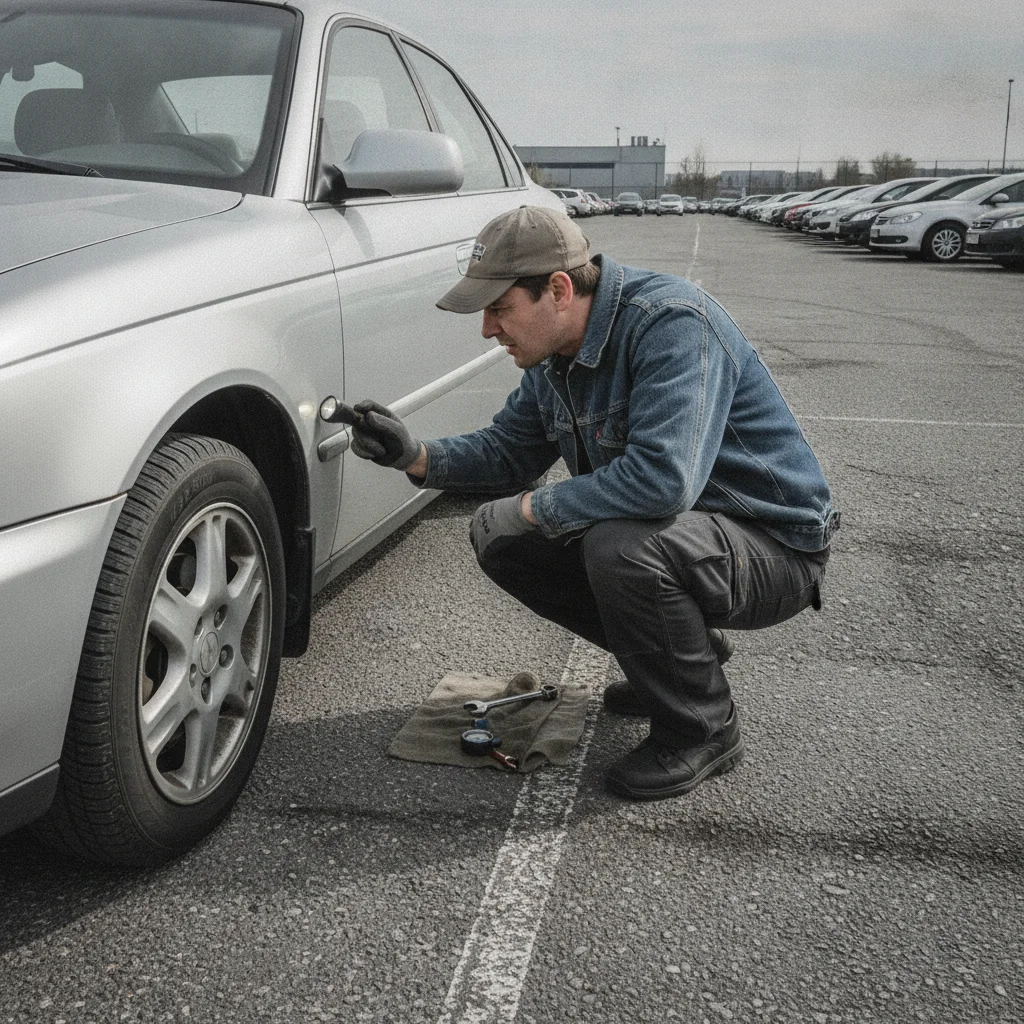
A 20-minute test drive tells you how a car feels, not what it's hiding. You'll notice obvious issues — a rough idle, brake shudder, a wandering steering wheel — but you won't see the rust eating through the subframe, the transmission that's one hard shift away from failure, or the rebuilt-title cosmetic repair under the fresh paint. That's exactly the gap a pre-purchase inspection fills.
Used cars, especially private-party listings, are sold as-is in most states. There is no implied warranty, no dealer recourse, and in many cases no legal obligation for the seller to disclose every known defect. Once you sign, the problems are yours. That reality is why a PPI isn't optional — it's the single most important due-diligence step in a private-party transaction.
For context on everything else you should verify before committing, see our full guide on test drives and inspections. But understand that the mechanical inspection is the centerpiece, not an afterthought.
Seller's Mechanic Is Not Independent
If a seller offers to have their own mechanic check the car for you, decline politely and insist on your own. A mechanic with an ongoing relationship with the seller has an inherent conflict of interest. Independence is the entire point of the inspection — without it, the exercise has limited value.
Carfax Is Not a Substitute for a PPI
Vehicle history reports like Carfax and AutoCheck are useful for spotting title issues, reported accidents, and odometer discrepancies, but they only contain information that was officially reported. A private-party fender-bender that was never filed with insurance, or an oil seal that's been leaking for 40,000 miles, will never appear in any database. A mechanic with a lift will find what a report cannot.
High-Mileage Cars Warrant Extra Scrutiny
On vehicles over 100,000 miles, ask the mechanic to specifically assess timing components, seals and gaskets, and suspension bushings — items with long service intervals that are often deferred. Knowing that a $900 water pump job is 20,000 miles out changes how you price the car today.
What a Mechanic Actually Checks
A thorough PPI follows a systematic order. Here's what a competent technician will cover, and why each area matters.
Engine and Drivetrain
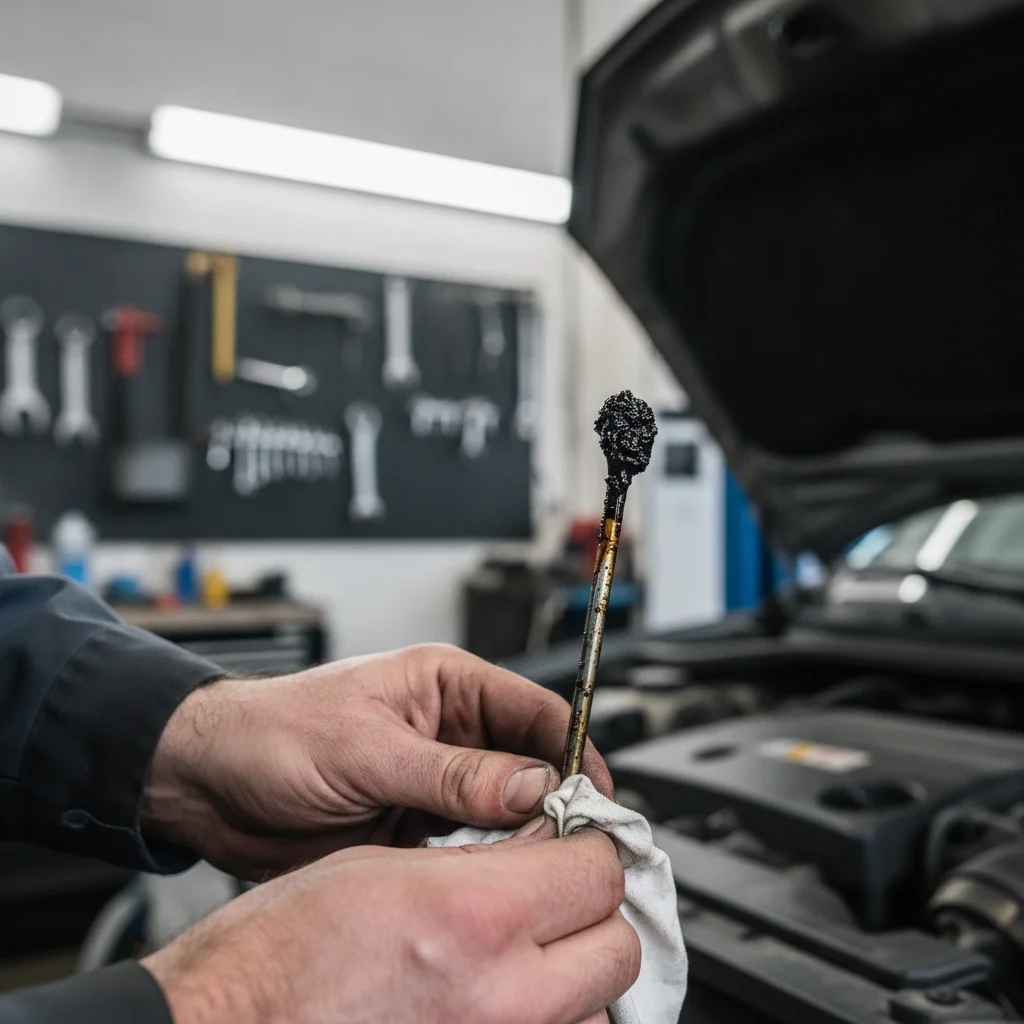
The mechanic will start the engine cold if possible — cold starts are more revealing than warm ones. They're looking for unusual smoke from the exhaust (blue smoke means burning oil, white smoke can indicate coolant intrusion), misfires, rough idle, and abnormal noises. They'll check oil condition on the dipstick — dark, gritty oil suggests deferred maintenance; milky oil means coolant mixing with oil, which signals a blown head gasket or worse.
They'll also inspect belts, hoses, and the coolant reservoir. A timing belt on the edge of its service interval is a $500–$1,200 job waiting to happen. On vehicles with timing chains, they'll listen for rattle on startup, which indicates stretch or tensioner wear.
$150–$200
Typical PPI cost at an independent shop
According to industry surveys of independent repair shops, a standard pre-purchase inspection averages $100–$200 across most U.S. markets.
1 in 4
Used cars with undisclosed problems
Vehicle history report providers estimate that roughly one in four used cars on the market has a significant undisclosed condition, from prior damage to hidden mechanical failures.
$1,200+
Average cost of a timing belt service
Timing belt replacement, including water pump, typically runs $500–$1,500 depending on make and model — a cost easily missed without an inspection that checks service intervals.
73%
Buyers who didn't get an independent inspection
A CarGurus consumer survey found that nearly three in four used car buyers did not obtain an independent pre-purchase inspection before completing their purchase.
Transmission and Clutch
The technician will check automatic transmission fluid color and smell — burnt fluid is a major warning sign of overheating and internal wear. On manual transmissions, they'll assess clutch engagement feel and inspect for fluid leaks around the bellhousing. Transmission rebuilds run $1,500–$3,500 depending on the vehicle, so this is a make-or-break inspection point.
Brakes
With the car on a lift, the mechanic can measure brake pad thickness directly (most pads have a minimum of 2–3mm before replacement is urgent), inspect rotor condition for deep scoring or warping, and check caliper operation. They'll also examine brake lines and hoses for cracking, corrosion, or leakage — a cheap-looking issue that's actually a safety emergency.
Suspension and Steering
The technician will physically grab each wheel and try to move it — lateral play indicates worn wheel bearings, and vertical play signals ball joint wear. They'll check strut condition for leaks, inspect control arm bushings for cracking, and assess tie rod ends. A car with sloppy steering or clunking suspension on a 60 mph highway is a hazard, not just a nuisance.
Tires
Tread depth gets measured with a gauge (2/32" is the legal minimum; under 4/32" means replacement is imminent), but tire condition reveals more than just tread. Uneven wear patterns — cupping, one-sided wear, center wear — point directly to alignment problems, suspension wear, or chronic overinflation. A new set of four tires is $400–$1,200 depending on size and brand.
Undercarriage and Frame
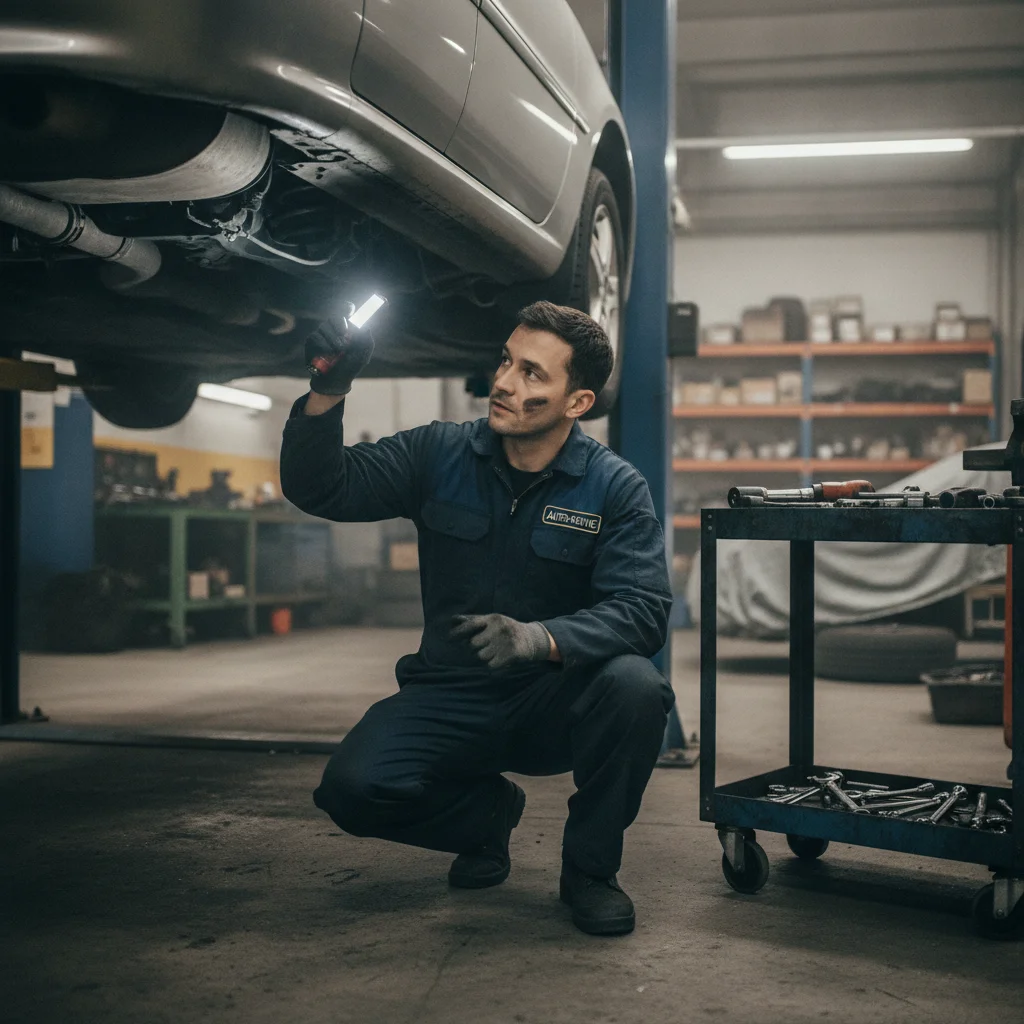
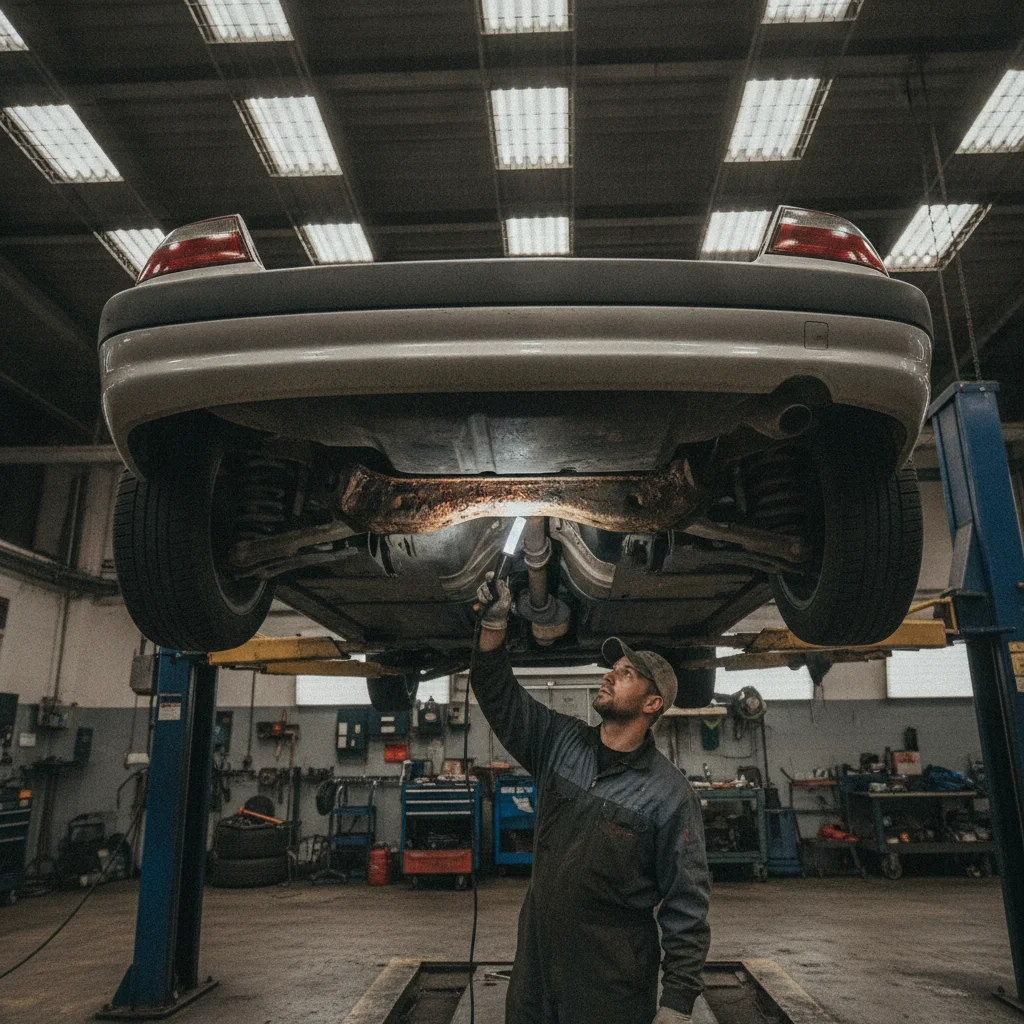
This is where the lift earns its value. The mechanic will inspect the frame rails, subframe, and unibody structure for collision damage, repairs, and rust. Surface rust on the undercarriage is common in salt-belt states and mostly cosmetic, but rust through structural metal — or signs of frame repair welds — is a serious structural integrity issue. They'll also look for fluid leaks from the engine, transmission, differentials, and power steering rack.
OBD-II Diagnostic Scan
A scan tool plugged into the OBD-II port (under the dashboard, standard since 1996) reads stored fault codes, including codes that are pending but haven't yet triggered the check engine light. Sellers sometimes clear codes before a sale. A good mechanic will note whether the readiness monitors have completed — if they haven't, it often means the codes were recently cleared and the car hasn't been driven long enough to reset them. That's a reliable tell.
Exterior, Glass, and Lights
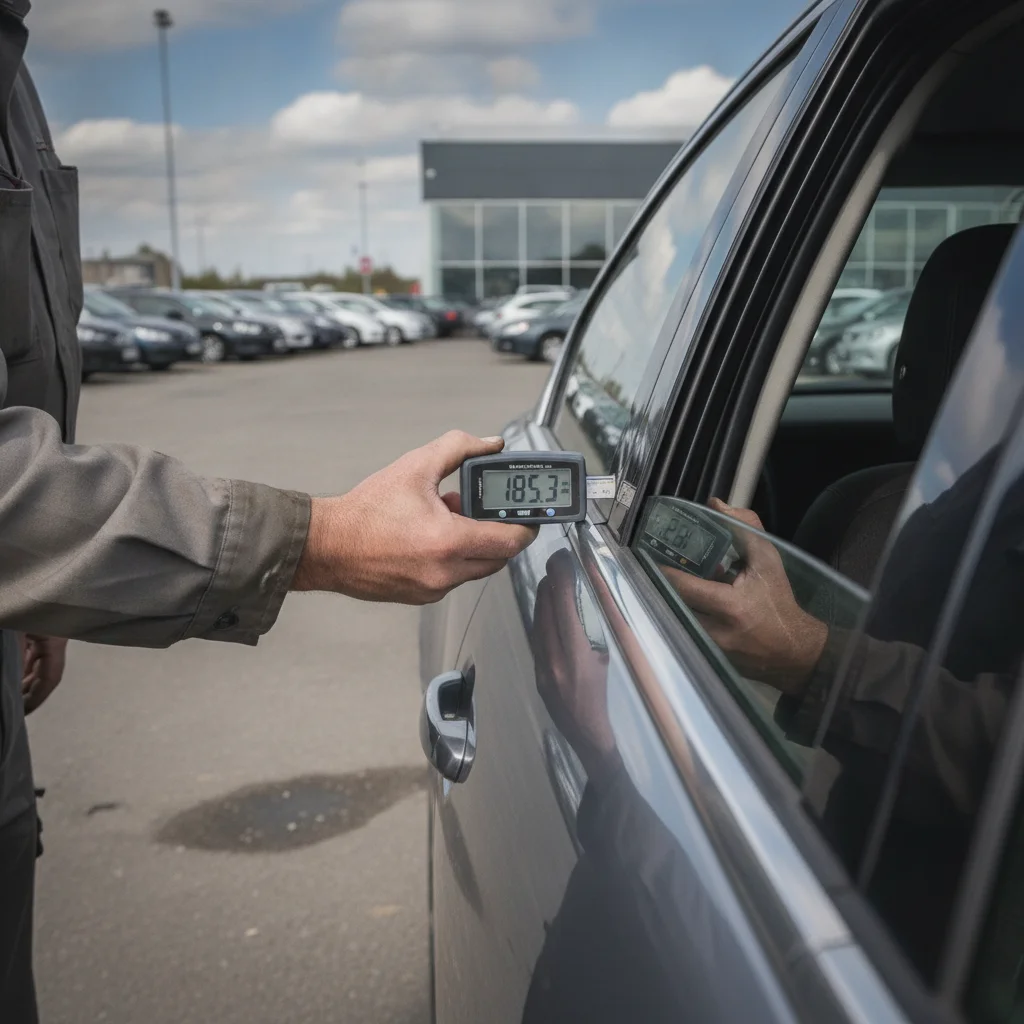
The mechanic will use a paint thickness meter to check for body filler — a spike in thickness readings on a panel indicates prior damage repair that may not show on a vehicle history report. They'll inspect door and trunk gaps for alignment issues that suggest a collision, check all exterior lights for function, and look for cracked or chipped glass that needs replacing.
Interior and Electrical Systems
HVAC operation (both heat and A/C), power windows, power locks, infotainment, all warning lights, and safety systems like backup cameras all get tested. Electrical gremlins on complex modern vehicles can be expensive and frustrating to diagnose after the fact.
For a complete point-by-point checklist you can bring to the inspection, see The Complete Pre-Purchase Vehicle Inspection Checklist.
Attend the Inspection in Person
If at all possible, be there when the mechanic lifts the car. A written report captures findings, but standing next to the technician while they point out a weeping transmission seal or a cracked control arm bushing gives you context a checklist cannot. Ask questions, ask about severity, and ask for repair cost estimates on the spot. This is your $150 — get full value from it.
Use the Report as a Negotiating Tool
Don't hide the inspection results from the seller. Present the report, itemize the repair estimates, and make a specific counter-offer that reflects those costs. A professional, document-backed negotiation is far more effective than a vague 'I think the price is too high.' Sellers respond to specifics.
How to Arrange a Pre-Purchase Inspection
The logistics are straightforward if you plan ahead. Here's how to do it right.
- Find your mechanic first. Don't wait until you're under pressure to close a deal. Identify a trusted independent shop in advance — ideally an ASE-certified technician or a shop specializing in the brand you're buying. Avoid using the seller's recommended mechanic. You need someone whose only loyalty is to you.
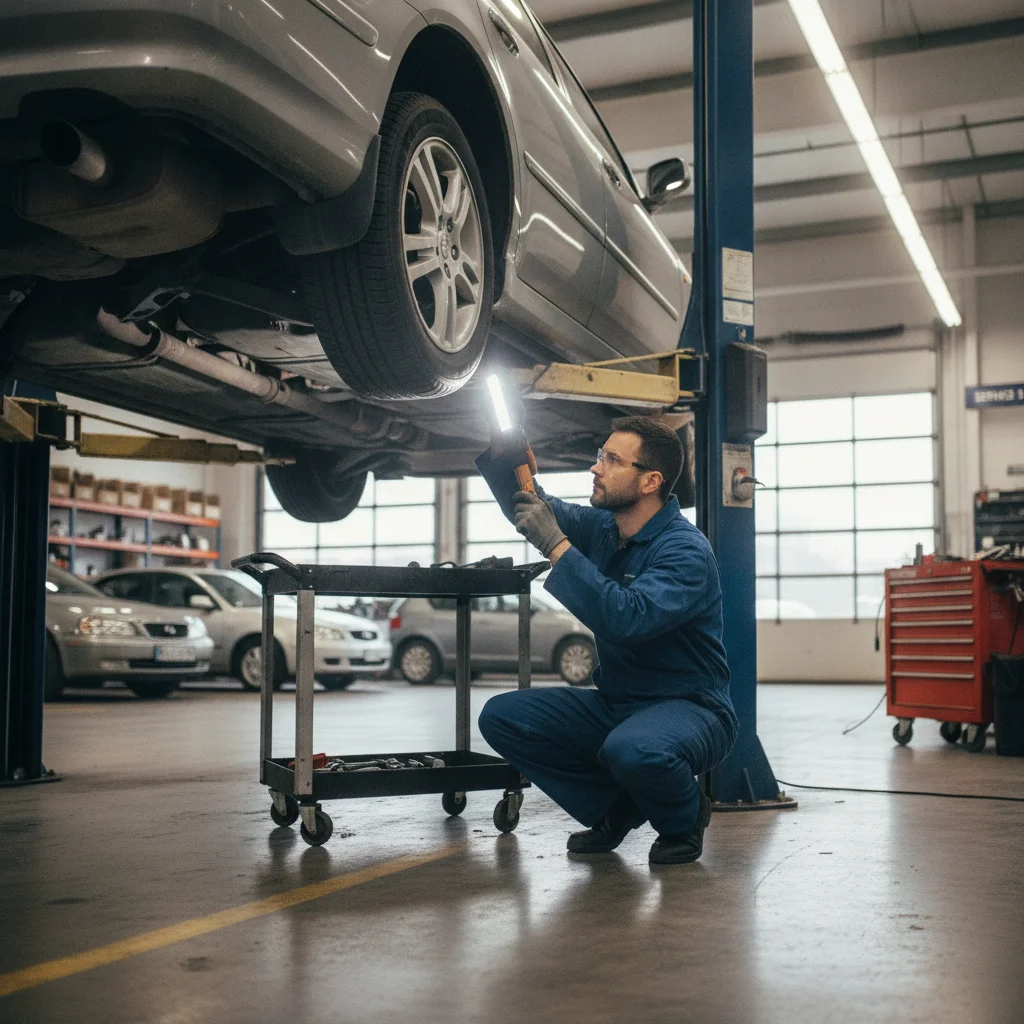
- Confirm the shop has a lift. A PPI without lifting the vehicle misses the undercarriage entirely. A shop that inspects in a parking lot can only do so much. A full lift inspection is non-negotiable for any serious purchase.
- Coordinate between seller and shop. The seller needs to drive the car to the shop, or you need to arrange transport if they won't. Most cooperative sellers will drive to a shop within a reasonable radius. Agree on a time when you can also be present — if you can attend the inspection, do it. Standing in the shop and hearing the mechanic's live commentary is far more informative than reading a report.
- Get the report in writing. Ask the shop to document every finding, including photos where possible. This written report is your negotiating document.
If you're buying remotely — from an online listing in another state — you still have options. Getting a Pre-Purchase Inspection on a Remote Vehicle walks through how to use third-party mobile inspection services that operate nationally. And if you're still in the early stages of verifying an online listing, the pre-purchase checklist for buying a car online covers what to verify before you even schedule an inspection.
“Most buyers spend more time researching a hotel room than they do vetting a $15,000 car purchase. A pre-purchase inspection is the one step that can tell you whether you're buying someone else's problem.”
— John Nielsen, Former Managing Director of Automotive Engineering and Repair, AAA
How to Use the Inspection Results
The inspection report gives you one of three outcomes: the car is clean, the car has minor issues, or the car has serious problems. Each calls for a different response.
Clean Report
You now have documented evidence the car is in good condition. That's worth something to you for peace of mind, and it removes the uncertainty from the transaction. Pay a fair price and move forward.
Minor Issues Found
Use the repair estimates to negotiate. If the inspection reveals $600 in deferred maintenance — new tires, a brake job, and a cabin air filter — ask for a price reduction in that range. Most reasonable sellers will negotiate when you show them a written inspection report with specific findings and costs. This is not adversarial; it's correcting the price to reflect the car's actual condition.
Serious Problems Found
Frame damage, significant rust, a failing transmission, head gasket failure, or a rebuilt-title car sold as clean — these are walk-away situations. Don't let sunk cost or emotional attachment to a specific car push you into a bad deal. The inspection fee you paid is a cheap exit ticket from a potential disaster.
If you're on the other side of this transaction — a seller wondering whether to get inspected before listing — Should You Get a Pre-Sale Inspection Before Listing? examines the tradeoffs honestly.
Attend the Inspection in Person
If at all possible, be there when the mechanic lifts the car. A written report captures findings, but standing next to the technician while they point out a weeping transmission seal or a cracked control arm bushing gives you context a checklist cannot. Ask questions, ask about severity, and ask for repair cost estimates on the spot. This is your $150 — get full value from it.
Use the Report as a Negotiating Tool
Don't hide the inspection results from the seller. Present the report, itemize the repair estimates, and make a specific counter-offer that reflects those costs. A professional, document-backed negotiation is far more effective than a vague 'I think the price is too high.' Sellers respond to specifics.
Special Situations: EVs, CPO, and High-Mileage Cars
Standard PPI checklists need adjustments in a few important scenarios.
Electric Vehicles
A conventional PPI covers far less territory on a battery-electric vehicle. There's no engine oil to check, no timing belt, no transmission fluid. The critical inspection point on a used EV is battery health — specifically the state of health (SOH) percentage, which indicates how much of the original range the battery still holds. This typically requires a brand-specific scan tool or a dealer service visit. See Pre-Purchase EV Inspection: What to Verify Before Buying Used for a full breakdown of what to check.
Certified Pre-Owned Vehicles
CPO vehicles from franchised dealers come with manufacturer-backed inspections, but those inspections are performed by someone with a financial interest in selling you the car. An independent PPI on a CPO vehicle is not redundant — it's a check on the checker. On a $30,000 CPO purchase, a $150 inspection is a rounding error. The certified pre-owned hub explains what CPO programs actually cover and where their limitations are.
High-Mileage Vehicles
On a 100,000-mile vehicle, the inspection focus shifts toward wear items with long replacement cycles: timing components, water pump, seals and gaskets, automatic transmission health, and suspension bushings. Ask the mechanic to specifically assess how many more miles the car realistically has before major expenditures are likely. That projection changes the math on whether the asking price makes sense.
For comparison, understand how a dealer's complimentary inspection differs from what an independent PPI delivers. What a Multi-Point Inspection Actually Covers — and What It Doesn't explains exactly why free dealer inspections aren't a substitute for third-party due diligence.
Seller's Mechanic Is Not Independent
If a seller offers to have their own mechanic check the car for you, decline politely and insist on your own. A mechanic with an ongoing relationship with the seller has an inherent conflict of interest. Independence is the entire point of the inspection — without it, the exercise has limited value.
Carfax Is Not a Substitute for a PPI
Vehicle history reports like Carfax and AutoCheck are useful for spotting title issues, reported accidents, and odometer discrepancies, but they only contain information that was officially reported. A private-party fender-bender that was never filed with insurance, or an oil seal that's been leaking for 40,000 miles, will never appear in any database. A mechanic with a lift will find what a report cannot.
High-Mileage Cars Warrant Extra Scrutiny
On vehicles over 100,000 miles, ask the mechanic to specifically assess timing components, seals and gaskets, and suspension bushings — items with long service intervals that are often deferred. Knowing that a $900 water pump job is 20,000 miles out changes how you price the car today.

All claims are backed by peer-reviewed research. Sources on request.